Can I Transfer from Trieste Cruise Port to Venice?
Yes, you can transfer from Trieste's cruise port to Venice in Italy: here is how the walk to Trieste Centrale, the urban bus fares and the rail connection actually work.
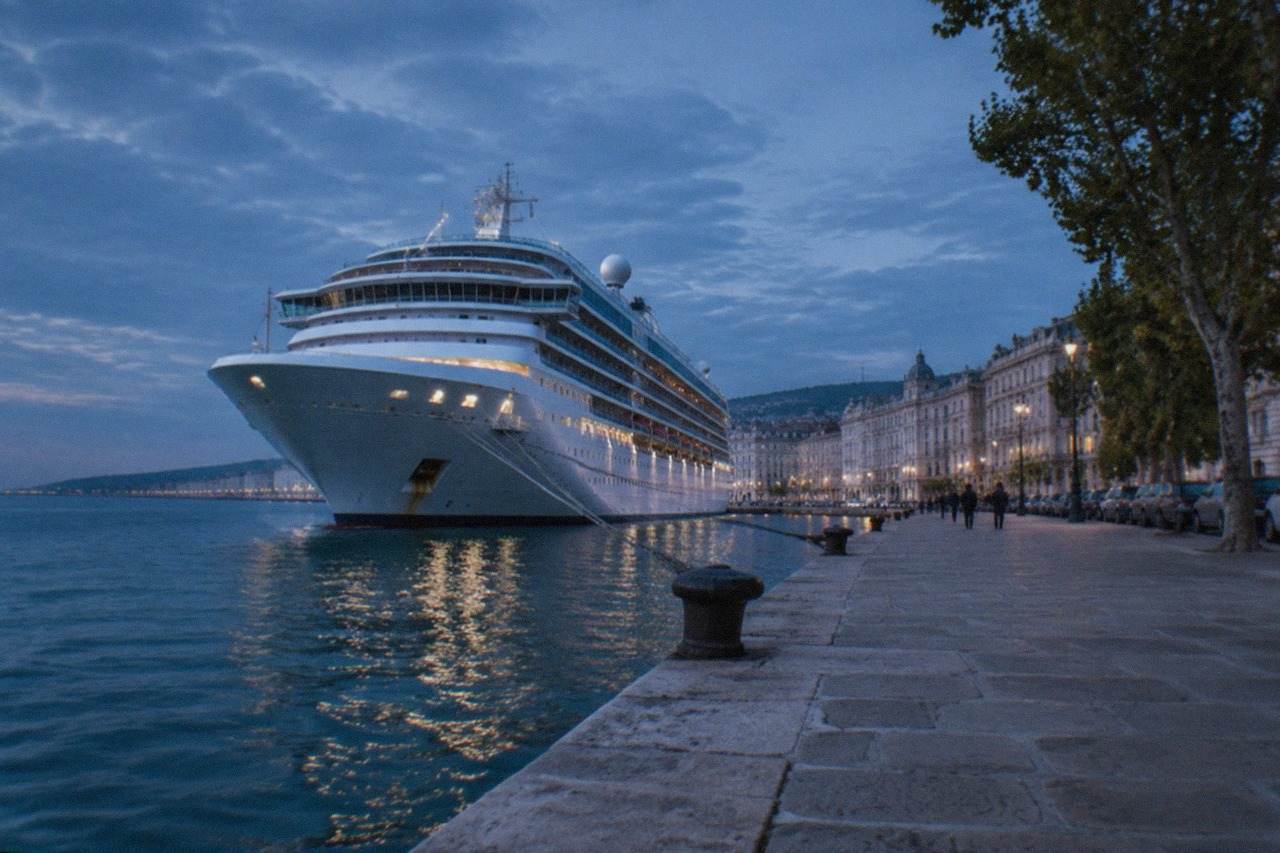
Trieste, the Adriatic port city in Friuli Venezia Giulia, Italy, works as a turnaround port for several cruise lines, which means a share of passengers step off the ship with a booked or imagined connection to Venice. The good news is that the transfer is genuinely straightforward: the cruise terminal sits close to the city centre, the main rail station is walkable, and trains run the coastal route north-west toward Venice. The pieces that trip people up are smaller ones, like how the urban bus system is priced, where exactly the terminal is relative to the station, and whether a few spare hours in Trieste are worth using before departure. This page answers the question end to end, using Trieste Trasporti's current fare sheet and the site's own cruise-port coverage.
Can I Transfer from Trieste Cruise Port to Venice?
Yes, a transfer from Trieste's cruise port in Italy to Venice is practical, and the standard route is a walk or short urban bus ride from the terminal to Trieste Centrale station, then a train along the coast to Venice. The terminal and the station both sit in the city's flat waterfront core, so no long taxi haul is needed, and the urban bus fares come from Trieste Trasporti's 2026 tariff sheet. Train times and fares should be checked on the rail operator's own pages before travel day.
The port of Trieste is not an industrial dock miles from town. Cruise ships berth at terminals within the city's waterfront, and Trieste Centrale station sits on the edge of the same compact grid of Habsburg-era streets. That geography is the reason this transfer works so well: a passenger with luggage can, in most cases, handle the whole first leg on foot. For the details of that walk, including what the route looks like with a suitcase, see our page on walking from the cruise port to the train station, and for the wider picture of where ships dock and what surrounds them, the Trieste cruise port guide covers the terminals, the seafront and the orientation.
One thing worth saying plainly: this is Trieste in Italy, not the bathyscaphe, not a cafe chain, and not a city in Slovenia. The question sounds odd to need that clarification, but this destination loses its name in search results to all of those, and a transfer plan only makes sense attached to the right place. Trieste is the regional capital of Friuli Venezia Giulia, on the border with Slovenia, roughly at the top of the Adriatic, and Venice is the nearest major tourist city up the Italian coast.
How Do You Get from the Terminal to Trieste Centrale?
The cruise terminal and Trieste Centrale station are both on the flat waterfront, and the transfer between them is a walk through the city core or a short hop on an urban bus using a standard Trieste Trasporti ticket. The 2026 tariff sheet prices an urban single at EUR 1.50 for 60 minutes or EUR 1.85 for 75 minutes, with a day ticket at EUR 3.35, and singles extend to 240 minutes on Sundays and public holidays.
Those fares come from Trieste Trasporti's own 2026 tariff sheet, which is the current price list for the city's urban network. The full set of ticket options looks like this:
| Code | Ticket | Price | Validity |
|---|---|---|---|
| U01 | Urban single | EUR 1.50 | 60 minutes |
| U02 | Urban single | EUR 1.85 | 75 minutes |
| U24 | Day ticket | EUR 3.35 | One day |
| U10 | 10 rides | EUR 13.50 | Ten urban journeys |
| U20 | 20 rides | EUR 16.65 | Twenty urban journeys |
The tap-on-board detail matters for cruise passengers arriving without a local ticket app. The on-board "Eva" readers accept Mastercard, Visa and American Express cards plus digital wallets, and the system applies the cheapest applicable fare, so there is no penalty for tapping rather than pre-buying. For a one-off transfer from the terminal to the station, a single ticket is all that is involved.
The walk itself is the option most people end up taking. The terminal area, the seafront and the station all sit inside the same compact stretch of the city, and the route runs through or past the grand waterfront Piazza Unità d'Italia, which is the sort of arrival view few cruise ports offer. Whether the walk suits you depends on luggage and legs rather than distance, and our page on whether Trieste is walkable from the cruise port goes into that judgement in detail.
Which Transfer Option Makes Sense for a Venice Connection?
For most cruise passengers the sensible plan is a walk or a single urban bus ride to Trieste Centrale, then a train to Venice, booked or checked on the rail operator's own site before the sailing ends. Trieste's airport station is irrelevant to this route, and a private road transfer is the fallback if a train departure does not line up with disembarkation. The rail journey's exact duration and fare depend on the service, so treat any fixed number you read elsewhere with caution unless the operator prints it.
The reason the train is the default is structural. Trieste Centrale is the city's main station and the Venice line is the coastal route out of the city, so a cruise passenger who reaches the station has done the hard part. Whether a high-speed service runs on this specific route, and what the realistic journey looks like, is covered on our page about the high-speed train from Trieste to Venice.
Timing is the one variable no article can fix in advance. Disembarkation slots, train departure patterns and the season all shift, so the working method is: find your ship's berth and expected off-ship time, check the operator's live timetable for Trieste Centrale that morning, and leave margin for a late gangway. Passengers with a late-afternoon or evening train have a genuinely pleasant problem, because Trieste rewards the hours in between, and a day trip in the other direction is common enough that we have a dedicated page on doing Venice as a day trip from Trieste.
If your ship finishes early and the wait for the train is long, the city is the waiting room. The practical options, with the tour products this site carries, look like this:
| Option | What it covers | Duration | From (per person) |
|---|---|---|---|
| Trieste Bus Tour with Audio Guide | City orientation by bus with audio commentary | 1 hour 15 minutes | $21.02 |
| Best of Trieste: Private Walking Tour with a Local Guide | Private landmarks walk, group up to 10 | 2 hours | $217.82 per group |
| Trieste: Habsburg History Private Walking Tour | Private walk on the city's imperial past | 2h 30m | $143.30 |
The bus tour is the one that fits a transfer window most easily, because it is short, does not depend on your legs after a week at sea, and gives you the shape of the city before you leave it. Its listing shows a rating of 4.1 from 236 reviews, and you can Check availability on the operator's live listing.
What Can You Actually Do with Spare Hours in Trieste?
A few spare hours in Trieste before a Venice transfer are enough for the seafront core: Piazza Unità d'Italia on the water, the Molo Audace pier, the Città Vecchia old town climbing behind the square, and a caffè stop, which in this city is a cultural institution rather than a refreshment. The cathedral on San Giusto hill is free to enter, Castello di San Giusto costs EUR 7.00, and everything listed here sits within the walkable waterfront zone.
The free things are not the consolation prizes here. The seafront square itself, the old town's lanes, the view down into the Roman theatre from the street, and the cathedral's interior all cost nothing, and the cathedral keeps long hours: the parish site lists weekdays 8:00-18:30 and Sundays and holidays 9:00-19:30. San Giusto castle, if you would rather spend the time and the EUR 7.00, is open daily 10:00-19:00 from 1 April to 11 October, then Tuesday to Sunday 10:00-17:00 from 12 October, closed Mondays.
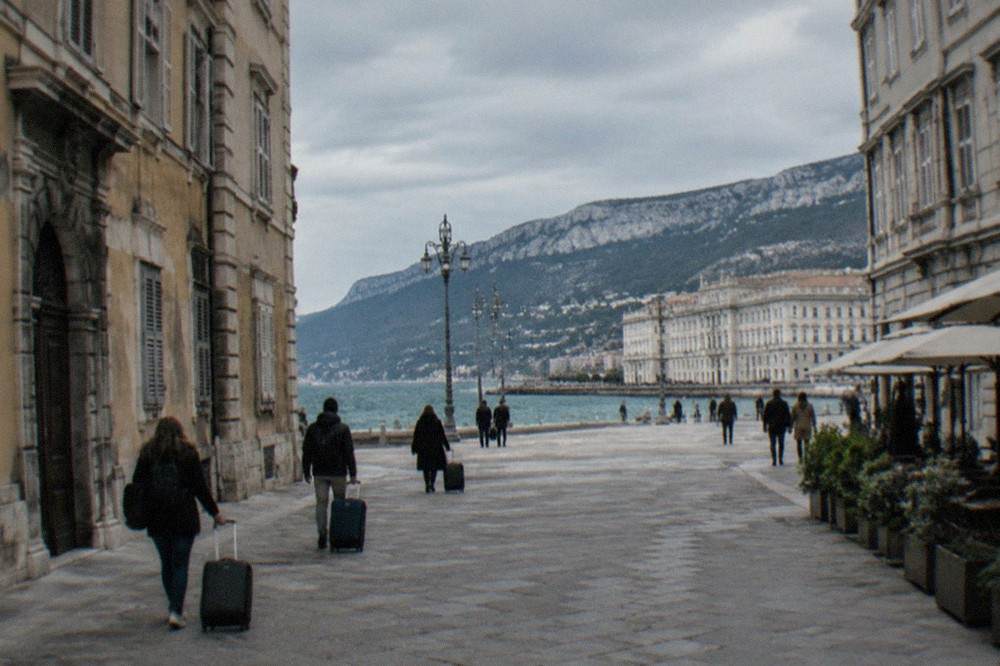
The caffè is the part that surprises people. Trieste is a historic coffee port and roasting city, and its historic cafés are institutions with the architecture to match; our Trieste coffee culture guide covers where the tradition lives. If the spare hours stretch to half a day, the city core sequences itself naturally: seafront first, then the old town lanes, then the hill with the cathedral and castle, with a caffè stop wherever the route passes one.
For a structured hour rather than a self-guided wander, the audio-guided bus tour named above is the product this site rates for the job, and the private walking tours in the table suit a passenger with a travelling group and a fixed window. You can read the fuller set of options on the tour pages linked from the cards above.
Common Questions About the Trieste to Venice Transfer
If you are weighing the transfer against a few more hours in the city, these are the questions that come up most often, starting with the one this page exists to answer.
Can I transfer from Trieste cruise port to Venice?
Yes. Walk or take a short urban bus ride from the terminal to Trieste Centrale station, then take a train along the coast to Venice. The urban single costs EUR 1.50 for 60 minutes or EUR 1.85 for 75 minutes per the 2026 tariff sheet, and contactless cards can be tapped on board.
How far is the Trieste cruise port from the town?
The cruise terminals sit within Trieste's waterfront core, so the town is effectively around you when you step ashore. The details, including the walk to the station, are on our page about the distance from the cruise port to the town.
Can you walk from Trieste cruise port to the train station?
Yes, the station is reachable on foot from the terminal area through the flat city core, and the route passes the seafront. Luggage and the weather are the deciding factors, not the distance.
Is there a high-speed train from Trieste to Venice?
The rail operator runs regional and faster services on the coastal route out of Trieste Centrale, but which service class serves Venice direct, and on what pattern, changes with the timetable, so check the operator's live listing for your travel date. Our dedicated page on the high-speed question has the detail.
What should I do in Trieste before the train to Venice?
Walk the seafront to Piazza Unità d'Italia, out onto the Molo Audace pier, up into the Città Vecchia, and stop in a historic caffè. The cathedral is free to enter and San Giusto castle is EUR 7.00, and all of it fits inside the walkable zone between the terminal and the station.
The transfer from Trieste's cruise port to Venice is, in the end, one of the easier port-to-city connections on the Adriatic: a short walk or a EUR 1.50 bus ride to a station that sits inside the city you came to see, and a coastal train that does the rest. Check the operator's live timetable on the morning you sail in, keep the urban fare sheet on this page as your pricing reference, and if the wait runs long, spend it in a caffè rather than a terminal. More on the city itself is throughout Trieste Travel Guide, including our answer on what to do in Trieste from a cruise ship.