How Do I Get from Venice City Center to Trieste Cruise Port?
How to travel from Venice city center to the Trieste cruise port in Italy: train options, private transfers, what the port area is like, and what getting around Trieste costs once you arrive.
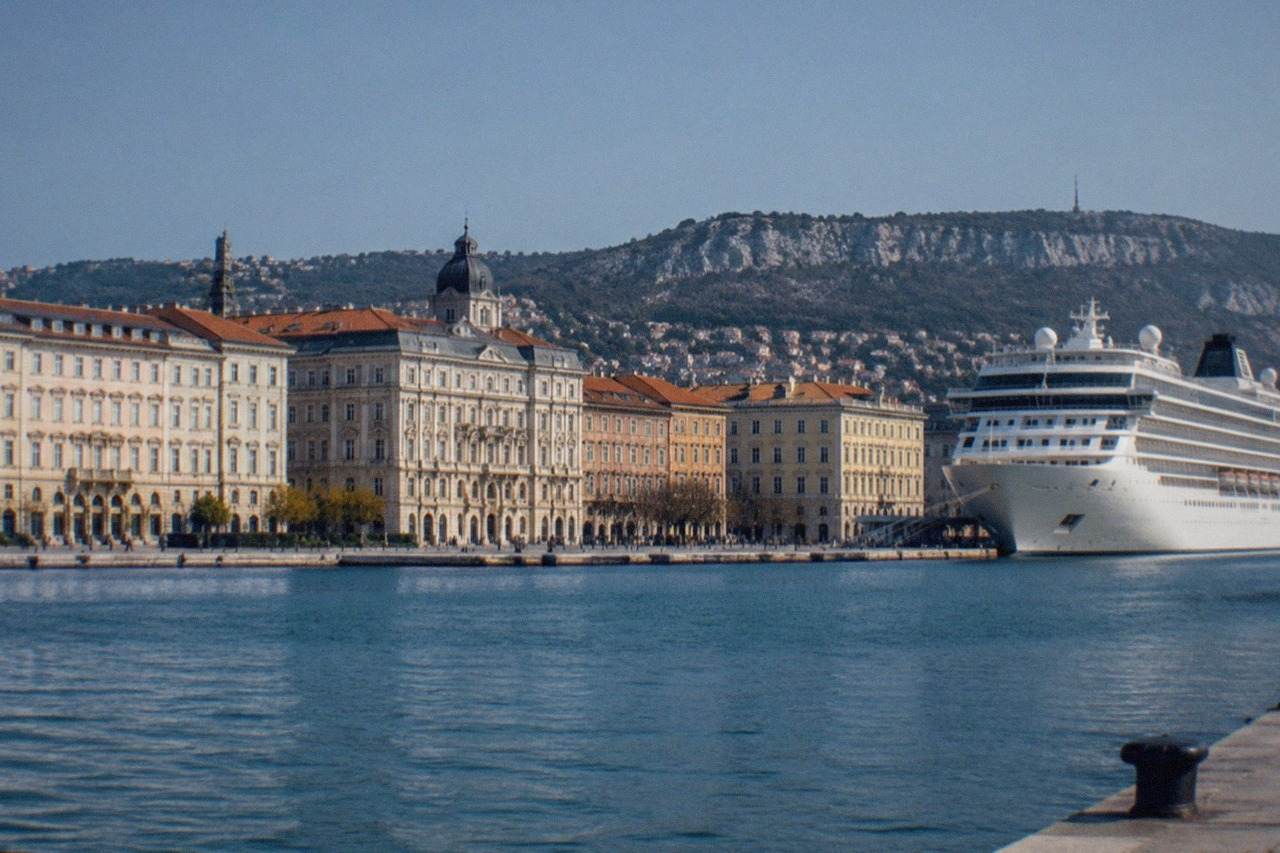
Venice and Trieste, Italy, are two Adriatic cities that cruise lines increasingly treat as a pair, and passengers booked out of Trieste's port often start their trip in Venice's historic centre first. The transfer between them runs the width of the Veneto and Friuli Venezia Giulia, ending at a cruise terminal on the flat waterfront side of a compact city where the station, the terminal and Piazza Unità d'Italia all sit within easy reach of one another. This page lays out the realistic options, what each involves, and what to budget once you step off the train, because Trieste rewards an hour or two ashore far more than most embarkation ports.
How Do I Get from Venice City Center to Trieste Cruise Port?
The practical answer is a direct train from Venice's Santa Lucia station to Trieste Centrale, followed by a short walk or taxi ride to the cruise terminal on the same waterfront side of the city. Trenitalia runs the route with regional and high-speed services, timetables vary by day, and no transfer or private car option beats the train for simplicity when you are starting in Venice's city centre.
The rail route is the backbone of this transfer. Venezia Santa Lucia sits at the foot of Venice's Grand Canal, reachable on foot or by vaporetto from anywhere in the historic centre, and Trieste Centrale is Trieste's main station, positioned on the waterfront side of a city centre small enough that most cruise passengers cover it on foot. Trenitalia publishes the current timetables and fares on its own site, and those are the numbers to trust: journey times and frequencies on this route have shifted more than once in recent years as works on the Venezia-Trieste line have moved buses onto parts of the corridor, so check the live timetable rather than relying on a figure printed in an older guide.
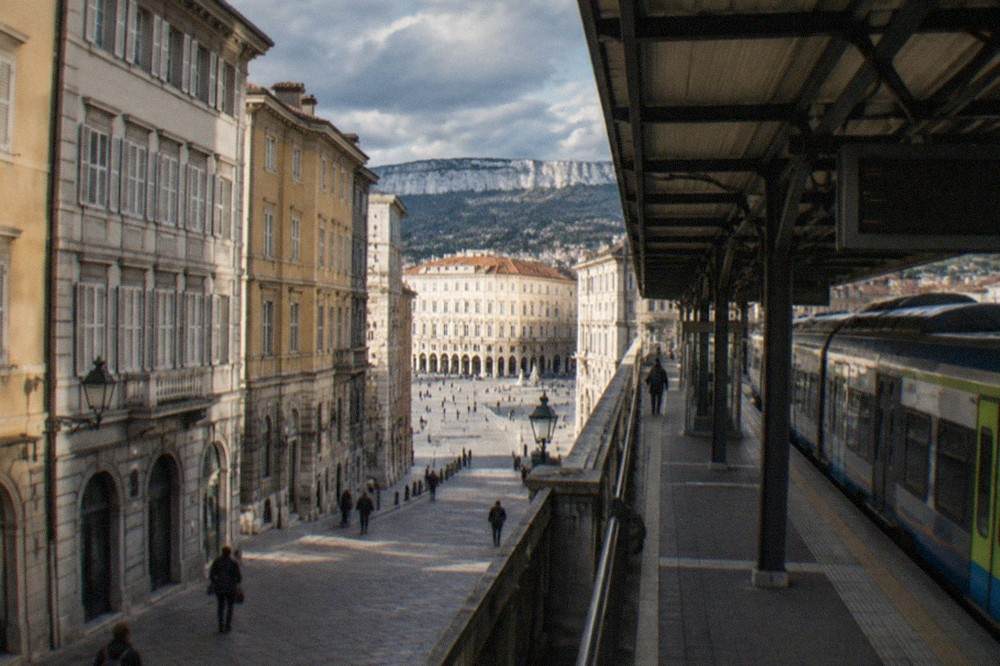
Two things matter when you plan the rail option. First, buy from Trenitalia directly or at the station, because the ticketing logistics at both ends are simple and the fare structure is transparent there. Second, build in buffer time before your ship's check-in closes: cruise lines in Trieste typically close boarding in the early afternoon, and a morning train from Venice leaves comfortable room for delays. The dedicated Venice to Trieste by train answer page walks through the rail specifics, and the high-speed train question covers what Frecciarossa service means on this corridor.
For anyone with heavy luggage, a group, or a flight landing in Venice the same morning, private transfer companies operate the Venice-Trieste corridor as a standard run, and the transfer-time questions travellers ask most are answered elsewhere on this site. What no honest page can do is print a fixed transfer time or fare: both depend on traffic, day and operator, so get a quote rather than trusting a number copied from someone else's trip.
What Are the Main Travel Options from Venice to Trieste, Italy?
Four routes cover virtually every case: the direct train from Venezia Santa Lucia to Trieste Centrale, a private transfer or taxi door to door, a rental car driven across the Veneto and Friuli plains, and a fly-in alternative via Trieste Airport's own railway station, which is connected to the terminal by a covered walkway and served by regional, Intercity and high-speed trains.
Each option suits a different traveller, and the choice mostly comes down to luggage, party size and how much Venice sightseeing precedes the transfer. The table below is a planning comparison of the shapes of the options, not a promise of times or prices, which no operator publishes as fixed for this corridor.
| Option | Best for | Where it starts in Venice | Where it ends in Trieste | What to check before booking |
|---|---|---|---|---|
| Direct train | Solo travellers, couples, light luggage | Venezia Santa Lucia station, at the foot of the Grand Canal | Trieste Centrale, on the waterfront side of the centre | Live Trenitalia timetable and fare, works advisories on the Venezia-Trieste line |
| Private transfer | Groups, families, heavy luggage | Hotel or apartment door | Cruise terminal door | Written quote and pickup time from the operator |
| Rental car | Travellers adding stops between the cities | Pickup points around Venice's mainland edge | Trieste, with a car to park | Parking arrangements in Trieste before you drive |
| Fly into Trieste Airport | Travellers not starting in Venice at all | Not applicable | Trieste Airport station via covered walkway, then a short regional train ride to Trieste Centrale | Flight and train connection on the same booking day |
The rental-car row deserves a caveat this site has covered in detail: parking in Trieste is its own subject, and a car you cannot park is a burden in a port city built tightly along its waterfront. The parking in Trieste guide covers the realistic arrangements, and the site's guide to renting a car there explains when a car earns its keep at all.
For travellers weighing whether the whole idea is sound, the paired questions of whether Trieste is worth visiting and whether Venice or Trieste is the better base are answered elsewhere on this site, and the short version is that arriving a day early for Trieste itself is rarely a mistake.
One decision worth making early is whether you treat Trieste purely as an embarkation point or as a destination. The ships usually board in the early afternoon, which leaves a full morning, and Trieste's centre is one of the few in Italy where that morning is genuinely enough: the grand square, the canal district, the hill of San Giusto and the seafront are all packed into a walkable core that the cruise port guide maps in full.
Where Do Cruise Ships Dock in Trieste and How Do You Reach the Terminal?
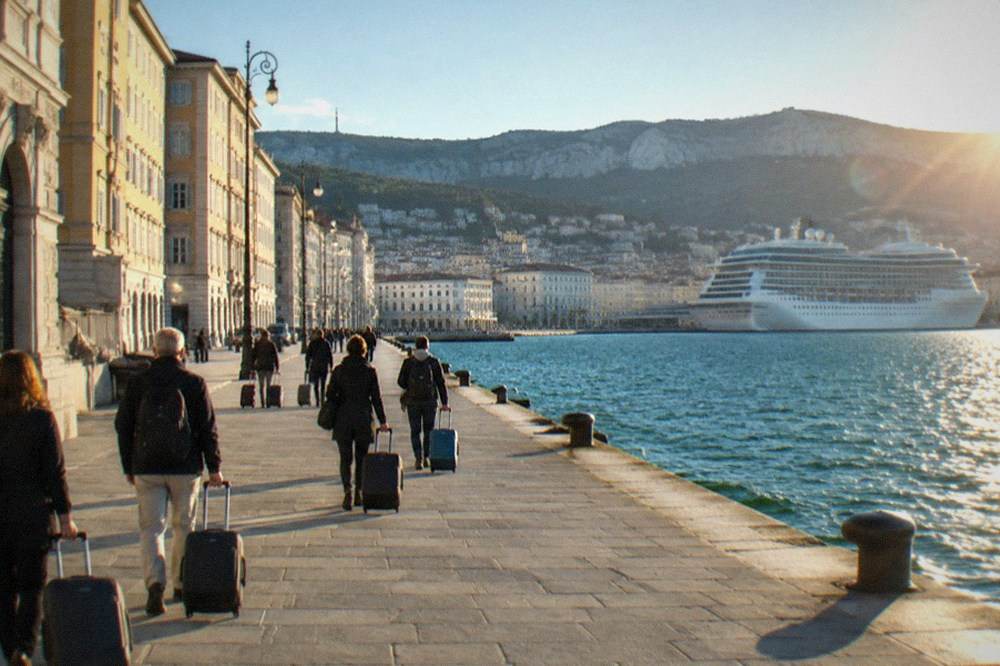
Cruise ships dock in Trieste's port area on the waterfront side of the city centre, with Trieste Centrale station, the terminal and Piazza Unità d'Italia all placed along the same flat stretch of shore, so the transfer between station and ship is a short walk or a brief taxi ride across a compact, pedestrian-friendly grid. Walking from the cruise port into town, and from the cruise port to the train station, are both standard, well-trodden movements.
The port layout is what makes this transfer unusually painless. Trieste is not a city where the cruise terminal sits behind a container yard miles from anything: the historic centre presses right up against the water, and passengers stepping off a ship are effectively already in town. The site's answers on walking into Trieste from a cruise ship and on getting from Trieste to Venice both touch the same underlying geography, and the what to do in Trieste from a cruise ship page turns that fact into a plan.
Because the walkable core is real but not enormous, plenty of arriving passengers use the embarkation morning for a quick orientation instead of a deep sightseeing session. A bus tour with an audio guide covers the main sweep of the city in about ninety minutes, which is a natural fit for a morning between hotel checkout and boarding, and the operator's live listing is the place to confirm the departure point and the day's running times. The full index of guides sits on Trieste Travel Guide.
The reassurance worth having before you commit any morning to a tour is the standard one: this kind of city tour books with a cancellation window and a pay-later option, so it does not have to be locked in before you know your ship's schedule. Check the terms on the operator's live listing rather than assuming, because the window varies by product.
Between the terminal and the station, a couple of practical notes carry over from Venice. Luggage is the one thing that turns the short station-to-ship transfer into a taxi ride, and Trieste's taxis, like Venice's transfers, price by meter or by quote rather than by a published flat rate, so agree the fare before loading the bags. And because ships board in the early afternoon, the station's left-luggage facilities and nearby caffès are the standard holding pattern for passengers arriving on a morning train with hours to spare.
What Does Getting Around Trieste Cost Once You Arrive?
Trieste's urban transport is priced from the operator's 2026 tariff sheet dated 29 December 2025: a 60-minute single costs EUR 1.50, a 75-minute single EUR 1.85, a day ticket EUR 3.35, 10 rides EUR 13.50 and 20 rides EUR 16.65, singles are extended to 240 minutes on Sundays and public holidays, contactless bank cards can be tapped on board on the Eva readers, and the cheapest applicable fare is applied automatically.
That fare structure is unusually generous by Italian city standards, and for a cruise passenger it is almost irrelevant in the best way: the distance from station to terminal to square is short enough that walking is the default and the day ticket is really only for the fringes of the city or the Opicina tram. The tariff sheet is published on the operator's site, and the same urban ticket covers that tram, which runs from piazza Dalmazia up to the Karst village of Opicina on a timetable the operator keeps current.
| Ticket (2026 tariff sheet) | Code | Price | Validity |
|---|---|---|---|
| Urban single | U01 | EUR 1.50 | 60 minutes |
| Urban single | U02 | EUR 1.85 | 75 minutes |
| Day ticket | U24 | EUR 3.35 | One day, urban network |
| 10 rides | U10 | EUR 13.50 | Carnet |
| 20 rides | U20 | EUR 16.65 | Carnet |
Two costs beyond the fare table are worth knowing before you arrive. The first is the tourist tax, which Trieste charges per person, per night, for a maximum of five consecutive nights in the same property, on a sliding scale from EUR 1.50 per night at campsites up to EUR 3.80 per night at five-star hotels, with everyone under 18 exempt. The second is that the city's major sights are startlingly cheap or free: the Cathedral of San Giusto is free to enter, the Risiera di San Sabba is free, Miramare's park is free all year with the castle at EUR 17.00, San Giusto Castle is EUR 7.00, and the Museo Revoltella is EUR 8.00. A pre-cruise afternoon in Trieste can cost almost nothing at all.
Is the Reverse Trip, Trieste Cruise Port to Venice, Any Different?
The mechanics are the same in both directions, train from Trieste Centrale to Venezia Santa Lucia being the default, but the planning pressure reverses: disembarkation mornings are tight, ships clear at different times, and the safer pattern is a later train or a pre-booked private transfer with a driver who waits, rather than a timetable chosen to squeeze every minute out of the morning.
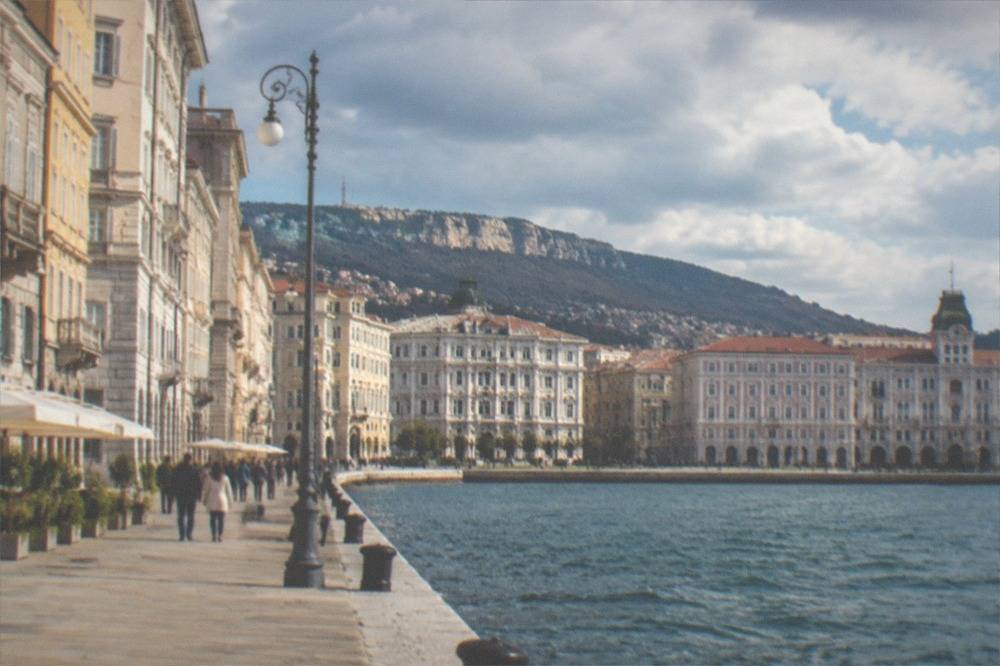
The site's dedicated answer on transferring from the Trieste cruise port to Venice covers the disembarkation-side logistics in detail, and the walking from the cruise port to the train station question fills in the last metres of the movement. The one structural fact worth repeating is that Trieste Centrale sits on the same waterfront as the terminal, so the morning-of scramble in Trieste is short in a way that Venice's airport-side logistics are not.
Travellers doing the full loop, Venice in, cruise out, Venice back, sometimes ask whether a day trip from Trieste to Venice works, and the honest framing is that it works as a rail day trip if the timetable on the day cooperates, which is exactly the kind of thing to confirm against Trenitalia's live schedules rather than a printed figure.
Common Questions About Getting from Venice to the Trieste Cruise Port
how do i get from venice city center to trieste cruise port?
Take a direct train from Venezia Santa Lucia to Trieste Centrale, then walk or take a short taxi ride to the cruise terminal, which sits on the same waterfront side of Trieste's compact centre. Private transfers and rental cars are the alternatives for heavy luggage or groups, and Trieste Airport is a separate option for travellers flying in rather than starting in Venice.
Can you walk from Trieste Centrale station to the cruise terminal?
The station and the terminal both sit on Trieste's waterfront, and the movement between them is a standard one that passengers routinely make on foot; the exact layout, and the luggage case for a taxi, is covered in this site's dedicated answer on walking from the cruise port to the train station.
How early should I leave Venice on embarkation day?
Cruise lines in Trieste typically close boarding in the early afternoon, so a morning train from Venice with buffer time for delays is the safe pattern. Check the ship's published check-in cut-off and the live Trenitalia timetable together, rather than planning against a fixed journey time copied from an older guide.
Do I need my passport for a cruise leaving from Trieste, Italy?
Yes, carry your passport: it is standard cruise documentation anywhere, and Italy is additionally running temporary border checks on its land border with Slovenia from 19 June to 18 December 2026, per the European Commission's register, so ID matters for any shore plan that crosses out of the country. Slovenia and Croatia both use the euro, so there is no currency change to plan for.
Is there anything to do in Trieste between the train and boarding?
Plenty, because the terminal sits at the edge of a walkable historic centre. Piazza Unità d'Italia, the Grand Canal, the Cathedral of San Giusto with free entry, and the seafront are all within reach of a spare morning, and this site's one-day and cruise-ship pages turn that window into a full plan.
What is the cheapest way to make the transfer?
The train, bought directly from Trenitalia at the going fare, is the cheapest realistic option once you are already in Venice's centre, and inside Trieste the 2026 tariff sheet prices a 60-minute urban single at EUR 1.50 and a day ticket at EUR 3.35, with the walkable centre making even those optional for most port movements.
The transfer from Venice's city centre to Trieste's cruise port is, in the end, one of the calmer embarkation-day runs in the Mediterranean: a single train ride across two regions, a station and a terminal that share the same waterfront, and a compact Italian city that treats waiting passengers as guests rather than luggage.