What Are Some Good Day Trips to Croatia from Trieste?
Good day trips to Croatia from Trieste, Italy: Rovinj, Pula, Piran on the way, what the border and euro rules really are, and which guided tours are worth booking.
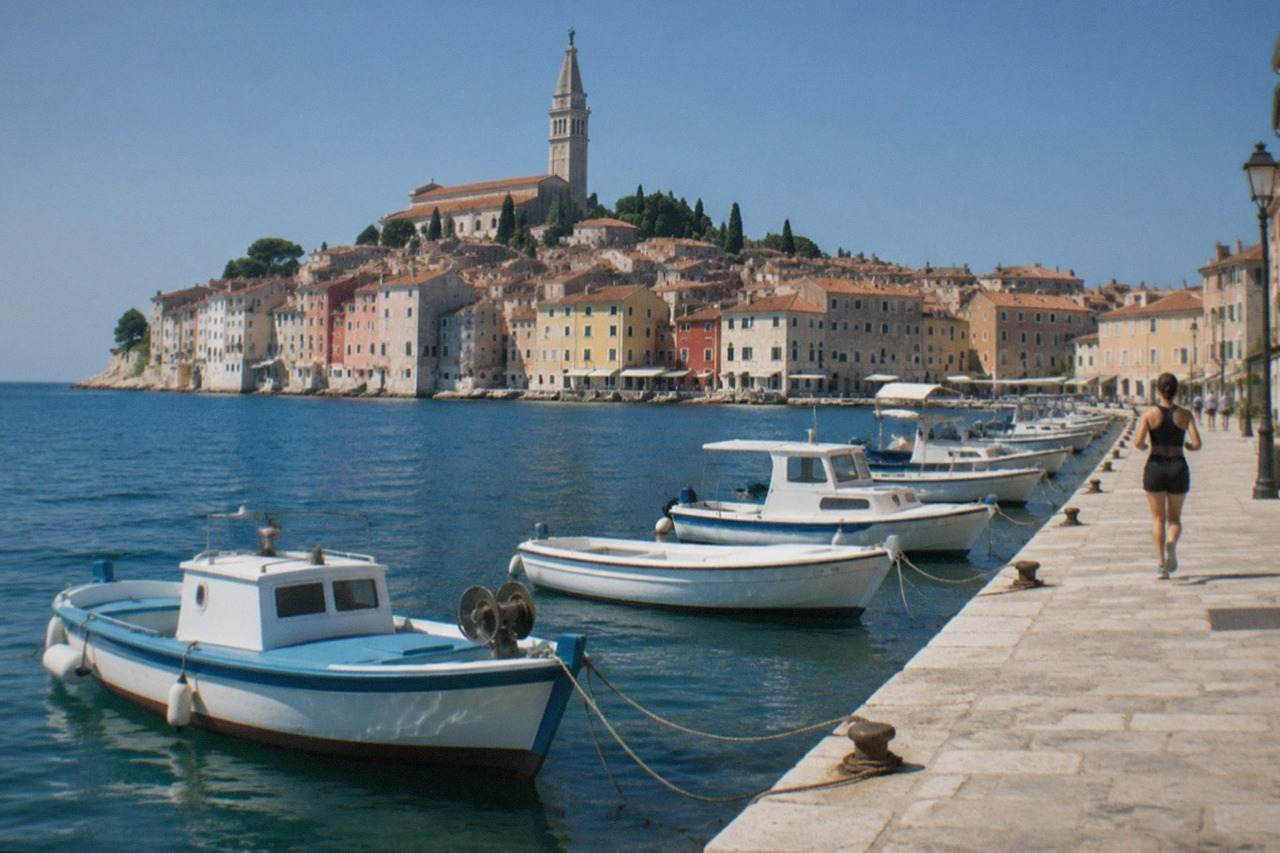
Trieste, the Adriatic port city in Friuli Venezia Giulia in north-east Italy, sits closer to Croatia than most Italian cities sit to their own provincial capitals. The Croatian border is a short drive down the coast, and behind it lies Istria: Roman Pula, the hill towns, and the fishing-port-turned-postcard of Rovinj. The question is not really whether a day trip is possible, it is which one to pick and what the border now involves. Two things changed recently that a lot of older guides still get wrong, and both matter for your planning.
The first is money and documents. Croatia adopted the euro and joined the Schengen area on the same day, 1 January 2023. That means no currency change anywhere on this itinerary: Italy, Slovenia and Croatia all use the euro. The second is a live exception. The European Commission's register of temporary reintroduced internal border controls lists Italy running checks on its land borders with Slovenia from 19 June 2026 to 18 December 2026. So for now, carry a passport or national ID card even for a hop to Piran, and treat the crossing as a routine possibility of a document check rather than a guarantee of none.
What Are Some Good Day Trips to Croatia from Trieste?
The best Croatian day trips from Trieste are Rovinj, the photogenic Istrian fishing port, and Pula, the city with a Roman amphitheatre you can walk into, with the hill towns of inland Istria as a slower alternative. Most routes pass through Slovenia, which adds Piran as a stop at no extra border cost. All three countries use the euro, and Croatia has been in Schengen since 1 January 2023, but Italy is running temporary checks on its Slovenian land border until 18 December 2026.
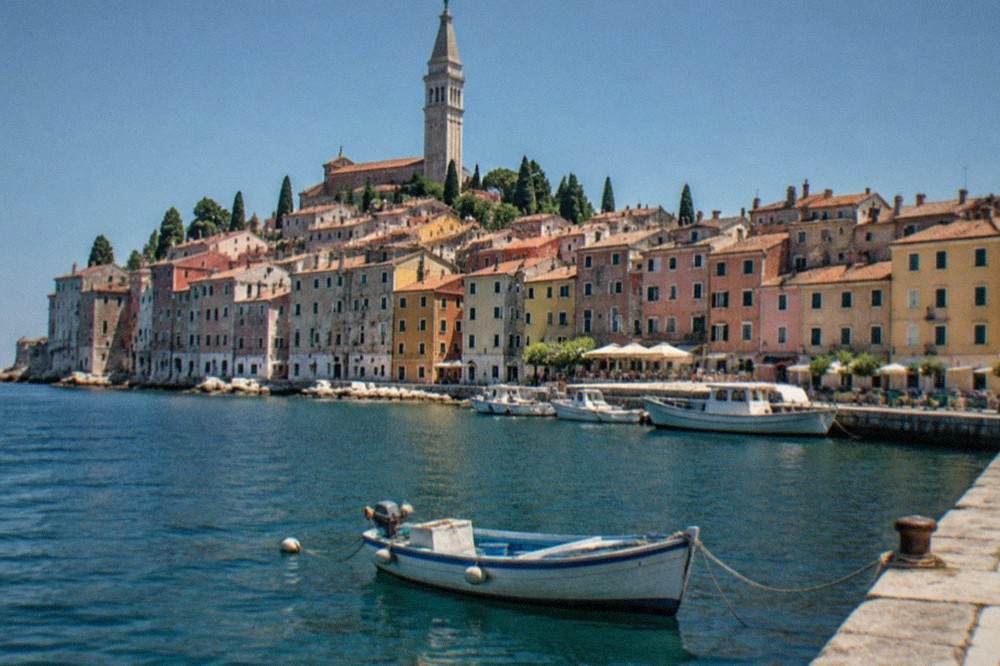
Rovinj is the one most people picture when they think of Istria: a tight cluster of terracotta roofs on a headland, an old town that was an island until the channel was filled in, and a waterfront of seafood restaurants. Pula is the heavier historical hit, anchored by an intact Roman arena that the city grew up around. Both are reachable on the same stretch of coast, though doing both properly in one day is ambitious.
The honest middle option is the one most first-time visitors overlook: the Slovenian coast sits directly between Trieste and Croatia. Piran and Portorož are effectively on the way, and a day trip that treats the whole northern Adriatic as one destination, Slovenian coast plus a Croatian town, often beats racing deeper into Istria. Our overview of every day trip from Trieste ranks the options by direction, and the ferry routes from Trieste to Croatia cover the sea alternative for the towns it reaches.
Which Croatian Towns Are Realistic in a Day from Trieste?
Rovinj and Pula are the two realistic full-day Croatian destinations from Trieste, with the smaller towns of north-west Istria, such as Novigrad or Umag, as shorter options if you want a half day. Anything south of Pula, including Zadar or Split, is not a day trip. The limiting factor is not the border but simple driving time along Istria's two-lane roads, so pick one base town and stay with it rather than trying to tour the peninsula.
Rovinj rewards people who like to wander. The old town is a maze of cobbled lanes climbing to the church of St Euphemia, whose bell tower doubles as the best viewpoint on this stretch of coast. Pula rewards people who like a single overwhelming sight: the amphitheatre is one of the best-preserved Roman arenas anywhere, and the rest of the city, the forum, the temple of Augustus, sits within an easy circuit of it.
What you should not do is plan a whistle-stop of four towns. Istria's roads are coastal and slow in summer, and the pleasure of these places is unhurried. A day that does Rovinj properly, with a long lunch, beats a day that photographs four towns from a car park. If you are travelling without a car, whether there is a train from Trieste to Croatia has its own answer, and it is mostly no: cross-border coaches are the practical public-transport option, though their timetables and fares are not verified here, so check the operator's own site before committing.
| Croatian day trip | What it is best for | Realistic in one day from Trieste? | Notes |
|---|---|---|---|
| Rovinj | Old-town wandering, seafood, viewpoints | Yes, comfortably | The classic first choice |
| Pula | Roman amphitheatre, city history | Yes, comfortably | Pair with a nearby beach if time allows |
| Novigrad or Umag | Quieter coastal towns, shorter visit | Yes, as a half day | Good combined with Slovenian coast |
| Motovun and inland Istria | Hill towns, truffles, wine | Yes, with a car | Roads are slow; pick one hill town |
| Zadar or Split | Longer-distance Croatia | No | Overnight at minimum |
What About the Border, Money and Documents?
Croatia uses the euro and is in the Schengen area, both since 1 January 2023, so there is no currency to change and no routine passport control between Italy, Slovenia and Croatia. The one live exception is that Italy is running temporary checks on its land borders with Slovenia from 19 June 2026 to 18 December 2026, so carry a passport or national ID card on any day trip that crosses into Slovenia, which includes the coastal route to Croatia.
That exception matters because almost every route from Trieste to Croatia runs through a corner of Slovenia first. The checks are temporary and dated, not a new permanent regime, but they are real for the 2026 season: the Commission's own register lists the window running to 18 December 2026. If you are driving, keep documents to hand rather than buried in a suitcase. If you are on a coach or guided tour, the operator handles the stop. The rest of the planning pages sit on Trieste Travel Guide.
The euro point is worth labouring because so much stale content still tells people to change money for Croatia. You do not. Croatia's adoption of the euro and its Schengen entry happened on the same day, and Slovenia has been in both since 2007. One wallet, one currency, three countries. For the sea route instead, the ferry question from Trieste to Croatia is covered separately.
Is a Guided Tour Better Than Driving Yourself?
A guided small-group tour is the better choice if you do not want to drive Istria's coastal roads, deal with the Slovenian border checks, or find parking in Rovinj in summer, and it is the only practical option if you have no car. Driving yourself gives more flexibility and costs less for a group of three or four. Both work; the deciding factor is usually whether the day's pleasure for you is the driving or the being there.
The case for the tour is logistics. A small-group excursion handles the border, drops you at the edge of the old town instead of a distant car park, and keeps the timing sane. The case against is the obvious one: you are on someone else's schedule, and Istria is a place that rewards lingering.
The strongest guided option in this direction is the coast tour that covers Piran and the Slovenian shoreline, the stretch you would otherwise drive straight through. You can Check availability on the operator's live listing; it runs about five hours with a small group, which leaves the afternoon free for Trieste itself if you want a two-stop day. If your appetite runs to a full-day outing in the other direction, the best single day trip from Trieste compares the heavyweights.
The tour card above is the same excursion: a small-group half-day along the Slovenian coast with a local guide, rated highly by past travellers on the operator's listing. It is the natural fit for this itinerary because the Slovenian shoreline is the part of the route most people drive past without stopping, and this tour makes it the destination instead.
Can You Combine Slovenia and Croatia in One Day Trip?
Yes, and it is arguably the smartest plan: the Slovenian coast sits directly on the route from Trieste into Istria, so a day that pairs Piran with a Croatian town such as Umag or Novigrad costs almost no extra travel. What does not work is trying to add the Slovenian lakes, Bled or Ljubljana, to a Croatian coastal day; those lie inland and pull in the opposite direction. Pick one axis, coastal or lakes, and stay on it.
The coastal pairing is geographically forgiving. Piran is a walled Venetian-era town on a narrow peninsula, compact enough that an hour or two covers it well, and from there the Croatian border towns follow one another down the coast. A morning in Piran, lunch over the border, an afternoon in a Croatian old town: that is a full and varied day without any long hauls.
The lakes axis is a different animal. Bled and Ljubljana sit inland, away from the coast, and doing them justice is its own full-day outing. If that appeals more than Istria, the Ljubljana and Bled question cuts both ways, and a guided full-day tour from Trieste handles the cross-border logistics. For a city-only alternative that skips borders entirely, one day in Trieste itself is a different kind of day out.
Common Questions About Day Trips to Croatia from Trieste
What are some good day trips to Croatia from Trieste?
Rovinj and Pula are the two best full-day Croatian trips, with the quieter towns of north-west Istria, such as Novigrad and Umag, working as shorter visits. Most routes pass through Slovenia, so Piran is a natural extra stop.
Do I need a passport to go from Trieste to Croatia?
Carry one, yes. Croatia and Slovenia are both in Schengen, but Italy is running temporary checks on its land borders with Slovenia from 19 June 2026 to 18 December 2026, so a document check is possible on this route during that window.
Do I need to change money for Croatia?
No. Croatia adopted the euro on 1 January 2023, the same day it joined Schengen. Italy, Slovenia and Croatia all use the euro, so one currency covers the whole trip.
Is there a ferry from Trieste to Croatia?
There are seasonal ferry connections from Trieste to Croatian ports, but they do not run year-round and do not serve every town. Check the current operators before planning a day around a sailing.
Can you visit Slovenia and Croatia on the same day trip?
Yes, along the coast. Piran sits on the route into Istria, so pairing it with a Croatian border town adds little travel. The Slovenian lakes and Ljubljana are inland and belong to a separate day.
Whichever axis you choose, the practical core of the answer is the same: the euro goes everywhere, the border is a dated and temporary check rather than a barrier, and the coast is close enough to Trieste that a well-planned day genuinely delivers another country.