Where Do Flies Direct to Trieste?
Which airports put you within reach of Trieste, Italy, what the city's own airport at Ronchi dei Legionari actually offers, and how to get from the terminal into the centre.
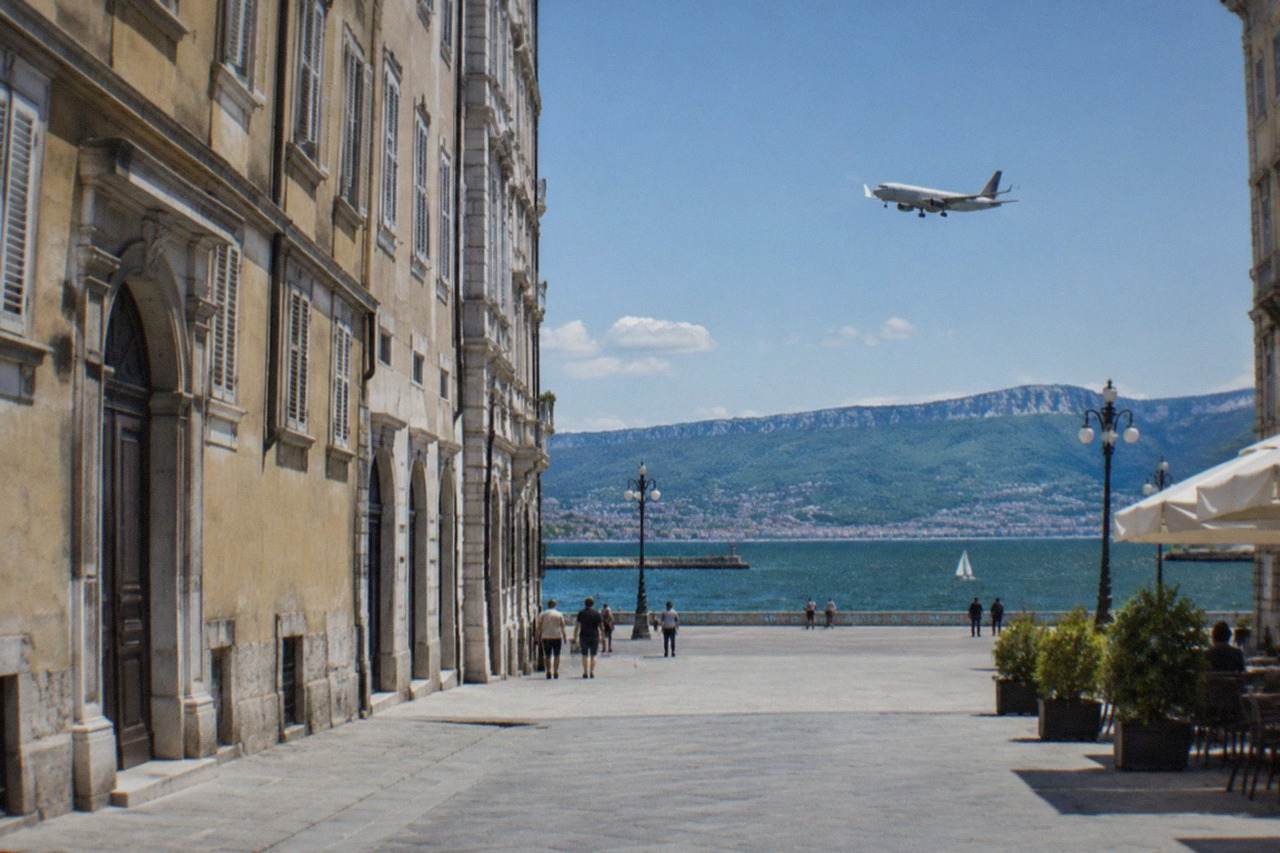
Trieste, Italy, the Adriatic port city in Friuli Venezia Giulia, is served by one airport of its own, Trieste Airport at Ronchi dei Legionari, with the airport code TRS. The question "where do flies direct to trieste?" is really two questions wearing one sentence: which airlines fly nonstop into TRS, and whether flying straight into this airport is smarter than routing through a bigger hub such as Venice or Ljubljana and covering the last stretch by train, bus or car. This page answers both using only what the airport's own service documentation and verified public sources state, and it flags clearly where a figure could not be confirmed, because airline route maps change every season and no route list survives a year untouched.
Where Do Flies Direct to Trieste?
Direct flights into Trieste land at Trieste Airport, Ronchi dei Legionari, near the Slovenian border in the north-eastern corner of Italy. The airport handles domestic Italian services and a limited set of international routes, and no verified, currently published list of nonstop destinations could be confirmed from official sources for this page, so check the airport's own live timetable before booking. The terminal is small, fast to clear, and linked to the national rail network by a covered walkway.
That last detail is the one that changes the whole calculation and it is under-used by most visitors. Many regional airports in Italy leave you dependent on a bus to reach a station. Trieste Airport has its own railway station, joined to the terminal by a covered pedestrian walkway of roughly 400 metres with moving walkways, and that station is served by regional trains, Intercity trains, Frecciarossa high-speed services, and some international services, including trains to and from Villach and Ljubljana, according to the airport's own service charter. So a "flight to Trieste" can end with a fast train ride rather than a shuttle bus, and that matters when you are weighing connections.
The service charter is the airport operator's own published document, not a marketing page, and it is the source for every operational claim in this section. What it does not contain is a route map, and route maps are where confident travel content goes wrong. Airlines open and close Trieste routes seasonally, and a list printed here as fact would go stale before the season turns. Treat any specific carrier list you read anywhere, this page included, as a snapshot rather than a rule, and confirm on the airport's own site before you commit money.
Which Airport Do You Fly Into for Trieste, Italy?
Trieste Airport, TRS, at Ronchi dei Legionari is the city's own airport and the only one in the Trieste area, so a search for "direct to Trieste" should end there. When no direct or affordable flight reaches TRS from your origin, the practical alternatives are major hub airports within wider reach of the region, from which you continue by train or long-distance coach, and the choice between them turns on onward connections rather than distance alone.
The reason a page like this exists at all is that Trieste Airport is genuinely small by Italian standards. That is a virtue on arrival: short walks, short queues relative to Milan or Rome, and a rail station a few minutes from baggage reclaim. The trade-off is frequency. Fewer airlines serve it, fewer departure points feed it, and long-haul travellers almost always connect somewhere in Europe first.
When you do connect, the onward leg is often the train, and Trieste Centrale is the city's main station with regional and high-speed connections. The verified point for the airport itself is that regional trains run between the airport station and the city, and the airport's charter describes the link as a short regional ride; exact minutes and fares were not verified from primary operator pages, so no figure is printed here and you should price it on the rail operator's own booking site. The bus alternative departs from the intermodal hub beside the terminal, roughly a five-minute walk from the door, with regional TPL FVG lines and long-distance coaches using it.
For planning, here is what is verified about your ground options at the terminal:
| From TRS terminal | What it is | Verified detail |
|---|---|---|
| Covered walkway to rail station | Pedestrian link with moving walkways | Roughly 400 metres, per the airport's service charter |
| Trieste Airport rail station | National rail station beside the terminal | Served by regional, Intercity and Frecciarossa trains, plus international services to and from Villach and Ljubljana |
| Regional train to Trieste Centrale | The standard rail link into the city | Runs as a short regional ride; exact journey time and fare not verified, price it on the rail operator's site |
| Intermodal bus hub | Regional and long-distance coaches | Beside the terminal, roughly a 5-minute walk, used by TPL FVG lines and long-distance operators |
The table makes the honest gaps visible: the operator names and the infrastructure are confirmed, while per-ride prices and exact minutes are not, and any page that prints them without saying where they came from is guessing.
Once you are down on the ground in the city itself, the historic centre rewards walking far more than driving, and many arrivals spend their first afternoon on foot between Piazza Unità d'Italia and the Città Vecchia. A Habsburg history private walking tour is a common first-day choice for exactly this reason, since the city's grand nineteenth-century core is the part most visitors know least about; you can also Check availability on the operator's live listing if that suits your arrival day.
How Do You Get from Trieste Airport Into the City Centre?
The standard route from Trieste Airport into central Trieste is the regional train from the airport's own station, reached by a covered walkway of roughly 400 metres, into Trieste Centrale; bus lines and long-distance coaches from the intermodal hub beside the terminal are the alternative. The airport's service charter confirms both the rail link and the hub, but it publishes no verified journey time or fare for the ride, so price a specific departure on the rail operator's booking site.
Because the station is part of the national network, the airport is not just a gateway to Trieste. The charter's list of calling services, regional, Intercity, Frecciarossa and international trains including Villach and Ljubljana directions, means you can land at TRS and continue towards Venice, Udine or cross-border without ever entering the city first, or arrive at the airport from those places. That cuts both ways: it makes the airport more useful than its size suggests, and it means the "last mile" from a long-haul hub might already be solved by rail before you think about a transfer. The wider set of guides lives on Trieste Travel Guide.
Inside the city, once your bag is dropped, the urban network is cheap and simple. Trieste Trasporti's published 2026 tariff sheet for the urban service lists the fares below, and single tickets validate for 60 or 75 minutes depending on the type, extended to 240 minutes on Sundays and public holidays. Contactless bank cards and digital wallets can be tapped on board on the "Eva" readers and the system applies the cheapest applicable fare, which removes the ticket-machine hunt entirely.
| Code | Ticket | 2026 price |
|---|---|---|
| U01 | Urban single, 60 minutes | €1.50 |
| U02 | Urban single, 75 minutes | €1.85 |
| U24 | Day ticket | €3.35 |
| U10 | 10 rides | €13.50 |
| U20 | 20 rides | €16.65 |
One Trieste transport note that trips up visitors who arrive by air and then wander: the tram de Opicina, the city's historic tram line, runs as urban line 2 from piazza Dalmazia, not from piazza Oberdan, and an ordinary urban ticket covers it. It was reactivated on 1 February 2025 after the long stop that followed the August 2016 accident, and its city terminus moved to piazza Dalmazia while the Oberdan area is redeveloped. Almost every older travel page on the internet still gets this wrong, which is reason enough to double-check transport details on the operator's own pages before relying on any single source.
If your arrival timing leaves you a spare half day rather than spare hours, the one-day Trieste itinerary covers a workable first-day route on foot, and the question of how many days you need in Trieste is worth settling before you book flights, because the answer usually changes whether a direct regional arrival or a cheaper hub connection wins on price.
Is Flying Direct to Trieste Better Than Connecting Through a Bigger Airport?
For most travellers, flying directly into Trieste Airport wins on convenience when a route exists from their origin, because the terminal is compact, the rail station is a covered 400-metre walk away, and there is no transfer between airports. Connecting through a large hub usually wins on price, frequency and long-haul availability, at the cost of an extra leg by train, coach or car into Friuli Venezia Giulia. No verified comparison of transfer times or costs across those routes could be confirmed here.
The way to make the decision is to price the full door-to-door journey, not the flight alone. A cheaper connection through a distant hub stops being cheaper once a transfer ticket, waiting time and the risk of a missed connection are counted, and a direct arrival into a compact airport saves more minutes than its headline price suggests, because there is no internal trek between terminals and the station is effectively attached to the building. Conversely, if your origin simply has no direct service into TRS in the season you travel, the question answers itself and the hub route is the only route.
A few honest observations help either way. First, seasonality: coastal Trieste is busiest and best connected in the warm months, and winter schedules thin out everywhere, including at regional airports. Second, the city you are actually heading for is small and walkable, and the is Trieste a walkable city question has a firm yes for the centre, so ground complexity after arrival is low whichever airport you choose. Third, the region's position means Slovenia and Croatia sit close by, and if you land with a border hop in mind, note that Italy is running temporary internal border checks on its land border with Slovenia through 18 December 2026, so carry a passport or national ID card even for a short crossing, and confirm current status before you travel because these measures are dated, not permanent.
The neighbouring countries use the euro and are in Schengen, which removes currency planning entirely, but the temporary check is the live exception to the "no border formalities" expectation, and it is the detail generic content most often misses. Croatia, for the record, joined Schengen and adopted the euro on the same day, 1 January 2023, and Slovenia has been in both far longer, since 2007 in the euro's case.
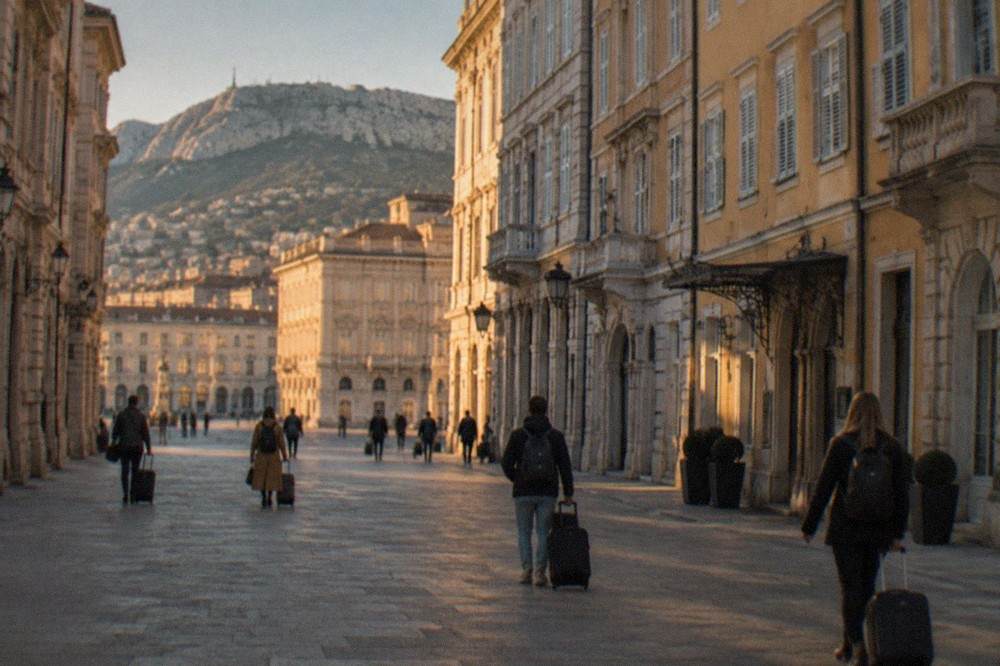
Whichever of those three picks catches your eye, the same landing-day logic applies to all of them: book for the afternoon you actually have, not the afternoon you imagine. A tour that starts two hours after your wheels down is a tour you will miss.
Common Questions About Flying to Trieste, Italy
Getting airborne toward this city raises a handful of repeat questions, from which airport to choose to what the border rules are once you land, and the answers below are the short versions of everything covered above, each carrying only the figures that are verified from the airport's own service charter, the operator's 2026 tariff sheet and dated official announcements. Read them as a summary, not a substitute for checking your own dates.
Where do flies direct to trieste?
Direct flights into Trieste, Italy land at Trieste Airport, Ronchi dei Legionari, code TRS. The airport is served by domestic and a limited set of international routes, but no verified current list of nonstop destinations could be confirmed from official sources for this page, so check the airport's own live timetable before booking rather than trusting any printed carrier list.
What airport do you fly into for Trieste, Italy?
Trieste Airport, TRS, at Ronchi dei Legionari is the city's own airport and the one a "direct to Trieste" search should end at. It has its own railway station joined to the terminal by a covered walkway of roughly 400 metres, served by regional, Intercity, Frecciarossa and some international trains, including services towards Villach and Ljubljana.
How do you get from Trieste Airport to the city centre?
The standard route is the regional train from the airport's station to Trieste Centrale, or the regional buses and long-distance coaches from the intermodal hub beside the terminal. The airport's service charter confirms both options, but a verified journey time or fare for the ride could not be confirmed, so price a specific departure on the rail operator's own booking site.
Do I need a passport to visit Slovenia or Croatia from Trieste?
Yes, carry a passport or national ID card. All three countries are in Schengen and use the euro, so there is no currency change, but Italy is running temporary internal border checks on its land border with Slovenia through 18 December 2026, and these measures are dated and changeable, so confirm the current status before you travel.
Is Trieste Airport big?
It is small by Italian airport standards, which works in your favour: the terminal is compact and its rail station is about a 400-metre covered walk away. The trade-off is route frequency, with fewer airlines and departure points than at a major hub, so long-haul travellers usually connect through a larger European airport first.
How many days should I stay once I land?
Most first visits run two or three days for the city itself, with more if you add the Carso, Miramare or cross-border day trips. The how many days in Trieste is enough question is worth settling before you book, because it changes whether a direct arrival or a hub connection makes sense for your dates.
Flying to Trieste, Italy, is a solved problem whichever way you route it: a compact airport of its own with a rail station attached, reliable high-speed and regional connections when no direct flight exists, and a city centre small enough that the journey effectively ends the moment your train pulls into Trieste Centrale.