Is the Train from Venice to Trieste Scenic?
Is the train from Venice to Trieste scenic? An honest, sourced answer about the Venice to Trieste rail route in Italy, what you see from the window, and how to pick the right seat.
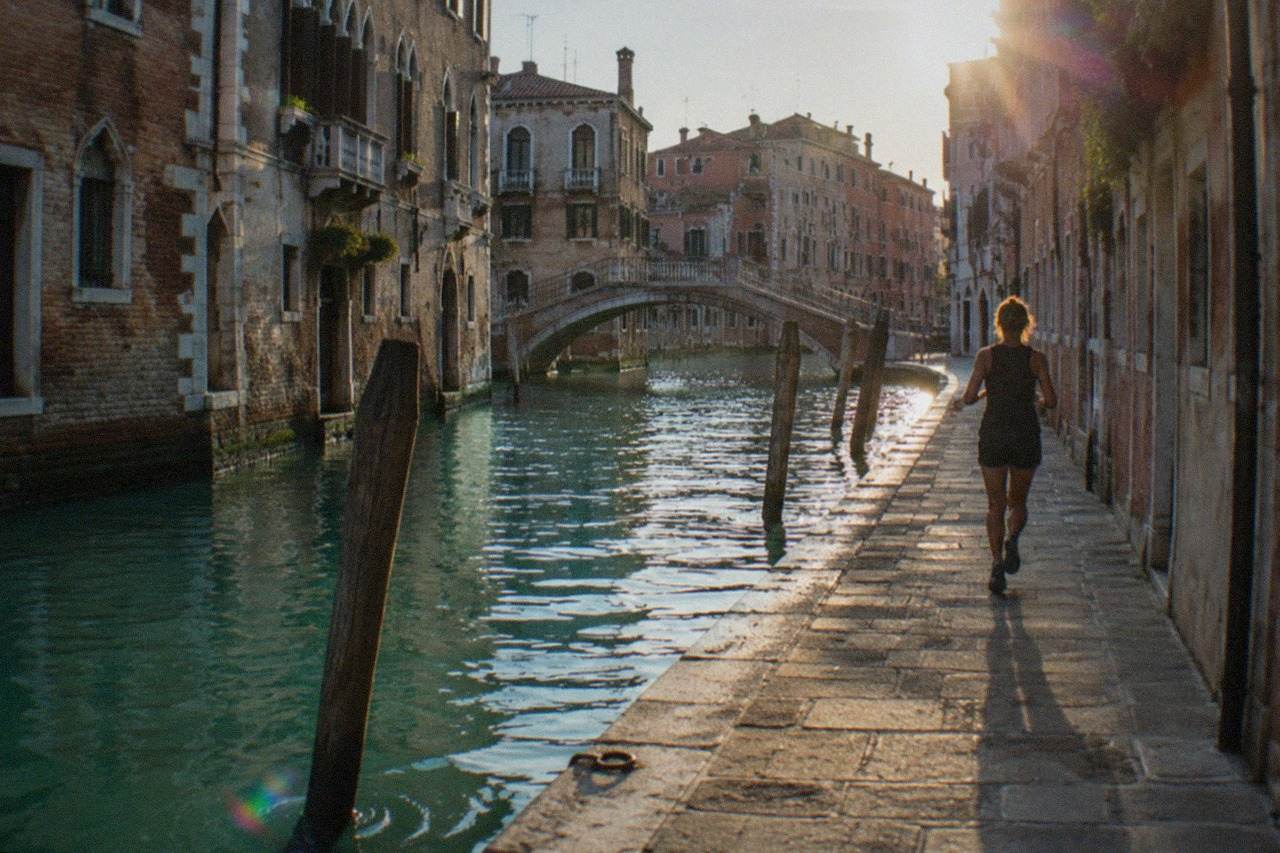
Trieste, the Adriatic port city in Friuli Venezia Giulia in the northeast corner of Italy, sits at the end of a railway that starts in Venice, and the question every seat-bound traveller asks is whether the ride is worth watching. The honest answer is that the Venice to Trieste train is quietly scenic rather than spectacular: it begins in the Venetian lagoon, crosses flat estuary country, and only in its final stretch opens onto the sea and the white cliff line of the Carso that makes the approach memorable. It is a route that rewards knowing where to look, and this page breaks down exactly what you pass, which side to sit on, and how the journey fits into a Trieste visit.
Is the Train from Venice to Trieste Scenic?
Yes, but selectively: the Venice to Trieste train in Italy is scenic in stretches rather than end to end. The opening lagoon crossing out of Venice is genuinely beautiful, the middle section across the flat Venetian and Friulian lowlands is plain farmland, and the final approach along the Gulf of Trieste, with the sea on one side and the limestone cliffs of the Carso above, is the part most riders remember. Treat it as a three-act route, not a single panorama.
The line runs down the northern Adriatic coast, and its character changes with the geography. Leaving Venice Santa Lucia, the train crosses the lagoon on a long causeway, water on both sides, marsh grass, the campanile of San Marco shrinking behind you and the island cemeteries of the lagoon sliding past. For many visitors this first ten minutes is the most photogenic part of the whole journey, and it happens before most people have found their seat.
After Mestre the route settles into the coastal plain. This is the longest act: flat fields, drainage canals, small stations, the occasional walled town a kilometre or two off to the north. It is pleasant, unremarkable country, and pretending otherwise would be dishonest. The compensation is that the train keeps the sea within reach, and from around Lignano and Monfalcone the water starts appearing again on the south side, first in glimpses and then, as the line bends toward Trieste, in long unbroken views.
Trenitalia's own infomobility pages report ongoing regional maintenance on the Venezia-Trieste line, with some bus replacements running through October 2026, so check the operator's live travel updates before you commit a day to this ride. A replacement bus flattens the scenery question entirely, because the coach route and the rail alignment are not the same thing.
| Section of the ride | What the window shows | Scenery verdict |
|---|---|---|
| Venice to Mestre | Lagoon causeway, open water, island silhouettes | The best opening of any Italian regional ride |
| Mestre to Portogruaro area | Flat farmland, canals, small towns at a distance | Plain; a good moment for coffee |
| Portogruaro to Monfalcone | Coastal plain, first sea glimpses near the coast | Improving; watch the right-hand side |
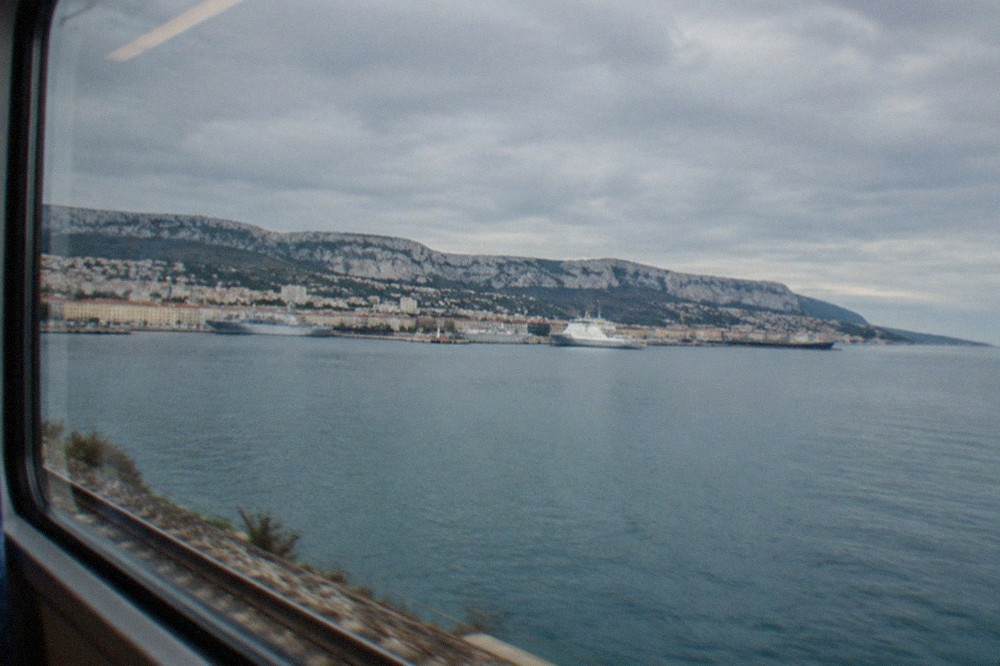
| Monfalcone to Trieste | Gulf of Trieste, shipping, the Carso cliffs above | The payoff stretch; sea on the right |
For the practical side of booking, frequencies and connections, our companion page on getting from Venice to Trieste by train carries the detail, and the reverse-direction guide to the Trieste to Venice rail route covers the same tracks from the other end.
Which Side of the Train Has the Best Views Toward Trieste?
Sit on the right-hand side of the train, in the direction of travel from Venice to Trieste, Italy, for the sea views on the final approach to the city. The left-hand side pays off in the Carso stretch instead, where the limestone plateau and its cliff face rise above the line. If you only pick one side for the whole ride, pick the right, because the lagoon crossing and the gulf both sit on that side.
The geometry is simple. The sea lies to the south and west of the line for most of the route, which on a west-to-east train from Venice means the right-hand windows. The lagoon causeway out of Venice shows water on both sides at first, but as the line settles onto the coast the right side is the one that keeps picking up the Adriatic. Near the end, as the train curves around the head of the gulf toward Trieste Centrale, the right side gives you the water, the piers and the city itself arriving in layers.
The left side is not wasted. The Carso plateau, the limestone upland that gives Trieste its dramatic backdrop, comes into view on the north side of the line as you approach the province, its grey cliff face unmistakable once you are past the plain. If you are riding in the other direction, from Trieste back to Venice, everything mirrors: the sea moves to your left.
A few practical points that make the viewing better. Regional trains on this line generally have unreserved seating on some services and reserved on others, so arriving at the platform early enough to choose a window seat matters more here than on a high-speed run. Window seats on the seaward side also catch the low morning or afternoon sun depending on your departure, and the gulf light in the final stretch is at its best late in the day. Travellers weighing the two cities against each other may also find our comparison of whether Trieste is better than Venice useful when deciding how long to give each.
Once you know which side to sit on, the next decision is what to do with the hours in between, and a little planning turns the plain middle stretch from dead time into a rest stop before the finale.
What Is Waiting at the Trieste End of the Line?
Trieste Centrale station sits a short walk from the seafront, and the city that greets you is one of Italy's most distinctive: Piazza Unità d'Italia opens directly onto the water, the Città Vecchia climbs the hill behind it, and the bora-sculpted waterfront gives the arrival a drama the train ride only hints at. The station itself is a modest terminus; the scenery restarts on foot.
This is the real argument for the train over other ways of making the trip: the destination over-delivers relative to the journey. Venice is the postcard and Trieste is the plot twist, a Habsburg-era port with Italian, Slovene and Central European layers, and the walk from the station toward the sea passes through it faster than most visitors expect. Our overview of what Trieste is famous for covers the ground in depth.
Once you arrive, the onward logistics are cheap and simple. Trieste's 2026 urban tariff sheet lists a 60-minute single at €1.50, a 75-minute single at €1.85, a day ticket at €3.35, and 10-ride and 20-ride carnet options at €13.50 and €16.65, with contactless bank cards accepted on board. Singles are valid for 60 or 75 minutes, extended to 240 minutes on Sundays and public holidays. The rest of the planning pages sit on Trieste Travel Guide.
| Trieste urban ticket | Price | Validity |
|---|---|---|
| Single, 60 minutes | €1.50 | 60 min; 240 min on Sundays and holidays |
| Single, 75 minutes | €1.85 | 75 min; 240 min on Sundays and holidays |
| Day ticket | €3.35 | Full day |
| 10 rides | €13.50 | Ten urban journeys |
| 20 rides | €16.65 | Twenty urban journeys |
The one transport curiosity worth knowing about is the tram de Opicina, the hybrid tram-funicular that has run again since 1 February 2025 after its long post-2016 suspension. Its city terminus is piazza Dalmazia, not piazza Oberdan, and an ordinary urban ticket is valid on it. It climbs from the city edge toward the Carso village of Villa Opicina, and the terrace at the top gives one of the defining views down over the gulf, a fitting encore to a scenic arrival by rail.
If you would rather see the city before walking it, a hop-on bus circuit with an audio guide is the low-effort orientation, and a private sightseeing walk or a trip out to the giant cave on the Carso are the two upgrades most worth the money from this station.
When Is the Best Time of Year for a Scenic Venice to Trieste Train Ride?
Late spring through early autumn is the best window for clear views on the Venice to Trieste line in Italy, with July and August offering the brightest gulf light and the warmest sea colour on the final approach. Avoid judging the route by its statistics alone: Trieste's wettest month is November at 109.8 mm, and September is second at 102.3 mm, so autumn rides carry the most cloud risk.
The rainfall pattern matters more here than most visitors expect, because the region's reputation for wind and weather is real but seasonally lopsided. ARPA FVG's station tables for Trieste molo Fratelli Bandiera, covering 1995-2024, put July as the second-driest month of the year at 53.8 mm, behind only January and March at 52.8 mm each, with June close by. The idea that the Adriatic coast is a wet summer destination is simply wrong for this city: the rain is an autumn problem, peaking in November.
| Month | Rain in Trieste | Mean sea temperature | Verdict for the rail view |
|---|---|---|---|
| May | 75 mm | 17.9 C | Long daylight, green Carso |
| June | 62.5 mm | 23.1 C | Calmest month for wind, 0.3 gale days |
| July | 53.8 mm | 25.9 C | Second-driest month, brightest water |
| September | 102.3 mm | 23.9 C | Warm sea, highest autumn rain risk |
| November | 109.8 mm | 16.8 C | Wettest month; views least reliable |
The bora, the dry north-easterly wind that defines this coast, deserves a sentence of respect rather than fear. The same station tables show an average of 17.6 days a year with a gust over 90 km/h, but June is the calmest month on record and summer episodes are rare. A summer train ride along the gulf is far more likely to be still and glittering than blustery. No official wind threshold exists at which services stop, so there is no cutoff to plan around; just watch the forecast.
That covers the window, the seat and the season. The last thing worth knowing is how the two cities compare as bases, because a scenic two-hour link only matters if you are using it well, and plenty of riders use this line in both directions on the same trip.
Common Questions About the Venice to Trieste Train
Is the train from Venice to Trieste scenic?
Partly. The lagoon crossing out of Venice and the final approach along the Gulf of Trieste are genuinely scenic, while the long middle section across the flat coastal plain is ordinary farmland. Sit on the right in the direction of travel for the sea.
Which side should I sit on going from Venice to Trieste?
The right-hand side in the direction of travel. It carries the lagoon views at the start and the sea and city views on the approach to Trieste Centrale. The left side gives you the cliffs and plateau of the Carso near the end.
Is the train or the drive better for scenery?
The train keeps you at sea level and close to the coast, and it lets you watch the lagoon causeway and the gulf without watching the road. The drive offers the option of detours, but the core coastal views are the ones the rail line already delivers.
Does the route pass the Carso cliffs?
Yes, in its final stretch. As the line approaches Trieste the limestone plateau of the Carso rises on the inland side, and its grey cliff face is visible from the left-hand windows before the train reaches the city.
What is there to see right after arriving in Trieste?
The station sits a short walk from the seafront, and Piazza Unità d'Italia opens directly onto the water from there. The Città Vecchia, the waterfront and the Miramare direction up the coast are all covered in our guide to a first day, and the urban bus and tram network uses the cheap tariff listed above.
Whether the ride counts as scenic depends on what you compare it with: against an Alpine pass, no, against the motorway, comfortably yes. The lagoon departure, the flat middle and the gulf finale make a three-act journey out of a simple regional line, and the city waiting at the end of it, Trieste, Italy's most Central European port, is worth the window seat on its own account.