Is Trieste Worth Visiting?
Is Trieste worth visiting? An honest, fact-checked answer about the Italian port city of Trieste: what it offers, what it costs, when to go and who it suits.
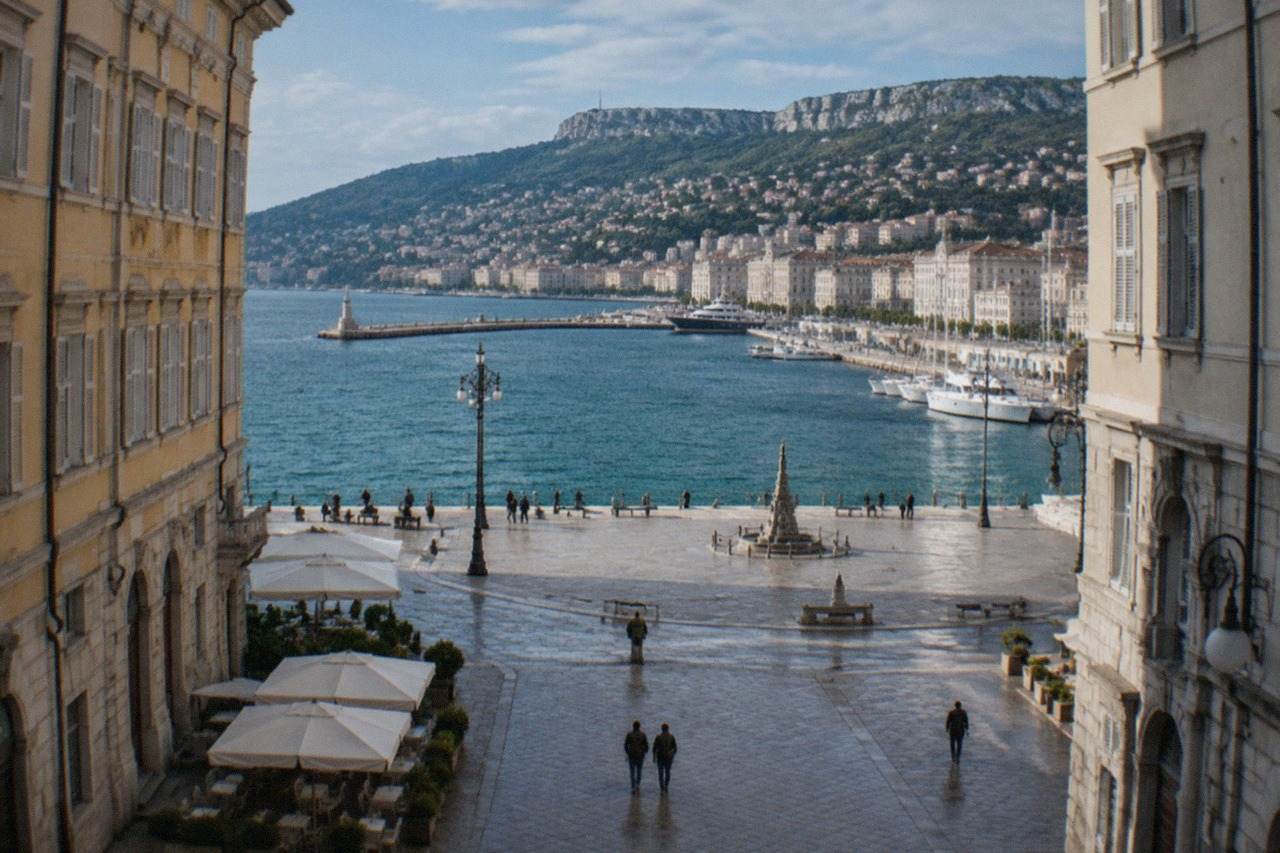
Trieste, the Adriatic port city in the Friuli Venezia Giulia region of north-east Italy, is one of the country's most overlooked destinations, and the honest answer to whether it is worth visiting is yes, with a specific kind of expectation. This is not Venice and does not try to be: it is a working port with a Habsburg heart, a seafront you can walk for free, Roman ruins you look down into from the street, and a coffee culture that shaped the way the whole country drinks. The verified numbers make the case better than any slogan can.
Is Trieste Worth Visiting?
Yes, Trieste is worth visiting if you want a genuinely Italian city that does not feel like a theme park: entry to its cathedral is free, its seafront and grand piazza cost nothing, its two main museums charge EUR 7.00 and EUR 8.00, and its layered Habsburg, Roman and Slovenian-border identity is unlike anywhere else in the country. It is a city for walkers, coffee drinkers and history readers rather than for visitors chasing blockbuster sights.
That is the short version. The longer version is that Trieste rewards a certain kind of traveller and quietly disappoints another. If your idea of a great Italian day is a dense cluster of world-famous monuments, Trieste will feel thin: its Roman theatre is viewed from the street, not entered, and its single most famous view, Piazza Unità d'Italia opening straight onto the sea, takes an afternoon rather than a week to absorb. If your idea is sitting in a historic caffè where the Habsburg empire once did its banking, walking a windswept seafront in October, and eating a cuisine that mixes Central European and Adriatic traditions, there are few better cities in Italy.
The city's identity is the real attraction. Trieste was Austria's main port for centuries, was contested between Italy and Slovenia through the twentieth century, and only settled as firmly Italian after 1954. The result is a place where the signs are bilingual, the food includes jota and goulash alongside pasta, and the architecture looks more Vienna than Verona. For more on what the city is known for, see what Trieste is famous for.
What Kind of Traveller Is Trieste in Italy Right For?
Trieste suits travellers who value atmosphere over attractions: readers, coffee lovers, walkers, and anyone interested in borderland history, Jewish heritage, Habsburg architecture or cold-water swimming. It is less suited to visitors who want hot beaches, famous art or a dense sightseeing circuit, since its sea peaks around 25.9 C in July and August and its headline monuments are few.
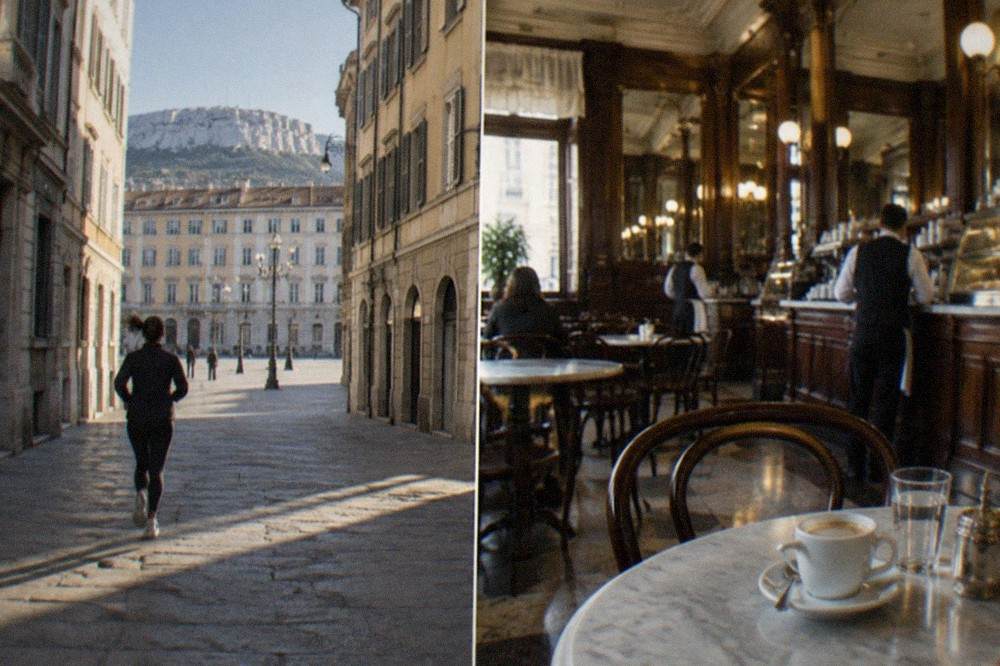
The honest segmentation matters because Trieste is a two- or three-day city, not a week-long one, and the visitors who love it are the ones who arrived with the right shape of plan. The coffee culture is real and deep: Trieste is a historic coffee port and roasting centre, and the historic caffè culture of the city centre is one of its signature experiences, though no reliable per-person consumption figure exists anywhere in official sources, so treat any "Trieste drinks twice as much coffee as Italy" claim you read elsewhere with suspicion. The swimming is real too, but it is northern-Adriatic swimming: ARPA FVG's own station tables put the mean sea temperature at 25.9 C in August and 11.6 C in January.
History readers are the best served of all. The city has a Roman theatre, a Habsburg castle on the hill, a national monument to a dark chapter of the Second World War at the Risiera di San Sabba, and one of the most significant Jewish histories of any European port, explored well on a dedicated private walk: the Trieste Jewish Heritage Guided Walking Tour runs three hours for a private group of up to three, and the listing rates it a perfect 5 from 4 reviews. Check availability if that thread of the city interests you.
For help sizing the trip itself, the question of how many days in Trieste is enough has its own answer, and most of the reasoning there comes back to the same point: Trieste is compact, and its rewards are cumulative rather than spectacular.
How Much Does It Cost to See Trieste?
Sightseeing in Trieste is among the cheapest in Italy: the cathedral, the Risiera di San Sabba national monument, the Miramare park and the Roman theatre view are all free, the two main castle-and-museum tickets cost EUR 7.00 and EUR 17.00, the modern-art museum is EUR 8.00, and the giant cave on the Karst above the city is EUR 15.00 with a compulsory guided tour.
The table below is the price list as each venue publishes it on its own official page, and it is the strongest single argument for the city: a visitor can fill two full days and spend very little at the door. The full index of guides sits on Trieste Travel Guide.
| Site | Adult entry | Notes from the venue's own page |
|---|---|---|
| Cattedrale di San Giusto Martire | Free | Open weekdays 8:00-18:30, Sundays 9:00-19:30; bell tower price not published |
| Castello di San Giusto | EUR 7.00 | Reduced EUR 5.00; covers walls, museum and Lapidario Tergestino; closed Mondays from 12 October |
| Castello di Miramare (castle) | EUR 17.00 | Daily 9:00-19:00, last entry 18:30; includes the temporary exhibition |
| Miramare park | Free | Open all year with seasonal hours |
| Museo Revoltella | EUR 8.00 | Daily 10:00-19:00, closed Tuesdays |
| Risiera di San Sabba | Free | Daily; groups must book a slot March to May |
| Grotta Gigante | EUR 15.00 | Guided tours only, booking compulsory; closed Mondays September to February |
| Teatro Romano | Free to view | Looked down into from the street; not routinely enterable by individuals |
Two structural savings sit on top of those prices. State sites including Miramare take part in the ministry's first-Sunday-of-the-month free-entry scheme, and the civic sites including San Giusto castle and the Museo Revoltella are free on the first Sunday of the month and on 3 November, the patron saint's day. The scheme's details have changed before, so confirm the current month on the venue's own page rather than planning around a date read here. There is no Trieste-only museum card; the regional FVGcard exists, but its prices could not be verified, so this article does not quote them.
Food costs run below the big-name Italian cities too, and the city's buffet tradition, jota and goulash included, has its own coverage in what food Trieste is famous for. The one unavoidable extra is the tourist tax, which the Comune's own table sets at EUR 3.30 per person per night in a four-star hotel and EUR 1.80 in a one-star, capped at five consecutive nights.
When Is Trieste Worth Visiting?
The best months for a first visit to Trieste are April to June and September to October, when the ARPA station tables show mean highs of 16.8 to 25.8 C and the sea is warming toward its 25.9 C August peak; July and August are the warmest but carry the most days over 30 C, and November is the wettest month at 109.8 mm of rain, with the bora wind strongest from November through March.
The climate data comes from ARPA FVG's own waterfront station, series 1995-2024, and it corrects two common misreadings of the city. Summer is not the rainy season here: July is the second driest month at 53.8 mm, wetter only than the same table's June figure's neighbour, and the genuinely wet months are September, October and above all November. The bora, the cold katabatic wind that funnels off the Karst plateau, is a winter phenomenon on average, with February recording both the highest average number of strong-gust days and the station's all-time peak gust of 168.1 km/h from February 2012.
| Month | Mean high C | Rain mm | Mean sea C | Character |
|---|---|---|---|---|
| April | 16.8 | 60.7 | 14.0 | Spring, park and castle weather |
| June | 25.8 | 62.5 | 23.1 | Warmest calm month for wind |
| July | 28.2 | 53.8 | 25.9 | Peak heat, peak sea temperature |
| September | 23.9 | 102.3 | 23.9 | Warm sea, rising rain |
| October | 19.6 | 88.6 | 20.3 | Barcolana regatta month |
| November | 14.7 | 109.8 | 16.8 | Wettest month, strong bora season |
October deserves a special mention because of the Barcolana. The regatta's 2026 edition runs 2-11 October, with the main race on Sunday 11 October over a 13-nautical-mile course in the gulf, and the event's record entry of 2,689 boats in 2018 is recognised as the largest sailing race in the world. Watching several thousand boats finish in front of Piazza Unità d'Italia is one of the great free spectacles in Italian travel, and it is a genuine reason to time a visit. The trade-off is wind: October averages 1.4 days a year with gusts over 90 km/h, and the regatta sits deliberately inside the windy shoulder of the year.
What Are the Honest Downsides of Visiting Trieste?
Trieste's real drawbacks are its thin blockbuster-sight list, its windy and wet late autumn, its Monday and Tuesday museum closures, and the fact that several of its neighbours, Venice, Ljubljana and the Slovenian coast, compete for the same itinerary days; the city also sits on a land border where Italy is running temporary ID checks with Slovenia through 18 December 2026.
None of those are fatal, but each one shapes a visit. The closure pattern catches people out: from 12 October the Castello di San Giusto closes on Mondays, and the Museo Revoltella closes on Tuesdays all year, so a careless two-day plan can miss both. The Roman theatre cannot be entered at all on a normal visit; you look down into it from the street, and the ministry's own page is the reference for what it is.
The border point matters for the day trips that many visitors add. Slovenia, Croatia and Italy all use the euro and are all in Schengen, so there is no money to change for a trip to Piran or Ljubljana, but Italy is currently running temporary internal border checks on its land borders with Slovenia, registered with the European Commission from 19 June 2026 to 18 December 2026. Carry a passport or national ID card for any cross-border excursion, and treat that as a dated, temporary measure rather than a permanent feature. The details of crossing into Slovenia are covered in can you visit Slovenia from Trieste and the wider border context in the site's coverage of the city's identity.
The competition for itinerary days is the least obvious downside. Trieste is close enough to Venice that many travellers treat one as a day trip from the other, and the comparison pages on this site, including is Trieste worth going and the one-day planning piece on what to do in Trieste in one day, exist because the trade-off is real. The short version: Trieste loses a beauty contest with Venice and wins on almost everything else, including price, crowds and the feeling of a city that belongs to the people living in it.
Common Questions About Visiting Trieste
Is Trieste worth visiting?
Yes, for travellers who want atmosphere, coffee culture, free seafront walking and layered borderland history at low entry prices. It is a two- to three-day city rather than a week-long one, and it suits readers and walkers better than visitors chasing blockbuster monuments.
Is Trieste worth visiting compared with Venice?
Trieste loses on world-famous beauty and wins on price, crowds and authenticity. Venice is the spectacle; Trieste is the city people actually live in, with free cathedral entry, a EUR 7.00 castle ticket and a seafront that costs nothing.
How many days does Trieste need?
Two days covers the centre, San Giusto hill, the seafront and Miramare; three days adds the Karst, an osmiza or a cross-border excursion. The compact centre makes short stays efficient.
Is Trieste expensive?
Entry prices are low by Italian standards, with free cathedral, free Risiera di San Sabba, a EUR 7.00 castle and an EUR 8.00 modern-art museum. The tourist tax runs EUR 1.50 to EUR 3.80 per person per night depending on the accommodation class, capped at five nights.
What is the best month to visit Trieste?
April to June for mild weather and long days, September to early October for the warmest sea and the Barcolana regatta in October. November is the wettest month, and the strongest bora winds cluster from November to March.
Can you visit Slovenia from Trieste?
Yes, and no currency change is needed since both countries use the euro. Italy is running temporary border checks on the Slovenia land border through 18 December 2026, so carry a passport or national ID card.
If the answer to the headline question is yes for you, the practical next step is picking the one or two guided experiences that match your interests rather than collecting them. The Jewish heritage walk, the Miramare entry with its audio app and the three-hour food walk are the three that most reliably match what first-time visitors actually enjoy here.
The verdict, in the end, is simple. Trieste is worth visiting precisely because it is not trying to be the Italy of the postcards: it is cheaper, quieter, windier and stranger than the famous cities, and a traveller who arrives with a book, a walking route and an appetite for coffee and borderland history will find it one of the most rewarding short stays in the north of the country.