What Is the Signature Dish of Trieste?
The signature dish of Trieste, Italy is jota, a sauerkraut and bean soup with smoked pork that tells the city's Central European story. Here is what it is, where to eat it, and what else competes for the title.
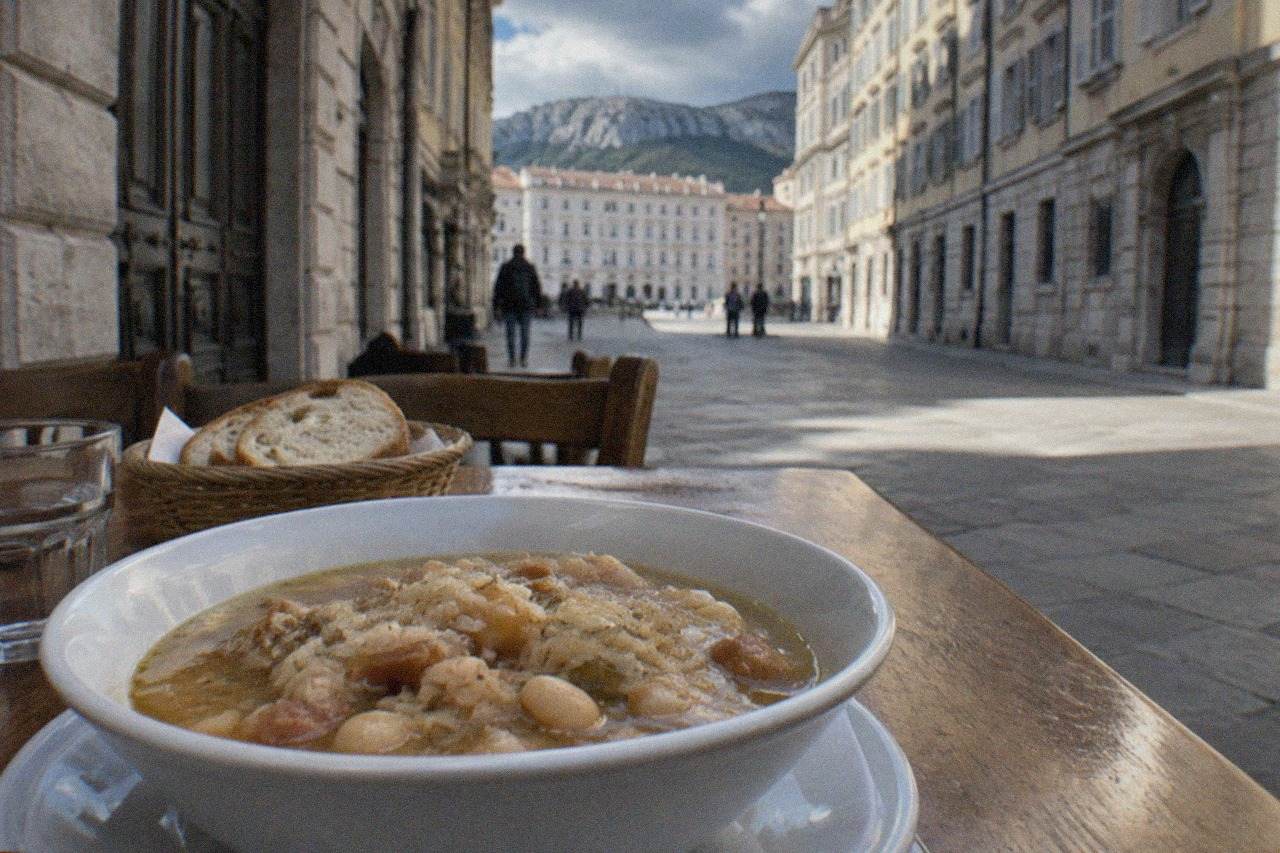
Trieste, Italy, sits at the top of the Adriatic with a kitchen that owes as much to Vienna and Ljubljana as it does to Rome or Naples, and the dish that carries that story is jota. It is a humble soup, the kind of thing a Habsburg-era port city built out of winter stores and smoked pork, and it is the plate locals will name when you ask what their city eats. This page sets out what jota is, where to find it in Trieste, and which other dishes argue for the title, with the tour options that let you taste the answer rather than read about it.
What Is the Signature Dish of Trieste?
The signature dish of Trieste, Italy, is jota: a dense soup of sauerkraut, beans, potatoes and smoked pork that the city adopted from its Central European neighbours and made unmistakably its own. It appears on buffet menus across the old town and the Borgo Teresiano, it is the plate most Triestini will name first, and no other Italian city claims it. Goulash, cevapcici and strucolo all compete, but jota is the answer that keeps coming back.
Jota is not a looker, and Trieste does not pretend otherwise. The soup is grey-brown, thick enough to stand a spoon in, and built on fermented sauerkraut, which is the ingredient that marks it out from almost everything else on the Italian table. The sauerkraut is cooked long with beans, potato and a smoked pork cut until the whole pot tastes of winter and of the Carso hills behind the city. Some kitchens finish it with a spoon of flour browned in lard, an old trick that deepens the colour and the body.
The reason jota belongs to Trieste specifically is the city's history. Under Habsburg rule Trieste was the empire's sea gate, and its food took on the sauerkraut, the paprika and the pork of the empire's inland kitchens while keeping the fish and the olive oil of the Adriatic. Jota is the clearest single expression of that split personality: a soup that would be at home in a Slovenian farmhouse, served a few streets from Piazza Unità d'Italia. The name itself is local dialect, and the dish crosses the border both ways, with versions cooked on the Slovenian side of the Carso too.
If you want the wider food picture rather than a single plate, the companion page on what food Trieste is famous for covers the whole table, from the buffet kitchens to the pastries.
What Is Jota Actually Made Of?
Jota is made from sauerkraut, borlotti-type beans, potato, smoked pork and a little garlic, simmered together until the sauerkraut softens and the beans break down enough to thicken the pot. Many Triestine kitchens finish it with browned flour in lard, and some add a bay leaf or a scrap of pork rind. It is peasant cooking raised to a civic symbol, served hot in the buffet restaurants of the old town.
Every buffet kitchen in Trieste has its own hand with it, and the differences are real. Some keep the soup loose and brothy, others reduce it until it barely pours. The pork varies: smoked pork rib in some pots, a piece of smoked shoulder in others. The one constant is the sauerkraut, and its sourness is what a first-time eater notices first. Locals eat jota year-round, but it belongs to cold weather, and a steaming bowl after a bora-scoured walk along the Rive is the classic setting.
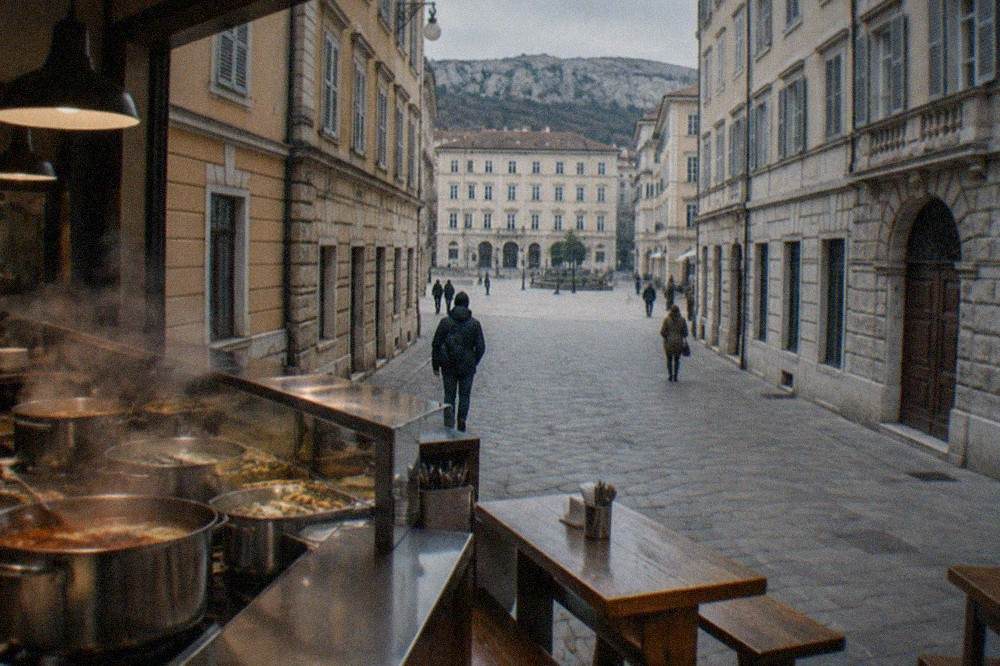
The dish also explains the city's buffet institution, the small wood-panelled eateries where Trieste has always eaten standing or perched on a stool. Those kitchens serve jota alongside goulash with polenta or bread dumplings, and alongside cevapcici, the grilled minced-meat rolls that arrived with the Balkan workers of the port. Together they make up a menu you will not find further down the Italian coast.
A guided walk is the efficient way to meet these kitchens, because the buffets are small, unmarked and easy to walk past. The food tour in the picks above runs about three hours through the centre and stops at the street-food counters where these plates are served; the cooking class option puts you in a local home instead, learning the technique rather than just the taste.
Where Should You Eat Jota in Trieste?
Eat jota in one of Trieste's historic buffet kitchens in Città Vecchia or the Borgo Teresiano, the small wood-fitted eateries that serve the dish alongside goulash and cevapcici. Book or arrive early in the cooler months, because the buffets are small and jota is a winter draw. A guided food walk is the shortcut, and the foodie tasting tour covers the same ground with a guide who knows the kitchens.
The buffets are the honest answer. They are not restaurants in the guidebook sense: counters, benches, a short menu, and a cook who has made the same five dishes for decades. That is where jota lives. The alternative is to let someone else do the choosing, and Trieste has several guided options for that, from a three-hour foodie walk to a private class where you cook the dishes yourself.
| Experience | Type | From (per person) | Rating | Length |
|---|---|---|---|---|
| Trieste: Guided Foodie Walking Tour | guided walk with tastings | $71.08 | 4.91 from 264 reviews | 3 hours |
| Trieste: Unique Food Tour with Local Flavors and Tastings | guided walk with tastings | $85.98 | 4.74 from 123 reviews | 3 hours |
| Trieste: Private Cooking Class at a Local's Home | hands-on class | $166.23 | 3.91 from 6 reviews | 3 hours |
| Trieste: Small Group Pasta and Tiramisu Class with Mamma | hands-on class | $157.65 | 4.4 from 40 reviews | 3 hours |
Prices and ratings above come from the operators' live listings and can change, so treat them as a planning range and check the listing before you book. If sitting down and tasting your way through the city appeals more than cooking, the guided foodie walk is the one that matches this page's question most directly: Check availability
What Other Dishes Compete for the Title?
Trieste has a second tier of signature candidates: goulash served with polenta or bread dumplings, cevapcici with raw onion and mustard, sardoni in savor, strucolo, the rolled dumpling that answers Austrian strudel, and putizza and presnitz, the city's festival pastries. None of them displaces jota as the single signature dish, but a plate of goulash in a Trieste buffet is the closest runner-up.
Goulash is the strongest challenger. It arrived with the same Central European current as jota and it shares the buffet menu, a paprika-dark stew spooned over polenta or bread dumplings. Cevapcici are the port's Balkan contribution, grilled and served with chopped onion. Then there is the sweet side: strucolo, a rolled dumpling filled with fruit or breadcrumbs, and putizza and presnitz, the rich nut-and-dried-fruit pastries that appear in every Triestine bakery window around Christmas. The coffee culture deserves a word too, and it is real, from the port's historic role in the green-coffee trade to the Habsburg-era caffè where residents still order by a vocabulary of their own, but coffee is a ritual rather than a dish. The wider set of guides lives on Trieste Travel Guide.
For the broader story of what this city is known for beyond the table, see what Trieste in Italy is famous for. The coffee houses get their own treatment there, along with the seafront and the Habsburg architecture that frame every meal here.
Can You Cook Trieste's Signature Dishes Yourself?
Yes, and Trieste is one of the easier Italian cities to do it in: private cooking classes in local homes teach the city's repertoire, and a small-group pasta and tiramisu class runs for three hours at a time. Cooking jota at home is also realistic, since the ingredient list is short, sauerkraut, beans, potato and smoked pork, and the technique is patience rather than skill.
The class options in the table above are the practical route. A private class at a local's home with a certified cook covers the full meal, and the small-group pasta and tiramisu session is the lighter option. If you would rather cook at home, start with jota precisely because it forgives: a slow pot on the stove, tasting as the sauerkraut softens, and no step that requires a machine or a thermometer. The one thing worth getting right is the smoked pork, which carries most of the flavour.
The tasting walk above is the related pick for this page because it answers the question on foot: three hours, the buffet counters, and a guide who can tell you which kitchen thickens its jota and which one keeps it brothy.
What Does the Signature Dish Tell You About Trieste?
Jota tells you that Trieste is a border city before it is an Italian one: the sauerkraut and the smoked pork are Central European, the beans and the olive-oil finish are Mediterranean, and the dialect name is neither standard Italian nor Slovene. The signature dish of Trieste is a document of the city's position, an Adriatic port that spent centuries looking inland toward Vienna.
That border identity runs through everything here, from the bilingual street signs to the Serbian Orthodox church a few minutes from the cathedral. The food is where it is most edible. A visitor who eats jota, then walks past the caffè tables of Piazza Unità d'Italia, has understood the city faster than any museum could manage. For more on that split personality, including the language question, see what is special about Trieste, Italy.
Common Questions About the Signature Dish of Trieste
What is the signature dish of Trieste?
Jota, a thick soup of sauerkraut, beans, potato and smoked pork. It is the plate most associated with Trieste, Italy, served in the city's buffet kitchens, and it reflects the Central European side of this Adriatic port's kitchen.
Is jota the same as sauerkraut soup?
It is a sauerkraut soup, but the Triestine version is defined by the beans, the potato and the smoked pork cooked into it, and by the browned-flour finish many kitchens use. Versions are also cooked on the Slovenian side of the Carso, with the same roots and small local differences.
Where can I eat jota in Trieste?
In the historic buffet kitchens of Città Vecchia and the Borgo Teresiano, the small counter restaurants that also serve goulash and cevapcici. A guided food walk is the shortcut if you do not want to pick the kitchens yourself.
What sweets is Trieste known for?
Putizza and presnitz, the dense nut-and-dried-fruit pastries of the Christmas season, and strucolo, the rolled dumpling that is the local answer to strudel. All three appear in bakery windows across the city.
Is Trieste's food more Italian or Austrian?
Both, honestly. The buffets serve goulash and jota beside Adriatic fish, and the caffè pour espresso under Habsburg-era ceilings. The signature dish, jota, is the clearest single example of the Central European half of that kitchen.
Can I take a food tour in Trieste?
Yes. Guided foodie walks of about three hours run through the centre with multiple tastings, and private cooking classes in local homes teach the dishes hands-on. Check the operator's live listing for current availability.
Trieste, Italy, answers the signature-dish question with a pot of soup, and the best way to settle the argument is to sit down in a buffet kitchen with a spoon in one hand and bread in the other. Jota has held the title for a long time, and nothing on the menu looks like taking it from her.