What Is Trieste in Italy Famous For?
Trieste in Italy is famous for its seafront Piazza Unità d'Italia, its historic coffee houses, the bora wind, Miramare Castle and the Barcolana regatta. Here is what defines the city.
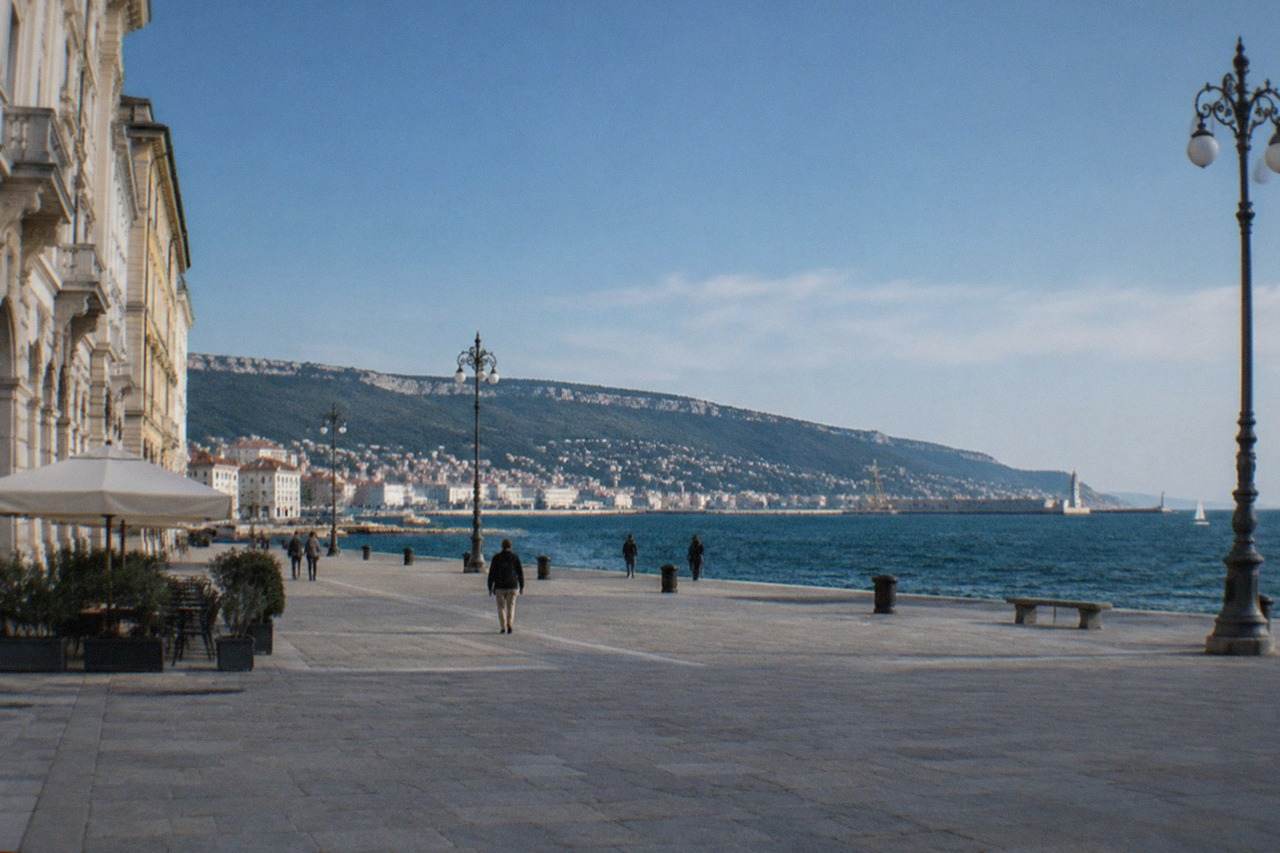
Trieste, Italy, is a port city on the Adriatic in the region of Friuli Venezia Giulia, pressed against the Slovenian border at the top of a narrow gulf. Ask what it is famous for and you get a short list, but every item on that list is unusually specific: a square that faces the open sea, a coffee tradition rooted in the port trade, a violent cold wind called the bora, a white castle built for an archduke who became emperor of Mexico, and a sailing race that holds the world record for the number of boats on one start line. The city spent centuries as the Habsburg empire's only Mediterranean outlet, and that history, not the usual Italian postcard, is what a visitor actually meets in the streets.
What Is Trieste in Italy Famous For?
Trieste is famous for five things above all: Piazza Unità d'Italia, the largest seafront square facing the open Adriatic; its historic coffee houses and its role as the country's coffee port; the bora, a cold north-easterly wind that funnels down off the Karst plateau; Miramare Castle, the white residence of Archduke Ferdinand Maximilian on the coast; and the Barcolana, the sailing regatta that set a world record with 2,689 boats in 2018. Its Habsburg past gives the centre a Central European look unique among Italian ports.
That combination is the honest answer, and each part of it is checkable rather than tourist-board poetry. The square is real and measurable: Piazza Unità d'Italia opens directly onto the water, with the façades of the former Habsburg-era palazzi on three sides and nothing but the gulf on the fourth. The coffee tradition is real too, anchored by the presence of Illy, the roasting house founded in the city, and by a density of historic cafés, several of which still operate in their nineteenth-century rooms. The bora is measurable, and the regional meteorological agency publishes the numbers. The castle and the regatta are simply facts of the calendar and the coastline.
| What Trieste is known for | Where you meet it | The hard fact behind it |
|---|---|---|
| Piazza Unità d'Italia | The main square, on the water's edge | Opens directly onto the Adriatic gulf |
| Coffee houses and the coffee port | Historic cafés in the centre | Illy, founded and still headquartered in Trieste |
| The bora wind | The whole gulf, strongest off the Karst | 17.6 days a year with gusts over 90 km/h |
| Miramare Castle | The coast north of the centre | Built for Archduke Ferdinand Maximilian |
| The Barcolana regatta | The gulf, every October | Record 2,689 boats in 2018 |
If you want the deeper background on each claim, the site's own long-form page on why Trieste is famous unpacks the history, and the companion answer on why Trieste is famous for coffee covers the city's best-known export in detail.
Why Is Trieste in Italy Famous for Coffee?
Trieste is famous for coffee because it grew rich as the Habsburg empire's Mediterranean coffee port, and the trade left the city with Italy's densest concentration of grand, surviving nineteenth-century cafés and with Illy, the roasting house founded there and still headquartered in the city. Coffee in Trieste is a civic institution rather than a quick drink, and the historic cafés in the centre are working businesses, not museums.
The port angle is the one people miss. Trieste was the sea gate of an empire that stretched to Vienna, and green coffee moved through it in volumes that made roasting and blending a local industry. Illy was founded in the city and remains based there, which is why the city hosts the coffee-festival circuit and why the espresso you are served in a square near the port tastes like a local product rather than an imported habit.
The cafés themselves are the visible half of the fame. Several of the grand rooms in the centre date from the nineteenth century, with mirrored walls, newspapers on sticks and waiters in white jackets, and they function as public living rooms in a way that has largely died out elsewhere in Italy. A guided walk is the practical way to see the rooms with someone who can put a date on each one.
The three listings above are the ones this site points at most often: a private city walk, the Miramare ticket with the audioguide app, and a three-hour food tour, each of which touches one of the things the city is famous for.
Which Landmarks Is Trieste in Italy Famous For?
Trieste is famous for Miramare Castle, the white residence Archduke Ferdinand Maximilian built on a headland north of the city, which charges €17 for adult entry and opens every day 9:00-19:00; for Castello di San Giusto on the hill above the old town, at €7; for the Roman theatre, which you look down into from the street; and for the seafront square itself, Piazza Unità d'Italia, which costs nothing and is the city's signature view.
Miramare is the one people travel for. The castle's own visit page lists the adult ticket at €17, including the temporary exhibition, with reduced rates for EU citizens aged 18-25, and it is open every day. The park around it is free all year and keeps its own, shorter hours by month, which is a detail that catches out visitors who assume the two keep the same clock. The castle sits directly on the coast, and the marine protected area in front of it is a separate attraction in its own right.
| Landmark | Entry | Hours | Notes |
|---|---|---|---|
| Castello di Miramare (castle) | €17 adult, €7 reduced EU 18-25 with exhibition | Every day 9:00-19:00, last entry 18:30 | Park free all year, separate hours |
| Castello di San Giusto | €7 adult, €5 reduced | Daily 10:00-19:00 to 11 Oct, then Tue-Sun 10:00-17:00 | Free first Sundays and 3 November |
| Cattedrale di San Giusto | Free | Weekdays 8:00-18:30, Sundays 9:00-19:30 | Bell tower price not published by the parish |
| Teatro Romano | Free, viewed from the street | Always visible | Entry only for booked groups |
| Museo Revoltella | €8 adult, €6 reduced | Daily 10:00-19:00, closed Tuesdays | Modern art, seafront palazzo |
The Miramare ticket-and-audioguide product is the most-reviewed way to do the castle, at $20.64 from 881 reviews on the operator's live listing, and a combined city-and-castle tour is also available. If you would rather have a guide for the whole city than for one building, a private walk is the better buy, and you can Check availability on the listing before you commit to a day.
Is Trieste in Italy Famous for the Bora Wind?
Trieste is famous for the bora, a cold, dry north-easterly wind that pours down off the Karst plateau and across the gulf, and the regional weather agency's own station tables give it hard numbers: gusts over 90 km/h on 17.6 days a year at the molo Fratelli Bandiera station, gusts over 72 km/h on 49 days, and an all-time series peak of 168.1 km/h recorded in February 2012. It is strongest in the cool season and rare in summer.
The bora is not folklore with a number bolted on; the figures come from ARPA FVG, the regional meteorological agency, which runs the waterfront station and publishes the averages. February is the windiest month in the table and June the calmest, which is a useful thing to know when planning: the wind is a winter and spring phenomenon, and a summer visitor may never feel a proper bora at all. The city has lived with it for centuries, from the mooring ropes on the old port to the stone streets in the centre that were built narrow to shelter pedestrians. The full index of guides sits on Trieste Travel Guide.
No official threshold exists at which the seafront closes or ferries stop; the authorities judge each episode on live conditions, so do not believe any specific cutoff figure you may read elsewhere. What the station table does show is that the monthly record gust exceeds 110 km/h in every single month of the year, which is the more interesting fact: even in July, an exceptional bora is possible, even if it is unlikely.
What Food Is Trieste in Italy Famous For?
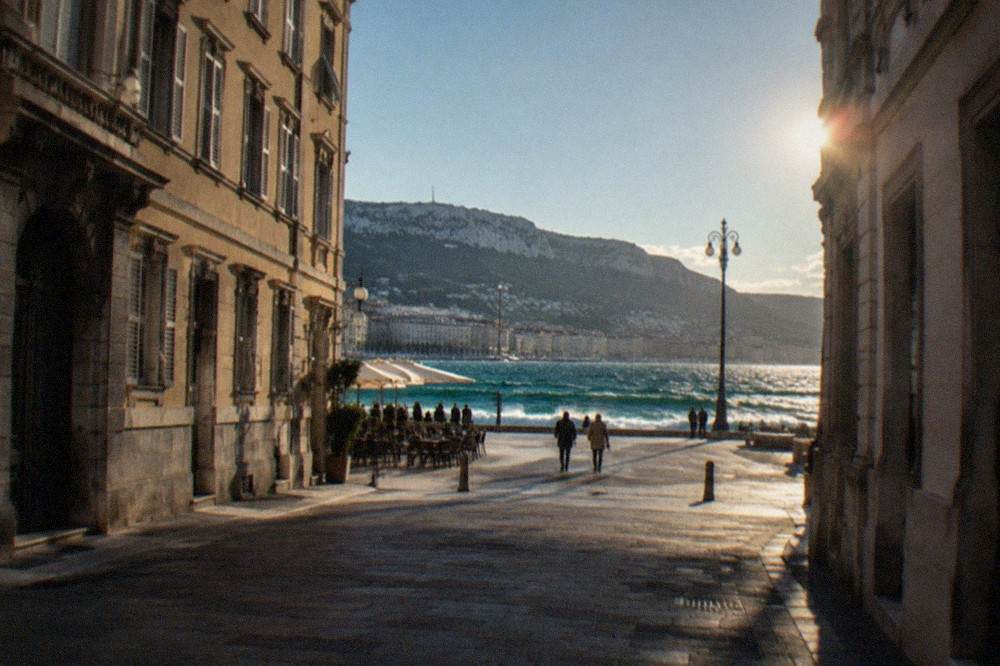
Trieste is famous for food that is more Central European than the Italian stereotype: jota, a soup of beans, sauerkraut and pork; prosciutto and cheese from the Karst plateau; the buffet, a local institution serving cured meats and simple hot dishes; and the osmize, seasonal farmhouse outlets on the Karst where producers sell their own wine and home produce, signposted by a leafy frasca branch hung at the turning. The city's sweets and its coffee-house pastries round out the list.
Jota is the signature dish, and it tells the story of the city in a bowl: sauerkraut in an Italian port is the Habsburg legacy on a plate. The buffets of the old town serve it alongside cured pork and local cheese, and they are cheap, standing-room places rather than restaurants. Out on the Karst, the osmize open for limited periods each year, selling their own wine, Vitovska above all, and whatever the farm produces; the volunteer-run calendar at osmize.com lists which ones are open on which days, with addresses and a map. There is a fuller answer on what food Trieste is famous for, and the food-walk listings are the easiest way to taste across several buffets in one afternoon.
Between them, those three listings cover the famous side of the city in a single day of booking: the walk, the castle and the table.
Is Trieste in Italy Famous for the Barcolana Regatta?
Trieste is famous for the Barcolana, a sailing regatta held every October in the Gulf of Trieste that the organisers describe as the largest sailing race in the world, holding the record entry of 2,689 boats set in 2018 at the 50th edition. The 2026 edition, Barcolana 58, runs 2-11 October, with the main race on Sunday 11 October starting at 10:30 over a course of 13 nautical miles finishing off Piazza Unità d'Italia.
The race began in 1969 with 51 boats, and it is deliberately open to everyone: professional crews and family dinghies share the same start line, which is how the entry numbers got so large. The 2025 edition drew 1,865 boats, the highest since 2019, though still short of the 2018 record. For a visitor who happens to be in the city in the second week of October, the event takes over the waterfront, and the race itself is watched from the seafront and the Molo Audace.
| Barcolana fact | Figure |
|---|---|
| First edition | 1969, with 51 boats |
| Record entry | 2,689 boats in 2018 (50th edition) |
| 2025 edition | 1,865 boats, highest since 2019 |
| 2026 dates | 2-11 October, race day Sunday 11 October |
| Start time and course | 10:30, 13 nautical miles in the gulf |
October is an interesting month to hold it, because the station tables show the windy shoulder of the year is already underway by then: November is the wettest month at the molo, and October averages 1.4 days with gusts over 90 km/h. The weather is part of the event's character rather than a risk to it.
What Else Is Trieste in Italy Famous For?
Trieste is also famous for its literature, above all James Joyce, who lived here for over a decade and wrote much of his early work; for the Opicina tram, the hybrid tram-funicular that climbs to the Karst village of Opicina and has run from piazza Dalmazia since its reactivation on 1 February 2025; and for its border position, which makes Slovenia a day trip rather than a journey, with Ljubljana, Lake Bled, Piran and the Postojna and Škocjan caves all reachable on organised tours from the city.
The Joyce connection is not a stretch: he taught English in the city, and Dubliners and A Portrait of the Artist as a Young Man both have Triestine roots. His statue stands on a bridge over the Canal Grande, and the site has a dedicated guide to James Joyce's Trieste for readers who want the full route.
The Opicina tram deserves its own mention because most English-language guides get it wrong. It was suspended after a collision in August 2016, and it was reactivated on 1 February 2025; it runs today as urban line 2, and its city terminus is piazza Dalmazia, not piazza Oberdan. It is one of the few hybrid tram-funiculars left anywhere, and the climb to the Obelisco and the village gives the best view down over the gulf that a public-transport ticket can buy.
For the practical side of a visit built around any of this, the answer on what to do in Trieste in one day does the planning work, and what is the unusual thing to see in Trieste covers the corners the famous list skips.
Common Questions About What Trieste in Italy Is Famous For
What is Trieste in Italy famous for?
Trieste in Italy is famous for Piazza Unità d'Italia, its seafront square; its historic coffee houses and its past as the Habsburg empire's coffee port; the bora wind; Miramare Castle; and the Barcolana, the world's largest sailing regatta by entry.
Why is Trieste famous for coffee?
Trieste grew as the Mediterranean coffee port of the Habsburg empire, and Illy, founded in the city, is still headquartered there. The grand nineteenth-century cafés of the centre survive as working businesses.
Is the bora dangerous for visitors?
The bora is strong but routine: the ARPA station tables show gusts over 90 km/h on 17.6 days a year, mostly in the cool season. Summer visitors rarely meet a full-strength episode, and no official threshold closes the seafront.
What is the most famous landmark in Trieste?
Piazza Unità d'Italia is the city's signature space, opening straight onto the Adriatic. Miramare Castle, at €17 adult entry with the park free, is the most famous individual building.
Is Trieste famous for anything unusual?
Yes: the Opicina tram, a hybrid tram-funicular running from piazza Dalmazia to the Karst village of Opicina since its reactivation on 1 February 2025, and the osmize, seasonal farmhouse wine outlets on the Karst signposted by a frasca branch.
Is Trieste in Italy worth visiting for these things?
Yes, if the coffee houses, the seafront, the wind-scoured light and the borderland food appeal to you, the city delivers all of them within a compact, walkable centre, and the site's own page on whether Trieste in Italy is worth visiting sets out the case in full.
Trieste Travel Guide covers each of these claims in more depth elsewhere on the site, and every figure on this page comes from the venue, the agency or the organiser that published it.