What Is Trieste Most Famous For?
Trieste, Italy is most famous for its coffee culture, Piazza Unità d'Italia, Miramare Castle, the bora wind and the Barcolana regatta. Here is what the city is really known for.
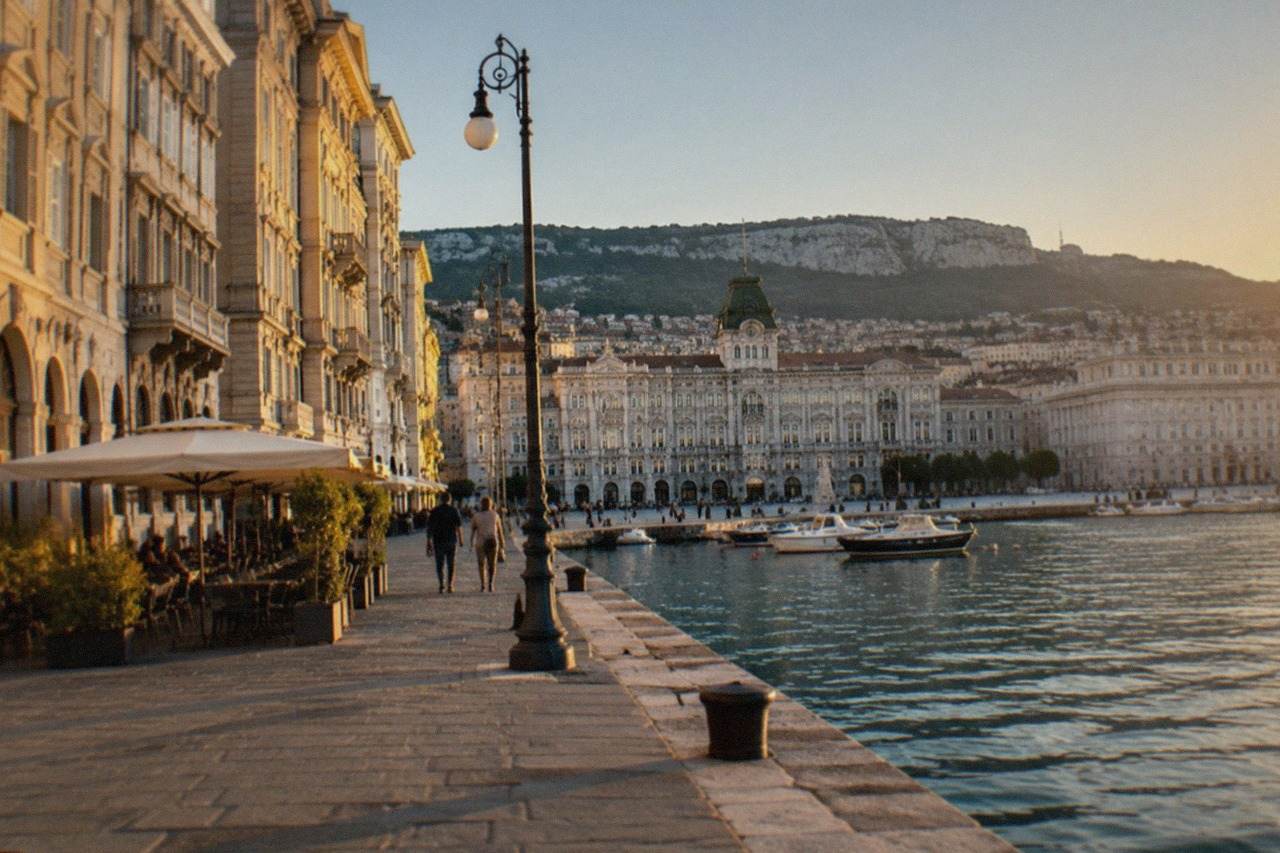
Trieste, Italy, is most famous for five things at once: a coffee culture rooted in its history as the Mediterranean's great coffee port, the Habsburg elegance of Piazza Unità d'Italia and the Città Vecchia around it, Miramare Castle on its Gulf, the bora wind that funnels down off the Carso plateau, and the Barcolana, the sailing race the organisers describe as the largest in the world. Few Italian cities pack that many identities into one waterfront, and fewer still sit within sight of Slovenia while doing it. This page lays out what each of those is, with the verified numbers behind them, so you know what the city's name actually carries before you plan anything around it.
What Is Trieste Most Famous For?
Trieste is most famous for coffee, and for a seafront Habsburg cityscape unlike anywhere else in Italy: Piazza Unità d'Italia opening straight onto the Adriatic, Miramare Castle up the coast at Grignano, the bora wind blowing off the Carso, and the Barcolana regatta, which set a record of 2,689 boats in 2018. It is also famous as Italy's border city, the port where Central Europe met the Mediterranean, and as the place James Joyce wrote much of his early work.
That list is not a menu of unrelated facts; it is one story. Trieste was the Habsburg Empire's only big seaport, and everything the city is known for, the coffee warehouses, the insurance palaces, the Central European cafés, the multilingual street signs, grew out of that. The empire is gone, but the architecture it built for itself is still the city's front room, and the coffee trade it anchored never left: Illy, the roasting house, has its headquarters here, and the historic cafés along the waterfront and in the Borgo Teresiano still serve the city's signature orders, from the caffè latte served in a glass to the stronger local variations, the way they have for over a century.
The fame is quieter than Venice's or Rome's, which is part of the point. Ask why Trieste is famous and the honest answer is that it is famous for being an anomaly: an Italian city that spent centuries being Austrian, that speaks Italian and Slovenian on the same streets, and that never needed a canal or a colosseum to be worth the train fare. The rest of this page takes the five headline claims one at a time and checks each against what the sources actually say.
Why Is Trieste, Italy Famous for Coffee?
Trieste is famous for coffee because it was the Habsburg Empire's coffee port and it still is Italy's roasting capital: Illy has its headquarters in the city, green coffee has moved through the port for well over a century, and the historic cafés of the Borgo Teresiano and the waterfront keep a local menu of coffee orders, served standing or seated, that exists nowhere else in quite the same form. The culture is real, documented and visible on every corner.
What you should not believe is the number that gets attached to it. The claim that Triestines drink so many kilograms of coffee per head per year, or "twice the Italian average", circulates constantly and has no primary source behind it: neither the Chamber of Commerce, nor the port authority, nor Illy publishes a figure you can check. The coffee culture does not need the statistic. It has the caffè storici, the grand cafés with their chandeliers and newspaper tables; it has the port's coffee warehouses; it has a local vocabulary of orders that a first-time visitor will not find in Rome or Milan; and it has an industry still headquartered in the city rather than merely commemorated by it. If you want the full story, including where to actually drink, our page on why Trieste is famous for coffee goes deeper.
The practical version is simple: put one historic café on your itinerary the way you would put a museum on it. Several of the grand ones sit within a short walk of Piazza Unità d'Italia, and a coffee there costs what a coffee in any Italian city centre costs, check the menu rather than trusting a guidebook figure. The Trieste Historic Cafés Experience exists precisely for this, a three-hour walk through the café culture, if you would rather have it explained than work it out alone.
If you want the city's fame explained on foot by someone who lives inside it, the private option below is the one most first-time visitors choose.
The walk runs two to six hours, priced per person, and a local guide can thread the café story, the Habsburg story and the seafront into one loop. For a broader set of options, these three cover the city's fame from three angles: a private walk, the castle, and the food.
Between them those three cover most of this page's headline list, and the sections below take the landmarks, the wind and the food one at a time so you can decide which parts of Trieste's fame you actually want to chase.
Which Landmarks Make Trieste Famous?
The landmarks Trieste is famous for are Piazza Unità d'Italia, the seafront square that opens directly onto the Adriatic; Castello di San Giusto and the cathedral on the hill above the Città Vecchia; Miramare Castle and its free park up the coast; the Roman theatre, which you view from the street; and Molo Audace, the pier walk straight off the square. Together they are why the city photographs like Vienna with a beach.
Piazza Unità d'Italia is the signature image and the one that travels furthest: a vast, unified Habsburg piazza whose western edge is open water, with the Molo Audace pier extending from it into the Gulf. It is the largest seafront square in Italy and the single most common answer to this page's question. Above it, the Castello di San Giusto complex, the castle, the cathedral and the Roman theatre within a few minutes of each other, gives the city its historic core; the castle ticket costs €7 full price, €5 reduced, and covers the walls, the civic museum and the Lapidario Tergestino, per the castle's own site.
| Landmark | What it is | Entry cost | Hours as published |
|---|---|---|---|
| Piazza Unità d'Italia | Seafront square on the Adriatic | Free, open public space | Always open |
| Castello di San Giusto | Castle, museum and walls on the hill | €7 adult, €5 reduced | 1 April-11 October daily 10:00-19:00; from 12 October Tue-Sun 10:00-17:00 |
| Cattedrale di San Giusto | Cathedral beside the castle | Free | Weekdays 8:00-18:30; Sundays 9:00-19:30 |
| Miramare Castle | Habsburg residence at Grignano | €17 adult, includes exhibition | Daily 9:00-19:00, last entry 18:30 |
| Miramare park | Castle grounds on the Gulf | Free | Hours vary by month, 8:00-19:00 April-September |
| Teatro Romano | Roman theatre in the Città Vecchia | Free, viewed from the street | Street access, no routine interior entry |
Miramare deserves its own sentence because it is the landmark most visitors actually travel to: the white castle Maximilian built on a promontory at Grignano, with the park free all year and the castle ticketed separately, and the two keeping different hours, which catches people out. The castle's own visit page lists the adult ticket at €17 including the temporary exhibition, with reduced rates for EU citizens aged 18-25. If you are weighing a visit, our Miramare Castle guide covers the detail, and the Miramare Castle Entrance Ticket listing is the straightforward way to buy ahead.
Not sure yet whether the castle or the city centre deserves your limited hours?
Is Trieste Famous for the Bora Wind and the Barcolana?
Yes: Trieste is famous for the bora, the cold north-easterly wind that funnels off the Carso plateau onto the Gulf, and for the Barcolana, the October sailing race that holds the record entry of 2,689 boats, set in 2018 and certified by the organisers as a Guinness World Record for the largest sailing race. ARPA's own station tables record a peak gust of 168.1 km/h in February 2012, and the wind is part of the city's identity, not a curiosity.
The bora is the one thing every Triestine will talk about before the coffee. The regional met agency's station tables for the molo Fratelli Bandiera, covering 1995-2024, average 17.6 days a year with a gust over 90 km/h and 49 days over 72 km/h, with the cool season the windiest and the monthly record gust exceeding 110 km/h in every single month of the year. No official threshold exists at which the seafront closes or ferries stop; the practical rule is simply to check the forecast, hold the handrails on the Rive when it blows, and treat it as weather rather than emergency. Our bora wind guide explains what the wind is and when it matters.
The Barcolana is the bora's cheerful cousin. The 2026 edition, Barcolana 58, runs 2-11 October with the main regatta on Sunday 11 October, starting around 10:30 over a 13-nautical-mile course in the Gulf, finishing off Piazza Unità d'Italia. The first edition in 1969 had 51 boats; the record 2,689 came in 2018; the 2025 edition drew 1,865, the highest since 2019, per the organisers' own news pages. It is the one weekend a year when the city's fame and its weather share a stage.
| Event or wind fact | Figure | Source basis |
|---|---|---|
| Barcolana record entry | 2,689 boats, 2018 | Organisers, Guinness World Record |
| Barcolana 2026 dates | 2-11 October, regatta 11 October | Official event site |
| Peak gust in station record | 168.1 km/h, February 2012 | ARPA station tables |
| Days per year with gusts over 90 km/h | 17.6 average | ARPA station tables, 1995-2024 |
| First Barcolana edition | 1969, 51 boats | Organisers' history page |
Is Trieste Famous for Food and for Its Border Position?
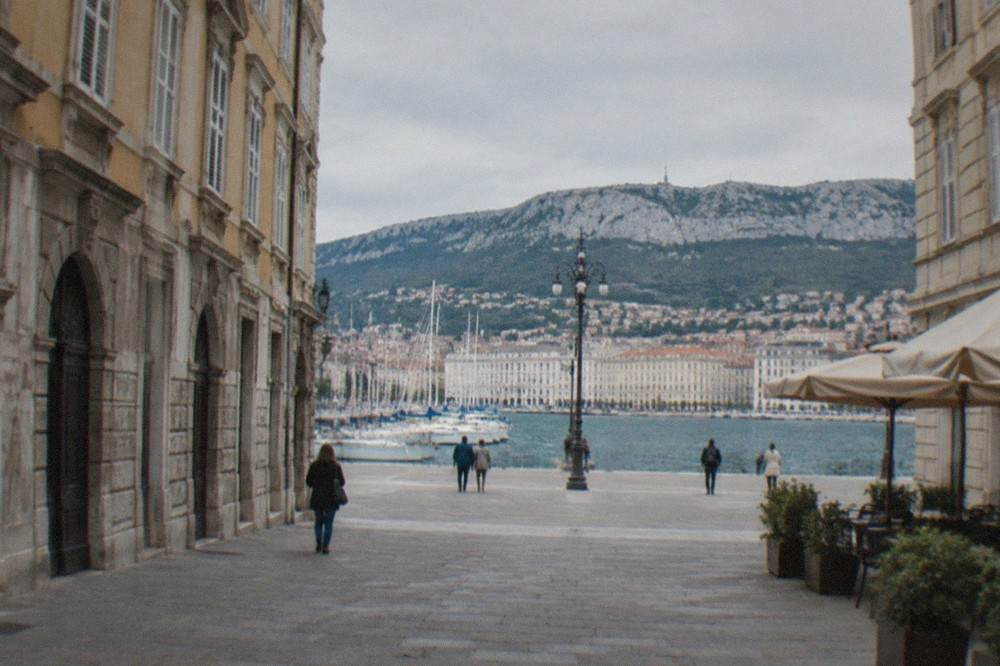
Trieste is famous for a cuisine that is half Central European and half Adriatic: jota, the sauerkraut-and-bean soup, goulash served with dumplings, pork and horseradish, and the buffet restaurants that serve them, alongside Adriatic fish and the osmize, the farmhouse wine outlets on the Carso signposted by a frasca branch. Its border position is the other half of the fame: it is Italy's city closest to Slovenia, with the border a short drive from the centre.
The food is the clearest fingerprint of the Habsburg years. This is the Italian city where sauerkraut is a staple rather than a novelty, and the buffet, the local version of the osteria, is the institution that serves it. If you want the full list of dishes and where to eat them, our pages on what food Trieste is famous for and the signature dish of Trieste cover it; the short version is that jota and goulash are the two names to know, and that a food tour is the fastest way to taste both in one afternoon.
The border is not just geography; it shapes the day trips. Slovenia is close enough that Piran and Ljubljana are standard excursions, and Croatia's coast is a longer hop down the Istrian shore. All three countries, Italy, Slovenia and Croatia, use the euro and are in Schengen, so there is no currency change; but Italy is running temporary border checks on its land border with Slovenia through 18 December 2026, so carry a passport or national ID card and write the checks as temporary, because they are. Our Trieste Travel Guide covers the cross-border options in its day-trip pages.
How Many Days Do You Need to See the Famous Trieste?
Two to three days is enough to cover everything Trieste is famous for: one day for Piazza Unità d'Italia, the Città Vecchia, San Giusto and a historic café; a second for Miramare Castle and the seafront up to Barcola; and a third for a day trip, either onto the Carso for an osmiza and Grotta Gigante, or across the border to Slovenia. Trying to compress it into one day works, but it means choosing between the castle and the caves.
The honest planning note is that the famous items cluster well. The square, the pier, the Roman theatre, the cathedral and the café culture are all walkable from one another, so a single well-organised day, or a guided morning, clears the city-centre half of the list. Miramare is the one headline attraction that needs a separate half-day, and Grotta Gigante, the giant cave on the Carso, is guided-only with compulsory booking and closed on Mondays from September to February, so it needs planning rather than improvisation. If you are deciding between lengths of stay, our page on how many days in Trieste is enough breaks down one-day, two-day and three-day versions.
Whichever length you choose, the three tours below are the ones that map most directly onto the famous list: a private walk for the centre, the Miramare ticket for the castle, and a food tour for the buffet-and-jota half of the city's fame.
Each of those three can be booked for a specific date with free cancellation, so there is little cost to reserving ahead and adjusting later if the bora or your itinerary changes your plans.
Common Questions About What Trieste Is Famous For
What is Trieste most famous for?
Trieste is most famous for its coffee culture, the seafront Piazza Unità d'Italia, Miramare Castle, the bora wind and the Barcolana regatta, which set a record of 2,689 boats in 2018. It is also known as Italy's Habsburg-era border port and the city where James Joyce lived and wrote.
Is Trieste in Italy famous for coffee?
Yes. Trieste was the Habsburg Empire's coffee port, Illy is headquartered there, and its historic cafés keep a local menu of coffee orders. No reliable per-head consumption figure exists, so treat any kilogram statistic you read as unverified.
What is the most famous landmark in Trieste?
Piazza Unità d'Italia, the Habsburg seafront square that opens directly onto the Adriatic. Miramare Castle at Grignano is the most famous landmark visitors travel out of the centre for, with the park free all year and the castle ticketed.
Is the bora wind unique to Trieste?
The bora blows across the whole northern Adriatic, but Trieste is the city most identified with it: ARPA's station tables record a peak gust of 168.1 km/h in February 2012 and an average of 17.6 days a year with gusts over 90 km/h.
What food is Trieste famous for?
Jota, the sauerkraut and bean soup, goulash with dumplings, and the buffet restaurants that serve them, plus Adriatic fish and the wines of the Carso, tasted at the seasonal osmize farmhouse outlets signposted by a frasca branch.
Can you visit Slovenia from Trieste?
Yes, easily: all of Italy, Slovenia and Croatia use the euro and are in Schengen, but Italy is running temporary border checks on the land border with Slovenia through 18 December 2026, so carry a passport or national ID card.
The short version of all of this: Trieste, Italy, is famous for being the city where an empire met the sea, and the coffee, the square, the castle, the wind and the regatta are all that single fact seen from five different angles. Plan around two or three days, book the cave and the castle ahead, and check the wind forecast before you promise yourself a walk along the Rive.