The Bora Wind in Trieste, Italy: What It Is, When It Blows and How Strong It Gets
The bora is the cold, dry north-easterly that funnels down off the Carso plateau and across Trieste, Italy, and it shapes the city's weather more than any other single force. Here is what the region's own station data says about it.
Short answer
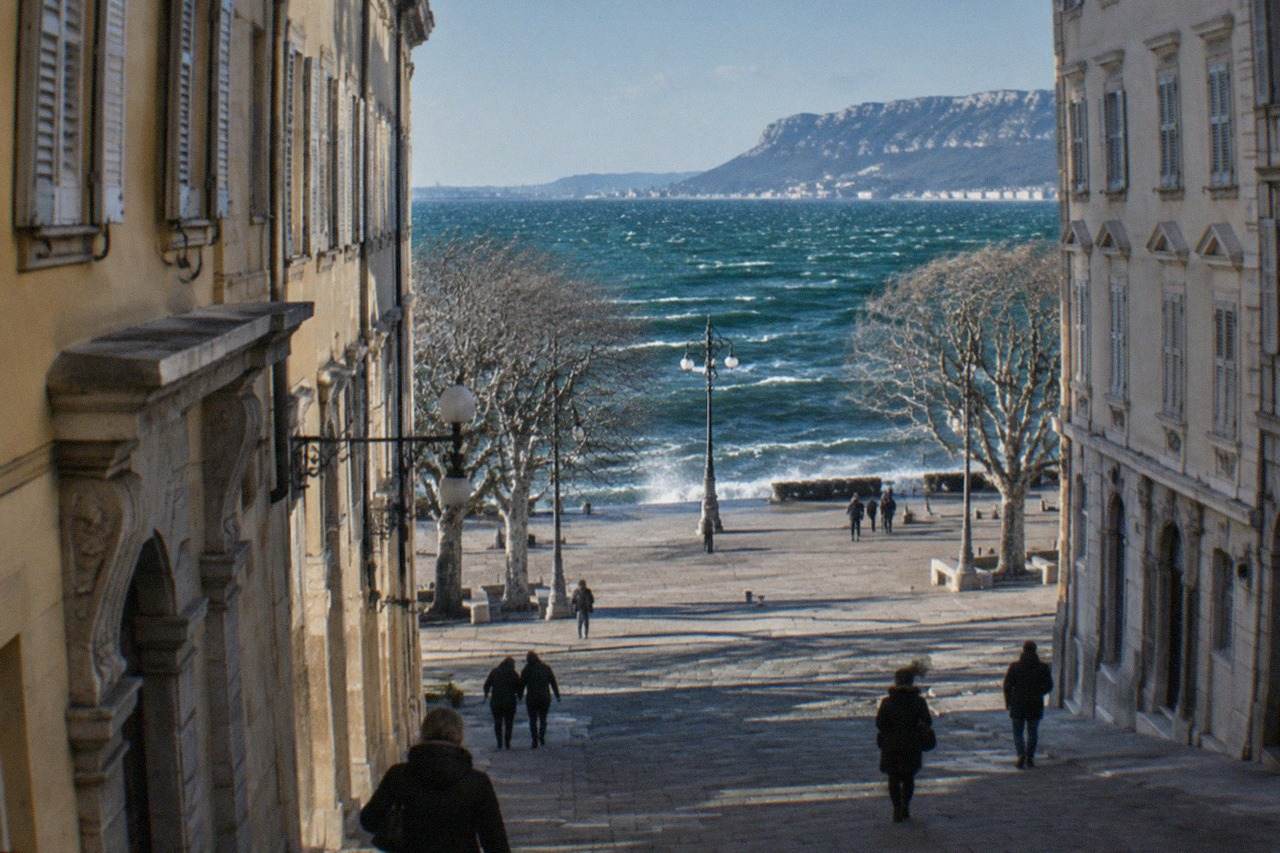
The bora is a cold, dry katabatic wind from the east-north-east that accelerates down the Karst plateau and across the Gulf of Trieste. ARPA FVG's waterfront station records an average of 17.6 days a year with gusts over 90 km/h, an all-time peak of 168.1 km/h in February 2012, and a record gust above 110 km/h in every single month of the year.
The bora is the defining weather fact of Trieste, the Adriatic port city in Friuli Venezia Giulia in north-east Italy, and it is the reason the seafront looks the way it does, the reason the sailing is what it is, and the reason every local conversation about the forecast starts with the wind rather than the rain. It is a cold, dry wind that pours down off the Carso plateau behind the city and accelerates across the Gulf of Trieste, and the regional weather agency has been measuring it continuously at the molo Fratelli Bandiera station on the waterfront. This guide lays out what the bora is, when it blows, how strong it actually gets according to the station tables rather than folklore, and how to plan a visit around it, with help from Trieste Travel Guide.
What Is the Bora Wind in Trieste, Italy?
The bora is a cold, dry, gusty wind that blows from the east-north-east, born when cold air masses spill over the Dinaric Alps and accelerate down the limestone slopes of the Carso plateau until they reach the Gulf of Trieste as violent, channelled gusts. ARPA FVG's regional wind sheet records gusts that largely exceed 100 km/h in the Trieste coastal zone, with values above 140 km/h recorded there in the last twenty years.
The mechanism is simple and worth understanding, because it explains almost everything else on this page. Cold air is denser than warm air. When a high-pressure system sits over the cold interior behind the mountains and lower pressure lies over the warmer Adriatic, the air does not drift gently down the slope, it falls, and a limestone plateau with a steep escarpment, which is exactly what the Carso is, acts as a chute. The gaps in the escarpment, the valleys and saddles above Trieste and along the coast towards Slovenia, concentrate the flow. The result at street level is a wind that does not blow steadily but arrives in violent pulses, with lulls between them strong enough to fool you into thinking it has finished.
The bora is a katabatic wind in the strict sense, gravity-driven, and it is dry. Trieste's rain comes mostly from other systems, and the bora often arrives with hard blue skies, the celebrated "bora chiara" that scrubs the air until the Slovenian and Croatian coasts stand out across the water. There is also a wet variant, the "bora scura", which carries cloud and rain, but the classic Trieste bora is the clear one. The wind is not unique to the city, the Croatian coast gets it too, but Trieste sits at the top of the gulf with the plateau directly behind it, which is why the city and the wind are so tightly bound together in the regional identity.
When Does the Bora Blow in Trieste?
The bora is a cool-season wind that peaks in February, but it can arrive in any month: ARPA's station tables for the molo Fratelli Bandiera show the monthly record gust exceeds 110 km/h in every single month of the year, and even July averages 0.9 days with a gust over 90 km/h, more than April or May. The calmest month is June, with 0.3 such days.
The seasonal shape of the wind is real but it is not absolute. The cool season from November to March is when strong episodes cluster, and February is the peak month in the station tables, which is also when the all-time record gust of 168.1 km/h was measured, on 11 February 2012. Summer episodes happen, they are simply rarer and usually weaker. The numbers that surprise people are the shoulder-season ones: October averages 1.4 days a year with a gust over 90 km/h, which is exactly the window in which the Barcolana regatta is sailed, and the event has always sat inside the windy shoulder on purpose.
| Month | Days with gust over 72 km/h | Days with gust over 90 km/h | Record gust km/h |
|---|---|---|---|
| January | 5.5 | 2.4 | 148 |
| February | 6.0 | 2.9 | 168 |
| March | 4.9 | 2.1 | 163 |
| April | 3.5 | 0.7 | 123 |
| May | 2.7 | 0.7 | 120 |
| June | 2.2 | 0.3 | 110 |
| July | 3.3 | 0.9 | 125 |
| August | 2.9 | 0.9 | 124 |
| September | 3.5 | 1.1 | 124 |
| October | 4.0 | 1.4 | 126 |
| November | 5.2 | 1.9 | 147 |
| December | 5.3 | 2.3 | 133 |
Averages from ARPA FVG / OSMER station tables, Trieste molo Fratelli Bandiera, series 1995-2024.
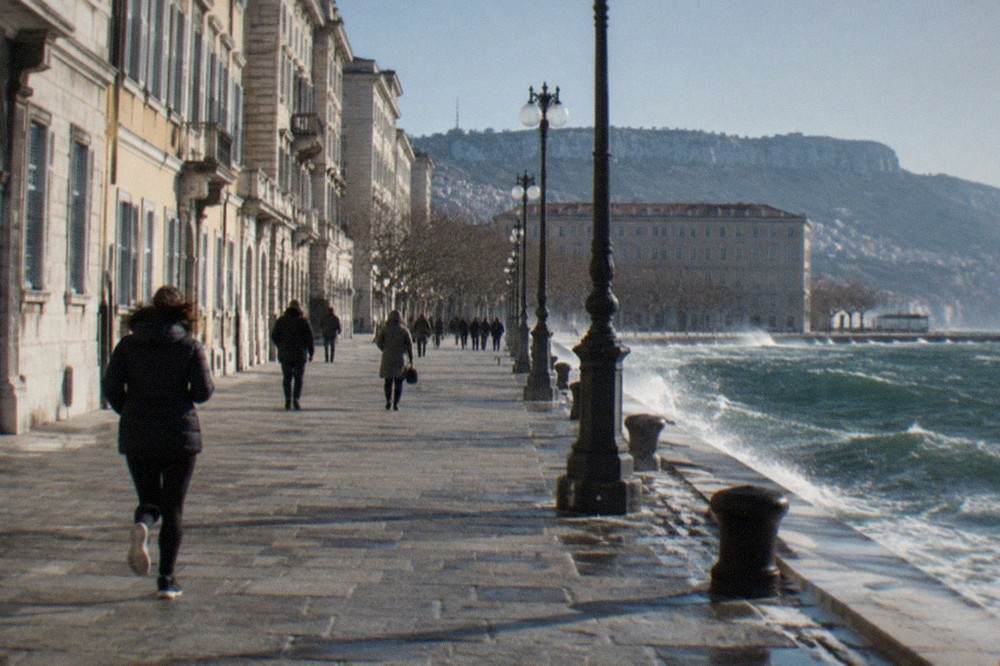
What this means for a visitor is that the bora is a planning variable, not a reason to avoid the city. A February trip carries the highest chance of a strong episode, and a June trip the lowest, but no month is guaranteed calm and no month is guaranteed wild. The practical advice is to check the regional forecast, which publishes wind warnings by intensity, and to build a plan with indoor options that can absorb a windy day: the museums of Trieste, the historic caffè, and the covered shopping arcades around the city centre all work in any weather. Start with the coffee culture guide and the where to stay guide for neighbourhoods that keep you close to sheltered streets.
A guided walk is one of the better wind-proof formats, because a local guide reroutes in real time. The Best of Trieste private walking tour covers the city's landmarks in two hours and can be steered towards sheltered lanes when the gusts arrive, Check availability.
How Strong Does the Trieste Bora Actually Get?
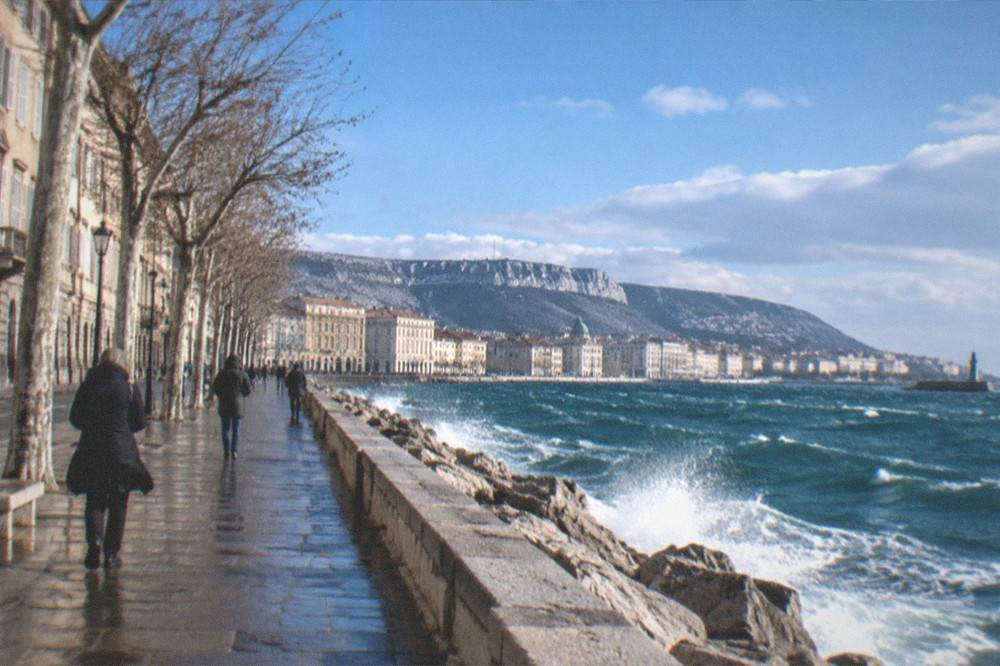
The strongest gust in the official station series is 168.1 km/h, measured in February 2012 at the molo Fratelli Bandiera on the Trieste waterfront, and the city averages 17.6 days a year with a gust over 90 km/h plus 49.0 days over 72 km/h. Strong episodes routinely disrupt ferries, close exposed seafront stretches and make walking on the open Rive genuinely difficult.
Those figures come from ARPA FVG's own tables and they are the ones worth trusting, because the bora attracts more inflated numbers than almost any other weather phenomenon in Italy. Two figures circulate widely in older sources, a 171 km/h reading from 1954 and a 188 km/h reading from 2010, and neither appears in the agency's station series. The 2012 figure is the one the agency itself treats as the verified peak under current measurement standards.
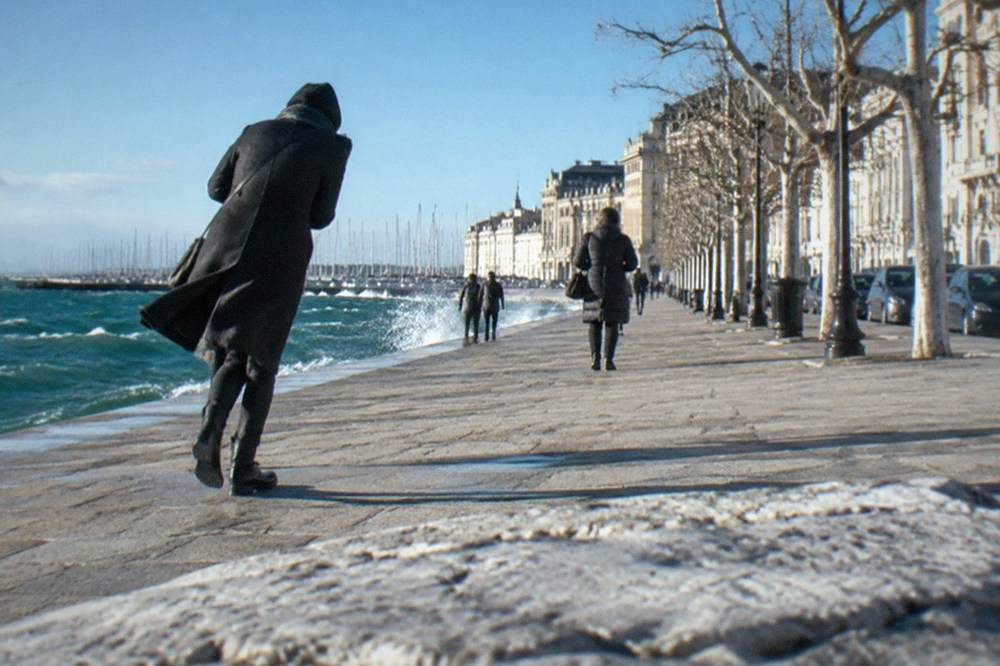
It helps to translate the numbers into street experience. A gust over 72 km/h, which Trieste records on 49 days a year, is strong enough that you notice it constantly: doors pull, umbrellas die, hats leave. A gust over 90 km/h, 17.6 days a year, is the level at which walking on the exposed seafront becomes a matter of leaning and bracing, and at which the city's famous handrails and ropes along the windiest stretches earn their keep. The all-time peak of 168.1 km/h is hurricane-force territory, and episodes at that scale are rare, memorable, city-shaping events rather than routine weather.
Does the Bora Close the Rive or Stop the Ferries?
Strong bora episodes do disrupt Trieste's seafront and its ferries, and the Rive promenade and the Trieste-Muggia ferry link have both been affected in strong events, but there is no published official wind threshold at which the Rive close, the ferries stop or an event is cancelled: decisions are made in real time by the authorities monitoring conditions, and no numeric cutoff exists in any official source.
This is a point worth stating plainly, because guide after guide prints a number. None of the bodies that would own such a rule, the city, the port authority, the coast guard, publishes one. What happens in practice is that effects scale with conditions: reinforced moorings, navigation warnings, ferry suspensions and closures of exposed stretches when gusts climb past roughly 100 km/h, with the authorities watching live data rather than consulting a fixed line. The correct posture for a visitor is to treat the forecast and any official notices as the source of truth on the day.
| Wind condition | Typical observed effect in Trieste |
|---|---|
| Gusts over 72 km/h (49.0 days/year) | Hard walking on the open seafront, umbrellas fail, doors pull |
| Gusts over 90 km/h (17.6 days/year) | Leaning and bracing needed on the Rive, handrails in use |
| Gusts around 100 km/h and above | Ferry suspensions reported, navigation warnings, exposed stretches closed |
| Peak events such as February 2012 (168.1 km/h) | City-shaping disruption, closures and damage across the gulf |
The row for 100 km/h effects describes what has been reported in strong episodes, not a published rule, and that distinction matters. If you are planning a ferry day, our ferries from Trieste guide and the cruise port guide both point you at the operators' live notices rather than at any fixed number.
Is Trieste Rainy, or Is the Bora the Real Weather Story?
Trieste records 867.1 mm of rain a year across 86.1 wet days, with November the wettest month at 109.8 mm and September second at 102.3 mm, while July is the second driest month at 53.8 mm: the rain is an autumn problem, not a summer one, and the bora, not rainfall, is the wind that defines the city's climate.
The rain figures and the wind figures come from the same station, the molo Fratelli Bandiera, over the 1995-2024 series, and together they draw a picture that does not match the Mediterranean stereotype. Trieste is not a dry southern Italian city, it is a wetter one than many southern coastal areas, but its wet season is autumn and its summers are comparatively dry. A July or August visit is far more likely to be interrupted by a hot, still day or a brief bora pulse than by rain.
| Month | Rain mm | Wet days | Mean high C |
|---|---|---|---|
| January | 52.8 | 6.6 | 9.2 |
| February | 59.7 | 6.6 | 9.8 |
| March | 52.8 | 6.1 | 13.0 |
| April | 60.7 | 8.0 | 16.8 |
| May | 75.0 | 8.5 | 21.7 |
| June | 62.5 | 6.1 | 25.8 |
| July | 53.8 | 5.4 | 28.2 |
| August | 71.7 | 6.6 | 28.1 |
| September | 102.3 | 7.4 | 23.9 |
| October | 88.6 | 7.6 | 19.6 |
| November | 109.8 | 9.5 | 14.7 |
| December | 77.4 | 7.7 | 10.7 |
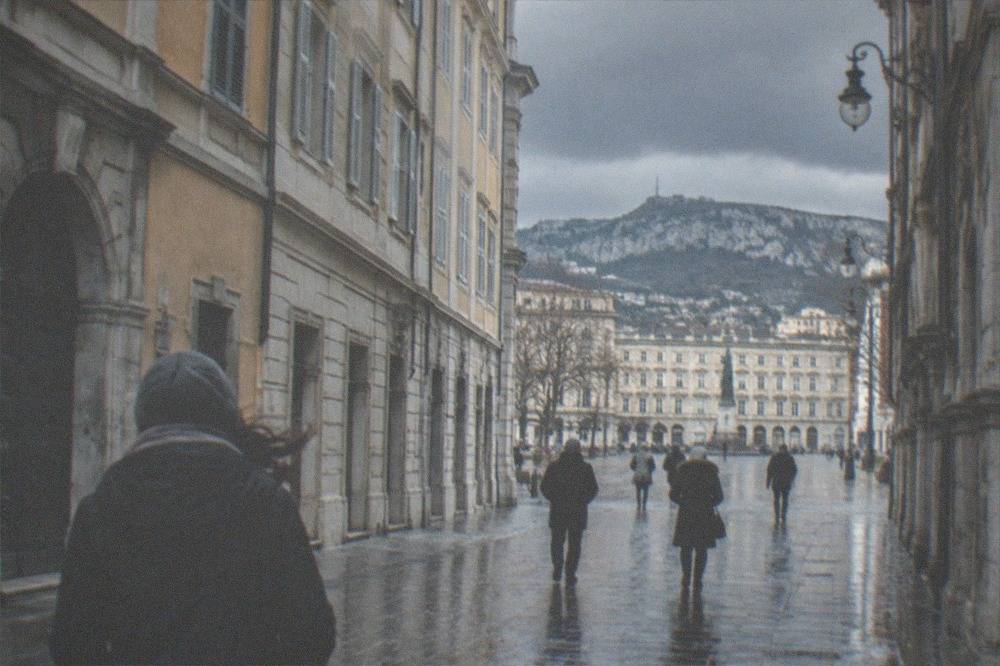
One warning about numbers, because this destination attracts bad data. Some climate sites publish rainfall and temperature figures for Trieste taken from a coarse reanalysis grid whose 9 km land cell is contaminated by the Carso plateau behind the city. The agency's own waterfront station gives 867.1 mm and 15.9 C, and the grid figures are wrong for the city by more than seventy percent on rainfall. If you see a Trieste rainfall figure dramatically higher than the station's on any page, treat everything else on that page with suspicion. For month-by-month planning, the Trieste weather month by month guide and the best time to visit guide use the station numbers.
How Does the Bora Shape the Barcolana Regatta?
The Barcolana, the world's largest sailing race by entry, runs every October in the Gulf of Trieste, with the 2026 edition from 2 to 11 October and the main regatta on Sunday 11 October starting at 10:30 over 13 nautical miles, and October averages 1.4 days a year with a gust over 90 km/h, so the event sits deliberately inside the windy shoulder of the season.
The regatta's relationship with the wind is the whole point of holding it in October. The record entry is 2,689 boats, set in 2018 at the 50th edition, which the organisers describe as a Guinness World Record for the largest sailing race in the world, and the first edition in 1969 drew 51 boats. Recent editions have been affected by strong bora episodes, with village activities and races disrupted when gusts climb, and the organisers make calls event by event rather than against a published wind limit, because no such official cutoff exists.
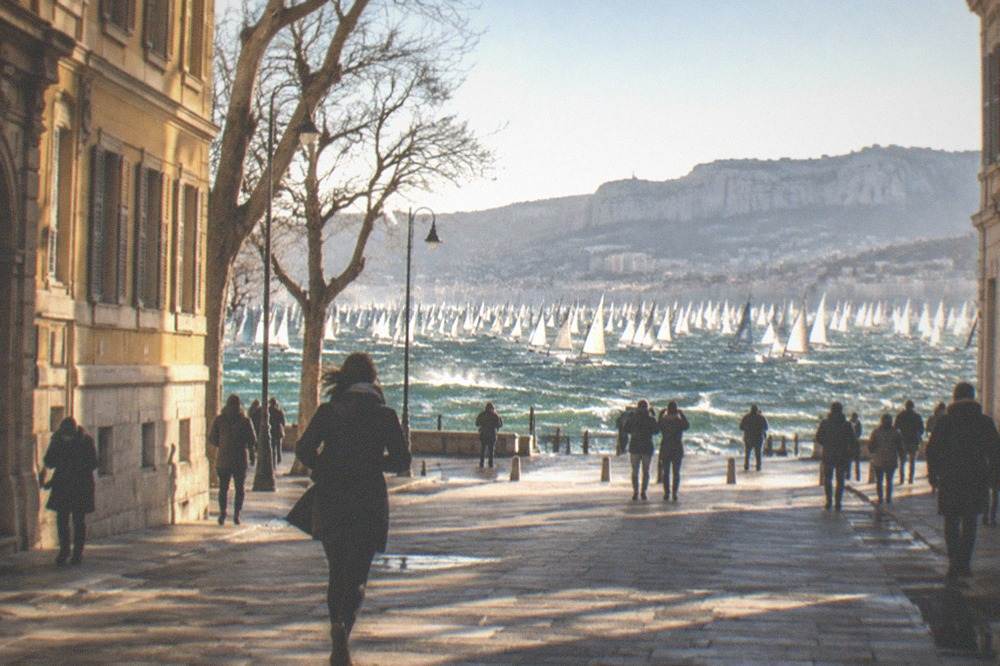
For a visitor, Barcolana week is one of the best times to feel the bora's place in the city's life, whether or not you sail. The race finishes off Piazza Unità d'Italia, and the whole waterfront becomes a festival site. The full story, dates and race details are in our Barcolana regatta guide.
How Do You Dress and Walk in Trieste When the Bora Blows?
Dress in layers with a windproof outer shell rather than a heavy coat, because the bora is cold, dry and gusty rather than wet, keep your hands free, and expect the exposed seafront, the Rive and the open stretches around the Molo Audace to be far windier than the sheltered lanes of the Città Vecchia a few streets inland.
The bora's dryness is the practical saving grace. Unlike a wet Atlantic storm, a bora day is often brilliantly clear, and the wind chill is the whole battle. A shell that blocks the wind over a warm layer beats a thick coat that the gusts get underneath. Hats need to be held onto, umbrellas are pointless, and gloves matter more than rain gear. The city itself is walkable, with the compact centre meaning you are never far from a caffè door, and the narrow streets of the old town and the arcades give you a sheltered route almost anywhere in the centre. Use the free things to do guide for indoor-heavy days instead.
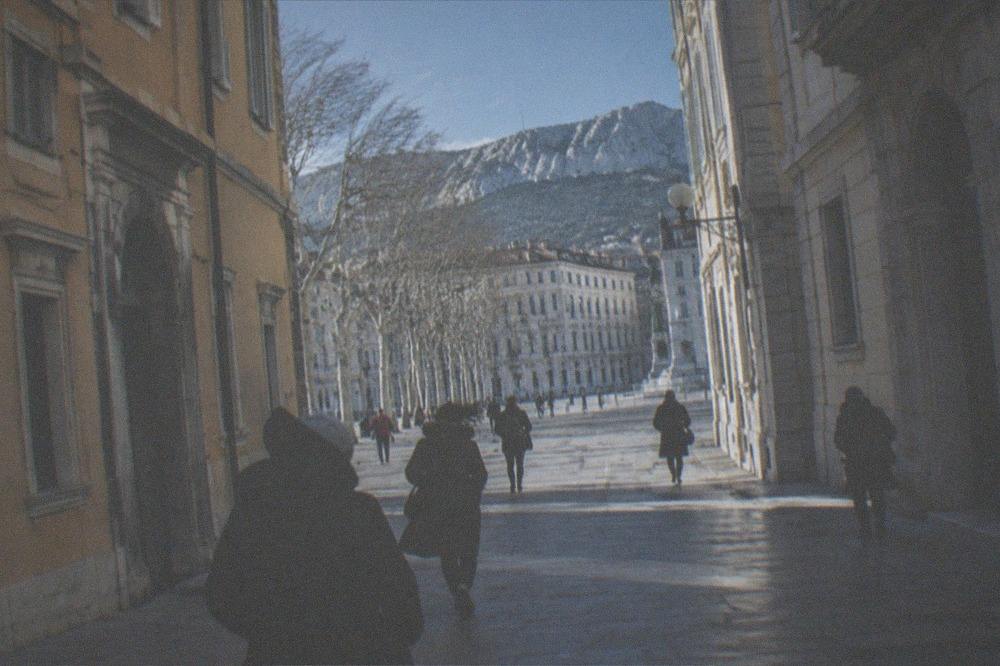
Walking technique sounds like a joke until the first strong gust. Lean into the wind, keep a low centre of gravity, cross the open stretches in the lulls between gusts rather than at the peak, and use the handrails where the city has installed them. The gusts are pulsed, not constant, and the lull between two pulses is often long enough to cross a square. Cyclists and motorcyclists find the gusts genuinely hazardous, and drivers of high-sided vehicles are warned in strong episodes.
Where Can You Watch the Bora Safely in Trieste?
The safest and most dramatic places to watch a strong bora are the elevated viewpoints above the city, such as the area around Castello di San Giusto on its hill, and the sheltered upper stretches of the seafront, while the exposed Rive, the Molo Audace and the open water of the gulf are where the wind is at its rawest and are best appreciated briefly and from behind cover.
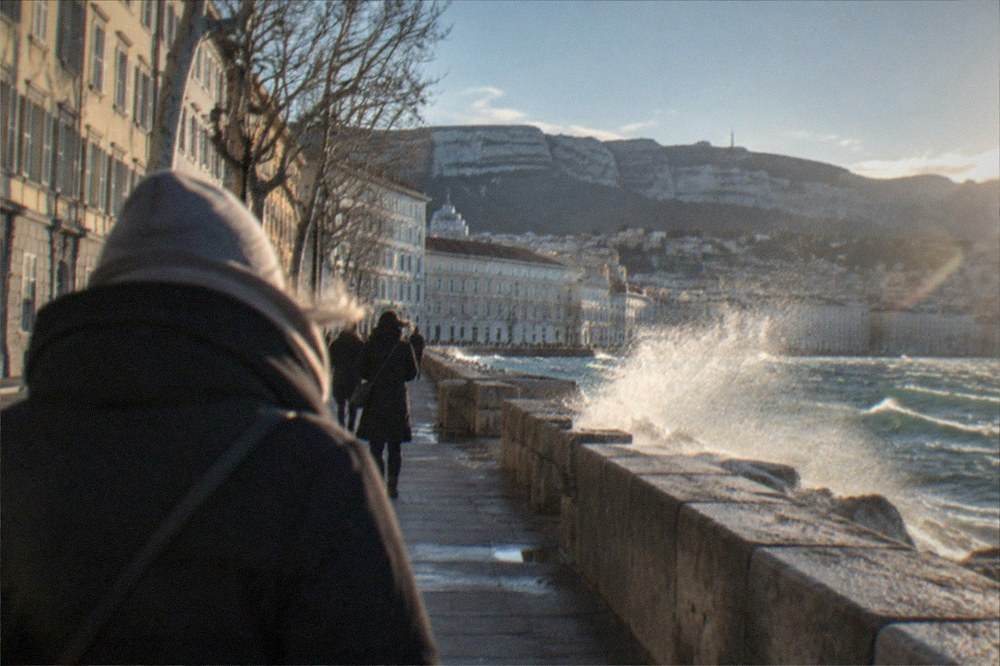
The paradox of the bora is that the wind is the spectacle. On a clear bora day the visibility across the gulf is extraordinary, the sea is a field of whitecaps, and the spray off the breakwater is worth seeing, but the best viewing is done from a position with something solid at your back. The hill of San Giusto, the arcades facing Piazza Unità d'Italia, and any of the elevated terraces above the waterfront give you the panorama without the full force. Pair this page with the Piazza Unità d'Italia guide and the San Giusto Castle and Hill guide for the sheltered viewing spots.
| Where | Exposure to the bora | Best use on a windy day |
|---|---|---|
| The Rive and the open seafront | Full force, gusts pulsed | A short look, then move inland |
| Molo Audace | Fully exposed over open water | Watch the whitecaps briefly, from cover nearby |
| Piazza Unità d'Italia, arcaded sides | Exposed square, sheltered arcades | Viewing behind the colonnades |
| Città Vecchia lanes | Sheltered by tall buildings | Normal walking, cafés, shopping |
| San Giusto hill | Elevated, open, strong gusts | Panoramic views of the white-capped gulf |
A local guide earns their fee on days like this. The Trieste Historic Cafés Experience is built around the city's coffee culture, which is the classic bora-day activity, and when the wind drops, the Postojna Cave and Predjama Castle day trip moves you into a cave where the weather outside is irrelevant.
Does the Bora Affect Day Trips from Trieste?
The bora mainly affects sea-based day trips, with ferry services across the gulf the first things to feel a strong episode, while land day trips to the Carso, the caves, Slovenia's lakes and the Istrian coast continue in almost any wind, though exposed coastal walks such as the Rilke Trail above Sistiana and the cliffs of the Karst edge become genuinely hazardous in gusts over 90 km/h.
The geography decides this. The wind accelerates as it pours down the escarpment and then runs out across the water, so the open gulf and anything floating on it take the worst of it, while the plateau itself, a few hundred metres up, is where the air is accelerating but the walking is on solid, if exposed, ground. Cave visits are effectively weatherproof: Grotta Gigante runs guided tours year-round with compulsory booking, and the karst caves day trips from the city are among the most reliable plans for a windy forecast. See the day trips from Trieste guide for the full menu.
One border note that matters for day trips into Slovenia: Italy is running temporary internal border checks on its land border with Slovenia, with the current extension running through 18 December 2026 per the European Commission's register, so carry a passport or national ID card even though all three countries, Italy, Slovenia and Croatia, are in the Schengen area and all three use the euro. No currency change is needed anywhere on this itinerary.
Common Questions About the Trieste Bora Wind
What is the bora wind in Trieste, Italy?
A cold, dry, gusty wind from the east-north-east that spills over the Dinaric Alps and accelerates down the Carso plateau before reaching the Gulf of Trieste. ARPA FVG's regional wind sheet records gusts largely exceeding 100 km/h in the Trieste coastal zone, with values above 140 km/h recorded in the last twenty years.
How strong does the Trieste bora get?
The strongest gust in the official station series is 168.1 km/h, measured in February 2012 at the molo Fratelli Bandiera. The city averages 17.6 days a year with a gust over 90 km/h and 49.0 days over 72 km/h.
When is bora season in Trieste?
Strong episodes cluster in the cool season from November to March, peaking in February, but the monthly record gust exceeds 110 km/h in every month of the year and even July averages 0.9 days with a gust over 90 km/h. June is the calmest month.
At what wind speed do the Trieste Rive close?
No official threshold exists. No published cutoff governs when the seafront closes, ferries stop or events are cancelled, and the authorities make those calls in real time from live conditions. Treat the forecast and official notices as the source of truth on the day.
Is Trieste rainy in summer?
No. July is the second driest month at 53.8 mm, behind January and March at 52.8 mm each. The wettest months are November at 109.8 mm and September at 102.3 mm, so rain in Trieste is an autumn problem, not a summer one.
Does the bora affect the Barcolana?
It can. The regatta runs in October, which averages 1.4 days a year with a gust over 90 km/h, and strong episodes have disrupted the event village and races in past editions. The organisers make event-by-event calls, with no published wind limit, and the 2026 edition runs from 2 to 11 October with the main race on Sunday 11 October.
The bora is not Trieste's inconvenience, it is Trieste's signature, the wind that clears the air, fills the sails and gives the seafront its drama, and the station tables say you can meet it in any month of the year.