Piazza Unità d'Italia in Trieste, Italy: The Grand Seaside Square
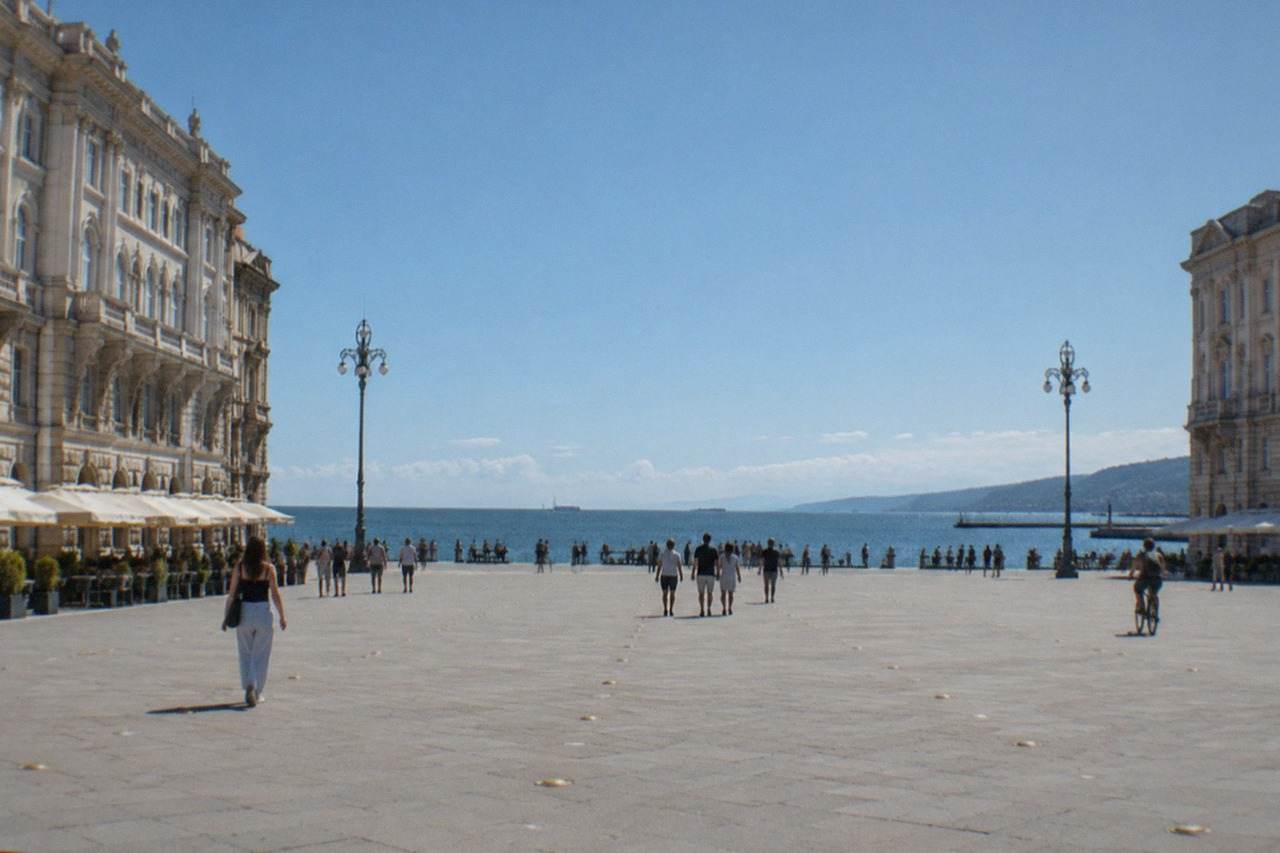
Piazza Unità d'Italia is the monumental heart of Trieste, Italy, a vast square that opens directly onto the Adriatic with the Gulf of Trieste in front of it and the city's Habsburg-era elegance on three sides.
Short answer
Piazza Unità d'Italia is Trieste's main square in Italy, one of the largest seaside squares in Europe, facing the Adriatic between the historic Città Vecchia and the Borgo Teresiano. It is free to visit at any hour, sits a short walk from the cruise terminal and the train station, and is the natural starting point for every visit to the city.
Piazza Unità d'Italia is the monumental centre of Trieste, Italy, the Adriatic port city in Friuli Venezia Giulia that sits close to the Slovenian border at the top of a narrow gulf. The square is the single best orientation point in the city: three sides are closed by grand civic and commercial buildings, and the fourth side is open water, so the Gulf of Trieste, the Molo Audace pier and the hills of the Carso plateau beyond form the square's fourth facade. Locals and every guidebook agree on one thing about this city, that the piazza is where a visit begins. This page covers what the square is, what surrounds it, which tours and tickets cover it, how to reach it by tram, bus or train, when to visit, and what to do with the rest of your day from its doorstep.
What Is Piazza Unità d'Italia in Trieste, Italy?
Piazza Unità d'Italia is Trieste's principal square in Italy, a vast paved piazza of roughly rectangular plan that opens directly onto the Adriatic Sea at the edge of the Città Vecchia, the city's old town. It is free to enter and open at all hours, it functions as the city's civic stage for events from the Barcolana regatta village to the Christmas market, and its three land sides carry the most grandly decorated facades in Trieste.
The square's defining feature is the missing fourth side. Where most Italian squares are enclosed, this one runs straight into open water, so the view from the middle of the paving is a horizon of sea and, on clear days, the coastline of the gulf on both sides. The position is not accidental: Trieste grew as the great port of the Habsburg empire, and the square was laid out as the ceremonial front door of that port, with the sea treated as the honoured guest. The result is a piece of urban theatre that visitors consistently describe as the most surprising single view in any Italian city of this size.
The square also works as the hinge of the whole city. To one side lies the Città Vecchia with its Roman theatre and medieval lanes, to the other the Borgo Teresiano with the Canal Grande and its churches, and behind it the hill of San Giusto with the cathedral and castle. Everything a first-time visitor wants is within a short walk, which is why every guided walking tour in the city, private or group, free or paid, uses the piazza as either its start point or its centrepiece.
Why Is the Piazza Laid Out Around the Open Sea?
The square faces the sea because Trieste's wealth came from the sea, and the piazza was built as the ceremonial interface between the port city and the Adriatic. Three sides were filled with the civic, commercial and insurance institutions of a Habsburg port, while the fourth was left open so that arriving ships, and later the waterfront itself, completed the composition. That single design decision is why the square feels like a stage set rather than an enclosed room.
The buildings around the square are the architecture of an empire's port city, a deliberately Central European grandeur that looks as much to Vienna as to Venice. Trieste's history as the main sea gate of Austria-Hungary is the reason the city's centre does not look like typical Italian cities of the same size, and the piazza is where that difference is most visible. The tour roster reflects it: there is a dedicated Habsburg History Private Walking Tour of the city, and the guided walks of the centre are sold on the promise of a Central European atmosphere among elegant squares and sea views.
The open side has a practical consequence for visitors. The bora, the cold north-easterly wind that funnels down the gulf, hits the waterfront with full force, and ARPA FVG's own station tables for the molo Fratelli Bandiera record an all-time peak gust of 168.1 km/h in February 2012, with 17.6 days a year on average gusting over 90 km/h. The square is one of the windiest grand spaces in Italy. In winter, hold your hat.
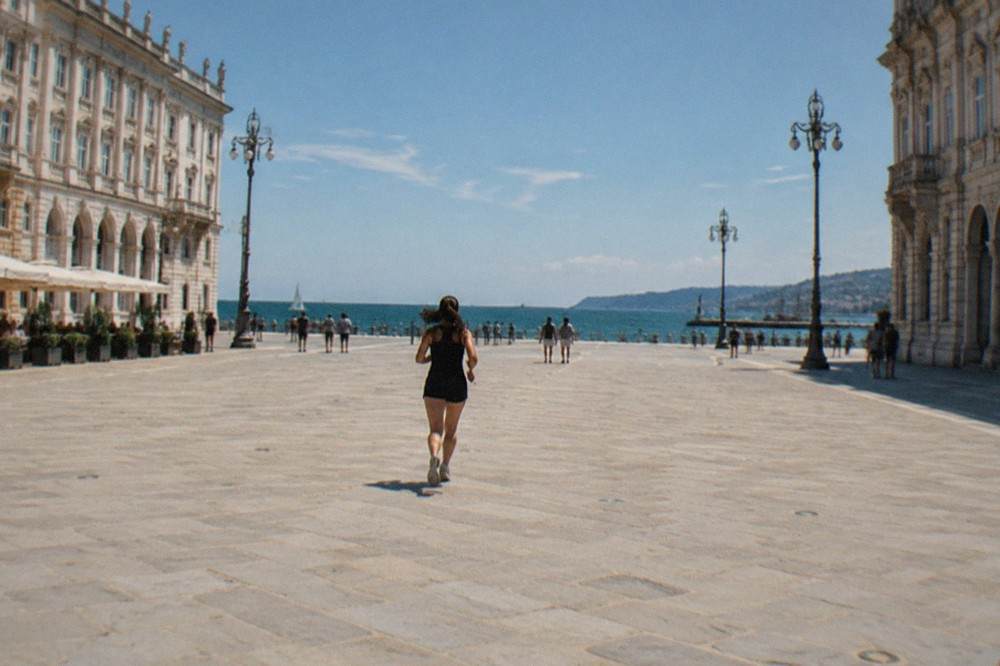
What the square is used for matters as much as how it looks. In October it becomes the shore base of the Barcolana, the regatta whose 58th edition runs 2-11 October 2026 with the main race on Sunday 11 October over 13 nautical miles of the gulf; the finish line lies off the piazza itself. In December the Christmas market takes over part of the paving. On ordinary evenings the square belongs to people walking the waterfront, because the sea side stays public and open all night.
What Can You See and Do Around Piazza Unità d'Italia?
Within a short walk of the square you can walk out onto the Molo Audace pier free of charge, look down into the Roman theatre from the street, climb to the cathedral of San Giusto where entry is free, and tour the castle on the same hill for €7, with the Museo Revoltella and its modern gallery a few streets away at €8. The piazza itself needs no ticket and no booking, and everything around it can be done on foot.
The square sits in the middle of a dense cluster of sights, which is the practical reason to start here. The table below lists what is closest and what each one costs, using the 2026 figures published on each venue's own page.
| Sight | Relation to the piazza | Entry cost | Hours (2026) |
|---|---|---|---|
| Molo Audace | Straight ahead, on the water | Free | Open access |
| Cattedrale di San Giusto Martire | Uphill in the Città Vecchia | Free | Weekdays 8:00-18:30, Sundays 9:00-19:30 |
| Castello di San Giusto | Same hill, above the cathedral | €7 full, €5 reduced | 1 Apr-11 Oct daily 10:00-19:00; from 12 Oct Tue-Sun 10:00-17:00 |
| Teatro Romano | Below the hill, viewed from the street | Free | Visible from outside only |
| Museo Revoltella | Short walk into the Borgo Teresiano | €8 full, €6 reduced | Daily 10:00-19:00, closed Tuesdays |
| Palazzo della Borsa area | Adjacent square behind the piazza | Free | Open access |
The Molo Audace deserves the first hour. The pier runs straight out from the waterfront in front of the square, paved in white stone, and walking to its end puts you standing on the sea with the city arranged around you. It costs nothing, it is open at all hours, and it is the place from which the standard photograph of the piazza's facades across the water is taken. On windy days the bora reaches the pier before anywhere else, and ARPA's tables show every month of the year has recorded a gust above 110 km/h at the nearby station, so treat the railings with respect in winter.
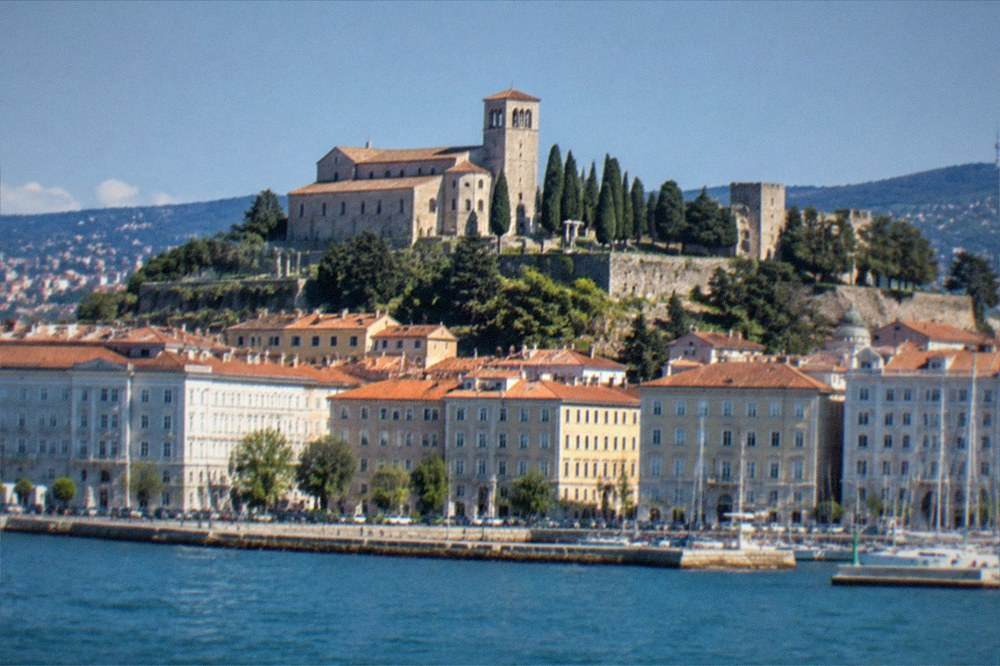
The second walk is uphill. The Città Vecchia rises behind the square's eastern corner, and the route up to San Giusto passes the Arco di Riccardo and the Roman theatre on its way. The cathedral is free to enter, its bell tower keeps seasonal hours published by the parish, and the castle on the same hill sells a €7 ticket that covers the walls and bastions, the castle museum and the Lapidario Tergestino. From the castle ramparts the whole gulf and the square below are laid out in one frame.
The private guided tour of Trieste is the most direct way to convert the square into an understanding of the city. The listing describes cordial walks through the beautiful city, it runs about 2.5 hours, and the operator's live listing shows a rating of 5 from 115 reviews with a group price of $194.89 for up to 10 people. Check availability if you want the facades explained rather than just photographed.
Which Tours and Tickets Start from the Piazza?
The tours that cover the square are the city's guided walking tours, which all route through it, the self-guided audio and written walk sold at $7.59, the free tip-based GuruWalk city walk, and the hop-on sightseeing bus at $19.49, while the Miramare Castle entry ticket at $20.64 covers the excursion most visitors pair with a day in the centre. Prices and ratings below are from each operator's live listing.
Walking is the dominant format here because the centre is compact and the square connects everything. The comparison below uses the figures on each listing.
| Tour | Format | From (per person) | Rating | Duration |
|---|---|---|---|---|
| Trieste: Private guided tour of Trieste | Private walk, up to 10 | $194.89 per group | 5 from 115 reviews | 2.5 hours |
| Trieste Walking Tour with Audio and Written Guide by a Local | Self-guided audio | $7.59 | 4.5 from 105 reviews | About 2.5 hours |
| Discover Trieste on a walking tour | GuruWalk free walk, tip based | Free, tip based | 4.86 from 50 reviews | Varies with the guru |
| Trieste Bus Tour with Audio Guide | Hop-on sightseeing bus | $19.49 | 4.3 from 2,638 reviews | 1.5 hours |
| Trieste: City that will definitely surprise you | Guided walk with historic bar coffee stop | $68.79 | 4.97 from 106 reviews | 2h 30m |
| Trieste Historic Cafés Experience | Coffee culture walk | $74.52 | 4.9 from 19 reviews | 3 hours |
The free option deserves a plain word, because it is genuinely free. GuruWalk runs a pay-what-you-want city walk of Trieste led by a local guru, tip based, rated 4.86 from 50 reviews, and a second free GuruWalk covering the Old Port's industrial archaeology. There is no price to print because there is no price: you tip the guru at the end. For visitors who would rather move at their own pace, the audio-and-written-guide walk avoids fixed schedules entirely and still tells the stories behind the streets around the square.
The self-guided format suits the piazza especially well, because the square's buildings reward standing still with headphones on. Pair it with the coffee walks above if the city's caffè culture is part of why you came: Trieste is a historic coffee port and roasting centre, home of Illy, and the historic cafés within a few minutes of the piazza are the standard stop on every themed walk. No per-head consumption figure is published by any primary source, so treat the city's coffee fame as a fact of its port history rather than a statistic.
How Do You Get to Piazza Unità d'Italia?
The square is reachable on foot from Trieste Centrale station and from the cruise terminals on the waterfront, by urban bus with a single ticket at €1.50 for 60 minutes or €1.85 for 75 minutes, by the tram de Opicina from piazza Dalmazia using the same urban tickets, and by regional train from Trieste Airport station, which is joined to the terminal by a covered walkway. Contactless bank cards can be tapped on board buses and the tram.
Trieste's 2026 urban tariff sheet, published by the operator, prices the whole network as follows, and the same tickets are valid on the tram.
| Ticket | Validity | 2026 price |
|---|---|---|
| Urban single U01 | 60 minutes | €1.50 |
| Urban single U02 | 75 minutes | €1.85 |
| Day ticket U24 | One day | €3.35 |
| 10 rides U10 | Ten urban journeys | €13.50 |
| 20 rides U20 | Twenty urban journeys | €16.65 |
Single tickets run 60 or 75 minutes, extended to 240 minutes on Sundays and public holidays, and the on-board Eva readers accept Mastercard, Visa and American Express plus digital wallets, applying the cheapest applicable fare. Season-pass prices appear in the same tariff PDF but should be read there rather than summarised. The rest of the planning pages sit on Trieste Travel Guide.
The tram deserves its own paragraph because almost every English-language guide gets it wrong. The tram de Opicina, urban line 2, was reactivated on 1 February 2025 after the long stop that followed the August 2016 accident, and it runs today on a timetable dated 20 July 2026. Its city terminus is piazza Dalmazia, not piazza Oberdan, and the route climbs about 5.175 km to Opicina at the top of the Carso. It is part of the ordinary urban network, so the €1.50 single covers it. For the live status, including occasional maintenance notices, check the operator's own site rather than any printed guide, including this one.
From the airport, the story is simple: Trieste Airport has its own railway station joined to the terminal by a covered pedestrian walkway of roughly 400 m with moving walkways, served by regional, Intercity and Frecciarossa trains. The journey time to Trieste Centrale varies by service, so check the operator's planner for your train rather than a fixed figure. From the station, the piazza is a short walk through the Borgo Teresiano.
Cruise passengers have the shortest trip of all. The ships dock on the waterfront within the same stretch of shore the square opens onto, and the walk from the berth into the piazza is level and direct, a route covered in detail on our cruise port orientation page.
When Is the Best Time to Visit the Piazza in Trieste?
The best months to stand in Piazza Unità d'Italia are May, June and September, when ARPA's station tables for the Trieste waterfront show mean highs of 21.7, 25.8 and 23.9 C with almost no days over 30 C and the sea at 17.9, 23.1 and 23.9 C, and when the wind is at its calmest, June averaging just 2.2 days with a gust over 72 km/h. July and August are hotter but still dry, and October belongs to the Barcolana.
The climate record matters more here than in most Italian cities because of the wind. The table below is from the ARPA FVG and OSMER station at Trieste molo Fratelli Bandiera, series 1995-2024, which is the agency's own waterfront station and the right source for the city.
| Month | Mean high C | Rain mm | Sea C | Days gusting over 72 km/h | Daylight hours |
|---|---|---|---|---|---|
| March | 13.0 | 52.8 | 11.6 | 4.9 | 11.83 |
| April | 16.8 | 60.7 | 14.0 | 3.5 | 13.48 |
| May | 21.7 | 75.0 | 17.9 | 2.7 | 14.88 |
| June | 25.8 | 62.5 | 23.1 | 2.2 | 15.68 |
| July | 28.2 | 53.8 | 25.9 | 3.3 | 15.38 |
| August | 28.1 | 71.7 | 25.9 | 2.9 | 14.19 |
| September | 23.9 | 102.3 | 23.9 | 3.5 | 12.62 |
| October | 19.6 | 88.6 | 20.3 | 4.0 | 11.03 |
Two facts in that record contradict the lazy version of Trieste's weather. First, the city's wettest month is November at 109.8 mm, with September second at 102.3 mm, while July at 53.8 mm is one of the driest: summer is not the rainy season, autumn is. Second, the wind does not simply fade away in summer; July actually records more days with gusts over 90 km/h than April, May or June, so a summer bora day is possible even in the warmest weeks. The calmest month for wind is June.
The square changes character completely across the year, and every phase has its constituency. Summer evenings belong to the waterfront stroll and the sea swimming spots up the coast at Barcola. Early October brings the Barcolana village and the biggest sailing race in the world, whose record entry of 2,689 boats in 2018 is the figure the organisers themselves publish. December turns part of the paving into the Christmas market. Winter days are quiet, sometimes ferociously windy, and the facades photograph beautifully in hard light.
Where Should You Eat and Drink Near the Piazza?
Around the square you should drink a coffee in one of Trieste's historic caffès, which are the standard stop on every coffee-themed walk of the city, eat the buffet-style local cooking of jota and goulash in a nearby trattoria, and look beyond the piazza's own terraces for the osmize of the Carso, farmhouse wine outlets signposted by a frasca branch, whose open days are listed on the osmize.com calendar.
The coffee comes first because this is a coffee city in a way few others are. Trieste is a historic coffee port and the home of Illy, its grand caffès sit within minutes of the piazza, and the Historic Cafés Experience walk, $74.52 and rated 4.9 from 19 reviews, is built around them. Order standing at the bar as the locals do and the price of the same caffè drops, which is true across Italy. No verified per-head consumption figure exists for the city, so ignore any number you have read claiming Trieste drinks twice the national average: it has no primary source.
For food, the city's own cooking is Central European as much as Mediterranean, and the signature dishes are jota, a bean and sauerkraut soup, and goulash, covered in detail on our guide to jota, goulash and the Trieste buffet. The guided foodie walking tour of Trieste, from $71.08 and rated 4.91 from 264 reviews, runs three hours through the street food around the centre, and there is a premium version of the same walk at $87.58 rated 4.9 from 88 reviews.
For something the standard guidebooks underplay, plan a car or bus ride up onto the Carso plateau behind the city. The osmize are farms that sell their own wine and home produce direct from the property for limited periods, an open one is signposted by a frasca, a leafy branch hung at the turning, and the de facto calendar of which farm is open on which day lives at osmize.com with a map and addresses. The wines of the Carso are Vitovska, Malvasia and Terrano, and note that Trieste is not in the Prosecco DOC area even though the village of Prosecco itself sits above the city: the Prosecco Origins tour, from $68.79 and rated 4.93 from 227 reviews, is where that story is told properly.
What Is Within a Day Trip of the Piazza?
From the square you can reach Miramare Castle up the coast at Grignano with a €17 castle ticket and a free park, the Grotta Gigante cave on the Carso at €15 with guided tours only and compulsory booking, and the Slovenian border a short drive away, with Piran, Ljubljana and Lake Bled all sold as organised day trips from the city, from $108.91 for Ljubljana and Lake Bled up to $146 for Postojna Cave and Predjama Castle.
The nearest headline sight is Miramare, the white castle on the water up the coast, and it pairs naturally with a piazza-centred day. The castle ticket is €17 for adults including the temporary exhibition, with reduced €7 for EU citizens aged 18-25, the park is free all year, and the castle opens every day 9:00-19:00 with last admission at 18:30. The operator's listing for the entry ticket with audio app is from $20.64, rated 4.35 from 881 reviews.
| Day trip | Tour price from | Rating | Duration | Notes |
|---|---|---|---|---|
| Miramare Castle entry ticket and audio app | $20.64 | 4.35 from 881 reviews | Self-paced | Castle ticket €17 direct, park free |
| Grotta Gigante guided tour and museum entry | $17.20 | 4.78 from 151 reviews | 1 hour | Guided only, booking compulsory |
| From Trieste: Ljubljana and Lake Bled | $108.91 | 4.69 from 544 reviews | 9 hours | Round-trip transport included |
| From Trieste: Piran and Slovenia Coast Tour | $114.64 | 4.57 from 136 reviews | 6 hours | Istrian coast |
| From Trieste: Postojna Cave & Predjama Castle | $137.57 | 4.76 from 543 reviews | 6 hours | Best-known cave in the world |
| Lipica Stud Farm and Škocjan Caves from Trieste | $129.93 | 4.86 from 23 reviews | 6 hours | Lipica and a UNESCO cave system |
The cave deserves emphasis because its rules trip people up. Grotta Gigante, at Borgo Grotta Gigante near Sgonico, is guided-tour only with compulsory booking, the adult ticket is €15 with reductions to €12 and children 6-18 at €8, departures run at 9:00, 10:00, 11:00, 12:00, 14:00, 15:00 and 16:00, and from September to February it is closed on Mondays. The step count and cave temperature that circulate in guides are not printed on the venue's own pages, so dress for a cool underground hour and expect stairs rather than a number.
For the cross-border trips, get the border facts right. Slovenia, Croatia and Italy all use the euro, and Croatia joined both the Schengen area and the euro on the same day, 1 January 2023, so there is no money to change anywhere on a day trip from Trieste. But Italy is running temporary checks on its land border with Slovenia from 19 June 2026 to 18 December 2026 per the European Commission's register, so carry a passport or national ID card and treat the border as checkable, not as a formality.
The Miramare ticket with the audio app is the most popular single add-on to a city day among the tours that cover this area, and the operator's live listing carries the current price and availability.
How Much Does a Visit to the Piazza Area Cost?
The square itself costs nothing, a full day around it can be done for the price of a €3.35 day ticket plus food, and the main optional costs are the castle at €7, the Museo Revoltella at €8, a coffee in a historic caffè, and the city's tourist tax, which runs from €1.50 per night at campsites up to €3.80 at five-star hotels, charged for a maximum of five consecutive nights and with everyone under 18 exempt.
The tourist tax is the line item most visitors do not expect, because it is usually collected by the accommodation, not by the city. The Comune di Trieste's own 2026 rate table sets it as follows.
| Accommodation type | Tourist tax per person, per night |
|---|---|
| 5-star hotel | €3.80 |
| 4-star hotel or self-catering case vacanza | €3.30 |
| 3-star hotel | €3.00 |
| 2-star hotel, B&B Superior, affittacamere | €2.30 |
| Hostels, agriturismi, short-let properties | €2.30 |
| B&B Comfort | €2.00 |
| 1-star hotel, B&B Standard | €1.80 |
| Campsites and motorhome areas | €1.50 |
Beyond the tax, the honest budget picture is that the piazza's own pleasures are free: the square, the pier, the old town lanes, the Roman theatre viewed from the street, the cathedral, and the first Sunday of the month at the state museums under the ministry's free-entry scheme, which Miramare participates in. The paid layer is the castle, the museums, the caves and the tours. The regional FVGcard covers sites including Grotta Gigante and the Museo Revoltella, but its price should be checked on the regional tourism site before purchase rather than quoted here.
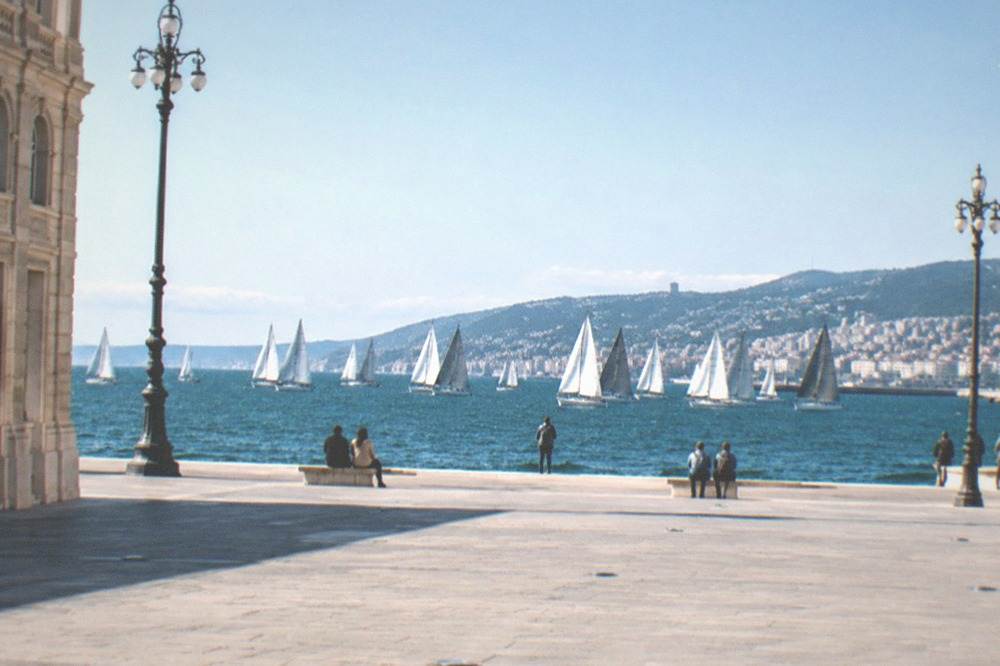
What Should Your Route from the Piazza Look Like?
A good route from the square runs: first the Molo Audace pier on the water, then the facades of the piazza itself, then uphill through the Città Vecchia past the Roman theatre to the cathedral and Castello di San Giusto, then down to the Canal Grande and the Borgo Teresiano, and finally back along the waterfront toward Barcola or out to Miramare, with the whole sequence doable on foot in a day and every leg starting and ending within a short walk of the piazza.
The morning belongs to the old town, because the castle's last admission comes before closing and the hill is best climbed before the heat. The afternoon belongs to the water: the waterfront from the square toward Barcola is the city's own seafront promenade, and the swimming spots along it are covered in our guide to Trieste's beaches and swimming. If the day is your only day, our one-day Trieste itinerary sequences exactly this walk with timings, and the self-guided walking tour page adds the street-level detail.
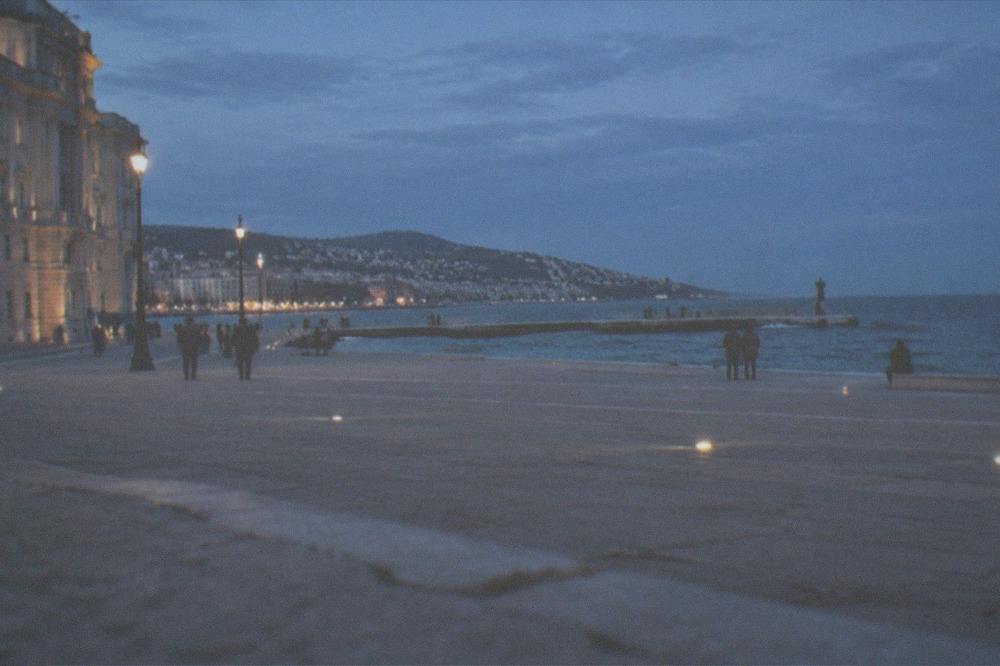
For orientation beyond the centre, the square is also the reference point for every onward move: the train station and the Borgo Teresiano lie one way, the cruise berths and the Molo Audace another, the hill of San Giusto behind, and the Carso and the border above. The city's map page untangles those directions, and the free things to do in Trieste page lists what costs nothing, which in this city is a long list.
Common Questions About Piazza Unità d'Italia in Trieste
Common Questions About the Piazza and the City Around It
Is Piazza Unità d'Italia free to visit?
Yes. The square is an open public space with no ticket, no gate and no closing time, and the Molo Audace pier in front of it is equally free. The paid sights begin uphill at the Castello di San Giusto, €7, and at the museums a few streets away.
What is the square's name in Italian, and how is it written?
It is Piazza Unità d'Italia, with the accent on the à and the particle d' lowercase inside the name. English-language guides frequently drop the accent, but the accented form is the canonical spelling on every official city document.
Can you see the sea from Piazza Unità d'Italia?
Yes, the sea is the square's fourth side. The piazza opens directly onto the Gulf of Trieste, with the Molo Audace pier running out into the water in front of it and the coastline of the gulf visible on clear days on both sides.
How far is the piazza from the cruise port in Trieste?
The cruise berths lie on the same waterfront stretch the square opens onto, and the walk between them is level and direct. Trieste is a compact city and the square is its hinge, so cruise passengers can be standing in the piazza within minutes of disembarking, a route covered in detail on the cruise port guide.
Is the piazza windy?
It can be, seriously. The bora wind funnels down the gulf and hits the waterfront first, and ARPA's station tables record gusts over 90 km/h on 17.6 days a year at the molo Fratelli Bandiera, with the monthly record exceeding 110 km/h in every month. June is the calmest month on average.
What is the best month to visit Trieste and the piazza?
May, June and September combine warm mean highs of 21.7 to 25.8 C with the calmest wind records and sea temperatures from 17.9 C in May to 23.9 C in September. October belongs to the Barcolana regatta, whose 2026 edition runs 2-11 October with the main race on Sunday 11 October finishing off the square.
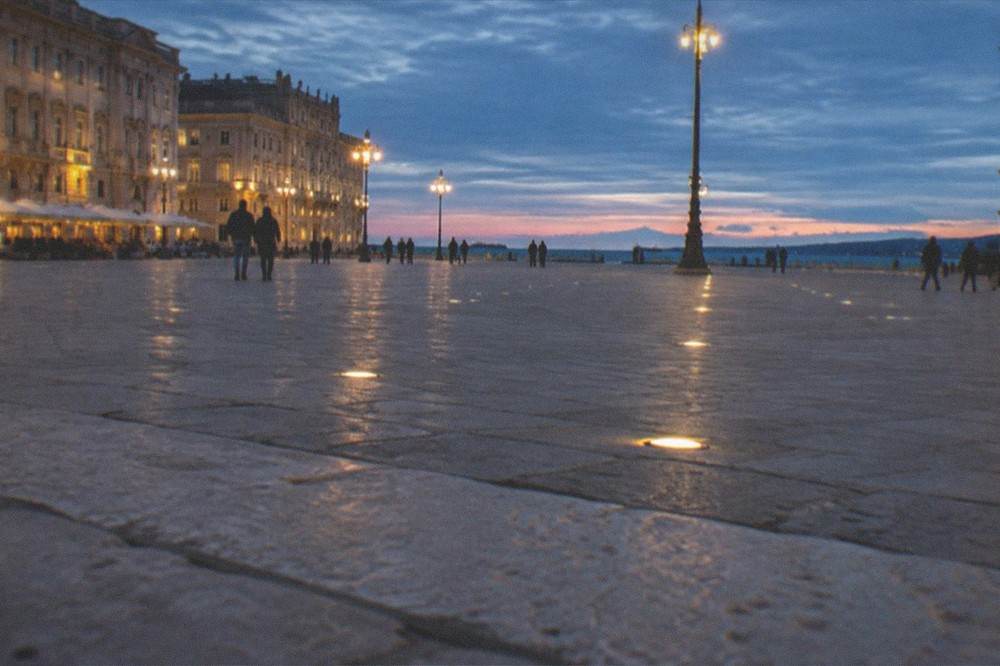
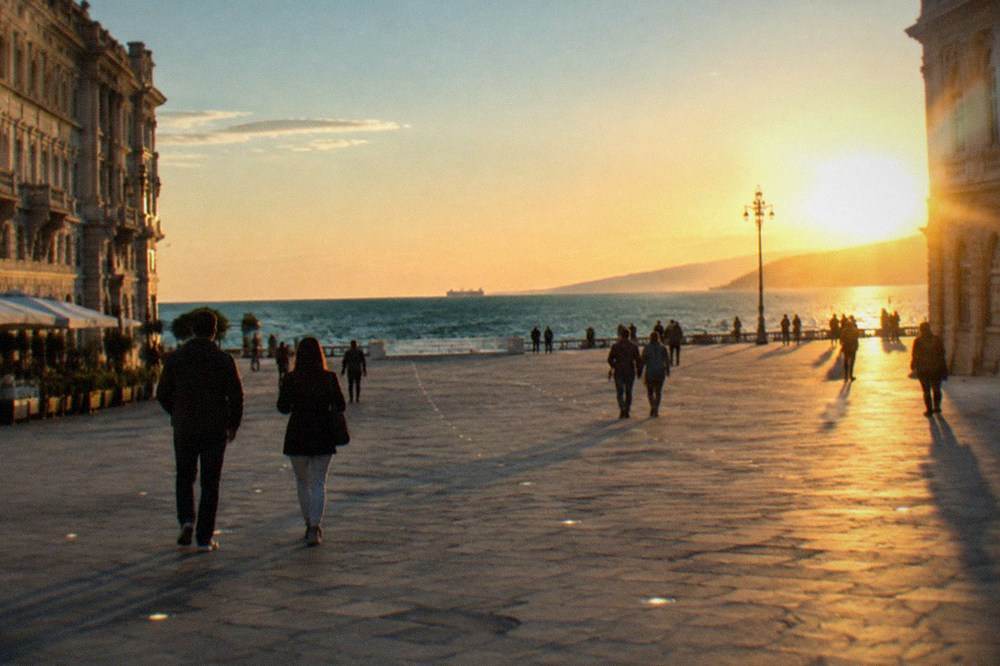
The square rewards the slow approach. Arrive once in daylight for the facades, once at dusk for the lamps, and once early on a windy morning to understand what the bora means to this city, and you will have seen Trieste, Italy from the exact spot its own history was written to face the sea.