A Self-Guided Trieste Walking Tour Through Italy's Adriatic Port City
Trieste, Italy's Adriatic port city, is compact enough to walk end to end in a day. This route strings the seafront, the Roman ruins, the Città Vecchia and the grand Habsburg streets into one loop you can follow at your own pace.
Short answer
A self-guided walking tour of Trieste takes in Piazza Unità d'Italia, Molo Audace, the Teatro Romano, the Cattedrale di San Giusto and Castello di San Giusto, the Canal Grande and the Borgo Teresiano, all within a walkable central loop. Key stops are free to see from outside, and the two paid highlights, the Castello di San Giusto at EUR 7.00 and the Museo Revoltella at EUR 8.00, are optional.
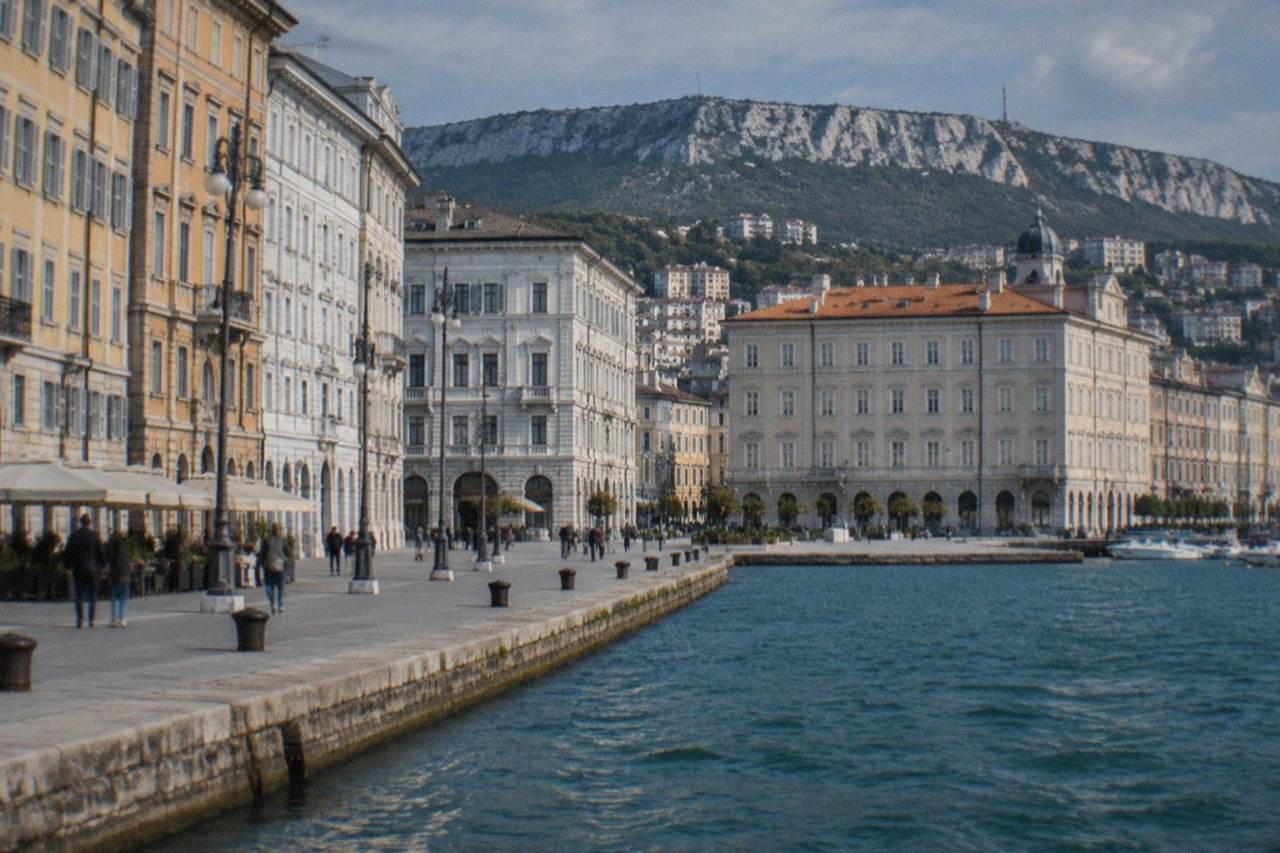
Trieste, in the far north-east corner of Italy on the Adriatic, is a city built for walking. The whole historic centre sits on a narrow strip between the sea and the Karst plateau: the great seafront square, the Roman theatre, the medieval old town on its hill and the grid of Habsburg-era streets behind the port all sit within a compact, largely flat rectangle, with one proper climb up to San Giusto. You do not need a car, a tour bus or even, for most of the route, a ticket.
This route is written as a loop you can start anywhere along the seafront, and it is designed to be done in either direction. Every price and opening time below comes from the venues' own published material for 2026, so you can plan around the two days of the week that matter: the Museo Revoltella closes on Tuesdays, and the Castello di San Giusto closes on Mondays once the winter timetable starts on 12 October. If you would rather have someone else hold the narrative, the free walking tours in Trieste page lists the tip-based options, and this site's own route for one day in Trieste builds on the same geography with more time. This Trieste Travel Guide page is one of a set of itineraries covering the same city from every angle.
How Walkable Is Trieste, Really?
Trieste's entire historic centre is walkable in a single day, because the city centre is a compact strip between the sea and the hills, and the two main clusters of sights, the seafront with Piazza Unità d'Italia and the old town on the San Giusto hill, sit within the same square kilometre. The only real climb is up to the cathedral and castle, and the whole loop needs no bus ticket unless you head out to Barcola or Opicina.
The geography does the work for you. The Roman grid of the Borgo Teresiano runs parallel to the waterfront, the Città Vecchia climbs the hill at the south-east end, and the seafront promenade, the Rive, ties the whole thing together. Public transport exists and is cheap, a 60-minute urban single costs EUR 1.50 per the 2026 tariff sheet, but on this route you will use it, if at all, only to come back from a longer detour.
| Trieste urban ticket | Code | Price | Validity |
|---|---|---|---|
| Single | U01 | EUR 1.50 | 60 minutes |
| Single | U02 | EUR 1.85 | 75 minutes |
| Day ticket | U24 | EUR 3.35 | Full day |
| 10 rides | U10 | EUR 13.50 | Carnet |
| 20 rides | U20 | EUR 16.65 | Carnet |
One note on that table: singles are extended to 240 minutes on Sundays and public holidays, and you can tap a contactless bank card on board instead of buying a paper ticket. The system charges the cheapest applicable fare, so there is no arithmetic to do at the validator.
What Is the Best Route for a Self-Guided Trieste Walking Tour?
Start at Piazza Unità d'Italia, Trieste's seafront square, walk out along Molo Audace for the view back, then loop east through the Città Vecchia to the Teatro Romano, climb to the Cattedrale di San Giusto and Castello di San Giusto, come down through Piazza della Borsa, and finish along the Canal Grande and the Borgo Teresiano. The full loop covers the city's five signature views in one continuous walk.
The order matters less than the spine: seafront first, hill second, grid third. The seafront gives you the city's famous opening image, the square with the sea directly in front of it. The hill gives you the layered history, Roman ruins, medieval cathedral, Habsburg castle, in one climb. The grid gives you the coffee houses and the shops, which is where most people want to be by the afternoon anyway.
| Stage | Stops | What you see |
|---|---|---|
| 1. Seafront | Piazza Unità d'Italia, Molo Audace | The square, the pier, the gulf |
| 2. Old town | Cavana, Teatro Romano, Arco di Riccardo | Roman Trieste from the street |
| 3. The hill | Cattedrale di San Giusto, Castello di San Giusto | Cathedral, castle, panoramic walls |
| 4. The centre | Piazza della Borsa, Via San Nicolò | Habsburg commercial Trieste |
| 5. The grid | Canal Grande, Sant'Antonio Taumaturgo, Borgo Teresiano | Coffee houses and the neo-classical city |
If you are short on time, the one day in Trieste itinerary compresses this same spine. Cruise passengers should check the dedicated Trieste from a cruise ship page, because the terminal sits at one end of this exact route.
Where Does the Walk Start, and What Is at Piazza Unità d'Italia?
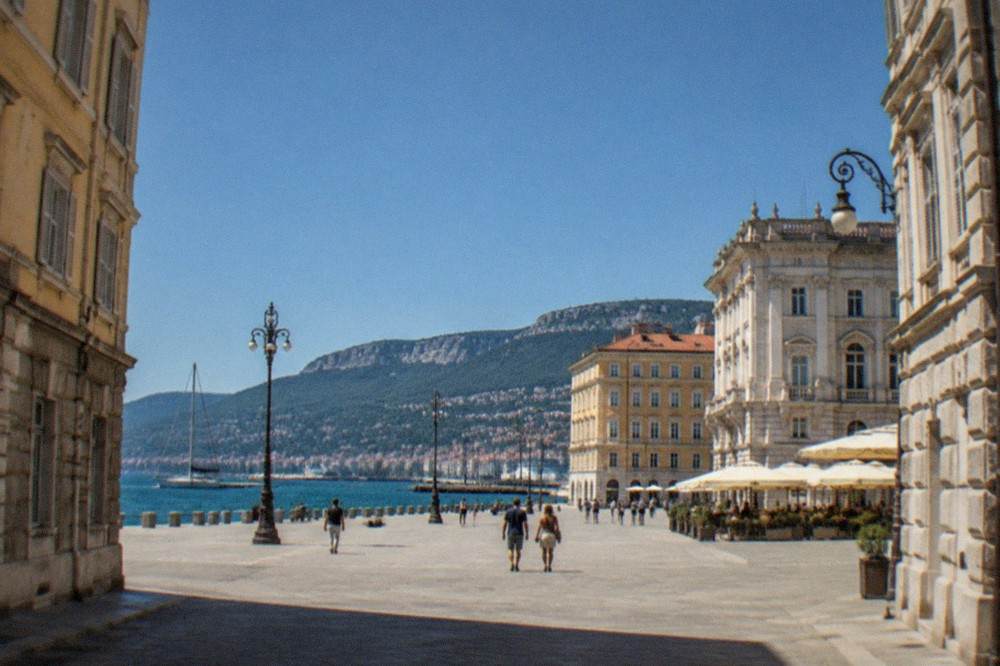
Piazza Unità d'Italia is the natural start and the single most photographed place in Trieste: a vast seafront square, opened directly onto the Gulf of Trieste, lined with the town hall, the prefecture and the palaces of the old insurance companies, with the Molo Audace pier stretching into the water beside it. The square is a public space, free to walk at any hour, and the best light is late afternoon when the facades face the sun.
Stand in the middle and look three ways. Behind you, the Habsburg-era facades; in front of you, the sea, with nothing between the square and the horizon; to your right, Molo Audace, the old passenger pier named for a ship, now a flat walkway with the city's best free panorama. The Piazza Unità d'Italia page covers the buildings in detail.
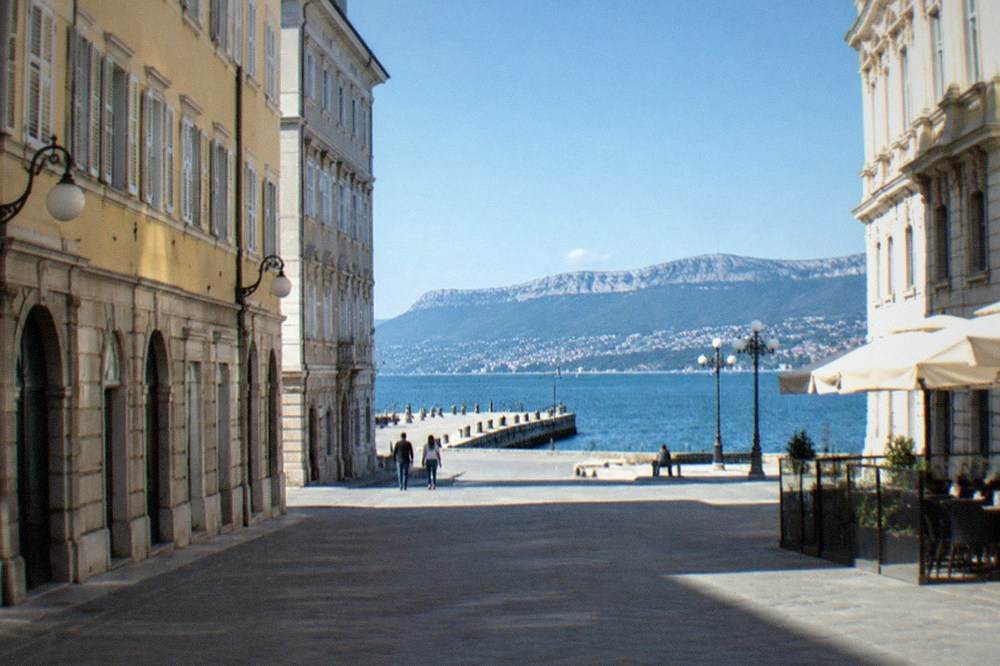
From the pier's end you see the whole waterfront in one frame: the Rive, the lighthouse on the hill to the north-west, the castle ramparts above the roofs. This is the view that decides people's impression of Trieste, and it costs nothing. The square also hosts the city's big public events, so on some days it is full of stages and fencing; the Barcolana regatta village in October is the largest of them, when the whole seafront changes character for the week.
What Do You See in the Città Vecchia and at the Roman Theatre?
The Città Vecchia, Trieste's old town, packs the Roman theatre, the Arco di Riccardo and the narrow medieval lanes into the slope below San Giusto, and the Teatro Romano is viewed from the street above it, free and without entry, because the monument is not routinely open to individual visitors. The whole quarter takes under an hour to wander, and the theatre appears suddenly between the buildings the way only an embedded ruin can.
The theatre is the surprise of the route. You come out of the lanes and there it is, a Roman cavea sitting below street level, framed by later buildings on three sides. The ministry's page for the monument describes it as visible from outside, with guided access for groups and schools on request through the heritage authority; do not plan on walking down into it. The Roman theatre page has the history.
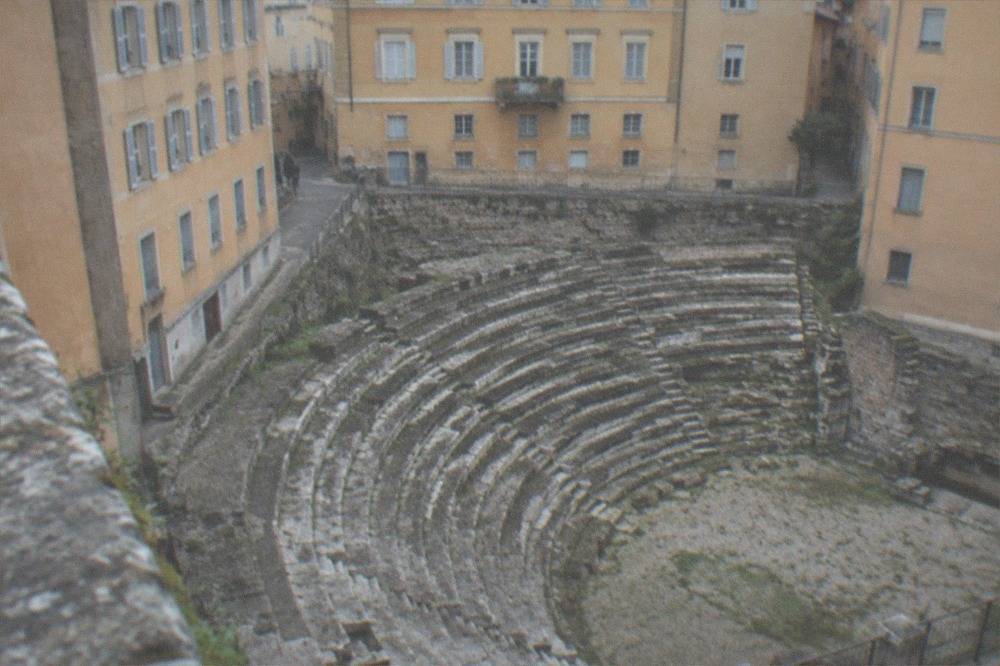
From the theatre, the lanes of the Città Vecchia climb towards the cathedral. The Arco di Riccardo, a Roman gate, stands on one of the ascents. This is the one stretch of the walk with a genuine gradient, and the cobbles reward sensible shoes; the rest of the route is flat.
Is the Climb to San Giusto Worth It, and What Does It Cost?
The San Giusto hill is the historical core of the walk: the Cattedrale di San Giusto Martire is free to enter, open weekdays 8:00-18:30 and Sundays 9:00-19:30, and the Castello di San Giusto next door costs EUR 7.00 adult, EUR 5.00 reduced, covering the walls, bastions and museum, with free entry on the first Sunday of the month and on 3 November. The panoramic walkway on the castle walls is the best view over the city and the gulf.
Check the calendar before you go, because the castle's week shifts with the seasons: daily 10:00-19:00 from 1 April to 11 October, then Tuesday to Sunday 10:00-17:00 from 12 October, closed Mondays. The cathedral keeps different hours again, and the parish asks visitors to avoid Mass times. The bell tower's price is not published on the parish site, so this page does not state one.
| Site on the hill | Entry | Hours | Closed |
|---|---|---|---|
| Cattedrale di San Giusto Martire | Free | Weekdays 8:00-18:30, Sun 9:00-19:30 | During services |
| Castello di San Giusto | EUR 7.00 adult, EUR 5.00 reduced | 10:00-19:00 to 11 Oct, then 10:00-17:00 | Mondays from 12 Oct |
| Castle free days | Free | First Sunday monthly, 3 November | - |
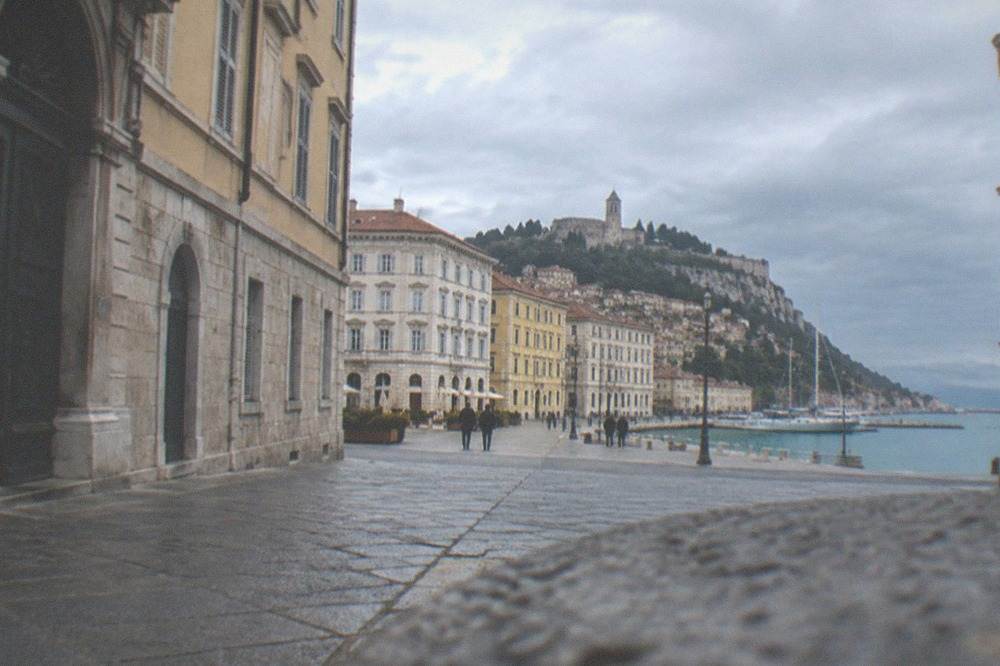
The San Giusto castle and hill page covers the museum and the walls in full. If you are travelling with children, the ramparts are the most forgiving part of the day for short legs, and a family itinerary can build the rest of the day around them.
Where Do You Go After the Hill, and What Is in the Borgo Teresiano?
Come down from San Giusto through Piazza della Borsa into the Borgo Teresiano, the neo-classical grid the Habsburgs laid out for the free port, where the Canal Grande, the Serbian Orthodox church of Sant'Antonio Taumaturgo and the historic coffee houses sit within a few flat blocks of each other. This is the walk's easy second half, all free to wander, and it is where Trieste's café culture lives.
The canal is the odd sight here: a straight waterway cut into the street grid so sailing ships could unload at the warehouse doors, with the church of Sant'Antonio Taumaturgo closing the view at its head. The canal district and the wider grid of the Borgo Teresiano are covered in this site's dedicated area pages, which walk the district block by block.
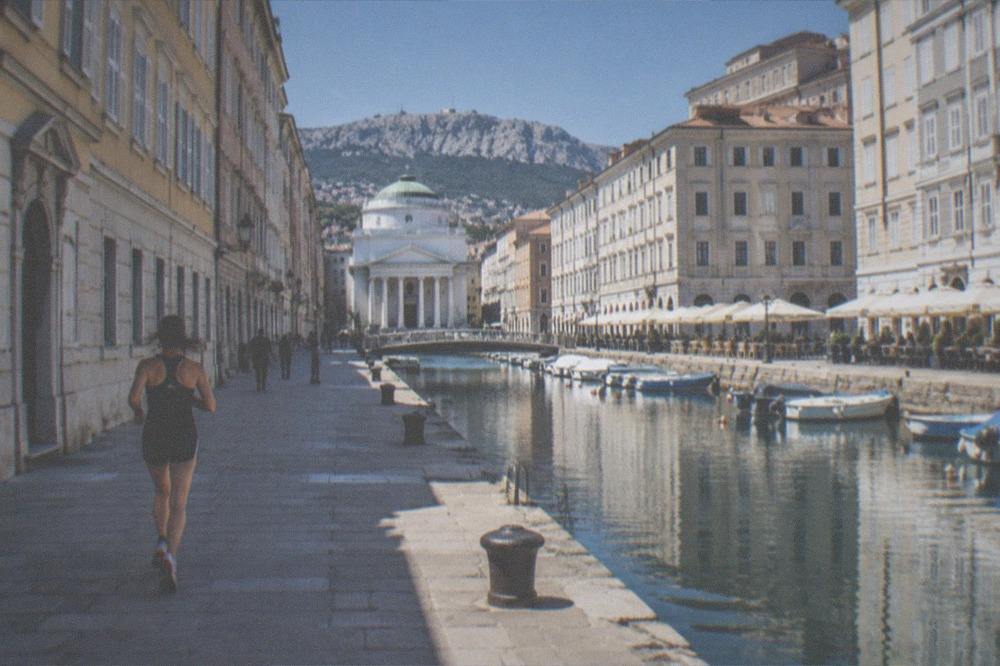
The coffee houses are the point of this stretch. Trieste's café culture is real, historic and central to the city's identity, but resist the version of the story that comes with numbers: the endlessly repeated claim about how many kilograms of coffee each resident drinks has no primary source behind it, so this site does not print one. What the sources do support is that Trieste has been a coffee port and roasting centre for centuries, and the Trieste coffee culture page tells that story properly. Order like a local and the barista will ask whether you want the coffee "normal" or with more milk; the local vocabulary is its own small lesson.
Which Museums Can You Add to the Walk, and When Are They Open?
Two museums sit directly on or beside this route: the Museo Revoltella, the modern art gallery on the seafront end of Via Diaz, at EUR 8.00 adult and EUR 6.00 reduced, open daily 10:00-19:00 but closed Tuesdays, and the Risiera di San Sabba, the national monument south of the centre, which is free and open daily 9:00-19:00 until 11 October and 9:00-17:00 after.
Both close on 25 December and 1 January, and Revoltella is free on the first Sunday of the month.
The Revoltella is the easy add-on: it is a five-minute detour from the seafront, in a palazzo that was itself a 19th-century banker's house, and its Tuesday closure is the single most common scheduling mistake visitors make in this city. The Risiera is a different proposition, a sombre memorial site on the site of the only Nazi extermination camp operating on Italian soil, and it deserves time rather than a dash between photos. This site's Risiera di San Sabba page handles it with the seriousness it needs.
| Museum | Price | Hours | Closed |
|---|---|---|---|
| Museo Revoltella | EUR 8.00 adult, EUR 6.00 reduced | 10:00-19:00 daily | Tuesdays |
| Risiera di San Sabba | Free | 9:00-19:00 to 11 Oct, then 9:00-17:00 | 25 Dec, 1 Jan |
| Castello di Miramare (out of centre) | EUR 17.00, park free | 9:00-19:00 daily | No weekly closure |
Miramare is listed here for completeness: it is not on the walking route, it sits up the coast at Grignano, but the castle and its free park are the region's biggest draw and the Miramare Castle page covers the visit. Fit it on a second day, or on the same day with a bus along the seafront.
When Is the Best Time of Day to Do This Trieste Walking Tour?
The best time to walk Trieste is the morning, before the cafés fill and before the afternoon wind picks up, because the seafront stages face east and the light on Piazza Unità d'Italia is best before midday, while the ARPA station tables show the bora gusts most often in the cool season and summer averages only 2.2 to 3.3 windy days a month. The evening is the rival slot, when the square's facades are lit and the pier is at its best.
The wind is the one planning variable that genuinely matters here. The bora blows from the east-north-east, and the ARPA FVG station tables for the molo Fratelli Bandiera show a monthly record gust above 110 km/h in every single month of the year, so no season is wind-free; what changes is how often it blows hard. February is the windiest month on the tables, and June the calmest. There is no published wind threshold at which the seafront closes, so do not plan around one; check the forecast and go.
| Month | Mean high | Rain mm | Days gust over 72 km/h |
|---|---|---|---|
| June | 25.8 | 62.5 | 2.2 |
| July | 28.2 | 53.8 | 3.3 |
| August | 28.1 | 71.7 | 2.9 |
| October | 19.6 | 88.6 | 4.0 |
| November | 14.7 | 109.8 | 5.2 |
Note what that table does not say: that Trieste is rainy in summer. The wettest month at the molo station is November at 109.8 mm, and July is the second driest at 53.8 mm. This site's month-by-month weather page carries the full series for all twelve months.
What Should You Eat Along the Way?
Trieste's street food suits a walking tour perfectly: the buffet tradition serves hot pork and sauerkraut dishes from shopfront counters for a standing lunch, the city's signature plates are jota, a barley, bean and sauerkraut soup, and the Austrian-influenced pastries pair with the local coffee vocabulary. A guided foodie walk of the centre runs about 3 hours from EUR 71.08 per person if you would rather have the stops chosen for you.
The buffets are the honest answer for a self-guided day: they are cheap, they are everywhere in the centre, and the counter culture means you are back on the street in twenty minutes. For the sit-down version, the what to eat in Trieste page sorts the city's tables and explains the buffet tradition you are standing in.
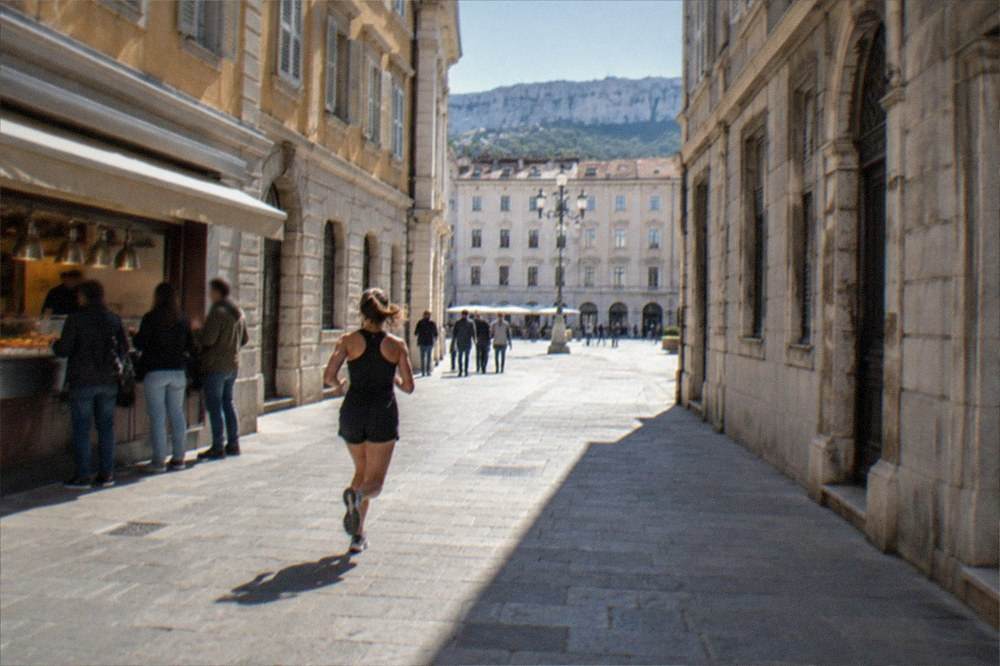
If the food is the reason you are walking, the foodie tour is the efficient way to do it: the operator's listing shows a 3-hour guided walk from EUR 71.08 per person, rated from 264 reviews, and the tour band above links straight to the live listing.
Should You Walk with a Guide Instead of Going Alone?
A guided alternative makes sense in Trieste if you want the stories rather than just the streets, and the options span every budget: a GuruWalk free, tip-based city walk led by a local guru covers the same centre for whatever you choose to tip, an audio and written guide by a local costs from EUR 7.59 per person with no schedule at all, and a private 2.5-hour guided tour of Trieste runs from EUR 194.89 per group of up to 10, rated from 115 reviews.
The self-guided purist's compromise is the audio-and-written-guide option: it is the tour this page's route most closely mirrors, it frees you from a meeting point, and the listing prices it from EUR 7.59 per person. Check availability for the current listing.
The free option deserves a word because it is genuinely free: the GuruWalk platform lists "Discover Trieste on a walking tour", a pay-what-you-want city walk run by a local guru, tip-based, with no price to print. The free walking tours in Trieste page lists the current gurus and routes.
At the other end, the private guided tour of Trieste is the full-service version: from EUR 194.89 per group of up to 10 people, 2.5 hours, with the itinerary shaped around you.
How Do You Extend the Walk Beyond the Centre?
Three extensions reward a longer day: the seafront promenade north to Barcola, the swimming and sunbathing strip where locals go for the sea; the tram or bus up to Villa Opicina on the Karst edge for the cliff-top view over the gulf; and the Miramare Castle and its free park up the coast at Grignano, which the castle's own site prices at EUR 17.00 with the park free all year. Each is a short hop from the end of the central loop, and none needs a car.
Barcola is the natural one: the promenade continues from the Rive, and the Barcola seafront page covers the swimming, the pines and the Sunday crowd. The Karst above the city is the other half of Trieste's character, wine country on a limestone plateau, home to the osmize, the seasonal farmhouse wine outlets signposted by a leafy branch hung at the turning, whose open-day calendar lives at osmize.com.
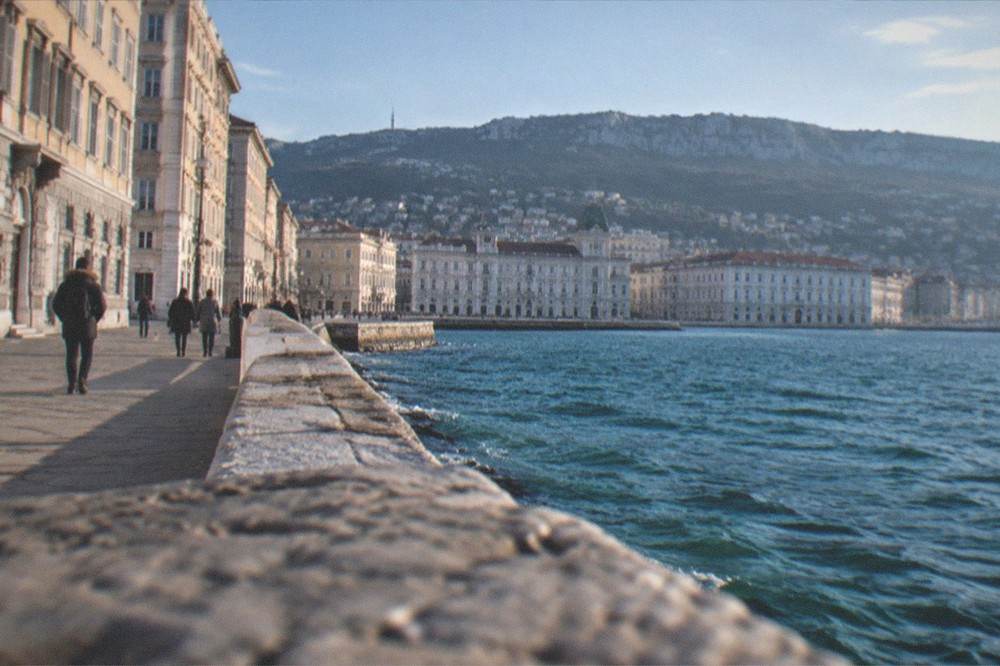
For the ambitious, the day trips from Trieste page collects the cross-border options, and remember the one live caveat before you cross: Italy is running temporary border checks on the land border with Slovenia through 18 December 2026, so carry a passport or ID card even though all three neighbouring countries use the euro. This site also publishes dedicated routes for two days in Trieste, a weekend, a solo traveller and a couple, all built on the same central spine.
Common Questions About Self-guided Walking Tours in Trieste
Can you see Trieste entirely on foot?
Yes. The historic centre, the seafront, the San Giusto hill and the Borgo Teresiano all sit within a walkable strip, and the only climbs are the lanes up to the cathedral and castle. Barcola, Opicina and Miramare need a bus or the tram.
How long does a self-guided Trieste walking tour take?
The central loop is a half-day at a relaxed pace, a full day with museum entries and a proper café stop. The two paid entries on the route, the Castello di San Giusto at EUR 7.00 and the Museo Revoltella at EUR 8.00, each take about an hour.
Is the Trieste walking route free?
The route itself is free, and so are the cathedral, the Risiera di San Sabba and the view of the Roman theatre from the street. The paid stops are optional: the castle, Revoltella, and, off-route, Miramare and Grotta Gigante.
What days are museums closed in Trieste?
The Museo Revoltella closes on Tuesdays, and the Castello di San Giusto closes on Mondays from 12 October when its winter timetable starts. The cathedral keeps daily hours but asks visitors to avoid Mass times.
Does the bora wind affect a walking tour?
It can, especially between November and March when the ARPA station tables show the most windy days, but there is no published threshold at which anything closes. June is the calmest month on the tables, and the summer months average only a few windy days each.
Is a guided tour better than walking alone in Trieste?
Not necessarily. The city is compact and legible, and an audio-and-written guide from a local, listed from EUR 7.59 per person, gives you the stories without a schedule. A private guide suits visitors who want questions answered in real time, and the GuruWalk free tip-based walk suits every budget.
Walk it once and the logic of Trieste becomes obvious: a Roman hill, a medieval cathedral, a Habsburg port and an Italian seafront, all within sight of each other, and all of it on foot.