What to Eat in Trieste, Italy: The Food, Coffee and Wine of the Adriatic's Most Central-European City
Trieste, Italy eats like nowhere else in the country: Austro-Hungarian comfort plates, Adriatic fish, a serious coffee ritual and farmhouse wine cellars on the Carso, all in one small port city.
Short answer
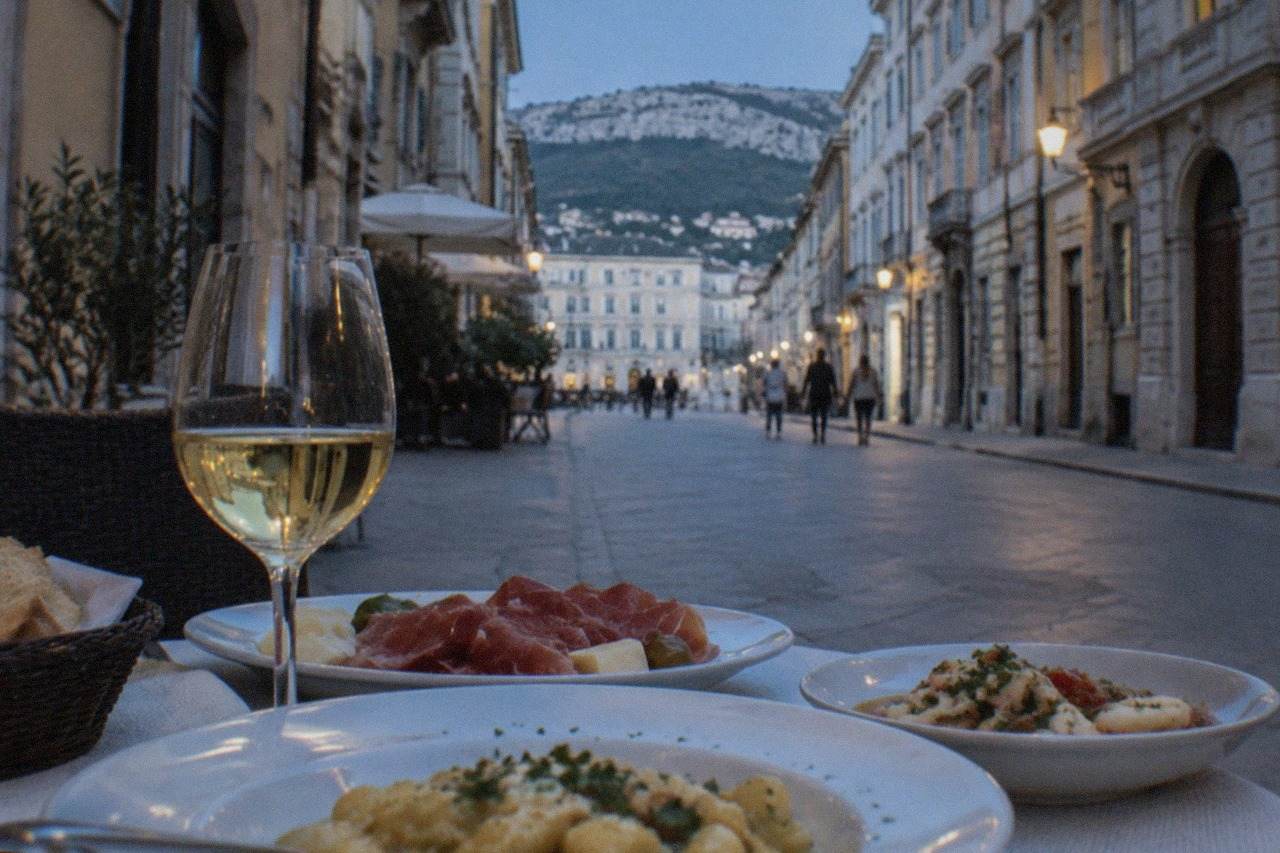
Trieste's food mixes Central European and Mediterranean influences: hearty soups and cured pork from the Habsburg era, fresh Adriatic seafood, a famous coffee culture rooted in the port trade, the seasonal osmize farmhouses of the Carso, and local wines like Vitovska and Terrano.
Trieste, Italy sits at the point where the Italian peninsula stops and the Central European world begins, and its food has never pretended otherwise. This is a port city that spent centuries under Habsburg administration, traded coffee through its docks, and farmed a limestone plateau that the locals call the Carso, and everything on the plate reflects at least one of those three facts. The result is a cuisine that one of the local tour listings sums up as "the mix of Mediterranean and Central European influences", which is exactly right, and which no other Italian city reproduces in quite the same combination.
This guide walks through the whole eating landscape of Trieste: the dishes that define the city, the coffee culture that structures its day, the farmhouse wine cellars of the Carso, the wines you should actually be drinking here, and the tours and classes that get you into all of it with a local at your side. The short answers to the most common questions, including what food Trieste is known for, are folded into each section, and there is a table of real prices and ratings wherever a decision needs numbers.
What Food Is Trieste, Italy Known For?
Trieste is known for a hybrid cuisine: hearty Central European dishes like bean-and-sauerkraut soup and pork goulash served alongside grilled and fried Adriatic fish, all accompanied by the city's distinctive coffee ritual and the farmhouse wine cellars of the Carso plateau. The mix comes from centuries of Habsburg rule layered onto an Italian and Slavic coastal population.
The single most useful thing to understand about eating in Trieste is that it is not a southern Italian food city wearing a northern coat. The Habsburg centuries left the city a taste for cured pork, sauerkraut, mustard and boiled meats, while the sea supplied the grilled fish and the seafood risotti. A local food tour listing describes the cuisine as reflecting "the mix of Mediterranean and Central European influences", and that phrasing is the honest summary: goulash and sardoni in one meal, a coffee and a strudel in the next.
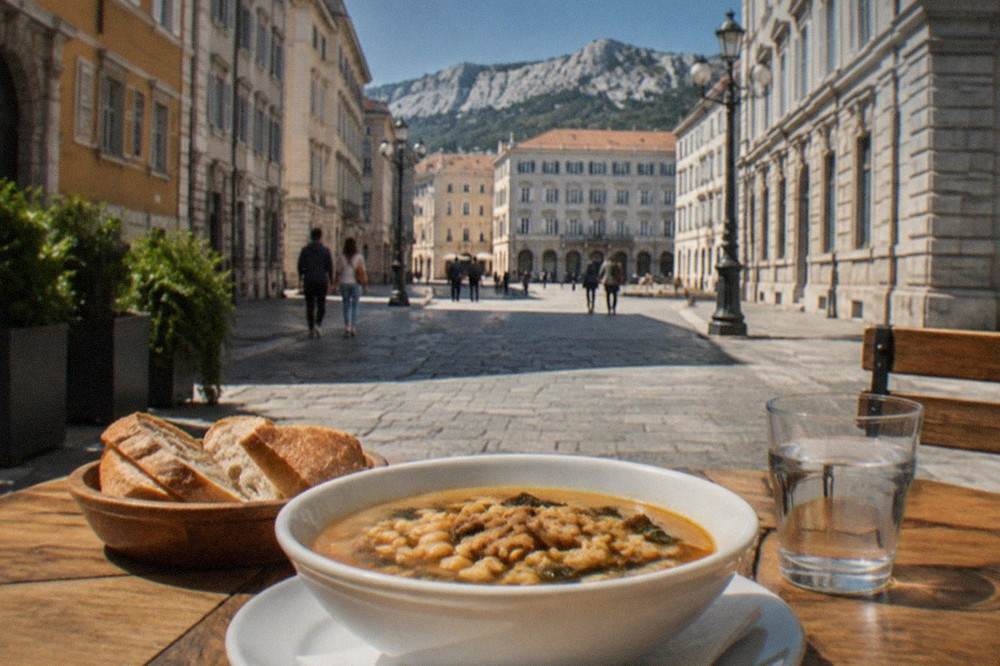
The city's eating day also runs on its own clock. Coffee is a morning and afternoon institution rather than a quick espresso at the bar; the historic cafés of the centre are places to sit. Lunch and dinner lean on the buffet, the local institution that serves the city's cured pork and boiled meats, and on simple trattorias where the Adriatic is on the plate. Our page on the best restaurants in Trieste goes deeper on where specifically to book, and the question is Trieste good for food gets a direct answer elsewhere on this site.
If you want the whole picture in one walk, a guided food tour is the efficient route. The table below shows the three main guided food walks currently listed for the city, with the operator's own prices and ratings.
| Tour | From (per person) | Rating | Reviews | Duration |
|---|---|---|---|---|
| Trieste: Guided Foodie Walking Tour | $71.08 | 4.914185827901917 | 264 | 3 hours |
| Trieste: Unique Food Tour with Local Flavors and Tastings | $85.98 | 4.7432896123082795 | 123 | 3 hours |
| Trieste: Unique Food Tour with Local Flavors and Tastings (premium listing) | $87.58 | 4.9 | 88 | 3 hours |
The three walks cover similar ground with different emphasis, and all three are strollable, tasting-based routes through the centre rather than bus tours. If you would rather taste first and decide later, Check availability on the operator's live listing; the listing carries the current departure days and the exact stops.
Where Do Locals Eat in Trieste?
Locals in Trieste eat at the city's buffeti, the standing-room and counter institutions serving cured pork and boiled meats, at small trattorias for Adriatic fish, and, in season, at the osmize, the farmhouse wine cellars of the Carso where farmers sell their own wine and produce directly. Coffee in a historic café fills the gaps between all three.
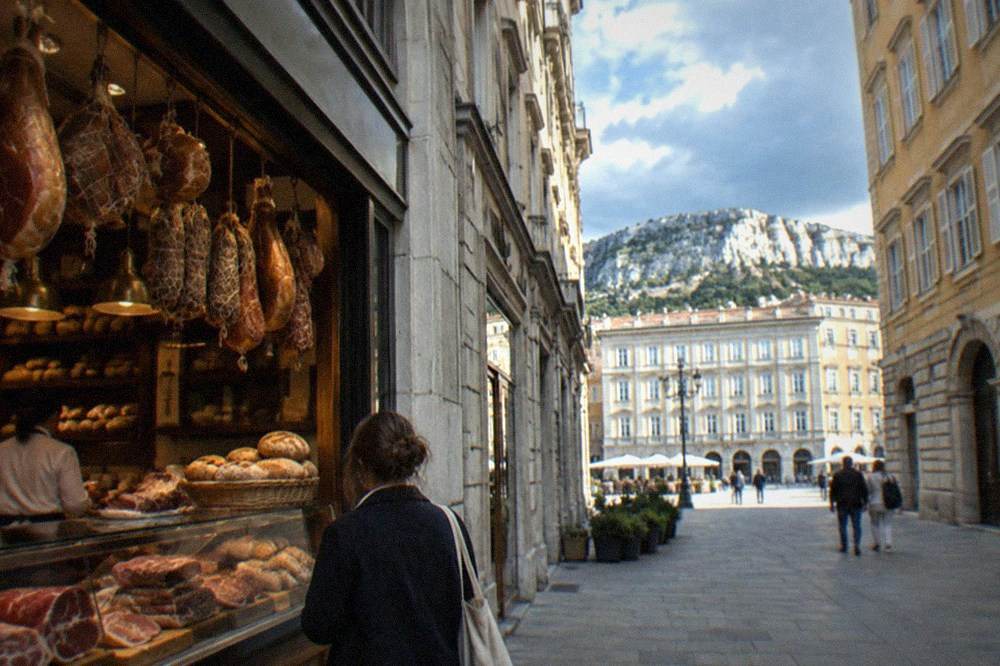
The buffet is the institution most visitors miss. It is a Triestine original: a small, often standing-only room where the counter is the whole menu, and the menu is pork, cured and boiled, with mustard and bread. This is the Habsburg layer of the city's food, eaten standing up, at prices that have nothing to do with the tourist waterfront. The full local picture, including which streets to work, is in our page on where locals eat in Trieste.
The second half of the local answer is up on the plateau. In season, the osmize of the Carso open their doors: farmhouses where wine growers sell their own wine and simple homemade food straight from the property, signposted by a frasca, a leafy branch hung at the turning. It is the most local eating experience the region offers, and it has its own section below.
If you want a local guide to do the navigating, the free, tip-based walks are a legitimate first step. Both walks below are run through GuruWalk, the free-walking-tour platform, and both are led by a local guru; they are free and tip based, and no price is ever charged for the walk itself.
| Free walk (GuruWalk, tip based) | Rating | Reviews |
|---|---|---|
| Discover Trieste on a walking tour | 4.86 | 50 |
| Free walking tour: Trieste and the Old Port, industrial archeology tour | 5 | 4 |
A free walk orients you; a food walk feeds you. The three tours in the previous section are the ones that end with you actually tasting the city, and the operator's live listing shows current availability before you commit.
Why Is Trieste, Italy Famous for Coffee?
Trieste is famous for coffee because its port has been a working hub of the green-coffee trade for centuries and its Habsburg-era cafés turned drinking it into a seated, all-day ritual, complete with a local ordering vocabulary that no other Italian city uses. The culture is real and observable; the famous consumption statistics are not.
That last sentence matters. You will read, all over the internet, that Trieste drinks two or three times the Italian average, or some kilograms-per-head figure. No primary source exists for that claim: it appears in secondary articles without a cited original, and this site does not print it. What is verifiable is the culture itself, and it needs no number to be impressive.
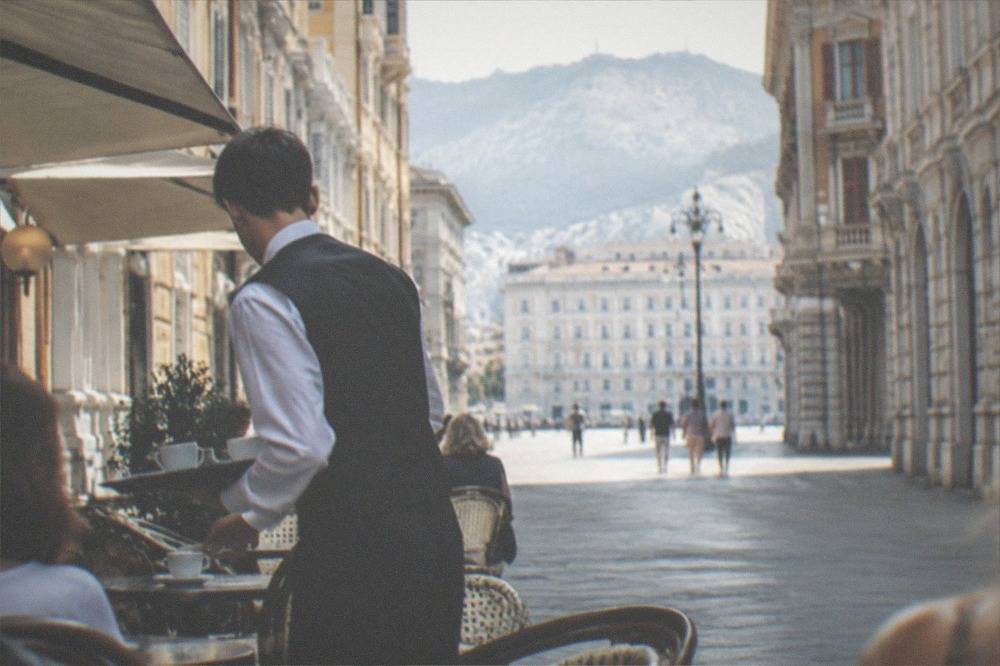
The observable facts are these. Trieste is a historic coffee port and a roasting centre, home to a major international coffee company headquartered in the city. The historic cafés of the centre, several of them grand, wood-panelled rooms from the city's Habsburg and fin-de-siècle decades, function as public living rooms where people actually sit down. And the local ordering vocabulary is its own dialect of coffee: Triestines order with words you will not hear in Milan or Naples, and getting them slightly wrong is itself a local initiation. Our full page on Trieste coffee culture covers the vocabulary, the cafés and the port trade in detail.
The coffee story is also the easiest one to taste on a tour. Two of the city's guided walks build a café stop into the route: one describes itself as a walk through the city centre that ends "drinking coffee in a historic bar", and another, the Trieste Historic Cafés Experience, is a three-hour walking tour devoted to the coffee culture. The table below compares the café-and-coffee walks.
| Tour | From (per person) | Rating | Reviews | Duration |
|---|---|---|---|---|
| Trieste Historic Cafés Experience | $74.52 | 4.906102497424429 | 19 | 3 hours |
| Trieste: City that will definitely surprise you (coffee in a historic bar) | $68.79 | 4.969554740865006 | 106 | 2h 30m |
| Trieste: Guided tour in the heart of the city and experience in a historic café | $50.44 | 4.616026440555483 | 24 | 2h 30m |
For a decision this cheap, the rating gap between the three is not really the story; the story is which route matches your day. The food walk remains the best single booking if eating is the priority, and Check availability before you build the rest of your itinerary around it.
What Are the Osmize of the Carso?
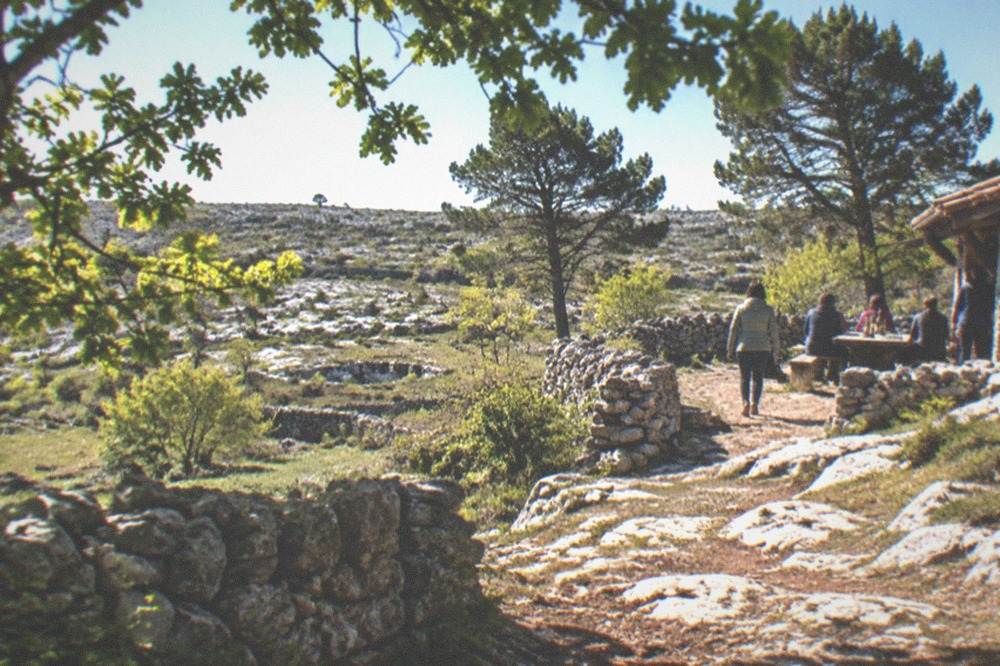
The osmize are seasonal farmhouse outlets on the Trieste Karst where wine growers sell their own wine and simple homemade produce, cured meats, cheeses and eggs, directly from their property for a limited period each year. An open osmiza is signposted by a frasca, a leafy branch hung at the turning, and the live opening calendar is published at osmize.com.
The word comes from the Slovene osem, eight, a reference to the short number of days the original Habsburg-era right allowed, though today each grower decides their own opening days and notifies the local authority rather than following a fixed national rule. What you actually do at one is simple: you drive or take the tram up onto the plateau, you follow the frasca, and you sit at a farmer's own tables drinking the farmer's own wine, served by the family, at farmhouse prices.
Two honesty notes, because this is where guidebooks go wrong. First, the legal history is widely repeated but not verified against a primary source: this site does not state a decree date or a fixed number of opening days per year as fact. Second, the openings are genuinely seasonal and change week to week, so the only reliable planning tool is the osmize.com calendar, which lists which osmize are open on which days, with addresses and a map. Our full page on the osmize of the Carso covers the custom, the frasca and how to plan a visit around the live calendar.
The osmize are also the cheapest possible introduction to the Carso's wines, because you are buying from the grower. If you would rather have the route driven for you, a guided day trip covers the same plateau with a driver: the Trieste: History of Prosecco and the Karst Region tour runs 7 hours from $145.22 per person, rated 4.483496638168807 from 23 reviews on the operator's live listing.
Can You Learn to Cook Trieste Food Yourself?
Yes, and it is one of the better food activities in the city: Trieste has private cooking classes in a local's home with a certified cook, a small-group pasta and tiramisu class led by a home cook, and craft workshops, with prices from about $90 to about $166 per person and durations around three hours.
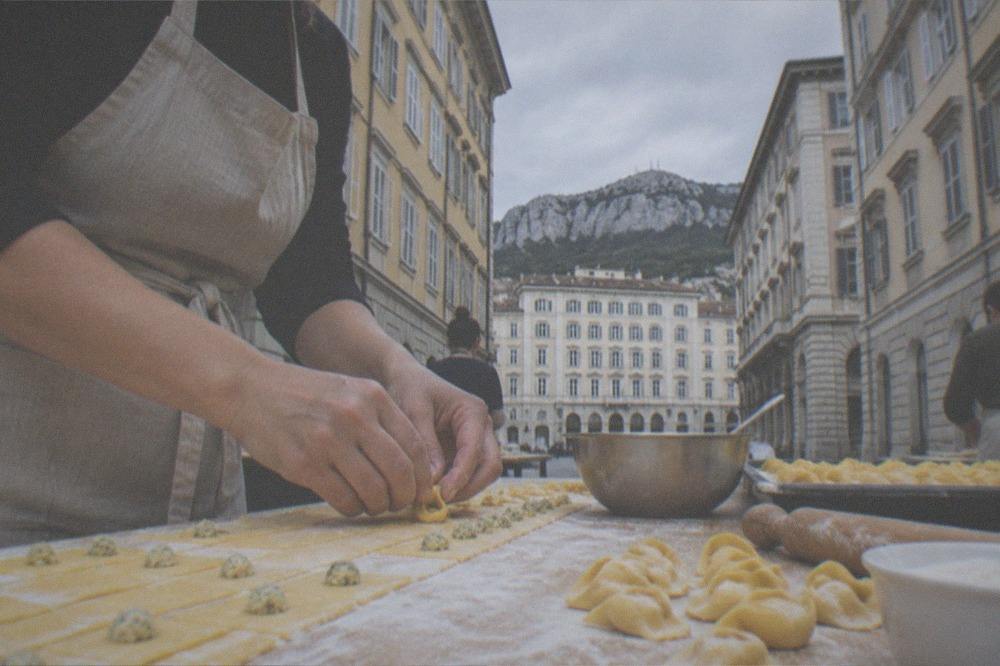
The cooking-class scene here is small but real, and it splits into two very different experiences. The private class at a local's home is exactly that: you cook in someone's kitchen, with a certified cook, and the listing describes a private class in a local home. The small-group pasta and tiramisu class takes the other approach, a hands-on lesson on the two crowd-pleasing classics with a passionate home cook leading it. The ceramic workshop is the wildcard, a decorative-plate workshop with a local artist using air-dry clay, food-adjacent rather than food.
| Class or workshop | From (per person) | Rating | Reviews | Duration |
|---|---|---|---|---|
| Trieste: Private Cooking Class at a Local's Home | $166.23 | 3.9058100533424667 | 6 | 3 hours |
| Trieste: Small group Pasta and Tiramisu class with Mamma | $157.65 | 4.4 | 40 | 3 hours |
| Trieste: Ceramic Workshop with Local Artist | $90.57 | 5 | 4 | 2h 30m |
Read the review counts before you read the ratings here: the pasta-and-tiramisu class has 40 reviews and the private home class has 6, so the smaller number is the more reliable one even though its rating is lower. If a cooking class is the anchor of your food day, and its live listing will show you the current dates and the cancellation terms.
The other half-day option that keeps food in the frame is the e-bike tour that ends in gelato: the Trieste E-Bike Tour covers the old town and both San Giusto Castle and Miramare Castle, with gelato in the itinerary, from $174.26 per person over 6 hours, rated 5 from 2 reviews on the listing. is worth a look if a class feels too static.
What Wine Should You Drink Around Trieste?
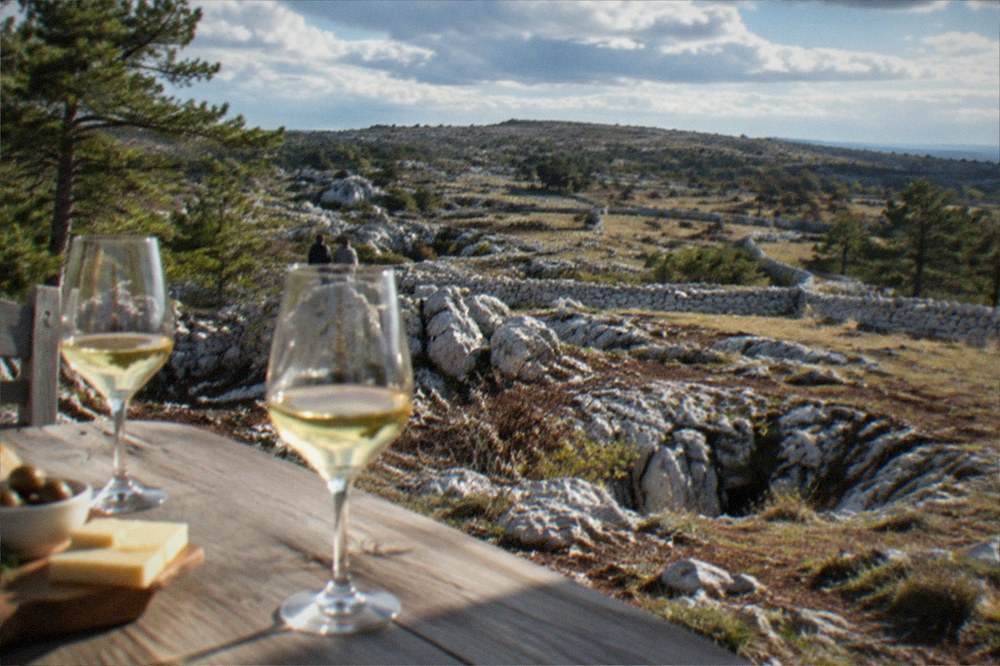
The Carso's own wines are Vitovska, Malvasia and Terrano, and those are the three names to look for on a Trieste wine list or at an osmiza. Trieste is not in the Prosecco DOC, but the village that gave the wine its name sits in the hills above the city, and the Prosecco origins tours visit it.
This is the point where a lot of generalist wine writing about Trieste goes wrong, so it is worth being precise. Prosecco the wine and Prosecco the village are two different things, and the village, which gave the wine its name, is in the hills behind Trieste; Trieste itself is not part of the Prosecco DOC production zone. The Carso's own grapes are the local story: Vitovska and Malvasia for whites, Terrano for the red, grown on the limestone plateau that also hosts the osmize. Our page on Friuli Venezia Giulia wine covers the region's full picture.
The wine experiences available to book split cleanly into two groups: short tastings in the city centre, and the half-day and full-day trips to the Prosecco village and the Karst. The table below is the full current set with the operator's prices and ratings.
| Wine experience | From (per person) | Rating | Reviews | Duration |
|---|---|---|---|---|
| Trieste: 2.5-Hour Prosecco Origins Tour and Tastings | $68.79 | 4.9301306017271 | 227 | 2h 30m |
| Prosecco Origins Wine Experience | $70.07 | 5 | 91 | 2 to 3 hours |
| Trieste City Center: Wine Tasting with Food Pairings | $56.18 | 4.6083464910036005 | 22 | 1 hour |
| Trieste: History of Prosecco and the Karst Region | $145.22 | 4.483496638168807 | 23 | 7 hours |
The Prosecco origins tour is the standout by review volume: 227 reviews at 4.9301306017271, described on the listing as a step back to the 14th century to discover the history of the world's favourite sparkling wine on the pieces of land where it began. The one-hour city-centre tasting is the cheap sampler, pairing wines with food, olive oil and delicacies from the Friuli Alps.
What Food Day Trips Can You Take from Trieste?
The two food-focused day trips from Trieste both run up the Slovenian coast: a small-group panoramic coast tour from $125.13 per person over 5 hours, and a Slovenian coast tour with food and wine tasting from $137.57 per person over 5h 30m, rated 4.9821244130930475 from 50 reviews. Both cross a border where Italy is running temporary checks through 18 December 2026.
The Slovenian coast is 20 minutes of border away and it is a genuinely different food region: Piran's salt-pan heritage and seafood kitchens are the draw, and the tours that run there from Trieste do the driving and the guiding in one package. The border point matters enough to repeat: Slovenia has been in Schengen and the euro since 2007, Croatia joined both on 1 January 2023, and all three countries use the euro, so there is no money to change, but Italy is running temporary internal border checks on the land border with Slovenia through 18 December 2026, so carry a passport or national ID card and treat the check as normal rather than as a problem.
| Food day trip from Trieste | From (per person) | Rating | Reviews | Duration |
|---|---|---|---|---|
| Piran & Panoramic Slovenian Coast from Trieste | $125.13 | 4.9 | 82 | 5 hours |
| TRIESTE: Slovenian Coast Tour with Food and Wine Tasting | $137.57 | 4.9821244130930475 | 50 | 5h 30m |
| From Trieste: Piran and Slovenia Coast Tour | $114.64 | 4.573708386372972 | 136 | 6 hours |
The middle tour is the one built around food and wine; the other two are coastal sightseeing routes where the eating is your own arrangement. If your day trip appetite runs to caves rather than coast, the karst-cave day trips from Trieste, including Postojna Cave and Predjama Castle from $137.57 per person, and Lipica and the Škocjan Caves from $129.93 per person, pair well with a morning osmiza stop on the plateau.
How Much Does Eating and Drinking in Trieste Cost?
A guided food walk in Trieste runs from $71.08 to $87.58 per person for three hours, a cooking class from $157.65 to $166.23, a wine tasting from $56.18 for one hour, and the free GuruWalk city walks cost nothing up front, tip based only. The cheapest paid food experience on the roster is a self-guided scavenger walk at $4.67 per person.
The spread is wide because the experiences are different animals. At the bottom, the self-guided options, the scavenger hunt walk at $4.67 and the audio-and-written-guide walk at $7.59, cost less than a coffee and cake in one of the historic cafés and cover the city at your own pace. In the middle sit the walking tours and tastings, nearly all between $50 and $90 per person. At the top are the private and full-day experiences: private walking tours from around $194.89 per group, cooking classes around $160, and the full-day karst and coast trips around $145.
| Budget tier | Experiences | Price range (per person) |
|---|---|---|
| Free | GuruWalk city walks (discover-trieste, Old Port industrial archeology) | Free, tip based |
| Under $10 | Scavenger hunt self-guided walk; audio and written guide walk | $4.67 - $7.59 |
| $50 - $90 | Food walks, café walks, wine tastings, Prosecco origins tours | $50.44 - $87.58 |
| $90 - $175 | Cooking classes, ceramic workshop, e-bike tour, coast day trips | $90.57 - $174.26 |
Two things are worth knowing before you budget. The tourist tax, the city's own imposta di soggiorno, is charged per person per night on top of your accommodation at rates from €1.50 at campsites to €3.80 at five-star hotels, for a maximum of 5 consecutive nights, so it is a real but small line in a food budget. And the osmize remain the best value eating in the region, because you are buying the grower's own wine at the farmhouse door with no middle layer at all.
Common Questions About Trieste Food
What food is Trieste known for?
Trieste is known for a Central European and Adriatic hybrid: hearty soups, cured pork served at the city's buffeti, grilled Adriatic fish, the coffee culture of its historic cafés, the seasonal osmize farmhouses of the Carso, and local wines including Vitovska, Malvasia and Terrano.
Where do locals eat in Trieste?
Locals eat at the buffeti for cured and boiled pork, at small trattorias for fish, in the historic cafés for coffee and pastries, and, in season, up on the Carso at the osmize, where growers sell their own wine and homemade produce directly from the farmhouse.
Is Trieste good for food?
Yes. The city's food culture is distinctive rather than generic Italian: the Habsburg layer gives it dishes and institutions you will not find further south, the port gives it coffee and seafood, and the Carso gives it farmhouse wine. A three-hour guided food walk is the fastest way to taste all three layers.
What is the famous food of Trieste?
The most famous food of Trieste is the combination rather than one dish: the buffet's cured pork, the bean-and-sauerkraut soups of the Habsburg kitchen, Adriatic fish, and the coffee ritual of the historic cafés, with osmiza wine and produce from the Carso in season.
What is the signature dish of Trieste?
Trieste's signature dish is its take on the Austro-Hungarian soup kitchen, the hearty bean-and-sauerkraut soup the city calls jota, served alongside the cured pork of the buffeti. The full story of both, and where to try them, is covered in our guide to the city's restaurants.
What is the best Trieste food tour?
By review volume the Trieste: Guided Foodie Walking Tour leads, at 4.914185827901917 from 264 reviews, from $71.08 per person for three hours. The Unique Food Tour listings run slightly higher in price with strong ratings of their own; all three cover the city's food on foot with tastings included.
The honest summary of eating in Trieste, Italy is that the city rewards exactly the kind of visitor who books nothing and simply wanders, and then rewards a second kind of visitor who books one good food walk and lets a local open the buffet doors and the café counters. Do the coffee sitting down, follow the frasca when you see one, order the wine the Carso actually grows, and read Trieste Travel Guide's restaurant and coffee pages before you arrive so the only decision left on the day is where to sit.