Barcola Seafront in Trieste, Italy: The City's Swimming and Sailing Waterfront
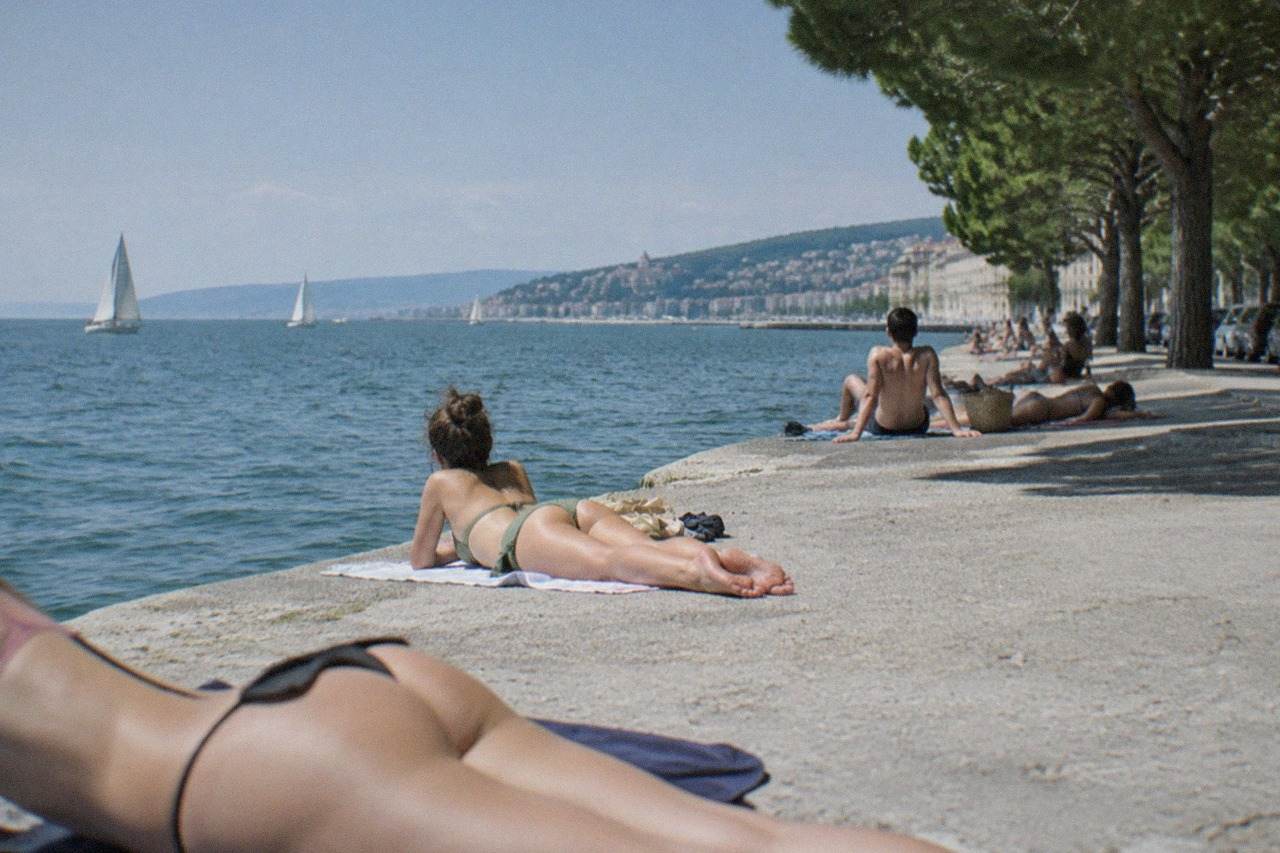
Barcola is the long seafront suburb where Trieste, Italy, goes to swim, sunbathe and sail, a ribbon of promenade and rocky shore running along the Gulf of Trieste below the castle of Miramare.
Short answer
Barcola is Trieste's seafront: a free, public promenade and bathing shore along the Gulf of Trieste in northeast Italy, busiest in summer, home to the Barcolana regatta each October, and reached from the centre by ordinary urban bus tickets.
Barcola is the seafront quarter of Trieste, Italy, the Adriatic port city in Friuli Venezia Giulia, and it is where the city's whole summer happens. It is not a beach resort in the package-holiday sense. It is a long public promenade with rocky and concrete bathing platforms along the Gulf of Trieste, free to walk and free to swim from, running north-west from the city past the Molo Audace and the Victory Lighthouse, Faro della Vittoria, toward the shoreline below Miramare Castle. Locals treat it as an extension of the city rather than an excursion, which is the honest way to describe it: you take an ordinary urban bus, you sit on the rocks or on a rented platform, and you are in the water of the northern Adriatic. This guide from Trieste Travel Guide covers what Barcola is, how to get there, when to swim, what the bora wind does to a day on the shore, and what happens in October when the world's largest sailing race finishes off its water.
What Is the Barcola Seafront in Trieste, Italy?
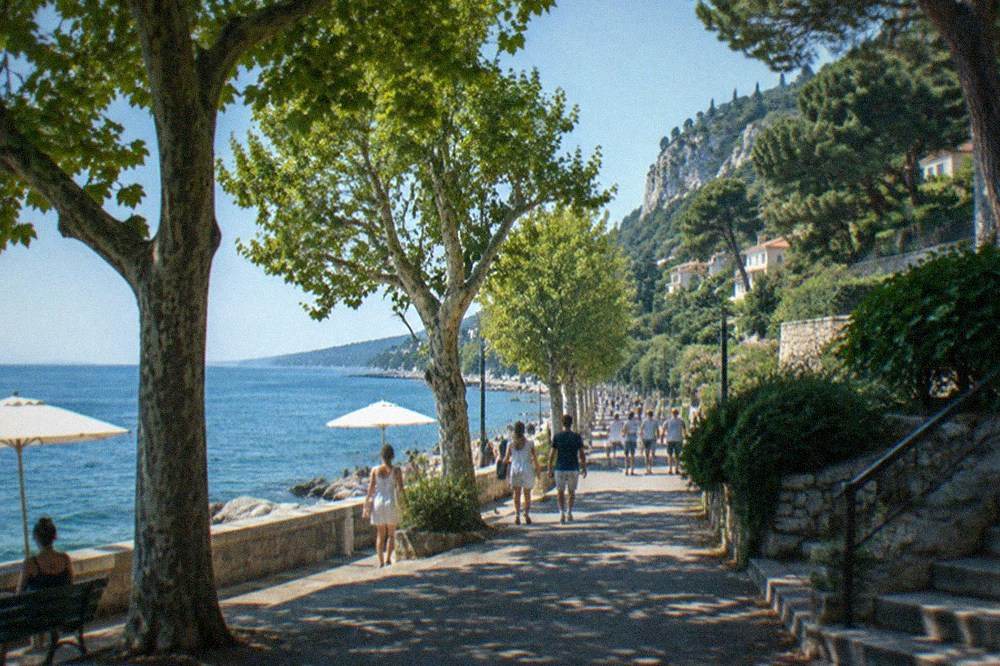
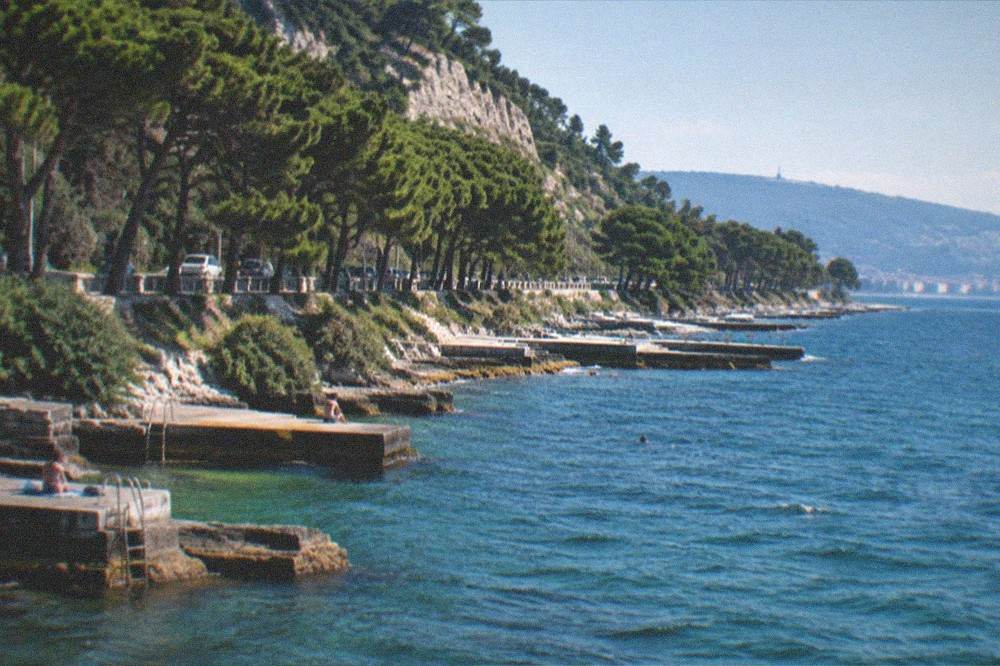
The Barcola seafront is Trieste's public bathing and sailing shore: a long, free promenade of rocky and concrete bathing ground running along the Gulf of Trieste in the city's north-western quarter, backed by plane trees, ice-cream kiosks and residential streets, and used by locals as their everyday summer waterfront rather than as a tourist attraction with gates or entry fees. It belongs to the ordinary life of the city. On a summer evening the whole promenade fills with swimmers, picnickers, joggers and people fishing off the rocks, and the clubs of the local sailing fleet sit at intervals along the shore. There is no single entrance, no ticket and no season: the seafront is simply there, the way a city park is there.
The character of the place comes from what it is not. It is not a sandy beach, and visitors expecting one are the people most often disappointed. The shore is rock and built concrete platforms, some of them managed as bathing establishments with sunbeds for hire and others left completely free. The water is clean, open Gulf water, deepening quickly in places, which is part of why the sailing clubs like it: there is no shallow shelf, and racing boats can come close inshore.
The setting is also the point. Behind you rises the wooded slope that climbs toward the Miramare Castle shoreline, and across the water the coastline of the Gulf curves away toward Slovenia on clear days. The seafront is the place where Trieste's relationship with the sea, which built the city as a port, becomes a pleasure rather than a business.
Where Exactly Is Barcola and How Do You Get There from Trieste City Centre?
Barcola lies along the shore north-west of Trieste's centre, reached on the ordinary Trieste Trasporti urban network, where a 60-minute single costs €1.50, a 75-minute single €1.85 and a day ticket €3.35 per the operator's 2026 tariff sheet, with contactless bank cards accepted on board. The seafront is served by the city's urban bus routes, the same network that runs to the centre and the station, so there is no special ticket, no tourist surcharge and no booking. You validate a standard urban ticket or tap a contactless card on the reader, and the fare rules are the fare rules of the whole city.
The 2026 tariff sheet lists the options that matter for a Barcola day:
| Ticket | Validity | 2026 price |
|---|---|---|
| Urban single (U01) | 60 minutes | €1.50 |
| Urban single (U02) | 75 minutes | €1.85 |
| Day ticket (U24) | full day | €3.35 |
| 10 rides (U10) | ten journeys | €13.50 |
| 20 rides (U20) | twenty journeys | €16.65 |
Two practical notes come straight from the operator's own documentation. Single tickets are valid for 60 or 75 minutes, extended to 240 minutes on Sundays and public holidays, which matters if you plan to break a Barcola trip with a stop elsewhere. And the contactless system on board applies the cheapest applicable fare, so a day of tapping does not quietly cost more than a day ticket would.
For orientation, the promenade runs as one continuous stretch of shore, and the Barcola area guide covers the district itself in more depth. If you are staying in the old town or the Rive end of town, the seafront begins where the Rive end and continues up the coast; the two pages on this site describe them separately because they behave differently. The Rive seafront is the grand, stone, city-facing waterfront; Barcola is the loose, bathing, tree-lined continuation where the swimming actually happens.
If you would rather see the whole shoreline in one organised sweep, there is a sensible option that does it in a day:
The e-bike option in that band is the one built around this exact stretch: it links the old town, the castles and the coast in a single guided loop, which suits visitors who want the shoreline and the monuments without working out the bus network on day one.
What Is There to Do at Barcola Besides Swimming?
Beyond swimming, Barcola is a walking, cycling, eating and sailing-watching shore: a promenade for long walks under plane trees, a shoreline of bathing establishments and free rocks, a strip of kiosks, gelaterie and simple seafood places, and the home water of Trieste's sailing clubs, whose fleets you watch training on the Gulf most days. The honest description is that Barcola is not dense with monuments. It is dense with ordinary seaside life, and the activities follow from that.
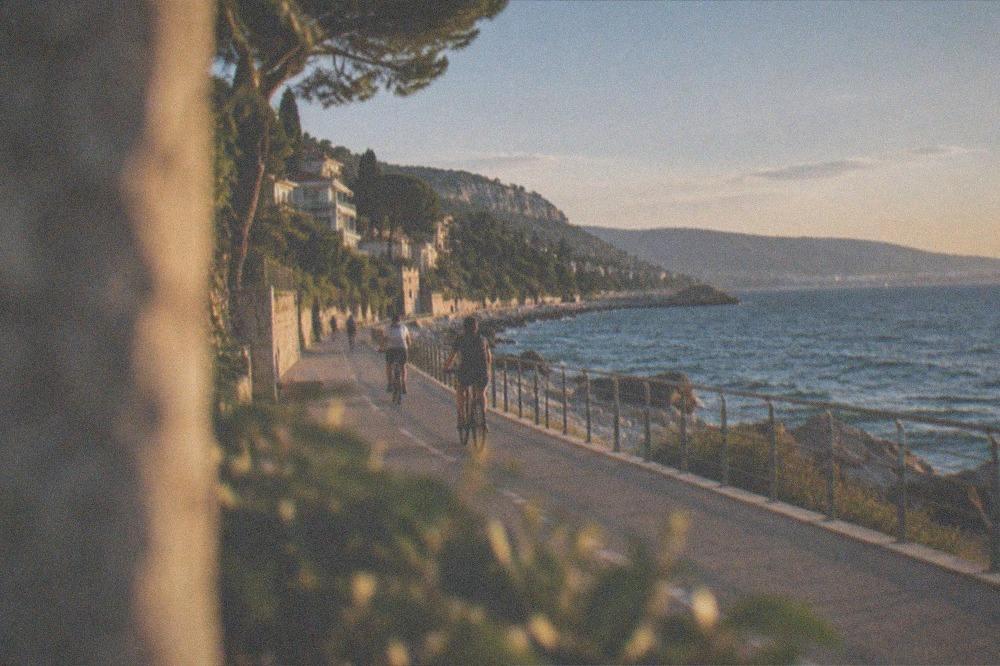
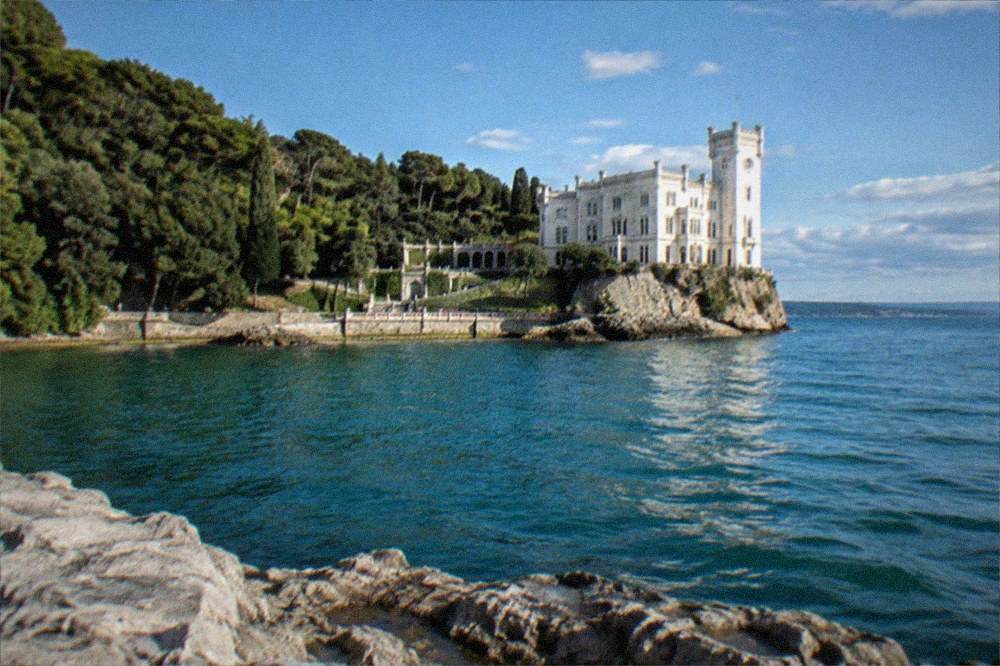
The promenade walk is the main free activity, and it connects naturally to two of the city's real sights at either end. Walking the length of the shore gives you the Gulf, the bathing platforms and the fleet of small boats, and at the far end the route continues toward the Miramare shoreline, where the castle's free park meets the coast. The Miramare Castle itself, the white residence built for Archduke Maximilian above its own stretch of shore, is the obvious pairing for a Barcola day: the castle's park is free all year, and the castle's adult ticket is €17 including the temporary exhibition, per the Ministry of Culture's own visit page. The castle opens every day 9:00-19:00 with last admission at 18:30, and the park keeps its own seasonal hours, so the two are not interchangeable.
| Miramare visit element | Price | Hours (per the venue's visit page) |
|---|---|---|
| Castle, adult | €17.00 | Every day 9:00-19:00 |
| Castle, EU 18-25, with exhibition | €7.00 | Last admission 18:30 |
| Castle, EU 18-25, castle only | €2.00 | Same hours |
| Park | Free | April-September 8:00-19:00; January 8:00-16:00 |
The second activity is the sailing-watching, which sounds like nothing until you have seen it. The Gulf of Trieste is a compact, reliably windy racing basin, and the clubs along the Barcola shore keep dinghies and keelboats on the water most afternoons. On regatta weekends the shore becomes a grandstand. The third is eating, covered in its own section below, and the fourth is simply sitting: the free rocks and the low concrete platforms are the cheapest good afternoon in the city.
For a day that combines the shoreline with the water itself, the kayak option is the most direct:
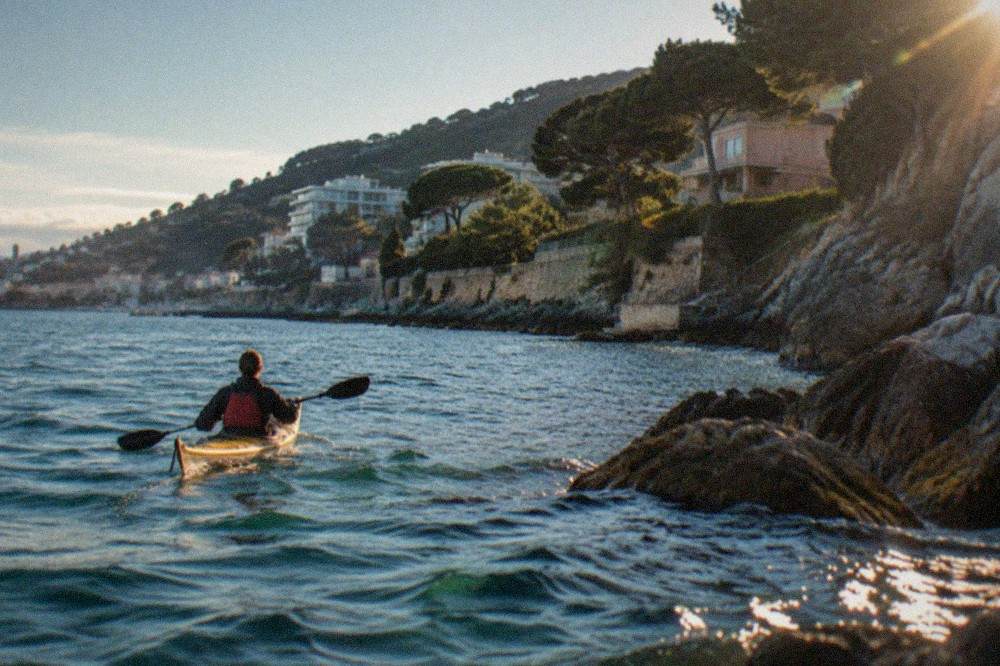
That trip paddles the coast toward Duino, the direction the Barcola promenade points, past the castle end of the shoreline. It is a 3-hour guided paddle rated highly by a small number of reviewers on the operator's live listing, and it suits confident swimmers who want the coast from sea level.
When Is the Best Time of Year for the Barcola Seafront?
The best months for Barcola are June through September, when ARPA FVG's station tables for Trieste molo Fratelli Bandiera show sea temperatures of 23.1 C in June, 25.9 C in July, 25.9 C in August and 23.9 C in September, with July the second-driest month of the year at 53.8 mm of rain and June the calmest month for wind. That combination, warm water, low rain and the quietest wind of the year, is what makes the Trieste summer shore work. The same tables show that the rain here is an autumn problem, not a summer one: the wettest month is November at 109.8 mm, September is second at 102.3 mm, and July is one of the driest months on the record.
The monthly picture from the ARPA station tables, the figures this site uses for the city and no others:
| Month | Mean air C | Rain mm | Wet days | Sea C | Days gust over 90 km/h |
|---|---|---|---|---|---|
| May | 18.8 | 75.0 | 8.5 | 17.9 | 0.7 |
| June | 23.1 | 62.5 | 6.1 | 23.1 | 0.3 |
| July | 25.2 | 53.8 | 5.4 | 25.9 | 0.9 |
| August | 25.2 | 71.7 | 6.6 | 25.9 | 0.9 |
| September | 21.2 | 102.3 | 7.4 | 23.9 | 1.1 |
| October | 17.1 | 88.6 | 7.6 | 20.3 | 1.4 |
Two readings of that table are worth spelling out. First, September's sea at 23.9 C is warmer than June's at 23.1 C, because the water holds the summer's heat: a September swim is not a compromise, it is often the best one. Second, the wind column does not fall to nothing even in summer. The station tables show the monthly record gust exceeds 110 km/h in every single month of the year, and July averages 0.9 days with a gust over 90 km/h, more than April, May or June. Summer is the calm season, not a windless one.
Spring and autumn have their own case. May's sea at 17.9 C is brisk but the promenade is at its greenest, and October belongs to Barcolana, which is the subject of its own section below. Winter, from late November through February, is for walking and watching the bora-lashed Gulf rather than swimming; the sea drops to 11.6 C in January and 10.5 C in February on the long-term tables.
Is Barcola Good for Swimming? What Are the Sea Temperatures Like?
Yes, Barcola is Trieste's main swimming shore, and ARPA FVG's station tables show the Gulf comfortably swimmable from June through September, with sea temperatures of 23.1 C in June, 25.9 C in July, 25.9 C in August and 23.9 C in September, before cooling through October's 20.3 C to a February minimum around 10.5 C. ARPA FVG maintains continuous sea measurements at the Trieste molo Fratelli Bandiera station, and the long-term monthly means from that series are the honest basis for planning. The sea warms quickly through spring, holds its peak through August, and gives September swimmers water warmer than June's, a lag most first-time visitors do not expect.
The full seasonal curve from the station series:
| Month | Mean sea C | Month | Mean sea C |
|---|---|---|---|
| January | 11.6 | July | 25.9 |
| February | 10.5 | August | 25.9 |
| March | 11.6 | September | 23.9 |
| April | 14.0 | October | 20.3 |
| May | 17.9 | November | 16.8 |
| June | 23.1 | December | 13.6 |
The swimming experience itself is rocky-shore swimming. You enter from rocks or from concrete platforms, some managed by bathing establishments and some free, and the water deepens quickly. What you do not get is sand, shallow toddler water or dunes; what you do get is clear open Gulf water and a shoreline that costs nothing. Families should read the site's dedicated swimming guide for where locals actually take children, including the city's historic floating bathing establishment.
One more ARPA figure belongs here because it changes what "a day at the shore" means in Trieste: the Gulf's sea temperature record shows a long-term warming trend in annual means over recent decades against earlier baselines. The summer water you swim in at Barcola is, on the agency's own series, warmer than the water a visitor in the 1990s would have found. That is a planning fact, not colour.
What Is the Bora Wind and Will It Ruin a Barcola Day?
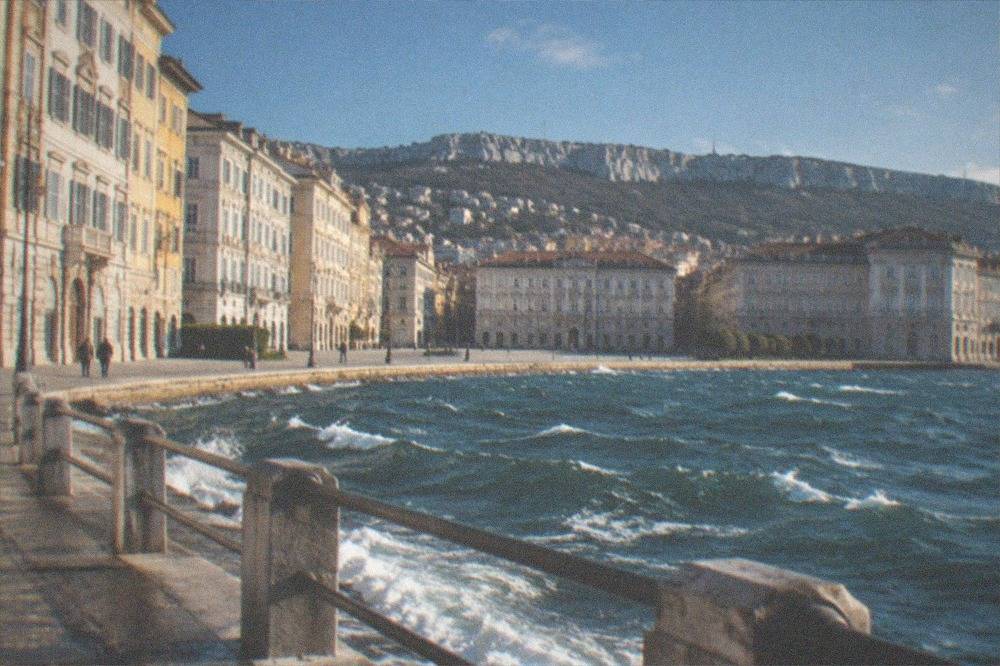
The bora is the cold, dry north-easterly wind that funnels down onto the Gulf of Trieste, and on ARPA FVG's station tables Trieste averages 49.0 days a year with a gust over 72 km/h and 17.6 days with a gust over 90 km/h, with the all-time peak in the series at 168.1 km/h in February 2012, so it is a real factor on the seafront but a winter-weighted one. The wind blows from the east-north-east, and ARPA's regional wind sheet records that gusts largely exceed 100 km/h in strong episodes, with values above 140 km/h recorded in the Trieste coastal zone in the last twenty years. It is the wind that built the city's sailing culture and its seafront handrails.
What the station tables actually show, month by month:
| Wind figure (ARPA station TRI, 1995-2024) | Value |
|---|---|
| Days per year with a gust over 72 km/h | 49.0 |
| Days per year with a gust over 90 km/h | 17.6 |
| All-time peak gust | 168.1 km/h, February 2012 |
| Calmest month (days over 90 km/h) | June, 0.3 |
| Monthly record gust range | exceeds 110 km/h in every month |
The practical reading for a Barcola visitor is seasonality. The bora is most frequent and most persistent in the cool season, and June is the calmest month on the tables. But no month is guaranteed: the record gust exceeds 110 km/h in every single month of the year, and July averages more gale days than April, May or June. A summer bora episode is uncommon rather than impossible.
Two things this site will not tell you, because no official source publishes them. There is no verified wind threshold at which the Rive are closed, ferries stop or events are cancelled; authorities act on conditions in real time, not on a published cutoff. And the often-repeated 171 km/h and 188 km/h gust figures are not in ARPA's station table and this site does not repeat them. If a bora is blowing on the day you planned to swim, the honest advice is that the promenade itself becomes the spectacle: the Gulf whitens, the sailing clubs stay ashore, and the walk is memorable in a completely different way. The site's full bora wind guide covers the phenomenon in depth.
What Is Barcolana and When Does It Happen at Barcola?
Barcolana is the world's largest sailing race by entry, and Barcola 58 runs from 2 to 11 October 2026 in Trieste, with the main regatta on Sunday 11 October 2026 starting around 10:30 over a 13-nautical-mile course in the Gulf of Trieste, finishing off the city's seafront; the record entry is 2,689 boats in 2018, recognised by the organisers as a Guinness World Record. The race was born on this shore in 1969 with 51 boats on the start line, and it remains a Barcola event in the literal sense: the sailing clubs along the seafront are its organising heart, and the finish sits in the Gulf the promenade looks out on.
The verified facts about the event:
| Barcolana fact | Figure (from the organisers' own site) |
|---|---|
| 2026 edition | Barcolana 58, 2-11 October 2026 |
| Main regatta | Sunday 11 October 2026, start scheduled 10:30 |
| Course | About 13 nautical miles in the Gulf of Trieste |
| Record entry | 2,689 boats, 2018 (Barcolana 50) |
| First edition | 1969, with 51 boats |
What the regatta means for a Barcola visitor in October is a shore turned inside out. The week carries a village of events, the water carries a fleet of every size from dinghies to maxis, and the seafront promenade is the free grandstand for all of it. You do not need a boat, a ticket or a club membership; you need a spot on the rocks and a layer for the wind, because October on the station tables averages 1.4 days with a gust over 90 km/h and 88.6 mm of rain across the month. The event sits deliberately in the windy shoulder of the year, which is the whole point of an autumn-cup regatta. The site's dedicated Barcolana guide covers the race, the week and how to watch it.
The October date also explains something about Barcola's layout. The clubs, the slipways and the wide promenade are not summer furniture; they are racing infrastructure that happens to double as a bathing shore. The same shore that holds sunbathers in July holds a world-record fleet in October.
Where Do You Eat Along the Barcola Seafront?
Eating at Barcola runs from kiosks and gelaterie along the promenade to simple seafood places and pizzerie in the streets behind it, plus the seasonal farm outlets of the Karst a short way inland; there is no single famous restaurant on the shore itself, and the reliable pattern is ice cream and coffee by day and casual seafood by evening. The seafront's food culture is kiosk-and-gelato rather than white-tablecloth, which matches what the shore is: a free public promenade, not a resort strip.
The two local institutions worth naming both sit a short way from the water and are covered in their own pages. The first is the osmiza, the Karst farm outlet where growers sell their own wine and home produce direct from the property, signposted by a frasca, a leafy branch hung at the turning; the opening calendar lives at osmize.com and the custom is covered in this site's osmize guide. The second is the city's buffet tradition, jota and goulash in the old-town buffets, which pairs better with a Barcola evening than anything on the promenade itself.
For a sit-down plan, the site's best restaurants guide covers the city, and the what-to-eat pages on this site cover the dishes. The one Barcola-specific note that is honest to make: eat late. The promenade's kiosks serve the afternoon, and the shoreline is at its best in the evening light, when the swimming crowds have gone and the shore becomes a walk rather than a bath.
How Does Barcola Fit Into a Day in Trieste?
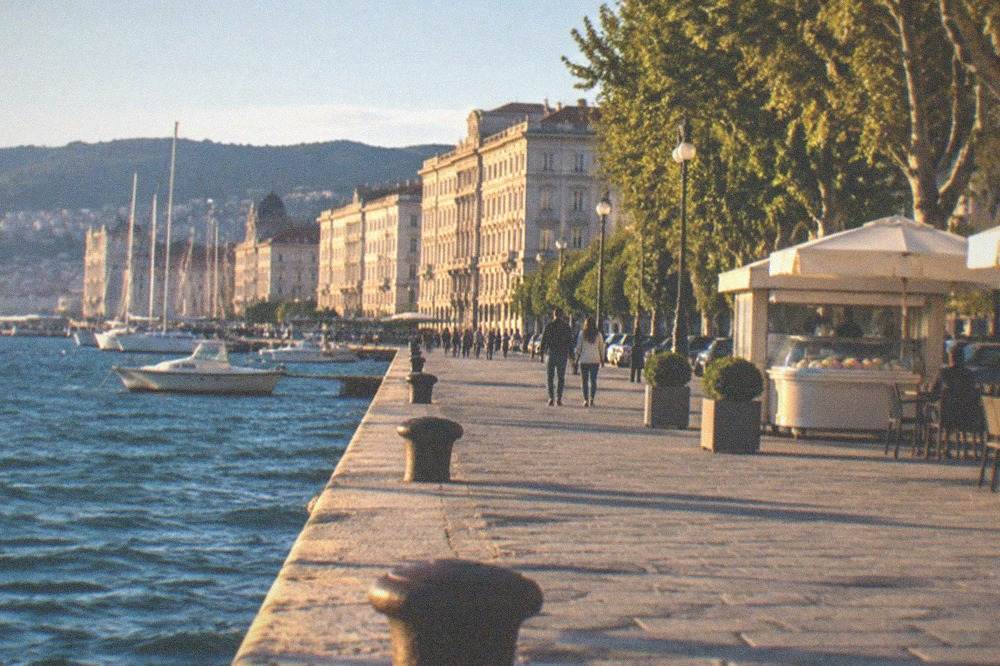
Barcola works best as the second half of a Trieste day: the morning in the centre around Piazza Unità d'Italia, the Città Vecchia and San Giusto, then an urban bus up the shore for an afternoon of swimming or promenade-walking, optionally extended to the Miramare park and castle at the seafront's far end, all on one €3.35 day ticket. The geography makes the sequence natural, because the seafront is a continuation of the same shoreline the centre sits on, and the bus network that serves the centre serves Barcola on ordinary fares.
A one-day shape that uses only the pages on this site:
| Time of day | Where | Page on this site |
|---|---|---|
| Morning | Piazza Unità d'Italia and the old town | One day in Trieste |
| Late morning | San Giusto hill, castle and cathedral | San Giusto Castle and Hill |
| Afternoon | Barcola promenade and swimming | Barcola area guide |
| Late afternoon | Miramare park and castle | Miramare Castle |
| Evening | Dinner back in the centre | Best restaurants |
If you have more than a day, the one day in Trieste and two-days itineraries on this site fold the seafront in with everything else. Visitors arriving on a ship should note that the cruise terminal sits on the same shoreline's city end, and the cruise port guide explains how the two connect; Barcola is reachable from the port area on the same urban fares listed above.
The alternative way to cover the day's geography, if walking and buses do not appeal, is the guided e-bike loop that this page's related tour runs: it takes in the old town, the castles and the coastal ride between them, with a gelato stop, in one organised day. The operator's live listing carries the current price and availability, and a small number of reviewers rate it at the top of the scale:
What Else Is Near the Barcola Seafront in Trieste, Italy?
The seafront's near neighbours are the Miramare shoreline and its protected marine area at one end, the city-centre waterfront and the Rive at the other, and, inland, the Karst plateau with Grotta Gigante, so a Barcola base puts a free castle park, a marine reserve, a world-scale show cave and the whole city centre within one urban fare's reach. The Miramare Marine Protected Area sits in the water off the castle shoreline, the section of coast the promenade runs toward, and this site covers it in its own guide. The castle park above it is free all year, per the venue's visit page, which makes it the best-value pairing with a shore day anywhere in the city.
Inland, the Karst rises behind the shore, and its headline sight is the show cave at Sgonico. Grotta Gigante runs guided tours only with compulsory booking, at €15 for an adult, €12 reduced, €8 for children 6-18 and free under 6, per the venue's own price list, and it operates Tuesday to Sunday from September to February and daily from March to August, closed 25 December and 1 January. The full details, including the family discount and the tour departure times, are in this site's Grotta Gigante guide.
For the ticketed Miramare visit, the entry-and-audio-app product is the listing most visitors use, and the operator's live listing carries the current price:
Back in the city, the seafront's story connects to the rest of the shoreline: the Rive seafront guide describes the stone city waterfront at the other end of the same curve of coast, and the Grand Canal and the Roman theatre sit a short urban ride inland. Visitors with a free morning should also read the free things to do guide, because Barcola is its own best entry: a free promenade, free rocks, a free park at the end of it and a sea that costs nothing to swim in.
Common Questions About the Barcola Seafront in Trieste, Italy
Is Barcola in Trieste, Italy, free to visit?
Yes. The Barcola promenade is a free public seafront with no entrance, no ticket and no season. Bathing from the free rocks and platforms costs nothing; managed bathing establishments charge only for sunbeds and facilities. The urban bus to get there costs €1.50 for a 60-minute single or €3.35 for a day ticket per the 2026 tariff sheet.
Can you swim at Barcola?
Yes, and it is Trieste's main swimming shore. ARPA FVG's station tables show the Gulf at 23.1 C in June, 25.9 C in July and August and 23.9 C in September. Entry is from rocks and concrete platforms rather than sand, and the water deepens quickly.
When is the best month for the Barcola seafront?
June through September. June is the calmest month for wind on ARPA's tables, July is the second-driest month at 53.8 mm of rain, and September's sea at 23.9 C is warmer than June's. October belongs to Barcolana, which runs 2-11 October in 2026.
Does the bora wind affect a Barcola day?
It can. Trieste averages 49.0 days a year with a gust over 72 km/h and 17.6 days over 90 km/h on ARPA's station tables, though the wind is most frequent in the cool season and June is the calmest month. No official threshold exists for closures, so check conditions on the day.
Is Barcola a sandy beach?
No. The shore is rock and built concrete platforms, some free and some managed as bathing establishments with sunbeds. Visitors wanting sand should read this site's beaches and swimming pages for the alternatives along the wider coast.
How do you get to Barcola from Trieste city centre?
On the ordinary Trieste Trasporti urban network: a 60-minute single is €1.50, a 75-minute single €1.85 and a day ticket €3.35 per the operator's 2026 tariff sheet, with contactless bank cards accepted on board and singles valid 240 minutes on Sundays and public holidays.
The Barcola seafront is Trieste at its most relaxed and least expensive: a free shore with warm summer water on the agency's own measurements, a promenade built for walking, a regatta that fills the Gulf each October, and a bus fare of a euro or two each way. Plan around the sea-temperature curve rather than the air temperature, keep a layer for the wind even in July, and the shore gives you the city's best free day.