Swimming in Trieste: Where Locals Go
Trieste, Italy, is a swimming city that most visitors never swim in: the locals have their own map of the water, and it runs from a 19th-century bathing complex to a free concrete seafront an hour before work.
Short answer
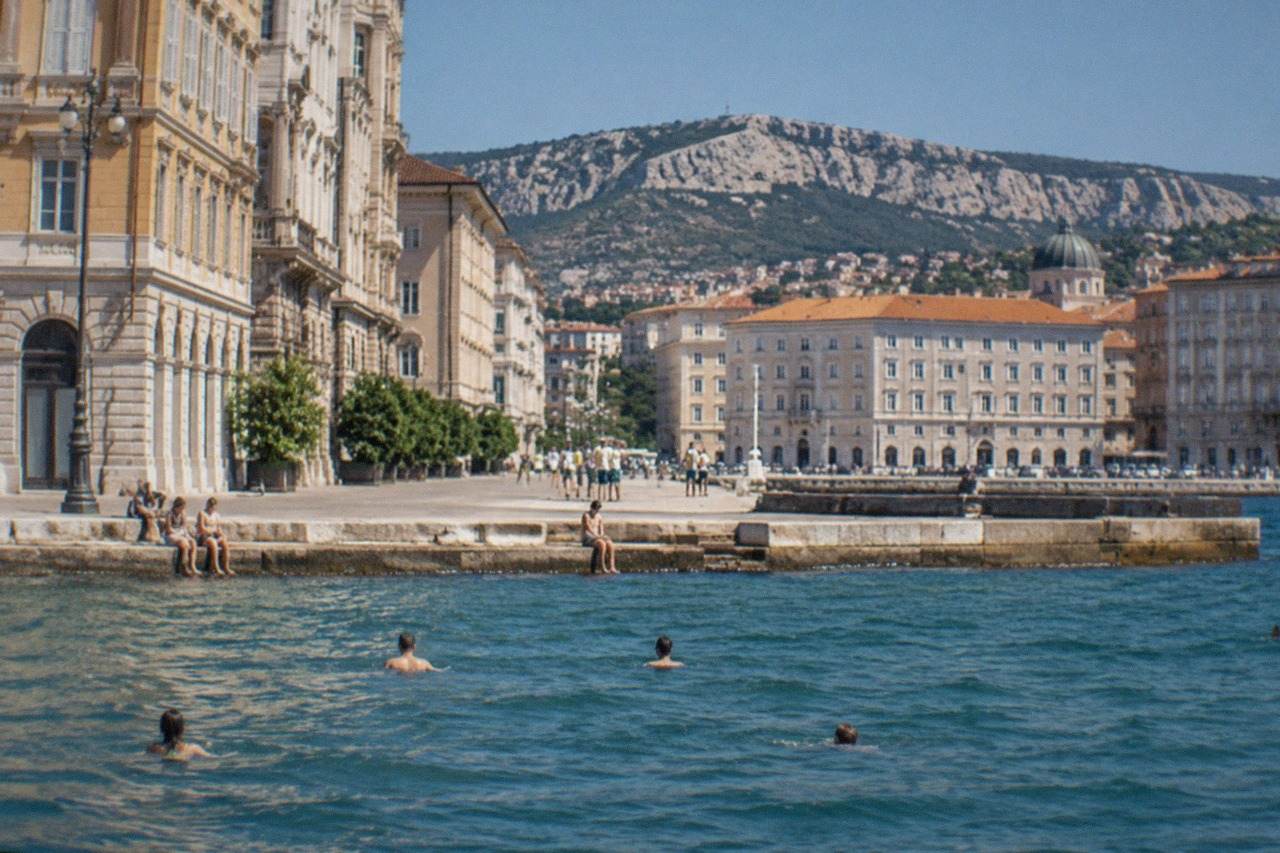
Locals in Trieste swim at Bagno Marino La Lanterna (Pedocin) in the city centre, along the free Barcola seafront and at the Topolini platforms, with the sea warmest from June to September, when ARPA's tables show monthly means of 23.1 to 25.9 C.
Trieste, the Adriatic port city in Friuli Venezia Giulia in north-east Italy, is a place where swimming is woven into ordinary life rather than packaged as a beach holiday. The city has no sandy resort strip of its own. What it has instead is a working seafront, a historic bathing establishment with separate men's and women's sections, a long free concrete shoreline at Barcola where people swim before and after work, and a data set, published by the regional weather agency, that tells you exactly which months the Gulf of Trieste is actually warm. This guide sets out where locals go into the water, what the sea temperatures really are, how the bora wind shapes every swimming day, and which guided options exist for visitors who want the coast explained rather than discovered by trial and error. The broader beach picture, including the sandy and pebble options further out, is covered in our Trieste beaches and swimming guide.
Where Do Locals Actually Swim in Trieste, Italy?
Locals in Trieste swim at three kinds of place: the historic Bagno Marino La Lanterna, known as Pedocin, on the city seafront; the free concrete platforms and steps of the Barcola seafront and the Topolini, a short ride north; and the rocky coves around Sistiana and the Miramare marine protected area up the coast. Almost none of them go looking for sand, because the local swimming culture is built on piers, platforms and deep, clear water.
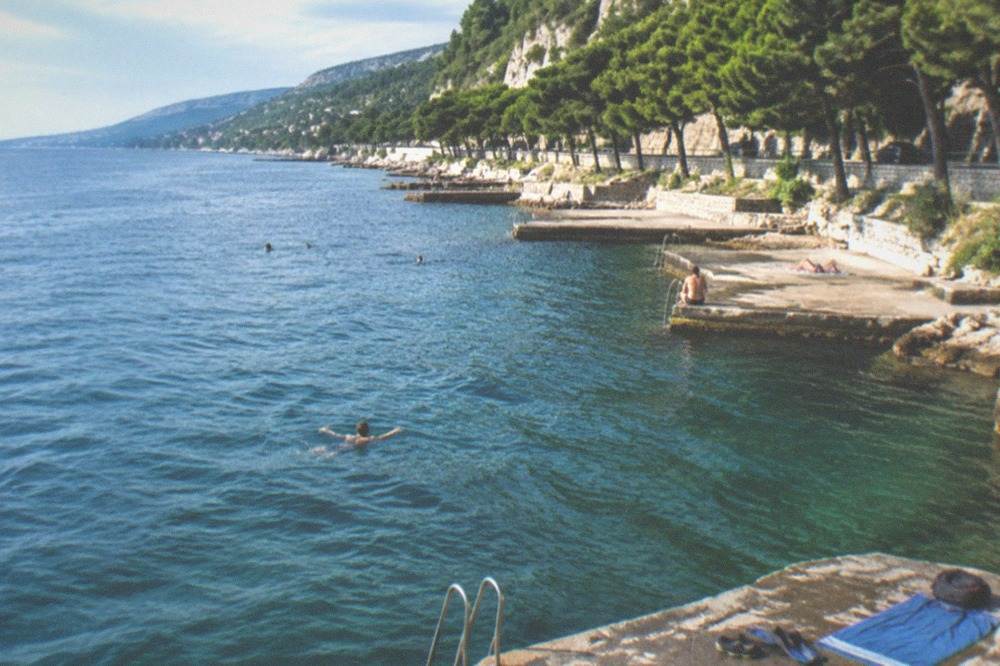
That last point is the one that surprises visitors most. Trieste's own shoreline drops away quickly, and the local habit is to walk off a concrete edge into water that is already over your head, or to lie on a warm slab of rock. The seafront at Barcola, lined with plane trees and a cycle path, fills with swimmers and sunbathers on any warm day from late spring onwards, and the Topolini, a cluster of rocky bathing platforms, is the classic after-work dip. Pedocin is the institution: a municipal bathing complex on the seafront that keeps separate men's and women's sections, a surviving piece of Habsburg-era seaside culture, and the spot most closely identified with swimming in the city itself. The listing for the historic complex describes it as the city's own sea bath, and its separate-section layout is the detail every local mentions first.
For orientation before you go, the seafront itself, the Rive, is the spine that connects all of this, and the best time to visit Trieste matters more here than in most Italian cities, because the swimming season is defined by wind and sea temperature rather than by air temperature alone.
Is the Sea Warm Enough for Swimming in Trieste?
Yes, from roughly June through September. The regional agency's oceanographic data shows the Gulf of Trieste reaching monthly mean sea temperatures of 23.1 C in June, 25.9 C in July, 25.9 C in August and 23.9 C in September, against 17.9 C in May and 20.3 C in October. May is usually tolerable for a short dip only, and by November the mean drops to 16.8 C, which is cold-water swimming territory.
Two things are worth knowing about those numbers. First, they come from a different source than the land weather figures: the sea temperatures are ocean reanalysis data, while the air temperature, rain and wind figures in this guide come from ARPA FVG's own station tables for Trieste molo Fratelli Bandiera, the waterfront monitoring station. Second, the sea's warmth lags behind the air. September's mean sea temperature of 23.9 C is higher than June's 23.1 C even though the air is cooler, because the gulf stores heat through the summer and releases it slowly. Locals know this: September is often the most comfortable swimming month of the year, with warm water, thinner crowds on the rocks and a sea that has had all summer to warm up.
| Month | Mean sea temperature (C) | Mean air temperature (C) | Verdict for swimming |
|---|---|---|---|
| May | 17.9 | 18.8 | brisk; short dips for the hardy |
| June | 23.1 | 23.1 | properly warm, calmest wind month |
| July | 25.9 | 25.2 | peak season, warmest water |
| August | 25.9 | 25.2 | peak season, warmest water |
| September | 23.9 | 21.2 | warm water, thinner crowds |
| October | 20.3 | 17.1 | cool; wetsuit weather for most |
The month-by-month detail, including the rain figures that matter in autumn, is in our Trieste weather month by month guide. If you would rather have someone else handle the logistics of the coast, there are guided options that pair the seafront with the wider gulf, from kayaking under the castles to a day across the border in Slovenia.
Whichever way you choose to see the water, the temperature table above is the honest starting point: it is the difference between a swimming trip and a sightseeing trip, and it is the table locals have in their heads when they say the season opens.
Bagno Marino La Lanterna (Pedocin): Trieste's Historic Sea Baths
Pedocin, formally the Bagno Marino La Lanterna, is Trieste's municipal sea-bathing complex on the city seafront, famous for keeping separate men's and women's sections, a layout that survives from an earlier bathing tradition. It sits within walking distance of the centre, and it is the single spot most identified with swimming in Trieste itself: a walled, structured place to swim in the middle of the city rather than on its edge.
The complex is the closest thing Trieste has to a beach club, and it is a genuinely local one. The separate sections are the detail that defines it: the women's side in particular has a following of its own, and the whole place functions as a social institution as much as a swimming facility. Because it is a managed bathing establishment rather than open shoreline, it has its own opening season and its own admission arrangements; the current price and season dates are on the operator's own notice board and website, and this guide does not print a figure the venue has not published in a form we could verify. Treat it the way you would any municipal bath: check the notice at the gate.
If your instinct is that a city bath is not what you crossed the Adriatic knowledge gap for, consider the flip side: Pedocin is where Trieste's swimming culture is most itself, and it is the easiest swim in the city for anyone staying centrally without a car.
Barcola and the Topolini: Free Swimming on Trieste's Seafront
Barcola is the free, open seafront a short ride north of the centre where most Triestini actually swim, a long stretch of concrete promenade, rocky edges and shaded plane trees, with the Topolini rocky platforms as its most popular bathing points. There is no entry fee, no gate and no season: you walk down to the water whenever you want, which is exactly why locals use it before work, at lunchtime and at sunset.
Barcola is the lung of the city in summer. The seafront road closes to traffic on warm days and the whole strip turns into an open-air living room, with swimmers sharing the rocks and concrete with cyclists, families and the elderly regulars who occupy the same slab every afternoon. The Topolini, the rocky bathing platforms along this stretch, are the classic diving and swimming spots, and the water off them is deep and clear within a few strokes of the shore. There are no facilities in the beach-club sense, but the strip is backed by bars, ice-cream stands and the shade of the plane trees, and the cycle path that runs its length is how most locals arrive.
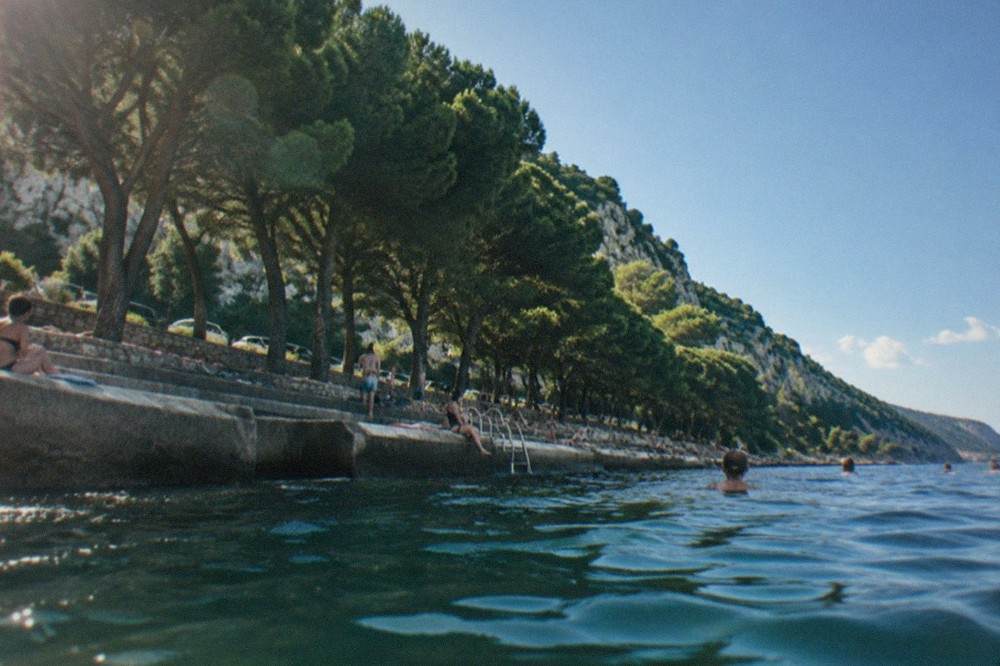
The honest advice about Barcola is to manage your expectations on two points. It is concrete and rock, not sand, and it faces an active commercial port gulf, so the water is at its clearest on calm days and after a stretch without rain, when the sediment that the rivers push into the gulf has settled. Locals read the water by looking at it from the promenade before committing, and there is no shame in walking two hundred metres further along to find the clearer patch.
When Is the Best Month for Swimming in Trieste?
July and August have the warmest water, both averaging 25.9 C, but September is the connoisseur's month: the sea still holds 23.9 C while the crowds thin, and June combines 23.1 C water with the calmest wind of the whole year, averaging just 0.3 days with a gust over 90 km/h. October at 20.3 C is the last month most swimmers would consider, and the season realistically runs June to September.
The wind data is the part national guides never mention, and it is the single most useful thing to know when planning a Trieste swimming trip. The bora, the cold north-easterly wind that funnels down off the Carso plateau, is the true gatekeeper of the swimming season, not the calendar. ARPA's station tables for the molo Fratelli Bandiera show that June is the calmest month of the year for wind, with an average of 0.3 days carrying a gust over 90 km/h, and that July, at 0.9 such days, is windier than April or May, both at 0.7. The wind picks up again sharply in the shoulder months: October averages 1.4 days over 90 km/h and November 1.9.
| Month | Days with gust over 72 km/h | Days with gust over 90 km/h | Mean sea temperature (C) |
|---|---|---|---|
| April | 3.5 | 0.7 | 14.0 |
| May | 2.7 | 0.7 | 17.9 |
| June | 2.2 | 0.3 | 23.1 |
| July | 3.3 | 0.9 | 25.9 |
| August | 2.9 | 0.9 | 25.9 |
| September | 3.5 | 1.1 | 23.9 |
| October | 4.0 | 1.4 | 20.3 |
| November | 5.2 | 1.9 | 16.8 |
Two practical readings of that table. First, the bora does not take summer off: the monthly record gust exceeds 110 km/h in every single month of the year, so a windy day can interrupt a July swimming week, and the all-time peak in the station series, 168.1 km/h, was measured in February 2012. Second, no official wind threshold exists at which the seafront is closed or swimming is forbidden; conditions are judged on the day, and on a strong bora day the sea off Barcola is rough, cold and unpleasant rather than closed. When the wind does blow, the city has an answer that is itself a local habit: it is the moment to duck into a historic caffè, and our Trieste coffee culture guide covers the ones worth crossing town for.
Does the Rain Matter for Swimming in Trieste?
Less than you would think in summer, and more than you would think in autumn. July is the second-driest month of the year at 53.8 mm, behind only January and March at 52.8 mm each, while the wettest month is November at 109.8 mm and September is second at 102.3 mm. Rain in Trieste is an autumn problem, not a summer one, and a June to August swimming trip is statistically one of the driest in Italy.
This is the point on which Trieste is most consistently misrepresented. The city sits far enough north, at the head of its gulf and under the Carso, that its rainfall pattern is central European rather than Mediterranean: the annual total is 867.1 mm spread across 86.1 wet days, which is wetter than the dry-south stereotype, but the distribution is what matters for a swimmer. Summer is genuinely dry. The rain arrives with the autumn, and September, statistically the second-wettest month, is also the month with the warmest late-season water, which is the trade-off locals navigate every year: the first half of September is often perfect, and by November the sea has dropped to 16.8 C and the rain has doubled. The full index of guides sits on Trieste Travel Guide.
| Month | Rain (mm) | Wet days | Mean sea temperature (C) |
|---|---|---|---|
| June | 62.5 | 6.1 | 23.1 |
| July | 53.8 | 5.4 | 25.9 |
| August | 71.7 | 6.6 | 25.9 |
| September | 102.3 | 7.4 | 23.9 |
| October | 88.6 | 7.6 | 20.3 |
| November | 109.8 | 9.5 | 16.8 |
The rain matters for swimming in a second way: runoff. After heavy rain, the rivers that empty into the gulf push sediment and cooler water along the coast, and the water clarity off Trieste drops for a day or two. Locals time their swims around the weather in the previous forty-eight hours, not just the forecast for the next twelve.
Swimming Beyond the City: Sistiana, Muggia and the Miramare Marine Protected Area
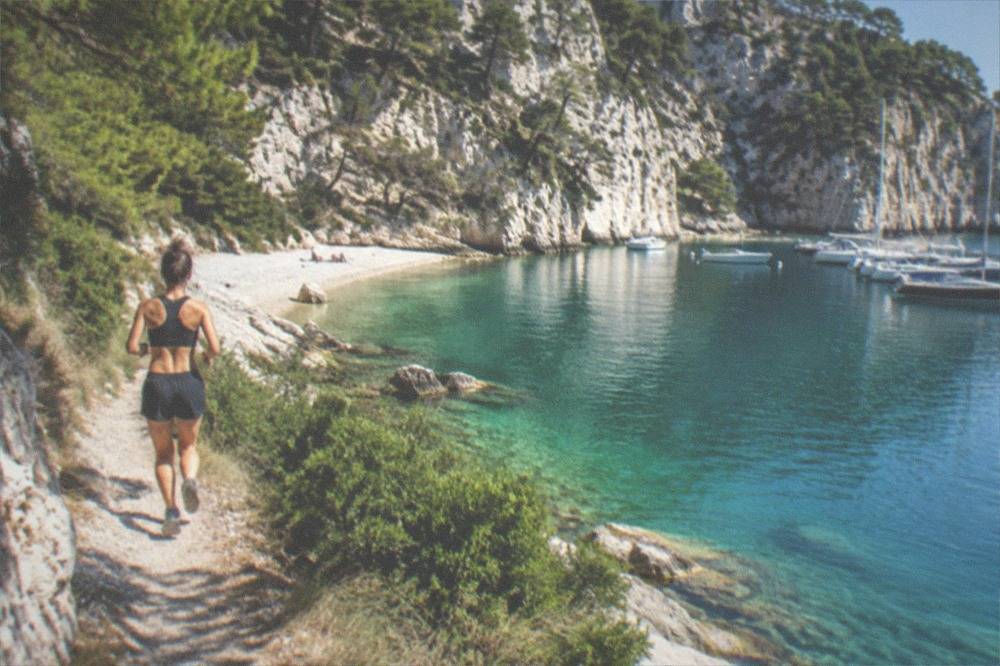
The three swimming areas locals drive to are the rocky bay and cliffs at Sistiana up the coast towards Duino, the sheltered water of Muggia bay across the harbour to the south-east, and the sea around the Miramare marine protected area below the castle at Grignano, where the protected status means the water is among the clearest on the whole gulf. All three are reachable without a boat, but each is a different kind of trip.
Sistiana is the classic day-out swimming destination on the Italian side of the gulf: a wide bay backed by pale cliffs, with the Rilke trail running along the top of them, and it is where Triestini head when they want the scenery to match the water. Muggia, across the bay in the direction of the Slovenian border, is the sheltered option, the place that stays swimmable when the bora is blowing the open seafront white. The Miramare marine protected area, the stretch of coast below the castle, is the clear-water option: the protected status restricts what happens in and on that water, which is precisely why it is the part of the gulf where you can see the bottom from the surface, and the castle's park, free all year, sits directly above it. Our Duino castle and Rilke trail guides cover the cliff-top side of the same coast.
One border fact applies to the Muggia direction and is checked less often than it should be. Italy is running temporary internal border checks on its land border with Slovenia, with the current extension running to 18 December 2026 per the European Commission's register, so if your swimming trip crosses the line into Slovenian water, carry a passport or national ID card. All three countries on this coast, Italy, Slovenia and Croatia, use the euro, and Croatia joined both the euro and Schengen on the same day, 1 January 2023, so there is no currency change anywhere along it.
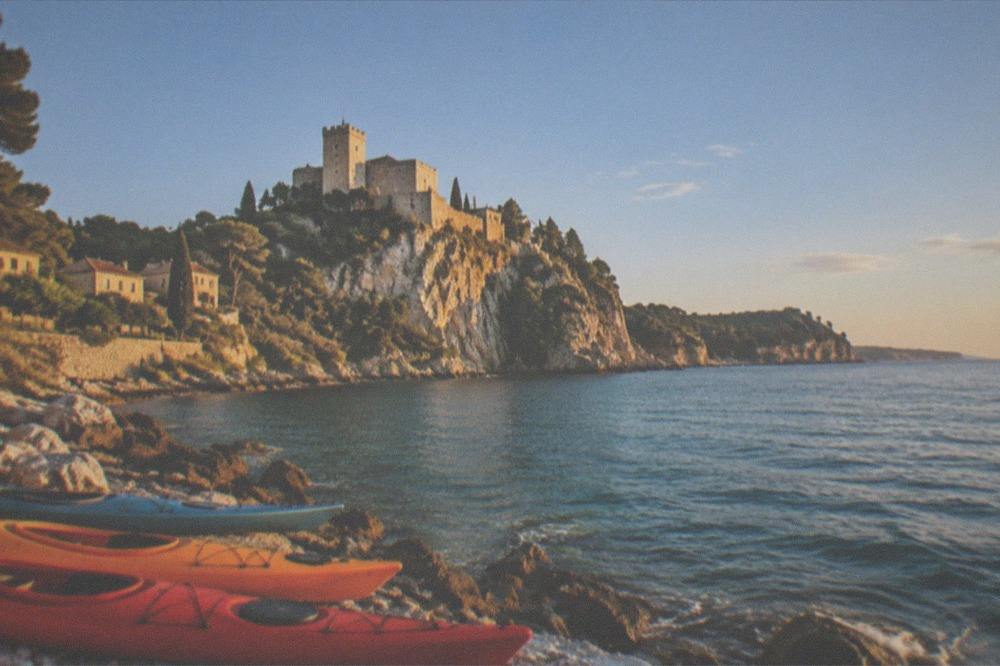
The easiest structured way to see this coast from the water is a guided kayak trip: the Duino coast and castles kayak tour runs three hours beneath the Duino castles, is rated 4.89 from 11 reviews on the operator's live listing, and starts from $76.81 per person. Check availability
Is Swimming in Trieste Safe?
Swimming in Trieste is safe for a competent swimmer who respects two local realities: the water off the seafront drops deep quickly, so it is a swimmer's coast rather than a paddler's coast, and the bora can turn a calm sea rough within hours, with gusts over 90 km/h on an average of 17.6 days a year. There is no published official wind threshold at which the seafront is closed, so the judgement is made on the day, by looking at the water.
The depth point deserves emphasis. Unlike the shallow Adriatic beaches further south, Trieste's shoreline is mostly rock, concrete and piers over water that is quickly over your head. Children swim here, but always under close supervision and usually at the managed spots, Pedocin above all, where the layout is designed for it. The open seafront is for people who can actually swim.
The wind point is about timing rather than danger. A bora day is not a subtle event: the sea off the Rive is visibly rough, the flags and moored boats tell the story, and no one is in the water. The practical skill is checking the forecast the evening before, since the regional agency publishes marine and wind forecasts for the gulf, and being willing to swap a swimming day for a museum day when it blows. Our bora wind guide covers the mechanics of it, and the free things to do in Trieste guide has the wet-weather alternatives.
Jellyfish, the question every Mediterranean swimmer asks, are a fact of the gulf in some summers, as they are everywhere in the northern Adriatic, and locals deal with them the way everyone does: by looking before jumping in and by asking at the bathing spots, where the regulars always know. There is no monitoring figure published for the Trieste seafront that this guide could verify, so the honest advice is the local one, which is to check the water you can see rather than a number you cannot.
What Should You Pack for a Swim on the Trieste Coast?
Pack for rock and concrete, not sand: proper swimming shoes or rock shoes are the single most useful item, followed by a towel or mat you can lie on a hard surface with, sun protection with nowhere natural to shade, and a windproof layer for the seafront, where even summer days can turn cool when the bora funnels down off the Carso. Snorkelling gear earns its place more than anywhere else on the Italian Adriatic, because the clear water off the protected coast is worth it.
The footwear point is not fussiness. The Topolini are rock, Barcola is concrete and rock, Sistiana is pebble and rock, and the sea urchin is a resident of all of them. Locals of every age wear rock shoes in the water, and the ones who do not have the stories to prove it.
| Item | Why it earns its place | Local note |
|---|---|---|
| Rock or swimming shoes | every local spot is rock or concrete, not sand | worn by everyone, including regulars |
| Thin foam mat or thick towel | no sand to lie on anywhere on the seafront | the classic Barcola sunbathing kit |
| Windproof layer | gusts over 72 km/h on 49 days a year, all seasons | lives in the bag even in July |
| Snorkel and mask | clearest water on the gulf is off the protected coast | best on calm days after dry weather |
| Water bottle | no shade structure on the open seafront | the fountains along the seafront are the local refill points |
Guided Ways Onto the Water in Trieste
The most direct guided water experience from Trieste is the three-hour kayak trip along the Duino coast beneath the Duino castles, from $76.81 per person and rated 4.89 from 11 reviews, but the coast also supports a small set of day trips that combine swimming-adjacent shorelines with sightseeing, including a six-hour Piran and Slovenian coast tour from $114.64 rated 4.57 from 136 reviews, and a panoramic coastal excursion with food and wine from $137.57 rated 4.98 from 50 reviews.
The kayak trip is the one that puts you in the water rather than beside it: three hours paddling the limestone coast under the castles, with the guide handling the tides and the wind call. The Piran tour is the swimming-adjacent option, a day on the Slovenian side of the gulf where the beaches are the classic Adriatic small-town sort, and the Slovenian coast food and wine tour pairs the same shoreline with tastings. If you want the coast explained rather than just swum, the panoramic city and Miramare tour, four hours from $129.94 and rated 4.97 from 21 reviews on the operator's live listing, is the comfortable way to see the protected coast and the castle above it.
For a swim-centred day out that needs no guide at all, the pattern locals use is simple: seafront spot in the morning while the sea is calm and the sun is low, long lunch, then back into the water in the late afternoon when the rocks have given up their heat. Where to eat around the seafront and beyond is covered in where locals eat in Trieste and our best restaurants in Trieste guide.
A Local's Swimming Day, Hour by Hour
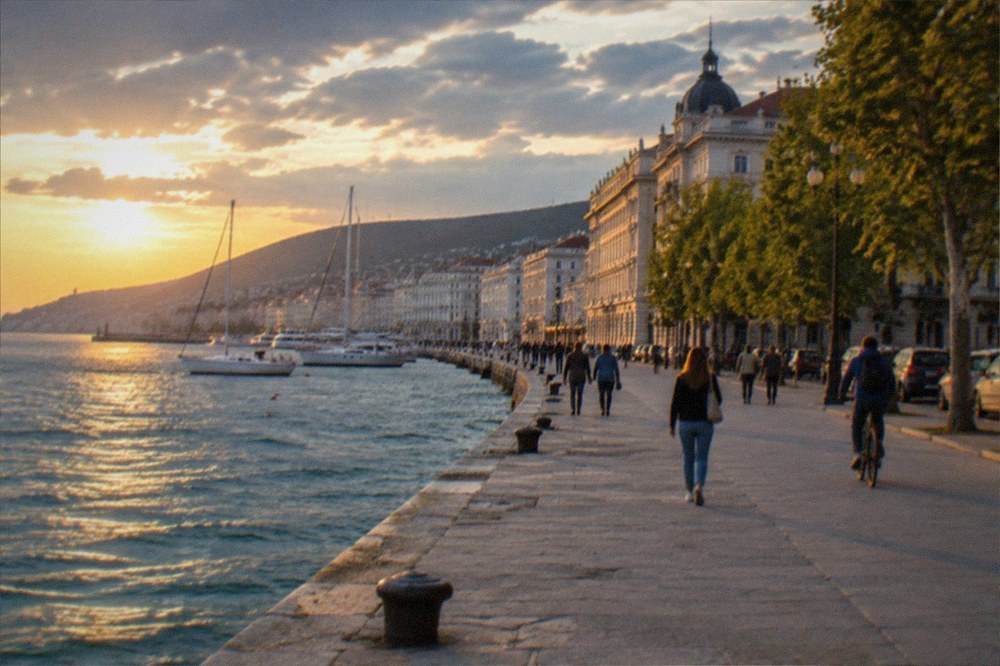
A classic Trieste swimming day starts early, because the sea is calmest and the seafront quietest before mid-morning, peaks with a long shaded lunch, returns to the water in the late afternoon when the concrete and rock are at their warmest, and ends on the seafront at sunset. The rhythm is wind-driven: the bora, when it comes, arrives with the day and makes the morning the only reliable window.
The daylight figure is worth dwelling on, because it is one of the quiet advantages of a northern Adriatic summer. The station tables show June averaging 15.68 hours of daylight, July 15.38 and August 14.19, against 8.72 in December. That is a swimming day with a long, gentle shoulder on both ends of it, and it is why the Topolini are busy at seven in the morning and again at seven in the evening with the same people.
| Time of day | What locals do | Why |
|---|---|---|
| Early morning | first swim off the Topolini or Pedocin | calmest sea, clearest water, empty rocks |
| Mid-morning to noon | cycle or walk the Barcola strip, second swim | sun on the concrete, sea still glassy |
| Midday to mid-afternoon | long shaded lunch, ice cream, escape the peak sun | no natural shade on the open seafront |
| Late afternoon | the main social swim | rock and concrete at their warmest |
| Evening | seafront passeggiata, sunset off the Molo Audace side | the day's wind, if any, has usually eased |
Common Questions About Swimming in Trieste
Can you swim in Trieste, Italy?
Yes. Trieste has a genuine local swimming culture, centred on the Pedocin sea baths on the city seafront, the free Barcola seafront and the Topolini platforms, plus rocky coves at Sistiana and clear water in the Miramare marine protected area. The sea is warmest from June to September, with monthly means of 23.1 to 25.9 C.
Where do locals swim in Trieste?
Locals swim at Bagno Marino La Lanterna, known as Pedocin, the municipal sea bath with separate men's and women's sections, at the free concrete and rocky Barcola seafront, especially the Topolini platforms, and, for a day out, at Sistiana bay and the coast below Miramare Castle.
When is the swimming season in Trieste?
Roughly June to September. The sea reaches monthly means of 23.1 C in June, 25.9 C in July and August and 23.9 C in September, then falls to 20.3 C in October and 16.8 C in November. June is also the calmest wind month of the year, averaging 0.3 days with a gust over 90 km/h.
Is the water cold in Trieste?
It depends on the month. In July and August the mean sea temperature is 25.9 C, which is as warm as much of the Mediterranean. In May it averages 17.9 C, brisk for most people, and outside the June to September window it drops quickly towards cold-water territory.
Does the bora wind stop you swimming in Trieste?
On some days, yes. The bora blows from the east-north-east off the Carso, and the station tables show gusts over 90 km/h on an average of 17.6 days a year, with the monthly record exceeding 110 km/h in every month. There is no official published wind threshold at which swimming is stopped, so the call is made by looking at the sea on the day.
Are there sandy beaches in Trieste?
Not in the city itself. Trieste's own swimming spots are rock, concrete and pier, which is the local culture: deep clear water off hard edges. Sandy and pebble beaches exist further along the coast, and the options within reach of the city are covered in our Trieste beaches and swimming guide.
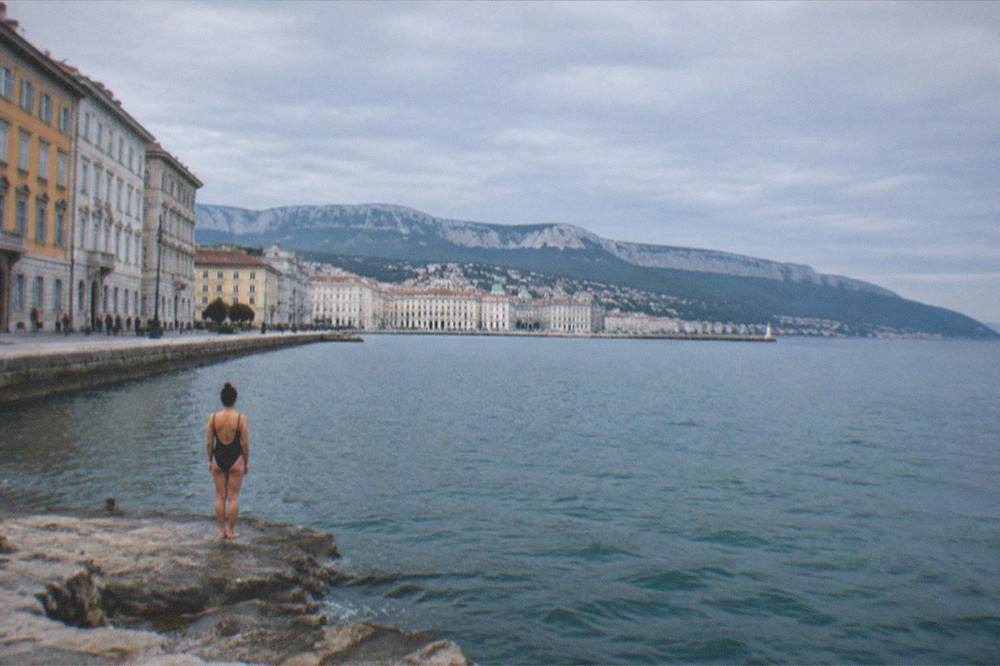
If you would rather see the whole coastline in a single comfortable loop before deciding which stretch of it to swim from, the hop-on audio bus tour covers the seafront and the waterfront landmarks in an hour and a quarter, from $21.02 per person, and pairs neatly with a morning at the Topolini.
That combination, a guided loop of the coast plus a free swim off the rocks, is a very Triestino way to do a day: the city is small enough that you can see all of it from a bus window in the morning and be in the water by the afternoon.
The short version of all of this: swim where the locals swim, in the morning, off the rocks, and check the wind the night before. Trieste's sea is warmer, clearer and better organised than its non-beach reputation suggests, and the days it is at its best, a calm June or September morning off the Topolini with the whole gulf glass-flat, are the days that bring the regulars back to the same slab of concrete every year of their lives.