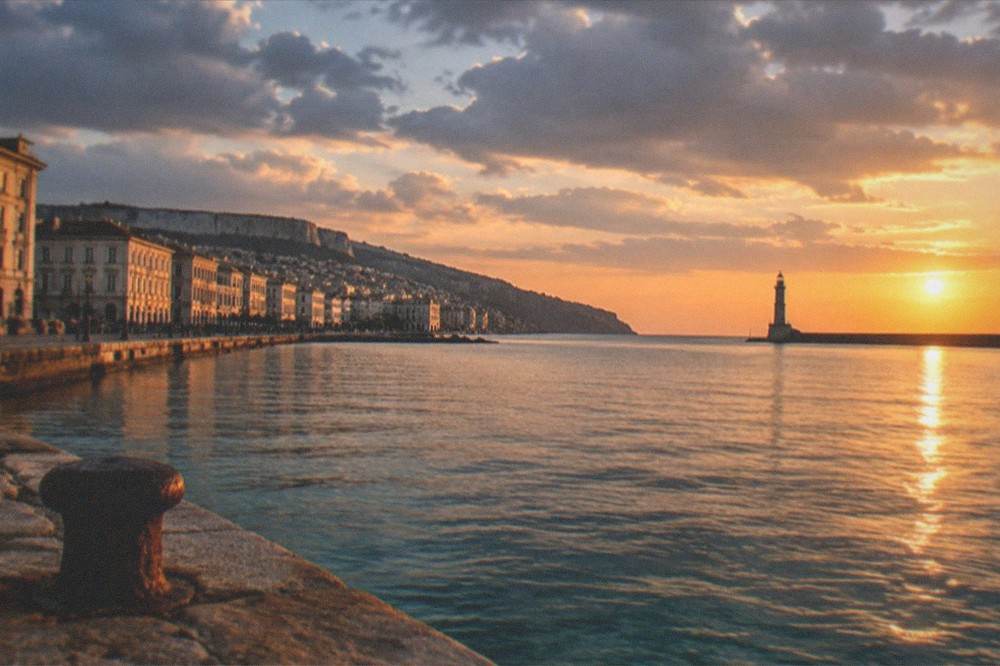
Best Time to Visit Trieste, Italy: A Month-By-Month Guide
Trieste, the Adriatic port city in Friuli Venezia Giulia in northeast Italy, rewards careful timing: its weather, its winds and its biggest events all swing with the seasons.
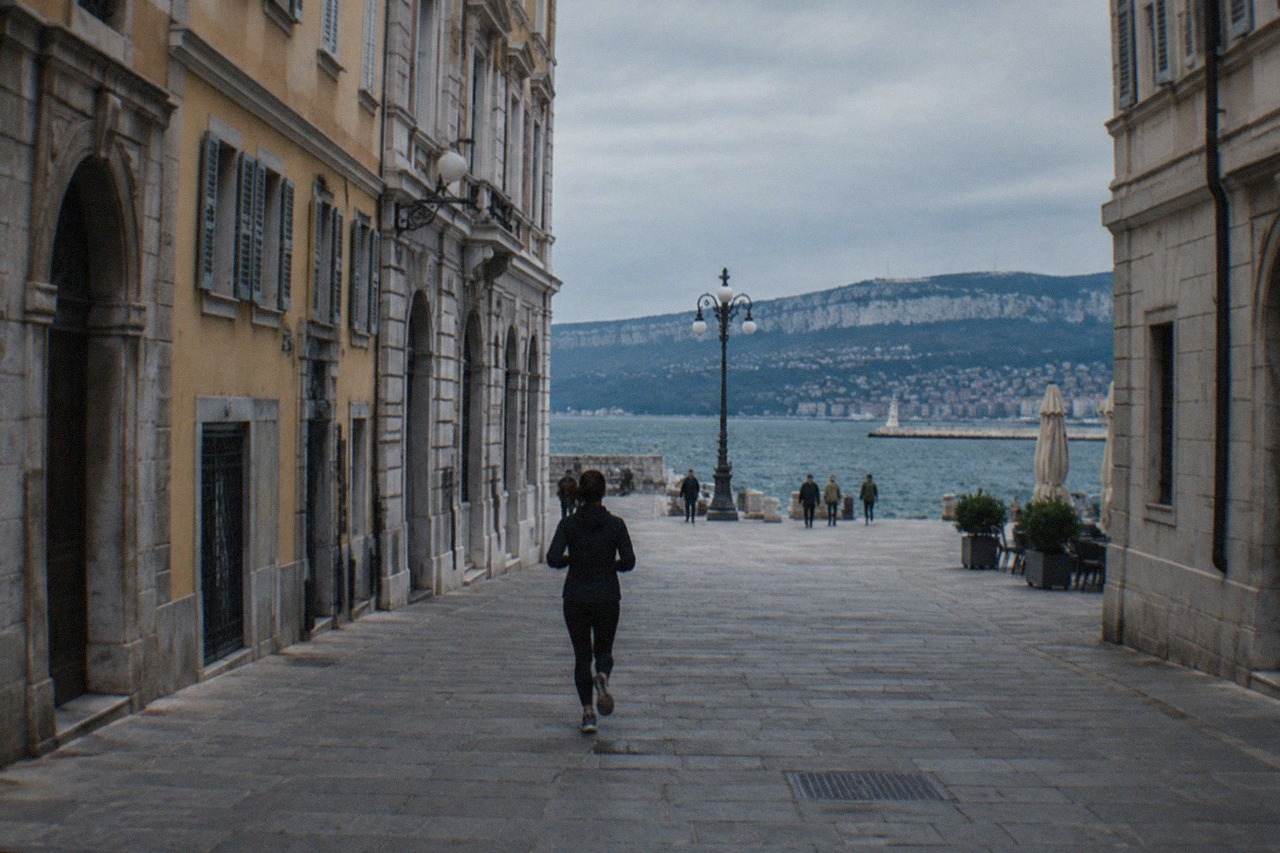
Short answer
The best time to visit Trieste, Italy is late spring (May and June) or early autumn (September), when days are warm, rain is lighter than the autumn peak and the bora wind is at its calmest of the year.
Trieste, the Adriatic port city in Friuli Venezia Giulia in northeast Italy, rewards careful timing. The city sits at the top of a narrow gulf, backed by the Karst plateau and open to a cold northeast wind that most Mediterranean guides never mention. Its rain falls in autumn, not summer. Its sailing regatta draws thousands of boats to a weekend in October. And its sea warms slowly, so the swimming season starts later than the calendar suggests. This guide lays out, month by month, the best time to visit Trieste using the regional weather agency's own station data, so you can pick the week that matches what you actually want from the city: walking, eating, swimming or watching sails.
What Is the Best Time to Visit Trieste, Italy?
The best time to visit Trieste, Italy is May and June, with September as a close runner-up. May averages a mean of 18.8 C with 75 mm of rain, June a mean of 23.1 C with just 0.3 days a year when a gust tops 90 km/h, the calmest wind figure of any month.
September brings a mean of 21.2 C and a sea still at 23.9 C, but it is the second wettest month at 102.3 mm, so late spring edges it.
The reasoning behind those months is specific to this city, and it is not the reasoning that applies to Rome or Florence. Trieste's climate is shaped by two things most of Italy ignores: the bora, a cold dry wind that accelerates down the Karst plateau off the gulf, and an autumn rainfall pattern that makes November, not any summer month, the wettest time of year. ARPA FVG, the regional environmental agency, maintains a weather station on the molo Fratelli Bandiera waterfront, and its 1995-2024 tables show a city that is windier than almost anywhere else in Italy, with a gust over 110 km/h recorded in every single month of the year at least once in the series.
That does not mean you should fear the place. The same tables show June is remarkably calm, July is the second driest month of the twelve, and the summer sea reaches 25.9 C. It means the question "when should I go" has a real answer, and the answer is data, not folklore. The month-by-month breakdown below carries the full picture, and the deeper dive lives in our Trieste weather month by month guide.
May and June also happen to be the months when the city is at its most usable. The historic caffès spill onto the pavement, the Rive seafront walk is pleasant at midday, and the day is long: 14.88 hours of daylight in May and 15.68 in June, against 8.72 in December. If you want the city at its greenest and calmest, that is the window.
How Does Trieste's Weather Change Month by Month?
Trieste's weather runs from a January mean of 7.1 C to a July and August mean of 25.2 C, with the hottest days concentrated in July and August (7.2 and 8.5 days over 30 C respectively) and the coldest, wettest and windiest stretch from November through February. Rain peaks in November at 109.8 mm and dips to its lowest in January and March at 52.8 mm each. The sea ranges from 10.5 C in February to 25.9 C in July and August.
Here is the full station table, from ARPA FVG's OSMER network at Trieste molo Fratelli Bandiera, series 1995-2024. Every figure below comes from that one station, measured at sea level on the waterfront, which is where a visitor actually stands.
| Month | Mean high C | Mean C | Mean low C | Days over 30 C | Rain mm | Wet days | Sea C |
|---|---|---|---|---|---|---|---|
| January | 9.2 | 7.1 | 5.0 | 0 | 52.8 | 6.6 | 11.6 |
| February | 9.8 | 7.4 | 5.2 | 0 | 59.7 | 6.6 | 10.5 |
| March | 13.0 | 10.4 | 7.9 | 0 | 52.8 | 6.1 | 11.6 |
| April | 16.8 | 14.0 | 11.4 | 0 | 60.7 | 8.0 | 14.0 |
| May | 21.7 | 18.8 | 16.1 | 0.1 | 75.0 | 8.5 | 17.9 |
| June | 25.8 | 23.1 | 20.2 | 2.5 | 62.5 | 6.1 | 23.1 |
| July | 28.2 | 25.2 | 22.4 | 7.2 | 53.8 | 5.4 | 25.9 |
| August | 28.1 | 25.2 | 22.3 | 8.5 | 71.7 | 6.6 | 25.9 |
| September | 23.9 | 21.2 | 18.4 | 0.5 | 102.3 | 7.4 | 23.9 |
| October | 19.6 | 17.1 | 14.8 | 0 | 88.6 | 7.6 | 20.3 |
| November | 14.7 | 12.5 | 10.3 | 0 | 109.8 | 9.5 | 16.8 |
| December | 10.7 | 8.5 | 6.4 | 0 | 77.4 | 7.7 | 13.6 |
Three things jump out of that table, and all three contradict the Mediterranean stereotype. First, summer is dry: July's 53.8 mm makes it the second driest month of the year, and the whole June-August stretch carries less rain than either September or October alone. Second, autumn is the wet problem, with September, October and November all above 88 mm and November the wettest month at 109.8 mm. Third, the sea lags the air: June's air mean is 23.1 C but the sea is only 23.1 C too, while in September the sea at 23.9 C is warmer than the air gap suggests, because water holds its heat through late summer.
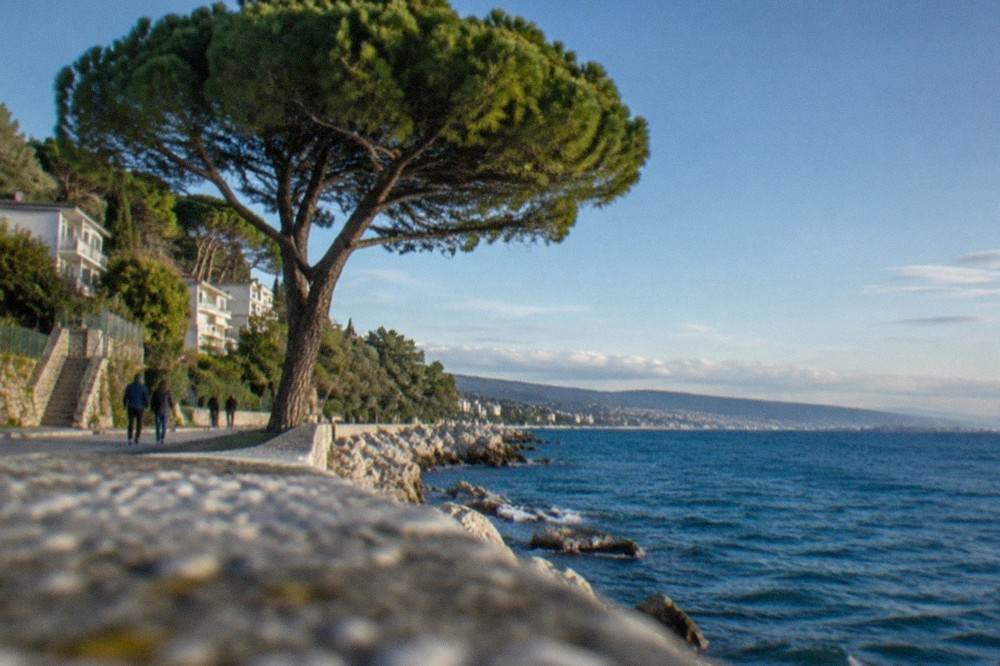
The practical translation, season by season, looks like this.
| Season | Months | Mean C range | Rain character | Best for |
|---|---|---|---|---|
| Spring | March-May | 10.4-18.8 | Steady, 52.8-75 mm per month | Walking, sightseeing, osmize on the Karst |
| Summer | June-August | 23.1-25.2 | Driest quarter, 53.8-71.7 mm | Swimming, seafront evenings, long daylight |
| Autumn | September-November | 12.5-21.2 | Wettest quarter, 88.6-109.8 mm | Barcolana, warm sea early, fewer crowds late |
| Winter | December-February | 7.1-8.5 | 59.7-77.4 mm, windiest | Christmas market, museums, caffè culture |
If you are planning around a specific activity rather than a season, the rest of this guide breaks down the four decisions that actually matter: rain, sea temperature, wind and events. For a first visit built around the city itself rather than the weather, a private walk with a local guide is the most weather-flexible way to see it, and the operator's listing lets you set the pace.
The listing describes a flexible private walk of two to six hours with a local, rated 4.6 from 94 reviews, which means it can absorb a changed forecast more easily than a fixed-group tour. You can also Check availability directly.
When Is the Rainiest Time in Trieste?
The rainiest time in Trieste is autumn, not summer. November is the wettest month at 109.8 mm across 9.5 wet days, September is second at 102.3 mm and October third at 88.6 mm, while July is the second driest month of the year at 53.8 mm, behind only January and March at 52.8 mm each. The annual total is 867.1 mm spread over 86.1 wet days.
This is the single most useful fact in the whole timing question, because almost every generic Italy guide gets it backwards. The instinct is to fear Mediterranean summer storms and treat September as a safe shoulder month. At this station the reverse is true: the three autumn months each carry more rain than any summer month, more than a third of the annual total between them, while the three summer months stay well below the autumn figures. A wet day in November (9.5) is nearly twice as likely as a wet day in July (5.4).
| Month | Rain mm | Wet days | Rank by rain |
|---|---|---|---|
| November | 109.8 | 9.5 | 1 |
| September | 102.3 | 7.4 | 2 |
| October | 88.6 | 7.6 | 3 |
| December | 77.4 | 7.7 | 4 |
| May | 75.0 | 8.5 | 5 |
| August | 71.7 | 6.6 | 6 |
| June | 62.5 | 6.1 | 7 |
| April | 60.7 | 8.0 | 8 |
| February | 59.7 | 6.6 | 9 |
| July | 53.8 | 5.4 | 10 |
| January | 52.8 | 6.6 | 11 |
| March | 52.8 | 6.1 | 11 |
The nuance worth keeping is that "wettest" in Trieste still means moderate by global standards. The 867.1 mm annual total is spread fairly evenly, with no monsoon-style concentrated season. What autumn adds is frequency: more wet days, longer grey stretches, and the bora arriving alongside the rain. May has more wet days than July (8.5 against 5.4) but its showers tend to pass, and the month's 21.7 C mean high keeps the city pleasant between them.
For a rainy-day plan, the city is unusually well equipped: the free things to do in Trieste include several museum options, and the caffè culture that made this a literary city is designed for exactly this weather. The Risiera di San Sabba national monument is free and open daily, the Cathedral of San Giusto is free, and Miramare's park is free all year even when the castle ticket is not.
When Can You Swim in Trieste?
The swimming season in Trieste runs roughly June through September, when sea temperatures sit above 20 C. The sea peaks at 25.9 C in July and August, holds 23.9 C in September and 23.1 C in June, and is warmest in absolute terms in late summer because the water retains heat. Below 20 C from November through May, with a February low of 10.5 C, the gulf is genuinely cold.
The sea figures come from a different source than the land figures: they are ocean reanalysis data from the Copernicus Climate Change Service, delivered for the Gulf of Trieste, and they show a clear asymmetry. June's air is already high-summer (25.8 C mean high) but the sea is still catching up at 23.1 C. By September the air has cooled but the sea has not, which is why September often feels warmer in the water than June did. ARPA's oceanographic bulletins for the gulf show the same pattern year after year, along with a long-term warming trend in the annual means.
| Month | Sea C | Swimmable? | Note |
|---|---|---|---|
| January | 11.6 | No | Coldest quarter |
| February | 10.5 | No | Annual sea minimum |
| March | 11.6 | No | Still cold |
| April | 14.0 | No | Warming begins |
| May | 17.9 | Marginal | Hardy swimmers only |
| June | 23.1 | Yes | Season opens |
| July | 25.9 | Yes | Annual peak |
| August | 25.9 | Yes | Annual peak |
| September | 23.9 | Yes | Sea warmer than June |
| October | 20.3 | Marginal | Cooling fast |
| November | 16.8 | No | Season over |
| December | 13.6 | No | Cold |
Where you swim matters as much as when. The city's own seafront at Barcola, the long paved stretch north of the centre, is where the swimming culture actually lives, and the topless and swimsuit zones of the historic Lanterna bathing establishment sit right below the city walls. The full picture, including the protected marine area off Miramare, is in our Trieste beaches and swimming guide.
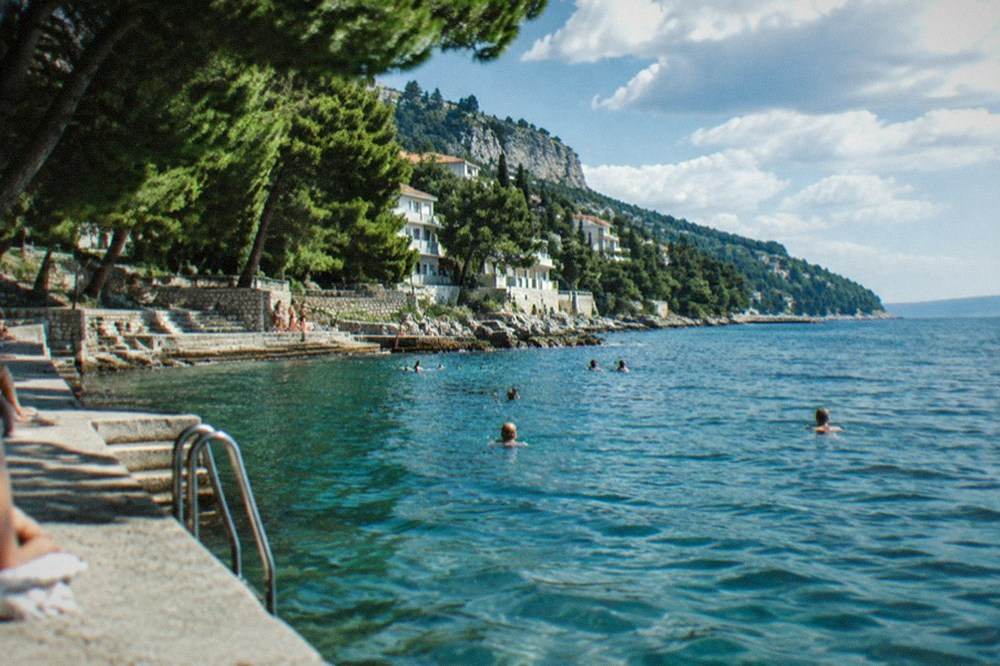
One planning note: August is the month when the sea and the air peak together (8.5 days over 30 C, sea at 25.9 C), and it is also the month when many Italians take their own holidays. If swimming is the priority, the last week of June or the first half of September gives you nearly the same water with a quieter city.
When Is the Bora Wind at Its Worst?
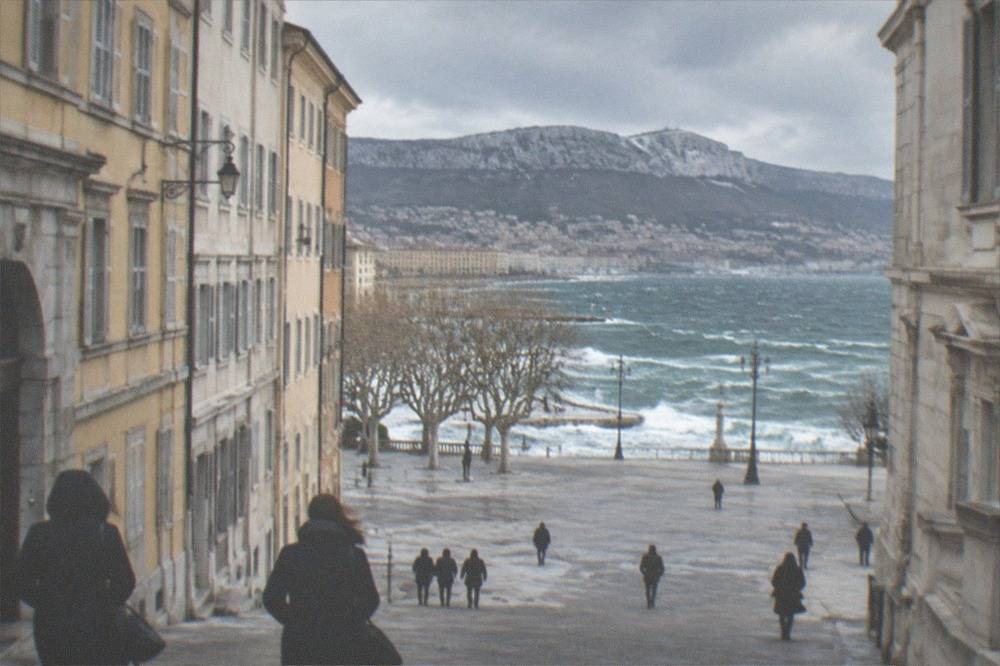
The bora is at its worst from November through March, peaking in February, which holds the station's all-time record gust of 168.1 km/h (recorded February 2012). On average Trieste gets 49.0 days a year with a gust over 72 km/h and 17.6 days over 90 km/h, and the monthly record gust exceeds 110 km/h in every single month of the year. June is the calmest month, with just 0.3 days a year when a gust tops 90 km/h.
The bora is a katabatic wind: cold air pools over the Karst plateau behind the city and then spills down the escarpment, accelerating across the gulf. ARPA's regional wind sheet describes it as blowing from the east-northeast, with gusts that "largely exceed 100 km/h" in strong episodes. It is dry, it is cold, and in winter it can drop the felt temperature sharply even on a day the thermometer reads mild.
| Month | Days gust over 72 km/h | Days gust over 90 km/h | Record gust km/h |
|---|---|---|---|
| January | 5.5 | 2.4 | 148 |
| February | 6.0 | 2.9 | 168 |
| March | 4.9 | 2.1 | 163 |
| April | 3.5 | 0.7 | 123 |
| May | 2.7 | 0.7 | 120 |
| June | 2.2 | 0.3 | 110 |
| July | 3.3 | 0.9 | 125 |
| August | 2.9 | 0.9 | 124 |
| September | 3.5 | 1.1 | 124 |
| October | 4.0 | 1.4 | 126 |
| November | 5.2 | 1.9 | 147 |
| December | 5.3 | 2.3 | 133 |
Two details in that table surprise people. July has more strong-wind days (0.9) than April, May or June, so summer is not wind-free, just much less windy. And no month has a clean record: even June's calmest-ever peak was 110 km/h. There is no published official wind threshold at which the Rive seafront closes, ferries stop or events are called off, so treat any specific cutoff number you read elsewhere with suspicion; the authorities scale their response to conditions rather than a single figure.
For a visitor, the bora is mostly a winter and early-spring consideration. In May and June it is a fresh breeze that clears the sky rather than a hazard. If you do land a windy day, the bora wind guide covers what it does to the city, and the historic centre's arcaded streets, built partly for this reason, give you covered walking routes when the seafront is unpleasant.
What Events Should You Time a Trip Around?
The event that should shape your calendar is the Barcolana regatta, whose 58th edition runs 2-11 October 2026 with the main race on Sunday 11 October starting at 10:30. The record entry was 2,689 boats in 2018, a figure the organisers describe as a Guinness World Record for the largest sailing race in the world. October in Trieste averages 17.1 C and 88.6 mm of rain, so the event sits in the windy autumn shoulder by design.
Barcolana is unlike any other sailing event: professional crews and family dinghies race the same 13-nautical-mile course in the Gulf of Trieste, finishing off Piazza Unità d'Italia, and the whole city turns out for it. The first edition in 1969 had 51 boats; the 2025 edition drew 1,865, the highest since 2019. If you want to be in Trieste for it, book well ahead, because the city's accommodation fills around that weekend. The full story is in our Barcolana regatta guide.
The rest of the year's timing is quieter but real. Spring is the osmize season on the Karst, when farmhouses hang a frasca, a leafy branch, at the turning to signal they are pouring their own wine, with the highest concentration of openings in spring and autumn. The volunteer-run calendar at osmize.com lists who is open on which days, and our osmize of the Carso guide explains the custom. December brings the Christmas market, and winter brings the caffè culture into its own.
| Period | Event or season | Weather context |
|---|---|---|
| 2-11 October 2026 | Barcolana 58, main race Sunday 11 October | Mean 17.1 C, 88.6 mm rain |
| Spring (March-May) | Osmize openings peak on the Karst | Mean 10.4-18.8 C |
| December | Christmas market in the centre | Mean 8.5 C, 8.72 hours daylight |
| June-September | Swimming season on the gulf | Sea 23.1-25.9 C |
| First Sunday monthly | Free entry at participating state museums, including Miramare | Any month |
That last row deserves a note: the ministry's first-Sunday free-entry scheme runs at participating state museums, and Miramare takes part, but the rules have changed more than once in recent years. Check the venue's own page for the specific month rather than assuming.
When Is Trieste at Its Most and Least Crowded?
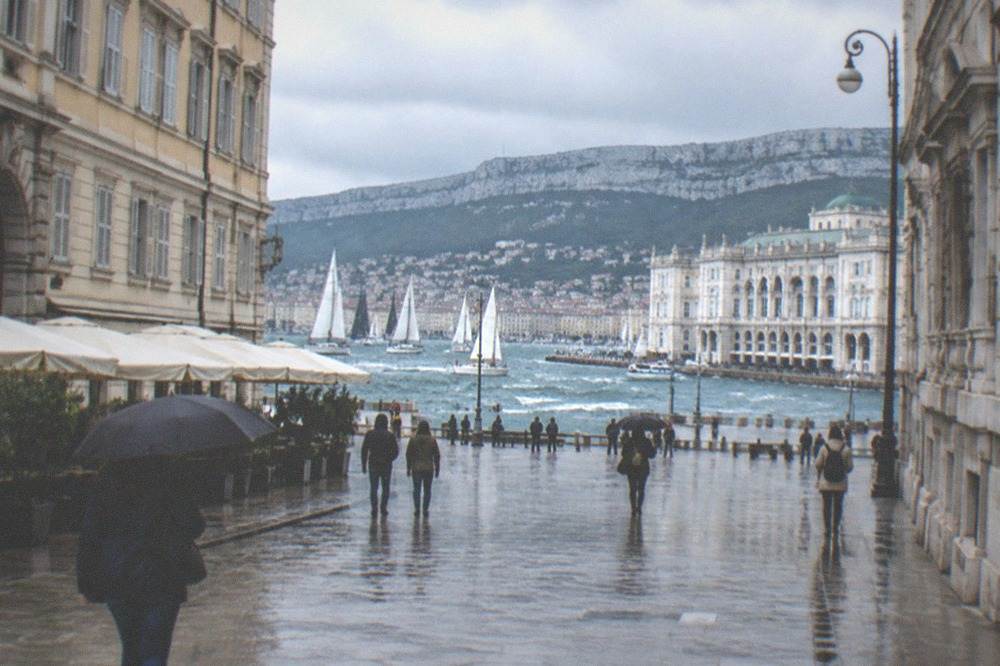
Trieste is at its most crowded in the Barcolana window of early October, when the regatta fills the city, and at its quietest in the winter months of January and February, when the mean temperature sits at 7.1-7.4 C and the bora is at its annual peak. August adds a secondary Italian-holiday peak, while May and June combine good weather with the year's calmest winds and no major event crowding.
Trieste is not Venice, and it does not have a cruise-ship crush problem, but it does have a rhythm. The regatta weekend is the one period when the centre genuinely fills. August is the month when Italian domestic tourism peaks and some family-run restaurants close for their own holidays, a pattern common across Italy. Winter is quiet, grey in November, brilliant and cold in the bora-clear days of February, and the city's museum and caffè infrastructure makes it a workable cold-season city break.
The tourist tax is the same year-round, so timing does not change that line of the budget: the Comune's 2026 table charges per person per night, from €1.50 at campsites up to €3.80 at five-star hotels, for a maximum of five consecutive nights in the same property, with everyone under 18 exempt. What timing does change is availability and room rates, neither of which we quote because they move constantly; check listings for your dates.
For a season-by-season recommendation, this is how the trade-offs stack up.
| If you want | Go in | Why | Watch out for |
|---|---|---|---|
| Calm weather, long days | May-June | 0.3-0.7 days over 90 km/h, 14.88-15.68 h daylight | May has 8.5 wet days |
| Warm swimming | July-August | Sea 25.9 C, air mean 25.2 C | 8.5 days over 30 C in August, holiday crowds |
| The big event | Early October | Barcolana, 2-11 October 2026 | 88.6 mm rain, book ahead |
| Fewest crowds | January-February | No events, quiet centre | Mean 7.1-7.4 C, windiest months |
| Wine and food | Spring or autumn | Osmize openings on the Karst | Check the osmize.com calendar first |
The one thing worth booking early in any season is the small-group food walk, because the good food tours in a mid-sized city fill faster than the landmarks do. The three-hour guided foodie walk is rated 4.9 from 264 reviews on its listing.
What About Day Trips: Does Timing Change Them?
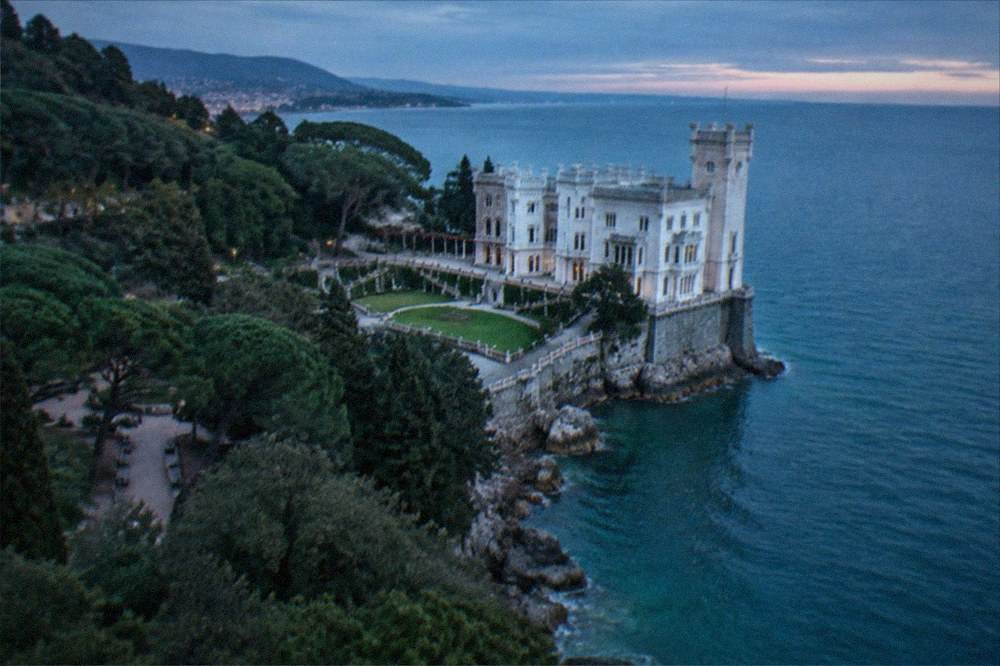
Timing changes Trieste's day trips less than you might think, with two exceptions. Miramare Castle and its park are open year-round (the castle 9:00-19:00 daily, the park free with seasonal hours), so they work in any month, but Grotta Gigante runs guided tours only, by compulsory booking, and is closed on Mondays from September to February. Slovenia day trips need a passport or ID card, because Italy is running temporary border checks on the Slovenia land border through 18 December 2026.
Start with the castle. Miramare's adult ticket is €17 including the temporary exhibition, and the park is free all year, with hours that shift by month (8:00-19:00 from April to September, closing earlier into winter). It works in every season, though the park is at its best from late spring. A simple entry ticket version is also sold as a timed product, rated 3.6 from 39 reviews on its listing, if you want to skip the museum experience.
The cave is where the calendar genuinely matters. Grotta Gigante, the huge show cave at Sgonico on the Karst, runs guided visits only with compulsory booking, at fixed departure times of 9:00, 10:00, 11:00, 12:00, 14:00, 15:00 and 16:00, and from September to February it opens Tuesday to Sunday, so a Monday autumn visit finds it shut. Adult entry is €15, children 6-18 €8, under 6 free. In March-August it opens every day.
The border point matters for the Slovenian side. Croatia adopted the euro and joined Schengen on the same day, 1 January 2023, and Slovenia has been in both since 2007, so there is no currency change on any of these trips. But the European Commission's register currently lists Italy as running temporary internal border checks on its land borders with Slovenia from 19 June 2026 to 18 December 2026, so carry a passport or national ID card and expect the possibility of a check rather than assuming an open road. The Piran and Ljubljana day trips are the ones this touches.
Common Questions About the Best Time to Visit Trieste
What is the best time to visit Trieste?
May and June are the best months to visit Trieste, Italy: mean temperatures of 18.8-23.1 C, the calmest winds of the year (June averages 0.3 days with a gust over 90 km/h) and long daylight of up to 15.68 hours. September is a strong alternative, with the sea still at 23.9 C, though it is the second wettest month at 102.3 mm.
Is Trieste rainy in summer?
No. July is the second driest month of the year in Trieste at 53.8 mm, behind only January and March at 52.8 mm each. The rain in Trieste is an autumn problem: November is the wettest month at 109.8 mm, September second at 102.3 mm and October third at 88.6 mm.
What is the hottest month in Trieste?
July and August tie as the hottest months, each with a mean of 25.2 C and mean highs of 28.2 and 28.1 C. August has slightly more days over 30 C (8.5 against July's 7.2).
When is the Barcolana in Trieste?
Barcolana 58 runs 2-11 October 2026, with the main regatta on Sunday 11 October 2026 starting at around 10:30 over a 13-nautical-mile course in the Gulf of Trieste. The entry record is 2,689 boats, set in 2018.
When can you swim in Trieste?
The comfortable swimming season runs roughly June through September, when the sea is at or above 23 C. The sea peaks at 25.9 C in July and August and holds 23.9 C into September, then falls to 20.3 C in October and a low of 10.5 C in February.
Is the bora dangerous for visitors?
The bora is a strong cold wind, not a hazard to a prepared visitor. Trieste averages 49.0 days a year with a gust over 72 km/h and 17.6 over 90 km/h, concentrated from November to March. June is the calmest month. No official wind threshold closes the seafront or cancels ferries; conditions are judged case by case.
The honest summary is that Trieste, Italy has two first-rate windows, late spring and early autumn, one spectacular single weekend in October, and a winter that rewards the traveller who wants caffès, museums and empty streets over swimming. Pick the window that matches your plans, carry a windproof layer in any month, and the city will do the rest. More planning help is in our where to stay in Trieste guide and the shorter answer page on the best time to visit, and the wider context is on Trieste Travel Guide.