What Is the Best Time to Visit Trieste?
The best time to visit Trieste, Italy, month by month: ARPA's own station data on rain, wind and sea temperature, plus Barcolana dates and crowd timing.
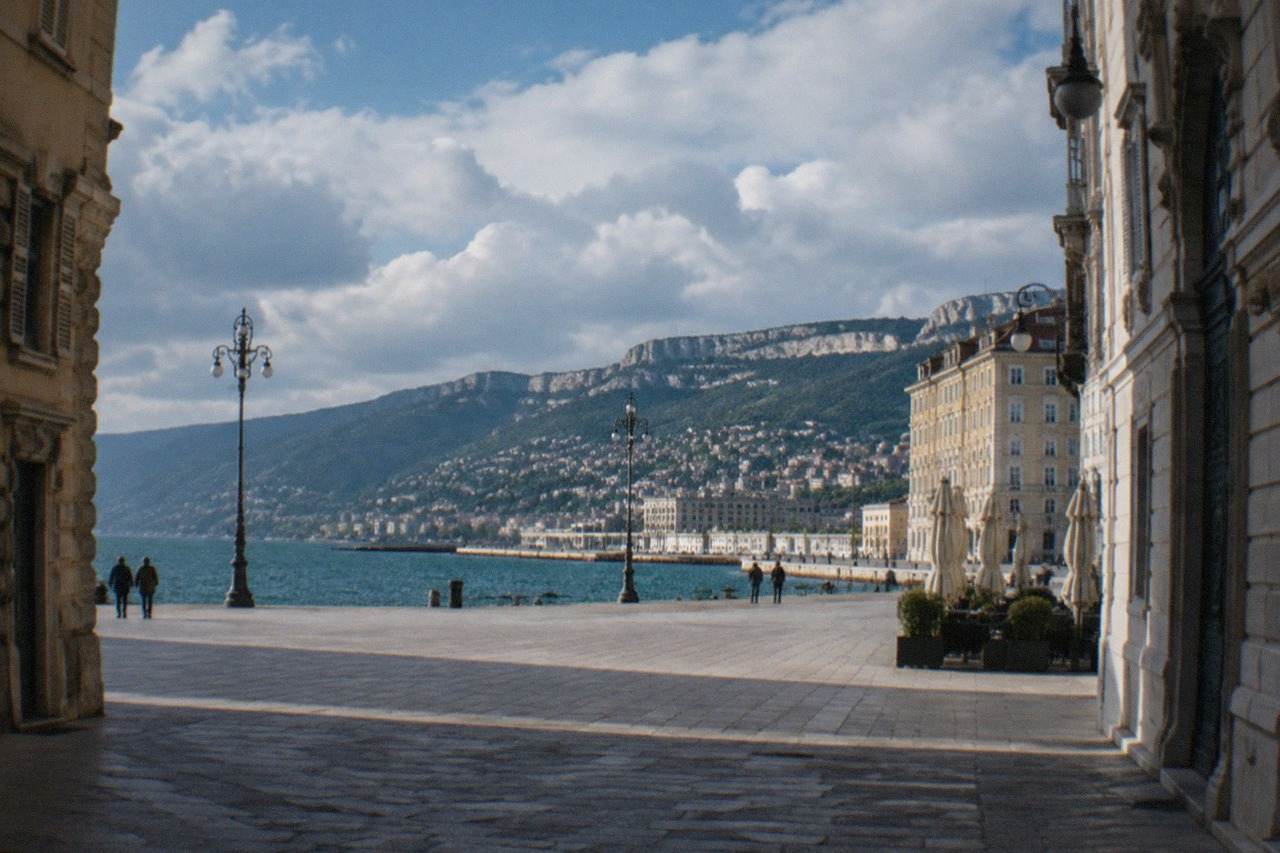
Trieste, the Adriatic port city in Friuli Venezia Giulia in the northeast corner of Italy, rewards timing more than most Italian destinations because its weather has two personalities: a sheltered, almost dry summer on the waterfront and an autumn that is genuinely the wettest stretch of the year. That runs against the lazy assumption that the rain here is a summer problem. It is not. ARPA FVG, the regional environmental agency, keeps a weather station at Trieste molo Fratelli Bandiera on the waterfront, and its 1995-2024 series is the basis for everything on this page: November is the wettest month at 109.8 mm, September is second at 102.3 mm, and July is one of the driest at 53.8 mm.
What Is the Best Time to Visit Trieste?
The best time to visit Trieste, Italy, is late April through June, when mean highs rise from 16.8 C to 25.8 C, rain stays near its annual lows, and June is the calmest month of the whole year for the bora wind, averaging just 0.3 days with a gust over 90 km/h. Early September to early October is the strong runner-up: the sea is at its warmest, but rain climbs steeply from September's 102.3 mm into November's 109.8 mm.
Those two windows are not equal, and the difference is wind. The bora, the cold katabatic gust that funnels down from the Carso plateau, is the variable that actually shapes a Trieste holiday: on average 49 days a year carry a gust over 72 km/h and 17.6 days a year one over 90 km/h, and the monthly record gust exceeds 110 km/h in every single month of the year, so no season offers a wind guarantee. What the station table does show is a clear calm corridor. April and May average 0.7 days each over 90 km/h, June just 0.3, and then the numbers climb again through July at 0.9. If you want the version of Trieste where you eat outside on the Rive without your napkin leaving the table, plan for late spring.
For a fuller month-by-month breakdown, see the Trieste best-time-to-visit guide, and for what the city actually offers once you are there, start with what Trieste is famous for.
A private walk, a castle ticket and a food tour are the three bookings most first-time visitors make here, and all three work in either of the good windows. The castle and the food walk in particular are worth locking in before you leave home once you have settled your dates, because the best-guided slots in the compact city centre fill first on late-spring weekends.
When Is Trieste Warmest and Driest?
July and August are the warmest months in Trieste, Italy, with mean highs of 28.2 C and 28.1 C respectively and mean sea temperature at 25.9 C in both, while July is also the second-driest month of the year at 53.8 mm of rain, behind only January and March at 52.8 mm each. August is wetter at 71.7 mm, and the two months average 7.2 and 8.5 days respectively on which the temperature tops 30 C.
The surprise in the station table, for anyone who has read that Trieste is rainy, is where the rain actually falls. Summer is not the problem. The wet period starts in September, builds through October at 88.6 mm and peaks in November at 109.8 mm, with 9.5 wet days on average that month. The annual total of 867.1 mm across 86.1 wet days makes Trieste wetter than the Mediterranean stereotype suggests, but the distribution matters more than the total: a July visit averages 5.4 wet days, a November visit 9.5.
| Month | Mean high C | Rain mm | Wet days | Sea C | Days gust over 90 km/h |
|---|---|---|---|---|---|
| April | 16.8 | 60.7 | 8.0 | 14.0 | 0.7 |
| May | 21.7 | 75.0 | 8.5 | 17.9 | 0.7 |
| June | 25.8 | 62.5 | 6.1 | 23.1 | 0.3 |
| July | 28.2 | 53.8 | 5.4 | 25.9 | 0.9 |
| August | 28.1 | 71.7 | 6.6 | 25.9 | 0.9 |
| September | 23.9 | 102.3 | 7.4 | 23.9 | 1.1 |
| October | 19.6 | 88.6 | 7.6 | 20.3 | 1.4 |
| November | 14.7 | 109.8 | 9.5 | 16.8 | 1.9 |
Sea temperature behaves with a lag that is worth knowing when you pick your month. The water peaks in July and August at 25.9 C and is still 23.9 C in September, warmer than June's 23.1 C despite the air being cooler, because the Gulf of Trieste retains heat into early autumn. Swimmers who want the warmest water without the warmest crowds should look at September, accepting that it is the second-wettest month of the year.
When Should You Avoid Trieste, and When Is It Cheapest?
The months to weigh carefully in Trieste, Italy, are November through February: November is the wettest month at 109.8 mm, January and February average the most days with gusts over 90 km/h at 2.4 and 2.9, and February holds the all-time station record gust of 168.1 km/h from 2012. Winter is not closed season, though: mean highs stay near 10 C, and the city's museums, caffè and Christmas market are all in full swing.
The bora deserves a paragraph of respect, because it is the one Trieste variable with no official rulebook. The agency's tables show the wind can arrive in any month, with the monthly record gust above 110 km/h everywhere from June to January, and the all-time peak of 168.1 km/h recorded in February 2012 at the molo Fratelli Bandiera station. What no source publishes is a threshold at which the Rive seafront closes or ferries stop: no such official cutoff exists, so treat any number you see quoted as one as invented. In practice the strong episodes cluster in the cool season, and ARPA's own climate sheet describes gusts that largely exceed 100 km/h blowing from the east-north-east. Everything else covered here is indexed on Trieste Travel Guide.
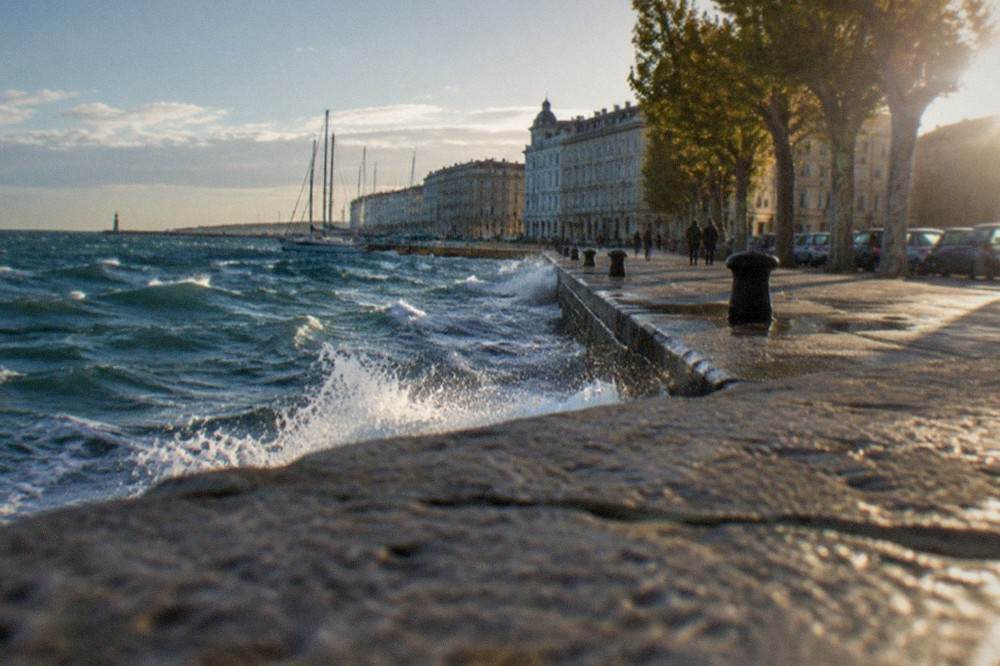
Should you still come in the cold half? Yes, with the right clothes and the right expectations. The city's indoor life, its historic caffè, its museums and its theatre season, exists partly because of that weather. Museo Revoltella is open daily 10:00-19:00 and closed Tuesdays, Castello di San Giusto runs 10:00-19:00 daily until 11 October and then Tuesday to Sunday 10:00-17:00, and the free-entry first-Sunday scheme at participating state museums, including Miramare, runs through 2026, though the details have changed before and the venue's own page is the place to confirm each month. For a fuller cold-season case, the rainy day guide to Trieste and the winter itinerary cover what to do when the wind is up.
What About the Barcolana and Autumn Events?
The Barcolana regatta, the world's largest sailing race by entry, runs 2-11 October 2026 in Trieste, Italy, with the main race on Sunday 11 October starting at 10:30 over a 13-nautical-mile course in the Gulf of Trieste. The record entry stands at 2,689 boats in 2018, and the 2025 edition drew 1,865. Early October therefore means a city transformed: crowds, a race village on the waterfront, and an average of 1.4 days a month with gusts over 90 km/h.
Barcolana week is the one stretch of October when Trieste is anything but quiet, and for many visitors that is precisely the draw. The regatta has run since 1969, when 51 boats started, and the organisers hold a Guinness World Record for the 2,689-boat fleet of 2018. If you are coming for the spectacle, book accommodation early and expect the seafront to be busy from the opening day. If you are coming for the city rather than the sailing, the same week is the one to sidestep.
The other seasonal marker is the osmize, the farm cellar outlets on the Carso that open for limited periods to sell their own wine and home produce, signposted by a frasca, a leafy branch hung at the turning. Openings concentrate in spring and autumn, and the de facto calendar of which farm is open on which day lives at osmize.com. An autumn visit timed between the September rains and the Barcolana crowds can combine the city with a day on the plateau, and the Carso Karst plateau guide covers how.
How Many Days Do You Need, Whenever You Come?
Two full days is the practical minimum for Trieste, Italy, in any season, enough for Piazza Unità d'Italia, the Città Vecchia, San Giusto hill and one half-day at Miramare or on the Carso, while three to four days comfortably adds a Slovenian or Croatian day trip. The season you choose changes what those days look like more than how many you need: late spring days run to over 15 hours of daylight in June, while December offers 8.72 hours.
Daylight is an underrated part of the timing question. The station tables give June 15.68 hours of daylight against December's 8.72, a difference of nearly seven hours between the two solstices. A December city break here is a short-days, long-lunches proposition, with the Christmas lights and caffè culture carrying the visit; a June one lets you walk the Rive after dinner in daylight. The itineraries on this site are built around that: see how many days in Trieste is enough for the length question, and what to do in Trieste for 3 days for the shape of a longer stay.
Whatever month you pick, a first morning with a local guide is the fastest way to read the city's layered Habsburg, Roman and Slovenian-border geography, and the private Best of Trieste walking tour is the strongest option in the roster for exactly that job.
The same logic applies to the other two picks above: the Miramare ticket is best booked for a clear late-spring morning when the park is at its greenest, and the food walk is a fine anchor for a first evening in the city centre in any season. Once your dates are fixed, checking availability on all three takes minutes and saves the disappointment of finding the best slots gone.
With dates and bookings settled, the only remaining variable is the one nobody can plan for: the bora. Watch the regional forecast in your final week, pack a windproof layer even in June, and the city will do the rest.
Common Questions About the Best Time to Visit Trieste
What is the best time to visit trieste?
Late April to June is the best window: mean highs climb from 16.8 C to 25.8 C, rain is near its annual lows, and June is the calmest month of the year for the bora wind. Early September to early October is the strong alternative, with the sea at its warmest, though September is the second-wettest month at 102.3 mm.
Is summer a bad time to visit Trieste?
No. July is the second-driest month of the year at 53.8 mm, with a mean high of 28.2 C and sea temperature at 25.9 C. The trade-offs are the 7.2 days on average when the temperature tops 30 C and the busiest accommodation period.
When is the bora wind worst in Trieste?
The cool season carries the most strong-wind days: January averages 2.4 days with a gust over 90 km/h and February 2.9, against June's 0.3. The all-time station record gust is 168.1 km/h from February 2012. No official threshold exists at which the seafront closes or ferries stop.
Is autumn rainy in Trieste?
Yes, and it is the wettest stretch of the year: September averages 102.3 mm, October 88.6 mm and November 109.8 mm, making November the wettest month at the waterfront station. Early autumn still offers the warmest lingering sea temperatures, 23.9 C in September.
When is the Barcolana held?
Barcolana 58 runs 2-11 October 2026, with the main regatta on Sunday 11 October starting at 10:30 over a 13-nautical-mile course in the Gulf of Trieste. The record fleet was 2,689 boats in 2018.
Is winter worth it in Trieste?
It can be. Mean highs stay near 10 C, the caffè and museums carry the visit, and the Christmas market runs through the season, but daylight drops to 8.72 hours in December and the strong-wind days peak. Pack for the wind and treat it as a city-break, not a beach, proposition.