The Carso (Karst Plateau) Above Trieste, Italy
The Carso is the limestone plateau that rises straight out of the sea behind Trieste, Italy: a landscape of white rock, sinkholes, dry-stone walls, farm taverns called osmize, and some of the largest show caves in the world.
Short answer
The Carso (Karst) is the limestone plateau immediately behind Trieste, Italy, reachable from the city centre by the Opicina tram. Its highlights are the Grotta Gigante show cave at Sgonico, the seasonal osmize farm taverns, and the vineyards of Vitovska, Malvasia and Terrano.
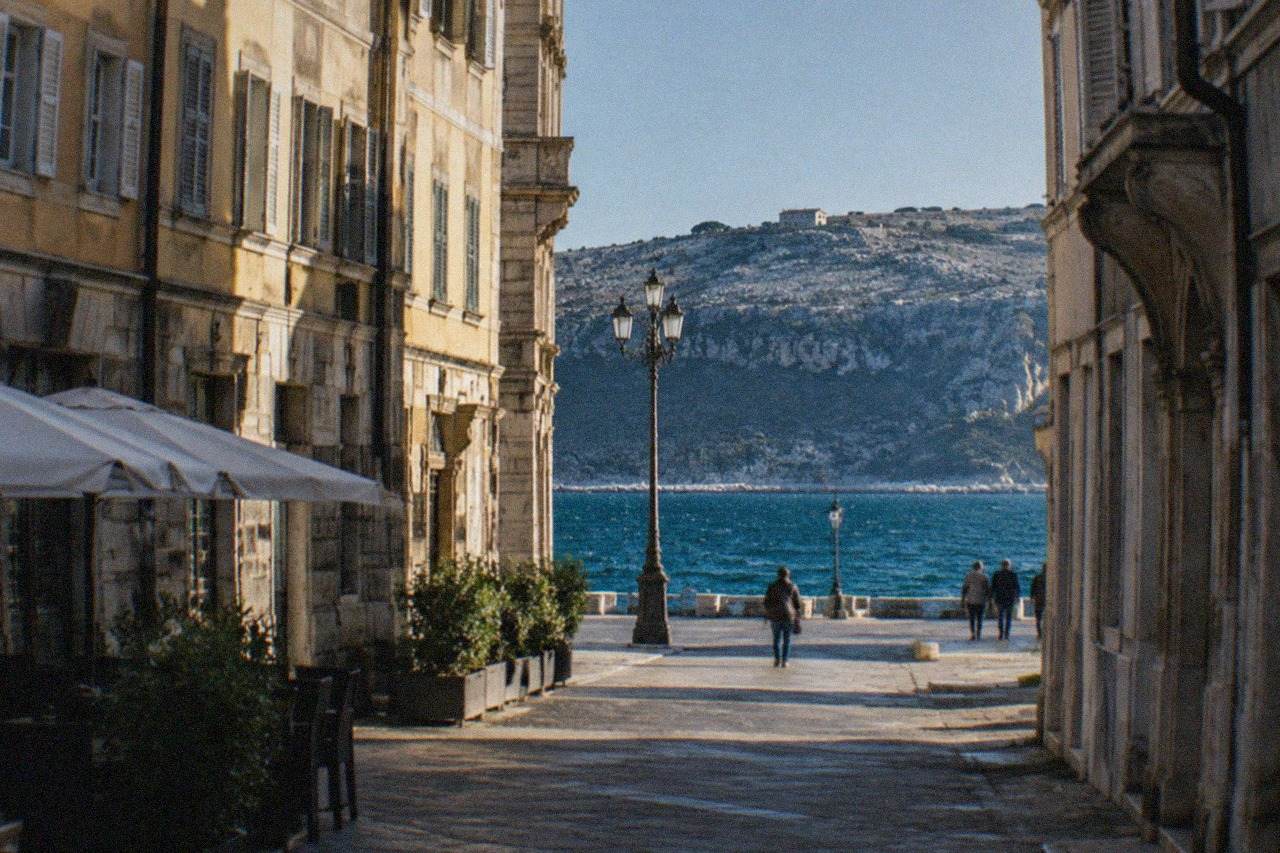
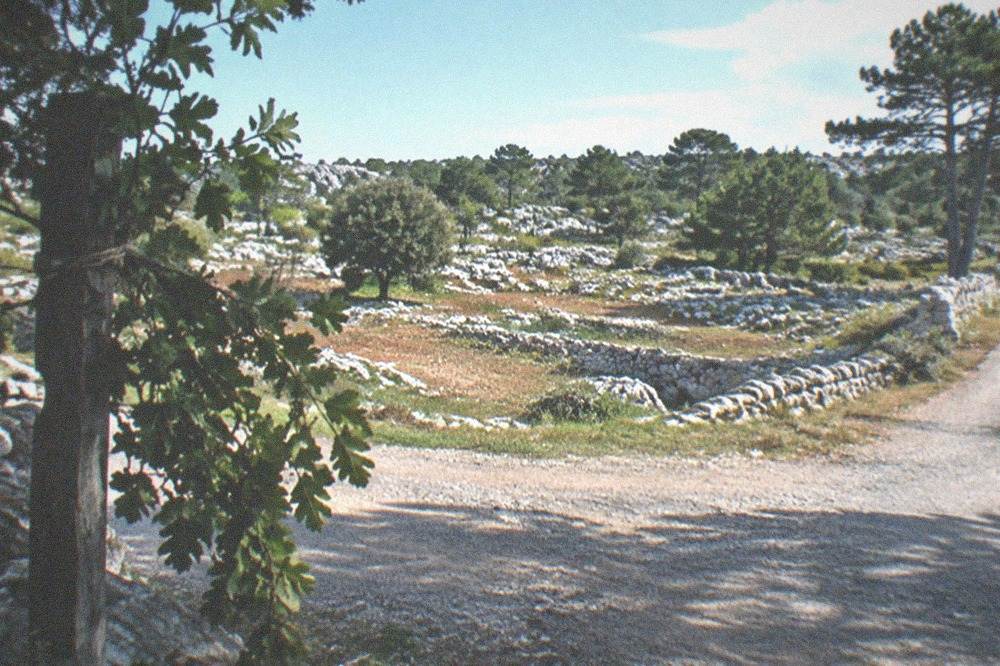
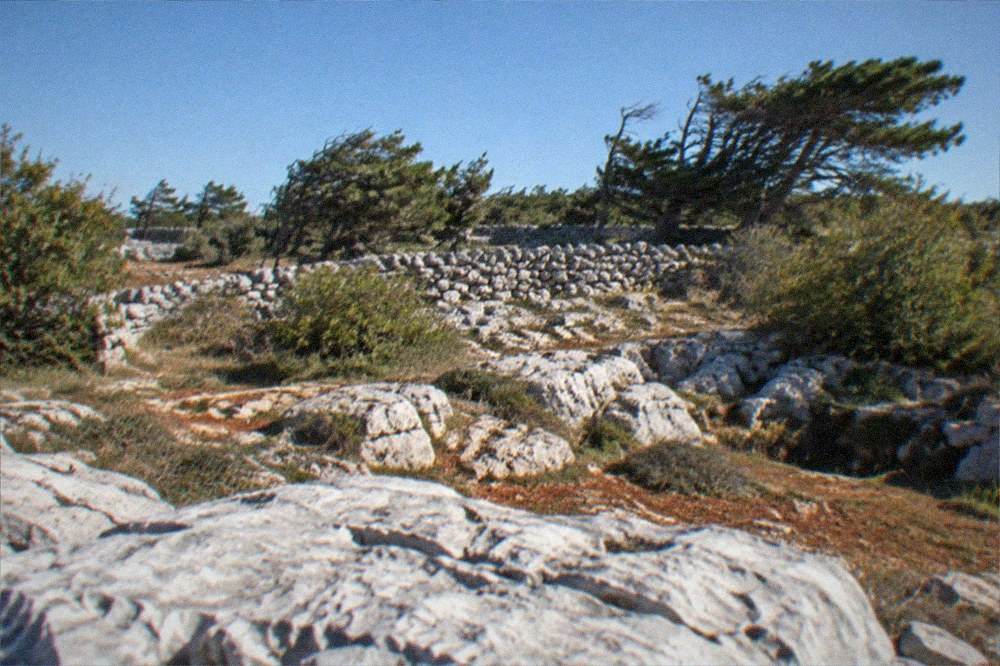
The Carso, the limestone plateau that rises directly behind Trieste, Italy, is the single most distinctive piece of geography in the whole city region. One moment you are on the seafront at Piazza Unità d'Italia; a short tram or bus ride later the ground has turned white, the trees have become wind-bent, and every field is hemmed in by dry-stone walls built from the same rock the landscape is made of. This is the Trieste karst, and it works as a half-day escape, a wine destination and a caving destination all at once.
The plateau is not a park with a gate and a ticket. It is a working landscape of villages, vineyards, caves and farms that happens to sit on one of the most studied karst systems in the world, close enough to the city that Trieste's own history, its food and its wine are inseparable from it. This guide from Trieste Travel Guide covers what the Carso is, what to see on it, how to reach it without a car, and the customs, the osmize above all, that most first-time visitors have never heard of.
What Is the Carso, the Karst Plateau Behind Trieste?
The Carso is the limestone plateau that rises immediately east and north of Trieste, Italy, a strip of karst terrain running along the Adriatic between the city and the Slovenian border. Its name is the Italian and Slovene word for the karst landscape type itself: the international geological term "karst" comes from this plateau, not the other way round. It is dry, rocky, wind-scoured and famous for sinkholes, caves and dry-stone walls.
That last point deserves repeating, because it is the kind of fact that reframes everything else. The word geologists use for dissolved limestone landscapes everywhere, from China to Kentucky, was borrowed from this plateau, the Kras of Slovene, the Carso of Italian. Water sinks into this rock rather than running across it, which is why the plateau is dry on the surface and hollow underneath, riddled with thousands of caves of which Grotta Gigante is only the most visited.
The villages on the Italian side of the plateau, Sgonico, Monrupino, Basovizza, Opicina and others, have Italian and Slovene names side by side, and much of the local life, the farm taverns, the wine, the food, is a product of both cultures. Trieste only became formally Italian in the twentieth century, and the plateau still carries the borderland in its vocabulary.
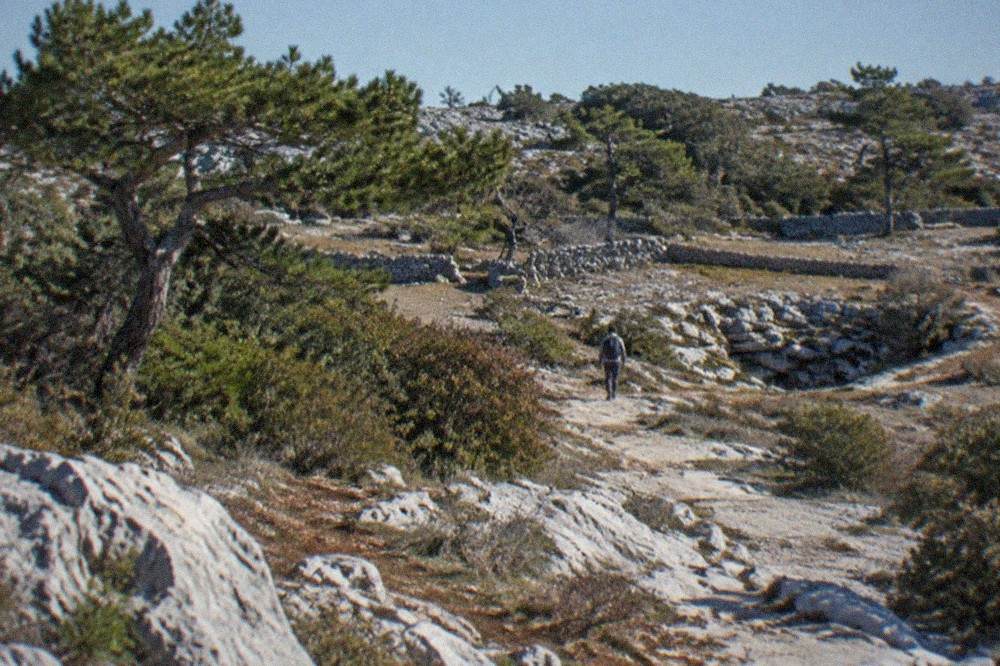
For planning purposes the Carso splits naturally into three experiences: the caves, above all Grotta Gigante near Sgonico; the food-and-wine circuit of osmize and vineyards, covered in our full osmize guide; and the viewpoints and villages along the plateau edge, of which Villa Opicina is the easiest to reach by public transport. A day on the Carso pairs naturally with the three days in Trieste itinerary, slotting in as the countryside day.
What Should You See on the Trieste Karst?
The four anchors of the Trieste karst are the Grotta Gigante show cave at Sgonico, the village of Prosecco on the plateau edge, the osmize farm taverns scattered across the countryside, and the viewpoint villages along the ridge above the sea, Opicina, Basovizza and Monrupino. The cave is the only one that needs advance booking; the rest can be improvised around a car-free loop using the Opicina tram.
Grotta Gigante is the headline. It sits at Borgo Grotta Gigante near Sgonico, and it is one of the largest show caves open to the public anywhere. The visit is guided-only with compulsory booking, by phone or email, and the official price list charges adults EUR 15.00, reduced EUR 12.00 for over-65s, students to 26, journalists and CAI or SSI members, and children 6 to 18 EUR 8.00, with under-6s free. Two or more children aged 6 to 18 in one family pay EUR 6.00 each. Groups from 15 people pay EUR 12.00 each, and a private tour costs the full tickets plus a EUR 50.00 group supplement.
| Ticket | Price | Notes |
|---|---|---|
| Adult | EUR 15.00 | Guided tour only, booking compulsory |
| Reduced | EUR 12.00 | Over 65, students to 26, journalists, CAI/SSI members |
| Child 6-18 | EUR 8.00 | |
| Family child rate | EUR 6.00 | Per child when two or more children aged 6-18 |
| Under 6 | Free | |
| Group of 15+ | EUR 12.00 each | |
| Private tour supplement | EUR 50.00 | Added to full ticket price |
Tours depart at fixed times, 9:00, 10:00, 11:00, 12:00, 14:00, 15:00 and 16:00, and the schedule of days matters more than most visitors expect: from September to February the cave is closed on Mondays, opening Tuesday to Sunday only, while from March to August it opens every day. It is also closed on 25 December and 1 January. What the official pages do not print, and what this guide will therefore not repeat as fact, are the widely quoted step count for the descent, the cave's constant temperature and any record wording: none of those figures appears on the venue's own price list or schedules pages.
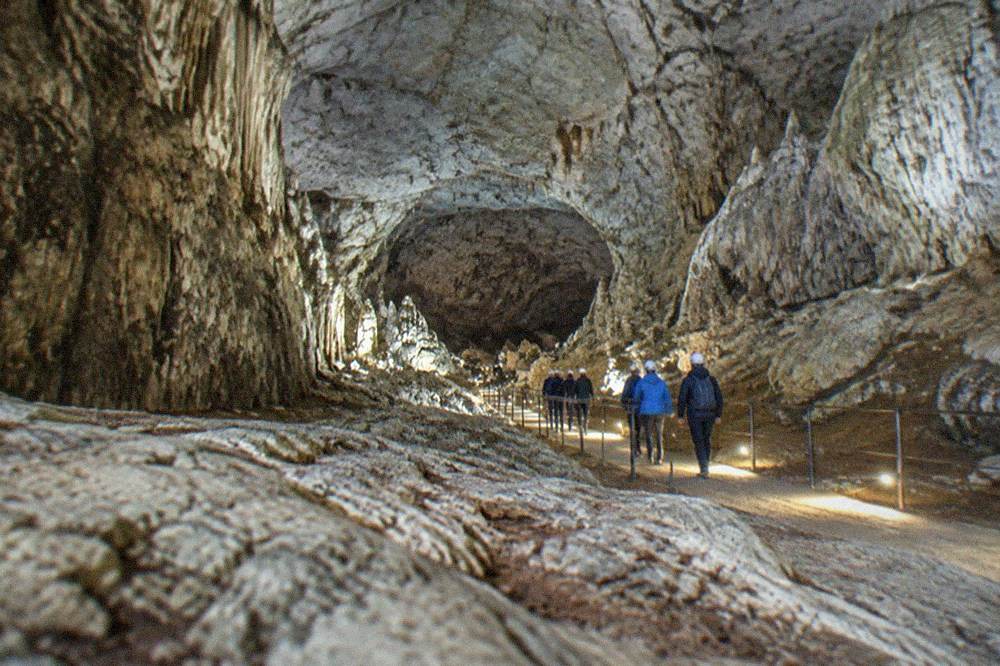
A guided tour with museum entry can also be booked as a package from Trieste, which removes the booking and transport problem in one step. The listing for the Sgonico tour prices it from $17.20 per person for about an hour, rated 4.78 from 151 reviews, and the operator's live listing carries the current availability.
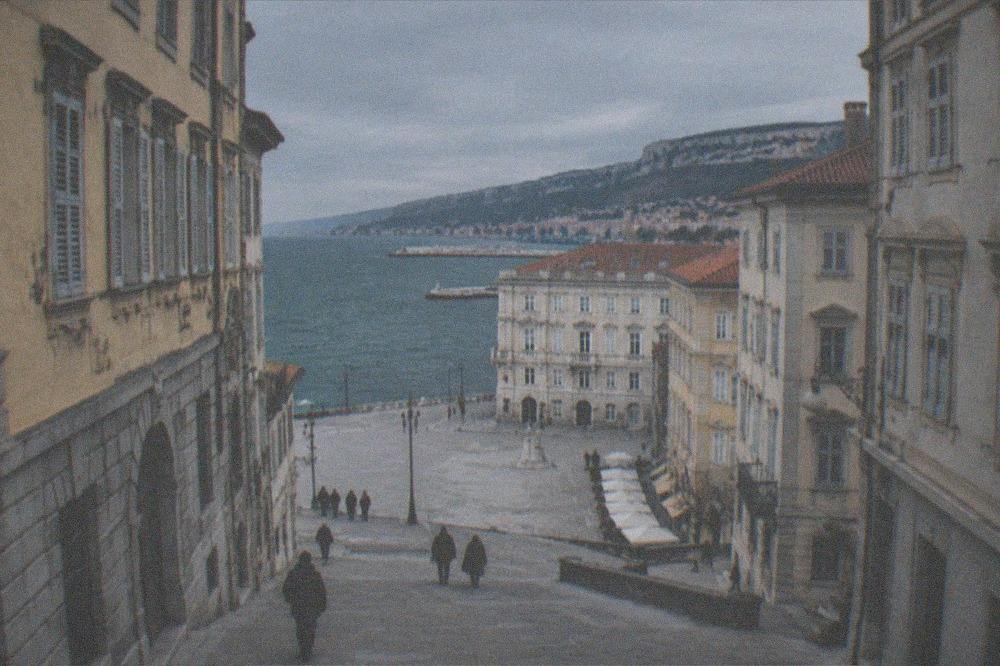
Beyond the cave, the plateau's other sights are quieter. The village of Prosecco, covered in the wine section below, is a small cluster of houses on the plateau edge with a claim that trips up almost everyone who writes about the region. Basovizza holds a striking monument and a sombre memorial site from the Second World War era. Monrupino has a fortified church standing alone on a rock. And the ridge road between them delivers views down over the Gulf of Trieste that feel like a different country from the streets of Città Vecchia below.
How Do You Get to the Carso from Trieste Without a Car?
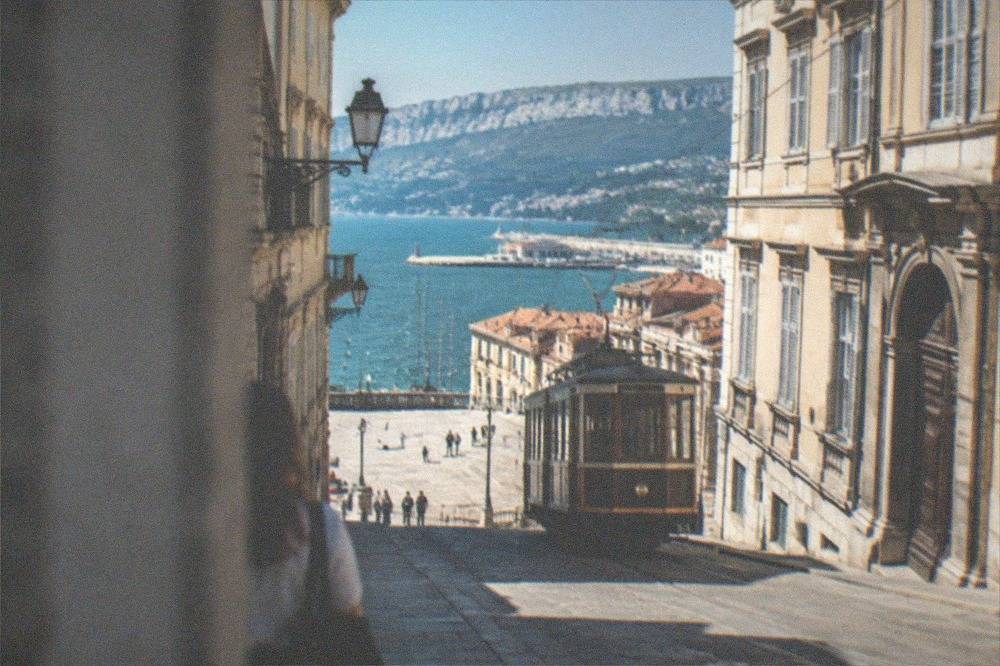
The easiest car-free route onto the Trieste karst is the Opicina tram, urban line 2, which climbs from piazza Dalmazia in the city to the village of Opicina on the plateau, about 5.175 km of track. It is running: it was reactivated on 1 February 2025 after the long stop that followed the August 2016 collision. A standard urban ticket is valid and contactless cards can be tapped on board.
Two facts there contradict almost every older guide on the internet, so they are worth spelling out. First, the tram de Opicina is in service: Trieste Trasporti's own line-2 page carries a current timetable dated from 20 July 2026. Any source telling you it is suspended, bus-replaced or "expected to reopen" is years out of date. Second, its city terminus is piazza Dalmazia, not piazza Oberdan; the published route runs piazza Dalmazia, piazza Casali, Sant'Anastasio, via Romagna, Vetta Scorcola, Cologna, Conconello, the Obelisco and Opicina station. Check the operator's live status page before you travel, because short maintenance suspensions do happen and are announced there rather than anywhere else.
| Ticket | Price | Validity |
|---|---|---|
| Urban single | EUR 1.50 | 60 minutes |
| Urban single | EUR 1.85 | 75 minutes |
| Day ticket | EUR 3.35 | Full day |
| 10 rides | EUR 13.50 | Carnet |
| 20 rides | EUR 16.65 | Carnet |
The fare table comes from the operator's 2026 urban tariff sheet. Single tickets run 60 or 75 minutes, extended to 240 minutes on Sundays and public holidays, and the on-board "Eva" readers accept Mastercard, Visa and American Express as well as digital wallets, applying the cheapest applicable fare. The tram is part of the ordinary urban network, so none of this is a special tourist arrangement.
From Opicina village, buses and your own feet take you onward across the plateau; the tram is the scenic way up, not a full karst circuit. For the caves at Sgonico and the villages further afield, most visitors either join a tour with transport included or use the regional bus network, checking the operator's route planner rather than trusting a stated frequency. If you would rather have the whole thing arranged, a guided day that leaves the logistics to someone else is the stress-free option.
The wine tour above is the natural pairing for a tram-and-cave day: ride up in the morning, taste on the plateau in the afternoon. But if the cave is the part of the Carso you came for, the packaged Grotta Gigante option below solves the one problem independent visitors run into, which is that booking a compulsory guided slot from abroad can be fiddly, and it bundles the museum entry too.
The plateau also connects neatly to the coast on either side. To the north-west, the karst drops to the sea at Sistiana and Duino, where the Rilke Trail runs along the cliff edge below Duino Castle, and the Miramare Castle sits on a rocky promontory on the road between the city and the coast. To the south-east, the plateau's edge runs down toward Muggia and the Slovenian border. A car-free visitor can combine the tram up with a coastal return, or the reverse.
What Are Osmize, the Farm Taverns of the Carso?
An osmiza is a farm on the Trieste karst that opens its doors for a limited period to sell its own wine and simple home produce, salumi, cheese, eggs and whatever the family makes, directly from the property. The name comes from the Slovene word osem, eight, for the eight days originally allowed. An open osmiza is signposted by a frasca, a leafy branch hung at the turning.
The custom is a Habsburg-era right that survives into the present, and it is the single most distinctive food experience in the Trieste region. You drive or walk the plateau roads, you watch for the frasca at a roadside or a farm gate, and you stop. Inside there is no menu in the restaurant sense: there is the farm's own wine, poured by the glass or bottle, and a short list of whatever the household produces. You eat at shared tables, often under a pergola, often with the vineyard a few steps away.
One thing this guide will not do is tell you which osmiza is open when. The open days are notified to the local authority by each farmer rather than fixed in a season, so the calendar changes constantly, spring and autumn are the heavy periods, and any printed list is out of date before it is published. The long-established volunteer-run calendar at osmize.com carries which farms are open on which days, with addresses and a map, and it is the reference everyone on the plateau uses. Check it the week you travel, or simply drive the plateau roads and follow the frasce.
Our full osmize of the Carso guide covers the custom, the etiquette and how to plan a route. The essentials: bring cash, expect nothing fancy, order what the farm has rather than what you want, and treat the visit as the point rather than a lunch stop.
What Wine Is the Carso Known For?
The Carso's own wines are Vitovska, Malvasia and Terrano, grown in small quantities on the rocky plateau above Trieste, Italy. Terrano is the red, grown on the red earth that fills the karst sinkholes; Vitovska and Malvasia are the whites. The Carso is not in the Prosecco DOC, and the village of Prosecco on the plateau is not where the sparkling wine comes from: the two share a name and nothing else.
That Prosecco trap deserves its own paragraph, because it catches writers constantly. There is a village called Prosecco on the Carso above Trieste, and there is prosecco, the world-famous sparkling wine, whose DOC zone lies far away between Veneto and Friuli's western hills. The village is a pleasant stop with a view and a story about the wine's name; it is not a tasting room for the sparkling wine, and Trieste is not in the DOC. A tour that markets itself on the "origins of Prosecco" is trading on the village's name and the historical connection, which is exactly why it pays to know the difference before you go.
| Wine | Type | Where It Grows | What to Expect |
|---|---|---|---|
| Vitovska | White | Carso plateau above Trieste | Mineral, saline, from small terraced vineyards |
| Malvasia | White | Carso plateau and Istria | Aromatic, fuller-bodied white |
| Terrano | Red | Red earth in karst sinkholes | Earthy, acidic, the plateau's signature red |
| Prosecco (the wine) | Sparkling | Veneto and western Friuli DOC zones | Not from Trieste; the DOC does not include the city |
The guided way into this is the Prosecco Origins tour, which leaves from Trieste and spends about two and a half hours on the plateau around the village, with tastings included. The listing prices it from $68.79 per person, rated 4.93 from 227 reviews, and it is the most direct way to have the village-and-name story explained on the ground by someone who lives with it. You can Check availability on the operator's live listing, or read our fuller tour write-up first.
For a deeper dive there is a full-day version, the History of Prosecco and the Karst Region, a day trip from the city priced from $145.22 per person and rated 4.48 from 23 reviews over about seven hours. And if you would rather taste the Carso's whites and reds without leaving town, a one-hour wine tasting with food pairings runs in the city centre, from $56.18 per person, rated 4.61 from 22 reviews.
What Is the Weather Like on the Trieste Karst?
The Carso is drier, windier and more exposed than the city below it. The bora, the cold east-north-east wind that funnels down off the plateau, gusts over 90 km/h on 17.6 days a year on average at the Trieste waterfront station, and over 72 km/h on 49 days. The all-time peak gust in the 1995-2024 station record is 168.1 km/h, measured in February 2012. Winter is the windy season; June is the calmest month.
Those figures come from the regional weather agency's own station tables for Trieste molo Fratelli Bandiera, and they describe the waterfront rather than the plateau top, which catches even more of the wind. The karst's vegetation tells the story without numbers: the trees lean away from the sea, clipped low and one-sided by a lifetime of bora. The plateau's dry stone walls exist partly to shelter thin soils and vines from exactly this.
| Month pattern | Mean high at the molo | Rain mm | Days with gusts over 90 km/h |
|---|---|---|---|
| January | 9.2 C | 52.8 | 2.4 |
| February | 9.8 C | 59.7 | 2.9 |
| June | 25.8 C | 62.5 | 0.3 |
| July | 28.2 C | 53.8 | 0.9 |
| November | 14.7 C | 109.8 | 1.9 |
Two planning notes fall out of the table. Summer on the plateau is genuinely hot but rarely storm-windy, and the city's wettest month is November, not any summer month, with July among the driest at 53.8 mm. And no published wind threshold exists at which anything on the waterfront closes, ferries stop or events are called off: conditions are judged live by the authorities, so treat any source quoting an official cutoff with suspicion. Bring a windproof layer for the plateau in any season; the rock holds no shade and the wind arrives without warning.
Which Guided Tours Cover the Carso from Trieste?
The Carso is covered from Trieste by four main tour families: the Prosecco Origins tasting tour from $68.79 per person, the Grotta Gigante guided tour with museum entry from $17.20, the food-tour circuit that pairs city and plateau flavours from $71.08, and the cross-border cave day trips to Postojna and Predjama from $137.57. All leave from the city and none requires you to drive on the plateau roads yourself.
| Tour | Duration | From (per person) | Rating |
|---|---|---|---|
| Grotta Gigante guided tour and museum entry | 1 hour | $17.20 | 4.78 from 151 reviews |
| Prosecco Origins tour and tastings | 2h 30m | $68.79 | 4.93 from 227 reviews |
| Trieste guided foodie walking tour | 3 hours | $71.08 | 4.91 from 264 reviews |
| From Trieste: Postojna Cave and Predjama Castle | 6 hours | $137.57 | 4.76 from 543 reviews |
| History of Prosecco and the Karst Region | 7 hours | $145.22 | 4.48 from 23 reviews |
The choice between them is really a choice of what the Carso means to you. The cave tour is the cheap, spectacular half-day and the only way to guarantee a slot at Grotta Gigante without phoning Italy yourself. The Prosecco Origins tour is the wine-and-story option. The foodie walking tour stays in the city but its guides frame Trieste's food as the plateau's food, which much of it is. The Postojna day trip leaves the Italian Carso for Slovenia's, a six-hour round from $137.57 rated 4.76 from 543 reviews, and pairs the best-known show cave in the world with Predjama Castle, the cave castle.
Common Questions About the Carso Above Trieste
Is the Carso the Same as the Karst?
Yes. Carso is the Italian name and Kras the Slovene name for the same limestone plateau behind Trieste, Italy, and the international geological term "karst" is derived from it. The plateau gave its name to the entire landscape type, so every karst region on earth is named after this strip of the Adriatic hinterland.
Can You Visit the Carso as a Day Trip from Trieste?
Yes, easily. The Opicina tram climbs from piazza Dalmazia to the plateau village of Opicina on a standard urban ticket, and the cave at Sgonico, the village of Prosecco and the osmize are all reachable in a half or full day. The tram is running as of the 2026 timetable; check the operator's live status before you set out.
Do You Need to Book Grotta Gigante in Advance?
Yes. The cave is guided-only and booking is compulsory, by phone on +39 040 327312 or by email. Tours depart at 9:00, 10:00, 11:00, 12:00, 14:00, 15:00 and 16:00, and from September to February the cave is closed on Mondays. A packaged tour from Trieste includes the booking for you.
Is Prosecco Wine from Trieste?
No. The sparkling wine's DOC zone lies in Veneto and western Friuli, not in Trieste. The village of Prosecco on the Carso plateau above the city shares the name and is part of the wine's naming story, but the Carso's own wines are Vitovska, Malvasia and Terrano.
What Should You Eat on the Carso?
Whatever the farm in front of you has made. The osmize serve their own wine with home-cured salumi, cheese, eggs and simple dishes, and the plateau's produce, not a restaurant menu, is the point. Check the osmize.com calendar for which farms are open during your visit, and follow the frasce on the roadside.
Is the Carso Windy in Summer?
Less than you might fear. The bora peaks in the cool season, and June is the calmest month in the station record, with 0.3 days a year on average with gusts over 90 km/h. July and August are hot and mostly settled, though the plateau is always more exposed than the streets below, so pack a windproof layer in any season.
The Carso rewards exactly the kind of visitor Trieste attracts: someone who wants the coffee and the seafront in the morning and white rock, farm wine and a cave the size of a cathedral in the afternoon. Take the tram up, follow the frasca, book the cave, and let the plateau do the rest.