Villa Opicina, Trieste, Italy: The Karst Village Above the City
Villa Opicina is the Karst village directly above Trieste, Italy, reached by one of the strangest trams in Europe. This guide covers the tram that is running again, the Obelisco viewpoint, the osmize of the plateau and how to fit it all into a day.
Short answer
Villa Opicina sits on the Karst plateau above Trieste in northeast Italy. The tram de Opicina, urban line 2, runs there from piazza Dalmazia and was reactivated on 1 February 2025 after a long suspension. The village is a small base for views, osmize farm taverns and cave visits rather than a sight-dense destination in itself.
Villa Opicina is the village on the Karst plateau that looks straight down on Trieste, the Adriatic port city in Friuli Venezia Giulia, Italy. Most visitors arrive for one of two reasons: to ride the tram de Opicina, the hybrid tram-funicular that has carried passengers up the escarpment since the early twentieth century, or to stand at the Obelisco and watch the city, the gulf and, on clear days, a stretch of coastline that reaches far into Slovenia. The village itself is small, a scattering of squares, cafés and stone houses, and that is precisely its appeal. It is the gateway to the Carso, the limestone plateau that rises behind the city, and the easiest place in the whole region to swap sea level for altitude in a single ticket.
Where Is Villa Opicina in Trieste, Italy?
Villa Opicina is a village on the Karst plateau immediately northeast of Trieste, in the Friuli Venezia Giulia region of northeast Italy, and it is the upper terminus of the city's historic tram line. It sits on the edge of the escarpment, so the ground falls away toward the city and the Gulf of Trieste. Administratively it belongs to the comune of Trieste, which makes it part of the city in a way that surprises visitors who expect a separate mountain town.
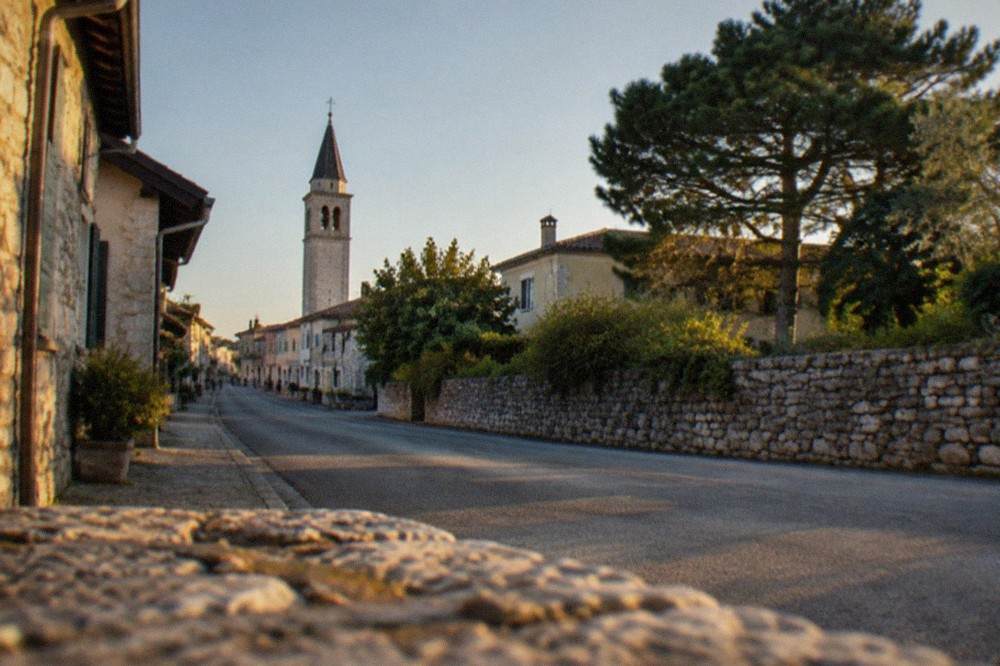
The relationship between the village and the city below is the whole story of the place. Trieste grew as a Habsburg port, and the Karst above it was the empire's back garden: a dry limestone plateau with vineyards, farmsteads and a Slovene-speaking rural population that has lived around the city for centuries. Villa Opicina, known locally as Opicina and in Slovene as Opčine, grew where the plateau road met the railway, and it became the point where the city's transport pushed up the cliff. The border with Slovenia runs only a short distance beyond the village, which shapes everything here, from the bilingual signs to the wine in the local taverns.
If you are planning the rest of your time in the city, our guides to the Carso karst plateau and to the Opicina tram and the Obelisco cover the two halves of this trip in more depth. For the city itself, start with one day in Trieste and add the plateau as a half-day excursion.
How Do You Get to Villa Opicina from Trieste?
You ride the tram de Opicina, which is urban line 2 of Trieste's ordinary network, from its city terminus at piazza Dalmazia up to Opicina station. The tram was reactivated on 1 February 2025 after the long suspension that followed a 2016 accident, and Trieste Trasporti's own line page carries a current timetable dated 20 July 2026. A standard urban ticket is valid on board and contactless bank cards can be tapped on the readers. The tram is running, whatever an older guide told you.
That first sentence deserves its emphasis, because almost every competing page gets it wrong. The tram was suspended after the August 2016 collision and stayed off the rails for years, which filled the internet with articles saying it was closed, scrapped or indefinitely bus-replaced. It is none of those things. The operator's published route runs piazza Dalmazia, piazza Casali, Sant'Anastasio, via Romagna, Vetta Scorcola, Cologna, Conconello, the Obelisco, and finally Opicina station, a run of about 5.175 km. Note the terminus, because this is the second most-repeated error: the tram leaves from piazza Dalmazia, not piazza Oberdan, which is a redevelopment site and not a stop on this line.
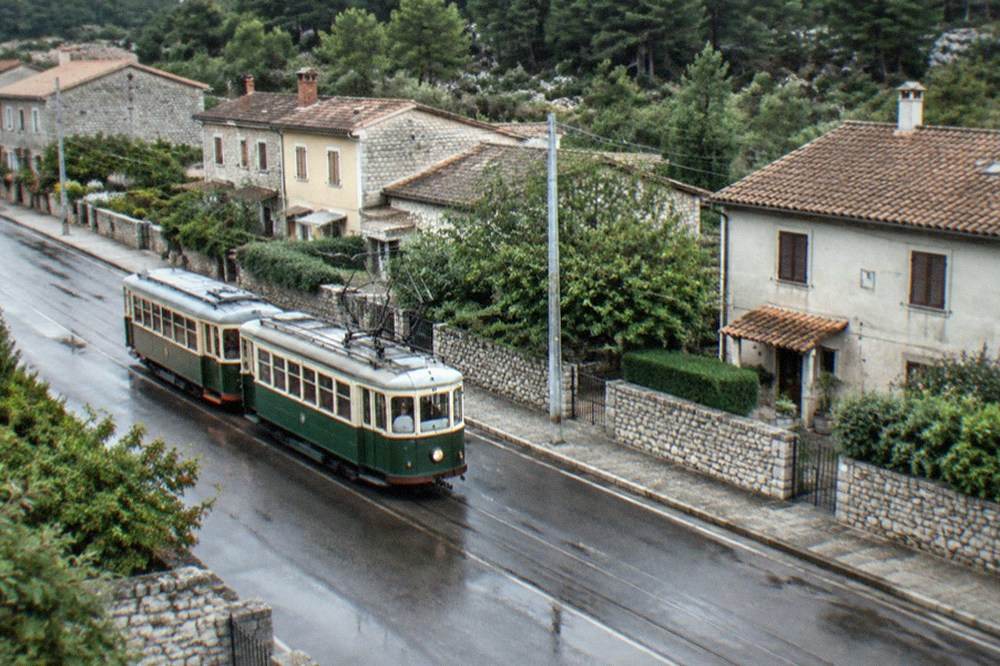
The line's character comes from the escarpment itself. For most of the route it behaves like a normal street tram, but on the steepest section the cars are hauled by cable, funicular-style, which is why enthusiasts cross Europe to ride it. Do not plan around a stated journey time or frequency: neither is published in the verified material, and the operator's live status page is the only honest source for the day you travel. Transient maintenance notices come and go; treat the operator's site as the authority rather than any fixed sentence in an article, including this one.
| Stop on line 2 | What it is |
|---|---|
| Piazza Dalmazia | City terminus, ordinary urban network |
| Piazza Casali | Intermediate stop on the published route |
| Sant'Anastasio | Intermediate stop on the published route |
| Via Romagna | Intermediate stop on the published route |
| Vetta Scorcola | Upper edge of the steepest section |
| Cologna (campo sportivo) | Plateau-side stop |
| Conconello | Karst village stop |
| Obelisco | Viewpoint stop near Villa Opicina |
| Opicina (stazione trenovia) | Upper terminus at Villa Opicina |
Tickets are the same ones that run the buses, from the operator's 2026 urban tariff sheet. Buy before boarding or tap a contactless card on the on-board reader, which charges the cheapest applicable fare automatically.
| Ticket | Price | Validity |
|---|---|---|
| Urban single (60 minutes) | €1.50 | 60 minutes |
| Urban single (75 minutes) | €1.85 | 75 minutes |
| Day ticket | €3.35 | Whole day, urban network |
| 10-ride carnet | €13.50 | Ten urban rides |
| 20-ride carnet | €16.65 | Twenty urban rides |
Single tickets run 60 or 75 minutes, extended to 240 minutes on Sundays and public holidays, which matters if you plan to ride up, walk the Obelisco terrace and ride back down on one fare. If you would rather see the city from a vehicle before you climb out of it, the sightseeing bus with audio guide is the low-effort orientation option, and a private walk with a local guide will do the same job on foot.
All three formats start in the streets below, which is the point: the plateau rewards you precisely because the city underneath is so compact. Get the geography explained once, on the ground, and the view from the Obelisco will make sense the moment you step off the tram.
What Is There to Do in Villa Opicina?
The village's headline sights are the Obelisco viewpoint on the tram route, the terrace views over the Gulf of Trieste, and the plateau around it: osmize farm taverns, Karst vineyards and walking country on the limestone. Villa Opicina is not a museum destination. You come for the ride, the panorama, a plate of ham and a glass of local wine, and for the feeling of standing above a port city. Plan half a day, not a full one, unless you are walking onward across the Carso.
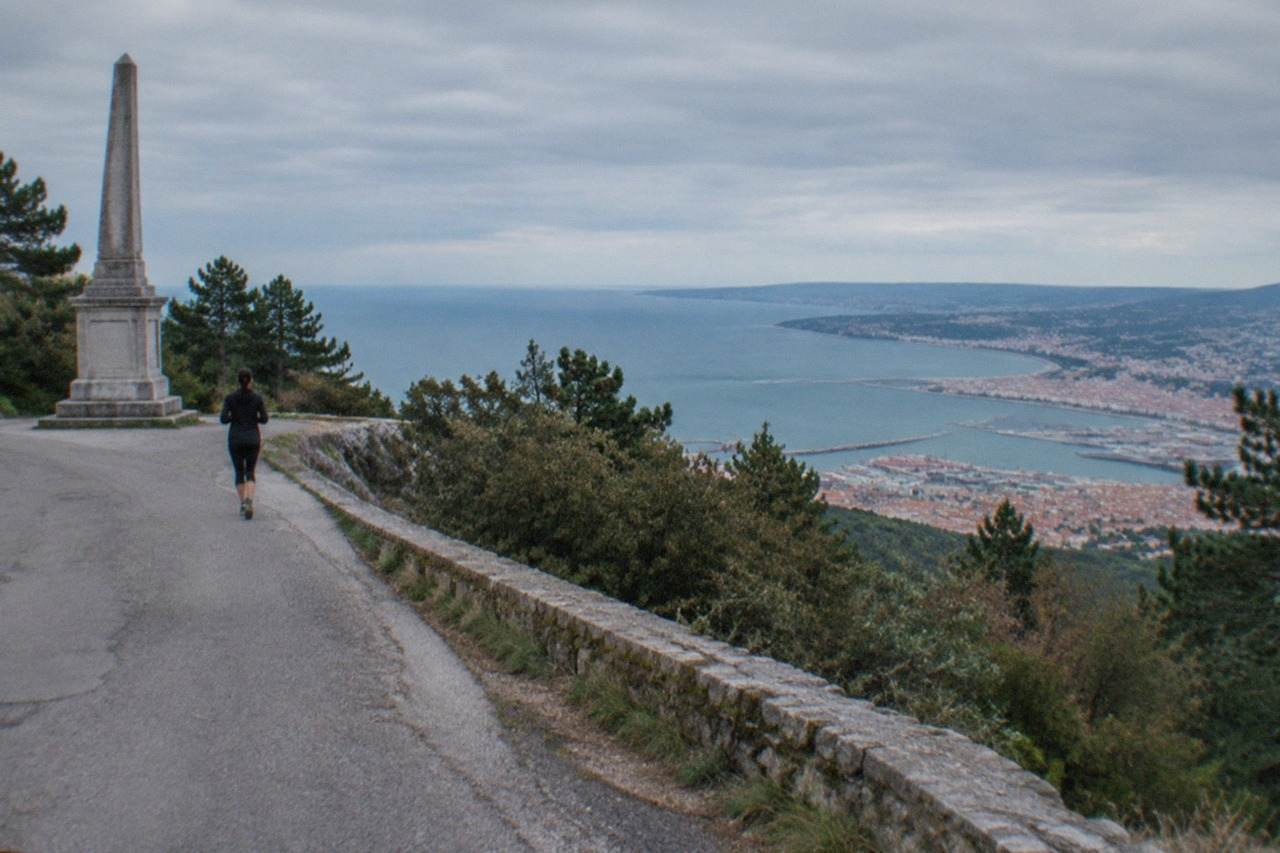
The Obelisco, formally the obelisk that marks the old toll point on the Vienna road, is the classic stop. Get off the tram at the Obelisco stop rather than riding to the terminus, and you step out onto a terrace where the whole gulf opens below: the city, the Muggia bay, the coastline toward Slovenia, and on clear days a horizon that reaches well down the Istrian shore. Photographers treat it as one of the two or three great panoramas of the region, and it costs exactly one urban tram ticket. The viewpoint is unguarded and open, so dress for the wind, which is the plateau's permanent resident.
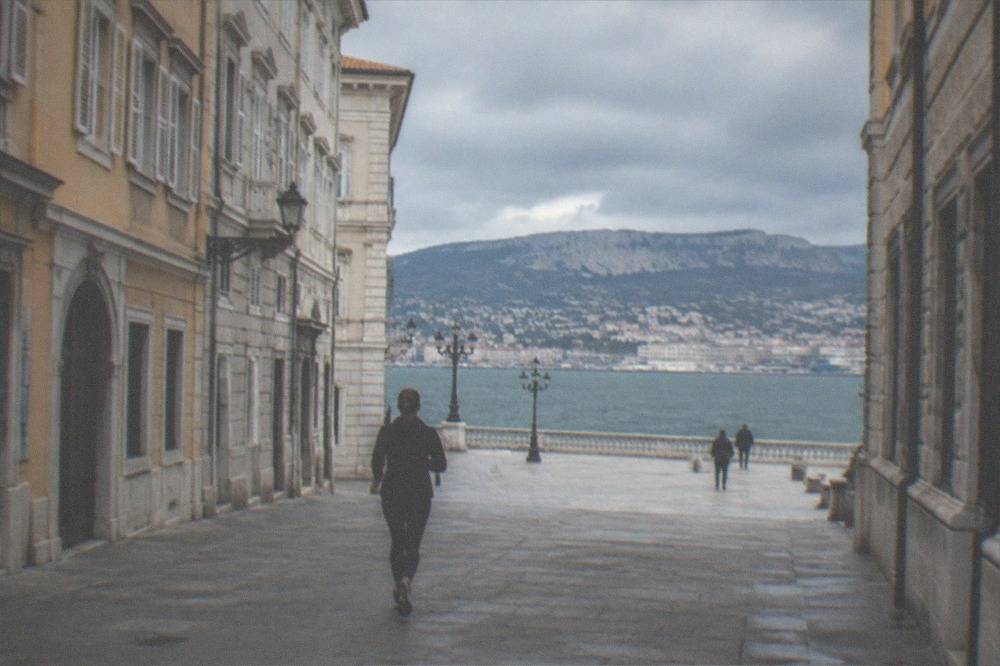
Back in the village, the pace slows. There are cafés on the main square, a church tower, and the station building where the tram turns around. The honest description is that you will spend an hour here, not an afternoon, and that the village works best as a launch point. Three directions repay the walk or short hop onward: north along the plateau toward Sgonico and the cave country, west along the escarpment edge toward the viewpoints above the city, and, for the ambitious, the long cliff walk down toward the coast at Duino and Sistiana, which our guides to Duino and Sistiana cover separately.
For travellers who prefer a structured day over a self-guided one, the operator's live listings below cover the two most useful formats: a panoramic city-and-castle tour that gets the geography explained, and a private walk that can be pointed at the Habsburg story, which is the story of how this tram and this village came to exist at all.
The box above is the audio-guide bus format: low effort, city-wide, and finished in time for an afternoon on the tram. The listing carries its current price and meeting point, and any seasonal change shows up on the operator's live page first, so a quick check the night before is the whole task.
The Habsburg thread is worth pulling. Trieste was the Austrian empire's only big port, and everything above the city, roads, tramways, villas and vineyards, exists because of that. A private walking tour focused on the Habsburg history of Trieste spends its hours in the streets below, but the plateau you see from the Obelisco is the same imperial landscape seen from above.
When Is the Best Time to Visit Villa Opicina and the Carso?
The plateau is at its best from late spring to early autumn, with May, June and September combining mild air, low rain and open views. Winter visits are perfectly possible and the tram runs year-round, but the bora wind blows hardest in the cool season, and the ARPA station tables for the Trieste waterfront average 17.6 days a year with gusts over 90 km/h, concentrated in the November-to-March window. Summer is the calmest season for wind and the busiest on the terrace.
The wind deserves respect, because it is not an ornament here. The bora blows from the east-north-east, and the Karst edge above Trieste is where it is at its most direct. The all-time peak gust in the ARPA series for the molo Fratelli Bandiera station is 168.1 km/h, recorded in February 2012, and the monthly record gust exceeds 110 km/h in every single month of the year. There is no published wind threshold at which anything closes: the honest advice is simply that on a strong-bora day the Obelisco terrace is somewhere you lean into rather than linger, and the views, while dramatic, come with a wind chill that surprises people dressed for the sea-level city. The rest of the planning pages sit on Trieste Travel Guide.
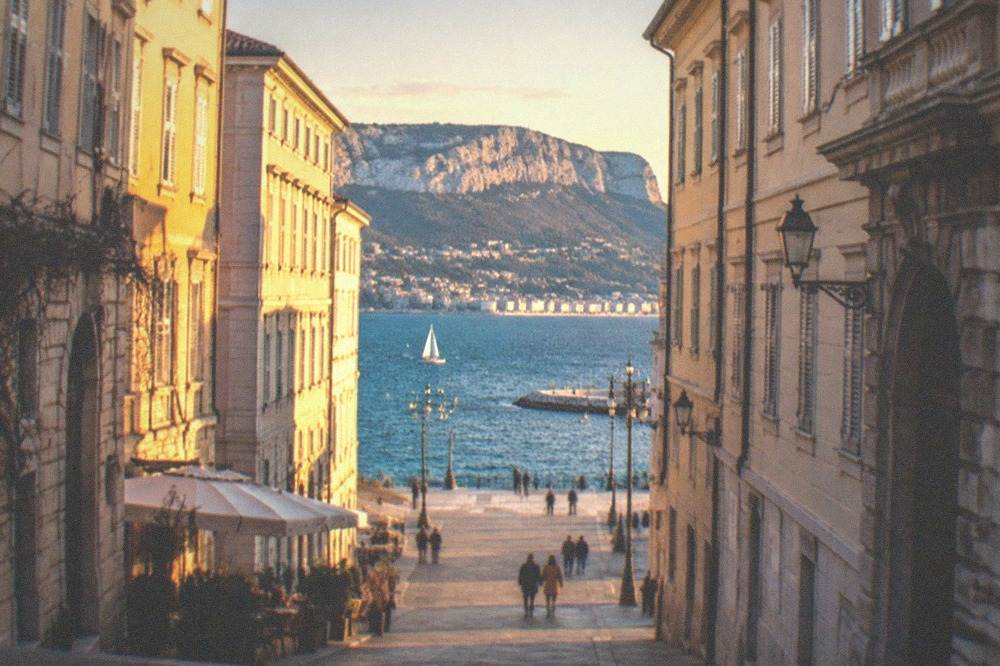
The rain picture is the opposite of what most visitors expect of an Adriatic city. Trieste's wettest month is November, at 109.8 mm in the ARPA normals for the waterfront station, with September second at 102.3 mm, while July is one of the driest at 53.8 mm. The plateau shares that pattern with a drier, sharper edge: the limestone drains instantly, so rain rarely ruins a walk here, it just interrupts one.
| Month | Mean high (C) | Rain (mm) | Wet days | Days with gusts over 90 km/h |
|---|---|---|---|---|
| April | 16.8 | 60.7 | 8.0 | 0.7 |
| May | 21.7 | 75.0 | 8.5 | 0.7 |
| June | 25.8 | 62.5 | 6.1 | 0.3 |
| July | 28.2 | 53.8 | 5.4 | 0.9 |
| September | 23.9 | 102.3 | 7.4 | 1.1 |
| October | 19.6 | 88.6 | 7.6 | 1.4 |
| November | 14.7 | 109.8 | 9.5 | 1.9 |
These figures are the ARPA FVG / OSMER climate normals for the Trieste molo Fratelli Bandiera station, the waterfront, series 1995-2024, and they describe the city rather than the plateau itself; the village above runs a degree or two cooler and a good deal windier, so treat them as the floor, not the ceiling.
What Are the Osmize Near Villa Opicina?
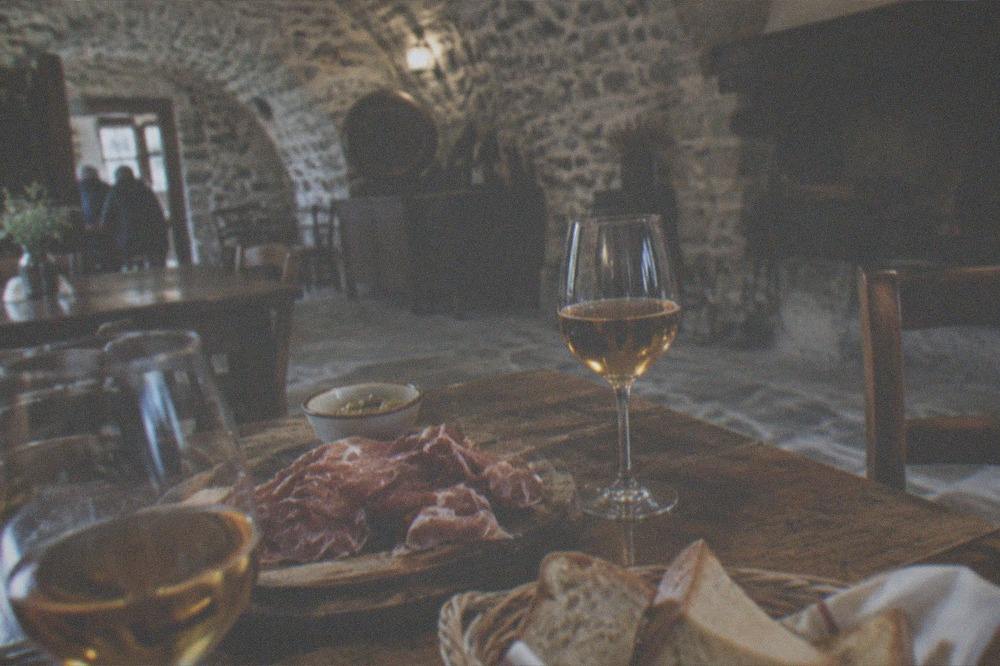
The osmize are seasonal farm taverns of the Trieste Karst where growers sell their own wine and home produce, mostly cured ham, cheese and eggs, direct from the farmhouse, and the plateau around Villa Opicina is their heartland. An open osmiza is signposted by a frasca, a leafy branch hung at the turning, and the de facto opening calendar is published at osmize.com. They open in waves through spring and autumn, with no fixed schedule, so you check the calendar and go where the branch is hanging.
The custom is the Carso's signature. The name is popularly traced to the Slovene word for eight, osem, for the limited days a farm was traditionally allowed to sell direct, though the exact legal history is not verifiable from a primary source and you should treat the folk etymology as story rather than statute. What is observable and true: the frasca marks the open house, the wine is the farm's own, and the produce is whatever the household makes. Vitovska, Malvasia and Terrano are the Carso's own grapes, and this is the place to taste them, not Prosecco: the village of Prosecco sits down the coast and gave the wine its name, but Trieste is not in the Prosecco DOC, and the plateau's whites are a different, quieter thing.
| Feature | An osmiza | A city osteria |
|---|---|---|
| Opening | Seasonal, per-farm, signalled by the frasca | Year-round, fixed hours |
| Wine | The farm's own, from Karst grapes | A list from anywhere |
| Food | Home-cured ham, cheese, eggs, simple plates | A full kitchen menu |
| Setting | Farmhouse or cellar on the plateau | Streets of the city |
| Finding one | The osmize.com calendar and the branch at the turning | A map search |
The osmize pair naturally with the village because both sit on the same plateau road. A realistic afternoon: tram up, Obelisco terrace, then a short hop or walk to whichever osmiza the calendar says is open that day, then tram down as the city lights come on. Our full guide to the osmize of the Carso covers the custom, the calendar and the etiquette in detail.
Can You Visit Grotta Gigante from Villa Opicina?
Yes, and it is the single biggest sight within reach of the village: Grotta Gigante, the giant cave at Borgo Grotta Gigante near Sgonico, is a guided-tour-only cavern with compulsory booking, an adult ticket of €15, reduced €12, children 6-18 at €8 and under-6s free. Tours depart at 9:00, 10:00, 11:00, 12:00, 14:00, 15:00 and 16:00. From September to February it opens Tuesday to Sunday, and from March to August it opens every day.
Book before you travel, because the booking requirement is real and enforced, and the cave is the region's most reliable wet-day and hot-day refuge in one. The venue's own price list and schedules pages carry the current details, and the family rate is €6 per child when two or more children aged 6-18 are in the party. A combined ticket with museum entry is also sold through tour operators, which is the simplest way to guarantee a slot in peak weeks.
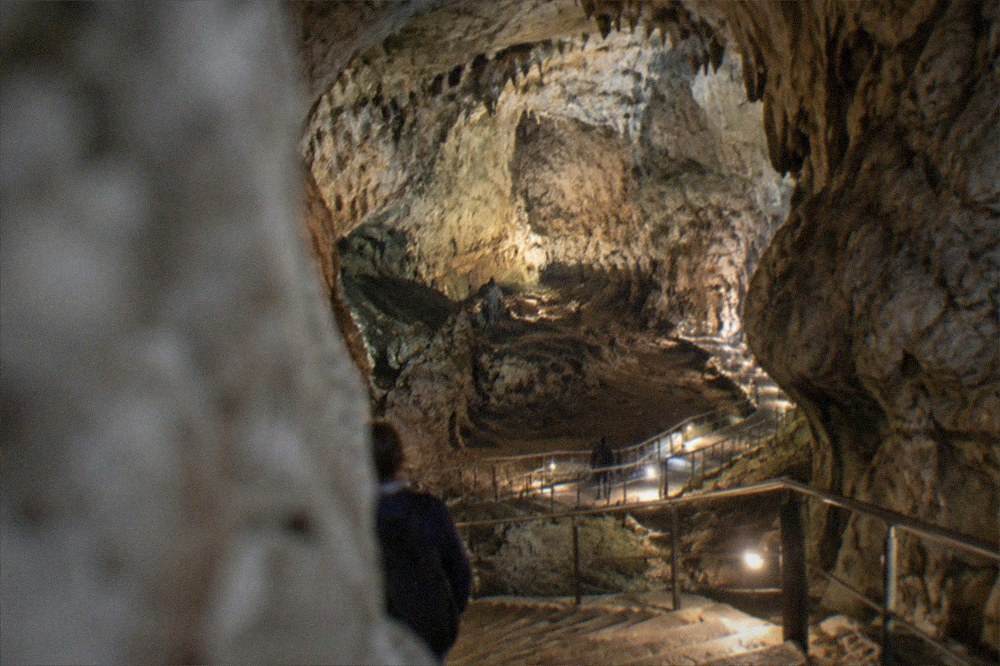
The cave country extends well beyond the one cavern. Škocjan Caves, a UNESCO-listed gorge system, and Postojna Cave with Predjama Castle over the border in Slovenia are both established day trips from Trieste, and Lipica, the stud farm of the white Lipizzaner horses, sits on the same plateau. The border crossing is routine, but not borderless right now: Italy is running temporary checks on its land border with Slovenia from 19 June 2026 to 18 December 2026, so carry a passport or national ID card. All three countries, Italy, Slovenia and Croatia, use the euro, so there is no money to change anywhere on this plateau.
| Sight near Villa Opicina | Entry | Booking |
|---|---|---|
| Grotta Gigante | €15 adult, €12 reduced, €8 ages 6-18 | Compulsory, guided only |
| Obelisco viewpoint | Free, open terrace | None |
| Miramare Castle (city side) | €17 adult, includes exhibition | Optional, recommended online |
| Castello di San Giusto (city) | €7 adult, €5 reduced | Optional |
| Museo Revoltella (city) | €8 adult, €6 reduced | Optional, closed Tuesdays |
How Does Villa Opicina Fit Into a Trieste Itinerary?
Give it a half-day: tram up, Obelisco terrace, coffee or a frasca-signalled osmiza, tram down, with Grotta Gigante added only if you book the guided slot in advance. On a first visit to Trieste of one or two days, the plateau is the afternoon of day one or the morning of day two, after Piazza Unità d'Italia, the San Giusto hill and the waterfront have had their hours. On a three-day stay it expands naturally, and the cave, the coast walk or a Slovenian excursion bolt on.
The order matters less than the ticket: the day ticket at €3.35 covers the tram both ways plus any city buses you use in between, which makes the whole excursion cheaper than a single coffee in some of the historic caffè downtown. If the bora is blowing hard, flip the day and do the cave, which is windless by nature, before the terrace. If the day is clear and calm, go up first, because the plateau haze builds through the afternoon and the morning view is the sharp one.
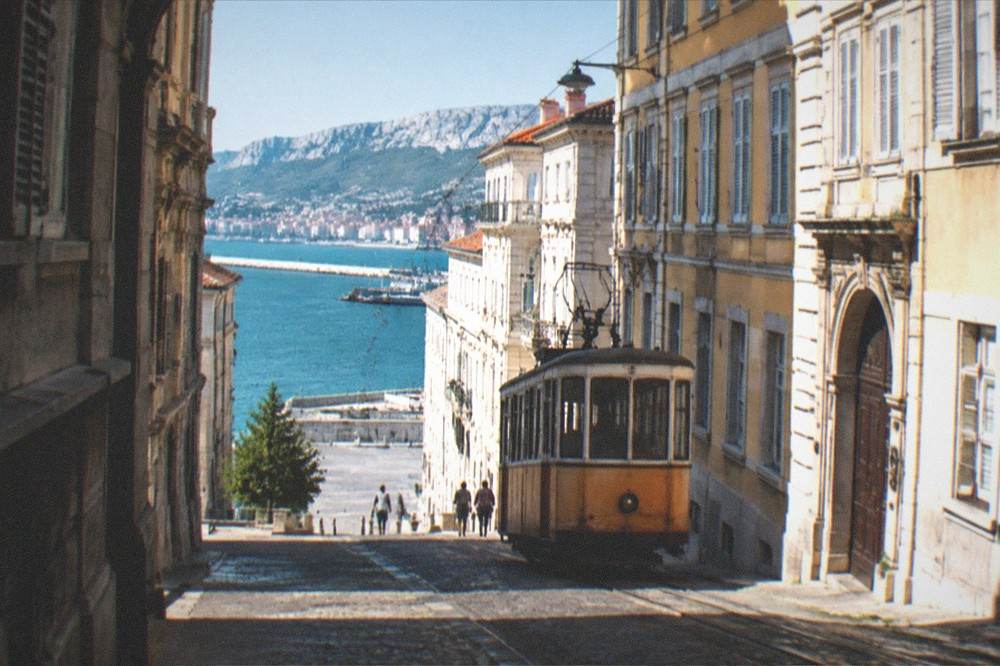
For itinerary frameworks, see two days in Trieste and three days in Trieste; both slot the plateau in as a half-day block. Cruise passengers ashore for a single day should read one day ashore in Trieste first, because the tram is a tight fit on a port day and the Obelisco is the shortcut version of it.
Whichever way you structure the city hours, the plateau half of the day needs nothing but a ticket and a timetable check. The three formats above are the city half; the tram is the rest.
And if you want the plateau with a driver and a narrative rather than a tram ticket and a map, the private walking options above can be booked as the city half of the day, with the Karst left to the tram, the frasca and whatever the wind allows. That is the shape of the place: a city that is Austrian, Italian and Slovene at once, and a village above it where all three of those stories are visible from one terrace, on one ticket, in one morning.
Common Questions About Villa Opicina in Trieste
Is the Opicina tram running in 2026?
Yes. The tram de Opicina, urban line 2, was reactivated on 1 February 2025 after the suspension that followed the August 2016 accident, and Trieste Trasporti's line page carries a current timetable dated 20 July 2026. Check the operator's live status page on the day you travel for any transient notice.
Where does the Opicina tram leave from?
From piazza Dalmazia, its current city terminus, not piazza Oberdan. The published route runs piazza Dalmazia, piazza Casali, Sant'Anastasio, via Romagna, Vetta Scorcola, Cologna, Conconello, the Obelisco and Opicina station, about 5.175 km in all.
How much does the tram to Villa Opicina cost?
It is part of the ordinary urban network, so standard Trieste tickets apply: €1.50 for a 60-minute single, €1.85 for 75 minutes, or €3.35 for a day ticket, per the operator's 2026 tariff sheet. Contactless bank cards can be tapped on board and the cheapest applicable fare is charged.
What is there to see in Villa Opicina?
The Obelisco viewpoint over the Gulf of Trieste, the village square and station, and the plateau around it: osmize farm taverns, Karst vineyards and walking country. It is a half-day destination, with Grotta Gigante near Sgonico the biggest sight within reach.
Do I need a passport to cross the border above Villa Opicina?
Yes, carry one. Italy is running temporary border checks on its land border with Slovenia from 19 June 2026 to 18 December 2026, so a passport or national ID card is the safe companion even though all three countries here are in Schengen and the euro.
When should I not visit the Obelisco viewpoint?
On a strong bora day. The wind blows hardest from November to March, gusts exceed 110 km/h in the record books every month of the year, and there is no published threshold at which the terrace closes: you simply judge the day. Winter visits are fine on a calm day, and summer is the mildest for wind.