The Barcolana Regatta in Trieste, Italy
Every second Sunday of October, the Gulf of Trieste fills with thousands of sails. This is what the Barcolana is, when the 2026 edition runs, where to stand to see it, and what the wind does to the whole thing.
Short answer
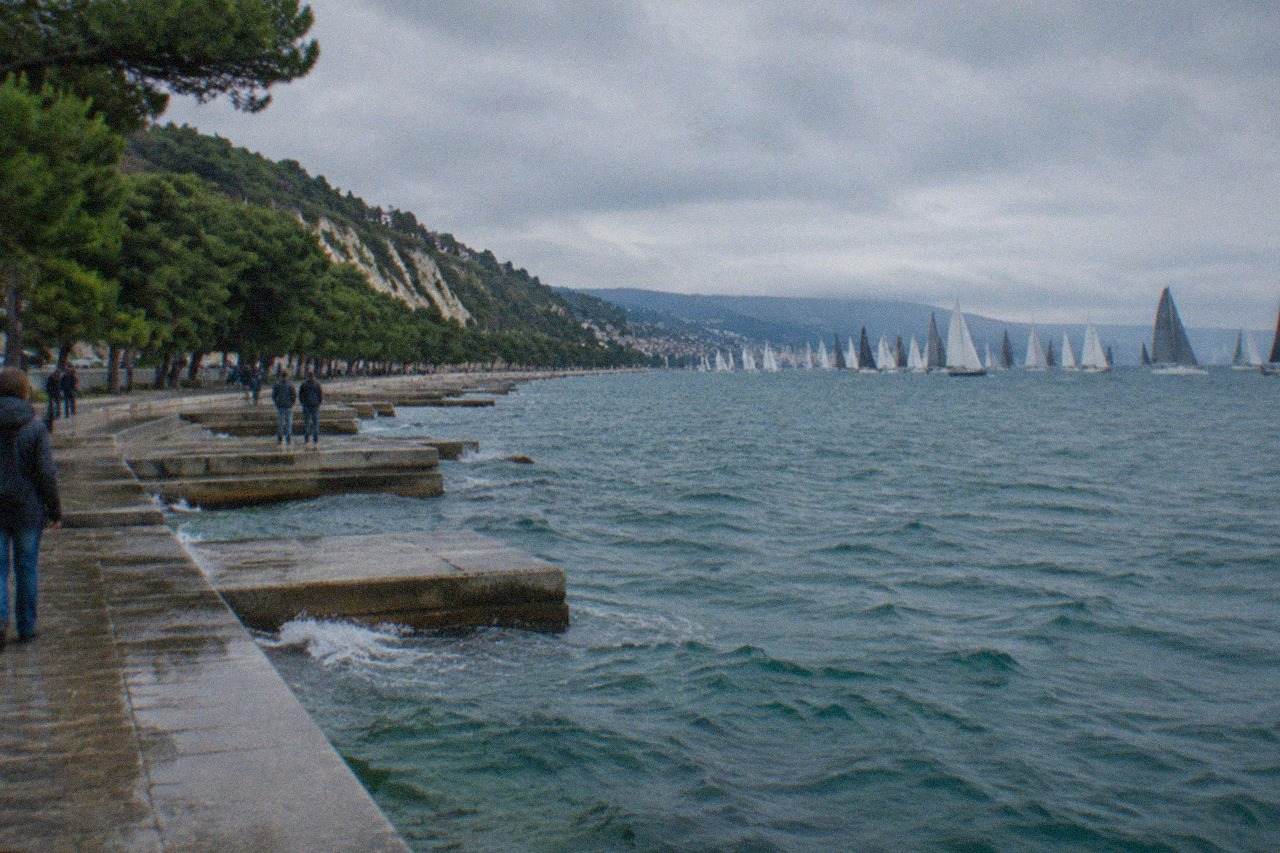
The Barcolana is an annual sailing regatta in the Gulf of Trieste, Italy, described by its organisers as the largest sailing race in the world. Barcolana 58 runs 2 to 11 October 2026, with the main regatta on Sunday 11 October starting at 10:30 over a 13-nautical-mile course that finishes off Piazza Unità d'Italia. The record entry is 2,689 yachts, set in 2018.
The Barcolana regatta, held every October in Trieste, Italy, is the sailing event that this Adriatic port city in Friuli Venezia Giulia organises its autumn around. The organisers describe it as the largest sailing race in the world, a claim resting on a verified Guinness World Record for the number of boats on one start line. The 58th edition runs 2 to 11 October 2026, with the main regatta on Sunday 11 October. For a city of Trieste's size, the transformation is remarkable: the seafront, the squares and the timetable of a whole week bend around a fleet of yachts, and the race finishes within sight of the main square, Piazza Unità d'Italia.
What Is the Barcolana Regatta in Trieste, Italy?
The Barcolana is a sailing regatta held every October in the Gulf of Trieste, in the north-east corner of Italy, and the organisers describe it as the largest sailing race in the world: the record entry is 2,689 registered yachts, set at the 50th edition in 2018 and recognised as a Guinness World Record. The 58th edition runs 2 to 11 October 2026, with the main race on Sunday 11 October starting at 10:30 over a 13-nautical-mile course.
It is a race open in principle to everyone, which is the root of its size. Professional crews and families in small cabin boats share the same start line and the same course, sorted into divisions by rating rather than excluded by it. The event began as a local autumn race, the Coppa d'Autunno, and it kept the name of the neighbourhood that gave it its start when it was founded in 1969. Its identity is not a yacht-club regatta in a distant anchorage: the course sits directly in the gulf in front of the city, and the finish is off Piazza Unità d'Italia, the great open square that faces the water at the centre of Trieste's waterfront.
The race is run on a fixed quadrilateral course of 13 nautical miles. The start is scheduled for 10:30 in the morning, and the whole thing is visible from land, which is unusual for a sailing event of this scale. You do not need a boat, a ticket or a credential to see the largest sailing race in the world; you need a place on the seafront, which is the point of the design.
The Barcolana 58 Numbers
| Detail | Figure |
|---|---|
| Edition | 58th (Barcolana 58) |
| Event dates | 2-11 October 2026 |
| Main regatta | Sunday 11 October 2026 |
| Scheduled start | 10:30 |
| Course | Fixed quadrilateral, 13 nautical miles |
| Waters | Gulf of Trieste |
| Finish | Off Piazza Unità d'Italia |
| Record entry | 2,689 yachts (Barcolana 50, 2018) |
When Is the Barcolana 2026 and What Happens During the Week?
Barcolana 58 runs from 2 to 11 October 2026, and the main regatta is on the final Sunday, 11 October, with the start scheduled for 10:30 on the fixed quadrilateral course in the Gulf of Trieste. The 13-nautical-mile course finishes off Piazza Unità d'Italia, which is why the waterfront crowd builds through the morning and the city turns to face the sea. The record entry remains 2,689 boats, set in 2018.
The week around the race has grown into a festival that the organisers program across the whole span of those ten days, though the confirmed, published anchor in the official material is the regatta itself. The village and the waterfront events are built around the racing programme, and the layout of the city during those days runs along the seafront rather than through it. If you are planning a trip, the two dates that matter are the Sunday of the race and the days immediately before it, when the fleet gathers and the gulf fills with practice sails.
Choosing when to arrive is mostly a choice between the crowd and the calm. The days early in the window give you the city at its normal pace with the harbour filling up; the final weekend gives you the event at full volume. The race start is mid-morning, so the Sunday is not an early start for spectators on land.
Between race days, the coast itself is the other half of the week. The e-bike tour that pairs the old town with Miramare Castle and a gelato stop runs six hours from $174.26 per person, and it covers the two waterfront halves of Trieste in one loop: the historic centre and the castle up the coast at Grignano. If your trip is built around the Sunday race, the days before it are the natural slot for the longer coastal outings, and the Piran and Prosecco options below fill the same gap from a different direction.
Race Week Milestones
| Edition | Year | Boats | Note |
|---|---|---|---|
| First edition | 1969 | 51 | The original start line |
| Barcolana 50 | 2018 | 2,689 | Guinness World Record entry |
| Barcolana 57 | 2025 | 1,865 | Highest entry since 2019 |
| Barcolana 58 | 2026 | Not yet published | Runs 2-11 October 2026 |
Where Are the Best Places to Watch the Barcolana in Trieste?
The best watching is along the Trieste waterfront itself. The sea-facing edge of Piazza Unità d'Italia and the Molo Audace sit in the heart of the finish area, the long Rive seafront gives you a continuous view along the water, and the Barcola beaches further along the coast are where local families spread out with the rocks and the sea at their feet. Higher ground above the city gives the wide view of the whole gulf.
The finish is off Piazza Unità d'Italia, so the square and everything connected to it are the centre of gravity. From the Molo Audace, the stone pier that reaches straight out into the gulf, you are standing in the middle of the picture rather than at its edge, with boats working the final legs of the course in front of you. The square behind it fills through the morning, and the crowd there is the closest thing the race has to a grandstand.
The Rive, the long seafront that runs along the water from the centre of the city, is the second tier: more room, the same view, and the boats coming and going along the course. Up the coast, the Barcola seafront is the locals' stretch, the same shoreline that fills with swimmers in summer and spectators in October. Our Trieste beaches and swimming guide covers this coast in detail for the rest of your trip.
For the wide view, you want height. The hills of the Karst rise behind the city, and from the upper edges of that plateau the gulf opens out and the fleet reads as a field of white across the whole course. The view from above is the one that conveys the scale of 2,000-plus boats; the view from the water's edge is the one that conveys the speed. Choose according to whether you are there for the record or for the racing.
How Does October Weather Affect the Barcolana in Trieste?
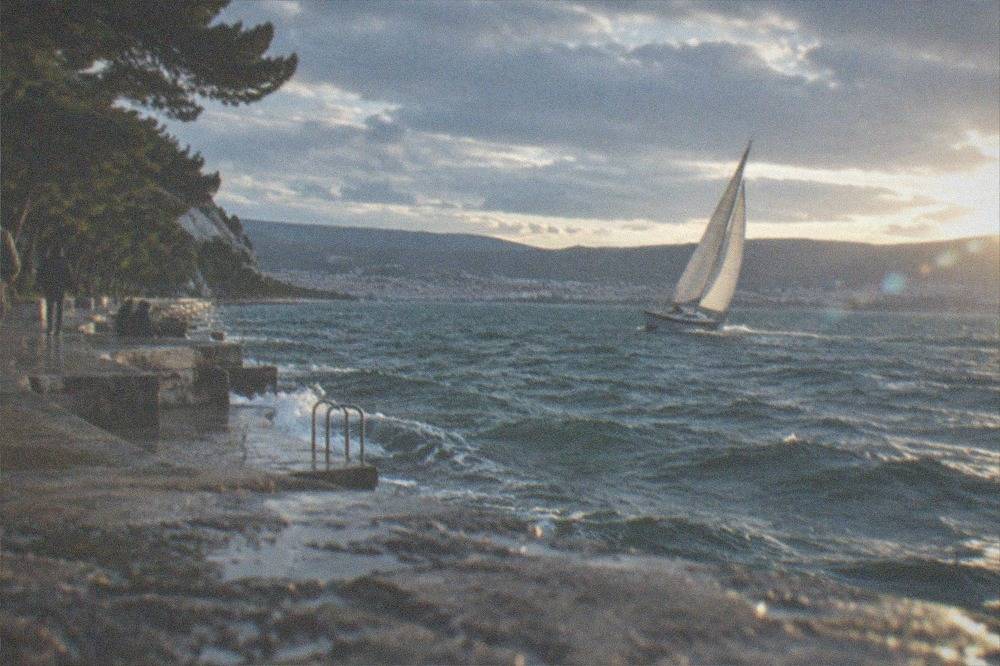
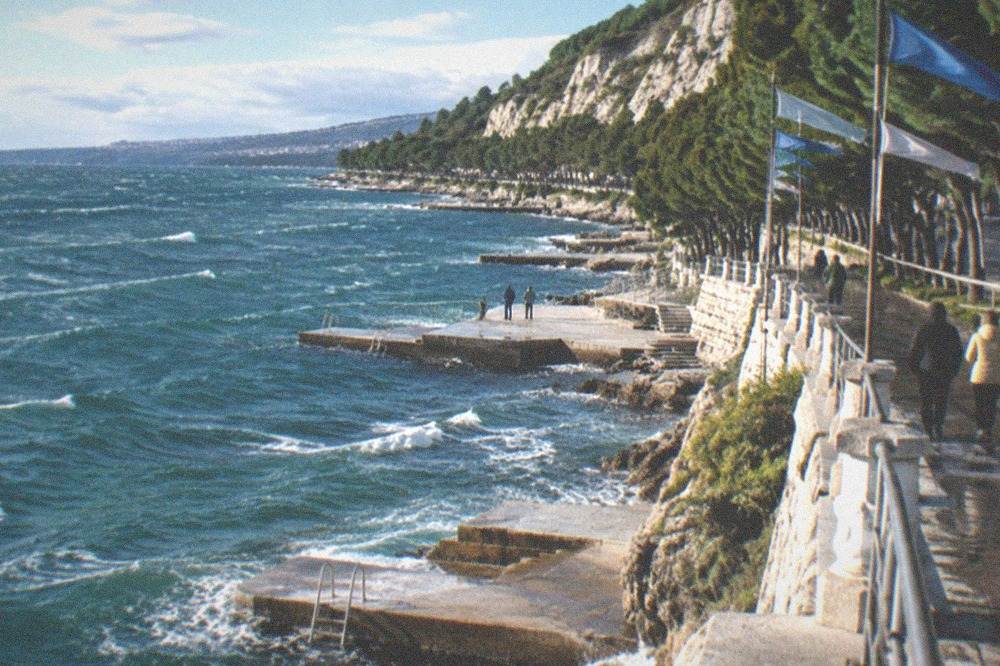
October in Trieste averages a daytime high of 19.6 C, a mean of 17.1 C, 88.6 mm of rain across 7.6 wet days, and a sea temperature of 20.3 C. Wind is the point of the date: the month averages 4.0 days with a gust over 72 km/h and 1.4 days with a gust over 90 km/h, and the race sits inside the windy shoulder of the year on purpose.
No published wind threshold exists at which the race is called off.
The Barcolana is scheduled where it is because of the bora, the dry north-easterly wind that defines this coast. The station tables from the regional met agency show that strong wind is not a summer phenomenon here: the gust season runs through the cool months, and the record gust in the whole Trieste series, 168.1 km/h, was measured in February. By October the summer lull is over and the gulf has wind to race in, which is precisely what a fleet of mixed abilities needs for a spectacle. Our bora wind guide covers the whole mechanics of it.
What this means for a spectator is layered clothing. The 19.6 C average high is an average across afternoons in the sun; standing on the Molo Audace with a bora funnelling down the gulf is a different experience from the number, and the seafront is fully exposed. Rain is a real possibility at 7.6 wet days in the month, but October is not the wettest month here: November is, at 109.8 mm, with October's 88.6 mm behind it and September's 102.3 mm ahead of it on the ARPA station tables.
| Month | Mean high C | Rain mm | Wet days | Sea C | Days gust over 72 km/h | Days gust over 90 km/h |
|---|---|---|---|---|---|---|
| September | 23.9 | 102.3 | 7.4 | 23.9 | 3.5 | 1.1 |
| October | 19.6 | 88.6 | 7.6 | 20.3 | 4.0 | 1.4 |
| November | 14.7 | 109.8 | 9.5 | 16.8 | 5.2 | 1.9 |
There is one claim you should not believe anywhere you read it: that there is a wind speed at which the authorities close the seafront or stop the race. No published cutoff exists. Conditions are managed in real time, not against a number, so treat any figure you see quoted as a threshold as what it is, an invention.
How Did the Barcolana Grow from 51 Boats to a World Record?
The first Barcolana in 1969 put 51 boats on the start line. The record came at the 50th edition in 2018, when 2,689 registered yachts made it the largest sailing race in the world by entry, a feat the organisers describe as a Guinness World Record. The 2025 edition drew 1,865 boats, the highest since 2019, and the 58th edition runs 2 to 11 October 2026.
The growth from a neighbourhood club race to a record holder tracks the character of the city as much as the character of the sport. Trieste is a port with a deep sailing culture and a seafront built to face the water, and the Barcolana's open-entry format let that culture pour onto one start line. The 2018 record is the number that defines the event, and it is the one the organisers themselves lead with in their own history pages. The rest of the planning pages sit on Trieste Travel Guide.
The post-record editions have settled lower, which is normal for any event that peaked into the thousands, but the direction of travel matters: the 2025 fleet of 1,865 boats was the biggest since 2019, which suggests the recovery is real and the 2026 start line will be substantial. The entry count for 2026 does not exist yet and nobody can honestly print one, so treat any figure for the coming race as what it is, a guess.
| Year | Edition | Registered yachts | What it meant |
|---|---|---|---|
| 1969 | 1st | 51 | The start of the Coppa d'Autunno |
| 2018 | 50th | 2,689 | Guinness World Record, largest sailing race |
| 2025 | 57th | 1,865 | Highest entry since 2019 |
| 2026 | 58th | Not yet published | Runs 2-11 October |
The race's history sits inside a wider story of this city that most casual visitors never get told, a port built by empire, contested by states and defined by the sea. Our short history of Trieste explains why a mid-sized Italian city runs one of the world's largest sporting events on its own doorstep, and it is worth ten minutes before the start gun.
How Should You Get to Trieste for Barcolana Week?
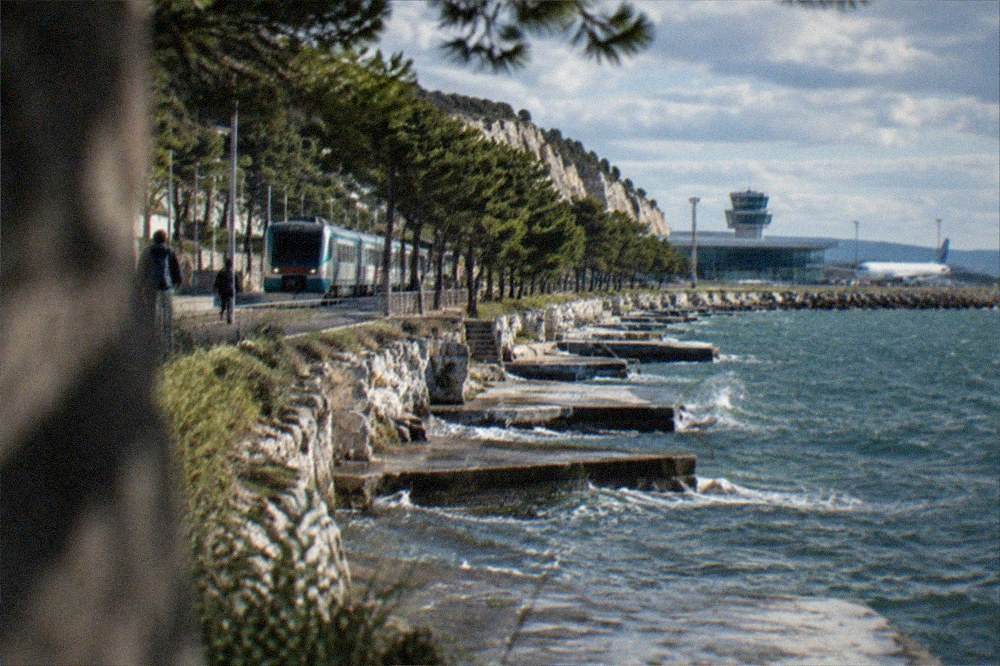
Fly into Trieste Airport at Ronchi dei Legionari, which has its own railway station joined to the terminal by a covered walkway of roughly 400 m with moving walkways, or arrive by train at Trieste Centrale. In the city, a 2026 urban single ticket costs €1.50 for 60 minutes or €1.85 for 75 minutes, the day ticket is €3.35, and contactless bank cards can be tapped on board. Book accommodation early: race week fills the city.
The airport connection is the underrated part of a Trieste trip. The station is served by regional, Intercity and Frecciarossa trains, and the walkway means you never step outside between the terminal and the platform. Our Trieste airport guide covers the routes and the alternatives, and if you are coming from Venice, our Venice to Trieste by train page handles the corridor most visitors arrive along. Cruise passengers get their own brief in the cruise port guide.
Inside the city, the 2026 urban tariff sheet from the local operator sets the fares, and the single ticket extends to 240 minutes on Sundays and public holidays, which race Sunday may or may not be: check the holiday calendar before you plan on it. Tapping a contactless card on board applies the cheapest applicable fare automatically, so the day ticket sometimes buys itself.
| Ticket (2026 urban) | Validity | Price |
|---|---|---|
| U01 single | 60 minutes | €1.50 |
| U02 single | 75 minutes | €1.85 |
| U24 day ticket | One day | €3.35 |
| U10 carnet | 10 rides | €13.50 |
| U20 carnet | 20 rides | €16.65 |
Accommodation in race week is the one thing you cannot fix on arrival. The city's stock is modest and the event pulls thousands of sailors plus their families, so the sensible plan is to book as early as you can and to accept that race weekend carries a premium. Our where to stay in Trieste guide maps the neighbourhoods against what you want from the trip.
The tourist tax is charged per person and per night, capped at five consecutive nights in the same property, at rates set by the municipality for 2026. It is worth knowing the scale before you see it on your bill.
| Accommodation type | Tax per person, per night |
|---|---|
| 5-star hotel | €3.80 |
| 4-star hotel | €3.30 |
| 3-star hotel | €3.00 |
| 2-star hotel, B&B Superior, affittacamere | €2.30 |
| Hostels, residences, holiday villages, short lets | €2.30 |
| B&B Comfort | €2.00 |
| 1-star hotel, B&B Standard | €1.80 |
| Campsites and motorhome areas | €1.50 |
What Else Is There to Do in Trieste During Barcolana Week?
Around the race the city offers the Barcola seafront, the historic caffè culture of the centre, the osmize farm taverns of the Karst opening their autumn season, and day trips across to Slovenia's coast at Piran or into the Prosecco country. The e-bike tour of the old town, Miramare Castle and a gelato stop runs six hours from $174.26 per person, and the smaller Piran and Prosecco outings fit the gaps between race days.
The coffee houses are the indoor half of a Trieste October. This is a historic coffee port with a caffè culture to match, and a long morning in one of the grand rooms of the centre is what race spectators do when the bora is at full strength and the seafront is a place you visit briefly rather than linger. Our Trieste coffee culture guide covers the rooms and the rituals.
Out along the coast, the e-bike tour above is the fullest single day you can buy: the old town, San Giusto Castle, the run up to Miramare and a gelato stop, six hours door to door. The listing rates it 5 from 2 reviews, so the sample is small but perfect. Pair it with Check availability on the operator's page, since autumn slots close early around the race.
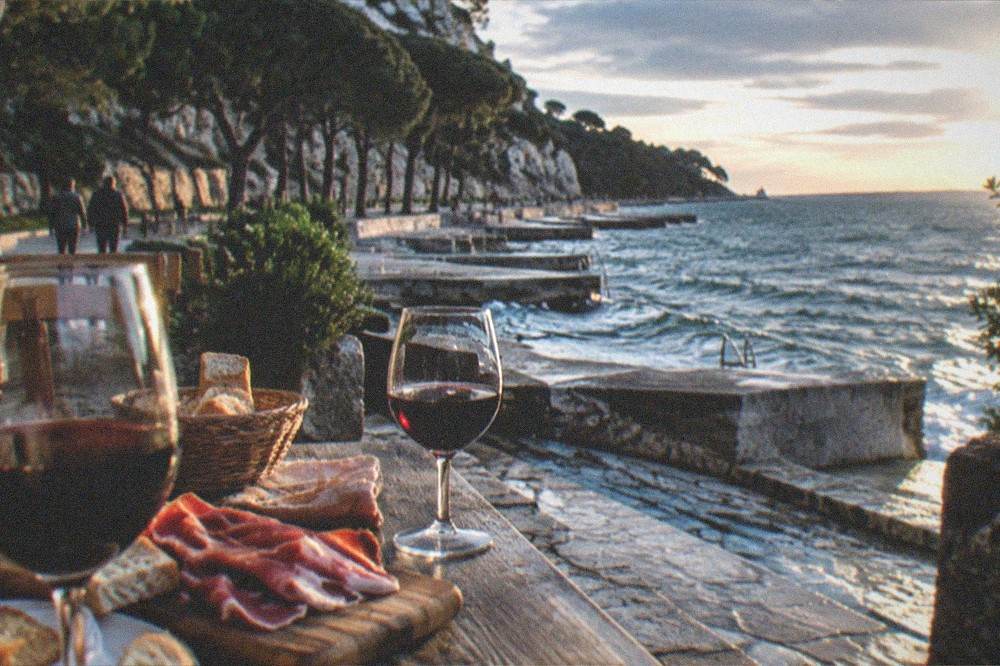
The other natural pairing for an October trip is food. The city's buffet tradition, its seafood and the surrounding wine country are covered in our what to eat in Trieste guide, and the osmize, the seasonal farm taverns of the Karst where growers sell their own wine, hang their frasca branch out to mark an open door through the autumn. The osmize calendar at osmize.com is the de facto listing of which farms are open on which days.
Across the border, the small-group Piran and panoramic Slovenian coast tour runs five hours from $125.13 per person, rated 4.9 from 82 reviews, and it is the cleanest way to see the other shore of the gulf when the racing is done. One border note that matters in 2026: Italy is running temporary checks on its land border with Slovenia until at least 18 December 2026, so carry a passport or national ID card even though all three countries here, Italy, Slovenia and Croatia, are in both Schengen and the euro.
The wine half of the week is the Prosecco origins tour, two and a half hours from $68.79 per person, from 227 reviews, which goes up into the hills where the sparkling wine's story starts. For a fuller route through the region's cellars and the Carso's own wines, our Friuli Venezia Giulia wine guide is the background read.
Tours That Fit a Barcolana Week
| Tour | From | Duration | Reviews |
|---|---|---|---|
| E-Bike: Old Town, Miramare Castle and Gelato | $174.26 per person | 6 hours | 2 |
| Piran and Panoramic Slovenian Coast, small group | $125.13 per person | 5 hours | 82 |
| Prosecco Origins Tour and Tastings | $68.79 per person | 2h 30m | 227 |
When Is the Best Time to Visit Trieste for the Race?
The race fixes your dates for you: 2 to 11 October 2026, with the regatta itself on Sunday 11 October. Within that window, arrive two or three days early to catch the fleet gathering and the waterfront building towards the weekend, and stay a day after to have the gulf, the seafront and the coffee houses back at their normal pace. October's averages, 19.6 C highs and 88.6 mm of rain, are good sightseeing numbers.
Race Sunday itself is the peak, and the peak means crowds on the Molo Audace and the square, but the event is linear along a long seafront rather than contained in one venue, so the crowd spreads. The days before give you the nicer version of the same city: the same boats, fewer people, and the osmize and the wineries at the height of their autumn season.
If you would rather have Trieste without the fleet at all, our best time to visit Trieste and weather month by month guides break the whole year down, and the free and low-cost side of the city is covered in our free things to do in Trieste page, which the race crowds make more useful than usual.
Common Questions About the Barcolana Regatta in Trieste
When is the Barcolana 2026 in Trieste?
Barcolana 58 runs from 2 to 11 October 2026, with the main regatta on Sunday 11 October 2026. The start is scheduled for 10:30 on the fixed quadrilateral course in the Gulf of Trieste, and the 13-nautical-mile race finishes off Piazza Unità d'Italia.
How many boats take part in the Barcolana?
The record is 2,689 registered yachts, set at the 50th edition in 2018, which the organisers describe as a Guinness World Record for the largest sailing race in the world. The 2025 edition drew 1,865 boats, the highest since 2019. The 2026 entry count is not yet published.
Where is the best place to watch the Barcolana?
The Molo Audace and the sea-facing edge of Piazza Unità d'Italia sit in the heart of the finish area, the Rive seafront gives a continuous view along the water, and the Barcola beaches are the locals' stretch. For the full scale of the fleet, head for high ground above the city.
Is the Barcolana free to watch?
Yes. The course sits in the open gulf in front of the city and the finish is off Piazza Unità d'Italia, so watching from the waterfront costs nothing. You do not need a ticket or a boat to see the race.
Is October windy in Trieste?
Yes, and by design. October averages 4.0 days with a gust over 72 km/h and 1.4 days with a gust over 90 km/h at the waterfront station, and the race sits in the windy shoulder of the year on purpose. There is no published wind threshold at which the race is called off.
What should I pack for Barcolana week?
Layers and a windproof outer layer are the essentials: the October average high is 19.6 C, but the seafront is fully exposed and the bora turns it cold fast. Expect 7.6 wet days in the month on average, so a light rain layer earns its place too.
The Barcolana is the one weekend a year when Trieste, Italy, looks exactly like what it is: a sailing city with the sea as its main square, running the largest sailing race in the world in front of the crowd that lives around it.