Trieste Beaches and Swimming
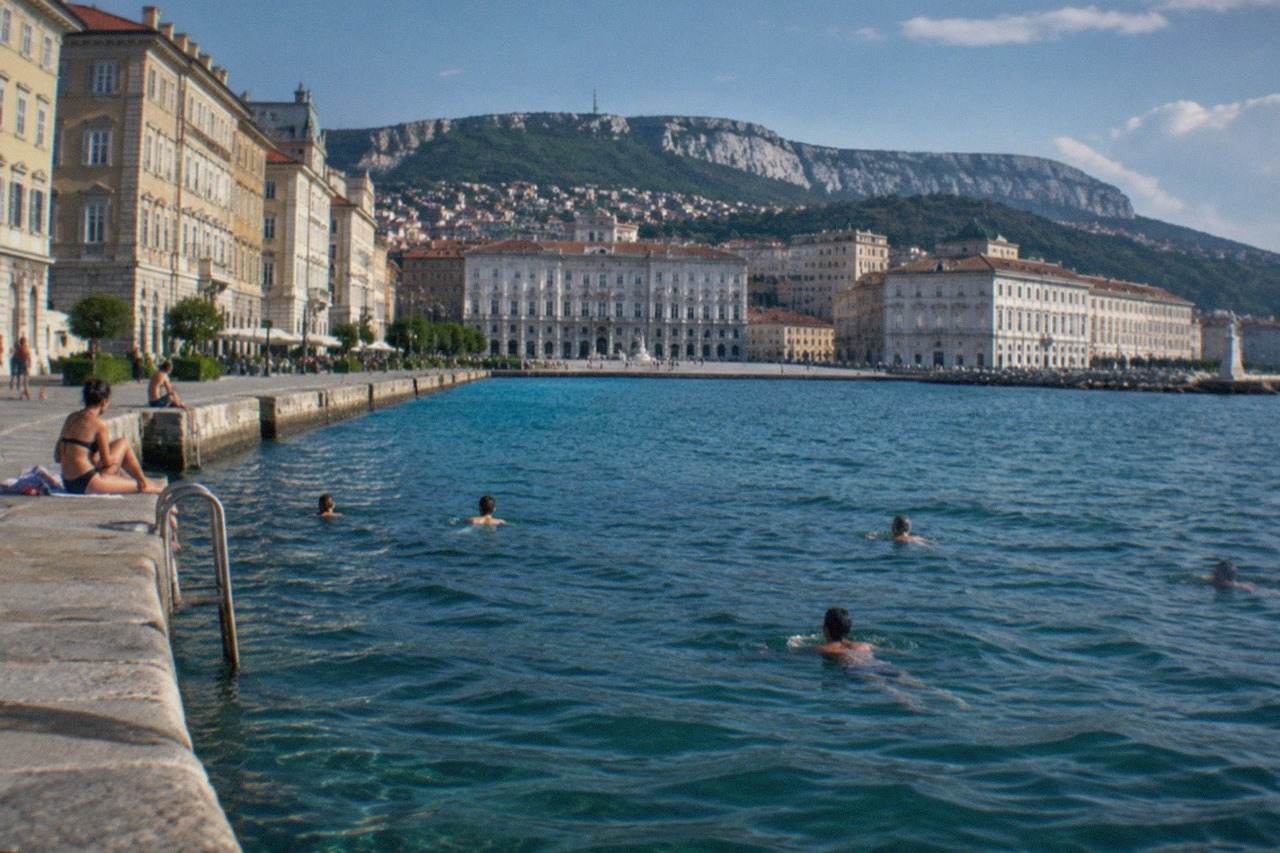
Trieste, Italy, is a swimming city in a way most visitors do not expect: the sea sits at the end of the main square, the locals bathe from stone platforms and a historic seaside lido, and the water is warm enough from June to early October.
Short answer
Yes, you can swim in Trieste, Italy. The Gulf of Trieste reaches about 25.9 C in July and August, the seafront has free bathing platforms and a historic lido, and the season runs roughly June to early October.
Trieste, Italy, is one of the few European cities where the sea is part of the everyday street plan rather than something you travel out to. The city's grandest square, Piazza Unità d'Italia, opens directly onto the water, the Molo Audace pier is a public walkway a few steps from the middle of town, and the long seafront stretch of the Rive and Barcola is where a large part of the population spends its summer evenings. Swimming here is not a resort activity. It is a municipal habit, with stone bathing platforms, a historic seaside establishment, and a sea that ARPA FVG's own monitoring shows warming into the mid twenties Celsius by midsummer.
That is the outline of this guide. Below you will find where the swimming actually happens in this city, what the water temperature does month by month, how the famous bora wind fits into a beach holiday, and what the coastal sights and day trips along this stretch of the Adriatic cost. Everything numeric comes from official venue pages, the regional transport operator's 2026 tariff sheet, and the ARPA FVG station tables for the molo Fratelli Bandiera, because a page about swimming is a page about weather and water, and those are exactly the numbers most travel content gets wrong.
Where Can You Swim in Trieste, Italy?
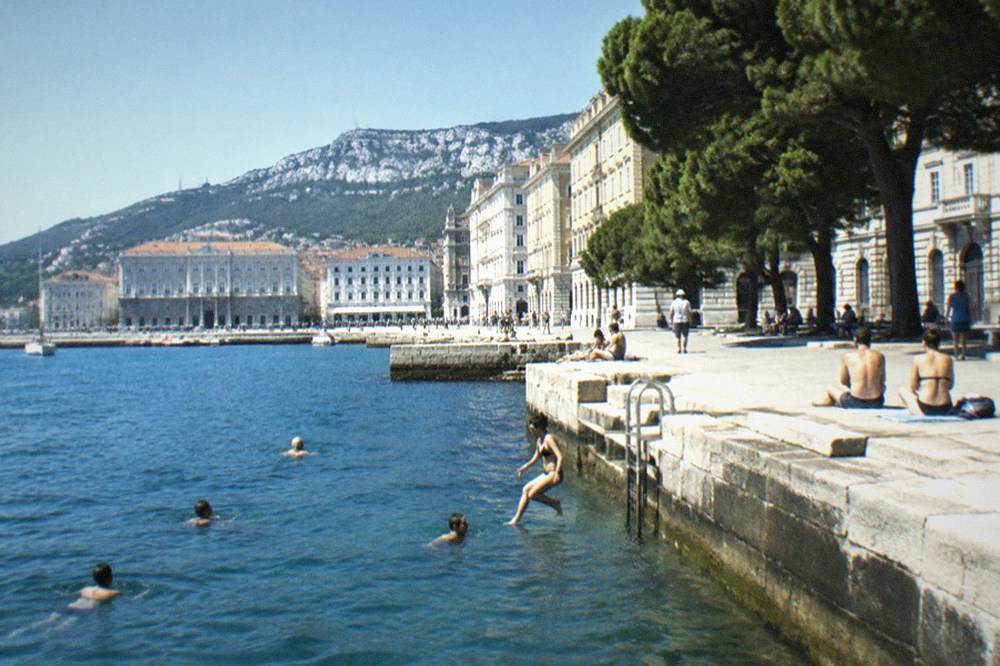
The main swimming spots in Trieste, Italy, are the Barcola seafront, the stone bathing platforms along the Rive, and the Bagno Marino La Lanterna at Pedocin, a historic seaside lido by the harbour entrance that separates men's and women's bathing areas as it has for generations. Entry to the sea is free at the public platforms, and the city treats its waterfront as an ordinary neighbourhood amenity rather than a resort.
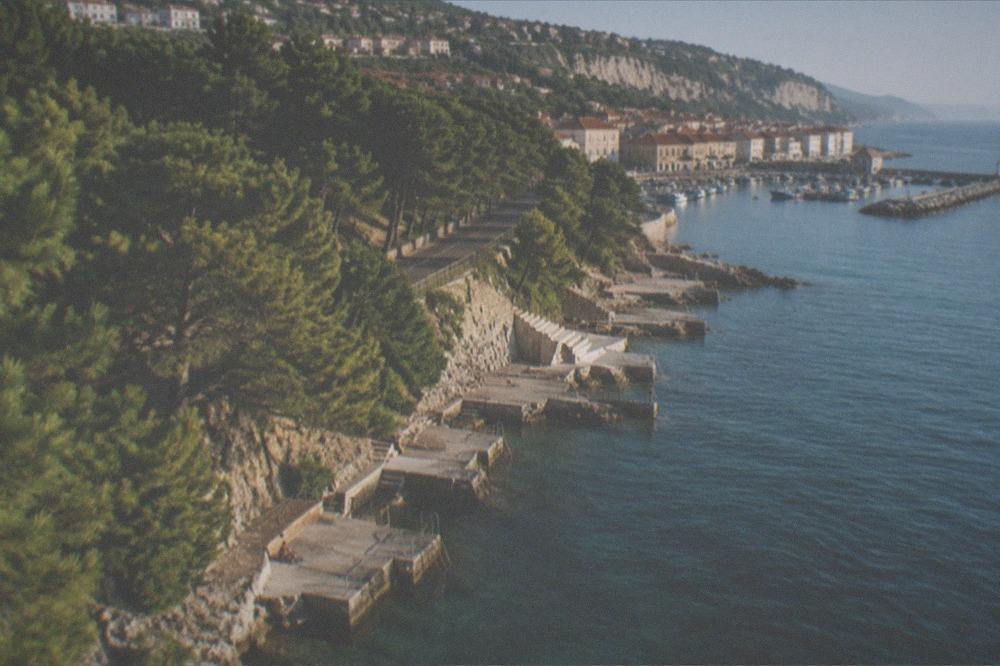
Barcola is the long seafront suburb where Trieste's swimmers congregate, a shoreline of plane trees, a cycling and walking lane, and concrete and rock entries into the water. The Rive are the broad quays in the centre, and on summer weekday evenings the platforms along them fill with people taking a swim before dinner. Pedocin, formally the Bagno Marino La Lanterna, is the last surviving historic lido of the old harbour baths and it still operates its traditional separate men's and women's sections, a detail that surprises visitors and is simply normal here. Our companion page on where locals actually swim in Trieste covers the habits and the etiquette of these places in detail, and the short answer to whether Trieste has nice beaches is that it has bathing rather than sand: this is a stone-and-platform coast, and the sand beaches people picture when they say "Italian beach" start across the border and further down the Adriatic.
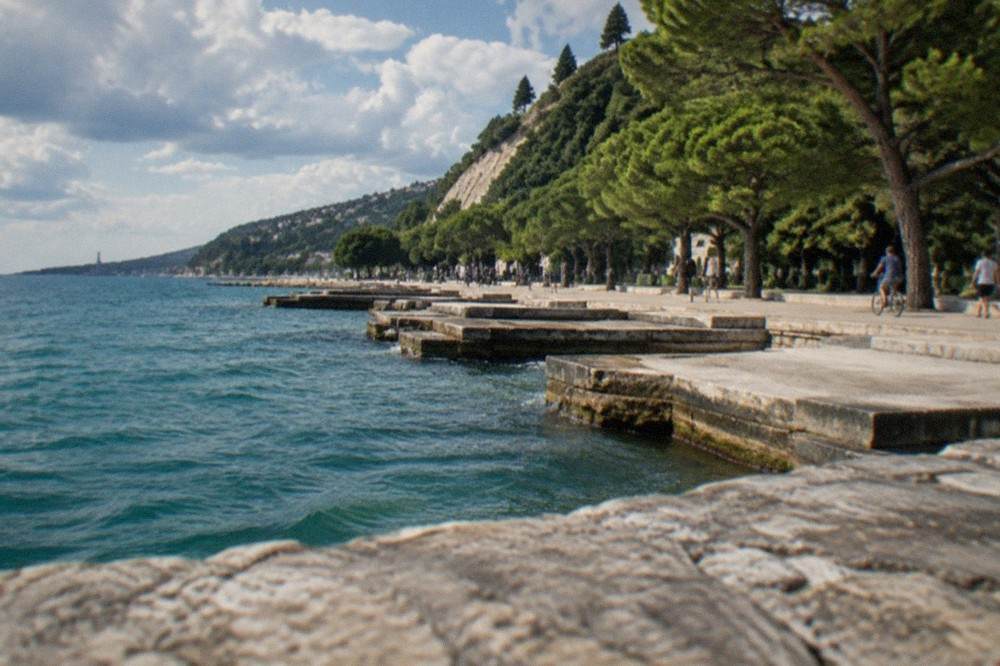
What that means in practice is that you do not need a car, a resort booking or a beach club to swim in this city. You need a towel and a sense of where the water is deepest off the platforms. The city's own seafront is public, the swimming is free, and the season is longer than most visitors assume. The rest of this page is about when, and about what the coast around the city adds to that.
When Is the Sea Warm Enough for Swimming in Trieste?
Sea temperature in the Gulf of Trieste averages 23.1 C in June, 25.9 C in July, 25.9 C in August and 23.9 C in September, against 17.9 C in May and 20.3 C in October, which makes roughly June to early October the comfortable swimming window. The sea stays warmer in September than in June even at similar air temperatures, because the water holds the summer's heat through the autumn shoulder.
Those figures come from the sea temperature series for the gulf, which is a different data source from the land station and is presented here as such. The land figures, from ARPA FVG's station at the molo Fratelli Bandiera, tell the other half of the story: the mean air temperature is 15.9 C over the year, July and August average 28.2 C and 28.1 C as daytime highs, and the sea reaches its own maximum in the same two months. The lag matters for planning. June can feel like summer on land while the water is still a degree or two short of its July peak, and September, which many visitors write off because schools have gone back, is statistically one of the best swimming months of the year here.
| Month | Mean sea temp C | Mean high air C | Rain mm | Days with a gust over 90 km/h |
|---|---|---|---|---|
| May | 17.9 | 21.7 | 75.0 | 0.7 |
| June | 23.1 | 25.8 | 62.5 | 0.3 |
| July | 25.9 | 28.2 | 53.8 | 0.9 |
| August | 25.9 | 28.1 | 71.7 | 0.9 |
| September | 23.9 | 23.9 | 102.3 | 1.1 |
| October | 20.3 | 19.6 | 88.6 | 1.4 |
Read the rain column carefully, because it inverts a common assumption. July is the second driest month of the entire year in Trieste at 53.8 mm, wetter only than January and March at 52.8 mm each. The wettest month is November at 109.8 mm, and September is second at 102.3 mm. Rain here is an autumn phenomenon, not a summer one, and a July or August beach plan in this city is statistically one of the driest plans you can make in northern Italy. The September rain figure deserves a caveat: it falls on 7.4 wet days on average, so the month is both one of the best for sea temperature and one of the showery ones. The sea is warm, the days are not guaranteed.
For the full picture of how the year runs, our month-by-month weather guide breaks down every month, and the broader best time to visit Trieste page weighs sea temperature against crowds, prices and the event calendar. If swimming is the main purpose of the trip, the sweet spot the numbers point to is late June through early September, with September as the connoisseur's choice: the sea at 23.9 C, the daytime air matching it, and the Barcolana regatta filling the gulf in the second week of October as the season's closing ceremony.
What Are Trieste's Beaches and Coastal Sights Like Compared with the Rest of Italy?
Trieste's coast is a working harbour and a stone seafront rather than a resort strip: bathing is from platforms, rocks and one historic lido, the water is clean and monitored, and the city compensates for the lack of sand with a shoreline you can walk, cycle and swim along for free, with Miramare Castle's free park sitting directly above the water up the coast.
The honest description first. If your mental image of an Italian beach holiday is umbrellas ranked on sand, Trieste will disappoint you on the literal geography. If your image is a city where you swim before dinner within sight of your hotel, this is one of the best in the country. The coastline runs from the industrial architecture of the Old Port, now opening to the public, out along the Rive to Barcola and on toward Grignano and the headland where Miramare Castle stands. The castle park is free all year, open 8:00 to 19:00 from April to September, while the castle itself costs €17 for an adult ticket including the temporary exhibition, and the two keep different hours, a distinction worth checking on the venue's own page before you set out.
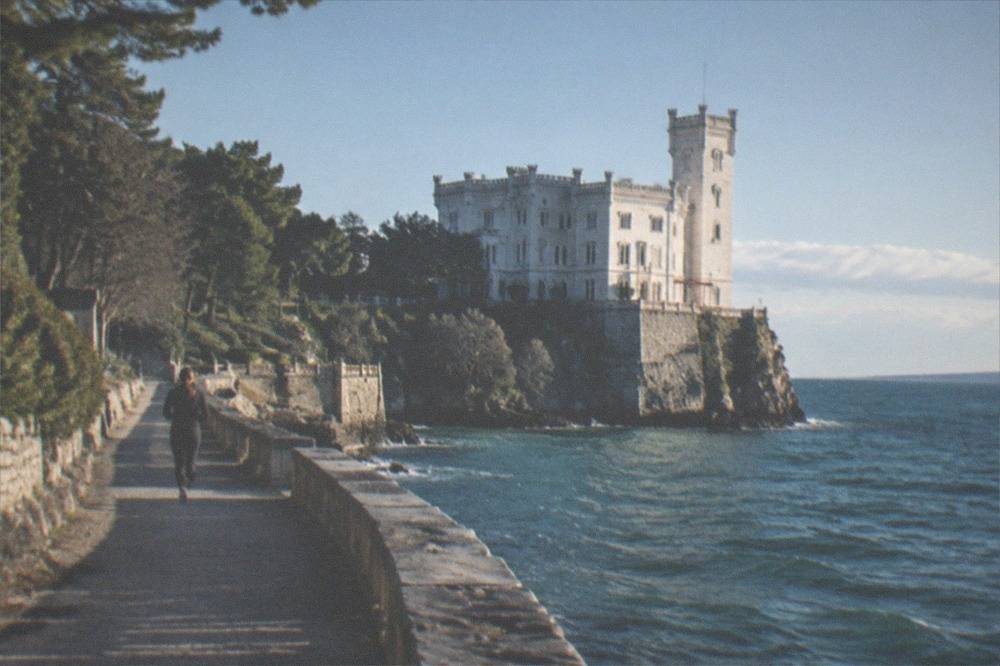
The castle and the sea go together here in a way few Italian cities can match, and the marine protected area off the point is one of the reasons the water along this stretch is worth swimming in at all. A day built around the coast can be done on foot and by bike, and the guided options cover it well. The e-bike tour that links the old town, Miramare Castle and a gelato stop is the standout for families and for anyone who does not want to plan the route themselves, and the operator's listing shows a 6-hour itinerary rated 5 from a small number of reviews, so check the live listing for dates and availability. Check availability if that route suits you.
For a slower version of the same shoreline, the entry ticket with an audio app for Miramare Castle and Museum, from $20.64 per person on the listing and rated 4.35 from 881 reviews, covers the castle itself and leaves the free park and the seafront to you.
The other coastal classic is on the water itself. The kayak tour along the Duino coast, from $76.81 per person and rated 4.89 from 11 reviews over 3 hours, paddles beneath the Duino castles up the shore from the city, and it is the closest thing this coast has to a beach-and-castle combo in a single morning.
| Coastal experience | Kind | From (listing) | Rating and reviews | Duration |
|---|---|---|---|---|
| E-bike: old town, Miramare Castle, gelato | active-coast | $174.26 per person | 5 from 2 reviews | 6 hours |
| Kayak: Duino coast and castles | active-coast | $76.81 per person | 4.89 from 11 reviews | 3 hours |
| Miramare Castle entry with audio app | miramare-castle | $20.64 per person | 4.35 from 881 reviews | on your own |
| Miramare Castle and the park, private tour | miramare-castle | $93.42 per group | 5 from 62 reviews | 2 hours |
| Panoramic city and Miramare Castle tour | miramare-castle | $129.94 per person | 4.97 from 21 reviews | 4 hours |
How Does the Bora Wind Affect a Beach Day in Trieste?
The bora is a cold, dry north-easterly wind that gusts hardest in winter but can reach over 110 km/h in every single month of the year, averaging 17.6 days a year with a gust over 90 km/h at the Trieste molo station, and there is no published official wind threshold at which the seafront closes or ferries stop, so conditions are judged in real time rather than against a fixed cutoff.
The numbers deserve their own paragraph, because this is the most misrepresented feature of the city. The all-time peak gust in ARPA's station series is 168.1 km/h, recorded in February 2012, and the monthly record gust exceeds 110 km/h in every month of the year, including July. On average the station logs 49.0 days a year with a gust over 72 km/h and 17.6 days over 90 km/h. But the distribution is what matters for a summer visitor: June is the calmest month of the year, with 0.3 days on average reaching 90 km/h, and July, at 0.9 such days, has more gale days than April, May or June. In other words, the statistical risk of a wind-ruined beach day in the core summer season is low, real, and not zero, and the bora's reputation as a winter monster is accurate without being the whole story.
| Bora fact | Figure | Source basis |
|---|---|---|
| All-time peak gust | 168.1 km/h, February 2012 | ARPA station series, molo Fratelli Bandiera |
| Days per year with a gust over 90 km/h | 17.6 on average | ARPA station series, 1995-2024 |
| Days per year with a gust over 72 km/h | 49.0 on average | ARPA station series, 1995-2024 |
| Calmest month | June, 0.3 days over 90 km/h | ARPA station series |
| Monthly record gust | exceeds 110 km/h every month | ARPA station series |
| Official closure threshold | none published | no cutoff found on any authority page |
Practically: a strong bora clears the swimming platforms, whips the surface of the gulf into a short, choppy sea that is unpleasant to swim in, and can suspend the small local ferry connections across the bay. No authority publishes a wind speed at which that happens, so the honest advice is to check the regional meteo forecast on the day and to treat the seafront's emptiness as the signal. Our full page on the bora wind goes into the phenomenon, its physics and its calendar, and the weather month by month guide pairs the wind data with the rain and temperature tables so you can plan around the numbers rather than the folklore.
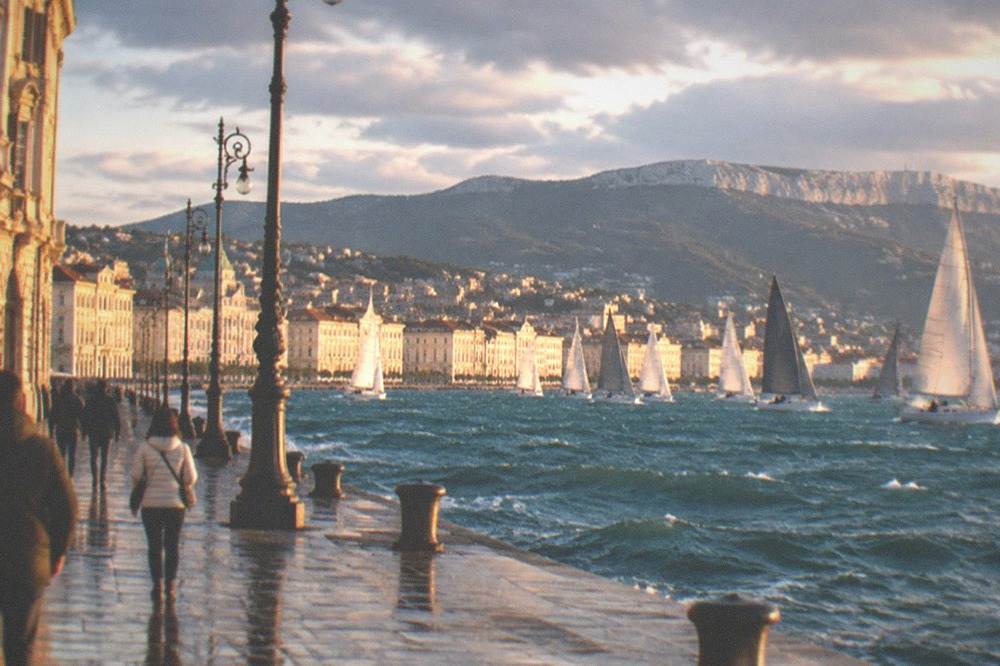
One event belongs in this section because it is the city's celebration of exactly this weather. The Barcolana, the regatta that runs in the second week of October, sits deliberately inside the windy shoulder of the year. Barcolana 58 runs from 2 to 11 October 2026, with the main race on Sunday 11 October starting around 10:30 over a 13-nautical-mile course in the gulf. The entry record stands at 2,689 boats, set in 2018, which the organisers describe as a Guinness World Record for the largest sailing race in the world. October averages 1.4 days a year with a gust over 90 km/h at the molo station, which is the whole point: the race wants wind. The Barcolana regatta guide covers the shore-side programme, and if you are in the city that week, the seafront you have been swimming from all summer becomes the grandstand for the largest fleet in sailing.
What Does a Beach-and-Coast Day in Trieste Cost?
A swimming day in Trieste can cost almost nothing, because the bathing platforms and seafront are free and a day ticket for the city's urban transport network is €3.35, while the paid add-ons are the castle at €17, the historic lido's modest entry, and food: a foodie walking tour runs from $71.08 per person on the listing and a Slovenian coast day trip with tastings from $137.57 per person.
Break the budget down and this is a genuinely inexpensive seaside city by Italian standards. The sea itself is free. Getting to it is a matter of a €1.50 single ticket valid for 60 minutes, or €1.85 for 75 minutes, on the urban network, with a day ticket at €3.35 and a 10-ride carnet at €13.50, all from the operator's 2026 tariff sheet, and contactless bank cards can be tapped directly on board. The tourist tax, if you are staying overnight, runs from €1.50 per person per night at campsites up to €3.80 at five-star hotels, charged for a maximum of five consecutive nights in the same property, and everyone under 18 is exempt.
| Item | Cost | Notes |
|---|---|---|
| Urban single ticket, 60 min | €1.50 | 2026 tariff sheet |
| Urban day ticket | €3.35 | unlimited rides for the day |
| 10-ride carnet | €13.50 | 2026 tariff sheet |
| Miramare Castle, adult | €17.00 | includes temporary exhibition |
| Miramare park | free | open all year |
| Tourist tax, 3-star hotel | €3.00 per night | max 5 consecutive nights |
| Tourist tax, campsite | €1.50 per night | max 5 consecutive nights |
The paid experiences around the coast are where the budget flexes. The foodie walking tour of the city, from $71.08 per person and rated 4.91 from 264 reviews over 3 hours, is the most-reviewed food option and pairs naturally with a swimming afternoon, since it runs through the centre a short walk from the platforms. The Slovenian coast tour with food and wine tasting, from $137.57 per person and rated 4.98 from 50 reviews over 5 hours 30 minutes, extends the same idea across the border to the Istrian shore. Both are listed with live pricing on the operator's pages, and neither needs to be booked far ahead outside the peak weeks.
Eating around the water follows the same pattern as the city generally: the buffet tradition, the seafood of the gulf, and the coffee institutions are all covered in our what to eat in Trieste and best restaurants in Trieste guides, and the osmize of the Karst above the city, the farm cellars signposted with a frasca branch, are the classic swimming-day continuation: a swim at Barcola, then a drive or bus up to the plateau for wine and ham. The osmize of the Carso page explains how the calendar works and where to find the current openings, and the Friuli Venezia Giulia wine guide covers the local Vitovska, Malvasia and Terrano that you will be drinking there, since Trieste is not in the Prosecco DOC despite the famous village of that name on the Karst.
Can You Combine Swimming with a Day Trip from Trieste?
Yes, and the border makes it unusually easy: Slovenia's Adriatic coast is a short hop away, Croatia and Slovenia both use the euro and are both in Schengen, so no currency change is needed, but Italy is running temporary border checks on its land border with Slovenia through 18 December 2026, so carry a passport or national ID card even for a half-day trip.
The Piran and Slovenian coast tours are the natural swimming-adjacent day trips, running from $114.64 per person for the panoramic coast tour rated 4.57 from 136 reviews over 6 hours, or $125.13 for the small-group half-day version rated 4.9 from 82 reviews over 5 hours. Piran is the town that gives this coast its picture-postcard old core, and the tour listings include round-trip transport from Trieste. The border point above is the one detail worth repeating, because the Schengen agreement does not currently mean "no check" on this particular border: the European Commission's register lists temporary Italian controls on the land border with Slovenia running from 19 June 2026 to 18 December 2026, so treat the ID as mandatory rather than optional.
The lakes are the other direction. The Ljubljana and Lake Bled day trip, from $108.91 per person and rated 4.69 from 544 reviews over 9 hours, is the most-booked excursion from this city and swaps the sea for an alpine lake, with round-trip transport and a guided tour in Italian and English included. Our day trips from Trieste hub collects all of these routes, including the independent versions by bus and train for travellers who would rather not join a group.
How Do You Get to the Waterfront and Around the Coast?
The seafront is inside the city, so no transfer is needed: the Rive and their bathing platforms are a short walk from Piazza Unità d'Italia and the train station's own connections, urban buses cover Barcola on a €1.50 single ticket, the Opicina tram runs from piazza Dalmazia as urban line 2, and the airport is linked to its own railway station by a covered walkway of roughly 400 metres.
The geography does most of the work. Trieste Centrale station sits close to the northern edge of the centre, and the train station and rail connections page handles the longer links, including the Venice route that most visitors arrive on. Flights land at Ronchi dei Legionari, covered in our Trieste airport guide, and the airport's own station is connected to the terminal by that covered walkway with moving walkways, served by regional, Intercity and Frecciarossa trains. No verified transfer time or fare to the central station is published on the operator pages, so check the timetable rather than trusting a number quoted in a forum.
Within the city, the transport is cheap and simple. A single ticket covers the urban buses that run out to Barcola and to Grignano, the day ticket at €3.35 covers a full coastal circuit, and the Opicina tram, urban line 2, runs from its city terminus at piazza Dalmazia up to the Karst village of Opicina as part of the ordinary network, so a standard ticket is valid and contactless cards can be tapped on board. The tram was reactivated on 1 February 2025 after its long stop, and the live status is published by the operator, so check the current notices before planning a ride on it.
Common Questions About Trieste Beaches and Swimming
Can you swim in Trieste, Italy?
Yes. The city swims from its own seafront: free stone platforms along the Rive, the Barcola shore, and the historic Bagno Marino La Lanterna at Pedocin. The sea reaches about 25.9 C in July and August, and the comfortable season runs roughly from June to early October.
Does Trieste have sandy beaches?
Not in the city itself. Trieste's coast is stone platforms, rocks and concrete entries into the sea, which is how the locals bathe. Sandy resort beaches begin further down the Adriatic coast, and day trips across the Slovenian border reach a more conventional seaside.
What is the warmest month for swimming in Trieste?
July and August tie at a mean sea temperature of 25.9 C, with September close behind at 23.9 C. September's sea is warmer than June's at 23.1 C, because the water holds the summer's heat into the autumn shoulder.
Is the bora dangerous for swimmers in summer?
It can end a beach day, but it is statistically rare in the core season. June is the calmest month of the year, averaging 0.3 days with a gust over 90 km/h, and July averages 0.9 such days. No official wind threshold closes the seafront, so check the regional forecast on the day.
Is swimming in Trieste free?
The public platforms along the Rive and the Barcola seafront are free, as is the Miramare Castle park above the water, which is open all year. The historic lido at Pedocin charges its own modest entry, and the castle itself costs €17 for an adult ticket including the temporary exhibition.
Do I need a passport for a beach day trip to Slovenia or Croatia from Trieste?
Yes, carry one. Slovenia and Croatia both use the euro and are both in Schengen, so there is no currency change, but Italy is running temporary border checks on its land border with Slovenia through 18 December 2026, and an ID check is possible on any crossing.
The Short Version: Planning a Swimming Trip to Trieste, Italy
Plan a Trieste swimming trip for late June through early September, with September as the best-value month, swim free from the city's own platforms and the Barcola seafront, budget almost nothing for the water itself and a few euro for transport at €3.35 a day, and carry a passport if the coast pulls you across the border to Slovenia, where the same sea continues under another flag.
Trieste, Italy, rewards the traveller who arrives with the right expectations: this is a swimming city, not a beach-resort city, and its version of the seaside is stone platforms, a historic lido, a castle above the water, and a regatta that fills the gulf each October. The numbers in this guide, from the sea temperature series to the 2026 transport tariff, all point the same way. The water is warm when people assume it is cold, the summer is dry when people assume it is wet, the wind is calmest exactly when the season peaks, and the whole thing costs less than a single umbrella rental on a sand beach further south. For everything beyond the water, the rest of Trieste Travel Guide covers the city's caffès, castles, caves and borders, and the coast will still be there when you have finished with them.
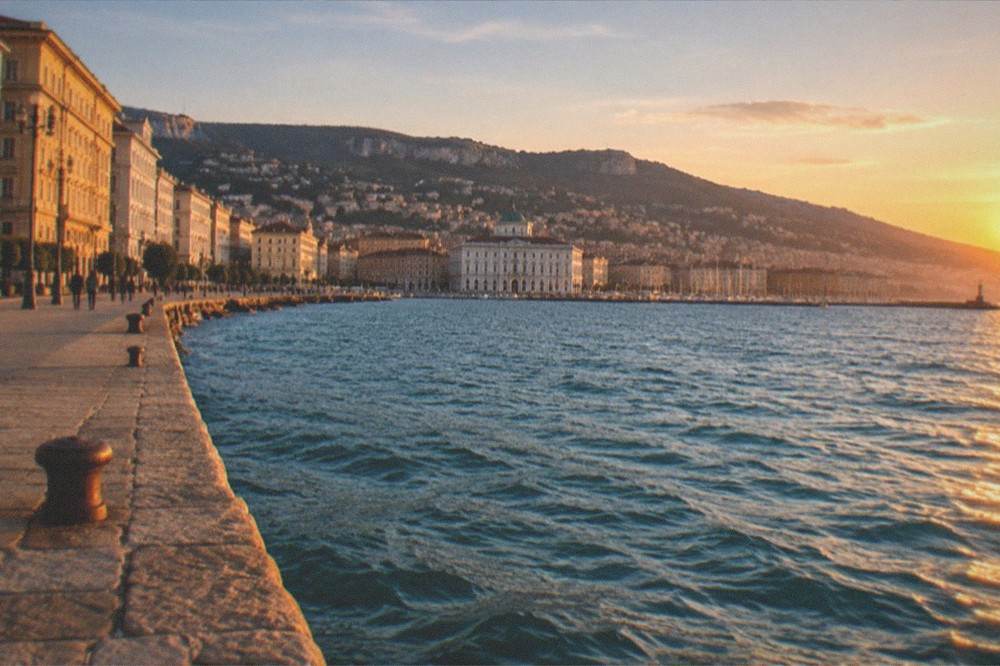
However you build the days, the sea in Trieste is the easiest part of the trip to plan: it is warm from June, free at the platforms, and a short walk from wherever in the city you happen to be standing.