Does Trieste Have Nice Beaches?
Does Trieste have nice beaches? An honest answer about swimming in Trieste, Italy: the seafront at Barcola, the historic Pedocin, sea temperatures and the bora wind.
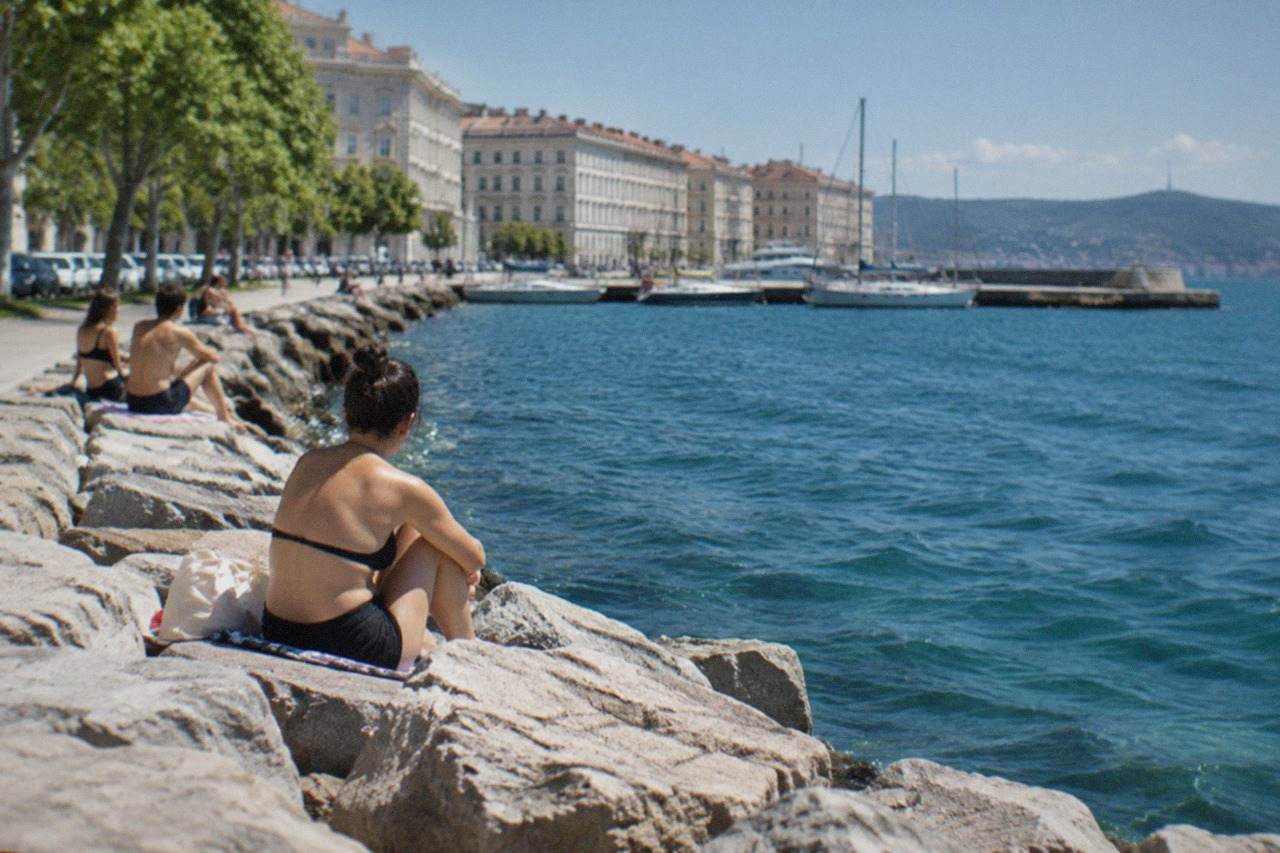
Trieste, the Adriatic port city in Friuli Venezia Giulia in the northeast of Italy, does not have the postcard beaches that the Italian seaside sells itself on. What it has is something more particular: a city that swims from its own waterfront, a long seafront at Barcola where locals lie on flat rocks a few steps from the sea, a historic bathing establishment at Pedocin, and a gulf that warms to genuinely swimmable temperatures every summer. Whether that counts as "nice" depends on what you want from a beach.
The fuller picture, from the city's own seafront culture to the sea temperatures recorded by the regional weather agency, is set out below. The short version: swimmers are happy here, sand seekers usually take a day trip. This page is part of Trieste Travel Guide, where the seafront, the swimming spots and the wind that rules them each have a page of their own.
Does Trieste Have Nice Beaches?
Yes, if your idea of a beach is clean sea, free access and a rock to lie on rather than sand. Trieste swims from its own seafront, above all at Barcola, and from the historic Bagno Marino La Lanterna at Pedocin. The water in the Gulf of Trieste reaches an average of 25.9 C in July and August. There is no classic sandy resort beach in the city itself.
That is the honest split. The Trieste beaches and swimming guide covers every spot in detail, and the swimming guide lists where locals actually go; this page deals with the narrower question of whether the beaches are nice.
The distinction matters because Trieste sits at the head of a narrow gulf, hemmed between the city and the Karst plateau, and its shoreline is built promenade first, sand nowhere. The city's bathing culture grew around that shoreline rather than in spite of it. On a summer evening the rocks at Barcola hold as many people as a resort beach, and almost none of them brought a towel the size of a bedsheet.
Where Do People Actually Swim in Trieste?
Most swimming in Trieste happens on the seafront at Barcola, the long promenade north of the centre where people lie on the flat rocks and slip straight into the gulf, and at the Bagno Marino La Lanterna at Pedocin, the historic seafront bathing establishment. The old free bathing spot remains a fixed point of city life, and the sea is a few steps from the street the whole way along.
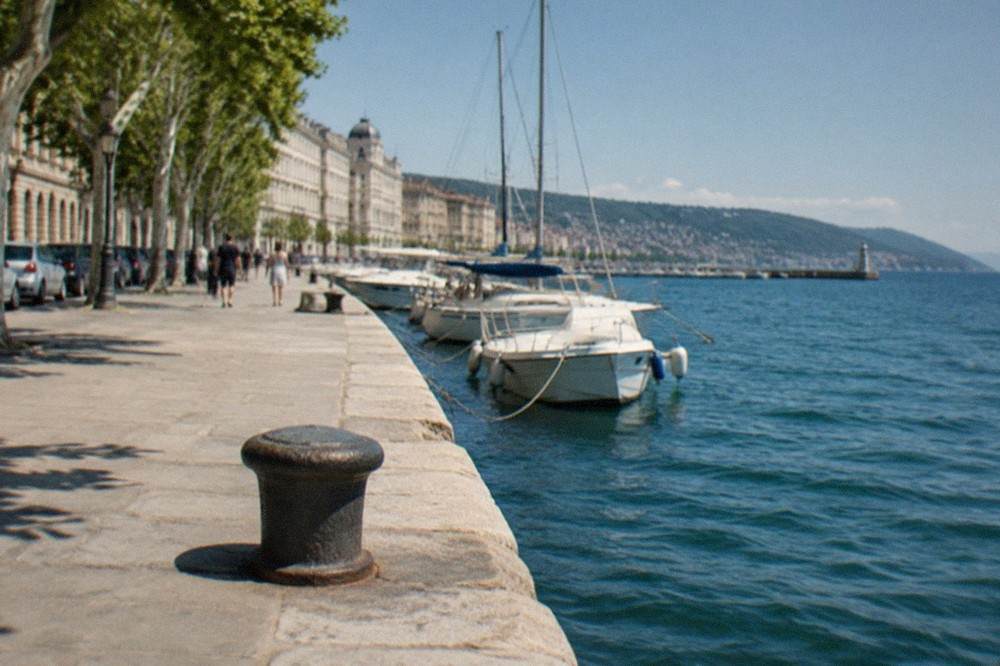
Barcola is the answer locals give when asked where the beach is. The seafront there is backed by pines, the rocks are flat and the sea is immediate. The Le Rive waterfront and the Molo Audace area carry the same relationship to the water: it is present, swimmable and free, but it is city shoreline, not a resort.
Pedocin, the Bagno Marino La Lanterna, is the other pole. It is one of the few remaining historic bathing establishments of its kind on this coast and it still functions as a working public bath. The full story of that place, and how it sits in the city's bathing culture, is in the guide to where locals swim in Trieste. If you are still weighing the city as a destination, the question of whether Trieste is worth visiting has its own honest answer elsewhere on this site.
For visitors who want the coastline without working out the logistics themselves, a guided coastal option changes the day. The e-bike tour below covers the old town, Miramare Castle and a gelato stop along the way, and the Slovenian coast tour crosses the border to a different shoreline for the afternoon.
Between them those three cover the coast from three angles: under your own power on an e-bike, across the gulf on a guided coast-and-tasting day, or on foot through the city that fronts it.
How Warm Is the Sea for Swimming in Trieste?
The Gulf of Trieste averages 25.9 C at the surface in both July and August, 23.9 C in June and 23.9 C again in September, according to the monthly figures compiled from the marine series for the gulf. That is comfortably swimmable for four months of the year, from roughly June into early October, with a lag effect: September water is as warm as June even though the air has cooled.
Those figures come from a different source than the land weather data, a marine reanalysis series rather than the harbour station, and the two should not be mixed. The table below gives the monthly picture.
| Month | Mean sea temperature | Mean air temperature | Rain |
|---|---|---|---|
| June | 23.1 C | 23.1 C | 62.5 mm |
| July | 25.9 C | 25.2 C | 53.8 mm |
| August | 25.9 C | 25.2 C | 71.7 mm |
| September | 23.9 C | 21.2 C | 102.3 mm |
Two things in that table are worth more than they look. The first is the rain column: July is the second driest month of the year at 53.8 mm, and the wettest month in Trieste is November at 109.8 mm. Summer is not the soggy season here; autumn is. The second is the sea warming. The regional agency's own oceanographic bulletins show a long-term warming trend in the gulf, on the order of a degree or more in annual means against earlier baselines, with the warmest recent years at the top of the range.
What Does the Bora Do to a Beach Day?
The bora, the cold north-easterly wind that funnels down off the Karst plateau, is the thing most likely to end a Trieste beach day, and there is no published wind threshold at which the seafront closes or swimming is called off. The harbour station averages 17.6 days a year with a gust over 90 km/h and 49 days over 72 km/h, with the record gust in the series at 168.1 km/h, measured in February 2012.
In practice: on a bora day the seafront is empty and the whitecaps stand off the shoreline, and on the calm days between, the water is glassy and the rocks are full. June is the calmest month on the station tables, which lines up neatly with the sea starting to warm. Summer boras exist but are rarer and weaker than the winter ones, which peak in February.
No official cutoff for closures has ever been published, and any number you may have read to that effect is not in the agency's station tables. The practical rule is simply to check the forecast on the day. The dedicated bora guide goes much deeper into the wind, the ropes and the whole culture around it, and it is the single most useful page on this site for deciding whether tomorrow is a beach day.
A guided coastal day is the easiest hedge against the wind question: the operator's live listing runs the tour with free cancellation and a pay-later option, so the booking does not have to be a bet on the forecast.
What About Sandy Beaches Near Trieste?
Sandy beaches do exist within day-trip range of Trieste, mostly across the border in Slovenia at Piran and Portorož and down the Istrian coast in Croatia, and both neighbours are in the euro area and the Schengen zone, so there is no currency change involved. Italy is running temporary border checks on its land border with Slovenia through 18 December 2026, so a passport or national ID card should be carried.
That last point is the one that catches people out. Croatia joined the Schengen area and adopted the euro on the same day, 1 January 2023, and Slovenia has been in both for years, so the old advice about changing money or expecting full passport control is out of date. But the temporary checks on the Italy-Slovenia land border are real and current, registered with the European Commission's own record through 18 December 2026. Write them into your plan, not onto a permanent assumption.
For the sand question specifically, the Piran and Portorož pages cover the Slovenian coast in detail, and there is a ferry route from Trieste to Croatia that answers the Istrian beach run. Whether a day trip is worth it depends on how much a beach day means sand to you. For most visitors who ask this question, one look at the rocks at Barcola on a calm evening settles it.
Which Guided Day Covers the Coast Best?
The six-hour e-bike tour linking the old town, San Giusto Castle and Miramare Castle with a gelato stop is the strongest single coastal option, at $174.26 per person and rated 5 from 2 reviews on the operator's live listing. It follows the shoreline much of the way and reaches the one stretch of coast, below Miramare, that most visitors never walk to.
The alternatives suit different travellers. The Slovenian coast tour, at $137.57 per person and rated 4.98 from 50 reviews, spends five and a half hours on the other side of the gulf with food and wine tasting built in, which pairs the beach question with the lunch question. The two-hour private walking tour, at $206.36 for a group of up to 10 and rated 4.9 from 98 reviews, stays in the city and orients you around the seafront landmarks instead.
| Tour | Price | Rating | Duration |
|---|---|---|---|
| E-bike, old town, Miramare Castle and gelato | $174.26 per person | 5 from 2 reviews | 6 hours |
| Slovenian coast with food and wine tasting | $137.57 per person | 4.98 from 50 reviews | 5.5 hours |
| 2-hour private walking tour | $206.36 per group up to 10 | 4.9 from 98 reviews | 2 hours |
Prices and ratings are as listed on the operator's live listings and can move with season and availability, so treat the table as a planning comparison and check the live page before booking. If you are still sketching the wider trip, the question of how many days you need in Trieste is the natural next one, since a beach afternoon slots into most itineraries without costing a whole day.
Common Questions About Beaches in Trieste
Does Trieste have nice beaches?
Yes, in the Trieste sense: free, clean, rocky seafront swimming at Barcola and the historic Bagno Marino La Lanterna at Pedocin, with sea temperatures averaging 25.9 C in July and August. There is no sandy resort beach in the city itself; sand seekers usually day-trip to Slovenia or Croatia.
Can you swim in Trieste?
Yes. The city swims from its own seafront, and the gulf is comfortably swimmable from roughly June into early October, with the September water averaging 23.9 C, as warm as June's.
Where is the closest sandy beach to Trieste?
Sandy beaches sit across the border on the Slovenian coast at Piran and Portorož, and further down the Istrian coast in Croatia. Slovenia and Croatia both use the euro and are both in Schengen, though Italy is running temporary checks on the Slovenia land border through 18 December 2026, so carry ID.
Is the sea in Trieste warm enough to swim in summer?
The Gulf of Trieste averages 25.9 C at the surface in July and August, from the marine series for the gulf. Regional bulletins also report a long-term warming trend in the gulf's annual means.
What is the best month for swimming in Trieste?
July and August have the warmest water, both averaging 25.9 C, while July is also the second driest month of the year at 53.8 mm of rain. June is the calmest month for wind, which matters more here than in most beach towns because the bora can empty the seafront in a day.
Does the bora affect swimming in Trieste?
Yes, the bora is the main variable. The harbour station averages 17.6 days a year with a gust over 90 km/h and 49 days over 72 km/h, and on those days the seafront is empty. There is no published official wind threshold for closures; check the forecast on the day.
The honest closing answer is that Trieste's beaches are nice in the way Trieste itself is nice: a little austere from a distance, unexpectedly generous once you are in the water. The rocks at Barcola on a calm July evening, with the sea at its summer average and the mountains of the gulf behind, are a better beach than a lot of the sand on the Adriatic, and the whole guide to swimming in Trieste explains why locals would not trade it.