Molo Audace in Trieste, Italy: The City's Most Loved Pier
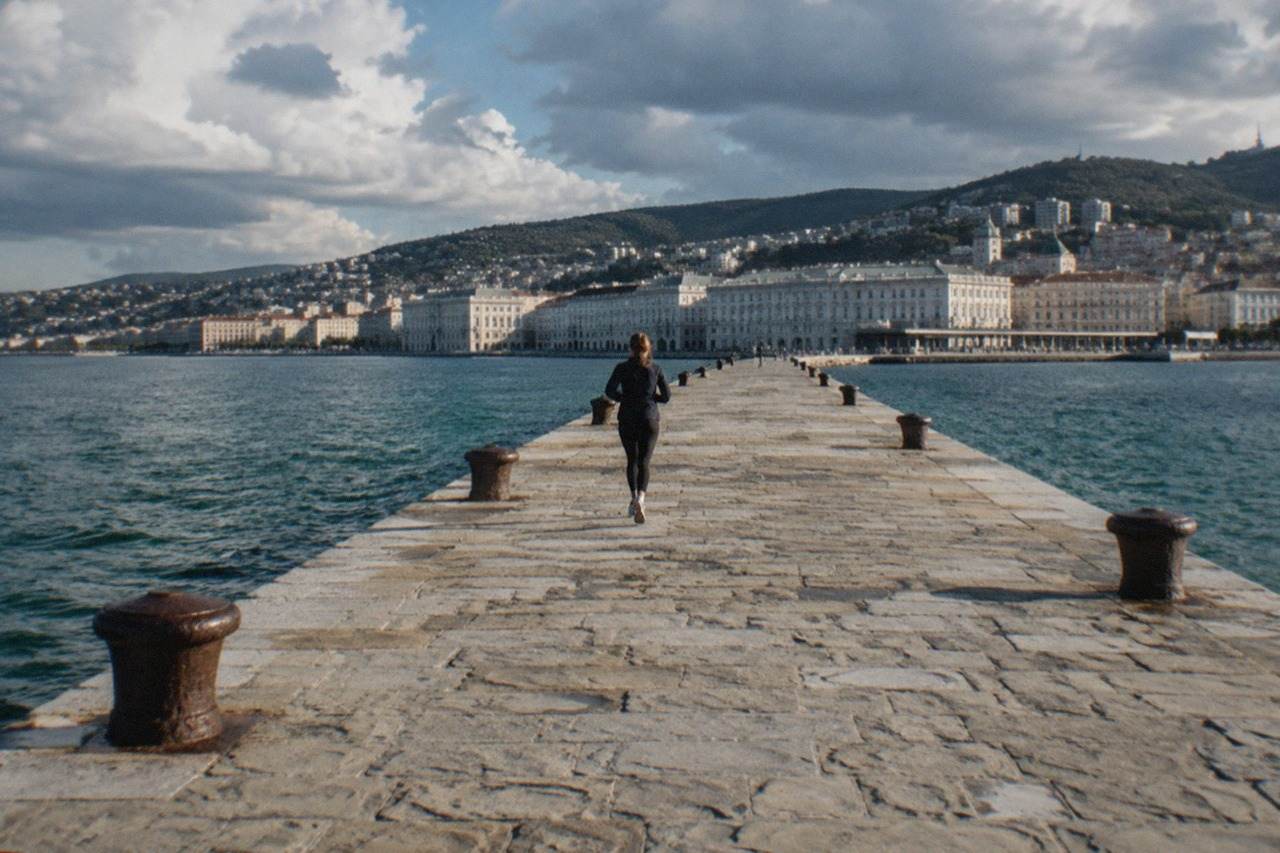
Molo Audace is the short stone pier that reaches straight out into the Gulf of Trieste from the foot of Piazza Unità d'Italia, and it is the single best free viewpoint in the city.
Short answer
Molo Audace is a free, always-open stone pier in the heart of Trieste, Italy, jutting into the Adriatic directly in front of Piazza Unità d'Italia. It is a public walkway, not a ticketed attraction, and it takes minutes to walk out and back, with the city's skyline, the sea and the distant Castello di Miramare all in one view.
Molo Audace is the stone pier that reaches out into the Gulf of Trieste from the heart of the city's waterfront, in Trieste, Italy, the Adriatic port in Friuli Venezia Giulia that travellers keep confusing with a bathyscaphe, a cafe chain and a basketball club. It starts at the water's edge below Piazza Unità d'Italia and runs straight out into the sea, so that standing at its far end you get the full sweep of the city behind you and open water on every side. There is no gate, no ticket and no closing time: the pier is a public walkway, part of the waterfront the Triestini call the Rive, and it costs nothing to walk out at any hour.
The pier's name comes from a ship. An Audace, an Austro-Hungarian destroyer, ended its days at this stretch of the waterfront, and the mole took the vessel's name, which is why a stone jetty in Italy carries a word that reads like an adjective: audace means "bold" in Italian. The name is the kind of detail a local guide sells and a plaque confirms, but the reason most people walk the pier has nothing to do with naval history. They walk it because it is the one place in the city centre where the land stops and you are standing on the sea, with the silhouette of Castello di Miramare up the coast and the hills of Slovenia across the water.
This page covers what the pier is, how to reach it, what the weather does to it, and what to pair it with on a day in Trieste. The facts on hours, prices and transport come from the operators' and venues' own published pages, and where a figure could not be verified it is left out rather than guessed.
What Exactly Is Molo Audace in Trieste, Italy?
Molo Audace is a free public stone pier in the centre of Trieste, Italy, projecting from the city's waterfront directly in front of Piazza Unità d'Italia. It is not a ticketed attraction and has no opening hours or entry fee, because it is simply part of the city's seafront promenade. Walking its full length and back takes only a few minutes, and it is the closest thing Trieste has to a pier you can stand on over open water.
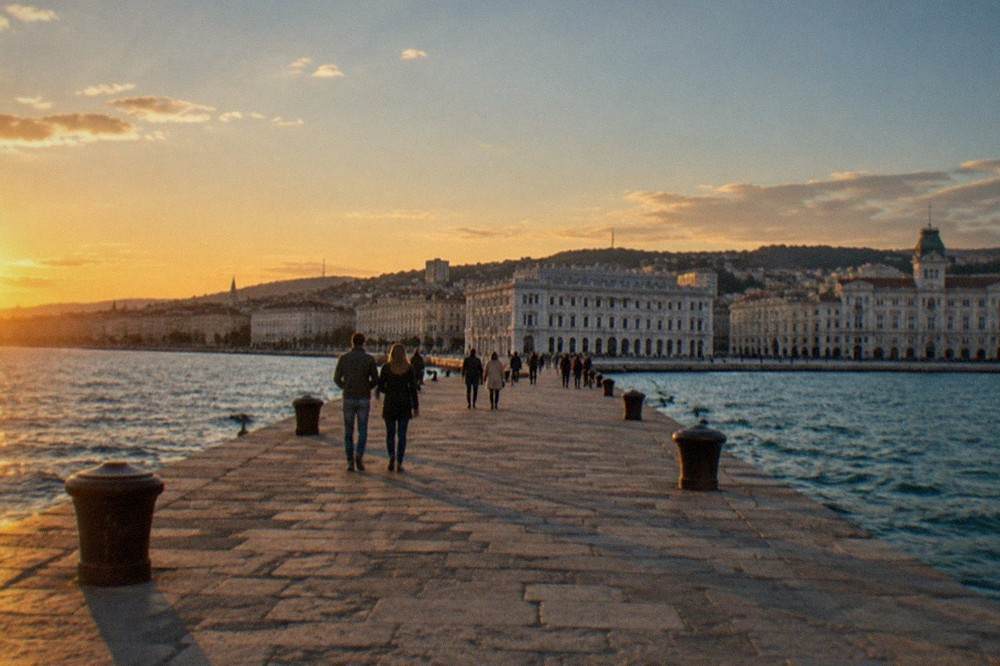
That last point matters more here than in most port cities. Trieste's waterfront, the Rive, is a long curve of paved embankment, and for most of its length you look at the sea from behind a low barrier. The mole is different: it is a walkable arm of stone that puts you out beyond the shoreline, so the water is on both sides of you and the view back at the city is uninterrupted. On a clear evening the sun sets behind the hills to the west and the whole grid of the Borgo Teresiano lights up around the Canal Grande of Trieste, which is why the pier fills up in the last hour of daylight.
The pier is also the city's most practical orientation landmark. Stand at its seaward end and turn a full circle: behind you, the vast open flank of Piazza Unità d'Italia; to your left, the Rive running northeast toward Barcola and, far off, the white shape of Miramare Castle; to your right, the old harbour structures of Porto Vecchio; ahead, the water of the gulf and, on the far shore, the coastline of Slovenia. If you learn one viewpoint in Trieste, learn this one.
| What you see from the pier | Direction | Where to read more |
|---|---|---|
| Piazza Unità d'Italia, Italy's largest seafront square | Directly behind you | Piazza Unità d'Italia guide |
| Castello di Miramare on its headland | Up the coast to the northwest | Miramare Castle guide |
| The Rive promenade and Barcola seafront | Northeast along the shore | Covered in the seafront pages of this site |
| The Canal Grande and Sant'Antonio church | West, inside the city grid | Covered in the city pages of this site |
| Victory Lighthouse, Faro della Vittoria | Northeast, on the Pizzale hill | Covered in the seafront pages of this site |
How Do You Get to Molo Audace from Piazza Unità d'Italia?
You walk to it: the pier begins at the northeast corner of Piazza Unità d'Italia, and the whole journey from the square to the pierhead is flat, paved and step-free. From Trieste Centrale station the route is a level walk through the Borgo Teresiano grid, and from the cruise terminal the pier sits within the same waterfront stretch. No bus, tram or ticket is needed, because the mole is part of the pedestrian seafront.
The pier's landward end is effectively part of the square itself. Piazza Unità d'Italia runs down to the water on its northern side, the Molo Audace starts there, and the small circular landing beside it, where the historic ship is moored, shares the same paved surface. If you can find the square, you have found the pier: walk toward the sea and keep going.
Coming from farther out, the practical reference points are these. Trieste Centrale, the main railway station, sits inland at the top of the Borgo Teresiano, the tidy Habsburg-era grid of streets that leads down to the water; the walk from the station to the square is flat the whole way. Cruise passengers have it easier still: Trieste's cruise berths are on the same waterfront stretch, and the pier is within the walkable part of the port area, a point covered in detail on the cruise pages of this site.
| Starting point | How to reach the pier | Ticket needed |
|---|---|---|
| Piazza Unità d'Italia | Walk straight to the water's edge at the square's north side | None, the pier is free |
| Trieste Centrale station | Level walk down through the Borgo Teresiano streets | None |
| Cruise terminal | Same waterfront stretch, on foot from the berth | None |
| Barcola seafront | Urban bus along the seafront, or the walk itself, per the getting-around guide | Standard urban ticket |
| Muggia or the southern bay | Urban bus toward the centre, then on foot | Standard urban ticket |
The urban fares are worth knowing even for a pier visit, because most people pair the mole with something farther out. Trieste Trasporti's 2026 tariff sheet lists the urban single at €1.50 for 60 minutes and €1.85 for 75 minutes, a day ticket at €3.35, and a 10-ride carnet at €13.50. Singles extend to 240 minutes on Sundays and public holidays, and you can tap a contactless bank card on board instead of buying a paper ticket. Those are the operator's own published 2026 figures.
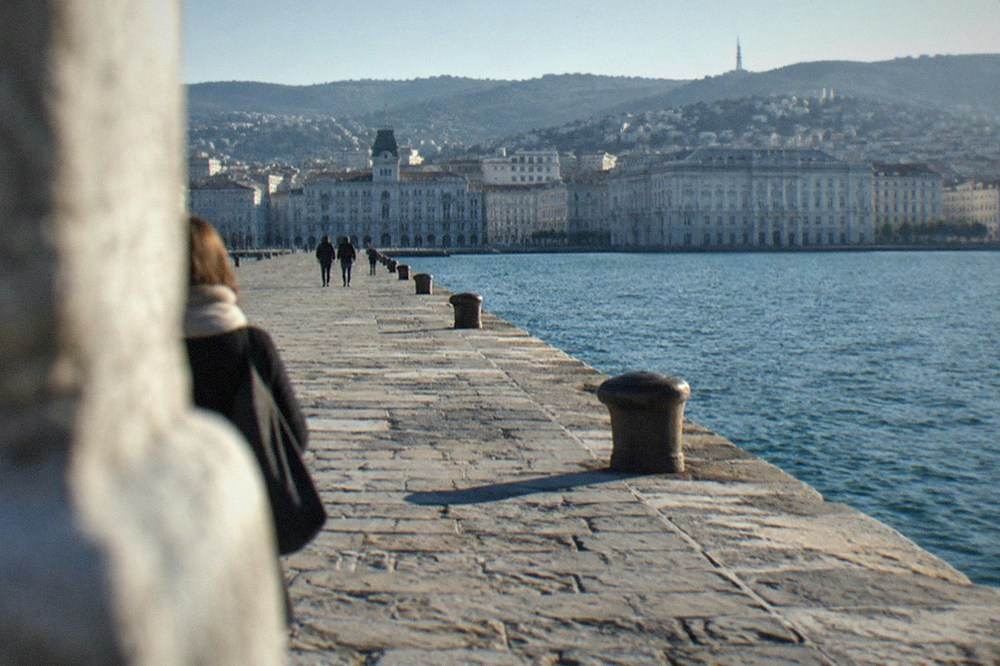
Once you are at the water, the pier itself needs no planning. There is no best time in the sense of an entry window, only in the sense of light: late afternoon and sunset fill the pier with people, early morning leaves it almost empty, and in winter the low sun sits over the hills and turns the whole gulf copper. For a city that sees an annual average of just 867 mm of rain, and whose driest and second-driest months are July at 53.8 mm and the shoulder season around it, the odds of a dry walk out are better than most visitors expect.
When Is the Best Time of Day to Walk the Pier?
Late afternoon into sunset is when Molo Audace is at its best and busiest, because the pier faces west along the city front and the evening light comes straight down the gulf. Early morning is the quiet alternative, with the same light working in reverse over the water. There is no closing time to plan around, so the choice is purely about crowds and weather rather than access.
The sunsets here have a simple geographic cause. Trieste's waterfront faces roughly southwest at the pier, the hills of the Carso close the western side of the gulf, and the sun goes down behind them in a line that changes with the seasons. In summer the light lasts until late in the evening; in December the city gets only 8.72 hours of daylight at all, against 15.68 hours in June, per the regional station tables. Photographers who want the skyline lit rather than silhouetted should arrive before the last hour.
The other variable is wind, and on this waterfront it is not a footnote. The bora, the cold katabatic wind that funnels down from the east-north-east, is the defining weather fact of Trieste's seafront, and the pier is one of the most exposed places in the city when it blows. The regional agency's own station tables at the molo Fratelli Bandiera, the waterfront measuring point a short way along the Rive, average 17.6 days a year with a gust over 90 km/h and 49 days with a gust over 72 km/h, and the monthly record gust exceeds 110 km/h in every single month of the year. The all-time peak in the series is 168.1 km/h, recorded in February 2012.
No official threshold exists at which the pier or the Rive close, and none should be invented: the authorities judge conditions in real time. What the tables do say is which months to watch. February averages the most days with gusts over 90 km/h at 2.9, and June the fewest at 0.3. The practical reading is simple: in the cool season check the forecast before planning a pier sunset, and in a strong bora expect the seafront to be dramatic rather than comfortable.
| Month | Mean high C | Rain mm | Days with gust over 90 km/h | Daylight hours |
|---|---|---|---|---|
| January | 9.2 | 52.8 | 2.4 | 9.06 |
| February | 9.8 | 59.7 | 2.9 | 10.35 |
| April | 16.8 | 60.7 | 0.7 | 13.48 |
| July | 28.2 | 53.8 | 0.9 | 15.38 |
| September | 23.9 | 102.3 | 1.1 | 12.62 |
| November | 14.7 | 109.8 | 1.9 | 9.54 |
Can You See Miramare Castle from Molo Audace?
Yes, on a clear day you can see Castello di Miramare from the pier, sitting on its headland up the coast to the northwest, roughly a seafront stroll away beyond Barcola. The castle appears as a pale, compact silhouette on the water's edge, and it is the single most useful distant landmark for orienting yourself along Trieste's coast. The castle itself is a separate, ticketed visit, and the park around it is free all year.
The view works in both directions, which is the reason to know it. From the pier, the castle marks where the coastline turns; from the castle's terraces, the city front and its waterfront read as one long line with the pier invisible at this distance but the square behind it identifiable. The castle's own published visit page lists adult entry at €17 including the temporary exhibition, reduced rates for EU citizens aged 18 to 25, and hours of 9:00 to 19:00 every day with last admission at 18:30, while the park is free and keeps its own seasonal hours, longer in summer, shorter around the year's end. Those are the venue's own current figures.
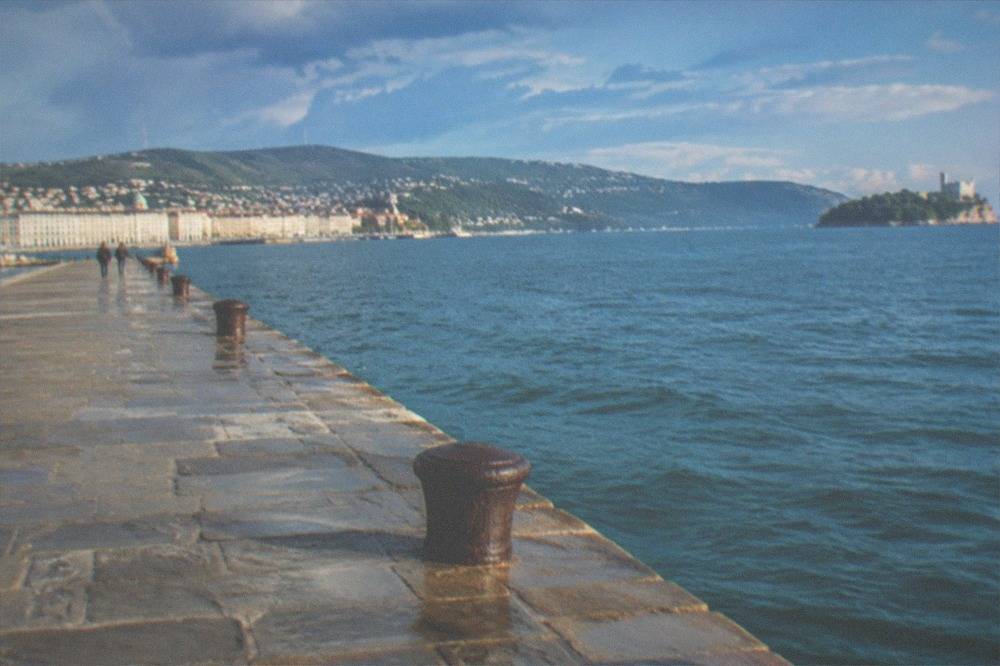
The castle is also this page's related tour, and for good reason: it pairs naturally with a pier visit as the day's second act. A private tour of the castle and park, led by a local guide, covers the apartments of Archduke Maximilian and his wife Charlotte and the grounds around them, and the listing prices it per group with a duration of about two hours. Check availability on the operator's live listing if that structure appeals, or read the full Miramare Castle guide first for the ticket options and the free-park detail.
For visitors who would rather turn inland than up the coast, the pier sits inside a five-minute radius of most of the old city. The Roman Theatre of Trieste, the Cathedral of San Giusto on its hill, and the Città Vecchia's steep lanes all sit behind the square, and a hidden-gems walking tour with a private local guide is the efficient way to reach the corners the waterfront does not advertise. The tour runs about two and a half hours, is priced per person, and is rated highly by a substantial volume of past guests per the listing.
| Sight within easy reach of the pier | Entry cost | Closed |
|---|---|---|
| Cathedral of San Giusto | Free entry | None stated for the cathedral itself |
| Castello di San Giusto and hill | €7 full, €5 reduced | Mondays from 12 October |
| Museo Revoltella | €8 full, €6 reduced | Tuesdays |
| Risiera di San Sabba | Free | 25 December and 1 January |
| Miramare Castle | €17 adult including exhibition | No weekly closing day stated |
| Grotta Gigante | €15 adult, €12 reduced | Mondays, September to February |
What Does the Sea Around Molo Audace Actually Feel Like?
The water beside the pier is the open Gulf of Trieste, warming fast through summer: the marine series shows mean sea temperatures of 23.1 C in June, 25.9 C in July and August, and 23.9 C in September, against 10.5 C in February. The gulf retains heat into early autumn, so September is often warmer to swim in than June. People do swim in Trieste, but not from the pier itself: the swimming happens at Barcola and the dedicated bathing spots along the coast.
The asymmetry is the interesting part, and it is the kind of detail that does not surface on a first page of search results. Because the sea stores heat through the summer, the water temperature lags the air: June's mean sea temperature of 23.1 C sits below September's 23.9 C even though June daylight is two and a half hours longer. The practical consequence for a pier visit is that the coast stays lively well into autumn, and the seafront promenade between the mole and Barcola stays full of swimmers and sunbathers into September. More of these guides are collected on Trieste Travel Guide.
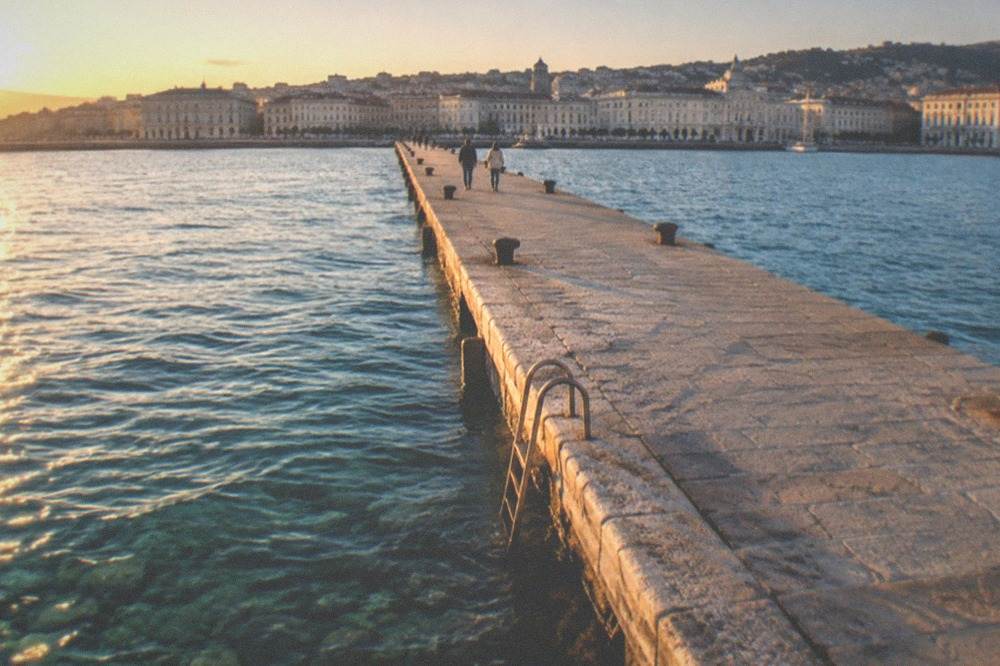
For actual swimming, the city's two answers are the long free seafront at Barcola, where the locals sprawl on the flat rocks, and the historic Bagno Marino La Lanterna at Pedocin, the century-old bathing establishment with its separate men's and women's sections on the stone. Both are up the coast from the pier, and both are covered in their own pages on this site. The pier, by contrast, is a place for looking, not bathing: its edges drop straight into working water at the heart of the harbour front.
| Month | Mean sea temperature C | Swimmable feel | Where locals go |
|---|---|---|---|
| May | 17.9 | Brisk | Barcola seafront on warm days |
| June | 23.1 | Comfortable | Barcola and La Lanterna at Pedocin |
| July | 25.9 | Warm | Both, busy |
| August | 25.9 | Warm, peak season | Both, busiest |
| September | 23.9 | Comfortable, often warmer than June | Barcola, thinning crowds |
| October | 20.3 | Fresh | Hardier swimmers only |
What Should You Pair with the Pier on a First Day in Trieste?
A first-day circuit that works is: Piazza Unità d'Italia, then the pier, then the Città Vecchia up to the Cathedral of San Giusto and Castello di San Giusto on the hill, then back down to a historic caffè. Every step of that loop is free except the castle, and the whole thing fits inside a day at walking pace. The pier is the hinge: it orients you at the water before you climb into the old town's lanes.
The logic is geographic. The square and the pier sit at the bottom of the old city; the cathedral and castle sit at its top; and the lanes of the Città Vecchia connect them in a steep, atmospheric tangle that is easy to descend and harder to climb. Doing the water first and the hill second means you earn the view rather than starting with it. The one day in Trieste itinerary on this site runs the same shape with timings, and the self-guided walking tour does it without a guide.
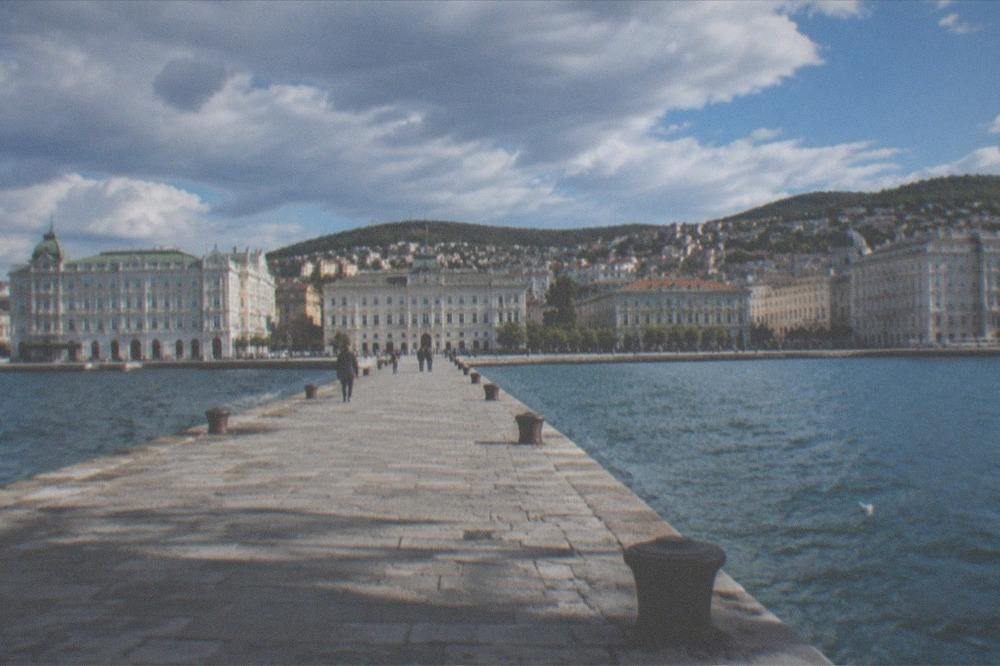
For travellers with more than a day, the pier also works as the departure mental model for the region's two big draws. The karst caves sit inland behind the city, and the Postojna Cave and Predjama Castle day tour from Trieste covers the best-known cave in the world and Europe's only preserved cave castle in a single six-hour trip priced from $137.57 per person, per the listing. It is a different register from a sunset stroll on the pier, but the two bookend a Trieste visit well: sea in the evening, stone underground the next day.
| Time budget | What to add beyond the pier | Cost |
|---|---|---|
| Half a day | Square, pier, Città Vecchia lanes, Arco di Riccardo | Free |
| One day | Add the cathedral, San Giusto castle and a caffè stop | €7 castle entry |
| Two days | Add Miramare Castle and the Rive walk to Barcola | €17 castle entry |
| Three days | Add a karst cave day trip or the Rilke Trail and Duino | From $137.57 for the cave tour |
Is Molo Audace Worth Visiting with Kids or at Night?
Yes to both: the pier is flat, step-free and short, which makes it one of the few Trieste sights that works for pushchairs, wheelchairs and tired children without any planning, and at night it becomes the city's open-air promenade, lit by the square behind it and popular until late. It is also free, which no other headline Trieste experience is.
The accessibility point deserves more emphasis than it usually gets. Trieste is a city of hills: the old town climbs, San Giusto climbs, Opicina climbs. The waterfront is the one long stretch that does not, and the pier is the flattest, shortest, most contained piece of it, so a family with small children or a visitor with limited mobility gets a genuine sea-over-the-side experience with zero effort. The accessible Trieste guide on this site covers the wider waterfront in the same spirit.
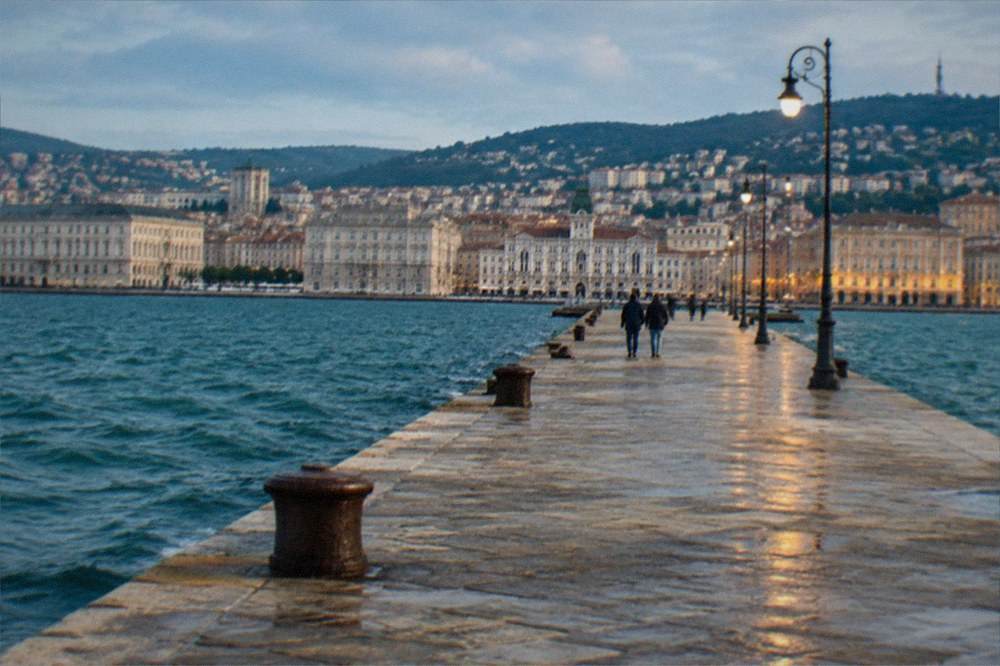
At night the pier changes character rather than closing. The square's floodlights do most of the work, the historic caffè district a few streets in keeps late hours, and the pier itself becomes the place where the city goes to look at its own reflection. The one honest caveat is the bora again: a winter evening on the mole in a strong wind is memorable for the wrong reasons, and the station tables' February average of 2.9 days with gusts over 90 km/h is the number to keep in mind between November and March.
What Do People Get Wrong About Molo Audace and the Trieste Waterfront?
The three common mistakes are: expecting a British-style pleasure pier with attractions on it, when Molo Audace is a bare stone walkway; assuming the seafront is calm because the city faces a gulf, when the bora makes it one of Italy's windiest city shores; and confusing Trieste's November and September rainfall with a rainy summer, when July is in fact one of the driest months in the station tables at 53.8 mm.
The first mistake is the most forgivable. The word "molo" means a mole or jetty, a working piece of harbour engineering, and that is what this is: stone, level, unrailed in the sense of having no amusements, and all the better for it. Visitors looking for the full Victorian-pier experience should recalibrate before arriving; visitors looking for the best free view in the city have found it.
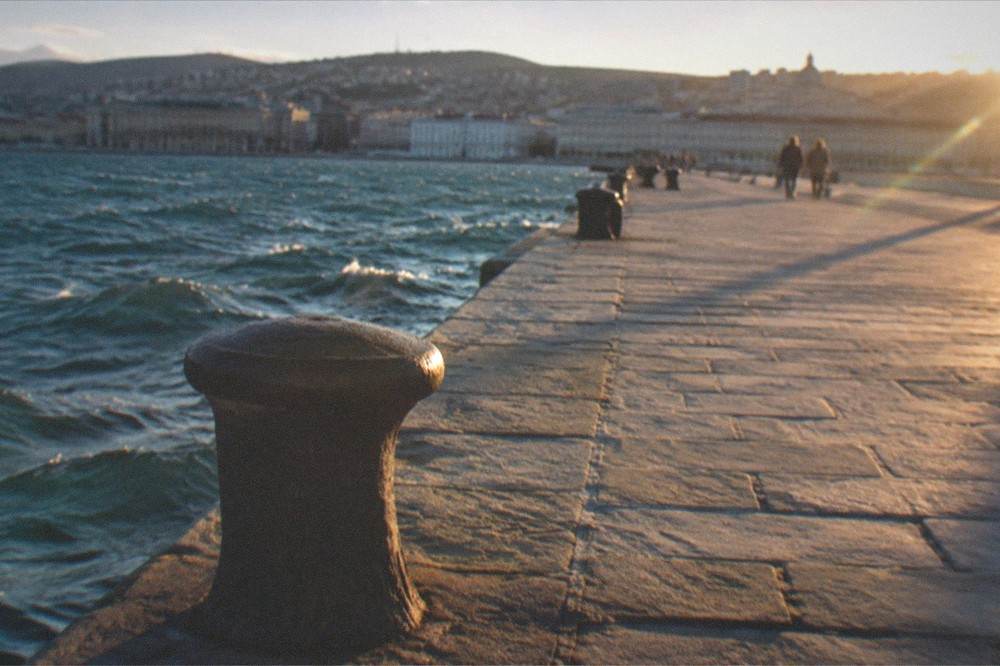
The second is the one that matters for planning. The regional agency's tables put the all-time peak gust at 168.1 km/h and the annual average of gusts over 90 km/h at 17.6 days, and the monthly record exceeds 110 km/h in every month, including July and August. No published cutoff governs when the seafront becomes unpleasant; the judgement is yours, aided by the forecast. The third mistake, the rain one, is covered above and in the site's weather month-by-month guide: Trieste's wet period is autumn, not summer, and a July or August visit is statistically one of the driest bets on the Italian coast.
Common Questions About Molo Audace in Trieste
Is Molo Audace free to visit?
Yes. The pier is a public walkway with no gate, ticket or entry fee, and it has no closing time. It forms part of the same free waterfront as Piazza Unità d'Italia and the Rive.
How long does it take to walk Molo Audace?
Only a few minutes each way. The pier is short, flat and paved, so the out-and-back walk is quick, though most people linger at the seaward end for the view back at the city.
Where is Molo Audace located in Trieste, Italy?
It projects into the Gulf of Trieste from the foot of Piazza Unità d'Italia, the large seafront square in the city centre of Trieste, in the Friuli Venezia Giulia region of northeast Italy.
Can you see the sunset from Molo Audace?
Yes, and it is the city's most popular sunset spot. The pier faces west along the city front, the sun drops behind the western hills of the gulf, and the last hour of daylight draws crowds in every season.
Is Molo Audace open at night?
Yes. There is no closing time, the square behind it is floodlit, and the pier is a popular evening promenade. In a strong winter bora, however, the exposed seaward end is uncomfortable, so check the forecast in the cooler months.
Can you swim from Molo Audace?
No. The pier is a walkway over working harbour water at the heart of the seafront, not a bathing spot. Swimming in Trieste happens up the coast at Barcola's flat rocks and at the Bagno Marino La Lanterna at Pedocin.
The pier will not fill a day, and it is not meant to. Its job is to give you the city in one glance, free of charge, at any hour you choose, and it does that job better than anything else in Trieste, Italy: walk out, turn around, and the whole Habsburg port is laid out behind you over the water.