Why Is Trieste Famous?
Why Trieste, Italy is famous: the Habsburg port, the coffee capital, Piazza Unità d'Italia, the bora wind, the Barcolana regatta and its border position between Italy and Slovenia.
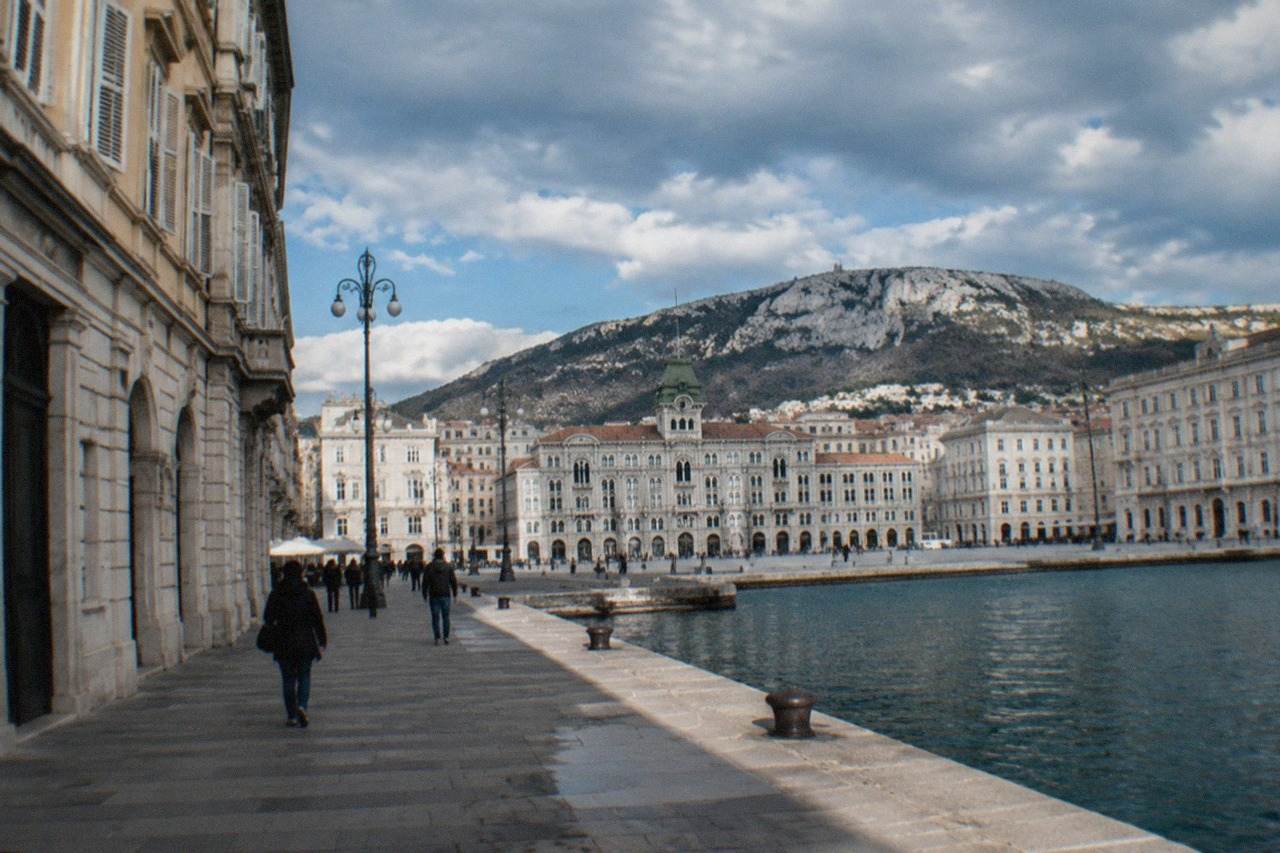
Trieste, Italy sits at the top of the Adriatic where the Italian state meets Slovenia, and its fame rests on a combination no other Italian city shares: it was the Habsburg empire's great sea port, it built a coffee culture around that trade, it stages the largest sailing race in the world, and it stands on one of the windiest city waterfronts in Europe. The result is an Italian city that looks Central European, drinks its coffee standing at marble counters, and holds a world record on the water each October.
Why Is Trieste Famous?
Trieste is famous for being the Habsburg empire's principal Adriatic port, a status that made it one of the busiest cities in the Mediterranean and filled it with Central European architecture, insurance houses and cafés. That past left Piazza Unità d'Italia, a seafront square of imperial palaces, a coffee tradition tied to the port's roasting trade, and a borderland identity between Italy and Slovenia that still shapes the city today.
The empire went to sea through Trieste. When Austria needed a navy and a merchant fleet, this was the harbour it built, and the wealth of that trade is still visible in the Borgo Teresiano district, where the Grand Canal runs straight past neoclassical facades. The city's most-photographed space, Piazza Unità d'Italia, opens directly onto the water, which is unusual even among Italian seaside cities and is the single image most people carry away from a visit.
Fame here is layered rather than concentrated. There is no single monument that explains Trieste, the way a leaning tower explains Pisa. Instead the city is known for a set of things that all trace back to the port: the coffee trade, the literary expatriate community it supported, the wind that funnels down the Karst plateau behind the city, and a regatta that fills the gulf with boats every autumn. Our longer piece on why Trieste is famous in depth unpacks the history, and the most famous things in Trieste cover the same ground in list form.
| Famous landmark | What it is | Entry cost |
|---|---|---|
| Piazza Unità d'Italia | Seafront square of Habsburg-era palaces | Free |
| Castello di Miramare | Archduke Maximilian's white castle above the gulf | Castle €17, park free |
| Castello di San Giusto | Hilltop castle and cathedral complex | €7 |
| Museo Revoltella | Modern art museum in a 19th-century palazzo | €8 |
| Grotta Gigante | Huge show cave on the Karst, guided visits only | €15 |
| Cattedrale di San Giusto | Cathedral on the hill | Free |
The prices in that table come from the venues' own published tariff sheets, and one detail is worth pausing on: at Miramare the castle and the park are priced differently, with the park free all year and the castle ticketed at €17 including the temporary exhibition. Many visitors assume one ticket covers both. It does not.
Why Is Trieste Famous for Coffee?
Trieste is famous for coffee because its port handled the green-bean trade for Central Europe and grew a roasting industry around it, which is why the city is home to Illy's headquarters and a dense population of historic cafés. The coffee is drunk in local forms with their own names, and the café is treated as an institution rather than a takeaway stop, a habit the port's trading wealth paid for.
The honest version of this story stops there. The often-repeated claim that Triestini drink more coffee per head than anyone else in Italy, usually quoted as a kilogram figure or a multiple of the national average, has no primary source behind it: neither the chamber of commerce, the port authority nor the roasters themselves publish such a number. What is verifiable is the trade itself. Coffee arrived through this port for the empire's cafés, roasting became a local industry, and Illy, one of Italy's best-known roasters, is headquartered in the city.
The café culture is the visible half of that history. Historic establishments in the centre operate as gilded rooms where the waiter brings you a tray and the bill together, and the local ordering vocabulary, which distinguishes several ways of taking coffee with milk, is its own small dialect. We cover the famous food of Trieste separately, because the eating side of the city, jota soup and buffet counters, is a parallel fame.
A guided walk is the most efficient way to see how the coffee city and the imperial city are the same city. The Habsburg history walking tour runs about two and a half hours with a private guide and covers the squares and palaces the port paid for, and it can be checked on the operator's live listing: Check availability. The coffee side has its own entry in our piece on why Trieste is famous for coffee.
Why Is Trieste Famous for the Bora Wind?
Trieste is famous for the bora, a cold north-easterly wind that accelerates down the Karst plateau and hits the city waterfront with gusts that have been measured at 168.1 km/h. The regional weather agency's station tables record 17.6 days a year with a gust over 90 km/h and 49 days over 72 km/h, which is enough to shape architecture, mooring practice and the city's whole reputation for hard weather.
That 168.1 km/h figure, from February 2012, is the verified peak gust in the series kept at the molo Fratelli Bandiera station, and it is the number to trust. Older and higher figures circulate, including a 1954 value and a 2010 value, but neither appears in the agency's own station table, so this site does not repeat them. There is also no published wind speed at which the waterfront closes or ferries stop, despite confident claims to the contrary on many travel pages; authorities judge conditions case by case.
The bora is a winter-and-spring phenomenon more than a summer one. The calmest month in the station tables is June, and the windiest readings cluster in the cool season, with February carrying the highest monthly record gust in the series. What the bora does to daily life is practical rather than dramatic most of the time: boats are moored with extra lines, and on the strongest days the sea in front of Piazza Unità d'Italia is whipped into spray.
| Bora and climate figure, Trieste molo Fratelli Bandiera | Value |
|---|---|
| Peak gust in the station series, February 2012 | 168.1 km/h |
| Average days a year with a gust over 90 km/h | 17.6 |
| Average days a year with a gust over 72 km/h | 49.0 |
| Wettest month, November | 109.8 mm |
| July rainfall, one of the driest months | 53.8 mm |
| Calmest month for wind | June |
One correction the table carries quietly: Trieste is not a rainy city in summer. November is the wettest month at 109.8 mm, and July is one of the driest at 53.8 mm, which is the opposite of the Mediterranean stereotype many visitors bring with them. The unusual things to see in Trieste include the practical traces of the wind, from the stone defences on older buildings to the ropes once rigged along exposed streets.
What Is Trieste in Italy Famous for on the Water?
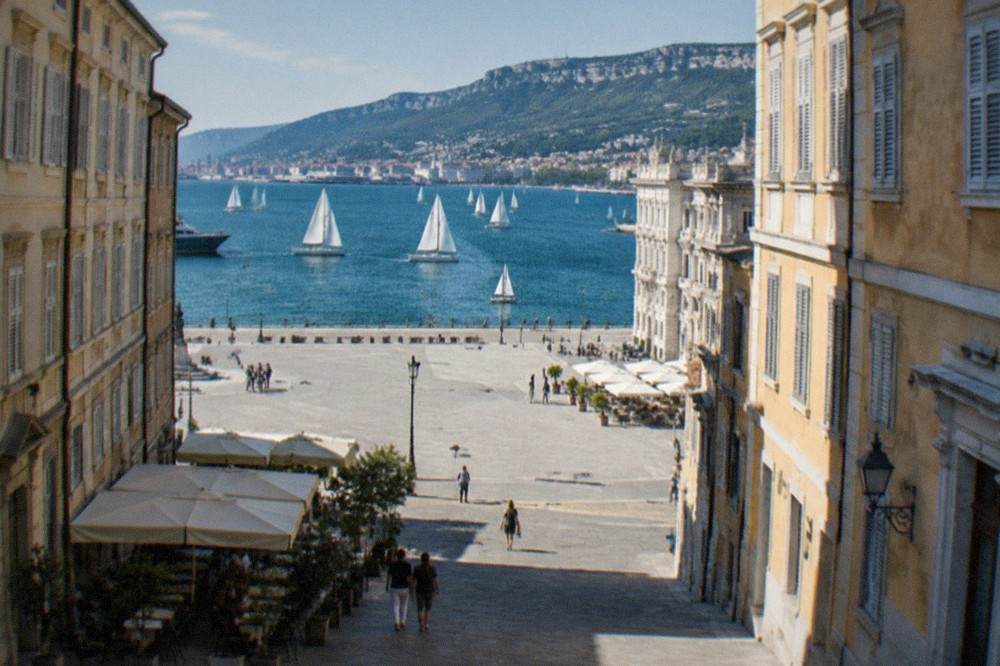
Trieste is famous on the water for the Barcolana, a sailing regatta that the organisers describe as the largest in the world, with a record 2,689 boats on the start line in 2018. The 2026 edition runs from 2 to 11 October with the main race on Sunday 11 October at 10:30, over a 13-nautical-mile course in the Gulf of Trieste finishing off Piazza Unità d'Italia.
The race began modestly: the first edition was in 1969 with 51 boats. The 2018 fleet of 2,689 earned a Guinness World Record as the largest sailing race, and the 2025 edition drew 1,865 boats, the highest since 2019. What makes the event famous beyond the numbers is its format: professional crews and family dinghies start in the same race, and the whole city turns to face the sea for a week.
| Barcolana fact | Figure |
|---|---|
| 2026 dates | 2-11 October |
| Main regatta, Barcolana 58 | Sunday 11 October 2026, 10:30 start |
| Course length | 13 nautical miles |
| Record fleet, 2018 | 2,689 boats |
| First edition, 1969 | 51 boats |
| 2025 fleet | 1,865 boats |
Why Is Trieste Famous for Its Border Position?
Trieste is famous for sitting on Italy's north-eastern border, a few kilometres from Slovenia and within reach of Croatia, in a region where Italian, Slovene and German influences have mixed for centuries. All three countries now use the euro and sit in Schengen, though Italy is running temporary checks on its land border with Slovenia from 19 June to 18 December 2026, so a passport or ID card is needed for cross-border day trips.
The border is not just geography, it is the reason the city looks the way it does. Trieste was Austrian, then Austrian-Hungarian, then disputed, and only definitively Italian after the Second World War, which is why the architecture reads Vienna-by-the-sea rather than Rome or Florence. The question of whether the city is more Italian or Slovenian has a documented answer in its bilingual street signs and its Slovene-speaking community.
The practical border facts are worth getting right, because many guides get them wrong. Croatia joined Schengen and adopted the euro on the same day, 1 January 2023, so no currency change is needed anywhere on a Trieste day trip. The Opicina tram, a famous local curiosity that climbs from the city to the Karst village, is running again: it was reactivated on 1 February 2025 and its city terminus is piazza Dalmazia, on a route of about 5.175 km. Deciding how many days in Trieste is enough usually comes down to how much of that borderland you want to cross.
Common Questions About Why Trieste Is Famous
Why is Trieste famous?
Trieste is famous as the Habsburg empire's Adriatic port, a coffee capital built on the green-bean trade, the home of the Barcolana sailing race and a windy, borderland city between Italy and Slovenia, with Piazza Unità d'Italia as its emblem.
Is Trieste famous for coffee?
Yes. The port's coffee trade created a roasting industry and a dense café culture, and Illy is headquartered in the city. The per-head consumption figures often quoted have no verifiable primary source, but the trade and the cafés are real and documented.
What is Trieste's most famous landmark?
Piazza Unità d'Italia, the seafront square of Habsburg-era palaces that opens directly onto the Adriatic. Castello di Miramare, the archduke's white castle up the coast, is the most famous landmark in the surrounding area.
Is the bora unique to Trieste?
The bora blows along the whole eastern Adriatic, but Trieste is one of the places where it is most measured and most famous. The regional weather agency's station at the molo Fratelli Bandiera records 17.6 days a year with gusts over 90 km/h, with a verified peak of 168.1 km/h in February 2012.
Is Trieste in Italy or Slovenia?
Trieste is in Italy, in the region of Friuli Venezia Giulia, close to the Slovenian border. It was the Habsburg empire's port for centuries and only became definitively Italian after the Second World War, which is why so much of its fame is Central European in flavour.
Trieste's fame, in the end, is a port's fame: the empire that built it, the coffee it roasted, the wind that meets it and the record fleet that sails past it every October. On Trieste Travel Guide each of those threads has its own page, and the borderland beyond the city does too.