Does It Rain a Lot in Trieste?
Rain in Trieste, Italy, month by month: ARPA station figures show 867 mm a year, with November the wettest month and July one of the driest. What the numbers mean for a visit.
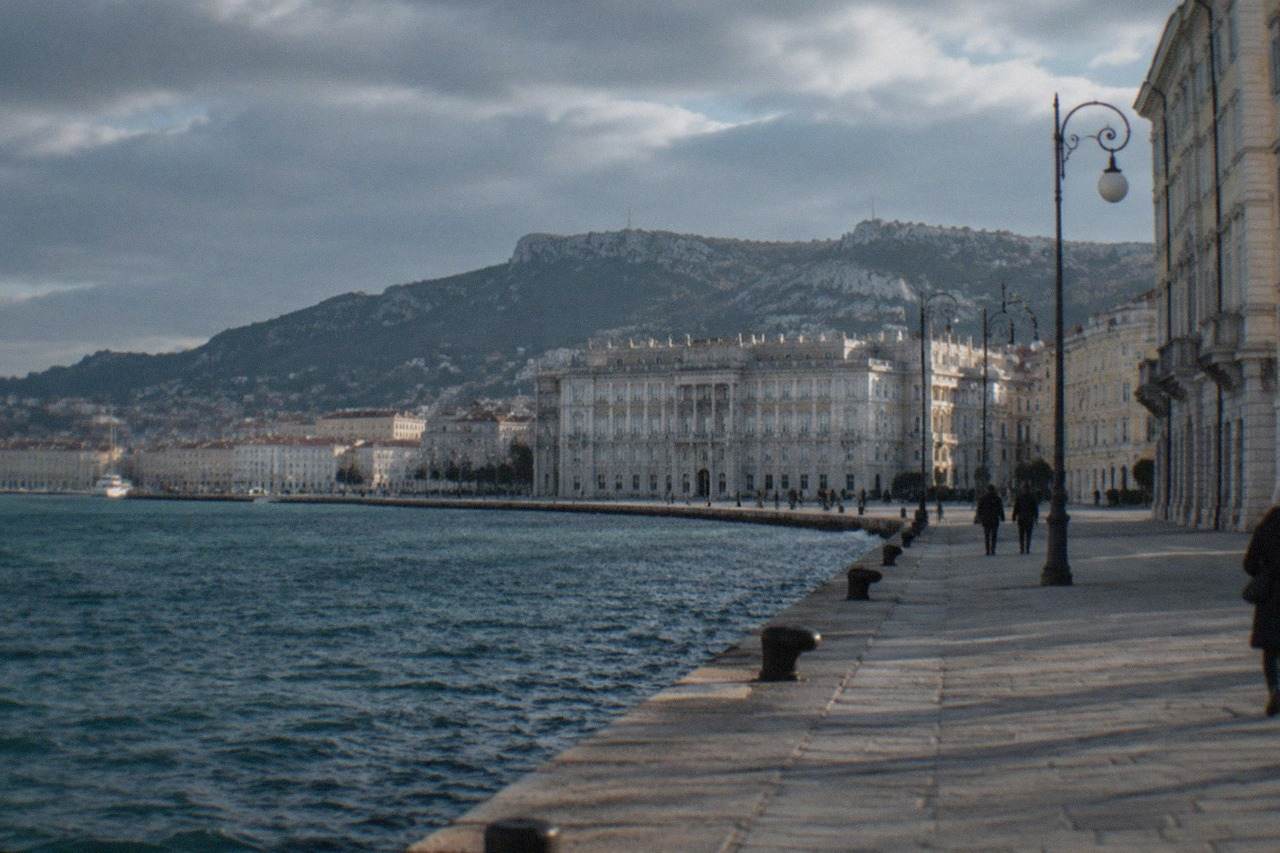
No, it does not rain a lot in Trieste, at least not in the way the question usually imagines. Trieste, the Adriatic port city in Friuli Venezia Giulia in the northeast of Italy, averages 867.1 mm of rain a year across 86.1 wet days, according to ARPA FVG's own station tables for the waterfront gauge at molo Fratelli Bandiera, and the pattern is sharply seasonal: November is the wettest month at 109.8 mm, while July is one of the driest at 53.8 mm. The rain this city gets is an autumn problem, concentrated in September, October and November, not a year-round damp the way many visitors to northern Italy expect. The wind, the bora, is the weather this city is actually famous for.
Does It Rain a Lot in Trieste?
No. Trieste, in Italy, records an annual average of 867.1 mm of rain spread over 86.1 wet days, which is moderate for an Italian city, and the rain is heavily concentrated in autumn. November is the wettest month at 109.8 mm and September is second at 102.3 mm, while July, at 53.8 mm, is the second driest month of the year behind January and March. Summer visitors are far more likely to meet heat and wind than rain.
The number that surprises people is the July one. The popular image of a damp, grey Adriatic north does not survive contact with the station table: July gets less rain than January, March, June, and every other month except the dead level of winter. ARPA FVG, the regional environmental agency, maintains a continuous series at Trieste molo Fratelli Bandiera running from 1995 to 2024, and it is that series, not a weather app's model output, that gives the figures on this page.
Worth knowing too: a competing dataset circulates online that puts Trieste at nearly 1,500 mm of annual rain. That figure comes from a coarse climate reanalysis grid whose 9 km cell for Trieste is contaminated by the Carso plateau rising immediately behind the city, and it overstates the city's rainfall by roughly three quarters. The 867.1 mm figure is the one measured at the waterfront.
Here is the full monthly picture from the station tables:
| Month | Average rain (mm) | Wet days | Notes |
|---|---|---|---|
| January | 52.8 | 6.6 | Among the driest months |
| February | 59.7 | 6.6 | Peak bora season |
| March | 52.8 | 6.1 | As dry as January |
| April | 60.7 | 8.0 | Spring showers begin |
| May | 75.0 | 8.5 | Wettest of the dry half |
| June | 62.5 | 6.1 | Calmest wind month |
| July | 53.8 | 5.4 | Second driest month |
| August | 71.7 | 6.6 | Occasional thunderstorms |
| September | 102.3 | 7.4 | Second wettest month |
| October | 88.6 | 7.6 | Barcolana month, windy shoulder |
| November | 109.8 | 9.5 | The wettest month |
| December | 77.4 | 7.7 | Windy, rarely soaked |
When Is the Rainy Season in Trieste?
The rainy season in Trieste, Italy, runs from September through November, and it peaks in November, which averages 109.8 mm of rain across 9.5 wet days. September is second at 102.3 mm and October third at 88.6 mm. Outside that autumn window, rainfall drops back to between roughly 53 and 75 mm a month, and no summer month comes close to the autumn figures.
Autumn is when the Atlantic systems start dragging across the northern Adriatic again after the quiet summer, and the Gulf of Trieste sits right in their path. The upside is that autumn rain here arrives in episodes rather than a permanent drizzle: 9.5 wet days in November still means two thirds of the month is dry. The city's porticoed Borgo Teresiano quarter and the arcades around Piazza Unità d'Italia were built for exactly this, Habsburg-era planning that lets you cross half the centre without an umbrella.
If you are choosing a month, the table above makes the practical case plain. June and July sit at the bottom of the rainfall column and the top of the temperature one, with mean highs of 25.8 and 28.2 C respectively, while the sea off Trieste reaches 25.9 C in July and August. For the full planning picture, including temperatures and crowds, see our month-by-month breakdown at the best time to visit Trieste.
A walking tour is the thing a rainy day in Trieste most threatens, and the Habsburg history walk listed above spends much of its route under cover.
Is the Bora Worse Than the Rain in Trieste?
Yes, wind is the weather Trieste is actually known for, not rain. ARPA's station tables record an all-time peak gust of 168.1 km/h in February 2012, an average of 49.0 days a year with a gust over 72 km/h and 17.6 days over 90 km/h, and a record gust above 110 km/h in every single month of the year. No official threshold exists at which the seafront closes or ferries stop.
The bora blows from the east-north-east, funnelled down off the Carso plateau, and it is cold, dry and famously fierce. What the station tables show, and what most summaries miss, is that it is not purely a winter guest: July averages 0.9 days a year with a gust over 90 km/h, more than April, May or June. The calmest month is June, at 0.3 days over 90 km/h, which pairs neatly with June's low rainfall to make it the statistically mildest month of the year.
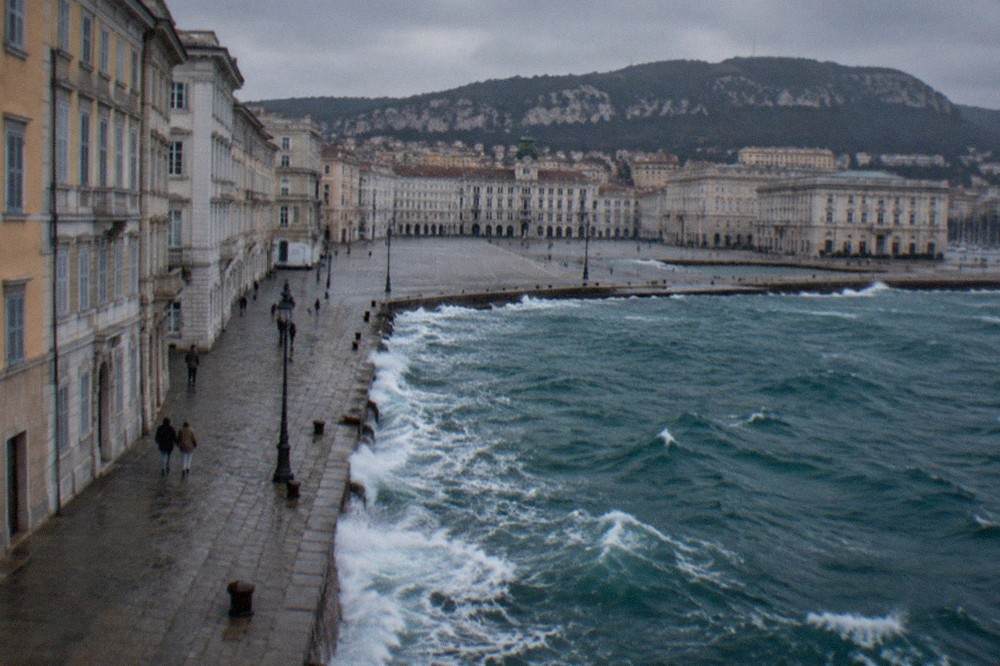
No published cutoff exists at which the Rive seafront is closed, the ferries stop or the Barcolana regatta is called off, so treat any number you see claiming to be one with suspicion. Authorities judge conditions case by case and in real time. On a strong bora day the practical signs are visible ones: ropes rigged along the waterfront for pedestrians to hold, and white horses right across the gulf.
| Month | Rain (mm) | Days gust over 90 km/h | Record gust (km/h) |
|---|---|---|---|
| January | 52.8 | 2.4 | 148 |
| February | 59.7 | 2.9 | 168 |
| June | 62.5 | 0.3 | 110 |
| July | 53.8 | 0.9 | 125 |
| September | 102.3 | 1.1 | 124 |
| November | 109.8 | 1.9 | 147 |
The pairing in that table is the honest answer to this whole question. The months with the most rain are also months of meaningful wind, but the windiest months of all, January and February, are among the driest. Trieste's weather is more often dry-and-blowing than wet.
What Should You Pack for Trieste Weather?
Pack for wind and for one soaked autumn day rather than for constant rain. The month decides it: in June and July, with 62.5 and 53.8 mm of rain and 5 to 6 wet days each, a light layer and a jacket for bora gusts are enough, while September through November, with 88.6 to 109.8 mm, calls for a real umbrella and waterproof shoes. The sea is warmest in late summer, at 25.9 C, so swimwear earns its place from July into September.
The single most useful item for Trieste is a windproof outer layer, not a raincoat. A bora gust can make an otherwise dry 10 C day on the seafront feel far colder than the thermometer says, and the same wind will destroy an umbrella on the open Rive. Locals keep to the porticoes on those days, and so should you.
A few practical pairings from the numbers:
- A rainy hour is a museum hour: the Museo Revoltella is open daily except Tuesdays, and Castello di San Giusto keeps a full ticket that includes the castle museum and the Lapidario Tergestino.
- November's 9.5 wet days still leave most of the month dry, so do not cancel a November trip on rainfall alone.
- On a wet morning, the caffè culture this city is built on is the obvious shelter: a table in one of the historic coffee houses turns weather into an itinerary.
For what the rain might interrupt, the one-day Trieste itinerary and the is Trieste walkable pages carry the indoor-heavy fallbacks, and the coverage in what is Trieste famous for explains why the coffee house is the institution it is here.
The Habsburg history walk above is listed by its operator as a private guided walking tour of about 2.5 hours, from $143.30 per person at the time of writing, rated 4.86 from 21 reviews on the operator's live listing, and it is the tour that bends most easily around a weather window, with an indoor-friendly route through the historic core. Prices and availability change, so treat the listing as the source of truth and Check availability before you plan around it.
Does It Rain More in Trieste Than in the Rest of Italy?
No, Trieste, Italy, sits near the middle of the Italian rainfall range at 867.1 mm a year, wetter than much of the far south but drier than the Alps and the Ligurian coast. Within its own region the picture is uneven: the ARPA tables show the coastal strip at around 867 mm while the Carso plateau immediately behind the city catches noticeably more, which is why inland grid figures routinely overstate Trieste's rain.
That last point is the one worth carrying, because it explains why different sources disagree so loudly about this city. A coarse reanalysis cell that averages the city together with the plateau behind it produces a figure near 1,489 mm, wrong for the city by about 72 percent on rain. Anyone quoting that number is describing the hills, not the seafront.
For a visitor the comparison that matters is with the places they might swap Trieste for. The city is drier than most Alpine and pre-Alpine destinations in the same season, markedly drier in summer than the Po plain cities, and its rainy window is compressed into three autumn months rather than spread across the year. If a grey week does arrive, the fallbacks are strong: the how many days in Trieste is enough page shows how a flexible day absorbs weather, and the broader coverage at Trieste Travel Guide pulls the whole city together.
Common Questions About Rain and Weather in Trieste
These are the follow-up questions visitors ask most often about rain in Trieste, Italy, and the short answers all come from ARPA FVG's own station tables: the wettest month is November at 109.8 mm, July is one of the driest at 53.8 mm, the annual total is 867.1 mm, and the wind is a bigger presence than the rain, with gusts over 90 km/h on 17.6 days a year and a record gust of 168.1 km/h in February 2012.
Does it rain a lot in trieste?
No. Trieste, in Italy, averages 867.1 mm of rain a year over 86.1 wet days, with the rain concentrated in autumn: November is the wettest month at 109.8 mm and July is one of the driest at 53.8 mm.
What is the wettest month in Trieste?
November, at 109.8 mm of rain across 9.5 wet days on average. September is second at 102.3 mm and October third at 88.6 mm, so autumn is the season to pack an umbrella for.
Is Trieste rainy in summer?
No. July is the second driest month of the year at 53.8 mm and June takes 62.5 mm, with only 5.4 and 6.1 wet days respectively. The sea reaches 25.9 C in July and August, and the bigger summer weather factor is the bora wind, not rain.
Does the bora wind bring rain?
No, the bora is a cold, dry wind blowing from the east-north-east off the Carso plateau. The windiest months, January and February, are among the driest, and the station tables record gusts over 110 km/h in every month of the year.
Is November a bad time to visit Trieste?
November is the wettest month at 109.8 mm, but that still leaves most days dry. The porticoes, the coffee houses and the museums, including the free Risiera di San Sabba and the first-Sunday free entry at state museums, absorb a wet day well.
Do I need an umbrella in Trieste?
From September to November, yes. In June and July a light windproof layer is more useful than an umbrella, because the bora can wreck an umbrella on the open seafront faster than any rain.
The honest summary: pack for wind, keep an umbrella for autumn, and check the live forecast before the bora decides your day for you.