Is There a Water Taxi from Venice to Trieste?
No, there is no water taxi from Venice to Trieste, Italy. Here is what the lagoon taxis actually do, and the real ways to cover the Venice to Trieste route by train, bus or car.
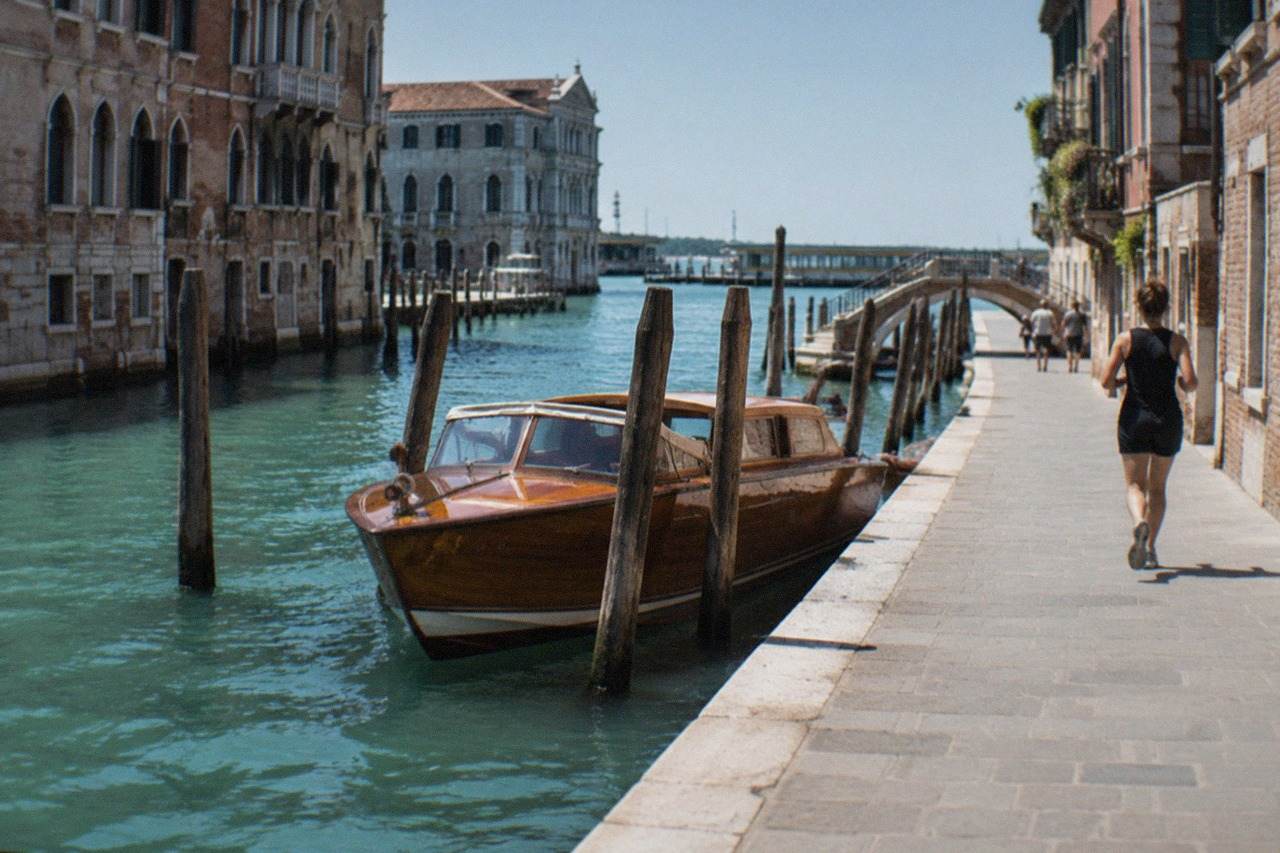
Trieste, the Adriatic port city in Friuli Venezia Giulia in Italy's northeast, sits roughly opposite Venice across the top of the Adriatic, and the question of a boat between them comes up constantly among cruise passengers and first-time visitors. The short answer is no: no water taxi, vaporetto or private launch operates a scheduled or on-demand crossing from Venice to Trieste. Venice's famous motorboats work inside the lagoon and its immediate channels, and the Venice to Trieste route is served instead by rail, coach and private road transfers. The rest of this page sets out why the lagoon taxis stop where they do, what the real alternatives involve, and what to do with your day once the train pulls into Trieste Centrale.
Is There a Water Taxi from Venice to Trieste?
No, there is no water taxi service of any kind from Venice to Trieste, Italy, and no operator offers one on demand. Venice's water taxis are licensed lagoon craft: they run between Marco Polo airport, the cruise terminals, the islands and the city's canal network, but they do not undertake the long open-water passage down the Adriatic coast to Trieste. The two cities are connected instead by train, by long-distance coach and by road transfer.
That is not a gap in the market waiting to be discovered by a determined traveller with a wallet. A Venice water taxi is a small open launch, built for sheltered lagoon water and short hops, not for the open Adriatic. The craft are licensed and insured for the lagoon district, and the operators who run them advertise airport transfers, city tours and canal journeys, none of which stretches more than a few kilometres from Venice itself. Asking a driver at a landing stage to take you to Trieste is not a negotiation, it is a category error.
The confusion usually comes from a reasonable place. Venice is a city where the taxi is a boat, so "water taxi from Venice" sounds like it ought to go anywhere. And there is a genuine ferry conversation to be had in this corner of the Adriatic, just not this one: Trieste itself has ferry connections, and Venice has cruise and ferry terminals, but the Venice-Trieste leg by sea simply is not a product that exists. If you have seen a page promising one, it was almost certainly selling a private car transfer with a nautical stock photo.
For the route that does exist, the practical planning question is covered in detail on our page on the best way to get from Venice to Trieste, and the rail option specifically on getting from Venice to Trieste by train. If your trip is actually a cruise transfer in disguise, read how to transfer from Trieste cruise port to Venice before you book anything.
Why Venice's Water Taxis Stay Inside the Lagoon
Venice's water taxis are licensed, insured and physically built for the lagoon and its surrounding channels, not for the open sea, and their permits cover journeys between the airport, the cruise terminals, the islands and the city, not intercity coastal runs. No operator in Venice offers a scheduled or private boat service down the Adriatic coast to Trieste, and the journey a water taxi would have to make is simply not the product these craft are designed or authorised to deliver.
The lagoon is the key. Venice sits inside a shallow, sheltered body of water separated from the Adriatic by the Lido and Pellestrina sandbars, with marked channels dredged through it. A water taxi there operates on flat water, in traffic that moves at low speed, on routes measured in minutes. The moment such a craft exits the lagoon's inlets at San Nicolò or Chioggia it is in open sea, and the top of the Adriatic in anything but flat-calm summer weather is a different proposition entirely for a small open launch carrying passengers and luggage.
Then there is the commercial reality. The Venice to Trieste corridor is one of the best-served road and rail links in northeast Italy: a frequent rail line runs the whole way along the coast, and long-distance coaches compete on price. A hypothetical boat would be slower than both, weather-dependent, and priced like a charter. Nobody sells the crossing because nobody would buy it at the price it would need. The water taxi industry in Venice is organised around short, high-margin hops, and the airport transfer is already its flagship product.
So when a search result or a transfer aggregator shows you a "water taxi" for this route, look closely at what is actually being sold. In every case this desk has reviewed, the product behind the nautical language is a car and driver: a private road transfer from Venice, Marco Polo airport or the cruise port to Trieste. That can be a perfectly good thing to buy, and it is the right choice for some travellers, especially cruise passengers working to a fixed boarding window who need to know how long the transfer from Venice to Trieste port takes. It is just not a boat.
How to Actually Get from Venice to Trieste, Italy
The real Venice to Trieste options are the train from Venice Santa Lucia or Mestre to Trieste Centrale, the long-distance coach, a private car transfer, or a hire car driven yourself; there is no sea option, and no fare or timetable for any of these is published in a form this site can verify, so check the operator's own pages before booking. Train is the choice most travellers land on, coach is the budget alternative, and private transfer is what cruise passengers with luggage and a deadline buy.
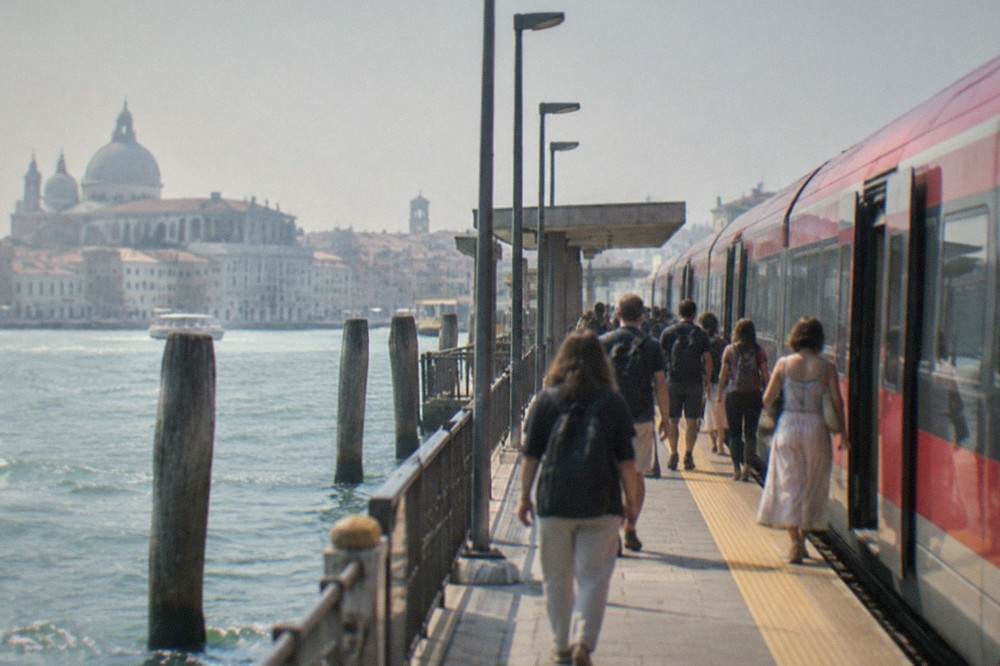
The train is the backbone of the route. It runs along the coast through the Veneto and Friuli, and travellers consistently want to know two things about it: whether it is fast, and whether it is worth looking out of the window. The rail answer, including the high-speed question, is covered on our pages on how often trains run between the two cities and on whether the ride is scenic. What this page will not do is print a journey time or a fare, because the operators' own pages are where those live and they change with the timetable.
The coach is the second rail of the route: long-distance operators run Venice to Trieste, and it is generally the cheapest way to cover the ground, at the cost of flexibility and comfort compared with the train. The third option is the private transfer, a car meeting you at the airport, the cruise terminal or your hotel, which is the one to look at if you are travelling with a group, heavy luggage or a ship to catch. The fourth is a hire car, which makes sense mostly if the Trieste leg is part of a wider loop through Friuli Venezia Giulia or the Carso.
The table below is a decision aid, not a timetable. No fares or journey times are printed because none is verified for this specific route in this site's source pack; the operator's own booking pages are the only place those figures should come from.
| Option | Where it starts in Venice | Where it arrives in Trieste | Best for | What to check before booking |
|---|---|---|---|---|
| Train | Venezia Santa Lucia or Mestre station | Trieste Centrale, walking distance from the centre | Most independent travellers | The rail operator's own site for times and fares |
| Long-distance coach | Venice's coach stops (Mestre in practice) | Trieste's coach station | The tightest budgets | Operator sites for the current schedule |
| Private car transfer | Any address, airport or cruise terminal | Your Trieste hotel or the cruise port | Groups, luggage, cruise deadlines | Transfer operator's quote, in advance |
| Hire car | Marco Polo or Treviso airport rentals | City parking (see our parking guide) | Wider Friuli and Carso touring | Parking in Trieste, border rules if crossing |
| Water taxi | Nowhere: no such service exists | N/A | Nothing, because it does not exist | Any page selling one is selling a car |
One Trieste-specific point matters if your transfer is cruise-related. Ships dock at the port close to the city centre, and the logistics of getting from Venice to the ship, or from the ship back toward Venice, are their own question with their own pitfalls: the route from Venice city centre to the Trieste cruise port, and the wider question of how to get from Venice to Trieste for a cruise, are both covered elsewhere on this site, and both are worth reading before you commit to a transfer booking.
What About Ferries and Boats Around Trieste?
Trieste does have boats, just not one to Venice: the city's ferry connections run locally across the gulf, and the question of a Venice ferry is separate from the water taxi question. The often-searched "ferry from Trieste to Venice" is its own topic, and the honest summary is that a scheduled sea crossing between the two cities is not part of the verified picture either. Boats around Trieste mean short local routes, the seafront at Barcola and the sailing of the Barcolana, not an intercity link.
Start with the ferry question, because it is the nearest cousin of the water taxi one and gets asked almost as often. The dedicated coverage of how much the ferry from Trieste to Venice is reaches the same conclusion as this page: verify on the operator's own pages before assuming a crossing exists, because the sea route is not the way these two cities talk to each other. Where ferries genuinely matter around Trieste is in the other direction, toward Slovenia and Croatia, and even there the schedules are seasonal and worth checking rather than assuming.
What Trieste's waterfront actually offers is local. The seafront from the Rive out toward Barcola is the city's open-air living room, swimmer-filled in summer and wind-brushed in winter, and the boat traffic you will watch from Molo Audace is freighters, sailboats and the occasional naval vessel, not passenger links to Veneto. In October the whole gulf fills for the Barcolana, the regatta whose 2026 edition runs 2-11 October with the main race on Sunday 11 October, an event that turns the sea between the city and the horizon into the largest sailing fleet in the world. That is the Adriatic working as a stage, not as a road.
The comparison that usually sits behind this whole line of questioning is whether Trieste is even worth the detour from Venice, and that deserves a straight answer rather than a shrug. It is a different animal: where Venice is a museum city drowning in its own success, Trieste is a working Habsburg port with a coffee-house soul, and the two are compared honestly on whether Trieste is better than Venice. Some visitors plan a day trip from Trieste to Venice or the reverse; others split a week between the two, and both strategies work with the rail link that replaces the boat you were looking for.
Getting Around Trieste Once You Arrive
Once the train or coach delivers you to Trieste, the city is cheap and simple to move around: an urban single ticket costs €1.50 for 60 minutes or €1.85 for 75 minutes, a day ticket is €3.35, and a 10-ride carnet is €13.50, per the operator's 2026 tariff sheet, with contactless bank cards accepted on board. The historic centre is compact enough that most visitors walk almost everywhere, and the tram to Opicina is part of the ordinary urban network.
Those fare figures come from Trieste Trasporti's own 2026 urban tariff sheet, and they are the numbers to plan with: singles, a day ticket and multi-ride carnets, all valid across the urban network, with contactless payment available on the vehicles themselves. The one category this site will not price is the season pass, because the table did not extract cleanly and an unverified figure is worse than none. For everything else about buses, the tram and taxis, see the dedicated getting-around coverage on Trieste Travel Guide.
| Ticket (2026 urban tariff) | Price | Validity |
|---|---|---|
| Urban single U01 | €1.50 | 60 minutes |
| Urban single U02 | €1.85 | 75 minutes |
| Day ticket U24 | €3.35 | One day |
| 10 rides U10 | €13.50 | Ten urban journeys |
| 20 rides U20 | €16.65 | Twenty urban journeys |
Single tickets are valid 60 or 75 minutes, extended to 240 minutes on Sundays and public holidays, which is a generous window for a city this size. And the tram deserves its own sentence: the tram de Opicina, line 2, runs from piazza Dalmazia up onto the Carso plateau and is a working part of the network, so a standard urban ticket covers one of the most scenic tram rides in Italy. It was reactivated on 1 February 2025 after a long stop, and its current timetable is published on the operator's site, which is where to check on the day.
For a first afternoon in the city, a well-reviewed orientation option is the guided walk marketed as the city that will definitely surprise you: the listing for Trieste City That Will Definitely Surprise You prices from $68.79 per person for a 2.5-hour walk through the centre ending with coffee in a historic bar, rated 4.97 from 106 reviews on the operator's live listing, and you can Check availability alongside it. It is not a substitute for wandering Piazza Unità d'Italia or the Città Vecchia on your own, but it sits comfortably in a day that started on a train from Venice.
The deeper planning questions follow naturally from here. If you are weighing whether the two cities can share one trip at all, start with whether you can do a day trip from Trieste to Venice; if the answer shapes your whole itinerary, then the question of which city deserves the hotel nights is the follow-up. And if you are reverse-engineering this page because a cruise itinerary ends in Trieste and starts somewhere near Venice, the airport shuttle question from Venice airport to Trieste is covered on its own page, and the transfer options from Venice to Trieste are compared there in detail.
Common Questions About Water Taxis from Venice to Trieste
Is there a water taxi from Venice to Trieste?
No. Venice's water taxis operate inside the lagoon, between the airport, the cruise terminals, the islands and the city canals, and no operator offers a scheduled or private boat service down the Adriatic coast to Trieste, Italy. The route is served by train, coach and road transfer instead.
Can you take a ferry from Venice to Trieste?
There is no verified scheduled ferry crossing between Venice and Trieste. The two cities are linked by rail and road along the coast. Trieste's own ferry connections are local ones across the gulf and seasonal routes toward Slovenia and Croatia, which you should confirm on the operators' own pages.
What is the best way to get from Venice to Trieste?
For most travellers the train from Venice Santa Lucia or Mestre to Trieste Centrale is the simplest option, with long-distance coaches as the budget alternative and a private car transfer as the choice for groups, heavy luggage or cruise deadlines. Times and fares live on the operators' booking pages and change with the timetable.
How do I get from Venice to Trieste for a cruise?
Cruise passengers usually book either the train to Trieste Centrale, which is close to the port, or a pre-arranged private road transfer from Venice, the airport or a hotel. The ship's own transfer desk is also worth consulting, since many lines sell seats on shared coaches for embarkation days.
Is the train ride from Venice to Trieste scenic?
The line runs along the Veneto and Friuli coast for much of the way, with lagoon and sea views on one side, and the final approach into Trieste comes down onto the gulf waterfront. Whether that justifies choosing it over a faster option is covered in detail on our page about the scenic merits of the route.
Do I need a passport to travel between Venice and Trieste?
No: both cities are in Italy, so domestic travel rules apply and no border is crossed on the direct route. A passport or national ID does matter if you continue from Trieste into Slovenia or Croatia, because Italy is running temporary checks on its land border with Slovenia through 18 December 2026.