Where to Stay in Trieste?
Where to stay in Trieste, Italy: the best neighbourhoods for a first visit, how the 2026 tourist tax works, and which parts of the city suit walkers, families and short trips.
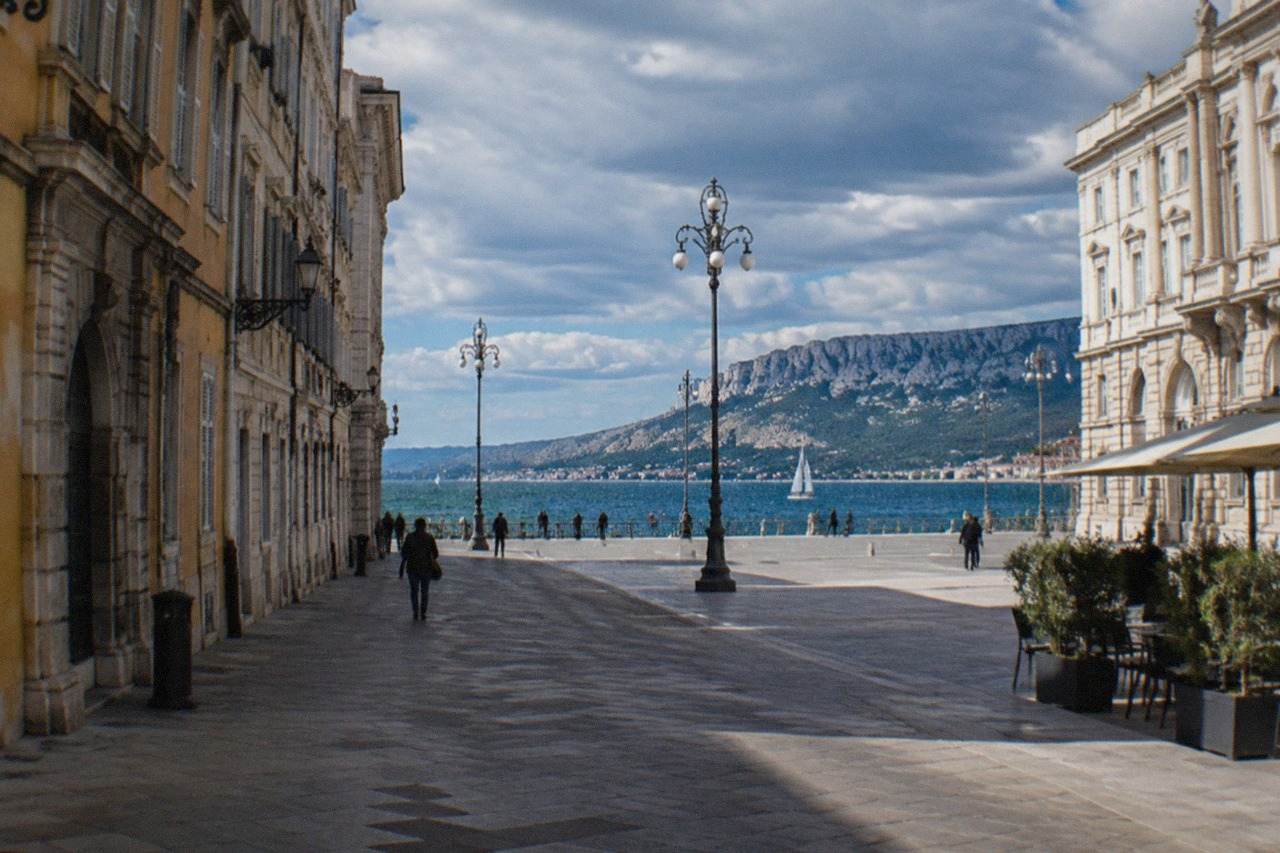
Trieste, the Adriatic port city in Friuli Venezia Giulia in the far northeast of Italy, is small enough that the whole question of where to stay is less about distance and more about character. The centre is a dense grid of Habsburg-era streets folded between the seafront and the hill of San Giusto, and the differences between its districts are differences of mood, noise and price rather than of travel time. This page walks through what the city's areas actually offer, what the official 2026 tourist tax adds to your bill, and how to pick a base that matches the trip you have planned.
Where to Stay in Trieste?
For a first visit, the Borgo Teresiano, the neoclassical grid around the Canal Grande and Piazza Unità d'Italia, is the most practical base in Trieste: it puts the seafront, the historic caffès and the main squares within a short walk of each other. Città Vecchia, the old town on the hill behind Piazza Unità, is quieter and more atmospheric, while Barcola, the seafront suburb along the gulf, suits travellers who want water and swimming rather than nightlife.
That one-sentence ranking hides a useful truth about this city: Trieste is genuinely walkable, and the question of where to stay in Trieste is rarely answered with transport times because there are very few of them to worry about. The grid of the Borgo Teresiano was laid out under Maria Theresa and it still works the way it was designed to, with straight streets, uniform facades and the canal running up its middle. Staying here means the Piazza Unità d'Italia guide landmarks, the Molo Audace and the main museums are all in the same compact area.
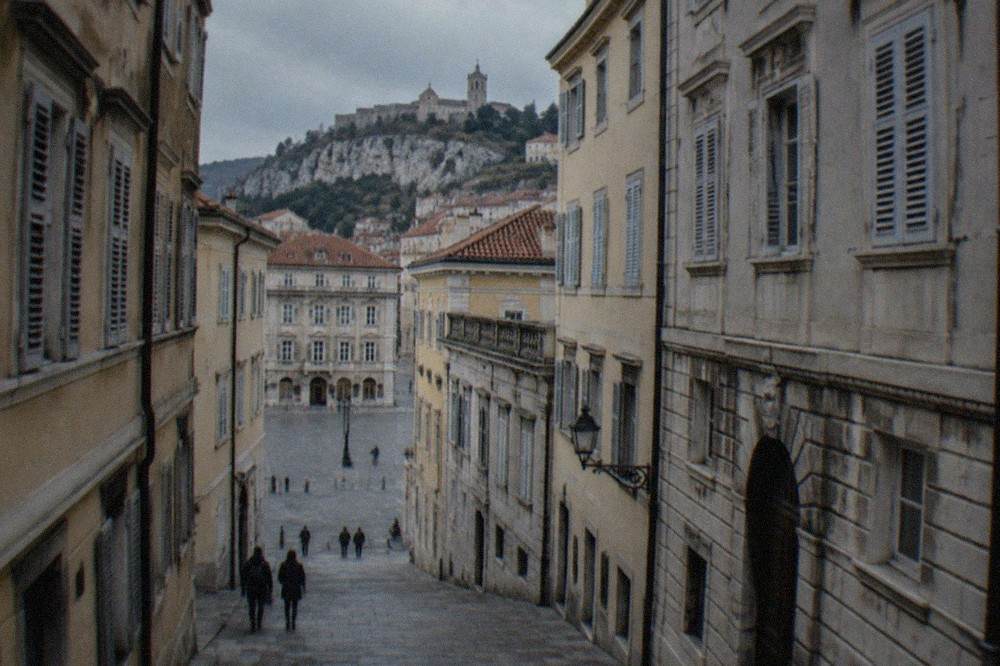
Città Vecchia, the old town climbing from the canal towards the cathedral, trades that tidiness for lanes, arches and views. It is where most of the city's oldest buildings sit, including the Roman theatre, which you look down into from the street rather than enter. Barcola is different again: a strip of shore road, beaches and ice-cream shops that locals treat as their seafront, further from the museums but right on the water.
The fuller comparison of areas, including what each one is good and bad at, lives in the site's guide to where to stay in Trieste, and the question of which specific part suits you is covered in what part of Trieste to stay in.
| Area | Best for | Trade-off | Character |
|---|---|---|---|
| Borgo Teresiano | First visits, walkability, caffès and squares | Busier, more traffic | Neoclassical grid, canal, grand seafront |
| Città Vecchia | Atmosphere, old lanes, cathedral and castle | Steep streets, quieter at night | Medieval hill town above the port |
| Barcola | Water, swimming, seafront walks | Furthest from the main museums | Suburban shore strip along the gulf |
| Cavana | Budget options, old-town edge | Less polished than the grid | District between the piazza and the old town |
Which Area of Trieste Suits Your Trip Best?
A two- or three-night city break is best based in the Borgo Teresiano or Cavana, where the historic caffès, Piazza Unità d'Italia and the cruise-ship waterfront are all in one walkable area. A longer stay, or a trip built around swimming and the sea, points to Barcola. Travelers who want old-town atmosphere and do not mind slopes should choose Città Vecchia, and anyone combining Trieste with Slovenia or Croatia should stay near the station end of the grid.
The reason the station end matters for cross-border trips is simple: the regional trains and the cross-border coaches leave from the north of the centre, and the Opicina tram, line 2 of the urban network, starts at piazza Dalmazia. The tram was reactivated on 1 February 2025 after its long stop, and Trieste Trasporti's current timetable for the line, dated 20 July 2026, confirms it runs the full route from piazza Dalmazia up to Opicina. Anyone staying in the northern grid can reach both the station and the tram terminus on foot.
For a short visit, the practical read is that the city's centre of gravity is the seafront. The Rive, the long quay facing the gulf, ties the piazza, the molo and the shore together, and nearly everything a first-time visitor wants to see sits within a belt a few blocks deep behind it. The site's answer to is Trieste a good place to stay covers the broader case for the city as a base.
One pattern worth knowing before you book: the districts differ more at night than by day. The grid around the canal keeps its caffès and bars busy into the evening, Città Vecchia empties and goes quiet, and Barcola runs on a daytime rhythm tied to the beach. If evening life matters to you, weigh that when you choose.
How Much Is the Tourist Tax in Trieste?
Trieste charges a tourist tax, the imposta di soggiorno, of EUR 1.50 to EUR 3.80 per person per night depending on the type of accommodation, for a maximum of 5 consecutive nights in the same property. Four-star hotels and self-catering case vacanza pay EUR 3.30, three-star EUR 3.00, two-star hotels, affittacamere, B&B Superior, hostels and short-let properties EUR 2.30, B&B Comfort EUR 2.00, one-star and B&B Standard EUR 1.80, and campsites EUR 1.50.
Those figures come from the Comune di Trieste's own 2026 rate table, and two details in it matter more than the headline numbers. First, the five-night cap: the tax is charged for a maximum of 5 consecutive nights in the same property, so a week-long stay stops accruing it partway through. Second, the exemptions: everyone under 18 pays nothing, as do people with a certified disability of 80 per cent or more, one companion per hospital inpatient, coach drivers and tour leaders accommodated free, and one group leader per 15 minors. The rest of the planning pages sit on Trieste Travel Guide.
| Accommodation type | Tourist tax per person, per night |
|---|---|
| Five-star hotel | EUR 3.80 |
| Four-star hotel, self-catering case vacanza | EUR 3.30 |
| Three-star hotel | EUR 3.00 |
| Two-star hotel, affittacamere, B&B Superior, hostels, agriturismi, short-let properties | EUR 2.30 |
| B&B Comfort | EUR 2.00 |
| One-star hotel, B&B Standard | EUR 1.80 |
| Campsites and equipped motorhome areas | EUR 1.50 |
The short-let line in that table is the one to notice. Properties let under the short-let rules of d.l. 50/2017 sit in the same EUR 2.30 band as two-star hotels and hostels, so an apartment booked through a platform is not a way around the tax. The tax is also per person, not per room, which catches families out: a family of four in a three-star property accrues it four times a night, up to the five-night cap.
What no honest page can tell you is the room rate itself. Nightly prices in Trieste are date-specific, move with events such as the Barcolana regatta in October, and sit behind booking engines this site does not quote. The tax above is a fixed, published addition to whatever rate you find.
Is Everywhere in Trieste Within Walking Distance?
Yes, for practical purposes: the areas a visitor stays in, from the station and piazza Dalmazia in the north to Barcola's shore and the old town on the hill, form one continuous walkable city, and the centre has no district that needs a bus to reach the main sights. The one real exception is the climb to San Giusto and the upper old town, which is steep, and the trip up to Opicina, which is what the tram is for.
The city's own transport numbers back this up. An urban single ticket on Trieste Trasporti costs EUR 1.50 for 60 minutes or EUR 1.85 for 75 minutes, a day ticket is EUR 3.35, and a 10-ride carnet is EUR 13.50, per the operator's 2026 tariff sheet. Contactless bank cards can be tapped directly on board, and the system applies the cheapest applicable fare, so you do not need to plan tickets in advance. If you stay central, you may never use any of it.
| Trieste urban ticket | 2026 price | Validity |
|---|---|---|
| Single, 60 minutes | EUR 1.50 | 60 minutes, 240 on Sundays and holidays |
| Single, 75 minutes | EUR 1.85 | 75 minutes, 240 on Sundays and holidays |
| Day ticket | EUR 3.35 | One day |
| 10 rides | EUR 13.50 | Ten journeys |
The steep part deserves honesty. Città Vecchia sits on the hill of San Giusto and its lanes include genuine slopes, which is the trade-off for its views and prices. If mobility is a concern, the flat Borgo Teresiano grid is the safer base, and the site's accessible Trieste guide covers the ground in detail.
What Should You Know Before Booking a Stay in Trieste?
Book early if your trip touches October, because the Barcolana regatta fills the city, check whether your dates hit a free-entry Sunday at state museums, and carry a passport or national ID card even for day trips into Slovenia, because Italy is running temporary border checks on that land border through 18 December 2026. Also confirm your accommodation's check-in arrangements, since much of the city's stock is small hotels and apartments rather than desks staffed round the clock.
The Barcolana point is the big one. The 58th edition runs 2-11 October 2026, with the main regatta on Sunday 11 October, and the event's record stands at 2,689 boats, set in 2018. The whole city is busy that week, and rates respond. The regatta sits in a windy shoulder of the year: ARPA's station tables for the molo show October averages 1.4 days a year with gusts over 90 km/h, and the bora is part of the event's character rather than a reason to avoid the city.
The free-Sunday point is a small but real saving. The ministry's first-Sunday-of-the-month scheme runs through 2026 and Miramare takes part, so the castle is free on those days; the park is free all year regardless. The scheme's rules have changed more than once, so confirm the specific date on the venue's own page rather than trusting a calendar.
The border point matters for anyone planning Slovenia side trips, which most Trieste visitors do. Slovenia and Italy both use the euro and both are in Schengen, so there is no currency change, but the European Commission's register currently lists Italian checks on the land border with Slovenia from 19 June 2026 to 18 December 2026. Treat the checks as temporary and dated, and carry ID.
Once the area is chosen, the practical finishing touches are small ones. A first-morning orientation walk saves an hour of map-reading later, and the private options below are the ones this site has checked: a two-hour private walking tour from $206.36 per group of up to 10, rated 4.9 from 98 reviews, and a longer private guided walk of the city from $194.89 per group of up to 10, rated 5 from 115 reviews. Both are bookable through the operator's live listing, and both start from the centre, which is where you will be staying anyway.
Common Questions About Where to Stay in Trieste
Where To Stay In Trieste?
The Borgo Teresiano, the neoclassical grid around the canal and Piazza Unità d'Italia, is the best base for a first visit because everything central is in one walkable area. Città Vecchia suits travelers who want old-town atmosphere and do not mind slopes, and Barcola suits trips built around the sea.
Is Trieste expensive to stay in?
Room rates vary by season and this site does not quote them, but the fixed, published costs are modest: the tourist tax runs from EUR 1.50 to EUR 3.80 per person per night depending on accommodation type, capped at 5 consecutive nights, and an urban day transport ticket is EUR 3.35.
Is it better to stay near the station or the seafront?
For most visitors the seafront end of the Borgo Teresiano is the better choice, because the piazza, the caffès and the Rive are the city's centre of gravity. The station end suits travelers making cross-border day trips, since the trains, the coaches and the piazza Dalmazia tram terminus all sit at that end of the grid.
Can you stay in Trieste without a car?
Yes, comfortably. The centre is walkable, urban singles cost EUR 1.50 to EUR 1.85 with contactless payment on board, and the day ticket at EUR 3.35 covers the trams and buses including the line up to Opicina.
Which part of Trieste is best for families?
The flat Borgo Teresiano grid is the easiest base with children, and Barcola adds swimming and the seafront walk. Remember that the tourist tax exempts everyone under 18, so children do not add to that part of the bill.
How many days should you stay in Trieste?
Two nights covers the centre well and three allows a cave or Slovenia day trip. The site's answer to how many days you need in Trieste breaks down the itineraries day by day.
A final thought on the choice itself: in Trieste the wrong answer is hard to reach, because the districts that hold most of the accommodation all touch the same compact centre. Pick the mood you want, evenings lively in the grid or quiet on the hill or salty at Barcola, check the tax band your property falls into, and the city will be at your door either way.