What Does Trieste Mean in English?
The name Trieste explained in English: why the Italian city's name has no translation, where it comes from, how to pronounce it, and why a bathyscaphe and a cafe chain share it.
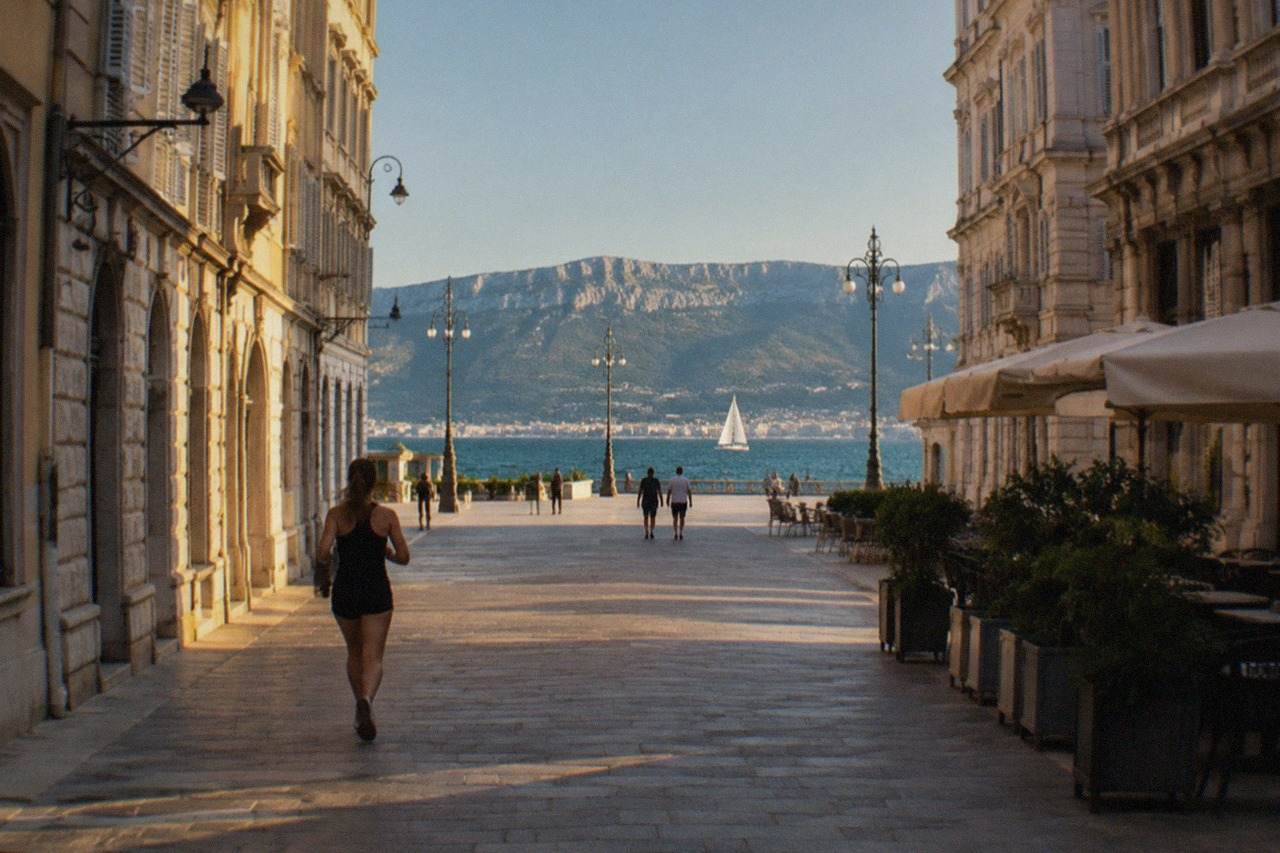
Trieste, the Adriatic port city in Friuli Venezia Giulia in northeastern Italy, carries a name that stops most English speakers mid-sentence. It looks like an Italian word, it ends like an English adverb, and people reasonably assume it must translate into something. It does not. The short answer is that Trieste is a place name, and English simply borrows it as-is, the same way it borrows Rome, Naples or Milan. The longer answer touches a Latin root, a Slovene neighbour, a Habsburg port and a surprising crowd of unrelated things, from a deep-sea vessel to a San Francisco cafe chain, that happen to share the word.
This page, written for Trieste Travel Guide, untangles the question properly: what the name means in English, where it comes from, how to say it, and why the search results for "Trieste" are so crowded with things that are not the city.
What Does Trieste Mean in English?
In English, Trieste means nothing at all, because it is a proper noun: the name of a city in northeastern Italy, and English uses the Italian form unchanged rather than translating it. There is no English word "trieste", no dictionary definition, and no hidden meaning to recover. When an English text says Trieste, it is naming the Adriatic port city in Friuli Venezia Giulia, exactly as Italian does, and nothing more.
That feels like a disappointing answer, so it is worth being precise about why. Some city names do get translated in English: Turin for Torino, Florence for Firenze, Munich for München. Trieste sits in the other group, the names English never bothered to alter: like Verona or Bologna, the Italian spelling is the English spelling. The word ends in a vowel and reads easily to an English eye, so no anglicised form ever took hold.
There is a second layer people are really asking about when they type this question. They have seen the word somewhere, perhaps in a novel, a crossword or a news headline, and they want to know what thing it refers to. The answer is almost always the city. Trieste appears in English literature and history writing constantly, because the city's past as the Habsburg empire's great sea port made it a household name in the English-speaking world in the nineteenth and twentieth centuries. When James Joyce lived there, or when the city changed hands at the end of the Second World War, English-language newspapers printed the name exactly as Italy does.
Where Does the Name Trieste Come From?
The name Trieste is the modern Italian descendant of Tergeste, the name the city bore under Rome, and the Italian form has been in continuous use since the medieval period. The root is ancient enough that no living language "contains" it as an ordinary word. English speakers meet the name already fully formed, and the city has answered to it, in one spelling or another, for the whole recorded history of the place.
The Latin name is the anchor. Tergeste is how the settlement on the gulf appears in the Roman record, and the modern name is that same word worn down by two thousand years of everyday speech. What Tergeste itself meant to the people who coined it is a matter for specialists and etymological dictionaries, and no tourist guide should hand you a confident folk translation. The honest position is that the name predates Italian, predates Latin's own written record of the region, and has simply been passed down.
The city's position explains why the name has neighbours. Trieste sits on the border with Slovenia, and Slovene, the other historic language of the area, has its own ancient form of the same name, Trst, which is not a borrowing but a sibling: two modern descendants of the same old name, shaped by two different sound systems. The city's own history page on this site covers the border identity question in depth, and the companion piece on what Trieste means in Italian takes the Italian side of the story further.
That layered past is exactly what makes the city rewarding to walk around. The names on the street, the languages on the shop signs and the layers of empire are the whole point of the place, and a guide who can decode them turns a pretty seafront into a story. The tours below are the ones that do that best.
Is There an English Translation or Word for Trieste?
No, and the proof is in how English texts behave: guidebooks, novels, encyclopaedias and news reports all print "Trieste" unchanged, with the Italian spelling and the stress on the second syllable. Unlike Venice or Florence, the city never acquired an English exonym, so there is no translated form to use and no English word hiding inside the name. The only "meaning" English attaches is the city itself, its port, and its coffee-and-empire reputation.
If you want a sense of what the name stands for in practice, the city's own verified numbers do the describing better than any translation could. These are figures from the official sources this site checks, and they sketch the place the word refers to.
| Fact about Trieste, Italy | Figure | Source basis |
|---|---|---|
| Region | Friuli Venezia Giulia, Italy | Official destination listing |
| Annual mean air temperature | 15.9 C | ARPA FVG station series, 1995-2024 |
| Annual rainfall at the molo | 867.1 mm across 86.1 wet days | ARPA FVG station series, 1995-2024 |
| All-time peak wind gust | 168.1 km/h, February 2012 | ARPA FVG station record |
| Largest sailing race entry | 2,689 boats, Barcolana 2018 | Organisers' own history page |
| Currency | Euro | Italy, Slovenia and Croatia all use the euro |
A translation would flatten all of that. A name as a label lets the facts do the talking, and Trieste's facts are unusually specific: a wind the city is famous for, a regatta that fills the gulf each October, a sea-level measuring station with one of the longest continuous records in the world. The word stays the same in every language that uses it, and the content behind it is what varies.
The same logic answers the related questions people ask in the same search session. The French form of the name is covered on the companion page explaining what Trieste means in French, and the pronunciation question, how Italians themselves say the word, is a small rabbit hole worth an evening of its own.
How Do You Pronounce Trieste in English?
English speakers say Trieste as tree-EST-ay or tree-EST-uh, with the stress on the second syllable, and Italian speakers say it closer to tree-ES-teh, three syllables, same stress. Neither pronunciation is a translation, because there is nothing to translate: both are just the same proper noun, adapted to each language's habits. The spelling never changes, only the accent around it.
The stress is the part English gets wrong most often, and it matters more than the vowels. First-syllable stress, TREE-est, sounds foreign to both languages, and the name in every language that uses it puts the weight in the middle. Once the stress is right, the rest follows naturally, and the word stops feeling like a puzzle.
Pronunciation is also where the language question around Trieste gets genuinely interesting, because the city is one of the most multilingual places in Italy. The border history, the Slovene name, the Habsburg decades and the port's trading past all left layers, and English is widely spoken in the tourist economy too. The page on whether they speak English in Trieste, Italy covers the practical side, and the deeper story of language and identity is one of the best reasons to visit with a guide rather than alone.
For that, the heritage walks are the strongest picks. The Jewish heritage walk below is a private, three-hour route through the community history of a city that was once known as a gateway port for emigration, and it is the kind of tour where the names and languages on the walls are the whole subject.
Why Do So Many Other Things Have the Name Trieste?
Because the city was famous enough that its name got borrowed: a record-setting deep-sea submersible, a long-established San Francisco cafe, sports clubs and ships have all been named after the Italian city, deliberately, in tribute to its port and maritime history. None of them changed the meaning of the word. Trieste still means the city in Italy, and everything else named Trieste is borrowing that meaning.
This is the disambiguation problem, and on this destination it is worse than most. Search for the word and you meet a bathyscaphe that made naval history, a cafe chain on the other side of the world, an actress, a basketball club and an Italian navy vessel, all ahead of, or beside, the actual city. The city is the original, the source of the borrowed prestige, and every one of those namesakes points back to it.
The lesson for a traveller is simple: when an English text uses the word Trieste, assume the city unless the sentence is plainly about the sea floor or a coffee menu. The city's own fame is the reason for the confusion, and that fame is well earned. The name stands for the coffee port, the Habsburg seafront, the wind and the border, which is why the companion pages on what Trieste is famous for and what is special about Trieste, Italy run so much longer than this one.
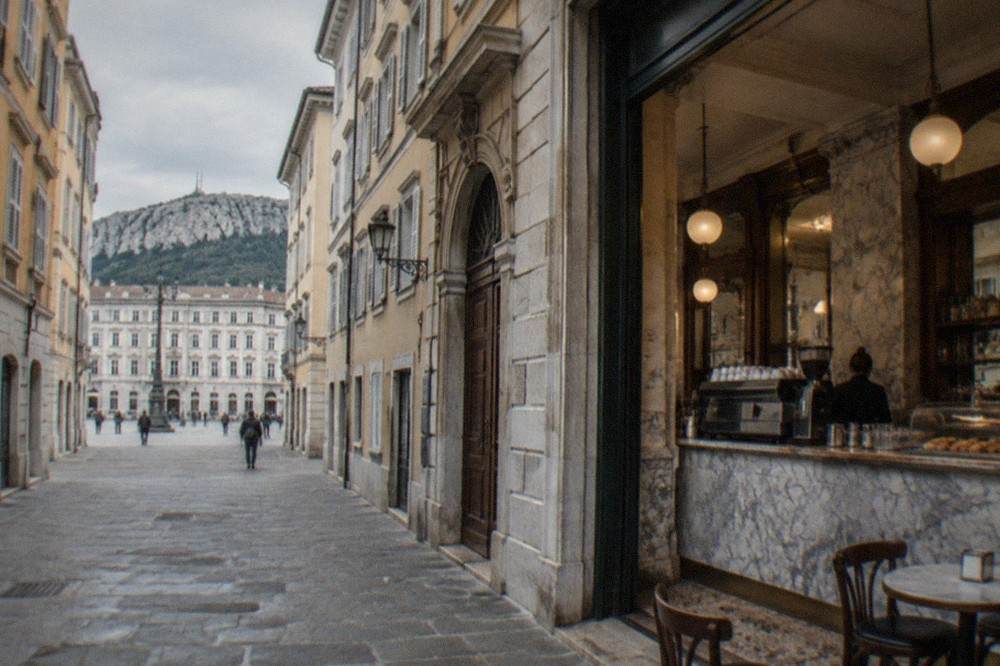
Seeing the Name Made Real: What Trieste Refers To
The word Trieste, once you know it names the city, points to a very particular place: a gulf-side Italian city of Habsburg squares, a free port past, a coffee-roasting present and a castle on the water at Miramare. The name is the label on all of it, and the sites below are the ones the label most directly conjures, with their current official entry figures.
| Site carrying the name's city | Entry price | Current status |
|---|---|---|
| Castello di Miramare (castle) | €17 adult, park free | Daily 9:00-19:00, last admission 18:30 |
| Castello di San Giusto | €7 adult, €5 reduced | Daily 10:00-19:00 to 11 October, then Tue-Sun 10:00-17:00 |
| Museo Revoltella | €8 adult | Daily 10:00-19:00, closed Tuesdays |
| Grotta Gigante (Sgonico) | €15 adult | Guided tours only, booking compulsory |
| Cattedrale di San Giusto | Free | Weekdays 8:00-18:30, Sundays 9:00-19:30 |
Those are the places behind the word, and they are why the name has weight rather than meaning. A traveller who types "what does Trieste mean in English" is usually a few weeks from standing in one of them, and the best preparation is not a translation but an orientation: how long to stay, what the city is known for, and what to do first. The planning pages on how many days in Trieste is enough and what to do in Trieste in one day pick that up from here.
For the visit itself, the three tours below are the strongest pairings with a first trip: a heritage walk, the castle that is the city's single most-visited site, and the food tour that explains the name's third language, the one spoken at the table.
Common Questions About the Name Trieste
What does Trieste mean in English?
Nothing, because it is a proper noun: the name of the port city in northeastern Italy. English uses the Italian spelling unchanged, the same as it does for Verona or Bologna, and no English word or translation exists behind it.
Is Trieste an Italian word with a dictionary definition?
No. It is a place name, not a vocabulary word. Italian dictionaries list it only as the name of the city, the capital of the Friuli Venezia Giulia region, and the word carries no ordinary meaning in Italian either.
Does the name Trieste come from Latin?
The modern name descends from Tergeste, the city's name in the Roman period. The Italian form has been in continuous use since the medieval period, and the root is older than any living language's everyday vocabulary.
Why is a bathyscaphe also called Trieste?
Because it was named after the city, like the cafe chain, the sports clubs and the ships that share the word. The city is the original bearer of the name, and everything else borrowed it in tribute to its maritime and port history.
Do people in Trieste speak English?
English is widely used in the city's tourist economy, and the city is one of Italy's most multilingual places, with Italian and Slovene both part of its historic identity. The companion page on English in Trieste covers the practical side for visitors.
Is Trieste in Italy or Slovenia?
Trieste is in Italy, and it is the capital of the Friuli Venezia Giulia region. It sits right on the border with Slovenia, which is why the name exists in both Italian and Slovene forms, but the city itself has been Italian territory since the mid-twentieth century.
The name, in the end, is the least interesting thing about the place it points to. Trieste means the city, the city means a seafront of empires, a gulf full of sails each October and a coffee culture with no equal in Italy, and every one of those is worth more than a translation.