What Does Trieste Mean in Italian?
What the name Trieste means in Italian, where it comes from, and how the Adriatic city in Friuli Venezia Giulia got its name.
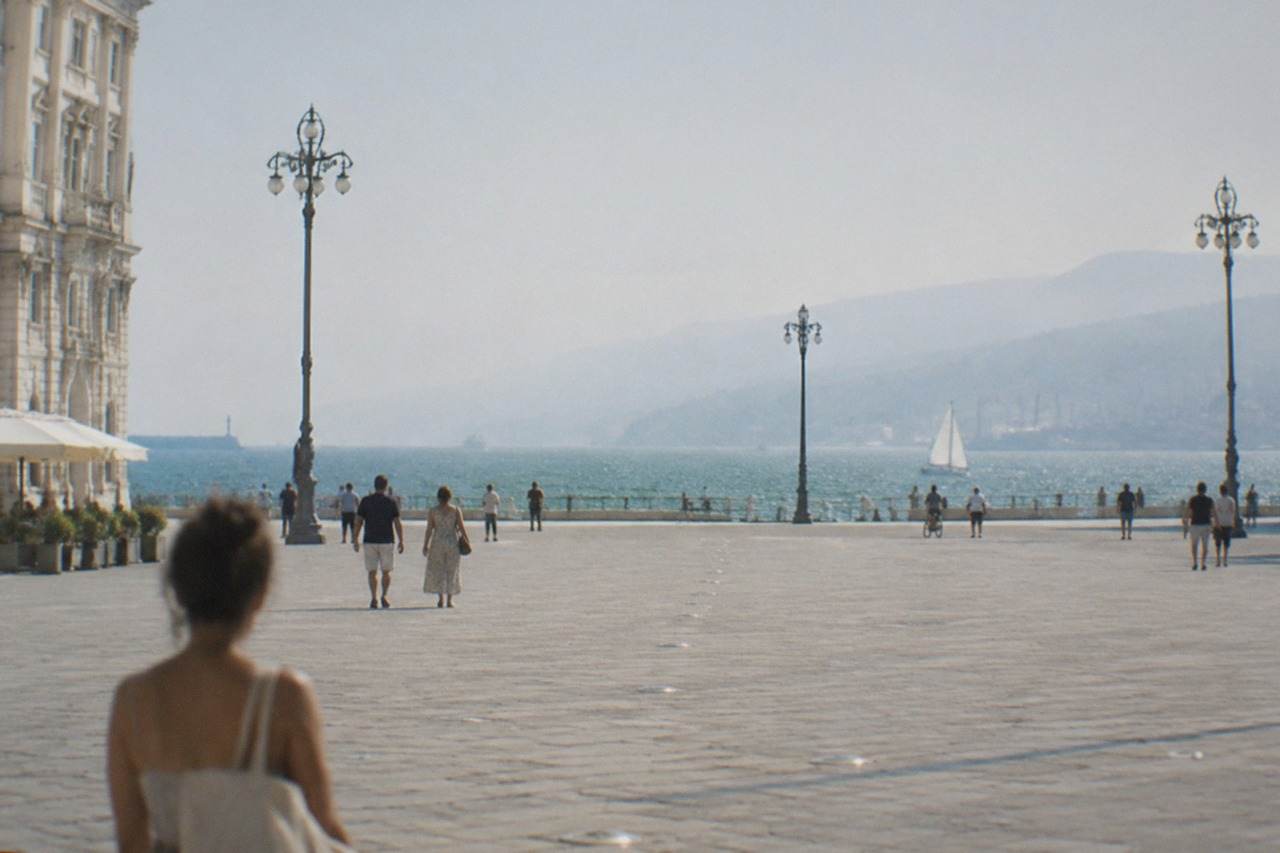
Trieste, the Adriatic port city in Friuli Venezia Giulia in the northeast corner of Italy, has a name that puzzles people the moment they say it out loud. It sounds Italian, it looks Italian, and yet no Italian speaker uses it as an ordinary word. Visitors ask the question constantly, partly because the name resembles the Italian adjective for sad and partly because a surprising number of other things, from a deep-sea vessel to a coffee chain, share it. This page answers the question directly, separates the city from its namesakes, and explains what the name does and does not mean.
What Does Trieste Mean in Italian?
In modern Italian, Trieste does not mean anything, because it is not a common word: it is purely the name of the city in Friuli Venezia Giulia. The Italian adjective for sad is "triste", a different word with a different ending, and the city's name is not a form of it. Trieste is simply a toponym, a place name inherited from the ancient Roman name for the settlement, Tergeste, which appears on the city's own monuments and institutions.
That is the short answer, and it is worth dwelling on why the question gets asked at all. English speakers often assume the name must translate to something, the way "Florence" gestures at flowering or "Rome" carries the weight of an empire. Trieste resists that instinct. Open an Italian dictionary and look for "trieste" as an entry and you will find it only as a proper noun, the city. The resemblance to "triste", meaning sad or sorrowful, is a coincidence of spelling that has fooled plenty of visitors, and it has even fed a small genre of melancholy writing about the city, but it is not what the name means.
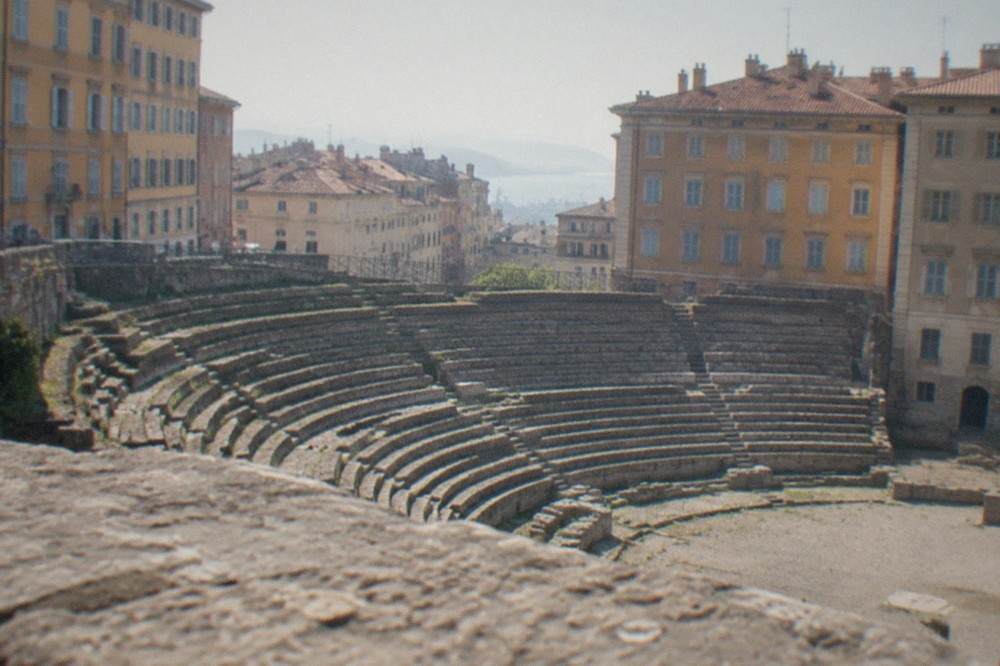
The name's real anchor is antiquity. The Roman world knew the place as Tergeste, and that Latin form is the direct ancestor of the modern Italian name. You can still see the old name in use around the city today: the archaeological museum on the hill of San Giusto is the Lapidario Tergestino, and the city's Roman theatre is the Teatro Romano di Trieste, a monument the ministry's own pages describe as one you look down into from the street rather than enter.
For everything the name does not tell you, the city itself does. The Trieste Travel Guide homepage lays out what is actually here: the seafront square Piazza Unità d'Italia, the Città Vecchia old town, the castles and the Carso plateau above the Gulf of Trieste.
Where Does the Name Trieste Come From?
The name Trieste comes from Tergeste, the Latin name the Romans used for the settlement on the hill where the Cathedral of San Giusto now stands. Tergeste passed through centuries of local pronunciation and documentation into the modern Italian form, and the city has carried some version of this name continuously since antiquity. No modern Italian word lies behind it, and the name was never a description in today's language.
The paper trail is what makes this answer solid rather than folk etymology. The Roman name Tergeste is preserved in the city's own institutional naming: the civic lapidary museum in the Castello di San Giusto complex is called the Lapidario Tergestino, and the ticket you buy there, €7 full price per the castle's official site, covers it along with the walls and the armoury museum. A city does not name its museum after a phantom. The same root surfaces in the Teatro Romano at the foot of the hill, visible from the street, free to look at, and not routinely open to walk into, as the ministry's monument page makes clear.
What Tergeste itself meant to the people who coined it is a matter for specialists, and this site does not print guesses. The honest position is that the pre-Roman origin of the name is not settled in the sources a traveller can verify, and the verifiable story starts with the Latin name and runs unbroken to the present. That continuity is unusual. Cities on this border, contested between empires and states for centuries, kept their name while everything around it, language, flag, currency, changed hands.
The border theme is worth a link of its own, since the name's stability sits oddly against the city's shifting nationality. The question is Trieste more Italian or Slovenian covers exactly that history, and the companion piece on how Italians say Trieste handles the pronunciation, which is tri-ES-te, three syllables with the stress on the middle one.
If you want to see the layers of the name's history in the stones themselves, a guided walk is the efficient way to do it. The Private Trieste Sightseeing Tour, from $128.45 per person, rated 5 from 100 reviews, runs about two and a half hours with your own guide, and you can Check availability on the operator's live listing.
Is Trieste the Italian Word for Sad?
No, Trieste is not the Italian word for sad, and Italians do not use it that way. The Italian adjective for sad is "triste", and its plural forms are "tristi" for either gender, so the city's name is not one of them. The similarity between "Trieste" and "triste" is a spelling resemblance only, and Italian speakers hear the two as entirely separate words, one a city and one a feeling.
The confusion is understandable and almost entirely an English-speaker's problem. In Italian the two words do not even rhyme the way they seem to in English: "triste" is pronounced with a final "-eh" sound, and "Trieste" carries its own distinct middle syllable and ending. An Italian reading the poet Umberto Saba, who wrote about this city for decades, never trips over a double meaning, because there isn't one. The city's melancholic literary reputation, which is real and well documented, comes from its history and its writers, not from a pun hidden in its name.
This is also where the disambiguation duty kicks in, because the name floats free of Italy in some famous directions. The bathyscaphe Trieste, the vessel that descended into the deepest ocean, was named after the city where it was built, not after sadness. The same goes for the San Francisco cafe chain called Caffe Trieste, which borrowed the name of the Italian coffee city, and Trieste is also the name of an actress, a basketball club and an Italian navy ship. None of these have anything to do with the Italian language's vocabulary for emotions, and none of them are what this site is about: the city on the Adriatic.
For the naming rabbit hole in other directions, the companion pages on what Trieste means in French and what Trieste means in English cover the same question in those languages, where the answers differ in interesting ways.
How Do Italians Use the Name Trieste?
Italians use Trieste exclusively as a proper noun: the name of the city, and by extension things named after it, such as the University of Trieste or the province of Trieste. It declines like other Italian place names in speech but never functions as a common word, and no Italian dictionary lists a separate everyday meaning for it. When Italians want to say sad, they say "triste", never "trieste".
The practical proof is in the city's own signage and institutions, which pair the name with Italian grammar in completely ordinary ways. Piazza Unità d'Italia, the great seafront square, keeps the particle lowercase and the accent on Unità, exactly as Italian orthography demands. The Città Vecchia, the old town below the castle hill, carries its accents too. A visitor who has read that Italian spelling is fussy about these marks will see why immediately: the accents change the sound, and the particles are part of the name, not decorations.
The name also travels in official usage. The region is Friuli Venezia Giulia, and Trieste is its regional capital, the seat of the region's administration. The port authority, the university, the railway station, Trieste Centrale, and the airport all carry the name forward in forms a traveller will actually use. Even the tourist tax, the imposta di soggiorno, is set by the Comune di Trieste, at rates from €1.50 per night at campsites up to €3.80 at five-star hotels, for a maximum of five consecutive nights, per the municipality's own 2026 tariff table.
Here is how some of the city's headline sites price out, all from the venues' own official pages, which is the kind of concrete detail a name alone never gives you:
| Site | Full price | Hours (current published) | Notes |
|---|---|---|---|
| Castello di Miramare, castle | €17.00 | Every day 9:00-19:00, last entry 18:30 | Ticket includes the temporary exhibition |
| Miramare park | Free | April-September 8:00-19:00, varies by month | Free all year, per the venue's own page |
| Castello di San Giusto | €7.00 | 1 April-11 Oct daily 10:00-19:00; from 12 Oct Tue-Sun 10:00-17:00 | Covers walls, museum, Lapidario Tergestino |
| Museo Revoltella | €8.00 | Daily 10:00-19:00 | Closed Tuesdays |
| Grotta Gigante, Sgonico | €15.00 | Tours at 9:00, 10:00, 11:00, 12:00, 14:00, 15:00, 16:00 | Guided only, booking compulsory |
Notice the Lapidario Tergestino in that table: the ancient name again, embedded in a modern ticket. That is the clearest everyday evidence of where the name comes from, and you can read more about the castle complex itself in the guide to San Giusto Castle and the hill.
Does the Name Trieste Tell You Anything About the City?
The name tells you the city is old, and almost nothing else. Trieste's name has been in continuous use since the Roman Tergeste, which puts it among the longest-lived place names in northern Italy, but it encodes no description, no direction and no meaning a modern visitor can act on. To know the city you have to look at what the name is attached to: the seafront, the coffee houses, the border.
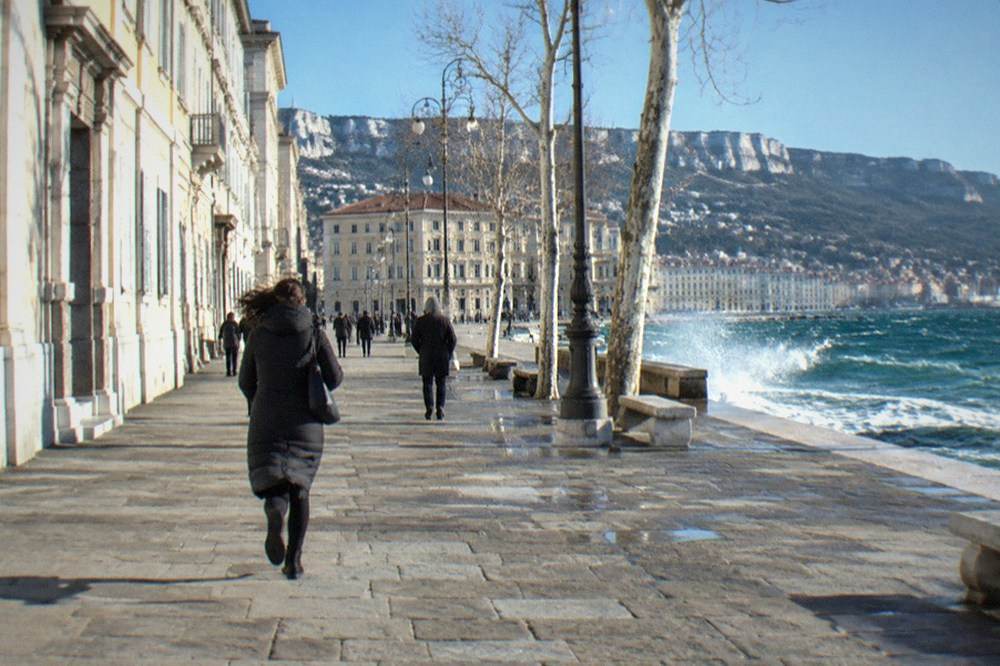
What the name is attached to is a city that behaves differently from the Italian stereotype, and the numbers back that up. The ARPA FVG climate station on the molo Fratelli Bandiera records 867 mm of rain a year across 86.1 wet days, wetter than the dry Mediterranean image many visitors carry, with the rain concentrated in autumn: November alone averages 109.8 mm, while July, at 53.8 mm, is the second driest month of the year. The same station tables record an all-time peak gust of 168.1 km/h in February 2012, and an average of 17.6 days a year with a gust over 90 km/h: the bora wind is part of what the name has been attached to for as long as anyone has written it down.
The city's calendar carries the same weight of continuity. Barcolana, the autumn sailing regatta, was first held in 1969 with 51 boats on the start line, and the 2018 edition set the record with 2,689 registered yachts, a figure the organisers describe as a Guinness World Record for the largest sailing race in the world. The 58th edition runs 2-11 October 2026. A name that has survived since antiquity now sits on the largest sailing event on the planet, which is a decent illustration of how little a toponym predicts and how much a city can accumulate around it.
| Month | Mean high C | Rain mm | Wet days | Sea C |
|---|---|---|---|---|
| July | 28.2 | 53.8 | 5.4 | 25.9 |
| August | 28.1 | 71.7 | 6.6 | 25.9 |
| September | 23.9 | 102.3 | 7.4 | 23.9 |
| November | 14.7 | 109.8 | 9.5 | 16.8 |
Those figures come from ARPA FVG's own normals for the Trieste waterfront station, and they correct a common assumption in one glance: this is not a rainy-in-summer city, and it is not the dry south either. The bora and the autumn rain shape the city far more than any meaning a visitor might guess from the name. The full picture is in the guide to the bora wind and the month-by-month climate breakdown.
Common Questions About the Name Trieste
What does trieste mean in italian?
Nothing, in the sense of an everyday word: Trieste is the proper name of the city in Friuli Venezia Giulia, Italy. The name descends from the Roman Tergeste. The Italian word for sad is "triste", which is a different word entirely.
Is Trieste related to the Italian word for sad?
No. The Italian adjective is "triste", with plurals "tristi", and the city's name is not a form of it. The spelling similarity is a coincidence, and Italian speakers treat the two as unrelated words.
Where does the name Tergeste come from?
Tergeste is the Latin name the Romans used for the settlement, and it is the direct ancestor of the modern name. Its pre-Roman origin is not settled in sources a traveller can verify, so this site does not print a guess. The name survives in the city's Lapidario Tergestino museum.
Why do so many things share the name Trieste?
Because they are named after the city. The deep-sea bathyscaphe Trieste was built there, the San Francisco cafe chain borrowed the coffee city's name, and an actress, a basketball club and an Italian navy ship carry it too. The city in Italy is the original.
How do you pronounce Trieste in Italian?
Tri-ES-te: three syllables with the stress on the middle one. The companion page on how Italians say Trieste covers the pronunciation and the local variants in more detail.
The name, in the end, is a label with two thousand years of service and no dictionary entry, and the city it labels rewards the visit far more than the etymology suggests. For what to actually do under that name, start with what Trieste is famous for and plan from there.