What Is the Secret Beach Near Trieste?
The answer to what is the secret beach near Trieste, Italy: the historic Pedocin at La Lanterna, plus quiet coastal alternatives at Sistiana and Muggia, with sea temperatures and how to visit.
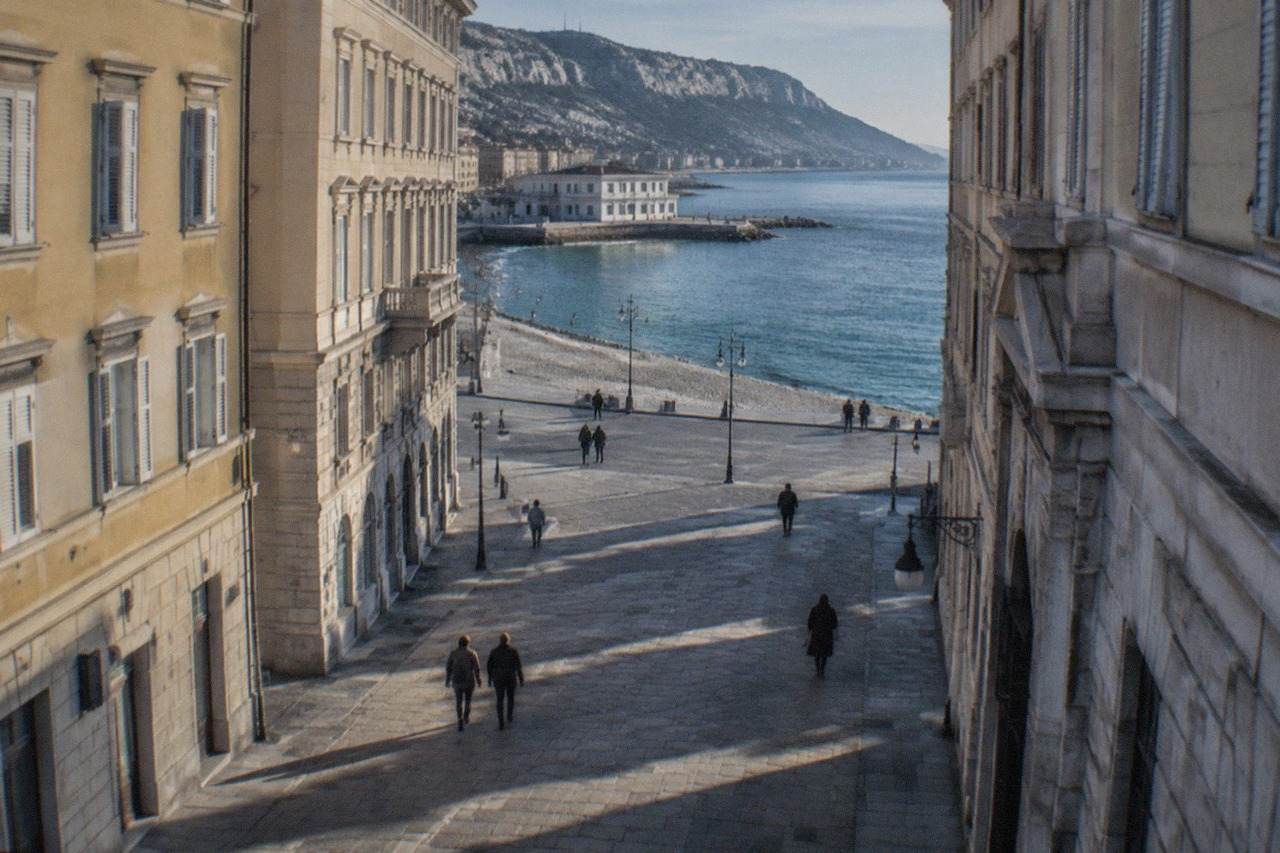
Trieste, Italy is a port city built straight onto the Gulf of Trieste, and the question of a "secret beach" comes up more often than you would expect for a place with no classic sandy resort strip. The honest answer is that there is no smugglers' cove here, but there is a beach that behaves like one: the Pedocin, the historic bathing establishment at La Lanterna on the city seafront, which most visitors walk past without realising what it is. Around it sit a handful of quieter stretches, from the rocks of Barcola to the limestone coast at Sistiana and the small bay at Muggia. This page answers the question properly, with the sea temperatures that decide when swimming is actually worth it.
What Is the Secret Beach Near Trieste?
The beach locals treat as their secret is the Pedocin, the historic seafront bathing establishment at La Lanterna in Trieste, Italy, a stone's throw from the city centre yet largely unknown to tourists. It is not sandy and not hidden, it is simply unfashionable, historic and cheap, with separate men's and women's sections that preserve a bathing tradition found nowhere else in the city. If one place answers this question, it is this one.
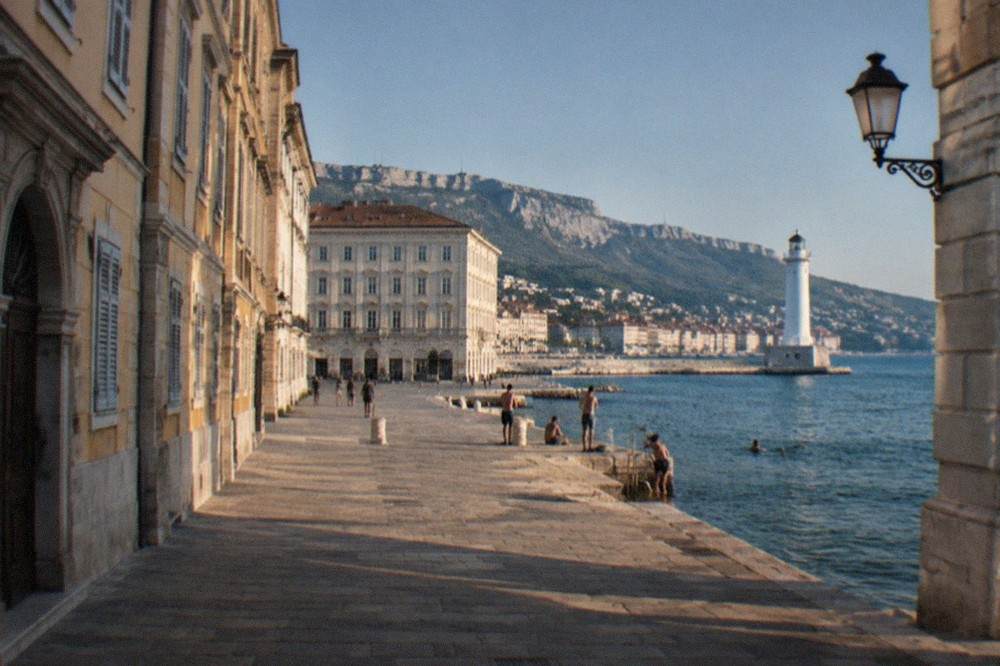
The Pedocin sits at the foot of the Lanterna, the small white lighthouse that has watched over Trieste's shoreline swimming since the nineteenth century. Its fame among residents rests on two things: it is the closest real swimming spot to the centre, and its women-only section survives from an era when the city's Habsburg-era bathing culture segregated the sexes, a tradition the establishment has kept alive into the twenty-first century. The water is the same Adriatic you get anywhere on this gulf, clear and calm on the lee days, churned by the bora when the wind blows from the east-north-east.
The reason it stays "secret" is simple. Visitors arriving in Trieste look for sand, find none, and head for the better-known free seafront at Barcola or the pebble beaches further up the coast, and the Pedocin never appears in the average guidebook itinerary. Locals, meanwhile, treat it as an institution. It is the kind of place where the changing cabins, the concrete sun decks and the cold deep water matter less than the fact that it has always been there. For more on how this city handles the sea generally, see our answer to is Trieste good for a beach holiday, which sets out the honest picture for the whole gulf.
Which Other Quiet Beaches Sit Near Trieste, Italy?
Beyond the Pedocin, the quiet swimming and sunbathing spots near Trieste are the long free seafront at Barcola, the rocky limestone coast around Sistiana to the north-west, and the sheltered little bay at Muggia across the gulf to the south-east. None is a hidden cove in the literal sense, but each sees far fewer tourists than the city's squares, and each is reachable on ordinary local transport or a coastal ride.
Barcola is the opposite of secret: the whole city migrates there on summer Sunday afternoons, spreading towels on the concrete and rocks that line the seafront road. What makes it relevant to this question is its edges. Away from the busiest central stretch, the shoreline breaks into small rocky platforms and steps where only a handful of people settle, especially on weekday mornings. The water drops off quickly, which suits confident swimmers more than paddling families.
Sistiana, up the coast towards Duino, is where the landscape changes. The limestone cliffs of the Carso meet the sea here, and the coast alternates between small pay beaches with facilities and free rocky access points. The Sistiana coast area guide covers the shoreline, the walking and the access in detail. Muggia, across the bay in the other direction, is a small Italian town on a narrow stretch of coast hemmed in by the Slovenian border, with a modest beach and a marina that most visitors never reach because they assume the border makes it complicated. It does not: Slovenia uses the euro and is in Schengen, though Italy is running temporary border checks on that land crossing until 18 December 2026, so carry a passport or national ID card.
The coastal question in Trieste is really a transport question. The beaches that feel secret are the ones that take a little effort to reach, and one of the most enjoyable ways to cover the seafront between the city and Miramare Castle is by bike. The e-bike tour that links the old town, Miramare Castle and a gelato stop runs about six hours and is currently rated 5 from a small number of reviews, from $174.26 per person on the operator's live listing: Check availability. For a different angle on quiet coast, the Piran and Slovenia coast tour crosses the border to the Slovenian side of the Istrian shore, a stretch of Adriatic that genuinely sees less traffic than the Italian side.
When Is the Sea Warm Enough to Swim Near Trieste?
The Gulf of Trieste reaches its warmest sea temperatures in July and August, at a mean of 25.9 C in both months according to the long-term series, with June at 23.1 C and September at 23.9 C, so the comfortable swimming window runs roughly June through September, and September is often as warm as June despite the shorter days.
Those figures come from the sea-temperature series for the gulf, which is a different dataset from the land-based weather station on the molo, and the distinction matters: the sea holds its heat through late summer, which is why September swimming in Trieste is a local habit rather than a stubborn one. May, at a mean of 17.9 C, is for the hardy. October drops to 20.3 C, borderline for most people but not impossible on a warm, still day. The rest of the planning pages sit on Trieste Travel Guide.
| Month | Mean sea temperature (C) | What that means for swimming |
|---|---|---|
| May | 17.9 | Cold on entry, fine for a quick dip |
| June | 23.1 | Comfortable, the season is properly open |
| July | 25.9 | Peak warmth, busiest water of the year |
| August | 25.9 | Peak warmth holds through the month |
| September | 23.9 | Still comfortable, far quieter beaches |
| October | 20.3 | Borderline, best on warm still days |
One thing that shapes any beach day here more than temperature is the wind. The bora, Trieste's cold dry gusting wind from the east-north-east, averages 17.6 days a year with gusts over 90 km/h at the waterfront station, and the monthly record gust exceeds 110 km/h in every single month of the year. No official threshold exists at which beaches close or ferries stop, because none has ever been published; the practical rule is simply to check the forecast, and to remember that a bora day makes even the warmest August water unswimmable while a calm October day can be delightful. The wind is also why the coastline is built the way it is, with concrete decks and stone steps rather than sand.
How Do You Actually Plan a Beach Day in Trieste?
Plan around three variables: the sea temperature, the wind forecast and the tide of local habit. Bring rock shoes rather than flip-flops because almost every beach here is stone, concrete or a platform, pick Barcola for ease and people-watching, the Pedocin for the historic enclosed experience, and Sistiana or Muggia when you want the quietest water, and go in the morning when the bora is least likely to have picked up.
Practicalities are thin on the ground by resort standards, and that is part of the charm. There is no beach-hire economy to speak of, no rows of sun loungers for rent along the seafront, and no promenade vendors selling inflatables. What there is: deep, clean water close to shore, free access along almost the whole coast, and a city that treats swimming as a daily routine rather than a holiday event. The free seafront at Barcola has no entry fee and no facilities to speak of, the Pedocin is a paying establishment, and the pay beaches at Sistiana come with the usual sunbed-and-cabin setup.
| Coastal spot | Character | Best for |
|---|---|---|
| Pedocin, La Lanterna | Historic enclosed bathing establishment, separate sections | The authentic local swim, close to the centre |
| Barcola seafront | Long free concrete and rock shoreline | Ease, sunsets, people-watching |
| Sistiana coast | Limestone cliffs, small pay beaches and free rocks | Quieter water, a coast-drive day out |
| Muggia bay | Small town beach and marina near the border | Escaping the city crowd entirely |
If the beach hunt is really a coast-hunt, the guided options that cover this shoreline are worth comparing before you commit:
| Tour | Duration | From (per person) | Rating |
|---|---|---|---|
| E-bike: old town, Miramare Castle and gelato | 6 hours | $174.26 | 5 from 2 reviews |
| Piran and Slovenia coast tour | 6 hours | $114.64 | 4.57 from 136 reviews |
| History of Prosecco and the Karst region | 7 hours | $145.22 | 4.48 from 23 reviews |
Prices and ratings are as listed by the operators at the time of writing; check the live listing for the current figure before booking.
Is the "Secret Beach" Worth the Hype?
Yes, if you calibrate your expectations: the secret beach near Trieste is not a hidden paradise, it is a working, historic, local swimming culture that happens to be invisible to most visitors, and that is exactly what makes it worth seeking out. The Pedocin, the quiet ends of Barcola, the cliffs at Sistiana and the bay at Muggia together give you a genuinely local sea day that no tour bus replicates.
The mistake would be arriving with a postcard of a sandy cove in mind. Trieste's coast is stone, concrete and deep blue water, framed by a lighthouse, a castle and a plateau, and the pleasure of it is bound up with that severity. Swim where the locals swim, time it with the sea-temperature curve rather than the calendar, respect the bora, and you will understand why the question "what is the secret beach near Trieste?" has a real answer even though no guidebook prints it. For the wider picture of what this city offers beyond the waterline, start with what Trieste is famous for and, if your time is short, our guide to what to do in Trieste in one day.
Common Questions About the Secret Beach Near Trieste
What is the secret beach near Trieste?
The Pedocin at La Lanterna, the historic bathing establishment on the Trieste seafront, is the beach locals treat as their secret: central, cheap, largely unknown to tourists, and famous for its separate men's and women's sections.
Is the secret beach near Trieste sandy?
No. Trieste's coast is stone, concrete platforms and rock, and the Pedocin is no exception. The water is deep and clear close to shore, but bring rock shoes rather than expecting sand.
When can you swim in Trieste, Italy?
The comfortable window is roughly June through September. The gulf's mean sea temperature is 23.1 C in June, peaks at 25.9 C in July and August, and is still 23.9 C in September.
Does the bora affect beach days in Trieste?
Yes. The bora averages 17.6 days a year with gusts over 90 km/h at the waterfront station, and no official closure threshold has ever been published. Check the forecast and swim on the calm days.
Are there quieter alternatives near the city?
Yes: the rocky coast around Sistiana to the north-west and the small bay at Muggia across the gulf both see far fewer visitors than Barcola's central seafront.