What Is the Speciality of Trieste?
What is the speciality of Trieste, Italy? Coffee culture, Habsburg streets, the bora wind and a Central European food tradition that no other Italian city shares.
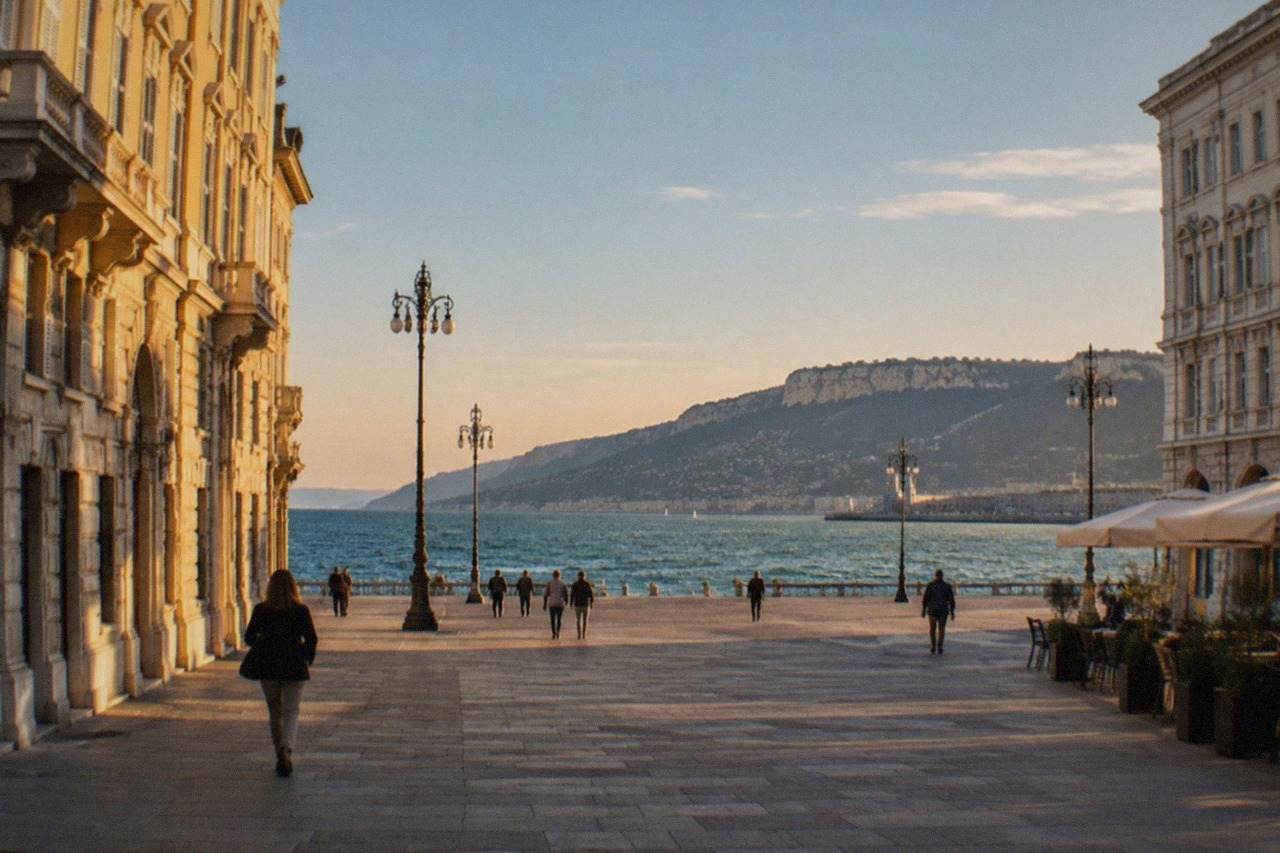
Trieste, the Adriatic port city in Friuli Venezia Giulia in the far northeast of Italy, has a speciality that no other Italian city can claim: it is the country's Central European metropolis. It was the Habsburgs' only great seaport, and everything visitors still cross the border for, the coffee houses, the Viennese-style squares, the cuisine built on jota and goulash rather than pasta al pomodoro, the bora wind blowing off the Carso, comes from that history. The question "what is the speciality of trieste?" gets asked because the city genuinely does not feel like the rest of Italy, and this page answers it in full.
What Is the Speciality of Trieste?
The speciality of Trieste, Italy, is its Central European character: it was the Habsburg Empire's principal seaport, and the city still shows it in Viennese-style architecture, a coffee-house culture unmatched in Italy, a cuisine that blends Italian, Slovene and Austro-Hungarian traditions, and the bora wind that funnels down off the Carso plateau onto the seafront. No other Italian city offers that combination, which is why Trieste is often described as the most un-Italian city in Italy.
That answer needs unpacking, because "speciality" means different things to different searchers. Some are asking what the city is famous for, a question covered in depth on what Trieste is famous for. Others want the signature dish, which has its own answer on the signature dish of Trieste. This page pulls the threads together: coffee, food, architecture, wind and sea, the five things that make Trieste recognisably Trieste rather than a smaller Venice or a colder Rimini.
The honest summary is that Trieste's speciality is a whole atmosphere, but each ingredient of it is checkable, and the sections below do exactly that.
Why Is Trieste's Coffee Culture Its Signature?
Trieste's signature is its coffee culture: the city is a historic coffee port and a working roasting centre, home to Illy's headquarters, and its historic cafés operate as institutions rather than snack bars. The claim that locals drink more coffee per head than anywhere else in Italy circulates widely, but no primary source, from the Chamber of Commerce to Illy itself, publishes a figure, so the culture is written here without a number.
What is verifiable is the texture. Trieste's cafés, from the grand institutions off Piazza Unità d'Italia to the tiny standing bars of the Città Vecchia, follow a Central European model: newspapers, marble, waiters, and a dozen named ways of ordering a coffee. A local guide walks you through that ordering vocabulary and the historic bars on the city's Trieste coffee culture traditions, and the guided walk that ends with a coffee in a historic bar exists precisely because the coffee house is the city's living room.
The coffee story is a port story. Green coffee has entered Italy through Trieste's docks for as long as the port has served Central Europe, and roasting remains a real industry here rather than a heritage display. That is why the caffè is treated as a public institution and why asking "what is the speciality of trieste?" almost always produces the word coffee in the first sentence of an answer.
What Food Is a Speciality of Trieste?
Trieste's food speciality is its Austro-Hungarian and Slovene-inflected cuisine: jota, a soup of sauerkraut, beans and pork, is the signature dish, alongside goulash served with bread or polenta, prosciutto from the Carso, and wines such as Vitovska, Malvasia and Terrano grown on the Karst plateau above the city. This is Italian food only in passport terms; its roots are Mitteleuropean, and buffets serving it are a Triestine institution of their own.
The buffet, the Triestine version of the osteria, serves cotto meats, goulash and jota to workers and visitors alike, and it is the fastest edible proof of the city's speciality. The full story, dish by dish, is on what food Trieste is famous for, and the deeper history of jota and the buffet tradition has its own guide. Note one trap: Prosecco, the Carso village that gave the sparkling wine its name, sits above the gulf, but Trieste is not in the Prosecco DOC, and the local wines to ask for are the Carso's own whites and reds.
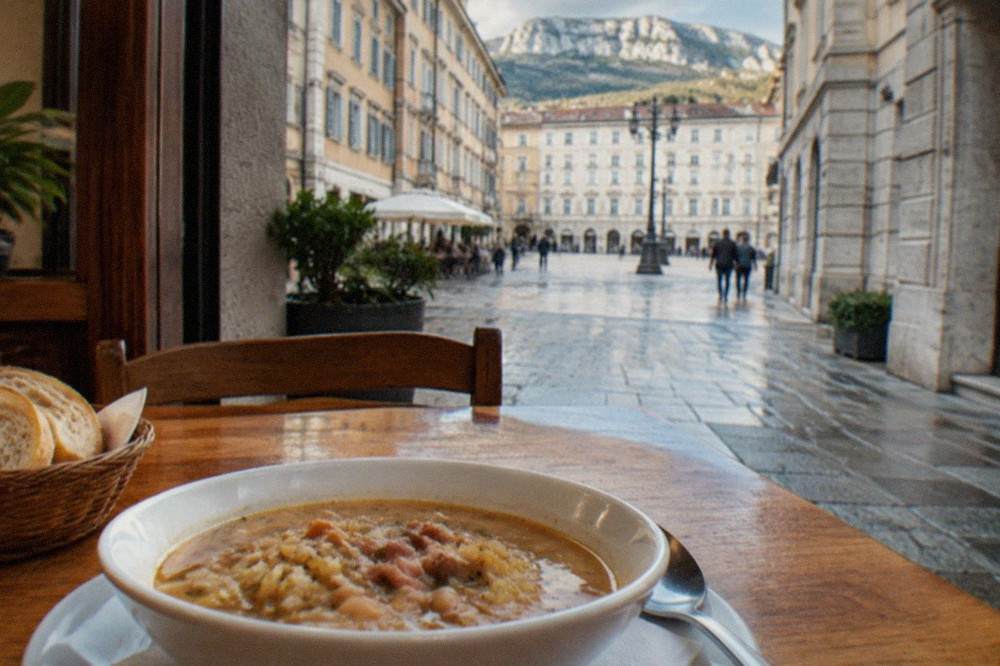
A guided food walk is the practical way to taste the speciality in an afternoon. The guided foodie walking tour runs about three hours, is rated 4.9 from 264 reviews on the operator's live listing, and starts from $71.08 per person. The rest of the planning pages sit on Trieste Travel Guide.
| Trieste speciality | What it is | Where to taste or see it |
|---|---|---|
| Jota | Sauerkraut, bean and pork soup, the signature dish | Triestine buffets across the city |
| Goulash | Austro-Hungarian stew, served with bread or polenta | Buffets and trattorie |
| Carso wines | Vitovska, Malvasia and Terrano from the Karst plateau | Wine bars and osmize on the Carso |
| Historic caffè | Central European coffee-house culture | Grand cafés off Piazza Unità d'Italia |
| Osmize | Seasonal farm outlets selling their own wine, signalled by a frasca branch | The Karst above the city, calendar at osmize.com |
Tasting the Carso's wine at its source means timing a visit around the osmize, the seasonal farmhouse outlets that open for limited periods each year, signposted by a leafy frasca branch hung at the turning. The volunteer-run calendar at osmize.com lists which farms are open on which days, and there is no municipal equivalent, so that page is the reference.
Is the Bora Wind Part of What Trieste Is Known For?
Yes, the bora is part of Trieste's speciality. ARPA FVG's own station tables for the molo Fratelli Bandiera record 17.6 days a year on average with a gust over 90 km/h, 49 days with a gust over 72 km/h, and an all-time peak gust of 168.1 km/h in February 2012. The cold, dry wind blows from the east-north-east off the Carso, and the city is engineered around it, from seafront moorings to the ropes locals hold on to in the strongest episodes.
The numbers matter because almost everything else written about the bora online is folklore. There is no published official wind threshold at which the seafront closes or ferries stop; the record gust figures of 171 km/h from 1954 and 188 km/h from 2010 that circulate in older guides are not in ARPA's station table and are not repeated here. What the agency's own data does show is that the monthly record gust exceeds 110 km/h in every single month of the year, so the bora is not purely a winter phenomenon, even though it peaks in the cool season.
| Bora fact, from ARPA FVG station tables | Figure |
|---|---|
| Average days a year with a gust over 90 km/h | 17.6 |
| Average days a year with a gust over 72 km/h | 49.0 |
| All-time peak gust in the 1995-2024 series | 168.1 km/h, February 2012 |
| Direction of the bora | East-north-east |
| Monthly record gust | Exceeds 110 km/h in every month |
The bora is also the engine of the city's most famous event. The Barcolana regatta, the sailing race that fills the Gulf of Trieste every October, runs 2-11 October 2026 with the main race on Sunday 11 October, and its record edition was 2,689 boats in 2018, described by the organisers as a Guinness World Record for the largest sailing race in the world. October sits inside the windy shoulder of the year, which is rather the point of the event.
How Do the Habsburg City and the Sea Explain Trieste's Speciality?
Trieste's built speciality is a Habsburg seaport that grew rich in the eighteenth and nineteenth centuries and never lost its layout: a grid of Neoclassical streets in the Borgo Teresiano, the sea-facing Piazza Unità d'Italia, and a hilltop core around the Cattedrale di San Giusto. The city's museums and castles carry the same character, from Miramare Castle on the gulf to the Revoltella gallery, and the sea defines the western edge of everything.
Miramare is the clearest single example: the white castle Maximilian of Habsburg built on a promontory above the gulf, with a park that is free all year and a castle ticket at €17 including the temporary exhibition, open daily 9:00-19:00 with last admission at 18:30. In the city itself, Castello di San Giusto costs €7 and covers the walls, the armoury museum and the Lapidario Tergestino, the Museo Revoltella charges €8 and closes on Tuesdays, and Grotta Gigante, the giant cave on the Carso at Sgonico, is €15 with guided tours only and compulsory booking.
| Site that shows the speciality | Ticket | Hours to check on the venue page |
|---|---|---|
| Miramare Castle | €17 adult, park free | Daily 9:00-19:00, last entry 18:30 |
| Castello di San Giusto | €7 adult | Daily 10:00-19:00 to 11 October, then Tue-Sun 10:00-17:00 |
| Museo Revoltella | €8 adult | Daily 10:00-19:00, closed Tuesdays |
| Grotta Gigante, Sgonico | €15 adult | Guided only, booking compulsory, tours on the hour |
| Cattedrale di San Giusto | Free | Weekdays 8:00-18:30, Sundays 9:00-19:30 |
The sea half of the speciality is just as real. The Rive waterfront, Molo Audace and the Barcola seafront give the city a relationship with the water that is closer to a Nordic port's than a beach resort's, and ARPA's oceanographic bulletins show Gulf of Trieste sea temperatures peaking in August, with swimmable conditions generally running from June into early autumn. The deeper comparison with the rest of Italy is drawn on what is special about Trieste, Italy.
Common Questions About Trieste's Speciality
Readers asking about Trieste's speciality almost always mean one of five things: the coffee, the food, the wind, the Habsburg architecture or the sea. The short answers below cover the rest.
What is the speciality of trieste?
Trieste, Italy, specialises in being Central European: a Habsburg seaport with an unmatched coffee-house culture, a cuisine built on jota and goulash, the bora wind off the Carso, and a seafront that faces open water. That combination, not any single monument, is the city's speciality.
Is coffee really Trieste's speciality?
Yes, in the sense that the coffee house is a civic institution and the city is a working roasting centre, home to Illy's headquarters. No per-head consumption figure has a primary source, so treat the "coffee capital" claim as culture, not statistics.
What is the signature dish of Trieste?
Jota, a soup of sauerkraut, beans and pork, is the dish most locals name first. Goulash and the buffet tradition of cotto meats sit right behind it, and the Carso's Vitovska, Malvasia and Terrano wines are the local pour.
Does the bora make Trieste a bad place to visit?
No. ARPA's tables average 17.6 days a year with a gust over 90 km/h, concentrated in the cool season, and July is one of the city's drier, calmer months. The wind is part of the character, not a reason to stay away.
How many days do you need to see Trieste's speciality?
Two days is enough for the cafés, the Habsburg centre, San Giusto hill and Miramare, with a third for the Carso, an osmiza or a cross-border day trip. The planning detail is on how many days you need in Trieste.
Trieste's speciality, in one line, is that it is Italy's Central European city, and the coffee, the jota, the bora and the Habsburg seafront are the four checkable proofs of it.