What Is the Unusual Thing to Do in Trieste?
The unusual things to do in Trieste, Italy: the reactivated Opicina tram, the osmize farm taverns of the Carso, a Roman theatre you view from the street, and the free walking tours of the old port.
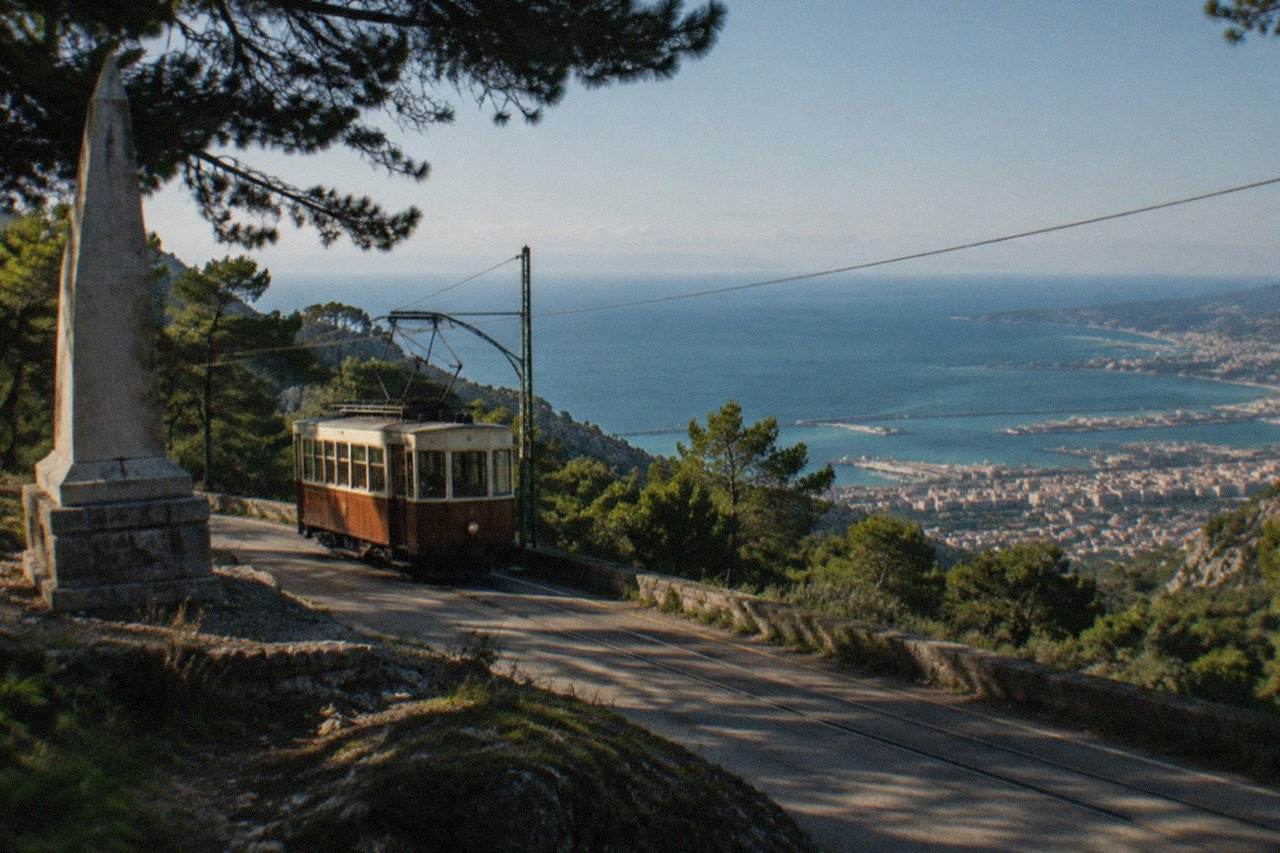
Trieste, the Adriatic port city in Friuli Venezia Giulia in the far northeast of Italy, does not trade in the usual Italian postcard. There is no Renaissance heart, no leaning tower, no canal lined with gondolas for hire. What it has instead is a stack of genuinely odd attractions: a century-old tram that was dead for nearly a decade and now runs again, farm taverns on the Karst plateau whose only advertisement is a branch hung over the road, and a Roman theatre you visit by standing on the pavement above it. If the question is what to do here that you cannot do anywhere else in the country, the answer starts with those three, and this Trieste Travel Guide page walks through each one.
What Is the Unusual Thing to Do in Trieste?
The single most unusual thing to do in Trieste, Italy, is ride the Opicina tram, the hybrid tram-and-funicular that climbs from piazza Dalmazia to the Karst village of Opicina, reactivated on 1 February 2025 after the stop that followed an August 2016 accident. Close behind come the osmize, seasonal farm taverns on the Carso where growers sell their own wine under a branch hung out as a sign, and the Roman theatre, which you view from the street rather than enter.
Those three are the headline acts, but the city keeps producing more. The Risiera di San Sabba, a national monument housed in a former rice-processing complex, is free to enter and open daily. The Bagno Marino La Lanterna at Pedocin is a historic sea-bathing establishment on the waterfront. And the old port, Porto Vecchio, is a district that was closed to the public for decades and has only opened up in recent years, which the free GuruWalk industrial-archaeology walk explores. A flexible way to tie the central oddities together is the Trieste Private Walking Tour with a Local, a private walk of 2 to 6 hours with a local guide, from $56.05 per person and rated 4.6 from 94 reviews, which you can shape around whatever corner of the city interests you most.
| Unusual thing | What makes it unusual | Key practical fact |
|---|---|---|
| Opicina tram | Hybrid tram-funicular, reactivated 1 February 2025 | City terminus is piazza Dalmazia, a standard urban ticket is valid |
| Osmize of the Carso | Farm taverns selling their own wine, signposted by a frasca branch | Openings are seasonal and listed on the osmize.com calendar |
| Roman theatre | Roman remains you look down into from the street | Free, no routine individual entry |
| Risiera di San Sabba | National monument in a former rice factory | Free entry, daily opening |
| Porto Vecchio | A port district closed to the public for decades | Explored by a free, tip-based GuruWalk walk |
For a longer list of strange corners, the site's own unusual things to do in Trieste guide goes deeper, and the companion piece on the unusual thing to see in Trieste covers the sights rather than the activities.
Ride the Opicina Tram, Trieste's Hill-Climbing Hybrid
The Opicina tram, urban line 2, runs the roughly 5.175 km route between piazza Dalmazia and the village of Opicina on the Karst, and it is the city's signature unusual ride because it combines an ordinary tram with cable-hauled funicular sections that drag the car up the steepest part of the slope. It was suspended after an August 2016 collision and reactivated on 1 February 2025, and Trieste Trasporti's own line page carries a current timetable dated 20 July 2026, so it is running now.
Two corrections matter here, because almost every English-language write-up gets them wrong. First, the tram is not closed. It was out of service for years after the 2016 accident, which is why stale content still says so, but the operator's own line-2 page confirms the reactivation date and a live timetable. Second, the city terminus is piazza Dalmazia, not piazza Oberdan. The route as published runs piazza Dalmazia, piazza Casali, Sant'Anastasio, via Romagna, Vetta Scorcola, Cologna, Conconello, the Obelisco, and Opicina station. If a source sends you to Oberdan, it is describing the historic route, not the current one.
Because it is part of the ordinary urban network, riding it costs a standard Trieste urban ticket, and contactless bank cards can be tapped on board. The 2026 tariff sheet lists the 60-minute single at €1.50 and the 75-minute single at €1.85, with a day ticket at €3.35. For live status, including any short maintenance suspension, check the operator's own site rather than a printed schedule. The village at the top, Villa Opicina, is itself an unusual spot: a Karst settlement with a Habsburg-era railway station and views down over the whole gulf.
Hunt a Frasca: The Osmize of the Carso
The most unusual food experience in Trieste is the osmiza, a farmhouse on the Carso plateau where the family sells its own wine and simple homemade produce directly from the property for a limited seasonal window, and the only advertisement is a frasca, a leafy branch hung at the turning to show the place is open. The name comes from the Slovene word osem, eight, for the days the custom originally allowed, and the openings cluster in spring and autumn rather than running year-round.
What you get inside is whatever the farm made: wine by the glass or bottle, salumi, cheese, eggs and simple plates, eaten at shared tables. The Carso's own wines are the point here, Vitovska, Malvasia and Terrano, grown on the red-earth plateau above the city. That detail matters because the village of Prosecco, which gives the famous sparkling wine its name, also sits in this area, but Trieste itself is not in the Prosecco DOC, and the plateau's growers pour their own varieties instead. The custom is a cross-border one, shared with the Slovenian side of the Karst, and it is old enough that its roots are traced to Habsburg-era rules letting farmers sell their own produce, though the precise legal history is folklore more than documented fact, so write the branch, the wine and the calendar, not the decree.
There is no municipal list of open osmize. The de facto calendar, with addresses, a map and day-by-day openings, lives at osmize.com, a volunteer-run site that has been the reference for years. Because each farm decides its own days based on its stock, a visit needs a little planning: check the calendar, note two or three options near each other, and treat a closed frasca as a sign to try the next one. The osmize of the Carso guide on this site covers the practical side in full.
| Osmiza feature | What to expect |
|---|---|
| The frasca | A leafy branch hung at the turning, the only sign a farm is open |
| What is served | The farm's own wine, plus salumi, cheese, eggs and simple plates |
| The wines | Vitovska, Malvasia and Terrano, the Carso's own varieties |
| When they open | Seasonal, concentrated in spring and autumn, days set by each farm |
| How to find one | The osmize.com calendar with addresses and a map |
For a structured version of the same plateau, the Prosecco Origins tour visits the village where the sparkling wine's story began, from $68.79 per person and rated 4.93 from 227 reviews over 2.5 hours.
Look Down Into the Roman Theatre from the Street
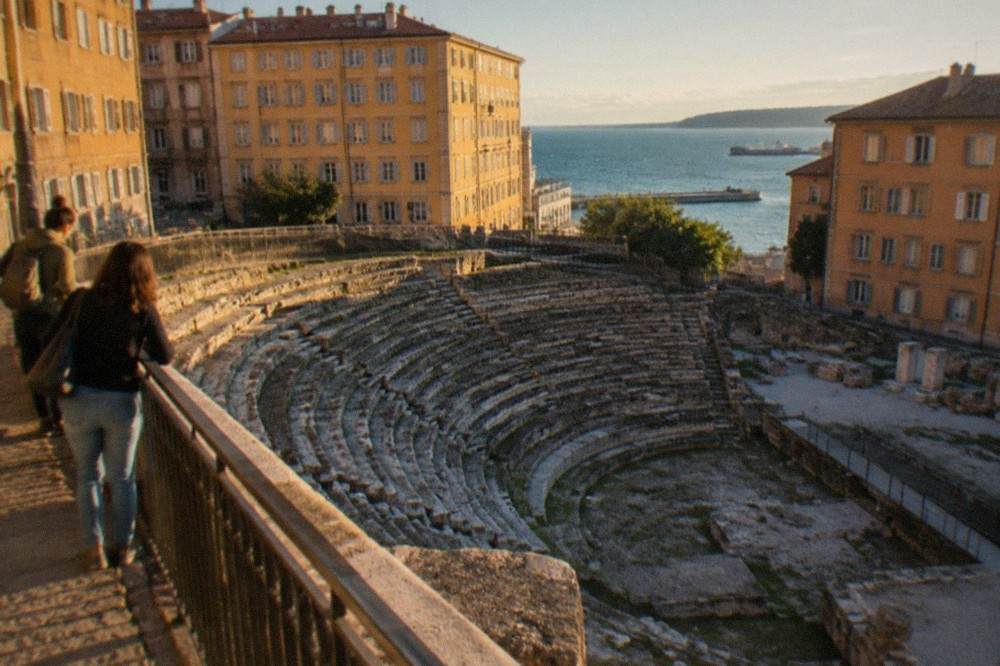
Trieste's Roman theatre is unusual among Italy's ancient monuments because you do not go inside it: you look down into it from the street, free, with no ticket and no turnstiles, and there is no routine individual entry at all. Guided access exists for groups and schools on request through the heritage authority, but the standard visit is a view from the pavement above the cavea, which is why so many visitors walk past without realising what they are standing over.
That arrangement is a fair emblem of the city. Trieste was Tergeste, a Roman port, and the theatre sat against the slope of San Giusto hill; the modern street grid preserved the view rather than the access. The hill above it holds the Cathedral of San Giusto, whose entry is free, and the castle and hill of San Giusto, which charges €7 full price and keeps long summer hours, 10:00-19:00 daily from 1 April to 11 October. So one short climb stacks three eras: the theatre seen from above, the medieval cathedral, and the Habsburg-era castle museum.
The same free-and-visible logic applies elsewhere. The Risiera di San Sabba, the national monument to the city's second world war history, charges nothing and opens daily, 9:00-19:00 from 1 March to 11 October and 9:00-17:00 thereafter. The victory lighthouse stands over the waterfront. And the old port district, closed to the public for decades, is now walkable and strange in the best way, a city within the city of warehouses and cranes. The free GuruWalk tour of the old port, tip-based and led by a local guru, covers exactly this industrial archaeology, and GuruWalk is named here precisely because it is not this site's product and the walk is free, with no printed price because there is none.
How to Fit the Unusual Trieste Into One Visit
The unusual side of Trieste fits comfortably into a short visit because the strange things cluster: the Opicina tram is a half-day loop up to the Karst and back, the Roman theatre is a two-minute stop on any walk through the centre, and the osmize need a car or careful planning on the plateau above the tram's top station. Two days is enough to do all three properly, with the osmize calendar checked the night before and the tram status checked the morning of.
A sensible shape for the first day is the centre: the theatre from the street, the cathedral and castle on the hill, the Risiera if the weight of that visit suits the day, and a coffee stop in one of the historic caffè the city is known for. The second day belongs to the plateau: the tram up to Opicina, a walk in the village, and an osmiza lunch if the frasca is out. How much time the whole city deserves is covered in how many days in Trieste is enough, and a ready-made plan is in what to do in Trieste for 3 days.
If a guide makes the centre easier, the private walking options are the natural fit, and the food walks suit anyone whose version of unusual is culinary rather than mechanical. The premium food tour runs 3 hours from $87.58 per person, rated 4.9 from 88 reviews, and the guided foodie walk is 3 hours from $71.08, rated 4.91 from 264 reviews. For the castle-and-park combination, the private Miramare tour covers the former apartments of Archduke Maximilian and his wife Charlotte in 2 hours from $93.42 per group, rated 5 from 62 reviews.
Common Questions About Unusual Trieste
What Is The Unusual Thing To Do In Trieste?
Ride the Opicina tram, the hybrid tram-and-funicular reactivated on 1 February 2025 that climbs from piazza Dalmazia to the Karst, then eat at an osmiza, a farmhouse tavern on the Carso signposted by a leafy frasca branch where the family sells its own wine.
Is the Opicina tram really running?
Yes. Trieste Trasporti's line-2 page carries a timetable dated 20 July 2026, and the operator states the line was reactivated on 1 February 2025 after the stop that followed the August 2016 accident. Check the operator's own site for live status, since short maintenance suspensions are replaced by bus line 64.
How do I find an open osmiza?
Check the osmize.com calendar, which lists which farms are open on which days, with addresses and a map. Each farm sets its own days based on its stock, so have a second option nearby in case the frasca is not out.
Can you go inside the Roman theatre in Trieste?
Not on a routine visit. You look down into it from the street, free, and guided access is available for groups and schools on request. Plan on the view from above rather than entry.
Do I need ID for a day trip into Slovenia from Trieste?
Yes, carry a passport or national ID card. Italy is running temporary checks on its land border with Slovenia through 18 December 2026 per the European Commission's register, even though all three neighbouring countries use the euro and sit in Schengen.
What is unusual about Trieste's museums?
The two big ones keep opposite weekly closing days: the Revoltella Museum is closed on Tuesdays, while San Giusto Castle closes on Mondays from 12 October. Entry to the Risiera di San Sabba is free, and Miramare's park is free all year even though the castle charges €17.
Trieste, Italy, rewards the visitor who wants the odd version of a country rather than its greatest hits, and its unusual things, a tram that climbs, a branch that advertises lunch, and a theatre seen from above, are all running, hanging or standing there right now.