What Is Trieste Italy Best Known For?
Trieste, Italy, is best known for its Habsburg-era seafront, its coffee and caffè culture, the bora wind and the Barcolana regatta. A plain answer to what the city is famous for.
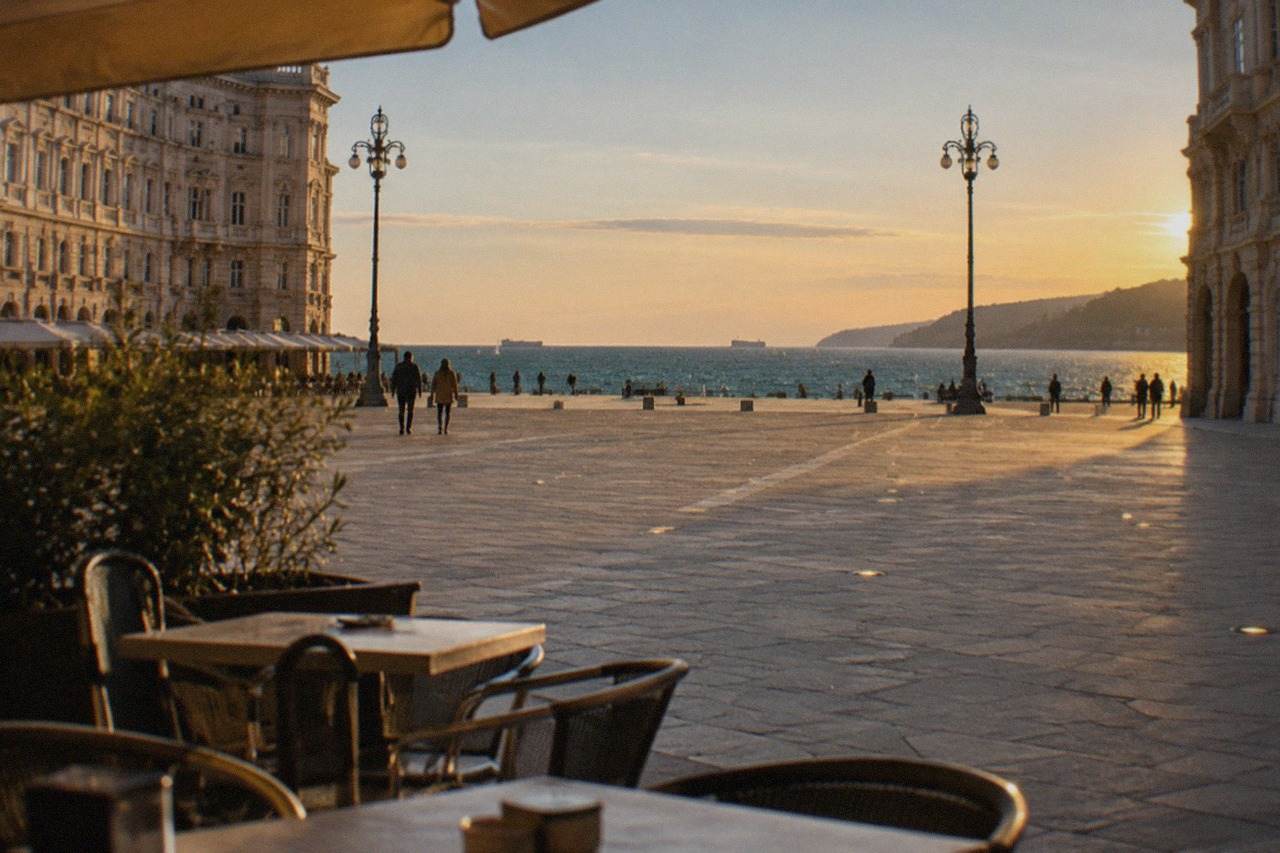
Trieste, Italy, is the Adriatic port city at the top of the Gulf of Trieste, in the Friuli Venezia Giulia region on the country's northeast border with Slovenia. It is not the bathyscaphe, not a San Francisco café chain and not a basketball club: it is a working Italian port with a Habsburg past, and what it is best known for is a short, firm list. The city is famous for its elegant seafront, Piazza Unità d'Italia, which opens straight onto the Adriatic; for a coffee and caffè culture grown out of its history as a coffee-importing port; for the bora, the cold east-north-east wind that funnels down onto the waterfront; and for the Barcolana, a sailing regatta whose 2018 edition set a Guinness World Record with 2,689 boats on the start line. Around those four sit the castles, Miramare above all, and a food tradition that mixes Italian, Austro-Hungarian and Slovene influences.
What Is Trieste Italy Best Known For?
Trieste, Italy, is best known for four things: Piazza Unità d'Italia, the vast seafront square that faces the Adriatic directly; a deep coffee and caffè culture rooted in the city's history as a coffee port; the bora, the east-north-east wind that ARPA's station tables show gusting over 90 km/h on 17.6 days a year; and the Barcolana regatta, whose 2018 edition drew 2,689 boats, a Guinness World Record. Miramare Castle and the Habsburg old town sit close behind.
That is the honest headline. The rest of this page expands each one, with the figures that the official sources actually publish, because Trieste attracts more confident invention than almost any mid-sized city in Italy. It is the city where the guides say the tram is closed when it is running, where the coffee statistics are repeated without a primary source, and where the weather is described as rainy in a summer that the station tables show is one of the driest stretches of the year.
Start with the square, because the square is the thing people remember. Piazza Unità d'Italia is the largest seafront square in Italy, and it does something no other major European square does: it opens onto open water on one side, with nothing between the paving and the sea. The Habsburgs built the city's neoclassical core around this axis when Trieste was the empire's only significant port, and the buildings around the square, the municipality's headquarters, the palaces of the old insurance and shipping companies, still carry that Central European formality. The Trieste Travel Guide walkthrough of the square covers the individual buildings, and the one-day Trieste itinerary places it where it belongs, at the start of everything.
The second thing the city is known for is coffee, and this needs care, because the famous statistic is not real. Trieste is a historic coffee port and remains a coffee-processing centre, home to a major Italian roasting company's headquarters, and its historic caffès are genuine landmarks in their own right. What no primary source supports is the endlessly repeated claim about kilograms per head per year or a multiple of the national average: neither the chamber of commerce, the port authority nor the roasters themselves publishes such a figure. The culture is real and is written without a number. The coffee culture guide and the page on what food Trieste is known for cover the parts that can actually be verified, from the historic caffès to the local ordering vocabulary.
Coffee, Caffès and the Historic Bar Scene
Trieste's caffè culture is the city's most exported claim to fame, and the verifiable part is strong: the city is a historic coffee port with a major roasting industry still headquartered there, its historic caffès are landmarks, and the local coffee vocabulary is distinctive enough that residents order differently from the rest of Italy. The widely quoted per-head consumption figure has no primary source and should be treated as legend rather than fact.
The historic caffès are the physical evidence. They function as reading rooms, meeting places and minor civic institutions, in the Central European manner rather than the Italian one, and a walk between them is the standard first tour of the city centre. Several paid experiences build on exactly this: the historic-cafès walking tour on the roster runs about three hours and is built around the coffee tradition, and the guided walk that ends with a coffee in a historic bar is one of the city's most consistently well-reviewed products, with the listing showing a rating above 4.9 from more than a hundred reviews.
What the caffès serve, and what the surrounding buffet restaurants serve, is the third layer of the answer. Trieste's food is where Italy, Austria and Slovenia meet, and the signature dish page covers it properly: jota, the bean-and-sauerkraut soup, goulash served with polenta or bread dumplings, and the buffet tradition of pork-based street food that has nothing to do with the rest of the peninsula. A guided food walk is one of the most reliable ways to sample the range, and the listing for the three-hour foodie tour shows a rating of 4.9 from 264 reviews.
The coffee story and the food story are really one story, and it is the same story as the architecture: Trieste was the Habsburg empire's Mediterranean outlet, and everything about the place, from the squares to the soup, still shows it. That imperial history is also why the city looks unlike anywhere else in Italy, and it is the reason the standard advice on how many days you need in Trieste keeps coming back the same way: the core is compact, but the cultural distance from the rest of the country is large.
The Habsburg Waterfront: Castles, Squares and the Old Port
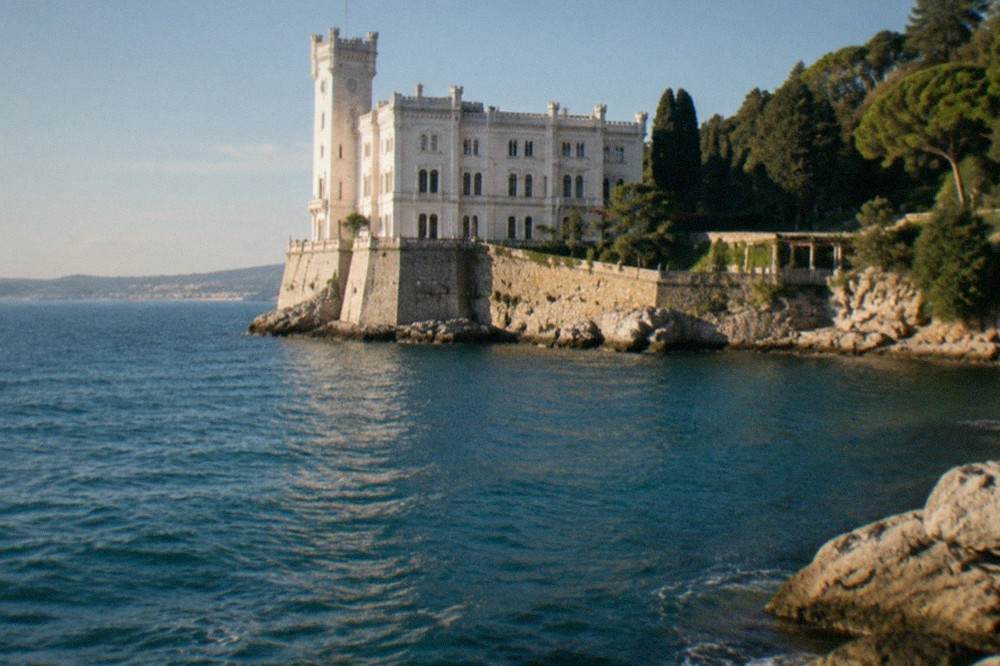
The architectural fame of Trieste rests on its Habsburg-era core, above all Piazza Unità d'Italia opening directly onto the Adriatic, and on Miramare Castle up the coast at Grignano, the white seaside residence of Archduke Maximilian, where the official ticket is €17 for the castle including the temporary exhibition and the park is free all year. San Giusto Castle and cathedral complete the historic high ground at €7.
Miramare deserves its own paragraph because it is the single most visited sight in the province. The Ministry of Culture's own visit page sets the adult castle ticket at €17, including the temporary exhibition, with a €7 reduced rate for EU citizens aged 18-25 and a €2 castle-only reduced rate in the same bracket. The park, which is the reason many people make the trip at all, is free every day of the year, with hours that shift by month: 8:00-19:00 from April to September, closing earlier through the winter. The castle keeps longer hours, 9:00-19:00 daily with last admission at 18:30. Miramare also participates in the ministry's first-Sunday-of-the-month free-entry scheme, though the rules of that scheme have changed more than once, so the venue's own page is the place to confirm a specific date.
The table below puts the headline sights and their official prices side by side, because this is where invented figures most often creep in.
| Sight | Official adult price | Hours (as published) |
|---|---|---|
| Miramare Castle | €17 (includes exhibition) | Daily 9:00-19:00, last entry 18:30 |
| Miramare Park | Free | Daily, hours vary by month |
| Castello di San Giusto | €7 (reduced €5) | 1 Apr-11 Oct daily 10:00-19:00; from 12 Oct Tue-Sun 10:00-17:00 |
| Cattedrale di San Giusto | Free | Weekdays 8:00-18:30; Sundays 9:00-19:30 |
| Museo Revoltella | €8 (reduced €6) | Daily 10:00-19:00, closed Tuesdays |
| Grotta Gigante | €15 (guided only, booking compulsory) | Sep-Feb Tue-Sun; Mar-Aug daily |
Two warnings attach to that table. The bell tower of the cathedral has no published price on the parish's own site, so no figure appears here. And Grotta Gigante, the giant cave on the Karst plateau behind the city, is guided-only with compulsory booking, and it closes on Mondays from September to February, which catches out a remarkable number of visitors who assume a major cave runs seven days a week.
The best-value way to see the core of the city with the history attached is a private walk, and the related tour below is the one that covers the famous landmarks in a single two-hour loop. The listing prices it per group of up to ten, and the operator's live listing carries the current figure and the up-to-date calendar.
The Bora Wind and the Barcolana Regatta
Trieste is known for weather the way other cities are known for food: the bora, a cold dry wind from the east-north-east, blows hardest in the cool season, and ARPA's own station tables for the molo record an all-time peak gust of 168.1 km/h in February 2012 and an average of 17.6 days a year with gusts over 90 km/h. The Barcolana regatta each October is the wind's festival, with a record 2,689 boats entered in 2018.
The bora is the reason the city's seafront has ropes strung along the water in winter, and it is the reason Trieste feels climatically unlike the rest of the Italian coast. The wind is funnels of cold air off the Karst plateau, and its numbers are published by the regional meteorological agency, which is where every figure in this section comes from. What no official source publishes is a wind threshold at which the waterfront closes or ferries stop: those decisions are made in real time, and any specific cutoff you read elsewhere is invented. The honest planning version is that strong episodes are most frequent from November to March, peaking in February, and that the summer months are dramatically calmer, with June the calmest month in the whole station record.
The rain figures deserve their own correction, because Trieste is routinely described as rainy in summer and it is not. The wettest month at the molo station is November, at 109.8 mm, with September second at 102.3 mm. July is the second driest month of the year, at 53.8 mm. Anyone planning a summer visit around rain is planning around the wrong season; autumn is the wet stretch.
| Bora and climate figure (ARPA station, 1995-2024) | Value |
|---|---|
| All-time peak gust | 168.1 km/h, February 2012 |
| Average days per year with a gust over 90 km/h | 17.6 |
| Average days per year with a gust over 72 km/h | 49.0 |
| Wettest month | November, 109.8 mm |
| Driest summer month | July, 53.8 mm |
| Calmest month for wind | June |
The Barcolana is the bora's good side. The regatta, first held in 1969 with 51 boats, is now a ten-day October festival whose main race is a 13-nautical-mile course in the Gulf of Trieste, finishing off Piazza Unità. The 2018 edition's 2,689 registered yachts earned a Guinness World Record as the largest sailing race in the world, and the 2026 edition runs from 2 to 11 October with the main race on Sunday 11 October. Even for a visitor with no interest in sailing, it is the single most atmospheric week of the city's year, and it sits deliberately inside the windy shoulder of the season: October averages 1.4 days a year with gusts over 90 km/h at the molo.
Border Culture: The Slovenian Frontier and the Istrian Kitchen
Trieste is known as Italy's border city: it sits on the frontier with Slovenia, its old town food and dialect carry Slovene and Austro-Hungarian layers, and all three neighbouring countries, Italy, Slovenia and Croatia, use the euro. One live exception matters for visitors: Italy is running temporary border checks on its land border with Slovenia through 18 December 2026, so a passport or national ID card should be carried on any cross-border day trip.
The border is not decoration; it shapes the daily city. The Karst villages behind Trieste have Slovene names alongside Italian ones, the osmize, the seasonal farmhouse wine outlets of the Karst, are signposted by a frasca, a leafy branch hung at the turning, and their opening calendar is published on the volunteer-run osmize.com site. The question of whether Trieste is more Italian or Slovenian and the page on what makes the city special both take the identity question seriously, because it is genuinely one of the things the city is known for.
The practical border facts are worth a table, because they change and because competitors get them wrong.
| Border fact | Status |
|---|---|
| Slovenia in the euro area | Since 1 January 2007 |
| Croatia in the euro area and Schengen | Both on 1 January 2023 |
| Italy-Slovenia land border checks | Temporary, through 18 December 2026 |
| Currency needed in all three countries | Euro only, no exchange |
Croatia joined Schengen and adopted the euro on the same day, 1 January 2023, which kills the older guidebook advice about changing money at the border. What is genuinely current is the Italian border measure: the European Commission's own register lists temporary internal checks on Italy's land borders with Slovenia from 19 June to 18 December 2026, written as a dated, temporary measure, not a permanent one. Day trips to Piran, Ljubljana or the Istrian coast are easy from Trieste, and the roster's Slovenia and Piran tours are among its most-reviewed products, but the ID card goes in the pocket.
Common Questions About What Trieste Is Known For
What is Trieste Italy best known for?
Trieste, Italy, is best known for Piazza Unità d'Italia, the seafront square that opens directly onto the Adriatic; its coffee and caffè culture, grown from its history as a coffee port; the bora wind, with an all-time recorded peak gust of 168.1 km/h; and the Barcolana regatta, which set a Guinness World Record with 2,689 boats in 2018. Miramare Castle and the Habsburg-era old town complete the picture.
Is Trieste worth visiting if I have never been to northern Italy?
Yes: the city is compact, walkable and unlike anywhere else in the country, with the sea, the castles and the caffès all reachable on foot or by a short bus or tram ride. The page on whether Trieste is worth visiting covers the case for and against in detail.
What food is Trieste famous for?
Jota, the bean and sauerkraut soup, goulash in the Austro-Hungarian manner, and the buffet tradition of pork dishes, plus a coffee culture with its own ordering vocabulary. None of it is typical of the rest of Italy, which is the point.
Is Trieste a walkable city?
Yes: the historic core between the station, the seafront and San Giusto hill is compact and flat enough for a single day on foot, with the Opicina tram available for the climb onto the Karst plateau.
Does the bora make Trieste unpleasant to visit?
Only in winter episodes. The strong wind is most frequent from November to March, June is the calmest month in the station record, and July is one of the driest months of the year, so summer visitors rarely meet the bora at its worst.
Whatever brings you to Trieste, the four famous things, the square, the caffè, the wind and the regatta, are all within a short walk of each other, and the city rewards exactly the kind of slow, coffee-fuelled wandering it has been built around since the Habsburgs made it their window onto the sea.