Where Is It Best to Stay in Trieste?
Where is it best to stay in Trieste, Italy? A practical breakdown of the central grid, Città Vecchia, Barcola and the Carso edge, with verified tourist tax rates and transport facts.
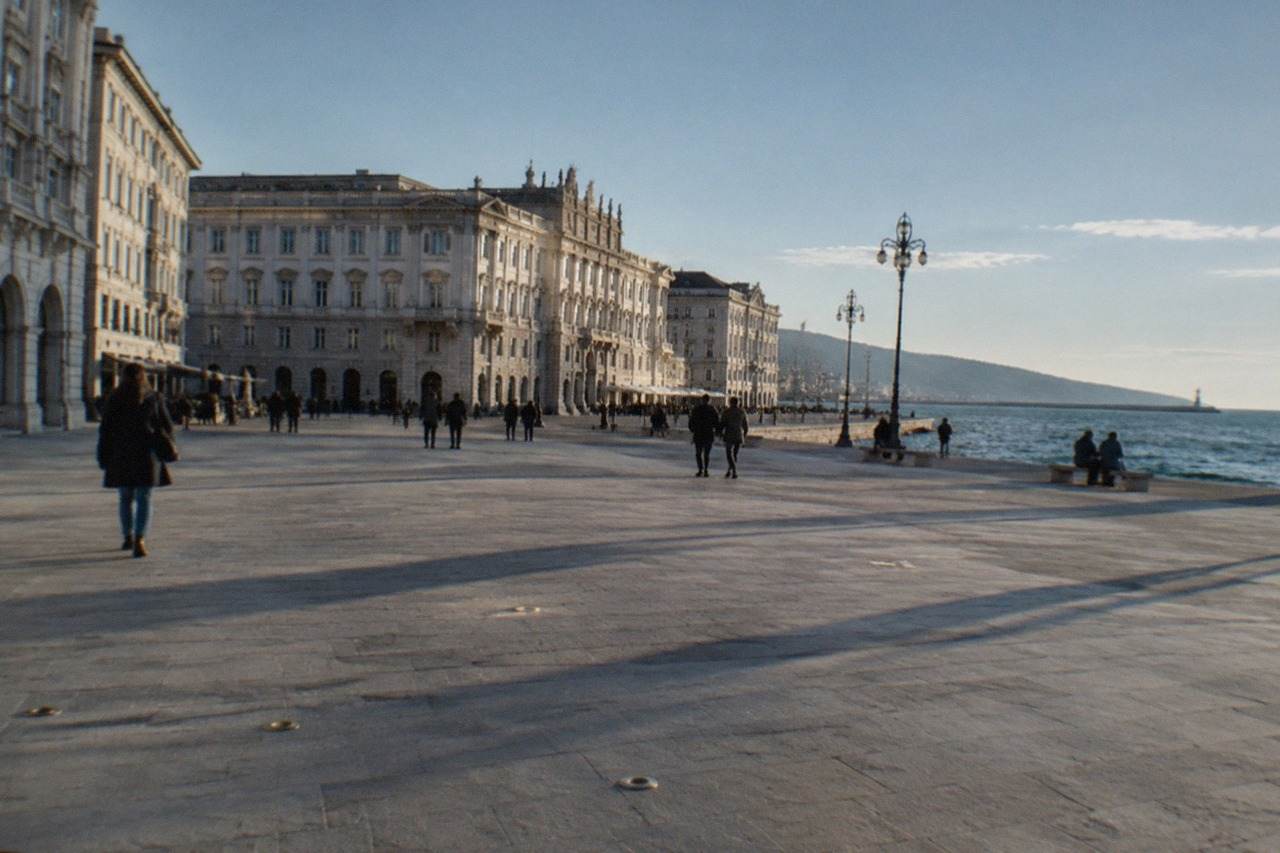
Trieste, the Adriatic port city in Friuli Venezia Giulia in the northeast of Italy, is compact enough that the question of where to stay is less about logistics and more about which version of the city you want outside your door. The whole central sightseeing core fits between the railway station and the seafront, so a central room puts nearly everything within an ordinary walk. That is the short answer, and the rest of this page breaks it down area by area, with the verified tourist tax rates and transport facts that actually change the arithmetic.
Where Is It Best to Stay in Trieste?
For a first visit, the central grid of the Borgo Teresiano between Piazza Unità d'Italia, the Canal Grande and Trieste Centrale station is the best place to stay in Trieste, because the seafront, the historic caffè district, the Città Vecchia hill and the museums all sit on or inside that grid. Families and swimmers do better along the Barcola seafront up the coast, and anyone planning daily drives across the Carso or into Slovenia saves the most time by staying at the edge of the city instead.
The Borgo Teresiano is the neoclassical quarter the Habsburgs laid out when Trieste was the empire's port, and it is still where most of the useful things cluster: the station on one edge, the Grand Canal and the Serbian Orthodox church of Sant'Antonio Taumaturgo in the middle, and Piazza Unità d'Italia, the largest sea-facing square in Italy, holding the whole quarter to the water. The streets are regular, the buildings are tall and calm, and the cafés in this district are the historic ones the city is known for.
Staying here also keeps the practical machinery of the city close. Trieste Centrale is the terminus for the trains to Venice, Ljubljana and the airport station at Ronchi dei Legionari, and the buses and the Opicina tram are part of the ordinary urban network, so a base in the grid means you can run a day trip to Piran, Ljubljana or the caves without ever needing a car.
For a deeper rundown of each district, including the areas this page only sketches, the site's main where to stay in Trieste guide carries the full neighbourhood-by-neighbourhood treatment, and there is a longer take on what part of Trieste to stay in for readers comparing specific streets.
Which Trieste Neighbourhood Fits the Way You Travel?
Choose the Borgo Teresiano grid if this is a first trip and you want the caffè district, the seafront square and the station on foot; choose Città Vecchia, the old town on the hill, for character, the cathedral and Castello di San Giusto but expect slopes and stairs; choose Barcola for swimming and family time by the water; and choose Opicina or the Grignano end only if you are driving to the Karst, Miramare or Slovenia every day.
The Borgo Teresiano case needs little defence: it is flat, it is central, and it holds both the station and the sea. Città Vecchia trades that convenience for atmosphere, with the Roman theatre, the Arco di Riccardo and the cathedral all inside a tangle of lanes that climbs toward the Castello di San Giusto. The castle ticket is EUR 7 full price, EUR 5 reduced, and it covers the walls, the Civico Museo del Castello-Armeria and the Lapidario Tergestino, which makes the old town a good base for visitors whose trip is built around the city's layered history rather than its cafés.
Barcola is the long seafront suburb where the city actually swims, lined with the fixed piers locals dive from and the pine-backed promenade. The naturist and family bathing establishments, including the historic Bagno Marino La Lanterna, sit along this stretch, so if your August plan is built around the water rather than the museums, this is the honest answer. The trade-off is distance from the station and the evening life of the centre.
The outlying options flip the logic. Villa Opicina, up on the Karst plateau, and Grignano, out at Miramare, suit travellers who are here for the castle park, the Grotta Gigante or the Slovenian border rather than for the city itself. Note one dated fact if Slovenia is on your itinerary: Italy is running temporary checks on its land border with Slovenia through 18 December 2026, so carry a passport or national ID card even for a short hop to Piran or Koper, as the site's border day-trip pages cover in more detail.
Readers still weighing Trieste against the obvious alternative should also read is it better to stay in Venice or Trieste, and anyone unsure of trip length can start with how many days in Trieste is enough, because the answer changes which base makes sense.
What Does the Trieste Tourist Tax Add to a Trieste Stay?
Trieste charges a city tourist tax, the imposta di soggiorno, of EUR 1.50 to EUR 3.80 per person per night depending on your accommodation's category, and it is billed for a maximum of five consecutive nights in the same property. A four-star or self-catering stay pays EUR 3.30 per person per night, a three-star EUR 3.00, hostels and short-lets EUR 2.30, and campsites EUR 1.50, so the tax rarely changes which neighbourhood you pick.
The 2026 rate table from the Comune di Trieste is unusually precise, and it applies to the whole city rather than by district, so a room above a Città Vecchia café and a Barcola apartment of the same category pay the same band. The published bands, per person per night, are these.
| Rate (EUR, per person per night) | Accommodation category |
|---|---|
| 3.80 | 5-star hotels and residenze turistico-alberghiere |
| 3.30 | 4-star hotels, RTA and self-catering case vacanza |
| 3.00 | 3-star hotels, RTA and case vacanza |
| 2.30 | 2-star hotels, affittacamere, B&B Superior, hostels, agriturismi and short-let properties under art. 4 of d.l. 50/2017 |
| 2.00 | B&B Comfort |
| 1.80 | 1-star hotels and B&B Standard |
| 1.50 | Campsites and equipped motorhome areas |
The exemptions matter to families more than the bands do. Everyone under 18 is exempt, and so are people with a certified disability of 80 per cent or more, one companion per hospital inpatient, coach drivers and tour leaders, on-duty armed forces and police in the province, and one group leader per fifteen minors. The five-night cap also means a longer stay stops accruing the tax after the fifth consecutive night in the same property, which quietly favours one central base over splitting the trip between two districts.
Do not expect the tax to be baked into the quoted rate: in Italy it is collected by the property at check-out, so budget it on top. And be sceptical of any article quoting specific Trieste hotel room rates, because those figures are date-specific and this page will not print one.
Do You Need a Car to Stay in Trieste?
Most visitors to Trieste do not need a car at all: the central grid puts the sights, the station and the seafront on foot, the urban buses and the reactivated Opicina tram run on ordinary tickets, and the popular day trips to Slovenia, the caves and Miramare all work as tours or trains. A car only earns its keep if you are chasing osmize on the Carso, the small Karst villages or Croatian beaches on your own schedule.
The transport arithmetic is simple. The 2026 urban tariff sheet lists a 60-minute single at EUR 1.50, a 75-minute single at EUR 1.85, a day ticket at EUR 3.35 and ten rides at EUR 13.50, and contactless bank cards can be tapped directly on board, with the system applying the cheapest fare. That covers the whole city network, including the Opicina tram, which runs from piazza Dalmazia, not piazza Oberdan as older guides claim, up to the Karst village of Opicina.
| Ticket | Price (EUR) | Validity |
|---|---|---|
| Urban single U01 | 1.50 | 60 minutes |
| Urban single U02 | 1.85 | 75 minutes |
| Day ticket U24 | 3.35 | One day |
| 10 rides U10 | 13.50 | 10 journeys |
| 20 rides U20 | 16.65 | 20 journeys |
On Sundays and public holidays the single tickets run for 240 minutes instead, which makes a waterside day at Barcola or a trip up to the Karst cheap. So the honest planning rule is: book central, buy singles or a day ticket as you go, and skip the hire desk unless the Karst farmhouse circuit is the point of the trip.
A guided walk is the other shortcut a central base buys you, because most of them start within the grid. The Habsburg history private walking tour spends two and a half hours on exactly the quarter most visitors end up sleeping in, which is a good way to learn the streets you will be walking for the rest of the stay. The operator's live listing has current availability: Check availability.
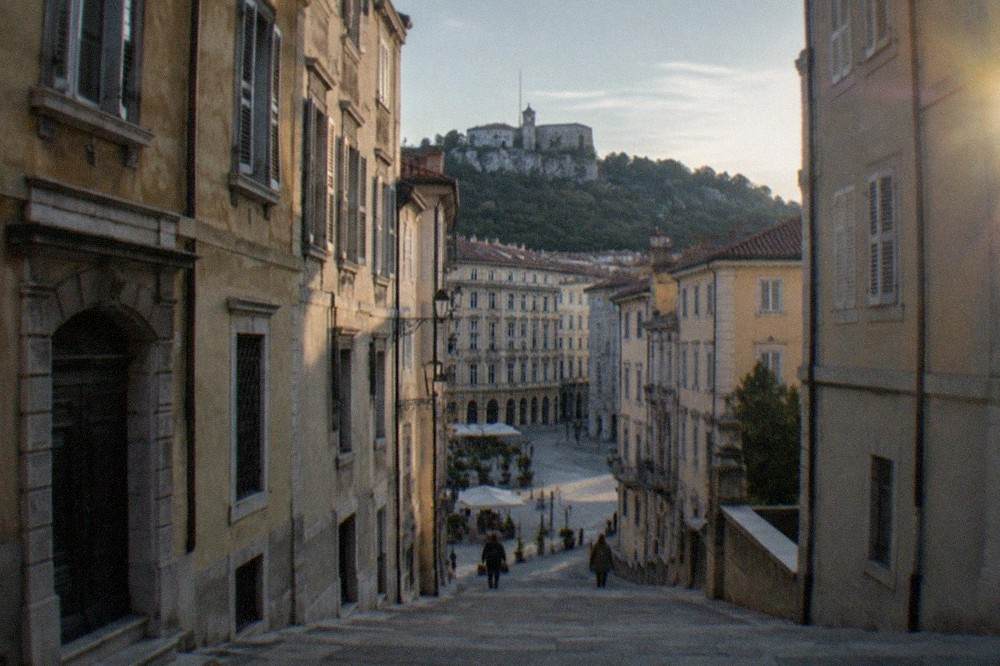
The one situation that flips the no-car rule is a stay built around the osmize, the seasonal farmhouse wine outlets of the Trieste Karst, which are scattered across villages that the urban network touches only thinly. Their openings are signalled by a frasca, a leafy branch hung at the turning, and the de facto calendar lives at osmize.com, so a car is the natural tool for that itinerary, ideally with a base up at the plateau's edge rather than down on the seafront.
For a stay anchored in the centre, the deciding factors are usually noise and slope rather than distance, so ask any central property which side of the grid it sits on: the station end is brisker, the seafront end is quieter at night, and the Città Vecchia lanes in between climb. And if the whole question is really about whether to use Trieste as a base for the region at all, the site's main planning pages on Trieste Travel Guide cover the border day trips, the ferries and the wine country that surround this one compact city.
Whichever neighbourhood wins, the same three experiences keep coming back as the ones worth booking ahead of arrival: a guided walk of the Habsburg core, a timed entry to Miramare Castle, and a tasting route into the Karst wine country that begins at the village of Prosecco itself. All three depart from or sit within easy reach of the central grid, which is one more quiet argument for basing yourself there.
Common Questions About Where to Stay in Trieste
Where is it best to stay in Trieste?
In the central Borgo Teresiano grid between Trieste Centrale station and Piazza Unità d'Italia for a first visit, on the Città Vecchia hill for character, along Barcola for swimming, and at the Karst or Grignano edge only for driving itineraries.
Is Trieste a good place to stay for more than a couple of days?
Yes, and the city's transport and tourist tax rules reward a single central base: the tax stops after five consecutive nights in one property, and the day trips to Slovenia, the caves and Miramare all depart from the centre.
Does the tourist tax change by neighbourhood in Trieste?
No. The 2026 imposta di soggiorno bands depend only on the accommodation's category, from EUR 1.50 at campsites to EUR 3.80 at five-star hotels, and they apply across the whole city, so a category match anywhere in Trieste pays the same.
Do I need a passport to day-trip to Slovenia from a Trieste base?
Carry one. Italy is running temporary checks on its land border with Slovenia through 18 December 2026, so a passport or national ID card is the safe rule even though both countries are in Schengen and use the euro.
Is it better to stay in Trieste or Venice?
They serve different trips: Trieste is the cheaper, calmer, more workaday port with the border country next door, while Venice is the destination itself. A central Trieste base with a train day trip to Venice is a workable combination, and the tariff sheet makes the city's urban travel cheap.