Why Does Italy Still Own Trieste?
Why Trieste, the Italian port city on the Slovenian border, is part of Italy and not Slovenia or Croatia: the postwar settlement, the layered identity, and what it means for visitors today.
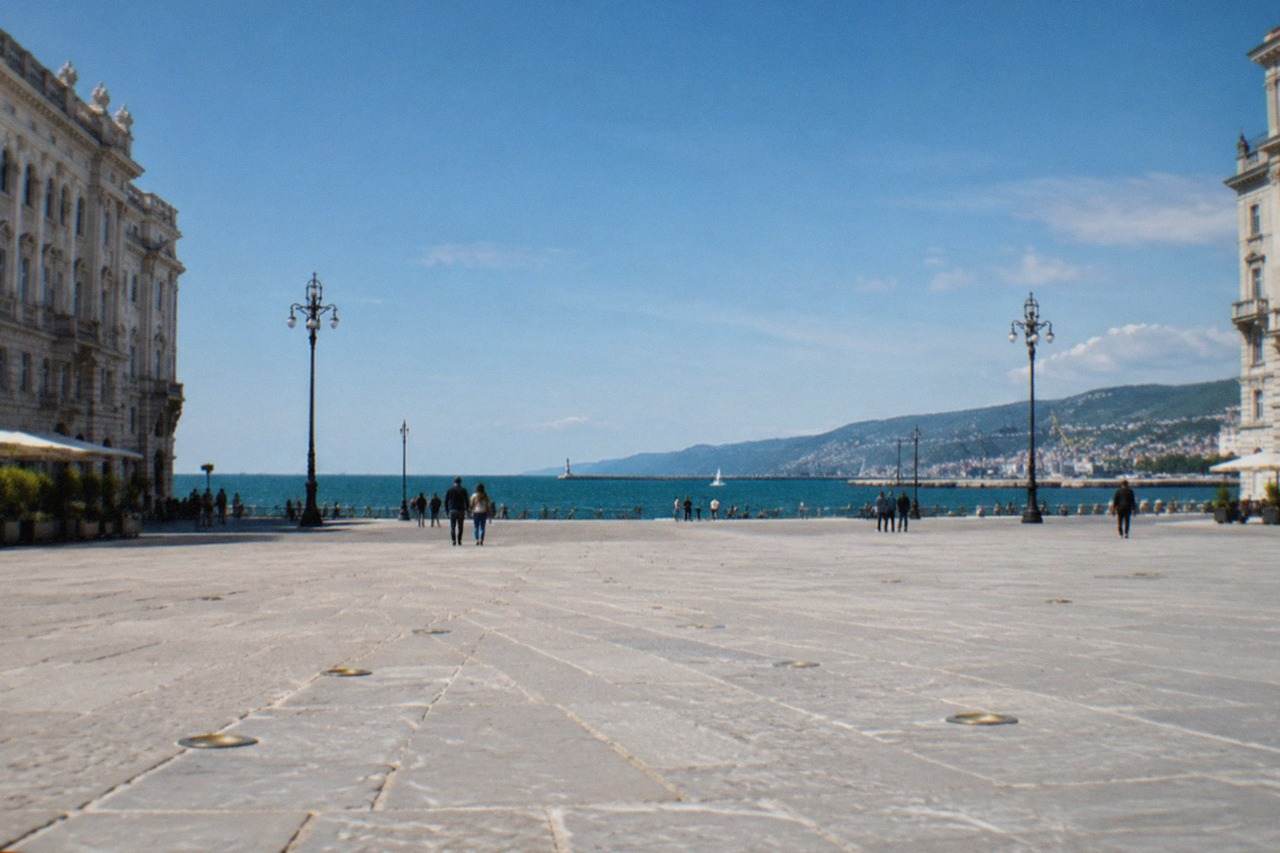
Trieste, the Adriatic port city in the Friuli Venezia Giulia region of northeastern Italy, sits so close to Slovenia that the border is a short drive from the city centre, and Croatia is not much farther down the coast. That geography is exactly why the question keeps coming up: the city looks Central European, the street names carry Slavic and German echoes, and the nearest foreign capital is closer than Rome. The short answer is that the postwar settlement of the border confirmed Trieste as Italian territory, and the city has been part of Italy continuously since, but the interesting part is how much else the place still carries with it.
Why Does Italy Still Own Trieste?
Italy still owns Trieste because the settlement that followed the Second World War assigned the city and its immediate surroundings to Italy, ending years in which the border and even the city's status were formally unresolved. Trieste emerged as an Italian city with an international-port role, and no later agreement has ever reopened the question. The border with Slovenia now runs just outside the built-up area, and both countries are partners in the European Union, the euro and the Schengen area.
The question usually hides a second one: not whether Italy owns Trieste on paper, but whether Trieste feels Italian. The honest answer is that it feels like itself. The city's grand waterfront, Piazza Unità d'Italia, opens straight onto the Gulf of Trieste, and the architecture around it is a mix of Habsburg-era grandeur and Italian civic confidence. The caffè culture, the historic coffee houses and the language of daily life are Italian, while the surnames, the food and the place names record centuries of Slovene, Austrian and Greek presence. For more on how that mix reads today, see our piece on what Trieste is famous for.
What confuses many visitors is that Trieste's Italian-ness is not the Mediterranean kind. The city grew rich as the main port of a Central European empire, and its look, its cakes and its workday rhythm come from that history rather than from the Italy of postcard stereotypes. That layered identity is why people reasonably ask whose city it is, and why the answer "Italy's" is both true and incomplete.
Was Trieste Part of the Habsburg World?
Yes, and visibly so. Trieste was the great seaport of the Habsburg empire, the outlet to the Adriatic for a vast inland realm, and the city's architecture, its caffè tradition and its coffee-roasting industry all grew from that role. Archduke Maximilian, later Emperor of Mexico, and his wife Charlotte built Miramare Castle on the coast north of the city as their residence. The empire is gone, but its imprint on the waterfront is not.
The clearest single monument to that era is Miramare, whose white walls sit above the gulf at Grignano. The castle's own story, an archduke's residence built for a couple whose story ended far away in Mexico, is one of the more curious threads in the city's fabric, and the castle and its free park are among the most visited sights in the region. The park, as the venue's own visit page states, is free all year, while the castle charges admission and keeps its own hours.
Inside the city, the Habsburg legacy shows in the grid of the Borgo Teresiano, the canal district named for the empress whose reign set the port's expansion in motion, and in the historic caffè where the city's coffee trade, still a major local industry, was transacted over small cups. A private walking tour is the most efficient way to have those layers pointed out building by building: the Trieste Habsburg History Private Walking Tour covers exactly this ground, and you can Check availability on the operator's live listing. Our longer look at why Trieste is famous unpacks the coffee side of the story.
Is Trieste Italian or Slovenian?
Trieste is Italian, and it is also a city with a deep Slovene heritage that never left. Italian is the language of government, schools and daily commerce, while Slovene is present in surnames, place names, church life and the villages that continue across the border. The two identities coexist rather than compete, and the border itself, once one of Europe's hard Cold War frontiers, is now an internal European Union line.
That coexistence is the thing a first-time visitor most often misreads. The city's most famous church, the Serbian Orthodox church of Saint Spyridon, is a reminder that Trieste was a merchant port drawing communities from across the Adriatic and the Balkans, and the Carso plateau behind the city is bilingual to this day. The question of which side Trieste belongs to is explored in more detail in is Trieste more Italian or Slovenian?, which is the companion piece to this one.
One point needs care, because most guides get it wrong or leave it out: Schengen membership does not currently mean an unchecked drive from Trieste into Slovenia. The European Commission's own register of temporary border controls lists Italy as running checks on its land borders with Slovenia from 19 June 2026 to 18 December 2026. Carry a passport or national ID card for any day trip across the line, and treat the checks as temporary and dated rather than as a permanent feature of the border. Other pages covering the same trip are gathered on Trieste Travel Guide.
| Border fact | Status | Since |
|---|---|---|
| Italy, land border with Slovenia | Temporary checks listed by the European Commission | 19 June 2026 to 18 December 2026 |
| Slovenia, euro and Schengen membership | In both | Euro 1 January 2007, Schengen December 2007 |
| Croatia, euro and Schengen membership | Joined both on the same day | 1 January 2023 |
| Currency on all three sides of the border | Euro everywhere | No money changing needed |
The table is the practical heart of the matter: whatever the historical question, today there is no currency to change and no visa to arrange between Italy, Slovenia and Croatia. The only live complication is the dated Italian check on the Slovenian land border, and even that is a slowdown, not a barrier.
How Do You See the Border Story in One Day?
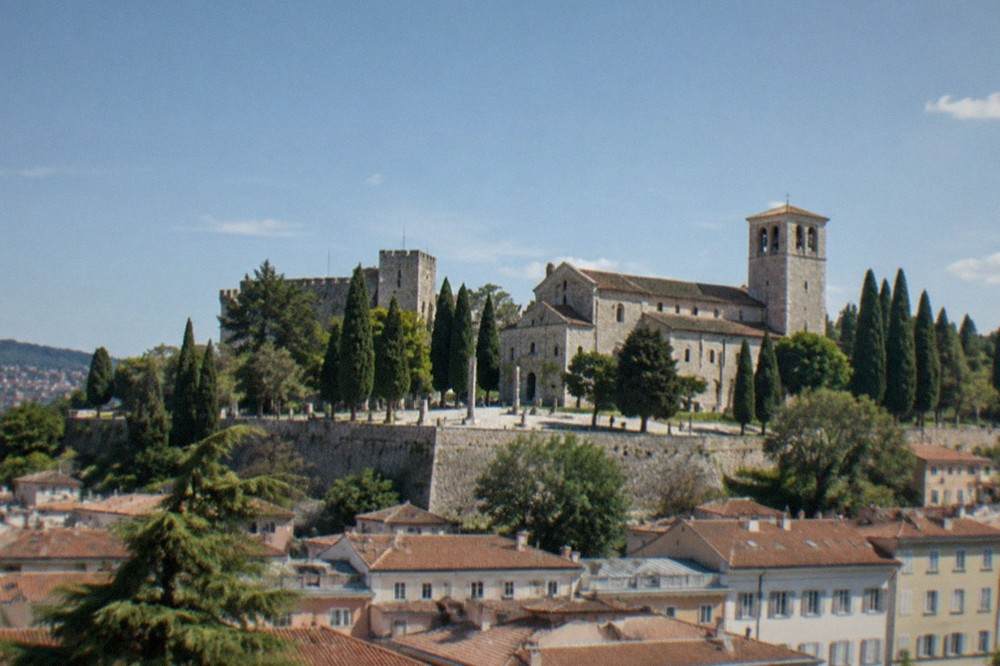
Walk it. Trieste's compact centre lets you trace the whole arc, from the Roman theatre you look down into from the street, up San Giusto hill to the cathedral and castle, down through the Borgo Teresiano grid to the canal and the seafront, all on foot. The Opicina tram, running again since 1 February 2025 from its piazza Dalmazia terminus, climbs to the Carso village of Opicina on the plateau where the border country begins.
The tram deserves a special note because almost every older travel article gets it wrong. The line was reactivated on 1 February 2025 after a long stop, its city terminus is piazza Dalmazia, not piazza Oberdan as outdated guides claim, and it is part of the ordinary urban network: a standard Trieste ticket is valid and contactless cards can be tapped on board. The operator's live status page is the place to check before you ride, since maintenance suspensions are announced there.
For the border itself, a day trip into Slovenia is the most concrete way to answer this page's question with your own eyes. Piran, Ljubljana and Lake Bled are all reachable on organised tours from Trieste, and the crossing is a non-event: same currency, same Schengen zone, with the dated Italian check as the only thing to plan around. If you are weighing how long to give the city itself, our how many days in Trieste is enough? page has the breakdown.
Which Tours Tell Trieste's Story Best?
A Habsburg-history walking tour covers the imperial layer, a Miramare Castle entry ticket covers the archducal one, and a food tour covers the cultural mix that no monument displays: the jota, the buffets and the coffee houses where the city's Central European and Mediterranean halves sit down at the same table. Between them, the three answer this page's question in stone, in scenery and on the plate.
| Tour | What it shows of the story | From | Rating |
|---|---|---|---|
| Trieste: Habsburg History Private Walking Tour | The imperial port, its squares and its grand streets, on foot with a private guide | $143.30 per person | 4.86 from 21 reviews |
| Trieste: Miramare Castle & Museum Entry Ticket & Audio App | The archduke's residence above the gulf, with audio commentary | $20.64 per person | 4.35 from 881 reviews |
| Trieste: Guided Foodie Walking Tour | The Central European and Mediterranean mix on the plate, across three hours of tastings | $71.08 per person | 4.91 from 264 reviews |
The Habsburg walk is the one that speaks most directly to this page's question, because the guide can point at the buildings that made Trieste what it is and explain why they look Viennese rather than Roman. Miramare adds the personal side of the story, a residence built for a couple whose dynastic fate carried them to Mexico, and it is the cheapest of the three to add. The food tour is the one that shows the city's identity as it lives now, in the buffet counters and the caffè rather than behind ropes.
Common Questions About Trieste and Its Italian Identity
Why does Italy still own Trieste?
Because the postwar settlement of the border assigned the city to Italy after a period in which its status was formally unresolved, and no later development has changed that. Trieste is today the regional capital of Friuli Venezia Giulia, and the international border with Slovenia runs just outside the built-up area.
Is Trieste close to Slovenia?
Very. The Slovenian border is a short drive from the city centre, and the Carso plateau behind Trieste continues across it. Slovenia is in the Schengen area and uses the euro, though Italy is running temporary checks on the land border from 19 June 2026 to 18 December 2026, so carry a passport or ID card.
Do they speak Slovenian in Trieste?
Italian is the dominant language of the city, but Slovene is present in surnames, place names, church life and the surrounding Carso villages, which are bilingual. Trieste's history as a multi-ethnic imperial port also left Greek, Serbian and German communities with their own landmarks.
Was Trieste part of Austria?
It was part of the Habsburg empire, whose imprint is still visible in the architecture, the caffè culture and the city's role as a coffee port. Miramare Castle was built on the coast north of the city for Archduke Maximilian and his wife Charlotte.
What is special about Trieste, Italy?
Its position: an Italian city with a Central European face, on a gulf shared with Slovenia and Croatia, with a coffee tradition, Habsburg architecture and a border you can cross for lunch. Our longer piece on what is special about Trieste, Italy goes deeper.
The border question that made you ask is, in the end, the least interesting thing about Trieste: the answer is settled history, while the city itself, Italian, Habsburg, Slovene and Adriatic all at once, is very much alive, and a single day of walking its squares will show you more of that than any map of frontiers can.