Why Is Trieste Not Slovenia?
Trieste is an Italian city on the Slovenian border. Here is the short version of why it belongs to Italy and not Slovenia, plus what that means for a day trip across the border.
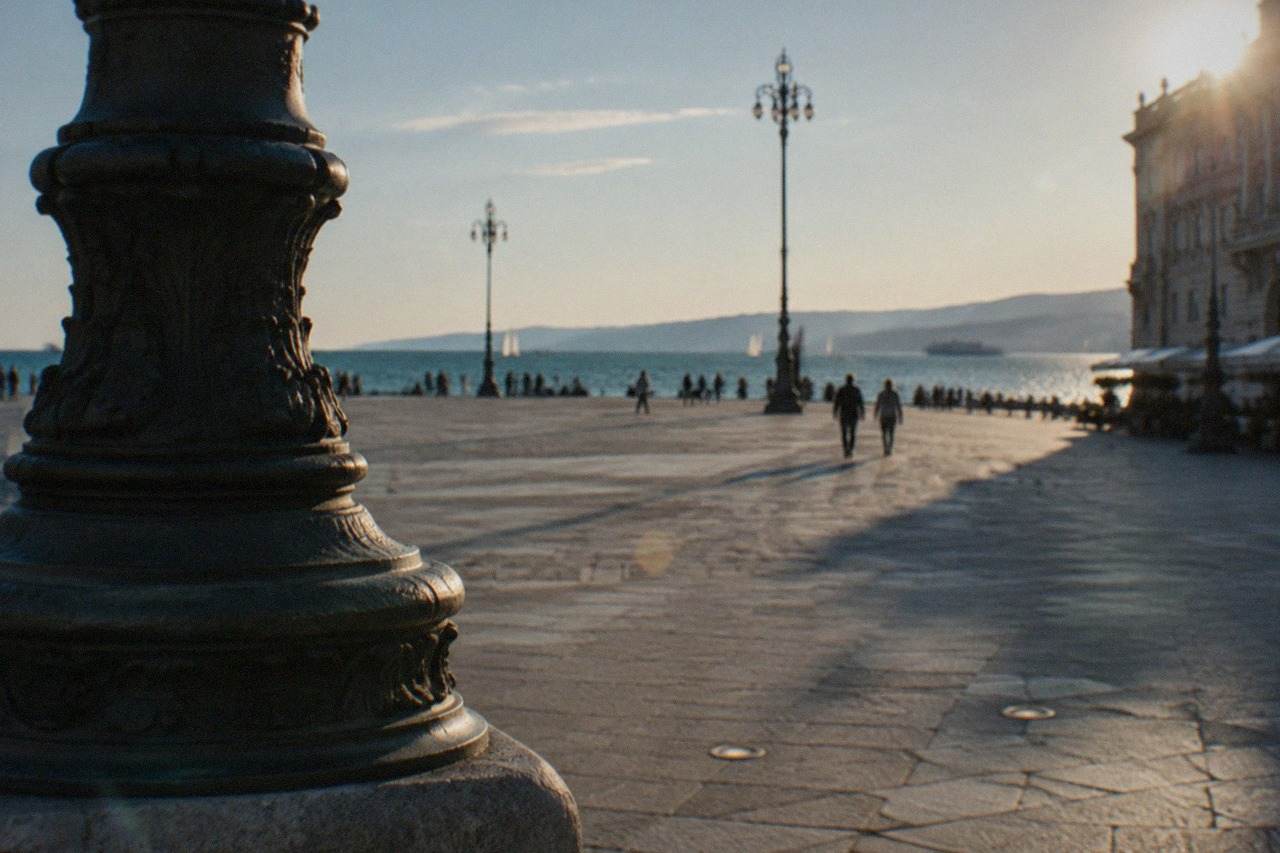
Trieste, Italy, is the oddity of the Adriatic: an Italian port city whose historic centre stands closer to Slovenia than to Venice, surrounded on three sides by territory where Slovenian place names, road signs and farmhouse taverns begin within minutes of the last Italian suburb. Visitors ask the question constantly, and it is a fair one. The answer is that Trieste was the great sea-gate of a Central European empire, spent the years after the Second World War as disputed territory under Allied military administration while Italy and Yugoslavia both claimed it, and was settled in Italy's favour before Slovenia existed as an independent country at all. Slovenia, when it finally became a country, inherited a border that had already been drawn for decades.
Why Is Trieste Not Slovenia?
Trieste is not Slovenia because the city was assigned to Italy in the post-war border settlement, years before Slovenia existed as an independent state. After the Second World War the city and its hinterland were placed under Allied military administration while Italy and the new Yugoslavia both claimed them, and the eventual settlement confirmed Italian sovereignty over the city itself. Slovenia only became an independent country in 1991, inheriting a border that had already been fixed.
The claim on Trieste was never really between Trieste and Ljubljana. It was between Rome and Belgrade, and later between Rome and the Yugoslav federation. The city had been the main port of the Habsburg empire, a German-speaking administration ruling an Italian-speaking merchant class on a Slovenian-speaking countryside, and when the empire collapsed at the end of the First World War Italy annexed the whole region. That is the first reason the city is Italian: the victors of that war drew it that way, and Trieste's own identity at the time was Italian-speaking and Italian-run in everything that mattered.
The second reason is the settlement that followed the Second World War. Yugoslavia's forces had physically occupied much of the region, and the city's fate was genuinely contested for years: Trieste spent nearly a decade as the "Free Territory of Trieste" in legal limbo, with the city under Anglo-American administration and its immediate hinterland under Yugoslav military administration. The compromise that ended the limbo gave the city and its urban core to Italy and the wider hinterland, the Istrian and Carso countryside, to Yugoslavia. That line is essentially the line you cross today.
Slovenia never had a seat at that table. When Slovenia declared independence from Yugoslavia in 1991, it inherited the Italian border as it stood, and when it joined the European Union's border-free zone it inherited it again. For a deeper look at the identity question, see our page on whether Trieste is part of Italy or Slovenia, and for the flavour of the city itself, what Trieste is famous for.
Those three picks are the ones this site rates for crossing the line: the full-day Bled and Ljubljana run, the food-and-wine version of the Slovenian coast, and the city's own food walk for the day you stay on the Italian side.
How Close Is the Slovenian Border to Trieste?
The Slovenian border begins at the eastern edge of Trieste's own suburbs, so close that a city bus route and a coastal road both cross it within the municipality's immediate reach. The village of Muggia, still Italian, sits beside a bay whose far shore is Slovenian, and the Karst plateau behind the city rises on both sides of the line. Trieste is, in effect, a border city in the fullest sense: the state line runs through its commuter belt.
You feel this on the ground within minutes. The Opicina tram, line 2, climbs from piazza Dalmazia toward the Carso, and the plateau it reaches is criss-crossed by a frontier that has been Italian, Allied, Yugoslav and Italian again within living memory. The osmize, the farmhouse wine taverns of the Karst, sit on both sides of the border and share one tradition, one dialect continuum and one landscape. The city's own bilingual street signs, Italian and Slovenian together, are a legal requirement in the municipality, not a courtesy.
The practical consequence is that "Trieste or Slovenia?" is a strange question to ask on the ground. The answer is: both, in layers. The city is Italian; the air it breathes is mixed. Our companion piece on whether Trieste is more Italian or Slovenian covers the identity layers in more detail.
Do You Need a Passport to Cross from Trieste Into Slovenia?
Yes, carry a passport or a national ID card. Although Italy and Slovenia are both in the Schengen area and both use the euro, Italy is running temporary internal border checks on its land borders with Slovenia from 19 June 2026 to 18 December 2026, as listed in the European Commission's own register. The checks are temporary and dated, not a permanent rule, but during this period you should have ID with you.
This is the detail most guides get wrong, because the honest answer changed. For years the correct advice was "no checks, Schengen, just drive through", and that is still the normal state of affairs between two Schengen states. But Italy has reintroduced temporary controls on this specific border, and the Commission's register currently lists them running through 18 December 2026. In practice that means spot checks on road crossings, and the safest assumption is that you may be asked. A driving licence alone is not a travel document. The full index of guides sits on Trieste Travel Guide.
The currency question is simpler and worth stating plainly: Italy, Slovenia and Croatia all use the euro. Nobody crossing this border needs to change money, and nobody should plan around a currency exchange. Croatia, for the record, adopted the euro and joined Schengen on the same day, 1 January 2023.
| Country | Currency | Schengen status | What it means at Trieste's borders |
|---|---|---|---|
| Italy | Euro | Schengen member | Temporary checks on the Slovenia land border, 19 June to 18 December 2026 |
| Slovenia | Euro since 1 January 2007 | Schengen member since December 2007 | No routine control, carry ID anyway during Italy's temporary checks |
| Croatia | Euro since 1 January 2023 | Schengen member since 1 January 2023 | Same day for both, no currency change from Trieste |
Can You Visit Slovenia from Trieste?
Yes, easily, and it is one of the best day trips you can make from the city. Slovenia's Lake Bled, the capital Ljubljana, the cave systems of Postojna and Škocjan, the Lipica stud farm and the coastal town of Piran are all realistic same-day destinations, reachable by coach, train or a booked guided tour. The border crossing adds no currency change and, at present, only an ID check.
The easiest version is a booked tour, because it absorbs the border, the driving and the parking in one price. The roster's full-day option, Lake Bled and Ljubljana Tour from Trieste, runs about 7 hours, is rated 4.5 from 214 reviews and lists from $145.97 per person, with round-trip transport and guided time in both the capital and the lake. Check availability
If you would rather taste the border than drive deep into it, the Slovenian coast tour with food and wine tasting runs about 5 hours 30 minutes, lists from $137.57 per person and carries a 4.98 rating from 50 reviews, while the Piran and panoramic Slovenian coast half-day option lists from $125.13 per person with a 4.9 rating from 82 reviews. For the practical planning questions, our page on visiting Slovenia from Trieste covers the options, and the food angle is covered in what food Trieste is famous for, since the cuisines overlap across the line too.
| Day trip from Trieste | Listed duration | From (per person) | Rating and reviews |
|---|---|---|---|
| Lake Bled and Ljubljana tour | 7 hours | $145.97 | 4.5 from 214 reviews |
| Slovenian coast with food and wine tasting | 5 hours 30 minutes | $137.57 | 4.98 from 50 reviews |
| Piran and panoramic Slovenian coast, small group | 5 hours | $125.13 | 4.9 from 82 reviews |
| Ljubljana and Lake Bled (alternate listing) | 9 hours | $108.91 | 4.69 from 544 reviews |
Does Trieste Feel Italian or Slovenian?
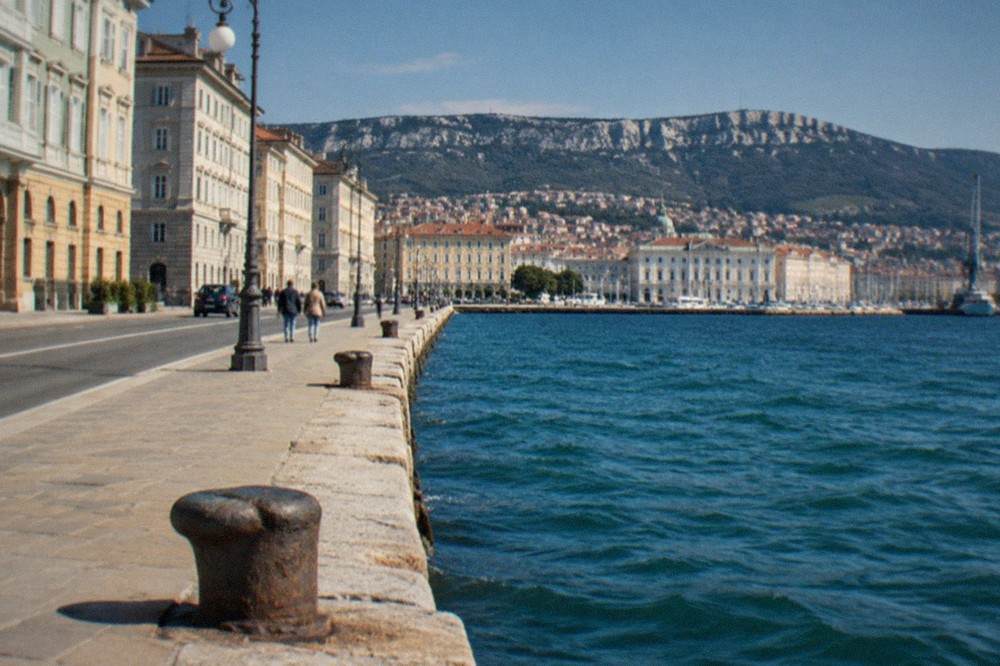
Trieste feels like neither, and that is the honest answer. It is a Central European port city that happens to be governed from Rome: its architecture is Habsburg, its coffee houses are Viennese in style, its cuisine mixes Adriatic and Austro-Hungarian threads, and its street signs are bilingual by law. The Slovenian countryside around it is part of the same historical region, but the city's own public life has been Italian-speaking for over a century.
Walk from Piazza Unità d'Italia up to the Città Vecchia and you pass through a city that spent its richest decades as the empire's outlet to the sea, a role that left it with insurance palaces, a Greek Orthodox church, a Serbian Orthodox church, a synagogue and a Roman theatre all within a compact centre. The Slovenian dimension is real and permanent, visible in the bilingual signage and the Karst villages behind the city, but it is the countryside's dimension more than the centre's.
That layered identity is why the question "why is Trieste not Slovenia?" keeps being asked and why the answer is historical rather than cultural. The border was settled by diplomacy between states that no longer exist in the form they then had, and the city it left on the Italian side kept its mixed character inside Italian sovereignty. For more on the unusual side of the city, see the unusual thing to see in Trieste, and for how long to give it, how many days you need in Trieste.
Whichever of those you book, the border itself is the small part of the day: the drive, the ID check and the euro are all straightforward, and the hard choice is only which side of the line to spend the afternoon on.
Common Questions About Trieste and Slovenia
Why is Trieste not Slovenia?
Trieste was confirmed as Italian in the post-war border settlement, while the city and its hinterland were still under Allied military administration and before Slovenia existed as a country. Slovenia became independent in 1991 and inherited the already-fixed Italian border.
Was Trieste ever part of Yugoslavia?
Not the city itself. After the Second World War Trieste was administered by Allied forces as disputed territory while Yugoslavia claimed it, but the settlement gave the city to Italy. Yugoslav administration at that time covered the surrounding hinterland, not the urban core.
Do I need a passport to go from Trieste to Slovenia?
Carry a passport or national ID card. Both countries are in Schengen, but Italy is running temporary border checks on its land borders with Slovenia from 19 June 2026 to 18 December 2026 per the European Commission's register.
Do Slovenia and Croatia use the euro?
Yes. Slovenia has used the euro since 1 January 2007, and Croatia adopted the euro and joined Schengen on the same day, 1 January 2023. No currency change is needed anywhere on a day trip from Trieste.
Is Slovenian spoken in Trieste?
Yes. The municipality's street signs are bilingual, Italian and Slovenian, and the Slovenian-speaking community is historically rooted in the city and the Karst villages around it. The city's dominant public language, however, is Italian.
What is the best day trip from Trieste into Slovenia?
Lake Bled and Ljubljana is the most-booked option, with guided tours from Trieste running around 7 to 9 hours. The Slovenian coast, Piran and the great caves at Postojna and Škocjan are the other realistic same-day choices.
Trieste Travel Guide covers the border region from the Italian side: the city, the Karst and the crossings, with the practical facts checked against the official sources rather than repeated from older guides.