Servola and Muggia Bay, Trieste, Italy: The Port City's Working Waterfront
Servola and Muggia Bay are where Trieste, Italy stops posing and starts working: cranes, freight yards, a free walking tour through the old port, and a sheltered bay that leads down the coast toward the Slovenian border.
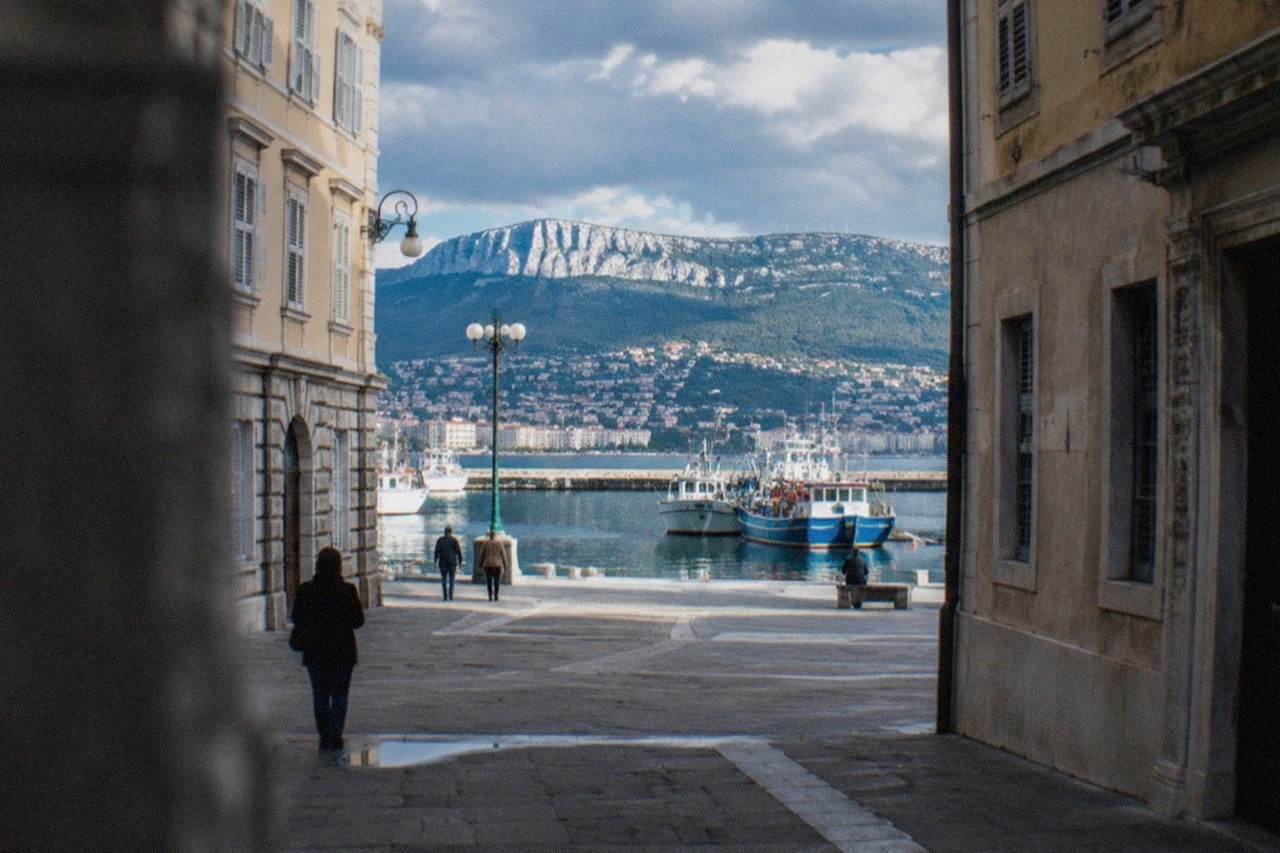
Short answer
Servola is Trieste's industrial and port district, south-east of the centre along the bay that curves toward Muggia, the last town on the Italian side of the border with Slovenia. The old port at Porto Vecchio can be explored on a free, tip-based GuruWalk, the working piers host cruise ships, and Muggia Bay sits on local bus and boat routes.
Trieste, Italy, is a port city before it is anything else, and Servola and Muggia Bay are where that identity is most visible. The district stretches south-east from the city centre along the shore of the gulf, past the old port, the freight terminals and the industrial plants of Servola, to the shallow curve of Muggia Bay, where the town of Muggia sits a few kilometres from the border with Slovenia. Most visitors never come this way, which is fair: the postcard Trieste lives around Piazza Unità d'Italia and the seafront promenade. But the port made this city. Its Habsburg-era wealth, its coffee trade, its shipyards and its cruise berths all belong to this stretch of water, and a growing slice of its visitor economy does too, because the cruise terminal sits on these very quays.
This guide, from Trieste Travel Guide, covers what the district actually is, what you can see on a walk through the old port, how to get from the Trieste port area to Muggia, whether the bay is swimmable, and what a cruise passenger arriving at these berths needs to know. Where a figure matters, it comes from the official sources this site verifies against, and where something cannot be verified, we say so rather than guess.
Where Is Servola and Muggia Bay in Trieste, Italy?
Servola is the industrial and port district on Trieste's south-eastern shore, running from the edge of the centre along the bay toward Muggia, the last Italian town before the Slovenian border. The old port of Porto Vecchio sits at its inner end, the working freight and cruise piers along its middle, and Muggia Bay opens out at its far end, with the town of Muggia reachable by urban bus and by boat in the sailing season.
The geography is simple once you see it once. Trieste's centre faces north over a narrow corner of the Adriatic; the shoreline then bends east and south around the head of the gulf. Everything along that bend, from the old port's warehouses to the steelworks site at Servola to the sheltered water of Muggia Bay, belongs to this working side of the city. The hills of the Carso plateau come down to the water here, which is why the district feels different from the flat, elegant Borgo Teresiano a short distance north.
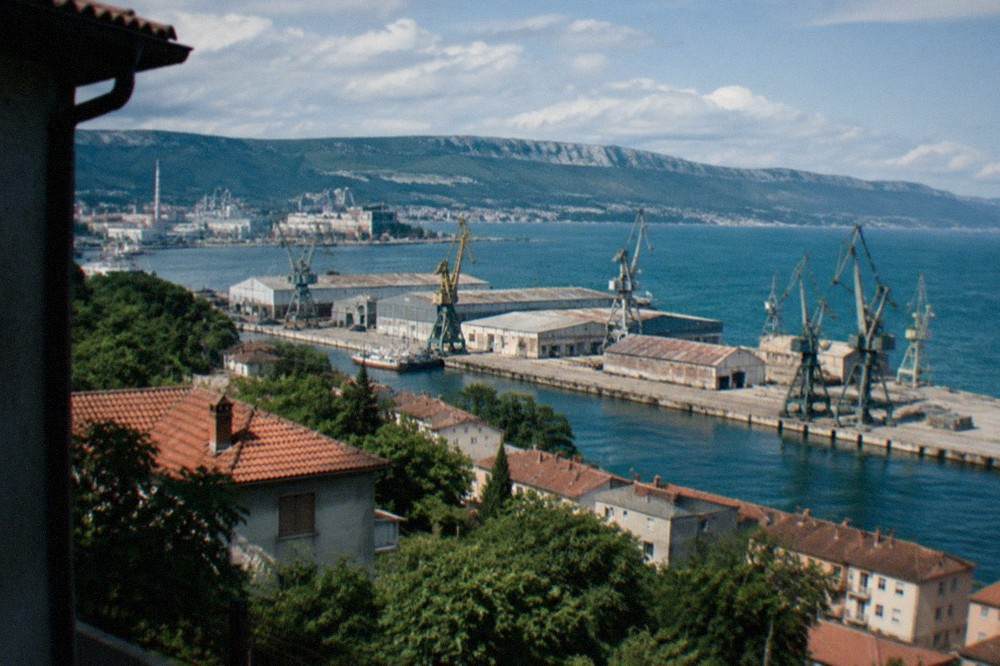
Muggia itself is a separate small town, administratively its own municipality, on the Italian side of the border with Slovenia. Our full Muggia area guide covers the town, its square and its boat connections in detail, and the Muggia day trip guide covers the practicalities of getting there. This page is about the shoreline that connects the port city to it.
What Was the Trieste Port District's Industrial Role?
Trieste's port was the engine of the city's Habsburg-era growth, and Servola was where the heavy industry sat: shipbuilding, steel and the freight yards that moved goods between Central Europe and the sea. The old port, Porto Vecchio, is a district of early twentieth-century warehouses, cranes and rail sidings that was closed to the public for decades and has only opened up in recent years, which is why it now draws industrial-archaeology walks.
The story people miss is that Trieste was the Austrian empire's sea gate, and the empire built accordingly. The port's free-trade status, granted under Habsburg rule, made it the shipping point for a vast hinterland, and the warehouses, silos and rail infrastructure of the old port are the physical remains of that. When the empire collapsed at the end of the First World War, the port's reason for existing largely went with it, and the district spent decades as a semi-derelict no-go zone. Its reopening to the public is recent, and it is one of the few places on the northern Adriatic where you can read a century of maritime history off the buildings themselves.
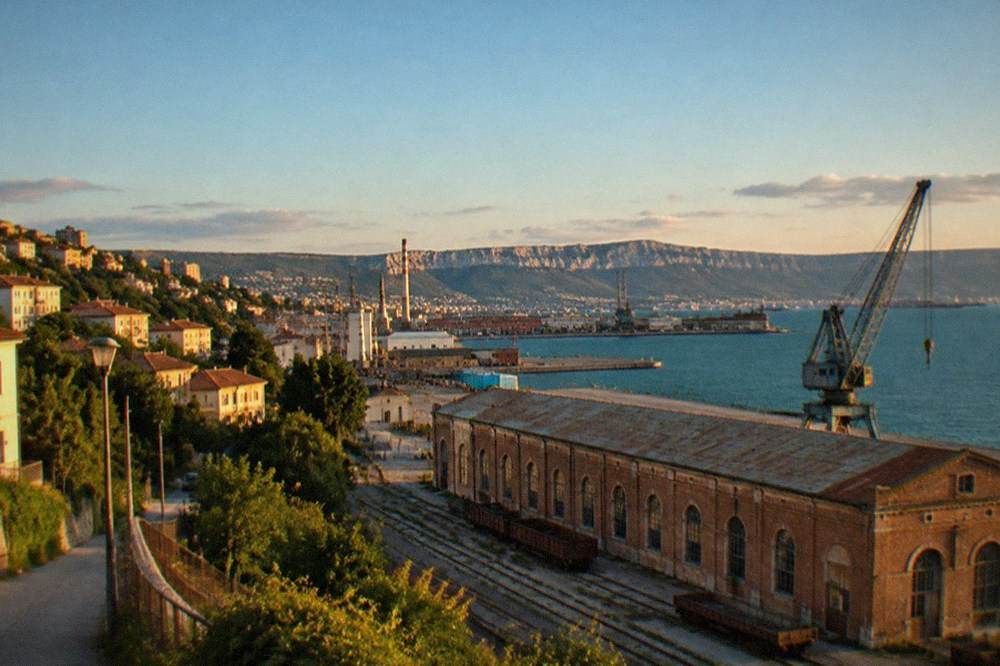
Servola, further along, was the industrial quarter proper. The name today is most attached to the steel plant that operated on the site across the twentieth century. The plant's history, including its closure and demolition, reshaped the district, and the area around it remains a working zone rather than a sightseeing one. Treat Servola as the stretch you pass through, and the old port and the bay as the stretches you stop in.
The best way into the old port's story is on foot with someone who knows it. There is a free, tip-based GuruWalk, "Free walking tour: Trieste and the Old Port - Industrial archeology tour", run by a local guru, which covers the district as "a city within another city: a district only opened to the public in recent years". It is free and tip based, and it is the only tour in our roster that deals with this specific quarter.
For travellers who prefer a fixed-price guided format over a tip-based walk, the city's mainstream guided tours cover the historic centre and the waterfront rather than the freight zone, and the best-of private walking tour is the usual starting point for those.
What Can You See on a Walk Through the Old Port of Trieste?
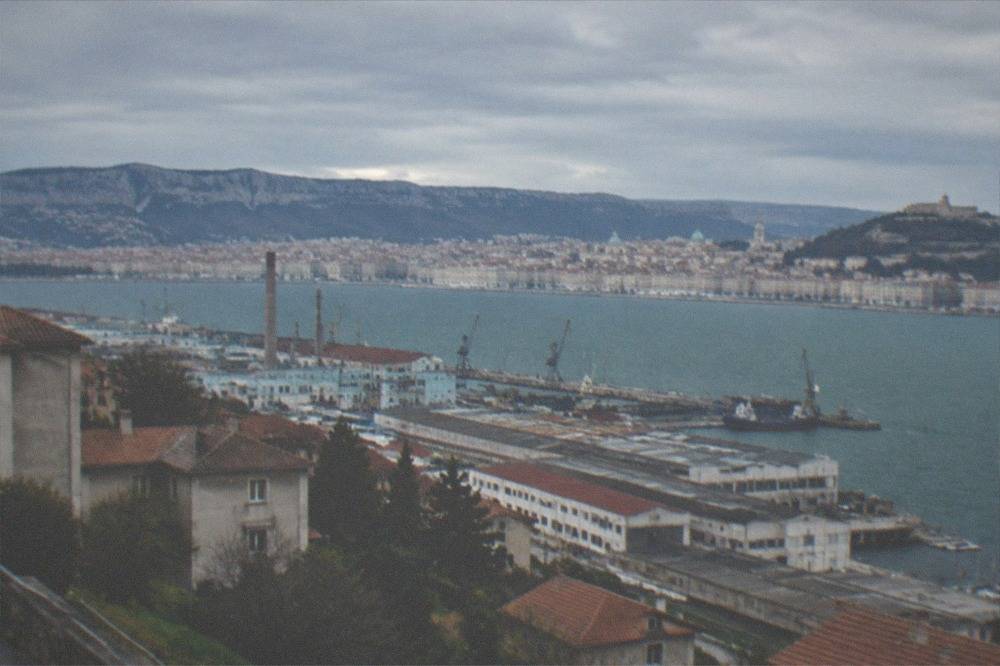
The walkable sights of the old port are the warehouse facades, the surviving harbour cranes, the rail sidings cut into the quays, and the open harbour views back toward the city centre and the seafront. There is no ticket, no museum desk and no published opening schedule for the district as a whole, so you walk it as open ground, and the guided option is the free GuruWalk industrial archaeology tour described above.
Porto Vecchio is not a museum with a gate. It is a redeveloping port district whose heritage fabric is still the main attraction, and the experience is closer to wandering a converted dockland than visiting a site. The quays give some of the best unobstructed views of the city's skyline from water level, a perspective the seafront promenade never offers because you are standing inside the harbour rather than looking across it.
A few practical cautions. The district is still partly active: working areas, fenced compounds and construction zones sit alongside the public parts, so stay on the open quay surfaces. There is no verified published schedule of events or markets for the port area that we could confirm on an official source, so check what the Comune's culture portal lists for the week you are there rather than assuming a given weekend will have anything on.
If your time in the city is short and you want the port's geography explained rather than discovered, a guided walk with a coffee stop in a historic bar covers the centre and the waterfront in about two and a half hours, from $68.79 per person, rated 4.97 from 106 reviews on the operator's live listing.
The three options above all start from the city and suit different budgets and time budgets, and the coast tour in particular pairs well with a morning in the old port: the port walk in the cool of the morning, the border crossing by minibus after lunch.
How Do You Get from Trieste Port to Muggia?
Muggia is reached from Trieste on the urban bus network, with tickets at €1.50 for 60 minutes or €1.85 for 75 minutes and a day ticket at €3.35, all valid across the city network, and by passenger boat across the bay in the sailing season. There is no verified train link: the rail network does not serve the bay shore, so the choice is bus, boat, or the coast road by car.
The fares above are Trieste Trasporti's own 2026 urban tariff, published in the operator's tariff sheet dated 29 December 2025. Singles run 60 or 75 minutes, extended to 240 minutes on Sundays and public holidays, and there are 10-ride and 20-ride carnet options for longer stays. Contactless bank cards and digital wallets can be tapped on board the "Eva" readers, and the system applies the cheapest applicable fare, which saves fiddling with ticket machines.
| Ticket | Code | Price | Validity |
|---|---|---|---|
| Urban single | U01 | €1.50 | 60 minutes |
| Urban single | U02 | €1.85 | 75 minutes |
| Day ticket | U24 | €3.35 | Full day |
| 10 rides | U10 | €13.50 | 10 journeys |
| 20 rides | U20 | €16.65 | 20 journeys |
Single tickets are valid for 240 minutes on Sundays and public holidays, and the same tickets cover the whole urban network, including the Opicina tram line 2, which runs from piazza Dalmazia up to Opicina on the Carso. The tram was reactivated on 1 February 2025 after its long stop, and its current timetable is dated 20 July 2026; the live status is always on the operator's site, because short maintenance suspensions happen and are announced there first.
The boat option is seasonal and weather dependent. The bora, Trieste's east-north-east wind, blows hardest in the cool season, and ARPA FVG's own station tables for the molo Fratelli Bandiera record an average of 17.6 days a year with a gust over 90 km/h, with February the windiest month and June the calmest. There is no published wind threshold at which bay crossings stop, so treat sailing as a fair-weather service and check on the day.
Is It Safe to Swim Off Muggia Bay?
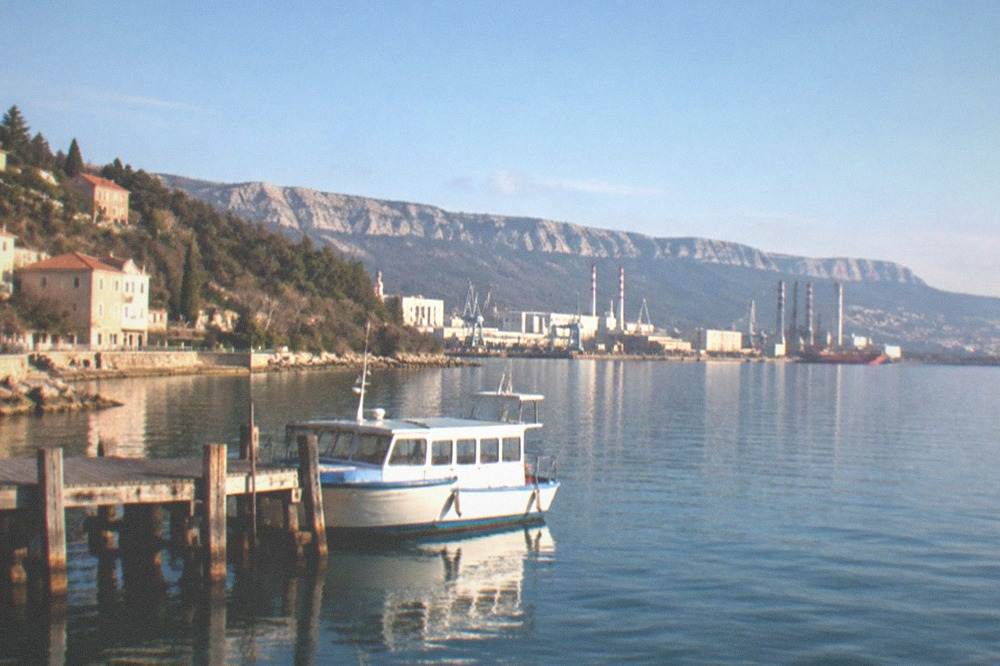
Muggia Bay is a local swimming shoreline rather than a resort beach, with sea temperatures in the Gulf of Trieste that ARPA's station data puts at around 23.1 C in June, 25.9 C in July and 25.9 C in August, so the swimming season runs roughly June to early October. The same tables show the sea at its coldest in February, around 10.5 C, and there is no lifeguarded beach infrastructure of the resort kind on this stretch.
The numbers above come from the ARPA FVG / OSMER station at Trieste molo Fratelli Bandiera, series 1995-2024, with sea temperature from an ocean reanalysis that is a different source from the land figures. What they tell you is that the gulf warms late and stays warm late: September's mean of 23.9 C is warmer than June's, because the sea retains heat through the summer.
| Month | Mean sea temperature | Mean air temperature | Rainfall |
|---|---|---|---|
| June | 23.1 C | 23.1 C | 62.5 mm |
| July | 25.9 C | 25.2 C | 53.8 mm |
| August | 25.9 C | 25.2 C | 71.7 mm |
| September | 23.9 C | 21.2 C | 102.3 mm |
| October | 20.3 C | 17.1 C | 88.6 mm |
Two cautions for the water. First, this is a working bay: freight traffic, port manoeuvring and industrial outfalls mean you swim where locals swim, not off whichever quay looks inviting. The city's established swimming spots are on the other side of the centre, at Barcola and the historic Pedocin beach, which our Barcola seafront guide covers. Second, the bora can turn any bay water choppy with little warning in the cooler months, and the monthly record gust exceeds 110 km/h in every single month of the year at the molo station, including summer.
What Should Cruise Passengers Know About the Trieste Port?
Cruise ships dock at Trieste's port berths within walking reach of the centre, and the practicalities that matter are three: the tourist tax is charged per person per night at rates from €1.50 to €3.80 depending on the accommodation category, for a maximum of 5 consecutive nights; the border with Slovenia has temporary Italian checks running through 18 December 2026; and the old port district is the part of the city that most shore excursions skip.
The tourist tax rates come from the Comune di Trieste's own 2026 multilingual rate table. The charge applies to stays in the city, not to a cruise day passenger who never sleeps ashore, but it matters to anyone staying before or after a sailing.
| Accommodation category | Tourist tax per person, per night |
|---|---|
| 5-star hotel | €3.80 |
| 4-star hotel | €3.30 |
| 3-star hotel | €3.00 |
| 2-star hotel, B&B Superior, affittacamere | €2.30 |
| Hostels, residences, agriturismi, short-let properties | €2.30 |
| B&B Comfort | €2.00 |
| 1-star hotel, B&B Standard | €1.80 |
| Campsites and motorhome areas | €1.50 |
The tax is charged for a maximum of 5 consecutive nights in the same property, and everyone under 18 is exempt, along with a list of other categories the Comune's table spells out.
The border point matters because the number-one shore activity from Trieste is crossing into Slovenia, whether to Piran, Koper or Ljubljana. All three countries, Italy, Slovenia and Croatia, use the euro, and Croatia joined Schengen and adopted the euro on the same day, 1 January 2023. But the European Commission's register of temporary border measures currently lists Italian checks on the land border with Slovenia from 19 June 2026 to 18 December 2026. Carry a passport or national ID card on any trip across that border this year, and treat the checks as temporary and dated, not as a permanent feature.
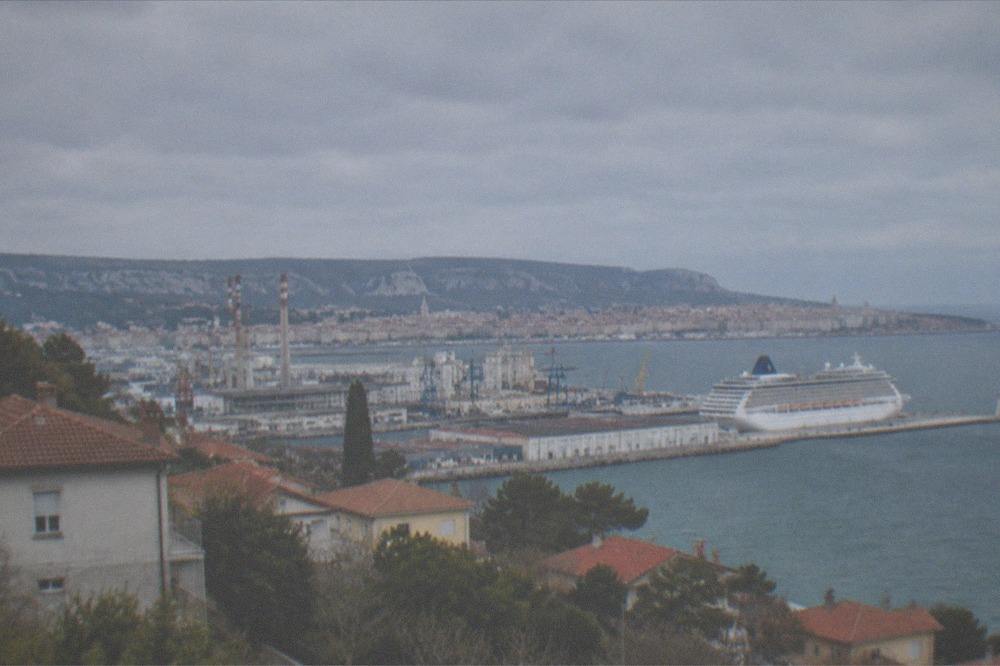
For the practical questions cruise passengers ask most, we have dedicated pages: how far the cruise port is from the town, whether Trieste is walkable from the cruise port, and a full Trieste cruise port guide. The short version is that the berths sit on the port side of the city and the centre is reached on foot along the waterfront or with a short hop on the urban network.
What Is the Best Way to See the Waterfront Beyond the Port?
The best value options for the coast beyond the port are the guided day tours into Slovenia, from $114.64 per person for the Piran and Slovenia coast tour rated 4.57 from 136 reviews, or $145.97 for the Lake Bled and Ljubljana tour rated 4.5 from 214 reviews, both with round-trip transport from Trieste, alongside the free tip-based GuruWalk city walk for the centre itself.
The logic is straightforward. The port district is walkable and free, but the coastline it belongs to continues across the border, and the border crossing, the parking and the seasonal boat schedules are exactly the friction a guided tour removes. The Piran coast tour runs about 6 hours and covers the Slovenian Istrian shore; the Bled and Ljubljana tour runs about 7 hours and pairs the capital with the lake. Both are day trips, not city tours, and both depart from Trieste.
| Tour | Kind | From | Rating | Duration |
|---|---|---|---|---|
| From Trieste: Piran and Slovenia Coast Tour | Adriatic coast day trip | $114.64 per person | 4.57, 136 reviews | 6 hours |
| Lake Bled and Ljubljana Tour from Trieste | Slovenia lakes day trip | $145.97 per person | 4.5, 214 reviews | 7 hours |
| Trieste: City that will definitely surprise you | Guided walk, coffee stop | $68.79 per person | 4.97, 106 reviews | 2h 30m |
| Free walking tour: Trieste and the Old Port | GuruWalk free walk, tip based | Free, tip based | 5, 4 reviews | Old port district |
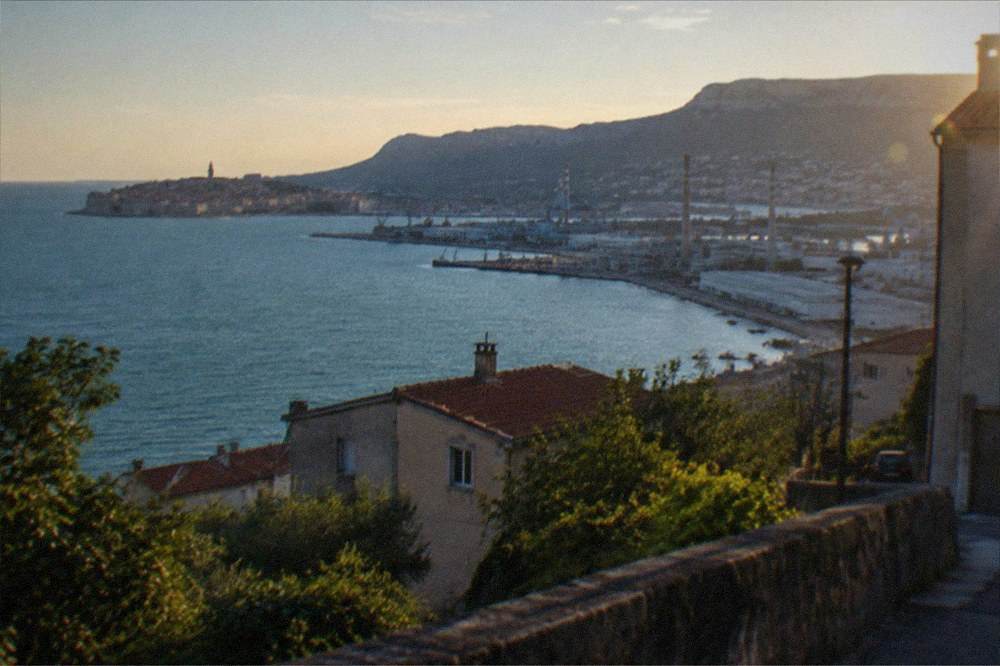
If you would rather stay on the Italian side, the shoreline walk from the old port toward the centre is the city's most underrated stretch, and it connects into the Le Rive seafront and the Città Vecchia old town beyond it. The Miramare Castle guide covers the other direction, up the coast toward Grignano, where the castle's park is free all year and the adult castle ticket is €17, hours 9:00-19:00 with last admission at 18:30.
For the independent-minded, the free GuruWalk "Discover Trieste on a walking tour", another tip-based walk run by a local guru, rated 4.86 from 50 reviews, covers the centre, and our free walking tours in Trieste guide compares all the free options.
Common Questions About Servola and Muggia Bay in Trieste
Is the old port of Trieste open to the public?
Yes, the Porto Vecchio district has been opened to the public in recent years after decades as a closed port zone. It is open ground rather than a ticketed site, with no published district-wide schedule, and the free, tip-based GuruWalk industrial archaeology tour is the guided way through it.
Can you walk from the Trieste port to the city centre?
Yes, the centre is reachable on foot from the port berths along the waterfront. Our dedicated answer page on whether Trieste is walkable from the cruise port covers the details, and the seafront route passes through the old port district before reaching the Rive and Piazza Unità d'Italia.
Do you need a passport to visit Muggia or Slovenia from Trieste?
Muggia is in Italy, so no border is crossed to reach it. For Slovenia, carry a passport or national ID card: Italy is running temporary checks on the land border with Slovenia from 19 June 2026 to 18 December 2026, per the European Commission's register, even though all three countries are in Schengen and use the euro.
Is Muggia Bay good for swimming?
The bay is a local swimming shoreline, not a resort beach. ARPA's station data puts the Gulf of Trieste's mean sea temperature at 25.9 C in July and August, so the season runs roughly June to early October, but there is no lifeguarded resort infrastructure, and the city's established bathing spots are at Barcola and Pedocin.
How much do Trieste city bus tickets cost in 2026?
Trieste Trasporti's 2026 urban tariff lists a 60-minute single at €1.50, a 75-minute single at €1.85, a day ticket at €3.35, a 10-ride carnet at €13.50 and a 20-ride carnet at €16.65, with contactless bank cards accepted on board.
What is the bora and does it affect the port area?
The bora is a cold east-north-east wind that funnels down over the Gulf of Trieste. ARPA FVG's station tables record an average of 17.6 days a year with a gust over 90 km/h at the molo, with a series peak of 168.1 km/h in February 2012. There is no published official wind threshold at which port areas close, so check live notices on the day.
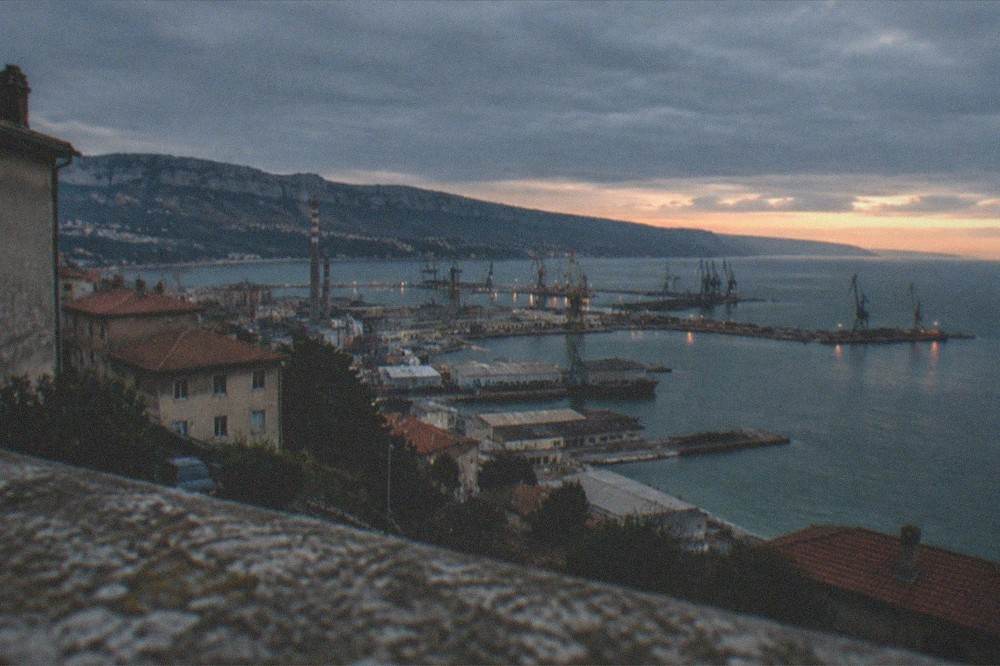
The evening light over the cranes is the district's best photograph, and it costs nothing but the walk out along the quay.
Whichever of those you choose, the port district itself asks nothing of you: no ticket, no schedule, no queue. Servola and Muggia Bay will never be the reason most people come to Trieste, Italy, and that is exactly the case for going. The old port gives the city's maritime century a physical shape you can walk through, the bay road leads to a border town most itineraries forget, and the whole stretch sits on a €1.50 bus ticket from the centre. Go early, go on foot where you can, and carry your passport if the day's plan crosses into Slovenia.
The guided walk above is the one that ties the whole city together, port and all, and it ends with a coffee in a historic bar, which is the most Triestine finish there is.