Trieste to Muggia: The Italian Seaside Town on the Slovenian Border
Muggia is the last town in Italy before the Slovenian border, a short hop from Trieste across its own bay, and the easiest half-day escape the city offers.
Short answer
Muggia is an Italian town on the eastern shore of the Bay of Trieste, reached from Trieste by road, by public transport or, when the sea allows, by ferry across the bay. It has a compact medieval old town, a working harbour and a Slovenian border a few minutes beyond it, so one visit can cover two coastlines in an afternoon.
Muggia is the last town in Italy before Slovenia, sitting on the eastern shore of the Bay of Trieste in Friuli Venezia Giulia, and it is the shortest genuine day trip the city of Trieste offers. Where most escapes from Trieste mean a border crossing, a long drive or a cave system, Muggia is simply across the water: a compact harbour town with a medieval core, a piazza that opens straight onto the sea, and a Slovenian coastline continuing east from the edge of its commune. For a traveller based in Trieste, Italy, it is the natural first excursion, and for anyone with an afternoon to spare it rewards the effort several times over.
The town gives its name to the whole southern stretch of the bay. The Muggia area guide covers the town and its surroundings in depth, and the wider shoreline, including the industrial Servola edge of Trieste itself, is described in the Servola and Muggia Bay guide. This page is about the trip itself: how to get there, what to do with the hours once you arrive, and how the Slovenian coast a few minutes further on turns a half-day into a full itinerary. For everything else the region offers, Trieste Travel Guide covers the city and its surroundings page by page.
Where Is Muggia and Why Does the Trip Work So Well?
Muggia lies on the eastern shore of the Bay of Trieste, inside Italy, a short hop by road or by water from the city of Trieste, and it is the last Italian commune before the Slovenian border. The border itself sits beyond the town, so the trip to Muggia involves no border crossing at all, while the Slovenian coast around Koper and the resort towns of Piran and Portorož begin minutes further east along the same shoreline.
That geography is the whole appeal. Trieste's waterfront faces north-west across its own gulf, and Muggia is tucked around the southern curve of the same body of water, sheltered from the open Adriatic. The town has been part of the Venetian world historically, which shows in the arcaded piazza and the layout of the old streets, and it remains a working port rather than a museum piece. Fishing boats still use the harbour, the shipyard at the edge of the commune is one of the area's big employers, and the town's identity is a mix of Italian and Slovene that mirrors the whole border region.
The other reason the trip works is the contrast. Trieste is a Habsburg imperial city of broad squares and neoclassical facades; Muggia is a small Venetian-flavoured harbour town you can walk across in well under an hour. Visitors who spend three days in Piazza Unità d'Italia and the Borgo Teresiano often describe Muggia as the moment the region finally feels small and local. It is also the obvious pairing with a Slovenian coastal excursion, because the road east from Muggia runs straight into Koper and on towards Piran.
How Do You Get from Trieste to Muggia?
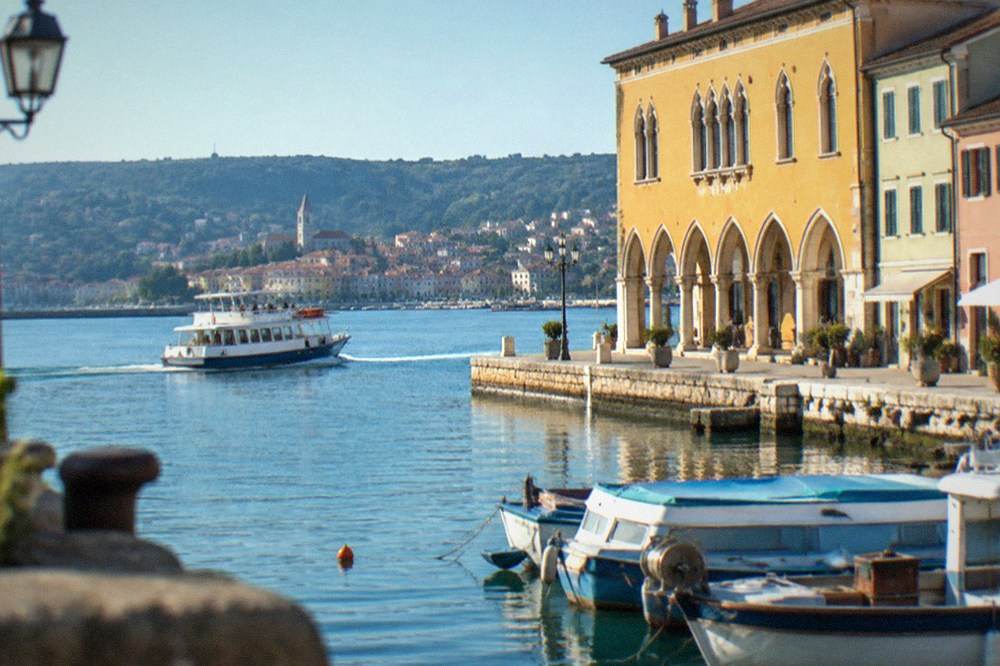
You can reach Muggia from Trieste by road along the shore of the bay, by public transport, or by the seasonal ferry service across the water, and the crossing by boat is the version most visitors remember because it delivers you directly into the harbour with the town's facade ahead of you. Operators publish their own timetables and the ferry is weather-dependent, so the live status has to be checked with the operator rather than assumed.
The practical detail that surprises people is the ferry's relationship with the wind. The bora, the north-easterly that defines Trieste's climate, blows straight down the gulf, and ARPA FVG's own station tables for the molo Fratelli Bandiera record an average of 17.6 days a year with a gust over 90 km/h and 49 days with a gust over 72 km/h. On strong-bora days the short crossing from Trieste to Muggia is one of the services that can be suspended, and no published wind threshold governs when: the decision is made operationally, day by day. The rule for planning is simple. Check the operator's site on the morning you travel, and if the boat is not running, the road around the bay still is.
For transport within Trieste itself before you leave, the urban network runs on a published 2026 tariff: a 60-minute single at €1.50, a 75-minute single at €1.85, a day ticket at €3.35, ten rides at €13.50 and twenty at €16.65, with contactless bank cards accepted on board and the system applying the cheapest applicable fare. Those are the city's urban fares as published by Trieste Trasporti, and they cover getting to your departure point in the city, not the Muggia leg itself, whose fare you should confirm with the operator before travelling.
| Option | What it involves | What to check before travelling |
|---|---|---|
| Ferry across the bay | Direct crossing into Muggia harbour, the scenic choice | Operator's live timetable and weather status |
| Road around the shore | Drive or taxi along the bay road into the town centre | Parking availability in the old town |
| Public transport | Local services along the same shore route | Current timetable with the operator |
| Guided coastal tour | Booked day combining the Slovenian coast with tastings | Tour listing for departure point and inclusions |
Whichever way you travel, the trip is short enough that Muggia works as a half-day. Many visitors leave Trieste in the morning, spend three or four hours in the old town and over a long lunch, and are back at their hotel by mid-afternoon, which leaves the rest of the day for Miramare Castle or the city's museums.
If you would rather someone else handle the coastal leg entirely, the Slovenian coast option in the band above, Trieste: Slovenian Coast Tour with Food and Wine Tasting, runs from $137.57 per person, is rated 4.98 from 50 reviews and lasts about 5h 30m, covering the coast east of the border with food and wine built in. You can also Check availability on the operator's live listing.
What Do You Actually See in Muggia?
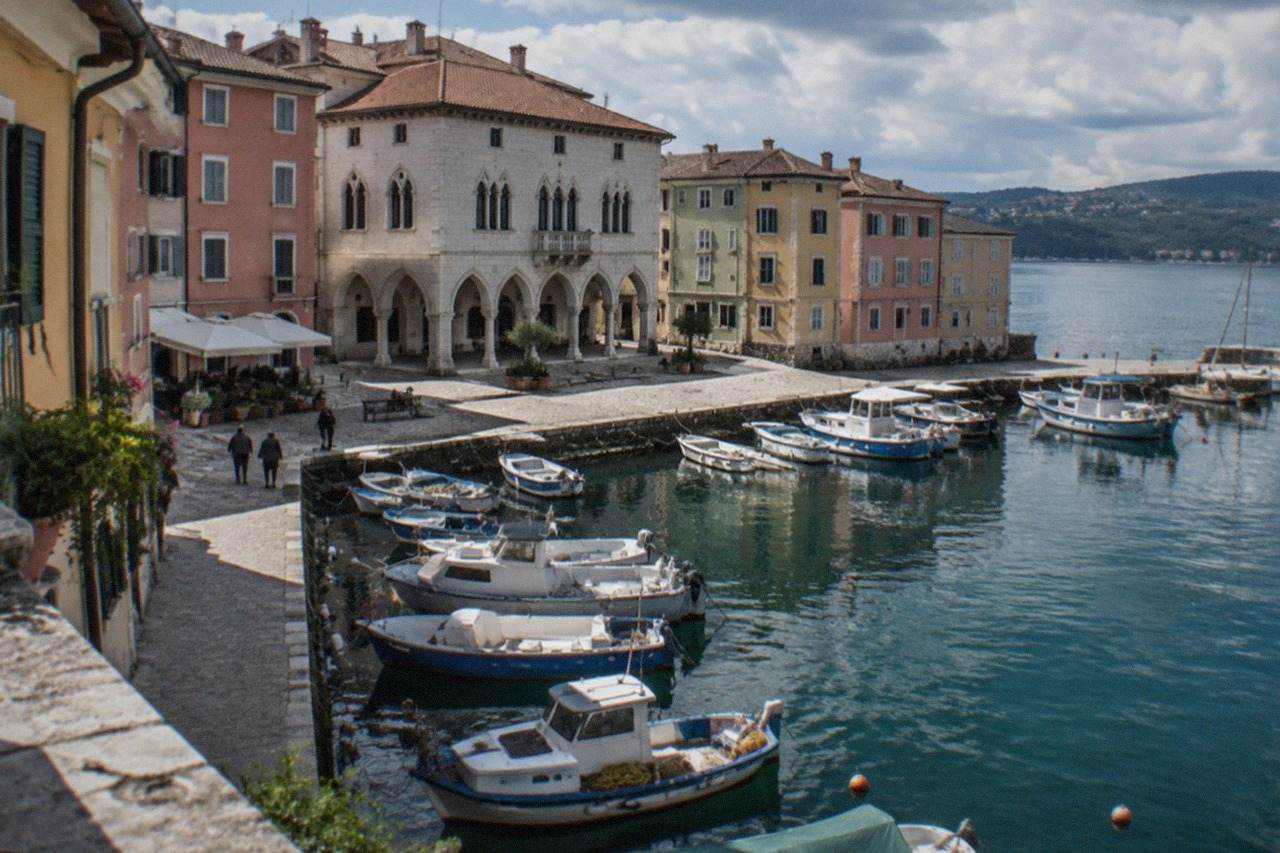
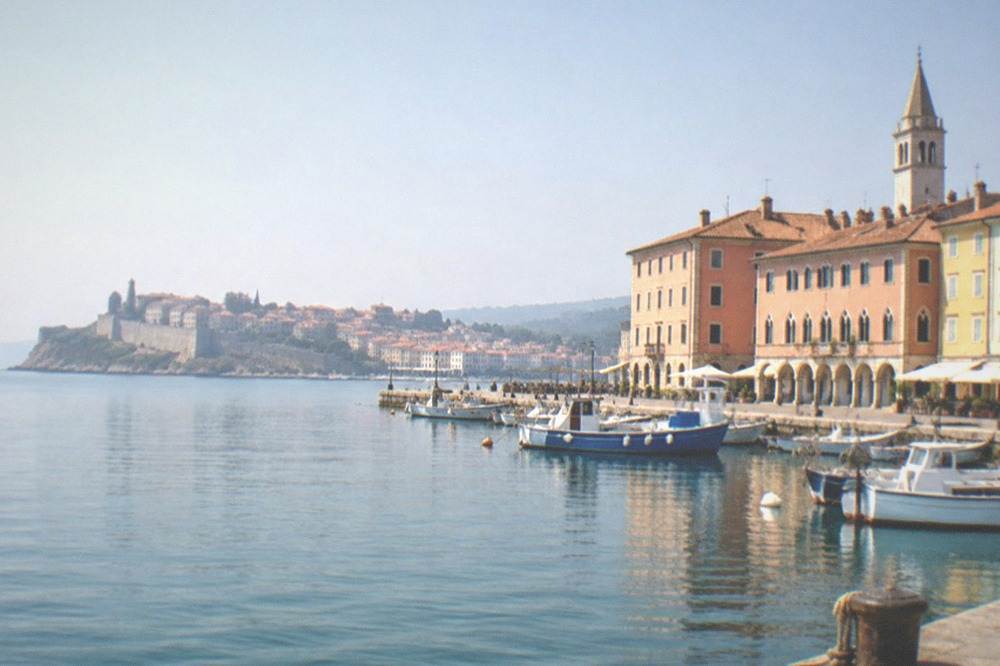
Muggia's sights are concentrated in a compact medieval old town that rises from the harbour: the arcaded Piazza Marconi on the water, the Romanesque Duomo di Santo Stefano above the streets, and the remains of the castle on the hill behind, all walkable within an hour at a slow pace, with the harbour itself and the boat activity along the front as the real attraction.
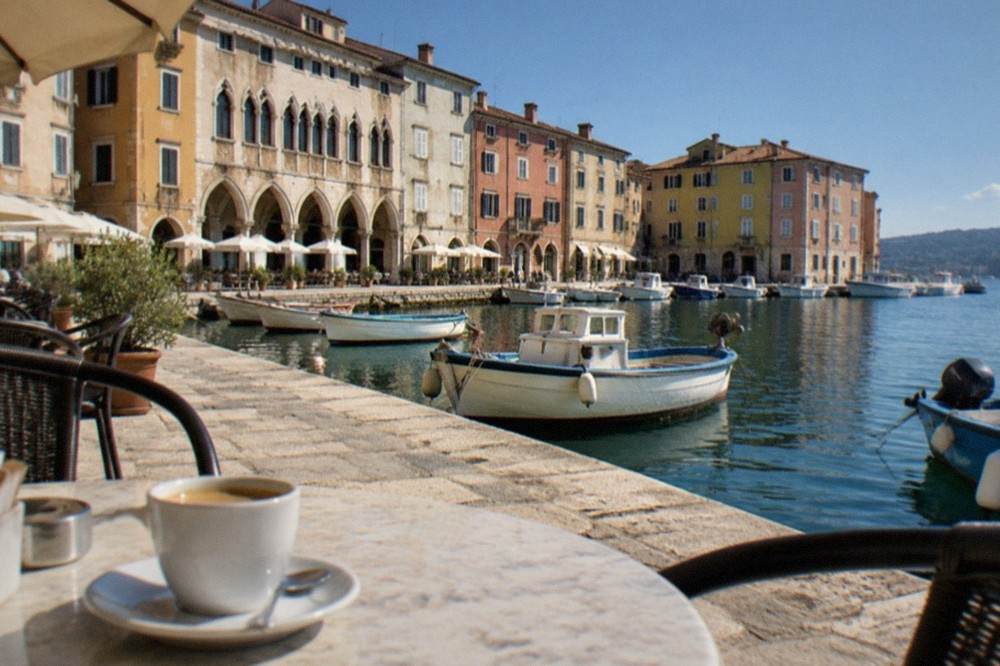
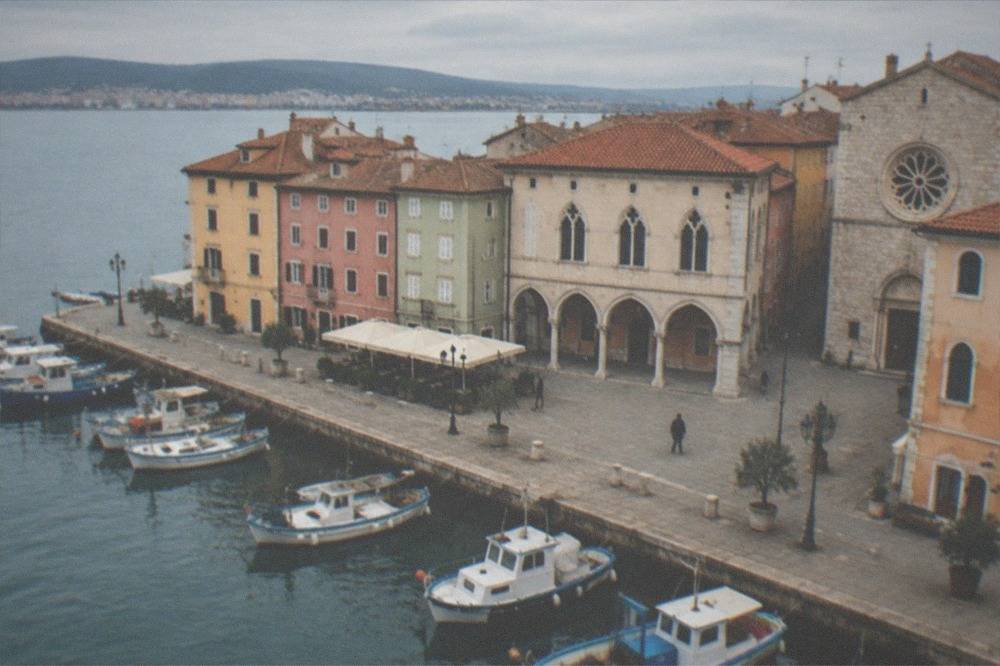
The piazza is the heart of the visit. It is a proper Venetian-style square, arcaded on one side, with painted facades and cafe tables, and it opens directly onto the water so that the sea is part of the square rather than a view from it. From there the old streets climb steeply to the Duomo di Santo Stefano, the town's main church, whose facade carries a stone rose window and a cycle of carved figures, and above it a staircase of alleys continues towards the castle remains at the top of the hill. The climb is short but real, and the reward is a panorama back across the bay towards Trieste itself, with the city's seafront and the hills behind it laid out to the north-west.
Two things make the town more than a pretty stop. The first is that it is genuinely lived in: the harbour has working fishing boats, the shipyard at the commune's edge is active, and the shops in the old streets serve residents rather than only visitors. The second is the layered identity. Street names appear in both Italian and Slovene, the local dialect is a border dialect, and the town's festivals, including its famous carnival, draw from both traditions. For a traveller who has only seen Trieste's imperial side, Muggia is where the region's mixed character becomes visible on the street.
| Sight | What it is | Time to allow |
|---|---|---|
| Piazza Marconi | Arcaded square on the harbour with cafes | 30-45 minutes, longer with a coffee |
| Duomo di Santo Stefano | Romanesque main church above the old town | 15-20 minutes plus the walk up |
| Castle remains | Hilltop ruins with the best bay panorama | 20-30 minutes round trip on foot |
| Harbour front | Working port with boats and the seafront walk | 30 minutes at a stroll |
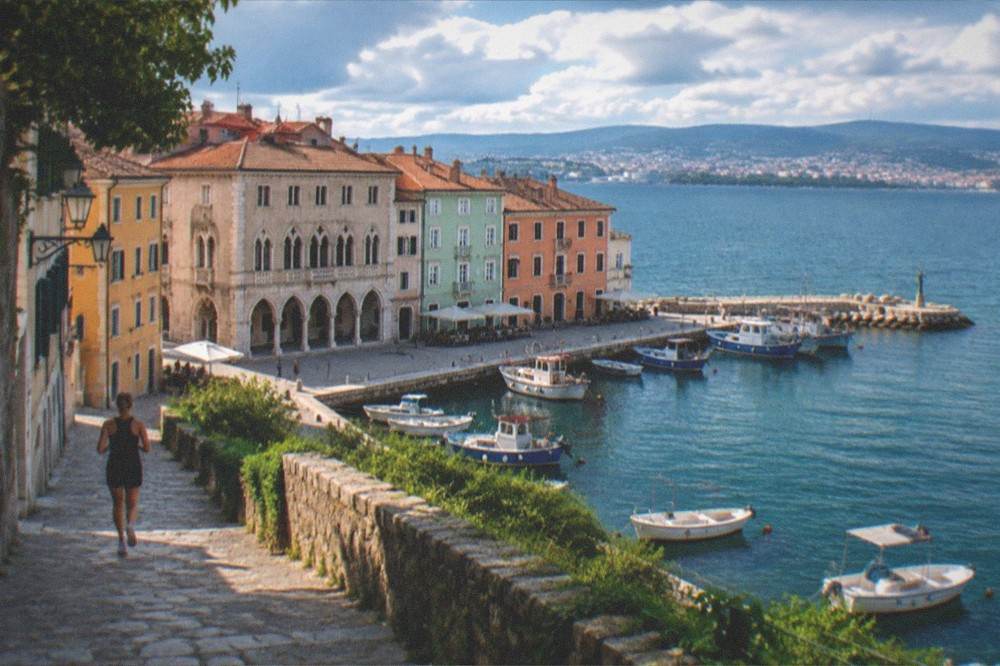
The town also makes a good photography stop. The view from the upper streets, with pastel houses stacked above the water and Trieste faint across the bay, is one of the region's most photographed compositions, and the harbour at golden hour is the shot most visitors leave with.
Can You Combine Muggia with the Slovenian Coast?
Yes, and the combination is the best use of a full day, because the Slovenian border sits just beyond Muggia and the coast road continues east to Koper, Izola and Piran without ever leaving the shoreline. Italy, Slovenia and Croatia all use the euro and all three are in Schengen, so there is no currency change, but Italy is running temporary checks on its land borders with Slovenia from 19 June 2026 to 18 December 2026, so carry a passport or national ID card.
That border detail matters more here than on almost any other page on this site, because the crossing is so close and so casual that travellers assume no document is needed. The European Commission's own register of temporary reintroduced internal border controls currently lists Italy running checks on the land border with Slovenia through 18 December 2026. The measure is temporary and dated, not a permanent rule, but on the day you travel it is the operative fact: bring ID, keep it accessible, and expect the possibility of a brief check even though the crossing itself takes moments.
The Slovenian side rewards the crossing immediately. Koper's old town is a Venetian core similar in feel to Muggia itself but larger, Izola is a smaller fishing town, and Piran, further down the coast, is the region's most photogenic seaside settlement, walled on a promontory with a tartini-style square on the water. All of it is on the same euro as Trieste, all of it is reachable on the same coast road, and the whole stretch can be covered in a day trip built around Muggia as the Italian starting point. The full menu of options is laid out in the day trips from Trieste overview.
| Country | Currency | Euro since | Schengen status |
|---|---|---|---|
| Italy | Euro | Founding euro member | In Schengen, running temporary checks on its Slovenia land border 19 June-18 December 2026 |
| Slovenia | Euro | 1 January 2007 | In Schengen since December 2007 |
| Croatia | Euro | 1 January 2023 | Joined Schengen 1 January 2023, the same day |
The table above carries the two facts an earlier generation of guidebooks got backwards. Croatia adopted the euro and joined Schengen on the same day, 1 January 2023; both happened, and both happened on that date. Nobody crossing from Trieste into Slovenia or on into Croatia needs to change money, and nobody should be told they will.
Guided options cover the same ground without the driving. The Slovenian coast tour mentioned earlier is the natural fit, and for travellers who want the biggest single excursion from Trieste, the Ljubljana route inland is covered on its own page. A solo option worth comparing:
What and Where Do You Eat Around Muggia Bay?
Eating around Muggia means Adriatic seafood in the town's harbour restaurants, from grilled fish and shellfish to the local pastas of the Trieste tradition, and the Slovenian side of the bay adds its own coastal kitchen minutes away, so a single day can take in both the Italian and Slovenian versions of the same shoreline cuisine. Reservations matter on weekends and in the Barcolana period in October, when the whole gulf fills with visitors.
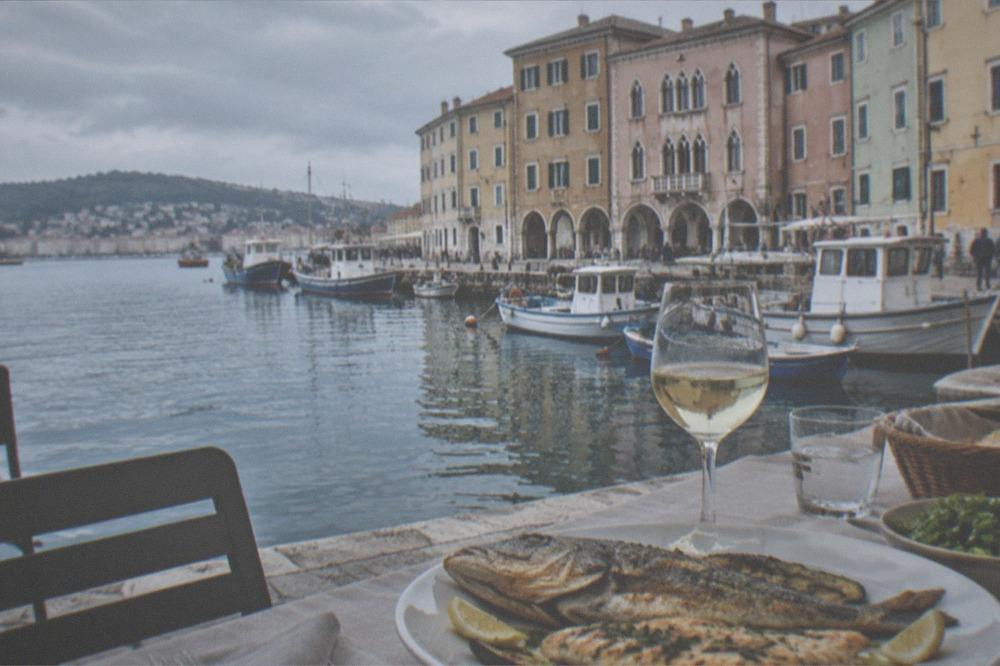
The food of the bay is genuinely shared. Trieste's own table, described in detail in the what to eat in Trieste guide, runs from jota, the sauerkraut-and-bean soup that shows the city's Central European side, to fresh Adriatic fish, and Muggia's kitchens lean towards the sea end of that spectrum. Lunch on the piazza with the water in front of you is the classic Muggia experience: a plate of grilled catch, a local white, and the boats working in the harbour a few metres away. Across the border the Slovenian coast serves the same fish with its own accents, and the guided tour option pairs that coast with wine and food tastings as part of the itinerary.
For wine, the region around the bay is Carso and Istrian country. The Karst plateau above Trieste produces Vitovska, Malvasia and Terrano, the local grapes of the Carso, and one thing worth being precise about: Prosecco the village sits on the Italian side of the border area and gave its name to the sparkling wine, but Trieste itself is not in the Prosecco DOC. The Carso's own whites are what the local lists pour. The osmize, the seasonal farm outlets of the Karst where growers sell their own wine and produce direct from the property, are a short drive up from the bay, signposted by a frasca, a leafy branch hung at the turning, and the de facto opening calendar lives at osmize.com. Their opening days are decided by each operator and notified locally, so the calendar is the reference, not a fixed schedule.
| Food and drink | What it is | Where it fits the day |
|---|---|---|
| Grilled Adriatic fish | The core of every harbour menu in Muggia | Lunch on the piazza |
| Jota | Trieste's sauerkraut, bean and potato soup | Back in Trieste for dinner |
| Carso whites, Vitovska and Malvasia | The local grapes of the plateau above the bay | With lunch or at a tasting |
| Osmiza produce | Farm wine, salumi and cheese sold direct on the Karst | A detour up from the bay when open |
A guided food pairing is also available in the city before or after the trip, and the historic-café tradition of Trieste is worth one dedicated stop:
When Is the Best Time of Year for the Trip?
The best months for the Muggia trip are late spring through early autumn, with May, June and September offering the most reliable combination of warm air, settled sea and thin crowds, and October special for a different reason: Barcolana, the world's largest sailing race, fills the Gulf of Trieste from 2 to 11 October 2026 and turns the whole bay into a spectacle, with the main regatta on Sunday 11 October.
The climate data backs the instinct. ARPA FVG's station tables for Trieste molo Fratelli Bandiera, a 1995-2024 series, put July and August as the warm months, with mean highs of 28.2 C and 28.1 C and sea temperatures around 25.9 C, but they also record 7.2 and 8.5 days over 30 C respectively, and July is the second-driest month of the year at 53.8 mm of rain. The shoulder months are gentler: May averages a 21.7 C high with 75 mm of rain, September a 23.9 C high with 102.3 mm, and the sea stays warm later than the air, at 23.9 C on average in September against 23.1 C in June.
The fact that most guides get wrong is the rain. Trieste is not a dry Mediterranean city: the station series gives 867 mm of rain a year across 86.1 wet days, wetter than the southern-Italian stereotype, and the wettest month is November at 109.8 mm, with September second at 102.3 mm. July, at 53.8 mm, is one of the driest months in the table. What that means for Muggia is simple: summer days are usually fine and can be hot, autumn days are often fine too but carry a real chance of rain, and the ferry's dependence on calm water matters most in the windy shoulder seasons. February holds the series' all-time peak gust, 168.1 km/h in 2012, and the bora is most persistent in the cool months, while June is the calmest month for wind in the table.
| Month | Mean high C | Rain mm | Sea C | Notes for the trip |
|---|---|---|---|---|
| May | 21.7 | 75 | 17.9 | Shoulder season, thin crowds |
| June | 25.8 | 62.5 | 23.1 | Calmest month for wind in the series |
| July | 28.2 | 53.8 | 25.9 | Warmest air and sea, busiest |
| August | 28.1 | 71.7 | 25.9 | Peak Italian holiday period |
| September | 23.9 | 102.3 | 23.9 | Warm sea, rising rain chance |
| October | 19.6 | 88.6 | 20.3 | Barcolana month, 2-11 October 2026 |
Barcolana deserves its own paragraph because it changes the bay itself. The regatta, first sailed in 1969 with 51 boats, set its entry record in 2018 with 2,689 registered yachts, which the organisers describe as a Guinness World Record for the largest sailing race in the world, and the 2026 edition runs from 2 to 11 October with the main race on Sunday 11 October over a 13-nautical-mile course in the gulf. Do not publish or trust a 2026 entry count in advance; the figure that matters is the record. During that week Muggia's piazza and the whole shoreline are busy from dawn, and the sight of the fleet spread across the water between Trieste and the far shore is the single most dramatic thing the bay does all year. The event's history and practicalities are covered in the Barcolana regatta guide.
How Does Muggia Fit Into a Longer Trieste Itinerary?
Muggia works best as the half-day block of a two- or three-day Trieste itinerary, paired with a morning in the city and an afternoon across the bay, or as the launch point for a full coastal day that continues into Slovenia, and travellers with three days or more can chain it with a Ljubljana, Postojna or Piran excursion without repeating ground.
For a one-day Trieste visit, Muggia is probably too much: the city's own San Giusto hill, the old town and the seafront justify the whole day, and the one day in Trieste itinerary makes that case. From two days onwards, the calculus changes. A morning in the city, lunch and the old town in Muggia, and an evening back at the seafront is a comfortable day two, and the two days in Trieste plan builds exactly that kind of split. With three days, Muggia becomes the anchor of a coastal day that can extend to Koper and Piran or turn inland to the caves, and the three days in Trieste itinerary slots it in alongside the Karst.
The onward options from Muggia are unusually rich because the border is so close. The cave systems at Postojna and the Škocjan Caves are among the region's headline sights, the Lipica stud farm sits on the same Karst plateau, and the full coastal and inland menu is compared in the day trips overview. A traveller who falls for the border region on the Muggia trip has a dozen ways to go deeper.
The coastal tour in that band is the one that shares Muggia's own geography, and it is also the related pick for this page: a 5h 30m Slovenian coast excursion from Trieste with food and wine tastings included, rated 4.98 from 50 reviews and priced from $137.57 per person on the operator's live listing. Before you book any version of the day, check the live listing for the current departure details.
Common Questions About Trieste to Muggia
Is Muggia in Italy or Slovenia?
Muggia is in Italy. It is the last Italian commune before the Slovenian border, on the eastern shore of the Bay of Trieste, and no border crossing is involved in visiting the town itself. Slovenia begins just beyond it, and Italy is running temporary checks on that land border from 19 June 2026 to 18 December 2026, so carry a passport or national ID card if you plan to continue east.
How far is Muggia from Trieste?
Muggia sits across the bay from Trieste, a short hop by road along the shore or by the seasonal ferry directly across the water. The exact journey time depends on the mode and the timetable, both of which you should confirm with the operator on the day, and the ferry is weather-dependent because the bora blows straight down the gulf.
Do you need a passport to go from Trieste to Muggia?
No, because Muggia is inside Italy and the trip involves no border. You do need a passport or national ID card if you continue beyond Muggia into Slovenia, because Italy is running temporary checks on its land borders with Slovenia from 19 June 2026 to 18 December 2026. All three countries on the bay, Italy, Slovenia and Croatia, use the euro.
Can you take a ferry from Trieste to Muggia?
A ferry service across the bay to Muggia operates seasonally and is the most scenic way to arrive, landing you directly in the harbour. It is weather-dependent: strong bora days can see the crossing suspended, and no published wind threshold governs the decision, so check the operator's live status on the morning you travel and fall back on the road around the shore if the boat is not running.
What is there to see in Muggia?
Muggia's sights are compact: the arcaded Piazza Marconi on the harbour, the Romanesque Duomo di Santo Stefano above the old streets, the castle remains on the hill behind with the best panorama back across the bay to Trieste, and the working harbour front itself. The whole old town is walkable in an hour or two at a slow pace, which is why it works so well as a half-day trip.
Is Muggia worth visiting from Trieste?
Yes, for the contrast as much as the sights. Trieste is an imperial Habsburg city and Muggia is a small Venetian-flavoured harbour town with a working port, a mixed Italian-Slovene character and a piazza that opens onto the sea. As a half-day it is the easiest excursion the region offers, and as the start of a coastal day into Slovenia it is even better.
The trip from Trieste to Muggia is the region at its smallest and most likeable: one bay, two shores, and a border you can cross after lunch with nothing in your pocket but the same euro and an ID card. Plan the ferry, accept the road as the fallback, and give the town the long lunch it is built for.