Trieste to Piran: A Day Trip from Trieste, Italy to Slovenia's Coast
Piran is the closest genuinely beautiful seaside town to Trieste, Italy, across the Slovenian border on the Istrian coast, and it makes one of the easiest international day trips in Europe.
Short answer
Piran sits on Slovenia's short stretch of Adriatic coast, a short hop across the border from Trieste, Italy. You can reach it on a guided coach tour, by cross-border bus, by car or, in season, by ferry. Carry a passport or national ID card: Italy is running temporary checks on its land border with Slovenia until at least 18 December 2026.
Piran is a walled Venetian-built peninsula town on Slovenia's short Adriatic coast, and it is one of the easiest international day trips you can make from Trieste, Italy: the border with Slovenia sits at the edge of the city, both countries use the euro, and the whole Istrian coastline unfurls within a single day's reach. This page lays out how to get there, what the border rules actually are in 2026, which guided tours run the route, and what the trip costs.
Why Is Piran the Best Coastal Day Trip from Trieste, Italy?
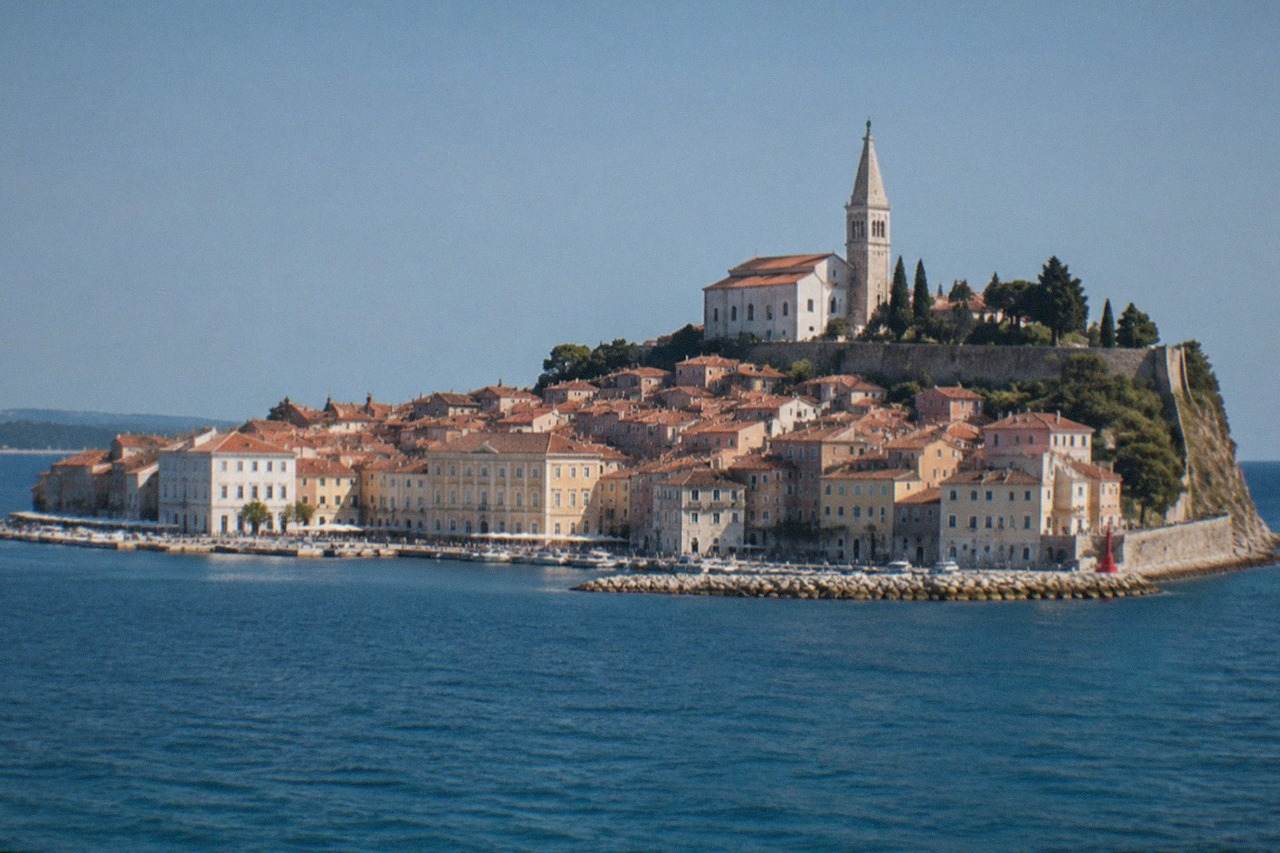
Piran is the pick of Slovenia's coast because it packs a walled old town, a working fishing harbour, a hilltop church and swimming water into a compact peninsula you can cross on foot, and it is the coastal destination closest to Trieste, Italy, reachable on a guided tour, by bus, by car or, in season, by ferry. No other seaside town within a day's reach combines that density with that setting.
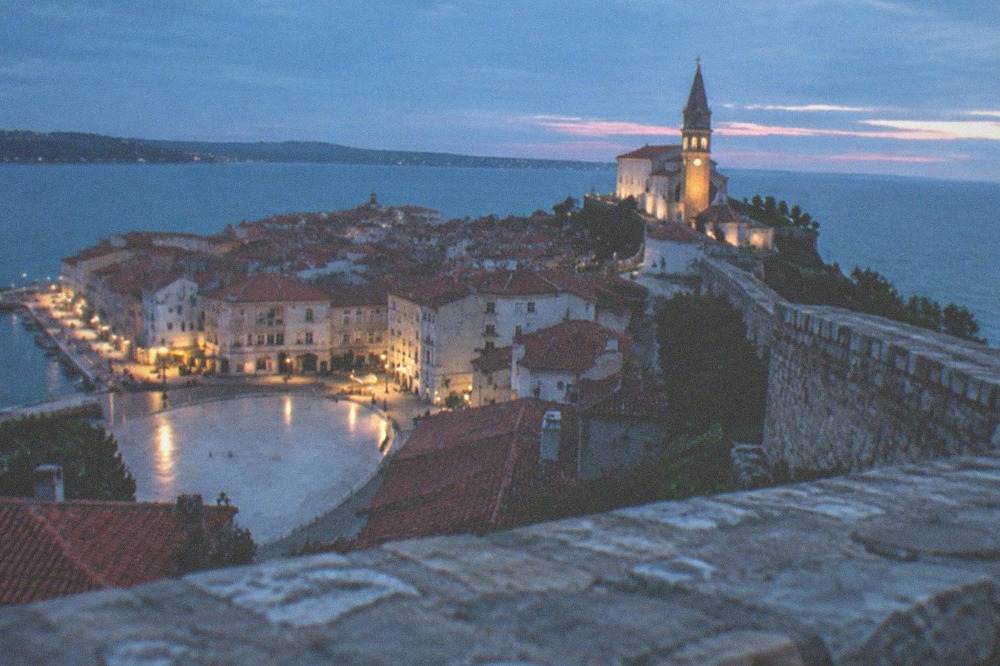
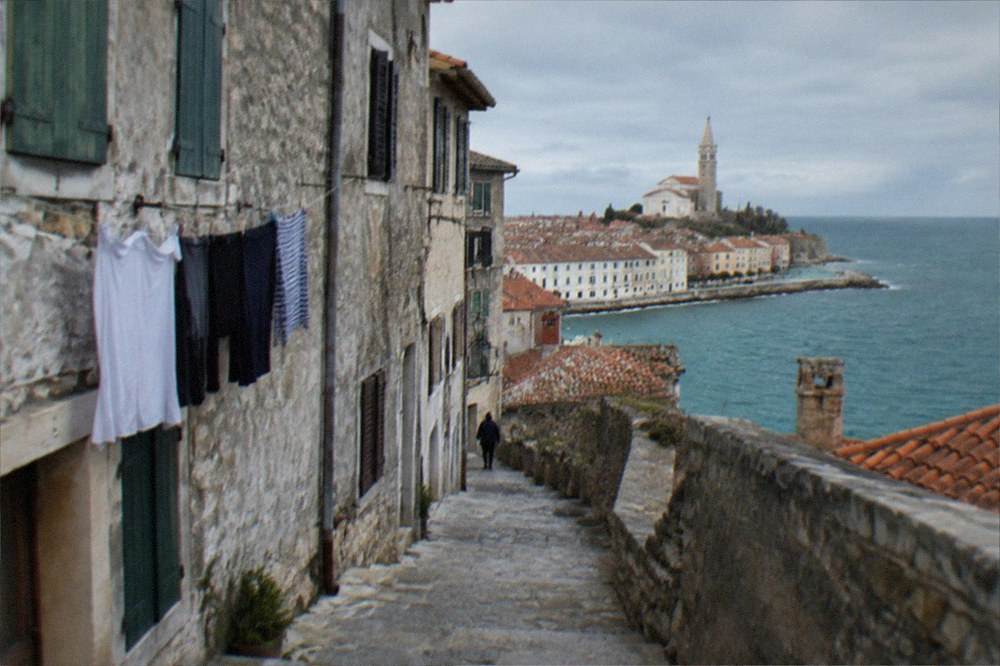
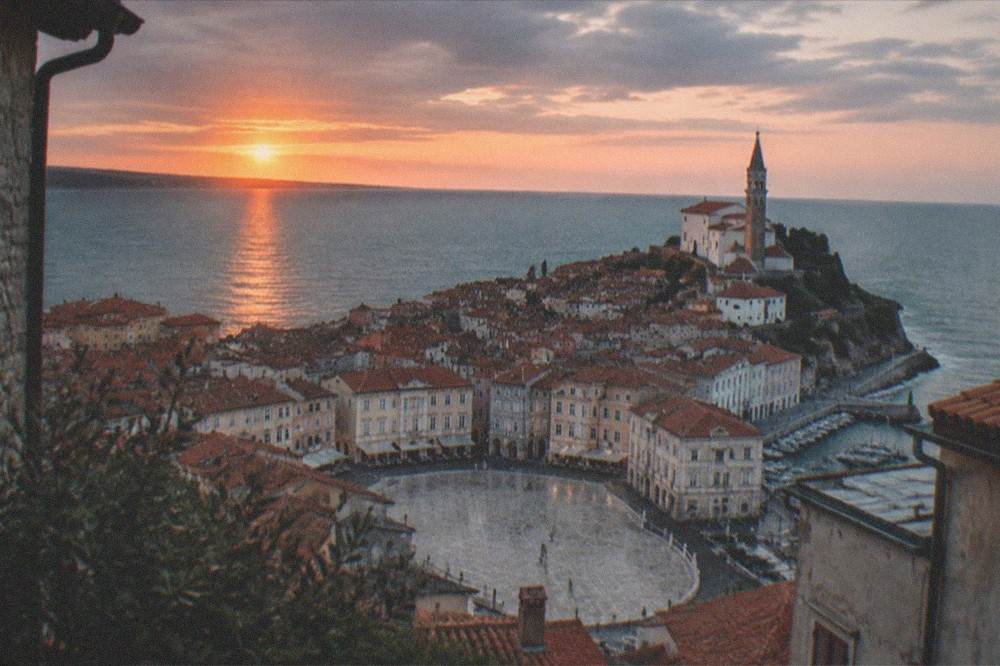
The Slovenian coast is short: a handful of towns strung along a narrow strip between Italy and Croatia, and Piran is the one that looks the way the postcards promise. It was Venetian for centuries, and the architecture shows it: narrow stone lanes, shuttered facades in faded reds and ochres, and a campanile that would not be out of place beside a canal in Venice. The town sits on a pointed peninsula jutting into the Gulf of Trieste, so the sea is on three sides and the views come free.
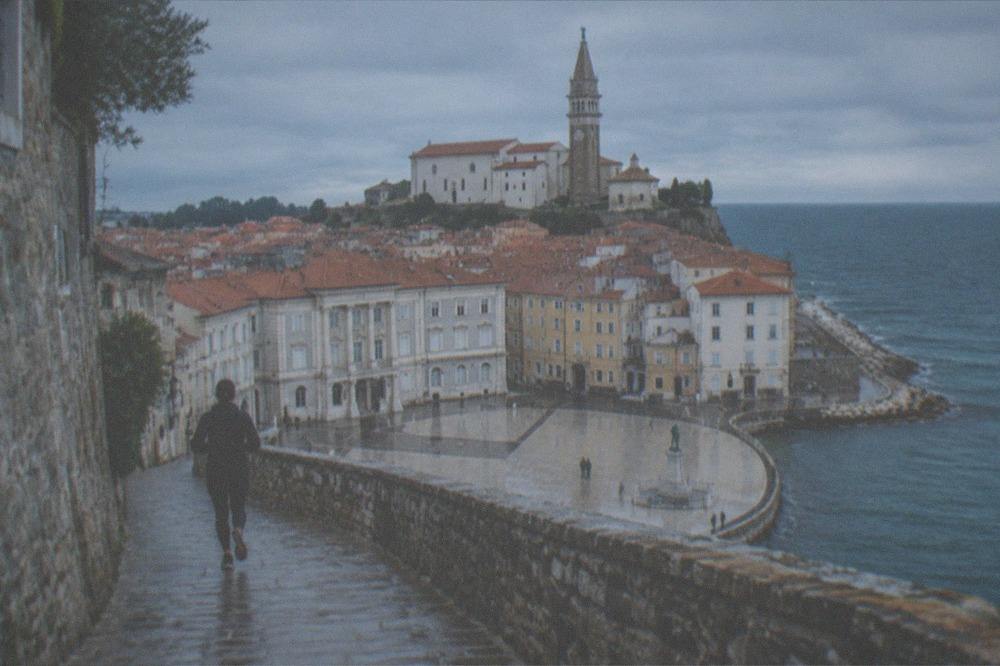
What makes it work as a day trip is scale. The old town is genuinely walkable in an afternoon. You can climb the town walls for the panorama, stand in Tartini Square on the site of the old harbour basin, walk out along the breakwater, and still have time for a long seafood lunch. Trieste itself is a grand Habsburg port, and Piran is its small-scale opposite: the contrast is the point of the pairing.
It is also the most flexible border crossing you will meet in Europe. Italy, Slovenia and Croatia all use the euro, and all three are in the Schengen area, so there is no currency to change and, normally, no routine passport control. There is one live exception on this exact border, covered in the next section, and it is the single most important practical fact on this page.
If you are building a wider trip around the city, our overview of day trips from Trieste ranks every cross-border option, and the ferry route to Portorož and Piran covers the sea option in detail.
How Do You Get from Trieste to Piran?
You have four realistic options: a guided coach tour from Trieste, a cross-border bus, a hire car or your own car, and, when the seasonal service runs, a ferry along the coast to Piran. All of them cross the Italy-Slovenia land border, where Italy is running temporary checks from 19 June 2026 to 18 December 2026, so carry a passport or national ID card even though both countries are in Schengen.
Start with the border, because it is the part every older guide gets wrong. Slovenia has been in the Schengen area since December 2007 and in the euro since 1 January 2007, so the crossing is normally a non-event: no currency exchange, no routine passport control. But the European Commission's own register of temporary reintroduced internal border controls lists Italy running checks on its land borders with Slovenia from 19 June 2026 to 18 December 2026. That is a dated, temporary measure, not a permanent rule, and it can be extended or lapse: check the current status before you travel. The practical version is simple: bring ID, and do not plan a crossing with no documents.
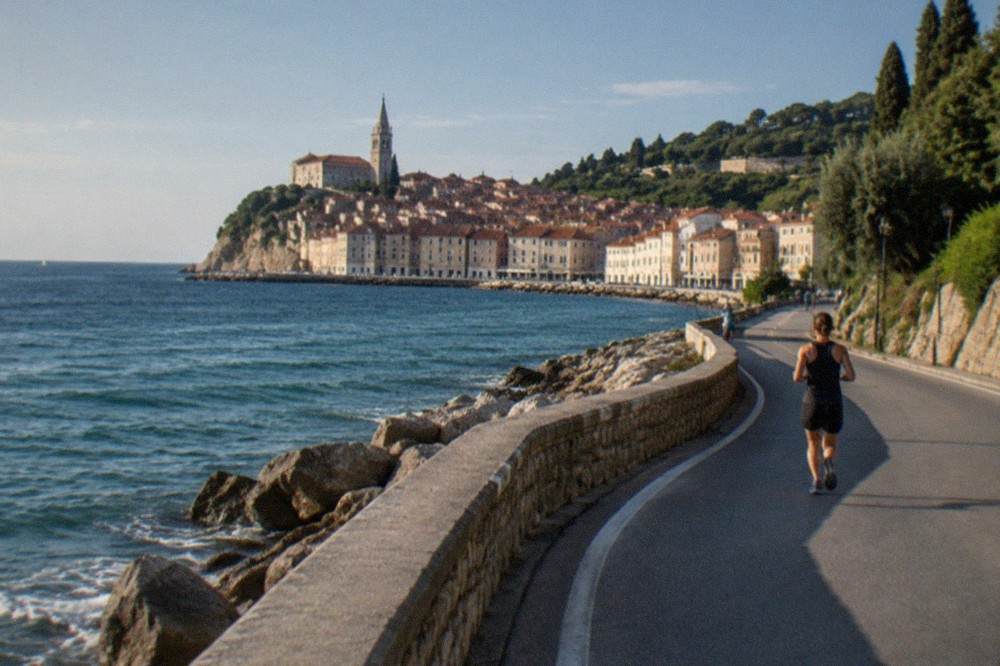
By bus, cross-border services to the Slovenian coast are operated by regional TPL FVG and long-distance coach operators from Trieste, but frequencies, departure points and fares for these routes were not verified at the time of writing, so check the operator's site rather than any timetable quoted in a blog. Name the operator, buy the ticket, and confirm the stop: Piran's coach station sits a short walk from the old town edge.
By car, the route follows the coast road east out of Trieste toward Muggia and across the border, or up and over via the motorway. Parking in Piran is limited in the old town itself, and most visitors park on the edge and walk in or use the shuttle from the outskirts; confirm current arrangements on the town's official information before you set out. Our guide to Muggia covers the Italian-side border town the road passes on the way.
By ferry, a seasonal service has run along the coast between Trieste and the Portorož and Piran area in summer periods. Sailing dates, operators and fares change year to year, so treat the ferry as a "check before you plan" option rather than a standing route, and see our dedicated Trieste to Portorož and Piran ferry guide for how it works when it runs.
If you are still getting oriented in Trieste itself before you leave, the Piazza Unità d'Italia guide covers the seafront square you will likely start from, and the urban buses and the Opicina tram run on the ordinary city ticket: a 60-minute single is EUR 1.50, a 75-minute single EUR 1.85, and a day ticket EUR 3.35 per the 2026 tariff sheet, with contactless cards accepted on board.
The guided option deserves its own section, because it is the one most visitors end up taking, and the price spread between the formats is wider than you might expect.
Those three are the highest-traffic picks for this route on the operator's live listings: the coast tour for Piran itself, the Ljubljana and Lake Bled day for the inland alternative, and the audio bus tour for orienting yourself in Trieste before you cross. The next section breaks the Piran options down line by line.
What Are the Best Guided Tours from Trieste to Piran?
The most-booked Piran option is a six-hour panoramic Slovenian coast tour from Trieste at $114.64 per person, rated 4.57 from 136 reviews, while a five-hour small-group version runs at $125.13 per person with a 4.9 rating from 82 reviews. A five-and-a-half-hour food-and-wine version costs $137.57 per person and is rated 4.98 from 50 reviews. All three handle the border crossing and the logistics for you.
A guided tour solves the two things that go wrong on this route: the border and the parking. You sit on a coach, someone else deals with the checks, and you arrive in Piran with a fixed window of free time rather than a parking hunt. For a first visit, especially with a cruise-ship clock or a tight schedule, that trade is worth the ticket.
The comparison below uses the operator's live listing figures for each product: price per person, the rating, the review count and the duration, exactly as the roster records them.
| Tour from Trieste | Type | Price per person | Rating | Reviews | Duration |
|---|---|---|---|---|---|
| From Trieste: Piran and Slovenia Coast Tour | Panoramic coast, Piran | $114.64 | 4.57 | 136 | 6 hours |
| Piran & Panoramic Slovenian Coast from Trieste | Small-group, half day | $125.13 | 4.9 | 82 | 5 hours |
| TRIESTE: Slovenian Coast Tour with Food and Wine Tasting | Coast plus tastings | $137.57 | 4.98 | 50 | 5h 30m |
The six-hour panoramic tour is the volume seller, and the rating from a large review base gives you a fair picture of what to expect: a comfortable coach loop along the coast with stops built around Piran and the viewpoints between. The five-hour small-group version trades an hour for intimacy, and its 4.9 rating from 82 reviews suggests the smaller format works. The food-and-wine version is the connoisseur's pick: same coastline, plus tastings, and the highest rating of the three, though from a smaller sample.
That is the headline coast tour as its own card: six hours, panoramic stops, and the largest review base of any Piran product on this route. If you already know you want the small-group format instead, the next card is that one.
Between the two, the decision is mostly about party size and pace rather than quality: both rate well, both run half a day or a bit more, and both put Piran at the centre of the itinerary. The food-and-wine version appears later, in the eating section, where it belongs.
If Piran is your first taste of the neighbourhood, the same operators run inland: a full-day Ljubljana and Lake Bled tour from Trieste costs $108.91 per person, rated 4.69 from 544 reviews, and a seven-hour version runs at $137.57 rated 4.51 from 277 reviews, both covered in our Trieste to Ljubljana guide. The cave country is inland too: see the Postojna Cave day trip guide for the most-booked underground option from Trieste.
What Should You See and Do in Piran on a Day Trip?
Piran's essentials are all within the walled peninsula: Tartini Square in the centre, the climb up to the town walls and the church of San Giusto above, the harbour front along the water, and the swimming platforms on the seaward side. The whole circuit is walkable, and the views from the wall are the reason most people make the trip.
Tartini Square is the town's stage, a broad paved oval on the site of the old inner harbour that was filled in, with the former warehouse now the town palace. From there the lanes rise steeply toward the church on the hill, and the walk up is short but unrelenting: take water in summer. The walls themselves are the headline: a surviving stretch of the medieval defences you can walk for a panorama that takes in the whole peninsula, the gulf and, on a clear day, the Croatian and Italian coasts on either side.
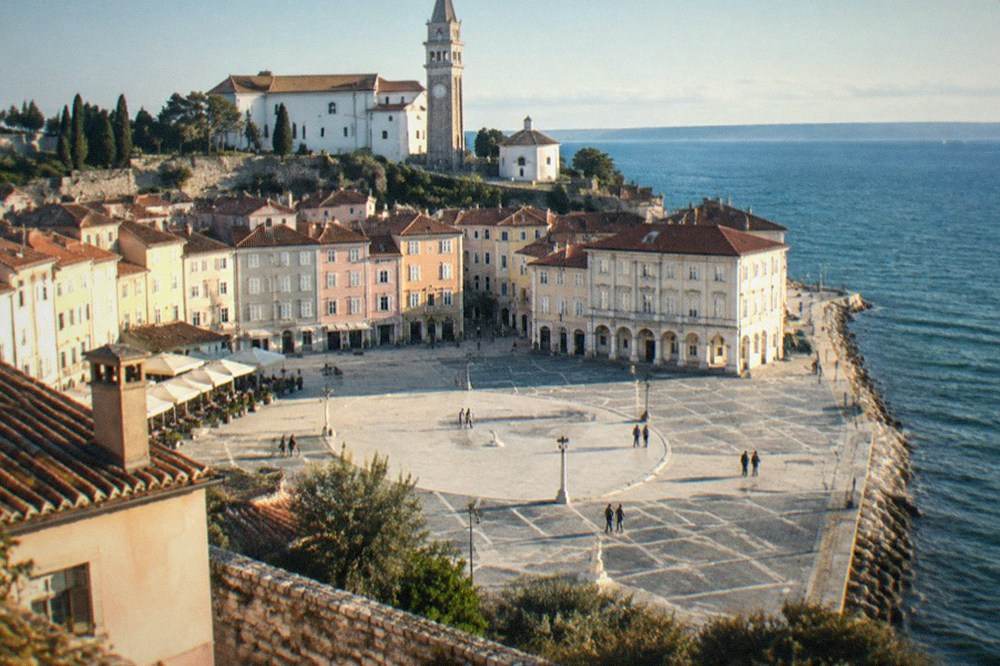
The harbour side is the gentler half of the visit. Fishing boats still work out of Piran, and the quay is lined with the seafood restaurants the town is known for. Out along the point, the breakwater walk gives you the postcard view back at the old town, and the rocks and platforms on the outside of the peninsula are where people swim. Slovenia's coast is short, and the sea here is the same gulf that laps Trieste's own seafront, so the water is familiar if you have already swum in the city.
Do not over-schedule. A day trip to Piran works precisely because the town rewards slow wandering over a checklist, and a fixed itinerary fights the place. Pick the walls, the square and one long meal, and let the lanes do the rest.
Where Should You Eat in Piran?
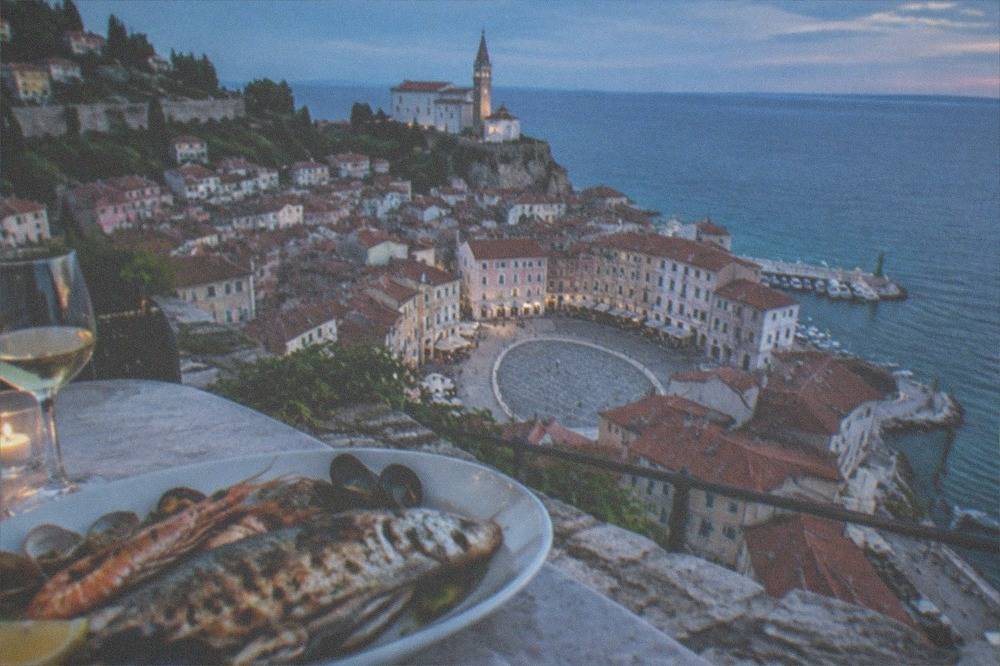
Piran's food is Istrian and Slovenian coastal: fresh Adriatic fish, shellfish, pasta with scampi, and the local white wines of the region, eaten on harbour-side terraces. A guided food-and-wine version of the coast trip from Trieste costs $137.57 per person and is rated 4.98 from 50 reviews, but you can eat just as well independently on the quay.
The town's size works in your favour at lunch: the restaurants cluster around the harbour and the lanes just off the square, so you can read menus on a walk and judge the terraces by the fish on display. Adriatic catch is the honest order, grilled simply, and the Istrian pasta dishes with scampi or truffle are the regional signatures. The Slovenian coast's own wine identity sits just inland on the Karst plateau, where Vitovska, Malvasia and Terrano are the local bottles, and a local white is the natural pairing with the fish.
If you would rather eat your way through the coast with a guide, the food-and-wine tour above is the structured version, with tastings built into the route. Otherwise, budget for a proper lunch rather than a snack: Piran's restaurants are mid-priced by coastal standards, and the fish is the reason you came.
What Does a Trieste to Piran Day Trip Cost?
A guided Piran coast tour from Trieste runs $114.64 to $137.57 per person depending on the format, while doing it yourself costs a cross-border bus fare plus lunch, with no ticket for the old town itself. Add EUR 3.35 for a Trieste urban day ticket if you need to reach the departure point on city transport, per the 2026 tariff sheet.
The honest budget answer splits into three cases. On a guided tour, the ticket is the bulk of the cost and everything else is lunch and incidentals. On a self-run bus trip, the fare plus food is your total, and Piran's streets cost nothing to wander. By car, add parking on the town's edge to the fuel.
The table below pulls together the figures this site has verified for the route and the city you start from, so you can see the shape of a day's spending at a glance.
| Item | Figure | Source |
|---|---|---|
| Piran and Slovenia Coast Tour, 6 hours | $114.64 per person | operator's live listing |
| Piran small-group coast tour, 5 hours | $125.13 per person | operator's live listing |
| Slovenian coast tour with food and wine | $137.57 per person | operator's live listing |
| Trieste urban day ticket | EUR 3.35 | 2026 tariff sheet |
| Trieste urban single, 60 minutes | EUR 1.50 | 2026 tariff sheet |
| Miramare Castle entry, if you stop en route | EUR 17.00 | Ministry of Culture |
| San Giusto Castle entry, in Trieste | EUR 7.00 | venue site |
One note on that last row: Miramare Castle stands on the coast road between Trieste and the border direction, and its park is free all year while the castle itself is EUR 17.00, open 9:00-19:00 with the ticket office closing at 18:30. If your day starts early, a stop there before continuing to Piran is the classic combination; the Miramare Castle guide has the full hours and booking detail.
When Is the Best Time of Year for a Trieste to Piran Trip?
The best months are June through September, when the sea at Trieste's molo station averages 23.1 to 25.9 C and rain is at its lowest, with July the second driest month of the year at 53.8 mm. Avoid late autumn if you dislike rain: November is the wettest month at 109.8 mm and September is second at 102.3 mm, per ARPA FVG's own station tables.
The climate data for this route comes from ARPA FVG's OSMER station at Trieste molo Fratelli Bandiera, the series 1995-2024, and it tells a clearer story than the Mediterranean stereotype. Trieste is not a rainy-in-summer city: July is one of its driest months, and the sea warms through spring to peak in July and August at 25.9 C. September stays swimmable at 23.9 C and is often warmer in the water than June, because the sea holds its summer heat.
| Month | Mean high C | Rain mm | Sea C | Days with gust over 90 km/h |
|---|---|---|---|---|
| April | 16.8 | 60.7 | 14.0 | 0.7 |
| May | 21.7 | 75.0 | 17.9 | 0.7 |
| June | 25.8 | 62.5 | 23.1 | 0.3 |
| July | 28.2 | 53.8 | 25.9 | 0.9 |
| August | 28.1 | 71.7 | 25.9 | 0.9 |
| September | 23.9 | 102.3 | 23.9 | 1.1 |
| October | 19.6 | 88.6 | 20.3 | 1.4 |
| November | 14.7 | 109.8 | 16.8 | 1.9 |
The wind column matters more here than most visitors expect. The bora blows from the east-north-east down the gulf, and the station tables show gusts over 90 km/h on 17.6 days a year on average, with the record gust exceeding 110 km/h in every single month. June is the calmest month, at 0.3 days over 90 km/h, and July actually has more gale days than April, May or June. No official wind threshold exists at which ferries stop or seafronts close, so do not plan around a number: just check the forecast, and know that a strong bora day changes the feel of any coastal trip.
For crowd and weather balance, late June and early September are the connoisseur's picks: full sea temperature, thinner crowds, and the autumn rain not yet arrived. October brings the Barcolana regatta to the gulf, 2-11 October 2026, which is a spectacle in Trieste itself but fills the coast.
What Else Can You Combine with Piran from Trieste?
Piran pairs naturally with the rest of Slovenia's coast and the Karst behind it: Koper is the neighbouring port town, the Škocjan Caves and Lipica stud farm sit inland on the same border, and Ljubljana and Lake Bled make the full-day inland alternative at $108.91 to $137.57 per person on a guided tour. The border rules are identical for all of them.
Because everything on the Slovenian side of this border is reached through the same crossing, the ID advice applies to every option: carry a passport or national ID card, because Italy's temporary checks on the land border with Slovenia run until at least 18 December 2026. That is true for the coast, the caves, the horses and the capital alike.
| Slovenian day trip from Trieste | Guided tour price | Rating | Reviews | Duration |
|---|---|---|---|---|
| Ljubljana and Lake Bled | $108.91 per person | 4.69 | 544 | 9 hours |
| Lake Bled and Ljubljana Tour | $137.57 per person | 4.51 | 277 | 7 hours |
| Postojna Cave & Predjama Castle | $137.57 per person | 4.76 | 543 | 6 hours |
| Lipica Stud Farm and Škocjan Caves | $129.93 per person | 4.86 | 23 | 6 hours |
| Piran and Slovenia Coast Tour | $114.64 per person | 4.57 | 136 | 6 hours |
That is the inland flagship as its own card: the largest review base of any Slovenian day trip from Trieste, and the natural second day if the coast was your first. The dedicated guides cover the rest of the country within reach.
The Škocjan Caves guide and the Lipica stud farm guide cover the Karst pair, and Koper covers the other coastal town, closer to Trieste than Piran and often quieter. Farther down the Istrian peninsula, Rovinj and Pula extend the same logic into Croatia, where the euro and Schengen apply on exactly the same terms since 1 January 2023.
Practical Tips for the Trieste to Piran Route
The three things that matter: carry a passport or ID card for the temporary border checks running to 18 December 2026, use euros on both sides since Italy and Slovenia share the currency, and book a guided tour or check the operator's site rather than trusting any quoted bus timetable, because cross-border frequencies and fares were not verified at the time of writing.
Start early. The border crossing adds a variable to any morning, and Piran rewards the hours before the coach parties arrive. If you are on a tour, the pickup points cluster in central Trieste, and the city's own transport is cheap: the day ticket at EUR 3.35 covers the buses and the Opicina tram, which runs as urban line 2 from piazza Dalmazia to Opicina on the Karst, reactivated on 1 February 2025 after its long suspension, with contactless payment on board.
Money is simple. The euro is the currency in Italy, Slovenia and Croatia alike, so there is nothing to change at any point on this route, and cards are accepted almost everywhere in Piran. What you should not do is plan a cash-free day in the smallest lanes: a few of the town walls kiosks and beach vendors prefer cash.
Weather cuts both ways. The same gulf that gives Piran its warm summer sea also funnels the bora, and a strong wind day changes the ferry option and the feel of the seafront. There is no published wind threshold at which services stop, so the forecast is your only tool.
With the route itself settled, the last decision is only which day of your stay to give it, and the tour cards below are the three bookings this site sees most often for exactly this itinerary: the Piran coast, the inland lakes and capital, and the city bus tour for the morning you leave.
Whichever of the three you take, the practical rules on this page hold: the ID card in your pocket for the temporary Slovenian border checks, the euro in your wallet on both sides, and the forecast checked the night before for the bora. That is the whole of the route's difficulty, and it is not much of one.
Common Questions About the Trieste to Piran Day Trip
Do you need a passport to go from Trieste to Piran?
Yes, carry one, or a national ID card. Slovenia and Italy are both in the Schengen area, so there is no routine passport control, but Italy is running temporary checks on its land borders with Slovenia from 19 June 2026 to 18 December 2026, and you can be asked for documents at the crossing.
How far is Piran from Trieste, Italy?
Piran is the nearest major coastal town on the Slovenian side of the border from Trieste, reached by a short cross-border journey. This site does not publish a distance or journey time for the route because no verified figure from an operator or official source was available; guided tours of the coast run five to six hours in total including stops.
Is there a ferry from Trieste to Piran?
A seasonal ferry service has run between Trieste and the Portorož and Piran area in summer periods, but sailing dates, operators and fares change year to year. Treat it as a check-before-you-plan option and see our dedicated ferry guide for how it works when it runs.
Do Slovenia and Croatia use the euro?
Yes. Slovenia has used the euro since 1 January 2007, and Croatia adopted the euro and joined the Schengen area on the same day, 1 January 2023. Italy, Slovenia and Croatia all use the euro, so no currency change is needed anywhere on this route.
What is the best Piran tour from Trieste?
The most-booked option is the six-hour Piran and Slovenia Coast Tour at $114.64 per person, rated 4.57 from 136 reviews. The small-group five-hour version is rated 4.9 from 82 reviews at $125.13, and the food-and-wine version is rated 4.98 from 50 reviews at $137.57 per person.
Can you swim in Piran on a day trip?
Yes. Swimming off the rocks and platforms on the seaward side of the peninsula is a normal part of a Piran visit in summer. The sea in the Gulf of Trieste averages 25.9 C in July and August and 23.9 C in September at the Trieste molo station, per ARPA FVG's tables, so June through early September are the comfortable months.
Piran is the day trip that best justifies Trieste's odd geography: a border you can cross before lunch, a currency shared on both sides, and a walled Venetian town at the end of the road. Plan the ID, book the tour or the bus with an hour's checking, and let the peninsula do the rest. For everything else within reach of the city, start from the day trips from Trieste overview, or plan the whole stay with Trieste Travel Guide.