Trieste to Rovinj: The Day Trip from Trieste, Italy to Croatia's Istrian Coast
Rovinj is the closest genuinely foreign-looking town to Trieste, Italy: a Croatian fishing port on Istria's west coast, reachable on a day trip across the Slovenian and Croatian borders.
Short answer
Rovinj sits on Istria's coast in Croatia, across the Slovenian border from Trieste, Italy. All three countries, Italy, Slovenia and Croatia, use the euro and are in Schengen, though Italy is running temporary checks on its land border with Slovenia until 18 December 2026, so carry a passport or ID card. Cross-border coaches run from Trieste, and small-group coastal tours from Trieste cover Piran and the Slovenian coast.
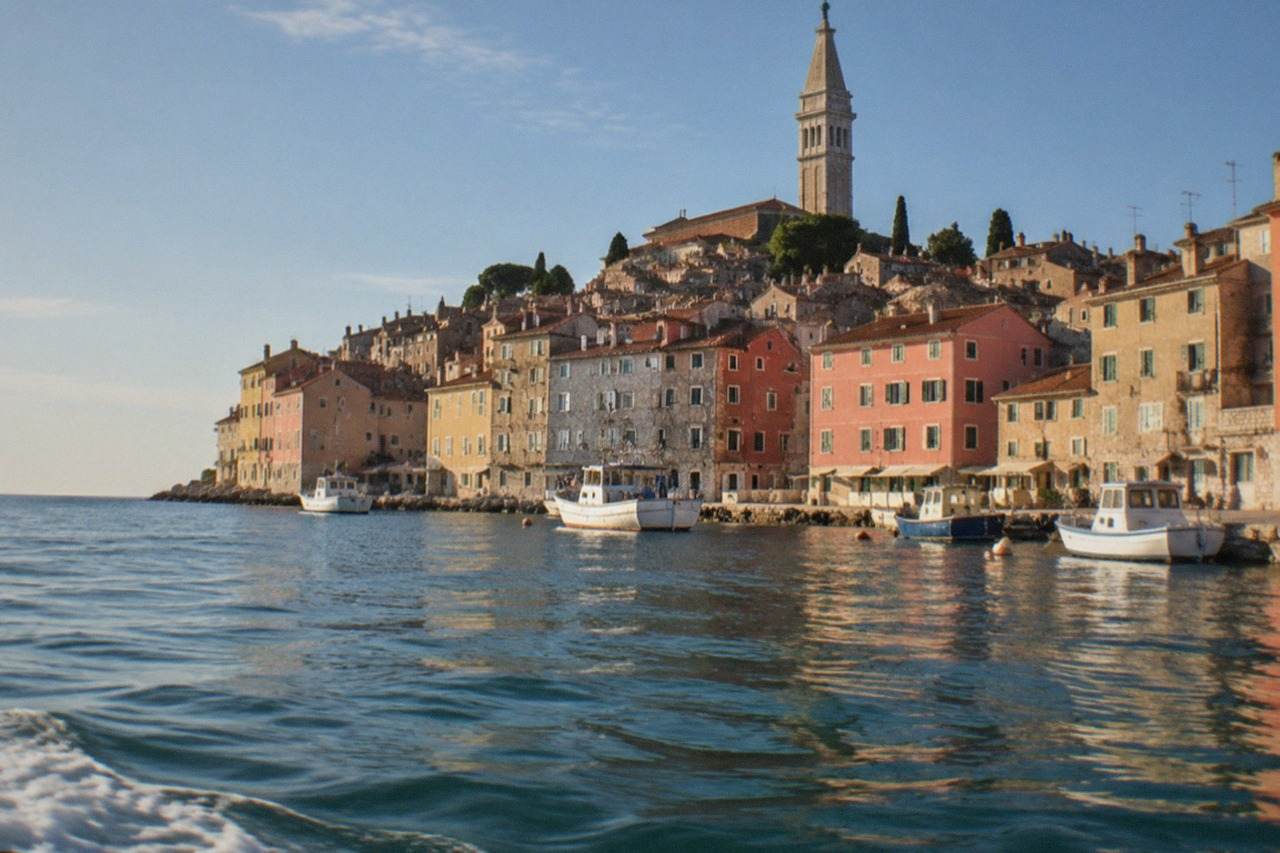
Rovinj is a Croatian town on the west coast of Istria, and it is one of the most rewarding day trips you can make from Trieste, Italy. The two towns face each other across the top of the Adriatic: Trieste at the head of its gulf in Friuli Venezia Giulia, Rovinj a little way down the Istrian peninsula, its old town piled on a headland that has been painted, photographed and argued over for centuries. The trip crosses two national borders, Slovenia and then Croatia, and it is one of the few day trips from an Italian city where you can pass through three eurozone countries between breakfast and lunch.
The point of this guide is practical. The border rules on this route changed recently and most older guides get them wrong, the transport options are not obvious, and there is a real decision to make between going independently and taking one of the small-group coastal tours that depart from Trieste. Everything below is drawn from verified sources: the European Commission's own border register, the tour operators' live listings, and the regional climate tables.
How Do You Get from Trieste to Rovinj?
There is no single obvious way to reach Rovinj from Trieste, Italy, and the honest answer is that the route splits into three choices: a cross-border coach, a self-drive across the Slovenian and Croatian borders, or a guided coastal day tour from Trieste. Flixbus is the named long-distance operator serving the Istrian coast from Trieste, but its frequencies, departure points and fares were not verified at the time of writing, so check the operator's own site rather than trusting a timetable printed in a guide.
Driving gives the most freedom and the least certainty about parking in Rovinj's old town, which is small and busy in season. The route leaves Trieste heading south, crosses briefly through Slovenia's short coastal strip, and enters Croatia near the Dragonja river. Because the crossing involves two EU land borders back to back, the paperwork questions matter more than the driving itself, and they are covered in the next section.
The coach option is the one most independent travellers take. Flixbus runs long-distance services from Trieste's coach stations towards the Istrian coast, and regional TPL FVG services cover the Slovenian side of the border. Neither operator's 2026 timetable or fare could be verified from primary sources, so treat any specific departure time you read online, here or elsewhere, with suspicion and confirm on the operator's page.
The third option is the one this site can actually verify in detail, because the tour operators publish their prices, durations and ratings. Small-group tours from Trieste along the Adriatic coast, such as the Piran and Panoramic Slovenian Coast trip, handle the border and the logistics entirely, and several of them can be extended or paired with Istrian stops. Those listings carry real, current figures, and they are compared further down this page.
Do You Need a Passport for a Rovinj Day Trip from Trieste?
Yes, carry a passport or a national ID card, even though all three countries on the route are in the Schengen area and all three use the euro. Croatia joined Schengen and adopted the euro on the same day, 1 January 2023, and Slovenia has been in both since 2007, so there is no currency exchange. But Italy is running temporary border checks on its land borders with Slovenia from 19 June 2026 to 18 December 2026, and a day trip from Trieste crosses exactly that border.
This is the single most-miswritten fact on the route. Older guides claim Croatia has the euro but not Schengen, or Schengen but not the euro. Both statements are false: both happened, and both happened on 1 January 2023. Nobody crossing from Trieste to Rovinj needs to change money, because Italy, Slovenia and Croatia all use the euro.
The live exception is at Trieste's own doorstep. The European Commission's register of temporarily reintroduced internal border controls lists Italy running checks on its land borders with Slovenia from 19 June 2026 through 18 December 2026. That is a dated, temporary measure, not a permanent rule, and it means you should have a valid travel document with you on any day trip that leaves Italy by land, whether the destination is Piran, Ljubljana or Rovinj. Checks are not guaranteed at every crossing on every day, but the possibility is real and official.
| Fact | Status | Date |
|---|---|---|
| Croatia adopts the euro | Confirmed | 1 January 2023 |
| Croatia joins Schengen | Confirmed | 1 January 2023 |
| Slovenia in Schengen | Confirmed | December 2007 |
| Slovenia in the euro | Confirmed | 1 January 2007 |
| Italy's temporary checks, Slovenia land border | In force | 19 June 2026 to 18 December 2026 |
| Currency needed in Rovinj | Euro, same as Trieste | No exchange required |
Practical takeaway: a passport or ID card lives in your bag for the day, and everything you spend in Rovinj, from a coffee on the waterfront to a parking meter, is in the same euros you carry in Trieste. If your day trip instead heads deeper into Slovenia first, the same advice applies, and the Trieste to Piran guide covers that crossing in detail.
What Makes Rovinj Worth the Trip from Trieste, Italy?
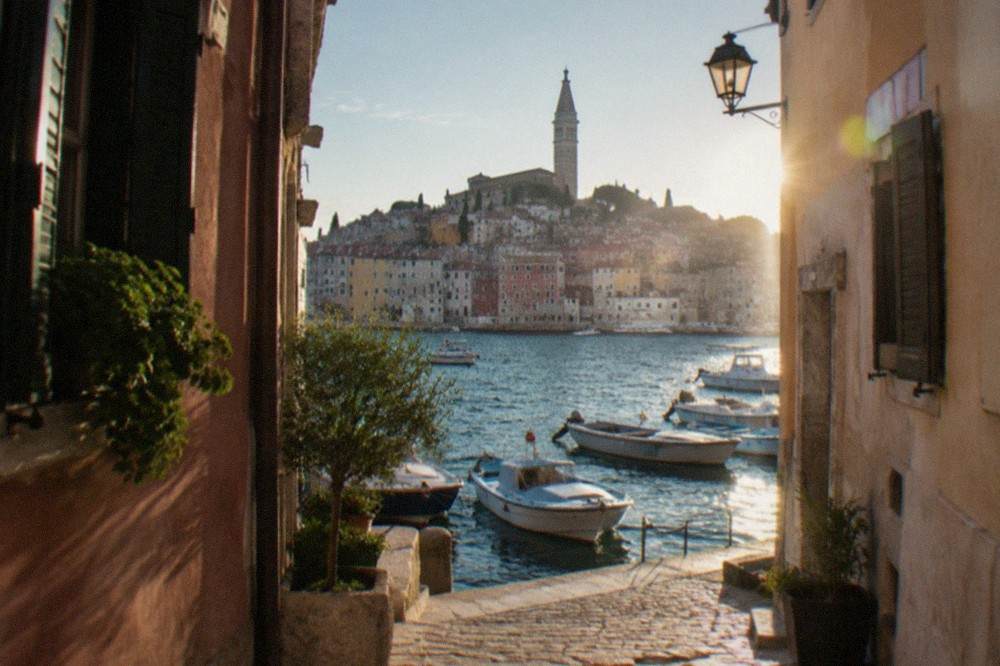
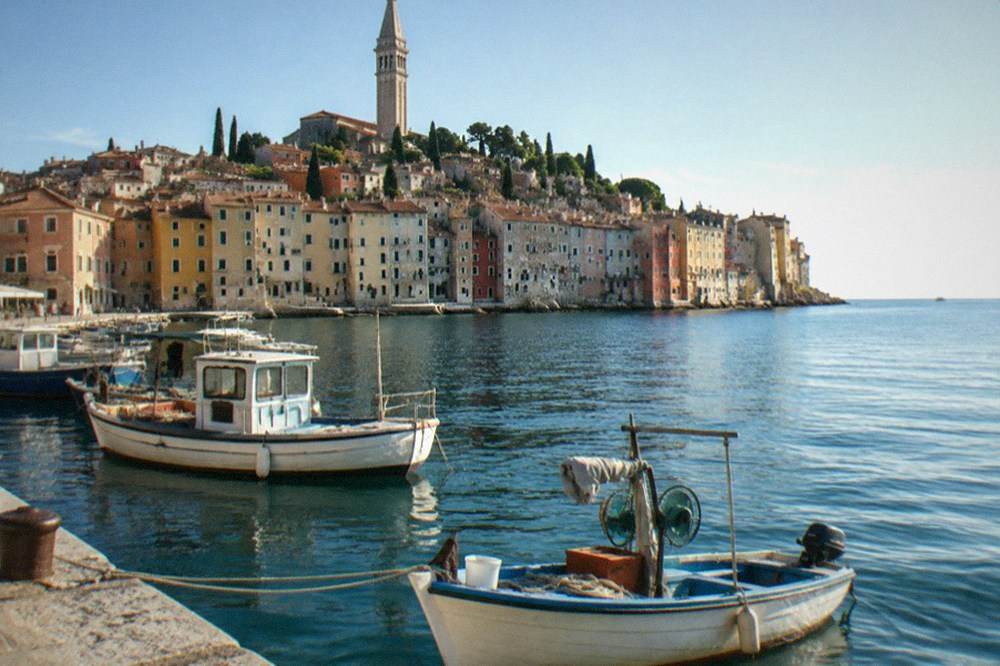
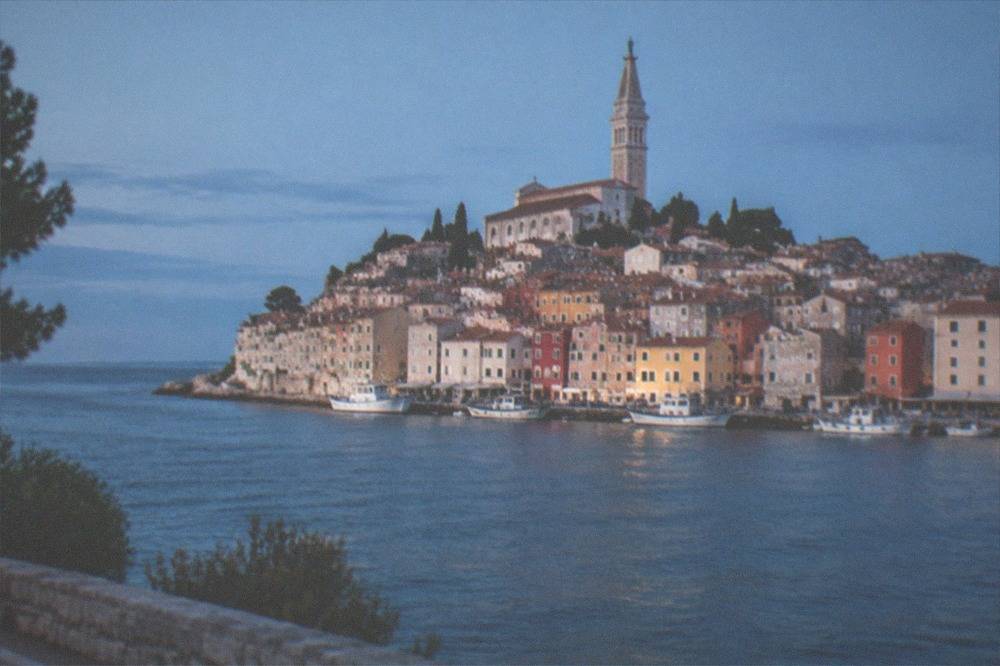
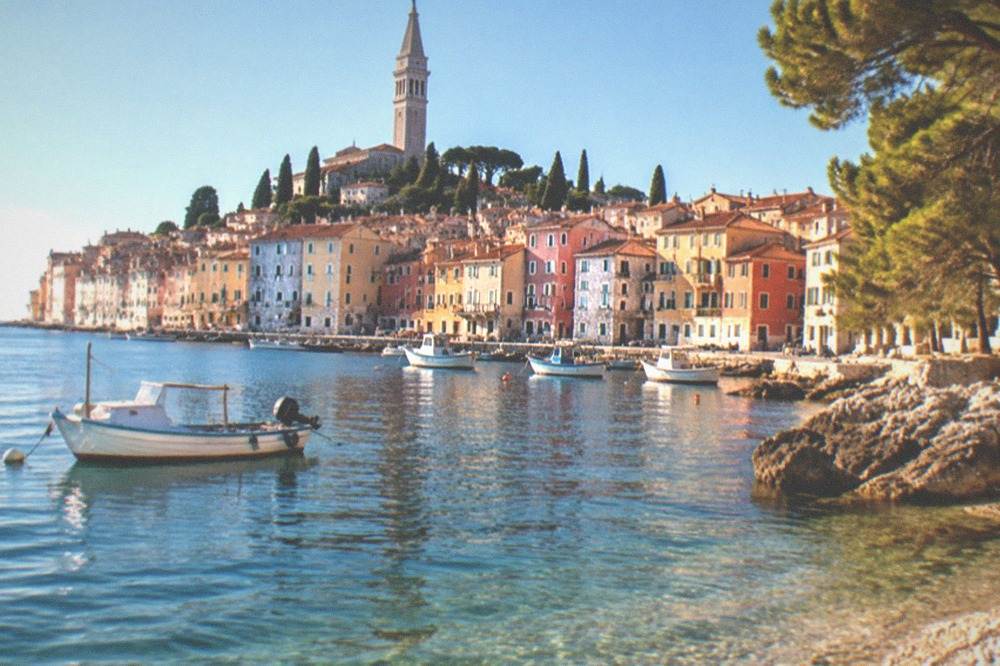
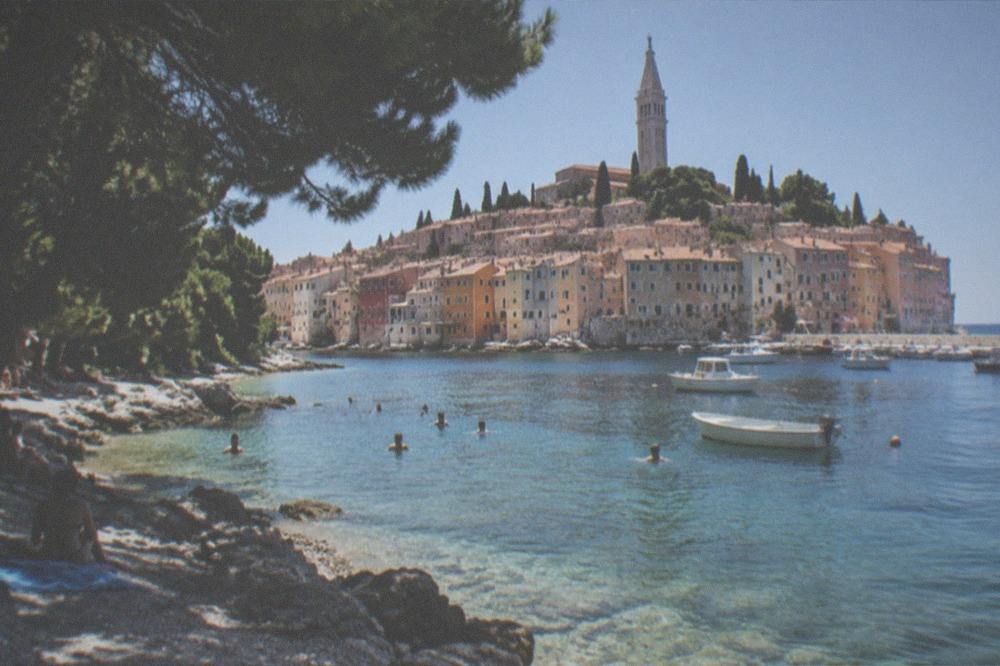
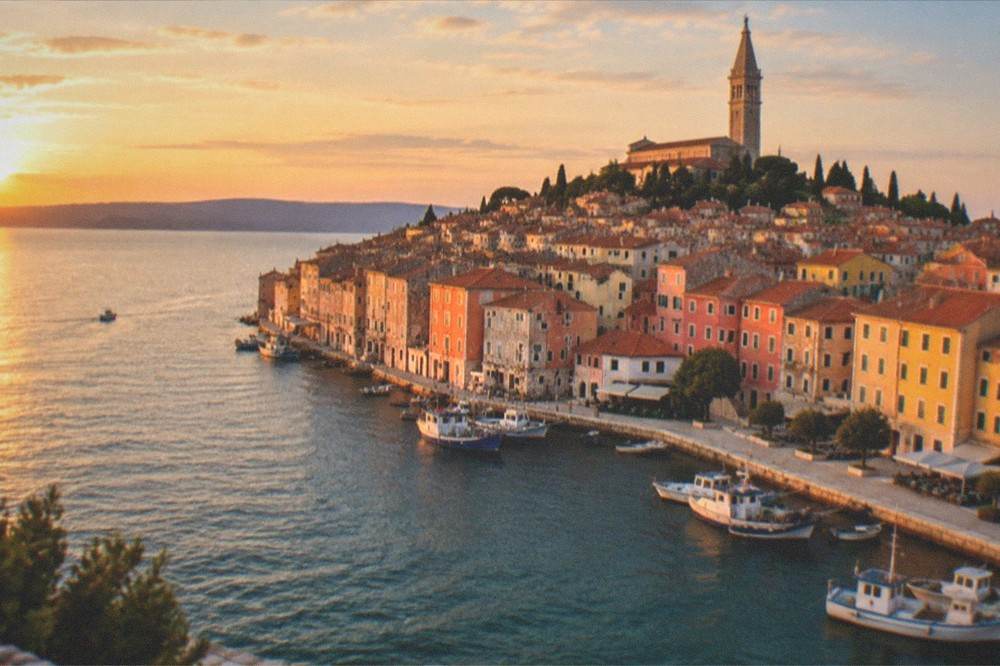
Rovinj is the payoff of the whole upper Adriatic: a compact old town stacked on a headland, a working fishing heritage that is still visible on the waterfront, and a string of pebble coves and pine-shaded shores wrapped around the peninsula. From Trieste the appeal is contrast: you leave an Austro-Hungarian port city built of grand stone squares and arrive, within a single morning, in a southern Istrian town of narrow lanes, painted facades and sea light that feels like a different country, because it is one.
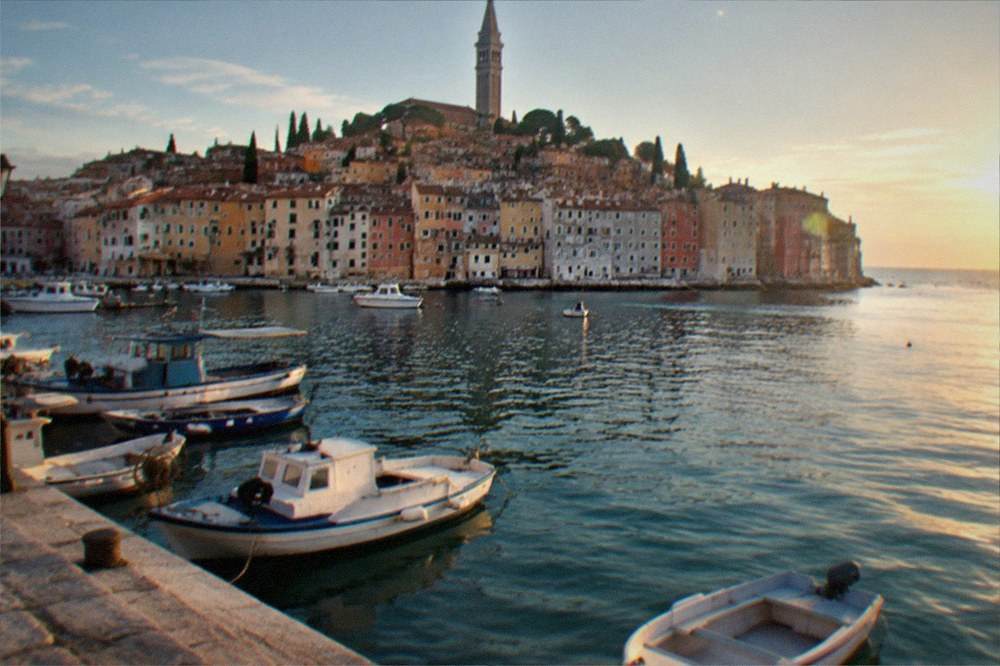
The old town itself is the main sight. It climbs from the harbour to the hilltop church that dominates every view of Rovinj, and the lanes around it are dense enough that an afternoon disappears without any plan. Below the old town, the harbour still hosts fishing boats, and the town's identity as a port shows in the morning routines on the quay rather than in a museum exhibit. Out on the water, the offshore islands opposite the old town are protected, and they set the tone for the swimming and boating that fill the warmer months.
For a visitor coming from Trieste, the comparison is the point. Trieste's seafront is monumental, its Piazza Unità d'Italia opening the city straight onto the gulf, while Rovinj's is intimate and tilted towards the south. The two towns share a Habsburg-era past, and Istria's layered Italian, Croatian and Slovene heritage is audible in the street names and on the menus, but the architecture and the atmosphere are unmistakably different. That difference is what makes the border crossing worth the effort.
Should You Drive, Take the Coach, or Book a Tour from Trieste?
For most visitors doing Rovinj as a day trip, the decision comes down to control versus convenience: driving lets you set your own schedule and stop in Istria's hill towns, the coach is the cheapest independent option but ties you to a fixed return time, and a small-group tour from Trieste removes the border, the parking and the timing decisions entirely, at a verified cost of $114.64 to $137.57 per person for the coastal trips in the current listings.
The verified tour prices are worth stating plainly, because everything else on this route is vague. The Piran and Panoramic Slovenian Coast small-group tour from Trieste lists from $125.13 per person, runs about 5 hours, and is rated 4.9 from 82 reviews. A longer Slovenian coast option with food and wine tasting lists from $137.57 per person over 5 hours 30 minutes, rated 4.98 from 50 reviews. The Piran and Slovenia Coast tour lists from $114.64 per person over 6 hours, rated 4.57 from 136 reviews. These are live-listing figures, and the listings carry the current detail.
| Tour from Trieste | Decision name | From (per person) | Rating | Duration |
|---|---|---|---|---|
| Piran and Panoramic Slovenian Coast | Small-Group Piran, Half Day | $125.13 | 4.9 from 82 reviews | 5 hours |
| Slovenian Coast with Food and Wine Tasting | Slovenian Coast, Food and Wine | $137.57 | 4.98 from 50 reviews | 5h 30m |
| Piran and Slovenia Coast Tour | 6-Hour Piran, Panoramic Coast | $114.64 | 4.57 from 136 reviews | 6 hours |
| Postojna Cave and Predjama Castle | Half-Day Postojna, Predjama Castle | $146.00 | 4.7 from 139 reviews | 5 hours |
Driving suits travellers who want to build a wider Istria loop, pairing Rovinj with inland towns or the Lim bay area further south. The trade-offs are parking, which is tight near Rovinj's old town in high season, and the fact that a hire car adds a second set of logistics to a day that already includes two border crossings. If you are weighing up hiring, the renting a car in Trieste considerations apply, and cross-border permission on a Italian hire agreement should be confirmed with the operator before you drive off.
The coach is the classic budget choice, and Flixbus is the operator to check, alongside regional TPL FVG services on the Slovenian stretch. What this guide will not do is print a departure time or a fare: those were not verifiable from the operators' own pages at the time of writing, and a stale coach timetable is worse than none. Book on the operator's site, aim for a morning departure that gets you to Rovinj before midday, and give the return leg more slack than you think you need.
What Can You Combine with Rovinj on the Same Day Trip?
Rovinj works best as either the sole destination of a relaxed day or the southern anchor of a two-stop coastal route, and the realistic pairings from Trieste are Piran, the Slovenian port town just across the first border, and the Istrian hill towns inland. The one pairing to avoid is Rovinj plus anything far east, because Ljubljana, Lake Bled and the cave systems each consume a full day in their own right, and squeezing one alongside Rovinj turns both into a bus-window experience.
Piran is the natural companion. It sits on the Slovenian coast, on the way to Istria, and it shares Rovinj's compact-peninsula character in miniature. The small-group tours from Trieste that cover Piran and the panoramic Slovenian coast run about 5 hours, which leaves room in a long summer day for a second stop, and the day trips from Trieste overview lays out the full menu of pairings along this coast.
If the plan is a two-country day, the sequence matters. Leaving Trieste, you cross into Slovenia first, then Croatia, and on the return you cross both again. With Italy's temporary border checks on the Slovenian frontier running until 18 December 2026, a two-stop itinerary should keep a little buffer in the afternoon for the return crossing, especially on weekends. Other pages covering the same trip are gathered on Trieste Travel Guide.
For visitors who would rather stay on the water than in a vehicle, the Slovenian coast tour with food and wine tasting is the most complete single-day option along this shore: it lists from $137.57 per person, runs 5 hours 30 minutes, and is rated 4.98 from 50 reviews, the highest rating of any coastal day trip in the current roster.
How Much Does a Rovinj Day Trip Cost?
The verified cost of a Rovinj day trip from Trieste, Italy starts at the tour end of the market: coastal small-group trips list from $114.64 to $137.57 per person, while the independent coach option costs less but has no verifiable published fare at the time of writing.
Add spending in Rovinj itself in euros, the same currency as Trieste, and, if you are staying overnight in the region, a Trieste tourist tax of €1.50 to €3.80 per person per night for up to five nights depending on your accommodation category.
The honest position on transport costs is that the cross-border coach fares were not verifiable from primary sources, so this guide does not print one. What can be stated is the structure: a coach ticket each way, no currency exchange, and no visa cost for EU nationals. For the tour route, the listings give exact figures, and the table below collects the verified ones from the current roster.
| Cost item | Verified figure | Source basis |
|---|---|---|
| Piran and Slovenia Coast Tour, from Trieste | $114.64 per person | Operator listing, 136 reviews |
| Piran and Panoramic Slovenian Coast, small group | $125.13 per person | Operator listing, 82 reviews |
| Slovenian Coast with Food and Wine Tasting | $137.57 per person | Operator listing, 50 reviews |
| Trieste tourist tax, 1-star and B&B Standard | €1.80 per person per night | Comune di Trieste 2026 table |
| Trieste tourist tax, 4-star hotel | €3.30 per person per night | Comune di Trieste 2026 table |
| Trieste tourist tax, 5-star hotel | €3.80 per person per night | Comune di Trieste 2026 table |
| Trieste urban day bus ticket | €3.35 | Trieste Trasporti 2026 tariff sheet |
Two notes on those tourist-tax figures. They are charged for a maximum of five consecutive nights in the same property, and everyone under 18 is exempt, along with several other categories listed in the Comune's 2026 table. They apply to nights spent in Trieste itself, not to Rovinj, but they matter to anyone structuring a wider Friuli-Istria trip around the city.
For travellers counting every euro, the budget floor in Trieste is genuinely low before you even leave: the free things to do in Trieste include the Miramare park, the Risiera di San Sabba and the Roman theatre, and the self-guided walking options cost less than a coffee. The cheapest paid tour in the whole Trieste roster is the scavenger hunt self-guided walk at $4.67 per person, rated 4.6 from 28 reviews, useful on a rest day between border crossings.
When Is the Best Time of Year for a Trieste to Rovinj Day Trip?
The best months for a Rovinj day trip from Trieste are May, June and September, when the sea is warm enough to swim and the crowds are thinner than in July and August. Trieste's own station tables show July and August as the warmest months at a 28.2 and 28.1 C mean high, with the sea at its 25.9 C peak, while November is the wettest month at 109.8 mm of rain, and July is the second driest at 53.8 mm.
The climate data for Trieste, from the regional agency's own station tables for the molo Fratelli Bandiera, is the best proxy for the whole upper Adriatic shore, and it dismantles a common assumption. Summer here is dry, not wet: July averages just 53.8 mm of rain across 5.4 wet days, while November, at 109.8 mm across 9.5 wet days, is the month that actually soaks the city. September stays warm, with a 23.9 C mean high and sea temperatures at 23.9 C, which makes it arguably the ideal month for a coastal day trip with swimming.
| Month | Mean high C | Rain mm | Sea C | Verdict for the Rovinj trip |
|---|---|---|---|---|
| May | 21.7 | 75.0 | 17.9 | Pleasant, sea still cool |
| June | 25.8 | 62.5 | 23.1 | Excellent, calmest wind month |
| July | 28.2 | 53.8 | 25.9 | Hottest, busiest, very dry |
| August | 28.1 | 71.7 | 25.9 | Hot, sea at its peak |
| September | 23.9 | 102.3 | 23.9 | Warm sea, thinner crowds |
| October | 19.6 | 88.6 | 20.3 | Barcolana month, cooler sea |
| November | 14.7 | 109.8 | 16.8 | Wettest month, not recommended |
One date to know if you are travelling in autumn: Barcolana, Trieste's sailing regatta, runs 2 to 11 October 2026, with the main race on Sunday 11 October. It is one of the largest sailing events in the world, with a record 2,689 boats entered in 2018, and it fills Trieste's waterfront and hotels in that window. A Rovinj day trip is entirely possible during Barcolana week, but book accommodation and transport early, and expect Trieste itself to be loud, crowded and joyful.
The wind matters here too. The bora, the cold north-easterly that defines this coast, blows hardest in the cool season, and the station tables show the all-time peak gust in the series at 168.1 km/h in February 2012. There is no published wind threshold at which ferries stop or coastal trips are cancelled, so check the forecast on the day rather than hunting for a rule. The best time to visit Trieste guide unpacks the seasons in more detail.
What Would a Sensible Rovinj Day Trip Look Like?
A sensible day leaves Trieste in the morning, reaches Rovinj before midday, gives the old town and the hilltop church the middle of the day, spends the early afternoon on or beside the water, and starts back with enough slack to absorb a border check and a summer traffic queue. The single biggest mistake on this route is planning a return that is too tight: two border crossings, a popular coastal road and a coach timetable you did not verify yourself add up to a missed evening in Trieste.
The morning in Trieste is short. Coffee near Piazza Unità d'Italia, then out of the city southwards. If you are on a tour, the pickup points and times are on the operator's listing; if you are driving or on the coach, the border documents come out of the bag before you leave Italian territory, because Italy's temporary checks on the Slovenian land border run until 18 December 2026.
In Rovinj, the shape of the day is obvious once you arrive: the old town lanes, the climb to the church on the headland, and then down to the water. The coves south of the town centre are walkable, and the offshore islands set the horizon for the afternoon. Eating in Rovinj is part of the point of Istria, and the seafood tradition is real; what this guide will not do is name a restaurant or quote a price, because those change faster than any publishing cycle.
The return leg deserves respect. Aim to be rolling north with the whole evening still ahead of you, keep the passport accessible rather than buried, and if the coach is your mode, confirm the return departure on the operator's own page while you still have signal and time to change the plan. Back in Trieste, the evening is well provided for: the Trieste bars and nightlife scene runs late, and a day of Istrian sun pairs well with the city's own caffè culture.
What Should You Know Before You Go?
Five verified facts change how this trip is planned: Croatia's euro and Schengen accession both date to 1 January 2023, Italy's border checks with Slovenia run to 18 December 2026, the euro is the only currency on the route, the Opicina tram in Trieste is running again from piazza Dalmazia, and Trieste's tourist tax tops out at €3.80 per person per night for a maximum of five nights. Each of these is current, dated and contradicted by most of the older content ranking for this route.
The tram point matters for the morning of your trip. The tram de Opicina, Trieste's historic hybrid tramway, was reactivated on 1 February 2025 after a long stop, and its current city terminus is piazza Dalmazia, not piazza Oberdan as many guides still print. It runs on the ordinary urban network, so a standard €1.50 single ticket or a €3.35 day ticket covers it, and it is a genuine pre-departure activity if your coach leaves mid-morning. The Opicina tram and obelisk sibling pages cover the hill and the city's other sights for anyone with a spare half-day in Trieste itself.
For anyone extending the trip, the verified attraction prices inside Trieste itself are worth having to hand, because the city's major sights are cheap by Italian standards and several are free.
| Trieste sight | Entry price | Hours basis |
|---|---|---|
| Miramare Castle | €17 adult, park free | Daily 9:00-19:00, park from 8:00 |
| Castello di San Giusto | €7 adult, €5 reduced | Daily to 11 Oct, then Tue-Sun |
| Museo Revoltella | €8 adult, €6 reduced | Daily 10:00-19:00, closed Tuesdays |
| Grotta Gigante | €15 adult, guided only | Tue-Sun Sep-Feb, daily Mar-Aug |
| Risiera di San Sabba | Free entry | Daily, from 1 Mar to 11 Oct 9:00-19:00 |
| Cattedrale di San Giusto | Free entry | Weekdays 8:00-18:30 |
Common Questions About a Trieste to Rovinj Day Trip
How do you get from Trieste to Rovinj?
Three realistic options: a cross-border coach with Flixbus or regional TPL FVG services, a self-drive crossing the Slovenian and Croatian borders, or a small-group coastal tour from Trieste. Coach timetables and fares were not verifiable from primary sources, so confirm on the operator's own site before booking.
Do you need a passport to visit Rovinj from Trieste?
Yes, carry a passport or national ID card. All three countries are in Schengen and use the euro, but Italy is running temporary internal border checks on its land borders with Slovenia from 19 June 2026 to 18 December 2026, and the route from Trieste to Rovinj crosses that border.
Does Croatia use the euro?
Yes. Croatia adopted the euro and joined the Schengen area on the same day, 1 January 2023. Italy, Slovenia and Croatia all use the euro, so no currency exchange is needed on a Trieste to Rovinj trip.
Is Rovinj worth a day trip from Trieste?
For most visitors, yes. Rovinj offers a compact old town on a headland, a working harbour, swimming coves and a distinctly different atmosphere from Trieste's Austro-Hungarian seafront, all within a day trip that crosses two borders.
When is the best time to visit Rovinj from Trieste?
May, June and September balance warm weather, swimmable sea and manageable crowds. Trieste's station tables show July and August as the warmest months with the sea at 25.9 C, while November is the wettest month at 109.8 mm of rain.
Can you combine Rovinj and Piran in one day?
Yes, and it is a natural pairing, since Piran lies on the Slovenian coast on the way to Istria. Small-group tours from Trieste cover Piran and the panoramic Slovenian coast in about 5 hours, leaving room for a second stop on a long summer day.
Rovinj rewards the effort of getting there, and Trieste, Italy is one of the best-placed cities in Europe from which to try it: two borders, one currency, a couple of hours of coast, and a fishing town that looks nothing like the imperial port you left in the morning. Pack the passport, book the transport or the tour on the operator's own listing, and keep the return leg generous.