Trieste to Skocjan Caves: A Day Trip from Trieste, Italy Into Slovenia's UNESCO Underground Canyon
The Škocjan Caves lie across the Slovenian border from Trieste, Italy, and the trip is short enough that a single day covers the caves, the Lipica stud farm and still gets you back for dinner on Piazza Unità d'Italia. Here is what the verified sources say about crossing that border in 2026, which booked tours actually run, and how the caves compare with Grotta Gigante on the Italian side of the Karst.
Short answer
The Škocjan Caves sit just across the Slovenian border from Trieste, Italy, and the simplest way to visit is a booked day tour from the Trieste roster. Carry a passport or national ID card: Italy is running temporary checks on its land border with Slovenia through 18 December 2026. Slovenia uses the euro, so no currency change is needed.
Trieste, the Adriatic port city in Friuli Venezia Giulia in the far northeast of Italy, sits closer to Slovenia's famous karst caves than to almost any other headline attraction in its own country. The Škocjan Caves, a UNESCO-listed cave system across the border in Slovenia, are one of the standard day trips out of the city, usually booked as a guided excursion rather than attempted independently, and they pair naturally with the Lipica stud farm on the same plateau. This guide lays out what the verified sources say about the border you will cross, the tours that actually run from Trieste, and how the caves compare with the karst attractions on the Italian side of the line.
The appeal is straightforward. Trieste is a coffee-and-Habsburg city perched on the edge of a limestone plateau that continues, geologically unchanged, into Slovenia. The Italian side gives you Grotta Gigante; the Slovenian side gives you Škocjan, whose Reka River gorge the UNESCO listing recognises. A day trip from Trieste can reach either, and plenty of visitors treat the two caves as one karst itinerary split across a border crossing that takes minutes. The Trieste Travel Guide day-trip collection covers the full menu of destinations reachable in a day, from Ljubljana to Piran, and Škocjan is one of the closest of them.
Where Are the Škocjan Caves and Why Do Visitors from Trieste Go?
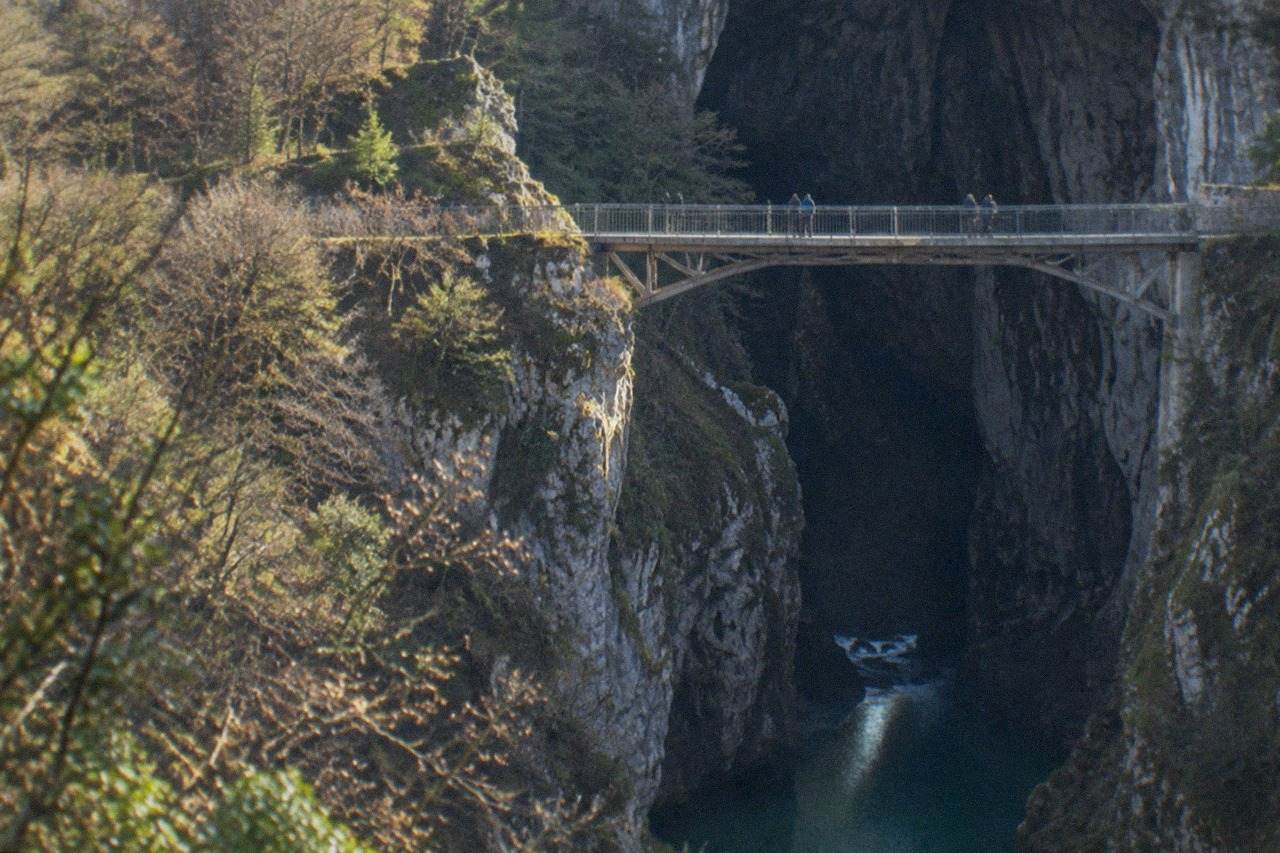
The Škocjan Caves are a UNESCO-listed cave system in Slovenia, on the karst plateau that continues across the border from Trieste, Italy, and the region's listings describe them as a protected park where the Reka River disappears underground into a dramatic gorge. The tour roster carries them as a booked day excursion from Trieste, most often combined with the Lipica stud farm, because independent travel across that border by public transport is awkward enough that most visitors simply book the ride.
The UNESCO framing is the reason the caves draw international day trippers rather than only cavers. The listing that appears in the tour roster's own description of the combined Lipica and Škocjan excursion notes the caves are "on UNESCO's list of natural and cultural" heritage, which is the standard shorthand for what makes this site different from the show caves closer to Trieste. The river gorge is the headline: the Reka runs across the plateau, swallows itself into a chasm, and the visitor infrastructure is built around that disappearance.
For a Trieste-based traveller the logic is about geography. The karst plateau, the Carso on the Italian side and the Kras on the Slovenian side, is one continuous landscape, and the plateau's attractions sit on both sides of a border that is internal to the Schengen area for most of the year. That makes Škocjan feel less like a foreign country and more like the next valley over, with the caveat about border checks explained below. Our overview of day trips from Trieste ranks the options by how much of the day each one consumes, and the cave runs sit at the shorter end of the full-day scale.
How Do You Cross the Border from Trieste to Slovenia in 2026?
Carry a passport or national ID card, because Italy is running temporary internal border checks on its land borders with Slovenia from 19 June 2026 to 18 December 2026, per the European Commission's own register of reintroduced controls. This is a dated, temporary measure and not a permanent rule, but during it a day trip to Škocjan, Lipica or Piran can involve a document check at the crossing. Slovenia uses the euro and is in Schengen, so there is no currency exchange and no other formality.
The two facts that trip up guidebooks on this route are worth spelling out precisely. Croatia adopted the euro and joined the Schengen area on the same day, 1 January 2023, a double change that older sources still get backwards. Slovenia has been in Schengen since December 2007 and in the euro area since 1 January 2007, longer than most travellers assume. Italy, Slovenia and Croatia all use the euro, so nobody crossing from Trieste to the Škocjan Caves needs to change money, and any advice telling you to do so is out of date.
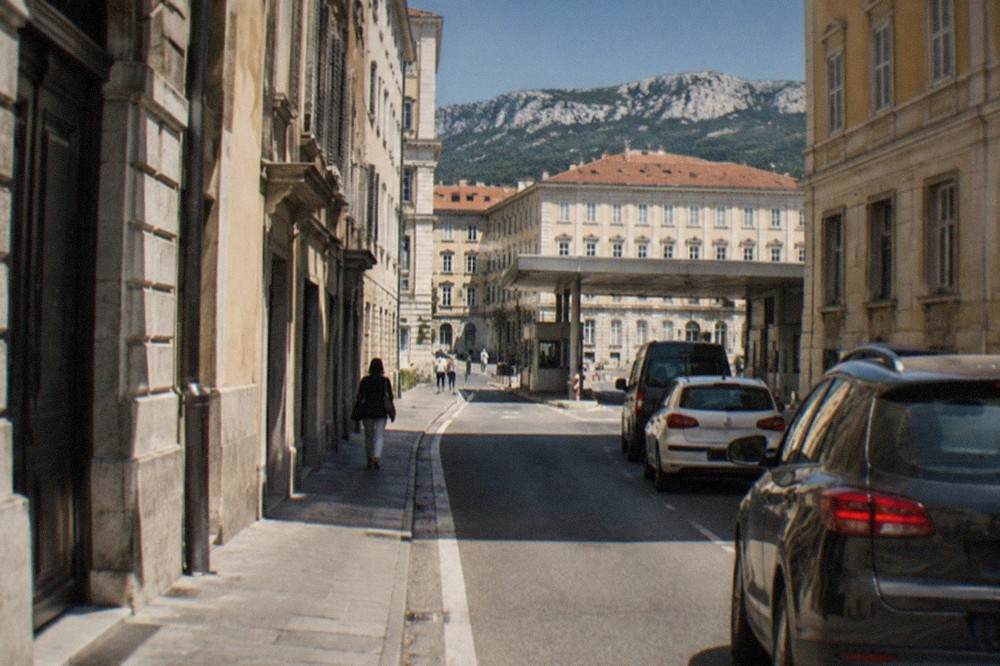
The border checks are the live detail for 2026. The Commission's register, which is the authoritative source for reintroduced internal controls, currently lists Italy's measure on the Slovenia land borders as running to 18 December 2026. Write that into your planning as a reason to carry ID, not as a reason to cancel: the crossings remain open, and tour coaches run as normal. Cross-border coach frequencies and fares from Trieste were not verified in the official sources for this page, so check the operator's site rather than trusting a printed timetable.
| Border fact | Italy | Slovenia | Croatia |
|---|---|---|---|
| Currency | Euro | Euro since 1 January 2007 | Euro since 1 January 2023 |
| Schengen | Member | Member since December 2007 | Member since 1 January 2023 |
| Checks on the Trieste land border in 2026 | Temporary checks on land borders with Slovenia, 19 June to 18 December 2026 | No active controls listed with Croatia or Hungary | No controls listed with Slovenia |
The practical read of that table: one currency, one zone, one document. The single item that changes your day is the ID card in your pocket, and the single date that matters if you are reading this in late 2026 is 18 December, when the current Italian measure is listed as expiring.
What Does a Booked Skocjan Caves Tour from Trieste Include?
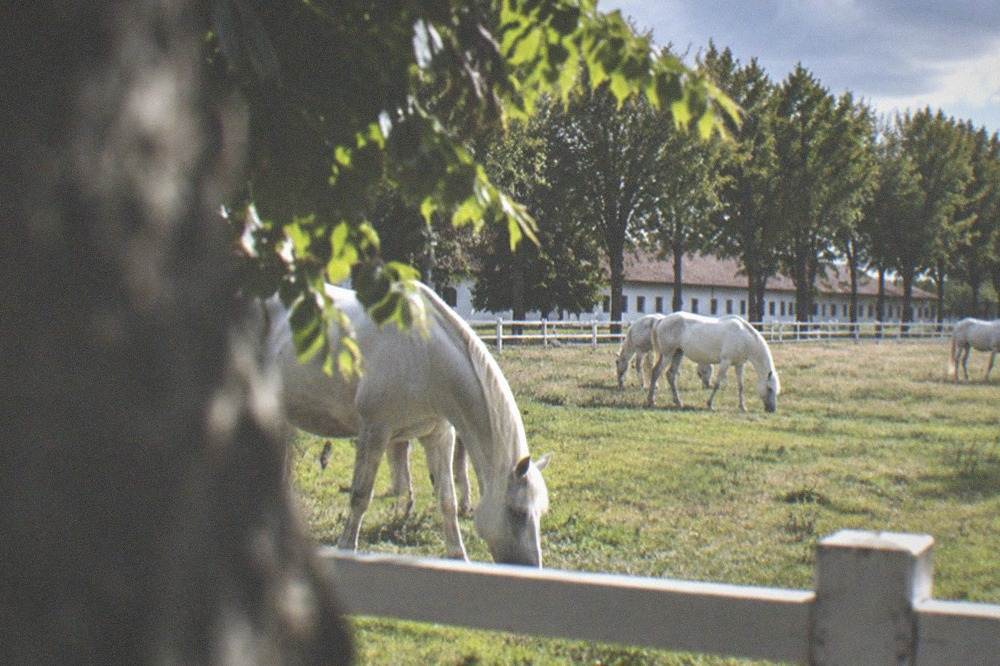
The roster's Lipica Stud Farm and Škocjan Caves tour from Trieste runs from $129.93 per person for about six hours, is rated 4.86 from 23 reviews, and combines the white horses of the Lipica stud farm with a visit to the Škocjan Caves. It is a guided day trip with round-trip transport from Trieste, which matters because the caves' location on the plateau makes independent public-transport routing the fiddly part of the day.
That combined tour is the one this page exists to point at. The listing describes a day spent at Lipica, experiencing the world of the white horses, followed by the Škocjan Caves, and the tour holds this site's related-tour slot for the karst-caves category because it is the direct, single-booking answer to the search that brought you here. You can Check availability on the operator's live listing, where the current price and departure details are shown.
The wider roster gives you alternatives if the combined format does not fit. The table below compares the three day trips this page is allowed to recommend, all booked from Trieste, using the roster's own figures. Prices and ratings are as the listings carry them and can move with the season, so treat the numbers as the shape of the market rather than a quote.
| Tour from Trieste | From | Rating | Reviews | Duration |
|---|---|---|---|---|
| Lipica Stud Farm and Škocjan Caves from Trieste | $129.93 per person | 4.86 | 23 | 6 hours |
| Miramare Castle and the park | $93.42 per group | 5.0 | 62 | 2 hours |
| Slovenian Coast Tour with Food and Wine Tasting | $137.57 per person | 4.98 | 50 | 5h 30m |
The comparison is deliberately lopsided in kind, not just in price. One is a cave-and-horses day into Slovenia, one is a private castle visit that stays on the Italian side of the gulf, and one is a food-and-wine day down the Slovenian coast. If your heart is set on the underground gorge, the first row is your row; if the weather turns against a plateau day, the second is the indoor-safe fallback.
Before you commit to any of the three, it is worth pausing on what the booking actually settles. The tour handles transport, the border crossing and the sequencing of the two sites, which is the part of the day that consumes the most planning hours if you attempt it alone. What it does not remove is the need for your passport, described in the section above, because the border checks apply to tour coaches exactly as they apply to private cars.
Skocjan Caves or Grotta Gigante: Which Karst Cave Should You Visit from Trieste?
Grotta Gigante, on the Italian side of the Karst at Sgonico, is guided-only with compulsory booking, costs EUR 15.00 for an adult, EUR 12.00 reduced, EUR 8.00 for children aged 6 to 18 and nothing for under-6s, with departures at 9:00, 10:00, 11:00, 12:00, 14:00, 15:00 and 16:00. It is closed on Mondays from September to February, open every day from March to August, and closed on 25 December and 1 January.
Those are the verified figures from the venue's own price list and schedule pages, and they are the only cave-entry numbers this site publishes for the Karst. The Škocjan entry arrangements are handled inside the tour booking, so the honest comparison is about the experience and the paperwork, not a ticket-price shootout. Grotta Gigante you can book directly or as a tour product; the roster carries a combined ticket at from $17.20 per person, rated 4.78 from 151 reviews, running about an hour, covering the guided descent and the museum entry. Škocjan you reach as part of a cross-border excursion.
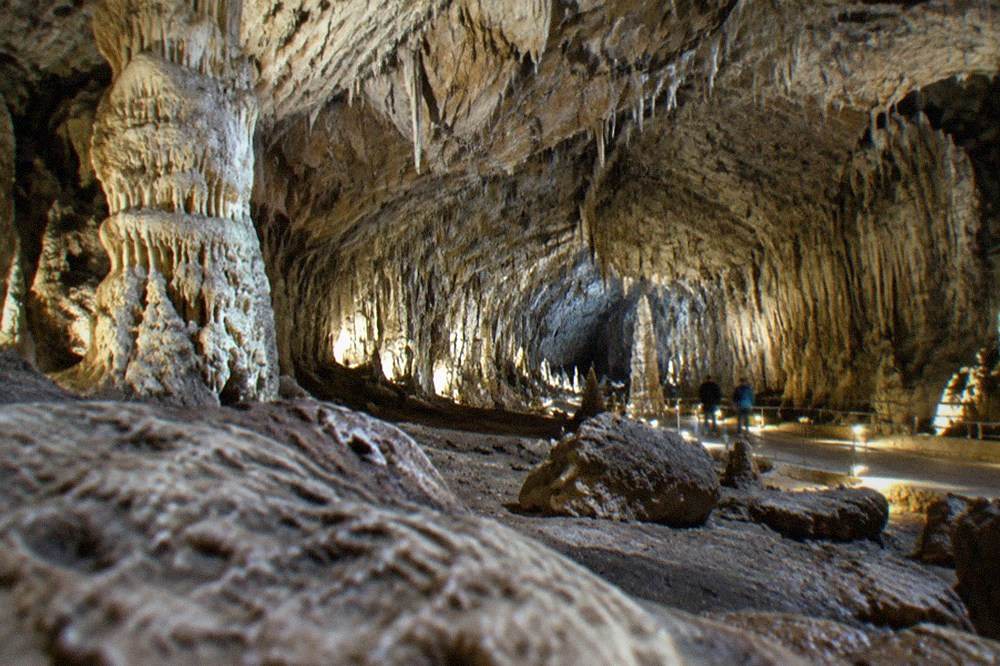
Three claims circulate about Grotta Gigante that the official pages do not carry and that this site therefore does not print: a step count, a constant cave temperature and a Guinness record. They are widely repeated, but the venue's own price list and schedules say nothing about any of them, and the rule on this site is that a figure without a primary source does not ship. Write to the venue on the number it publishes, +39 040 327312, if you need those details for an accessibility decision.
| Grotta Gigante ticket | Price | Notes |
|---|---|---|
| Adult | EUR 15.00 | Guided tour, booking compulsory |
| Reduced | EUR 12.00 | Over 65, students to 26, journalists, CAI/SSI members |
| Children 6-18 | EUR 8.00 | EUR 6.00 per child with two or more children in the party |
| Under 6 | Free | |
| Groups from 15 people | EUR 12.00 each | Over-65, CAI and student groups EUR 10.00 |
| Schools | EUR 6.00 per pupil |
The seasonal closing is the planning trap. From September to February, Grotta Gigante runs Tuesday to Sunday only, which means a Monday in autumn gives you an empty slot that the Škocjan tour happily fills. Our full Grotta Gigante guide covers the Italian cave in depth; this page's job is the cross-border day, and in practice many visitors do one cave per trip and save the other for next time.
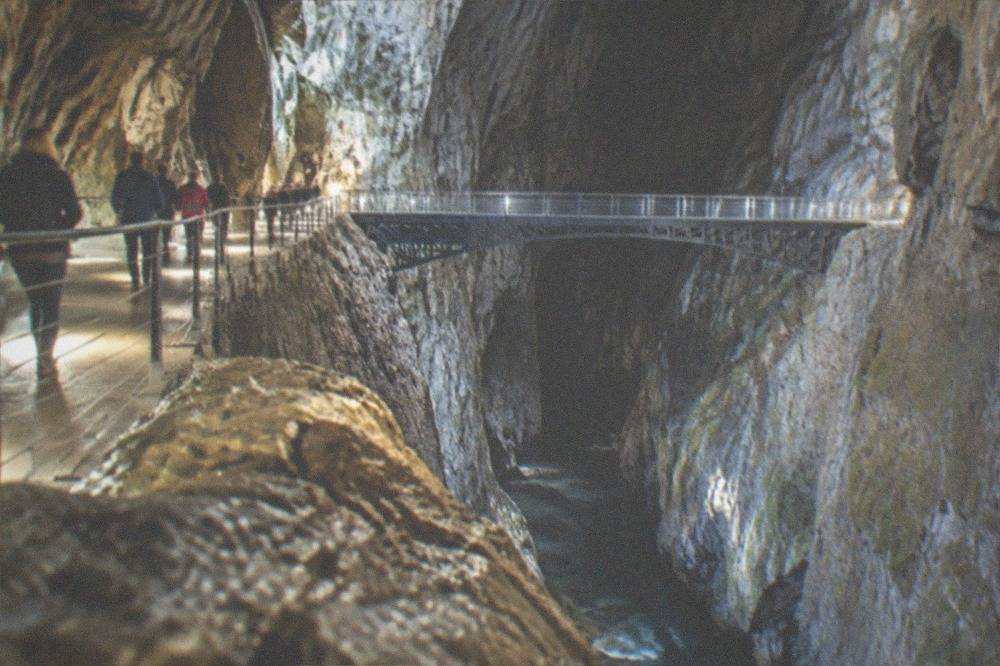
Can You Combine the Skocjan Caves with Lipica or the Slovenian Coast?
Yes, and the roster is built for it: the six-hour Lipica and Škocjan tour pairs the caves with the white-horse stud farm in one booking, while a separate five-and-a-half-hour Slovenian Coast tour with food and wine tasting, from $137.57 per person and rated 4.98 from 50 reviews, covers Piran and the coast in a food-led format. Doing the caves, Lipica and the coast in one day is more than the tour products promise, so pick two sites, not three.
The Lipica pairing is the natural one because both sites sit on the same plateau and the combined tour exists precisely because the geography permits it. Our dedicated page on the Lipica stud farm day trip covers the farm on its own; the combined product is what you book when you want both without self-driving. The listing describes the day as Lipica first, the world of the white horses, then the Škocjan Caves, with the UNESCO listing named in the tour's own copy.
The coast pairing works differently. If you would rather trade the second cave for the sea, the Slovenian Coast tour with food and wine tasting runs from Trieste to the coast in a relaxed small-group format, and its listing describes discovering the hidden corners of Slovenia's Adriatic shore. That tour pairs wine and food stops with the coastal towns, and our Trieste to Piran and Postojna Cave pages cover the neighbouring options if you want to compare the full Slovenian menu before committing.
A word on Miramare, which keeps appearing on this page because it is the roster's other high-rated short product. The private Miramare Castle and park tour, from $93.42 per group and rated 5.0 from 62 reviews, covers the former apartments of Archduke Maximilian and his wife Charlotte in about two hours, per its listing. It is not on the way to Škocjan; it is the fallback for a day when the plateau weather closes in, and the Miramare Castle guide has the verified ticket and hours detail: castle adult EUR 17.00, the park free all year, castle open every day 9:00-19:00 with last admission 18:30.
When Should You Do the Skocjan Caves Day Trip from Trieste?
The plateau is driest and calmest from late spring to early September, but the cave itself is the same temperature in any month, so the real planning variables are the border, the tour calendar and the bora wind, which ARPA's station tables show averaging 17.6 days a year with gusts over 90 km/h at the Trieste molo. June is the calmest month in the station series, and the wettest months are November, with 109.8 mm of rain, and September, with 102.3 mm.
The climate figures come from ARPA FVG's OSMER station at Trieste molo Fratelli Bandiera, a 1995-2024 series, and they describe the waterfront rather than the plateau, which runs colder and windier. Even so, the pattern is what a day tripper needs: a dry summer shoulder, an autumn that turns wet from September onward, and a bora season that peaks in the cool months. July, often assumed to be the rainy height of an Italian summer, is in fact the second driest month in the series at 53.8 mm.
| Month | Mean high C | Rain mm | Wet days | Days gust over 90 km/h |
|---|---|---|---|---|
| April | 16.8 | 60.7 | 8.0 | 0.7 |
| May | 21.7 | 75.0 | 8.5 | 0.7 |
| June | 25.8 | 62.5 | 6.1 | 0.3 |
| July | 28.2 | 53.8 | 5.4 | 0.9 |
| August | 28.1 | 71.7 | 6.6 | 0.9 |
| September | 23.9 | 102.3 | 7.4 | 1.1 |
| October | 19.6 | 88.6 | 7.6 | 1.4 |
| November | 14.7 | 109.8 | 9.5 | 1.9 |
Read the last column before you pick a winter date. The monthly record gust exceeds 110 km/h in every month of the year in the station series, and the all-time peak in the record is 168.1 km/h, measured in February 2012. No published wind threshold exists at which the Rive close or ferries stop, so do not plan around a cutoff number; plan around the forecast, and check the operator's cancellation terms when you book. The bora blows from the east-north-east and can persist for days.
Where Can You Eat and Taste Wine on the Karst Between Trieste and the Caves?
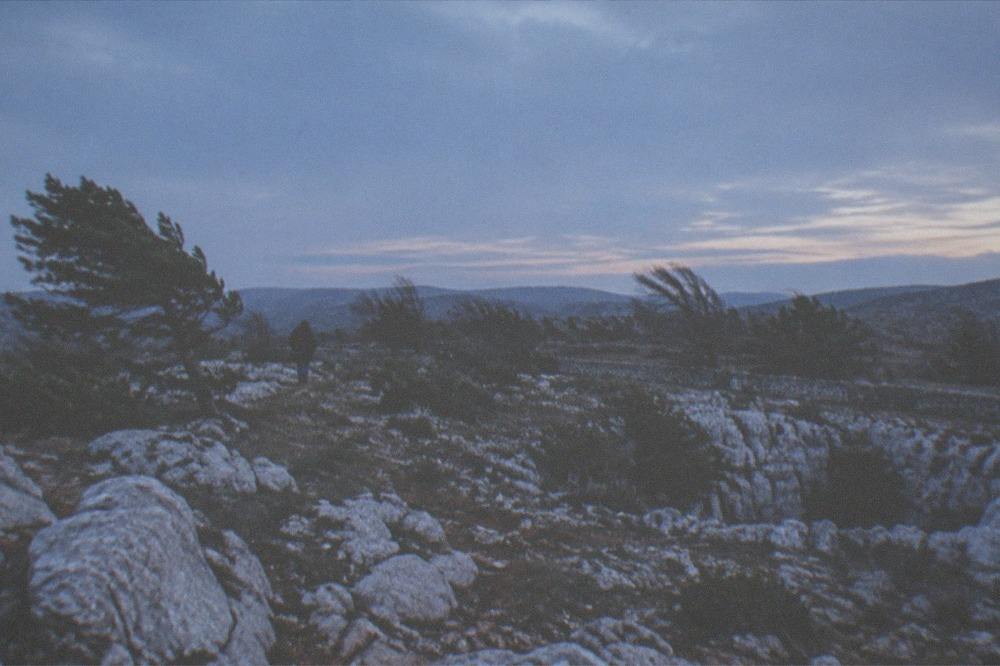
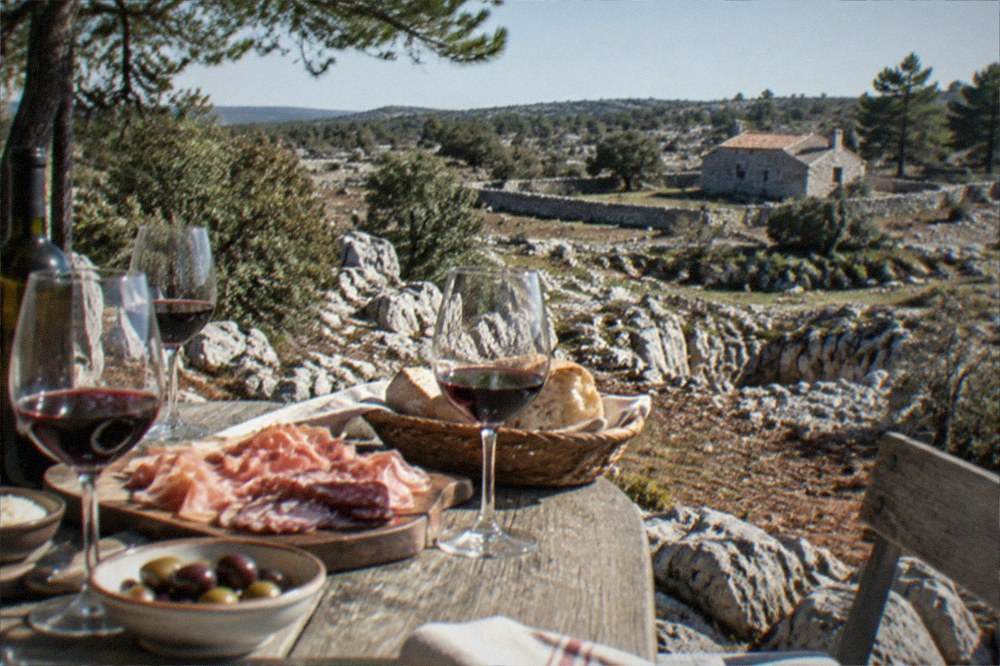
The Karst answer is the osmiza, a farmhouse on the plateau that opens for a limited period to sell its own wine and simple home produce direct from the property, signposted by a frasca, a leafy branch hung at the turning. The long-established opening calendar, with addresses and a map, lives at osmize.com, which is the de facto reference because no municipal equivalent exists. The Carso's own wines are Vitovska, Malvasia and Terrano, and Trieste is not in the Prosecco DOC.
The osmize custom is the plateau's food culture in one institution: a farm selling what it makes, when it has stock to sell, for however many days it chooses to open. The days are concentrated in spring and autumn, and the frasca is the signal that an osmiza is open, sometimes with a red arrow or a sign pointing the way. Because openings are decided farm by farm, the calendar is the only reliable planning tool, and osmize.com is the site that maintains it.
The wine point matters more than it sounds. The village of Prosecco sits on the Karst near Trieste and is the origin of the sparkling wine's name, but the DOC production zone is elsewhere, and Trieste is not inside it. The plateau's own grapes are the local story: Vitovska, Malvasia and Terrano. If a wine-tasting stop is what you want from the day, the roster's city-centre option is the Trieste City Center wine tasting with food pairings, from $56.18 per person, rated 4.61 from 22 reviews, running an hour; the full-day History of Prosecco and the Karst Region tour from the roster, from $145.22 per person for seven hours, covers the plateau's wine story in depth, and our day trips from Trieste overview lists where it fits.
How Much Does the Day Cost and How Do You Pay for Things?
The booked Lipica and Škocjan tour runs from $129.93 per person, and around it you will spend in euros: a Trieste urban single ticket costs EUR 1.50 for 60 minutes or EUR 1.85 for 75 minutes, a day ticket is EUR 3.35, and contactless bank cards can be tapped on board the city's buses and tram. Slovenia uses the euro, so the same money works on both sides of the border, and there is no currency exchange anywhere in this itinerary.
The transport fares come from Trieste Trasporti's own 2026 tariff sheet, and the contactless detail is the one that saves the morning: the onboard readers accept Mastercard, Visa and American Express and digital wallets, and the system applies the cheapest applicable fare, so you can board the airport bus or the city tram without a ticket office. Singles run 60 or 75 minutes, extended to 240 minutes on Sundays and public holidays. The Opicina tram, line 2, is part of the same urban network and runs from piazza Dalmazia to Opicina on the plateau, which makes it a legitimate karst-outing in itself.
| Trieste urban ticket | Price | Validity |
|---|---|---|
| Single, 60 minutes | EUR 1.50 | Extended to 240 minutes on Sundays and public holidays |
| Single, 75 minutes | EUR 1.85 | Same Sunday extension |
| Day ticket | EUR 3.35 | One calendar day |
| 10 rides | EUR 13.50 | Carnet |
| 20 rides | EUR 16.65 | Carnet |
One cost you will not see quoted here is accommodation, which this site does not price. What can be stated is the tourist tax schedule, from the Comune's own 2026 table: EUR 2.30 per person per night at a B&B Superior, EUR 3.00 at a three-star, EUR 3.30 at a four-star, charged for a maximum of five consecutive nights, with everyone under 18 exempt. If you are stringing the Škocjan day into a longer stay, that table is the number your hotel bill will carry beyond the room rate.
With the money and the transport settled, the last decision is which of the three recommended products fits your calendar. The cave-and-horses day, the castle morning and the coastal food tour all depart from Trieste, all sit in the middle band of the price table above, and all carry the cancellation terms on the operator's listing.
Common Questions About the Škocjan Caves from Trieste
Do I need a passport for a day trip from Trieste to the Škocjan Caves?
Yes, carry a passport or national ID card. Italy is running temporary internal border checks on its land borders with Slovenia from 19 June 2026 to 18 December 2026, per the European Commission's register, so a document check is possible at the crossing during that window.
Do I need to change money for Slovenia?
No. Slovenia has used the euro since 1 January 2007, and Italy uses the euro too, so the same currency works on both sides. Croatia also adopted the euro, on the same day it joined Schengen, 1 January 2023.
How long does the Lipica and Škocjan tour from Trieste take?
The booked tour runs about six hours door to door, from $129.93 per person, rated 4.86 from 23 reviews, covering the Lipica stud farm and the Škocjan Caves with round-trip transport from Trieste.
Should I visit the Škocjan Caves or Grotta Gigante?
If you want the UNESCO-listed river gorge and do not mind the border crossing, book Škocjan. If you want the easiest karst cave from Trieste, Grotta Gigante at Sgonico costs EUR 15.00 for an adult, is guided-only with compulsory booking, and departs at fixed times from 9:00 to 16:00; it is closed on Mondays from September to February.
Can I do the Škocjan Caves and the Slovenian coast in one day?
Not comfortably as a single booked product. The six-hour Lipica and Škocjan tour fills a day on the plateau, and the separate Slovenian Coast food and wine tour runs five and a half hours in the other direction. Pick one, or split them across two days.
Is the Škocjan trip a good idea in winter?
The caves themselves are the same in any month, but winter is the bora season: ARPA's station series shows 17.6 days a year with gusts over 90 km/h at the Trieste molo, concentrated in the cool months, and November is the wettest month at 109.8 mm. Check the forecast and the tour's cancellation terms before booking.
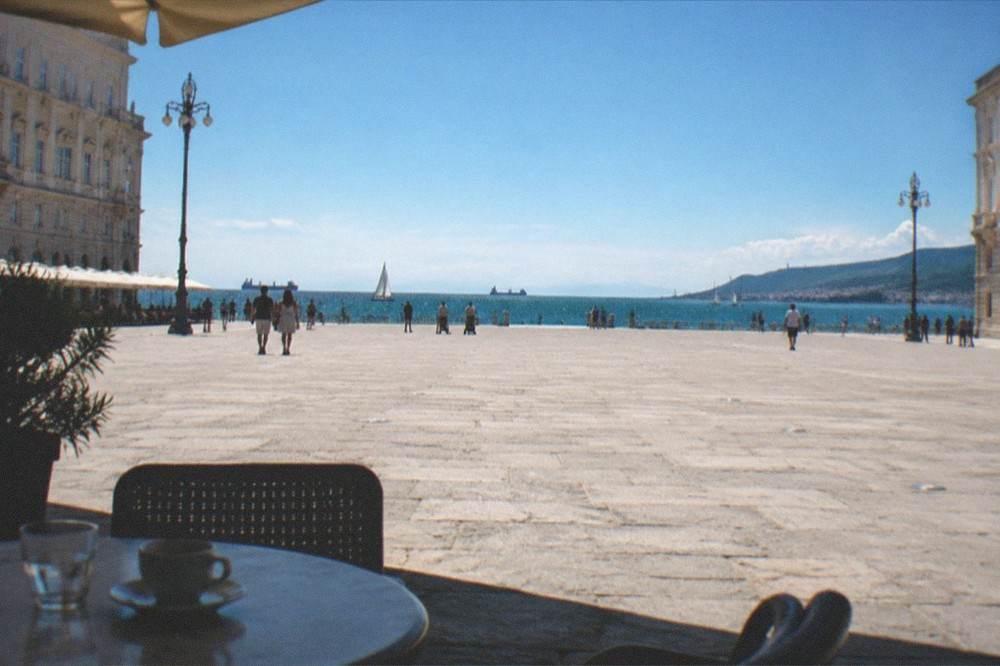
The day itself, once the booking is made and the passport is in your pocket, is one of the most efficient in Trieste's repertoire: a border you barely notice, a landscape that carries on unchanged across it on paper but changes nationality at the line, and an underground gorge the UNESCO listing exists to protect, all close enough to the city that you can be back on the seafront for an evening coffee. Book the tour, carry the ID, keep one eye on the wind forecast, and the Karst does the rest.