Is Trieste a Wealthy City?
Is Trieste a wealthy city? A sourced look at the Adriatic port city in Italy: its Habsburg-built elegance, its 2026 prices, and what its wealth actually looks like today.
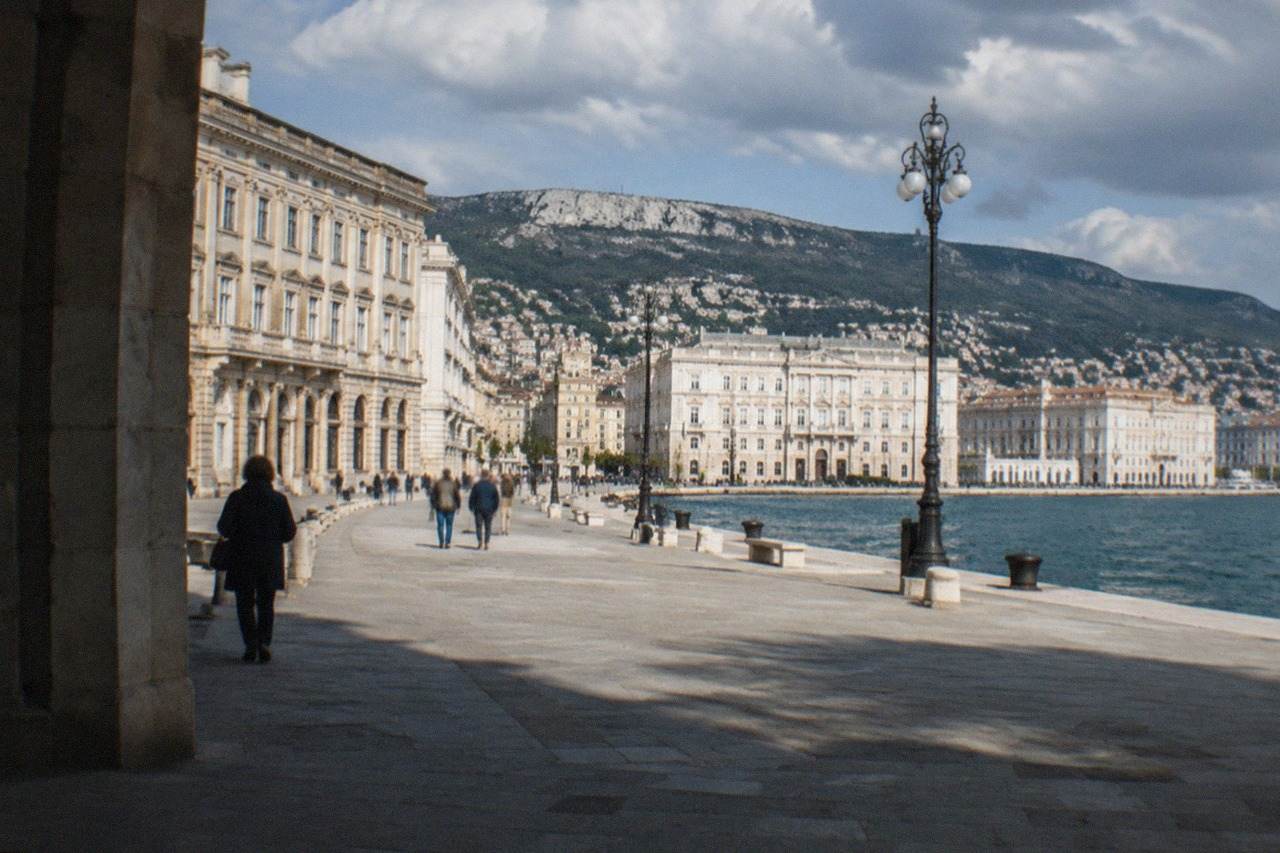
Trieste, the Adriatic port city in Friuli Venezia Giulia in the northeast corner of Italy, answers the wealth question before you ask it: the seafront opens with Piazza Unità d'Italia, one of the largest sea-facing squares in Europe, lined with neoclassical and Habsburg-era palazzi that were paid for by the busiest port of a vanished empire. Whether that inherited grandeur still adds up to present-day prosperity is a more interesting question, and the honest answer mixes a rich historical core, comfortable public institutions and prices that are high by Italian regional standards but modest beside Milan or Venice.
Is Trieste a Wealthy City?
Yes, in appearance and by several practical measures, Trieste is a wealthy city, though not one of Italy's richest: its historic centre was built with imperial port money, its cultural institutions charge big-city prices, and its 2026 tourist tax bands sit at the upper end of what mid-sized Italian cities levy, while the city's economy today rests on coffee roasting, shipping, insurance and research rather than heavy industry. Wealth in Trieste is inherited architecture plus a stable white-collar base, not a finance boom, and the result is a city that feels richer than its statistics. The question of what Trieste is famous for is partly a question about where all this stone money came from.
The look of the place is the first evidence. The Borgo Teresiano district, laid out under Empress Maria Theresa, is a grid of uniform limestone facades that only a customs-free imperial port could finance. Piazza Unità d'Italia opens straight onto the Adriatic with the Prefecture and the Palazzo del Lloyd Triestino facing the water, buildings that were headquarters of shipping and insurance companies when Trieste was the main port of the Austro-Hungarian Empire. That skyline of banks and insurers was not built by a poor city.
| Trieste institution | What it is | Why it signals wealth |
|---|---|---|
| Piazza Unità d'Italia | Sea-facing square lined with palazzi | Imperial and commercial headquarters built 18th-20th century |
| Borgo Teresiano | Grid district of uniform neoclassical facades | Planned and financed by the free port's customs revenues |
| Miramare Castle | Archduke Maximilian's white residence on the Gulf | A private royal build, now a €17 state museum |
| Teatro Lirico Giuseppe Verdi | Opera house in the city centre | A Habsburg-era theatre maintained as a civic institution |
The modern economy keeps the same shape in different industries. Trieste remains a coffee city: Illy has its headquarters here, and the port is a historic entry point for green coffee into Italy, though no verified per-capita consumption figure exists anywhere in official sources, and the widely repeated claim that Triestini drink twice the Italian average has no primary backing. Insurance and shipping are still present, and the city hosts national research institutions. None of that makes it Milan. It makes it a comfortable administrative and knowledge-economy city with an unusually grand set of hand-me-down buildings.
Where Trieste's Wealth Came From
Trieste's wealth was manufactured by imperial decree: declared a free port in the eighteenth century, the city grew into the principal sea gate of the Habsburg Empire, and the palazzos, the insurance companies and the grand caffè of the centre were all financed by that trade, a fortune that survived the empire's collapse because the buildings, the banks and the port stayed. The city's elegance is not decoration; it is a balance sheet from when customs revenue paid for limestone.
The free-port decision is the hinge. Once goods could move through Trieste without the duties that choked other Habsburg ports, the shipping companies, the insurers that underwrote them and the financiers who serviced them all settled on the waterfront. The historic caffè that still operate in the centre, the ones a guided walk through the historic caffè route takes in, were the meeting rooms of that class, and they survive as working businesses today in a way few European cities can match.
That inherited base explains why Trieste never industrialised into grimness and never had to gentrify back. The centre was never abandoned, so there was no cheap decade for bohemians to colonise. The 2026 tourist tax table, published by the Comune di Trieste, quietly reflects the same confidence: the city charges €3.80 per person per night for a five-star stay, a figure that puts it in the same band as far larger tourist cities, capped at five consecutive nights.
| Accommodation category | 2026 tourist tax, per person per night |
|---|---|
| 5-star hotel | €3.80 |
| 4-star hotel or equivalent self-catering | €3.30 |
| 3-star hotel or equivalent self-catering | €3.00 |
| 2-star hotel, B&B Superior, affittacamere | €2.30 |
| Hostels, agriturismi, short-let apartments | €2.30 |
| B&B Comfort | €2.00 |
| 1-star hotel, B&B Standard | €1.80 |
| Campsites and motorhome areas | €1.50 |
Under-18s are exempt, and the charge applies for a maximum of five consecutive nights in the same property. A tax table is a blunt instrument, but it is a real one: cities set these bands to what their market will bear.
Whichever of those three you lean toward, the common thread is that each one spends its time in the parts of Trieste that the imperial economy paid for, which is the fastest way to understand the wealth question with your own eyes.
What Wealth Looks Like on the Ground in Trieste
Wealth in Trieste shows up as maintained public space rather than private display: castle and museum tickets priced at big-city levels, a civic opera house, a free seafront and free castle parks, and a streetscape of restored facades, with the 2026 price list putting Miramare Castle at €17, Museo Revoltella at €8 and Castello di San Giusto at €7, figures close to what state museums charge in Rome or Florence. The city spends like a city with money, and it charges visitors like one too.
The ticket prices are the clearest signal. A castle entry at €17, an adult ticket that includes the temporary exhibition at Miramare, is not a provincial price. Museo Revoltella, the modern-art gallery on via Diaz, charges €8 and closes on Tuesdays. Castello di San Giusto charges €7 for the walls, the armoury museum and the Lapidario Tergestino together. These are confident institutions with confident price lists, even when the first Sunday of the month is free under the ministry's recurring scheme. The full index of guides sits on Trieste Travel Guide.
| Trieste attraction | 2026 adult entry | Notes |
|---|---|---|
| Miramare Castle | €17.00 | Includes temporary exhibition; park free all year |
| Grotta Gigante | €15.00 | Guided tours only, booking compulsory |
| Museo Revoltella | €8.00 | Closed Tuesdays; free first Sundays |
| Castello di San Giusto | €7.00 | Walls, museum and lapidarium included |
| Risiera di San Sabba | Free | National monument, no booking for individuals |
| Cattedrale di San Giusto | Free | Bell tower price not published by the parish |
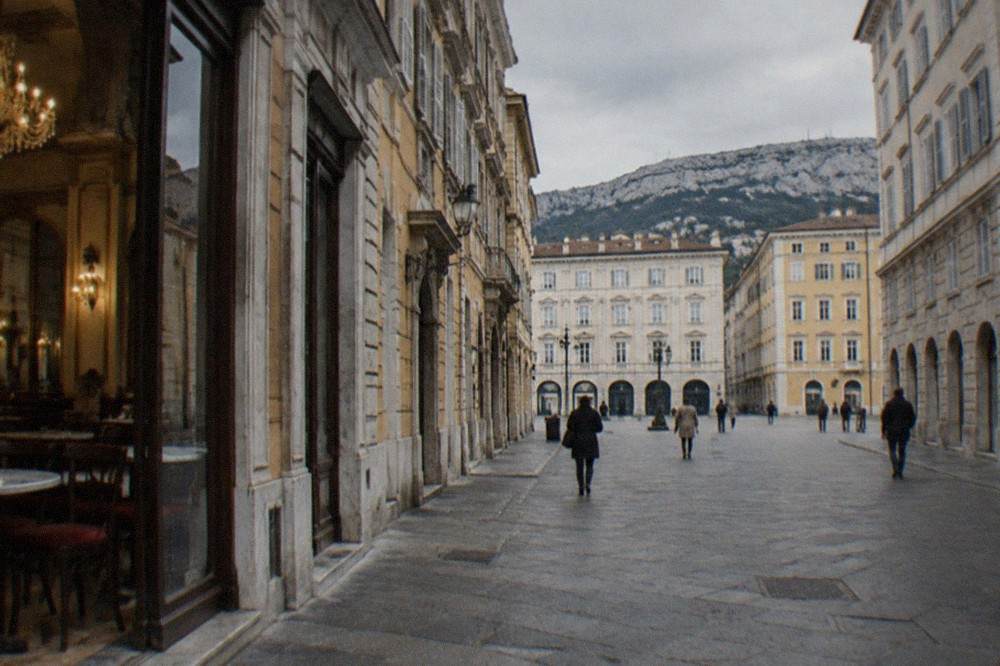
The free layer matters as much as the paid one. The Rive seafront, the Miramare park, the Molo Audace and the cathedral all cost nothing, and the question of whether Trieste is cheap or expensive turns largely on how much of that free layer a visitor uses. A wealthy city that keeps its best rooms free is choosing to look rich in public and let everyone walk through it.
Is Trieste Expensive for Visitors?
For visitors, Trieste prices out above most of Friuli Venezia Giulia but well below Venice or Milan: attraction tickets run €7-17, the 2026 tourist tax tops out at €3.80 a night for a five-star stay, and the city's dense free layer, from the seafront to the castle parks, means a visit can be run cheaply without feeling like an economy version of the city. The wealth is visible from the pavement for nothing.
The paid experiences scale up from there. A private guided walk of the centre runs from about $50 per person for a group tour to $194.89 for a private group of up to ten, and the panoramic city and Miramare Castle tour, a four-hour guided day trip, is listed from about $130 per person on the operator's live listing. Food tours are listed from $71.08 and $85.98 per person. None of that is bargain territory, and none of it is exceptional for a city that maintains an opera house.
The honest summary for a traveller: Trieste is a city whose visible wealth is real, inherited and well kept, whose current economy is comfortable rather than spectacular, and whose visitor prices sit in the middle-upper band for Italy. If the question behind the question is whether Trieste is worth visiting, the wealth is part of the answer, because the grand rooms were built to impress and they still do.
The guided tour in the heart of the city, which ends with a coffee in a historic caffè, is the most direct way to see the wealth with a guide explaining it. It is listed from about $50 per person for a 2.5-hour walk, and you can Check availability on the operator's live listing.
That walk spends most of its two and a half hours among the elegant squares and sea views that the free-port economy financed, and the closing caffè stop lands you inside one of the institutions that wealth built, which makes it a fitting last look at the question.
Between them, those three options cover the city's wealth from three angles: the architecture on foot, the imperial castle up the coast, and the food culture that grew out of the port's trading money. Whichever angle you take, the underlying answer to the wealth question stays the same, and it is written in limestone.
Common Questions About Trieste's Wealth
Is Trieste A Wealthy City?
Yes, by appearance and by several practical measures. Its centre was built with imperial free-port money, its 2026 attraction tickets run €7-17, and its tourist tax bands reach €3.80 a night, while its modern economy rests on coffee, shipping, insurance and research. It is wealthy without being one of Italy's richest cities.
Why does Trieste look so rich?
Because it was the principal port of the Austro-Hungarian Empire, declared a free port in the eighteenth century. The customs revenues financed the neoclassical Borgo Teresiano, the palazzi of Piazza Unità d'Italia and the headquarters of shipping and insurance companies, and the buildings were never abandoned.
Is Trieste expensive to visit?
More than most of its region, less than Venice or Milan. Castle and museum tickets cost €7-17 in 2026, the tourist tax tops out at €3.80 per person per night, but the seafront, the Miramare park, the Molo Audace and the cathedral are all free.
Do people in Trieste still make money from coffee?
Yes, coffee remains a real industry, not just a heritage story: Illy has its headquarters in the city and the port is a historic entry point for green coffee into Italy. No verified per-capita consumption figure exists in official sources, so the famous drinking statistics should be treated as folklore.
Is Trieste richer than other cities in Friuli Venezia Giulia?
It is the regional capital and its most expensive city by visitor-facing measures, with the highest tourist tax bands and the highest attraction ticket prices in the 2026 tables. The pack does not carry comparative income data, so the honest claim is about prices and institutions, not household earnings.
Does Trieste's wealth come from Italy or from the Habsburgs?
The buildings and the institutional base come from the Habsburg free-port era; the current economy is Italian and post-imperial, built on coffee roasting, port activity, insurance and public research institutions. The two layers sit on top of each other, which is exactly what the streetscape shows.