What Is the Traditional Dessert of Trieste?
The traditional dessert of Trieste, Italy is presnitz, a rolled pastry of dried fruit and nuts. What it is, where to find it and which tours include a sweet stop.
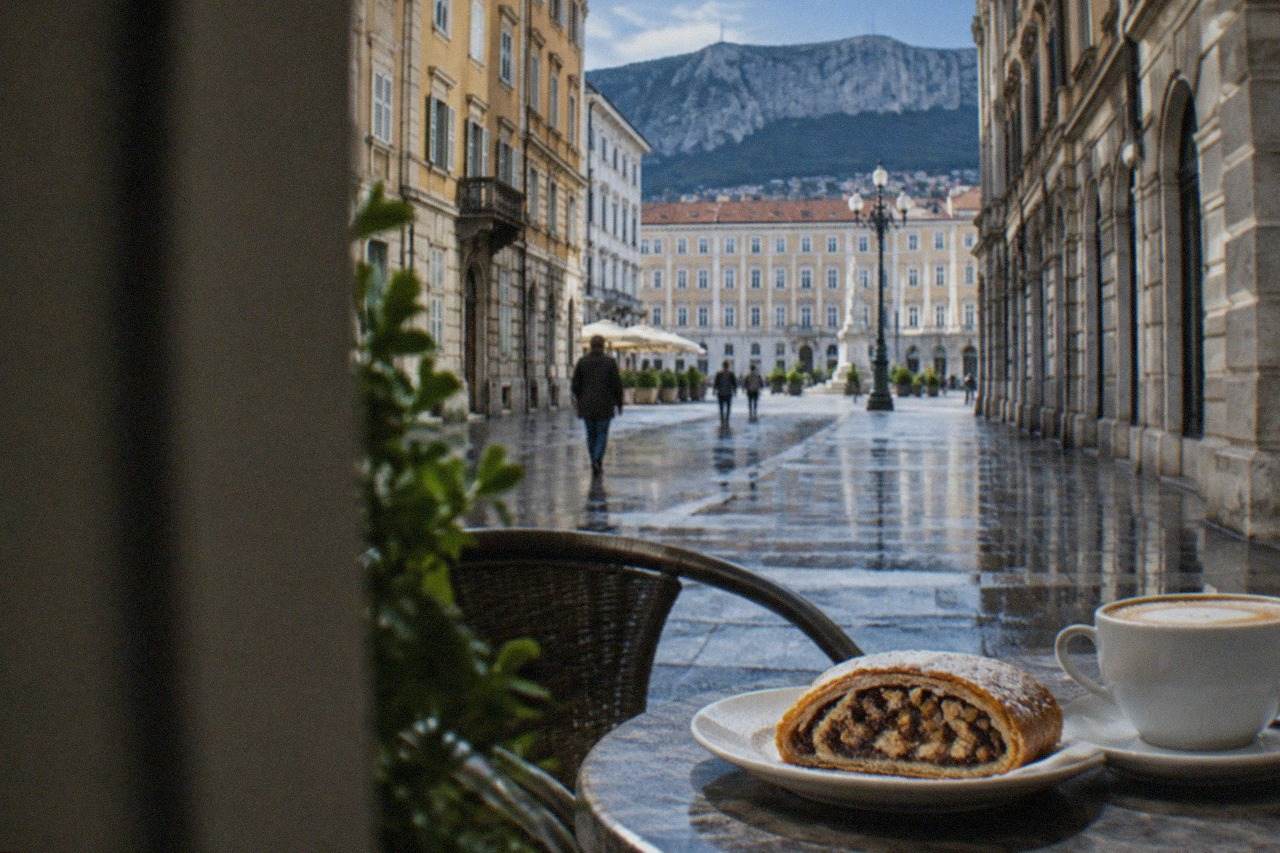
Trieste, the Adriatic port city in Friuli Venezia Giulia in northeast Italy, answers the dessert question with one word: presnitz. It is a rolled pastry, coiled into a spiral and sliced to show a dense filling of dried fruit, nuts, candied peel and a splash of spirit, and it belongs to the city's Central European cafe tradition rather than to the gelato-and-tiramisu canon most of Italy runs on. The question "what is the traditional dessert of trieste?" has a specific answer, and this page gives it in full: what presnitz is, where the city's bakers and historic caffè serve it, which other sweets share the counter with it, and which food and walking tours build a stop around Trieste's sweet tooth.
What Is the Traditional Dessert of Trieste?
The traditional dessert of Trieste is presnitz, a rolled pastry baked in a spiral and filled with a dense mix of dried fruit, walnuts, candied peel, raisins, spices and a spirit such as grappa or rum. It is sliced into rings and served across the city's caffè and bakeries, and it belongs to Trieste's Austro-Hungarian cafe heritage rather than to the broader Italian dessert canon. No other sweet is as specifically tied to the city.
The pastry is the edible summary of what Trieste is: a port that traded with the whole Habsburg world and kept the tastes of Central Europe while speaking Italian. A presnitz is not light. The dough is thin, the filling is the point, and a slice with an espresso is the classic serving. The city's coffee culture, covered in depth on what Trieste is famous for, is the setting: the dessert arrives with the caffè, not after a restaurant meal, which is the first thing visitors get wrong.
Two things distinguish it from the desserts most visitors expect in Italy. First, it is a bakers' product, made in pastry shops and sold by the slice or the coil, not a restaurant plated dessert. Second, it is seasonal in the sense that it peaks around the Christmas market weeks, when the city's Austrian-inherited sweet calendar takes over the squares, though you can find it year round in the historic caffè. If you arrive in December, you will meet it everywhere; if you arrive in July, you will meet it in fewer places, but the ones that have it are the ones worth having it in.
It is worth being honest about what the sources do and do not confirm. The pastry's association with Trieste is not in doubt: the city's tourism material, its bakers and its historic cafes all present presnitz as the local sweet. What no verified primary source pins down is a single inventor, a founding year or an exact origin story, and several competing ones circulate. This site does not print a date or a name it cannot source, so the honest formulation is: presnitz is the traditional dessert of Trieste, its roots are in the city's Habsburg-era kitchen, and the colourful origin stories are legend rather than record.
Where to Eat Presnitz in Trieste, Italy
The places to eat presnitz in Trieste, Italy are the city's historic caffè and its pastry shops, above all in the Città Vecchia old town and around Piazza Unità d'Italia, where the grand cafes serve it by the slice alongside an espresso. The pastry shops of the Borgo Teresiano and the streets behind the Grand Canal are the other reliable source, and at Christmas the market stalls stock it in quantity.
The caffè route is the one that fits Trieste. The city's coffee houses are institutions, and ordering a presnitz with a coffee is not a tourist move, it is what the counters are for. The historic bars in and around the old town are the natural first stop, and a walking tour that ends with coffee in a historic bar, like the private walks in the selection below, lands you exactly in this tradition. For the fuller picture of the city's cafe culture, the guide to Trieste coffee culture on this site covers the historic houses one by one.
The bakery route matters too. A whole presnitz, coiled and glossy, is a standard item in Trieste's pasticcerie, and buying one to slice at home is a local habit. Around the Christmas market the pastry appears in volume, and that is the moment the city's sweet calendar is at its loudest. Outside the season, ask in the pastry shops near the Grand Canal and in Città Vecchia; the answer varies by shop, and no verified source lists a fixed roster of which bakeries carry it on which days, so this site will not invent one.
A practical note on ordering: a slice is "una fetta di presnitz", and the coffee that goes with it is ordered at the counter, standing, in the Trieste style. The city has its own coffee vocabulary, and using even a little of it marks you as someone who has read past the first paragraph of a guidebook. The fuller language story, including how the city's bilingual identity shapes daily life, is in what is special about Trieste, Italy.
Which Other Sweets Is Trieste, Italy Known For?
Beyond presnitz, Trieste is known for putize, a richer dried-fruit-and-nut sweet from the Carso, for the Austrian-inherited strudel that survives in the city's caffè, and for the tiramisu and gelato common across all of Italy. The distinctively Triestine ones are presnitz and putize, both rooted in the Karst farmhouse tradition, while strudel reflects the Habsburg cafe layer of the city's kitchen.
Putize deserves its own line. It comes from the Karst plateau behind the city, the same limestone upland whose farms run the osmize, the seasonal wine-and-produce outlets signposted by a leafy frasca branch at the turning. A putize is denser and darker than a presnitz, and the two are often confused; the short version is that both are dried-fruit spirals, but putize belongs to the Carso farmhouse table and presnitz to the city caffè. The Karst and its osmize tradition are covered in this site's guide to the osmize of the Carso, which is the deeper food-and-wine context for both sweets.
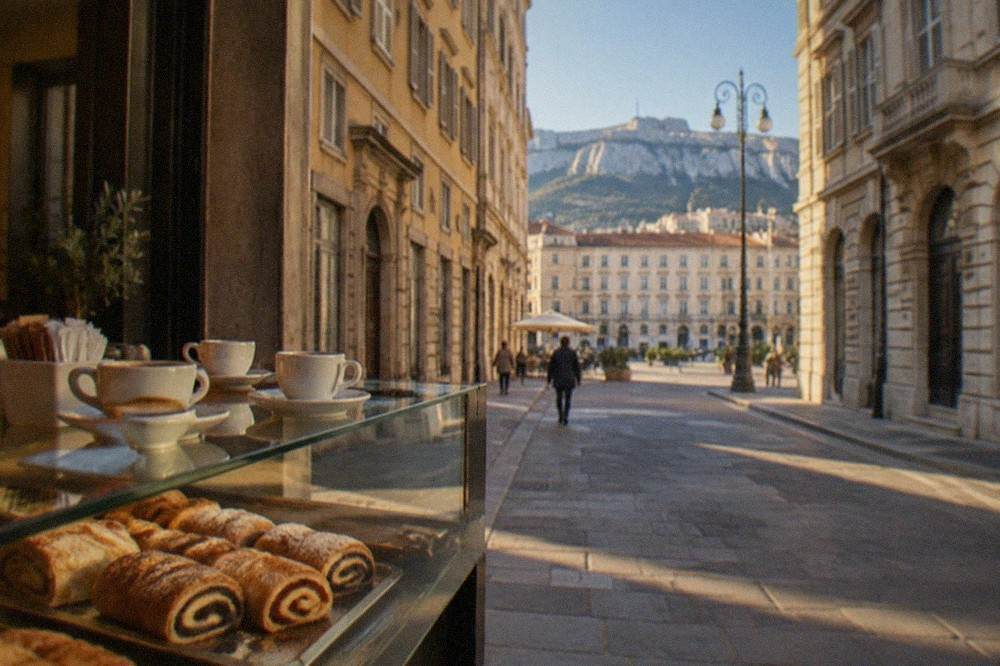
The table below sets the city's sweets against each other. It is a planning table, not a promise: what a given caffè stocks on a given day is the caffè's business, and the right move is to ask at the counter. More of these guides are collected on Trieste Travel Guide.
| Sweet | What it is | Where it belongs |
|---|---|---|
| Presnitz | Rolled spiral pastry, dried fruit, nuts, candied peel, spirit | The city's caffè and pasticcerie, peak at Christmas |
| Putize | Dense dried-fruit and nut sweet of the Karst | Carso farmhouse tradition, osmize tables |
| Strudel | Austrian apple pastry inherited from the Habsburg era | Historic caffè counters |
| Tiramisu | The standard Italian layered coffee dessert | Restaurants and caffè citywide |
For the savoury side of the same kitchen, the city's signature dish is covered separately in the signature dish of Trieste, and the wider food picture in what food Trieste is famous for. The short version: Trieste's table runs on jota soup, pork and goulash from the Austro-Hungarian layer, and buffet-style cured meats, with the sweets as the closing act.
Can a Food Tour in Trieste Include the Dessert?
Yes, a food tour in Trieste can include the traditional dessert, because the city's guided food walks run through the old town and the market streets and stop at the caffè and bakeries where presnitz is sold. The Trieste: Unique Food Tour with Local Flavors and Tastings runs three hours from $85.98 per person, rated 4.74 from 123 reviews on the operator's live listing, and its route takes in the city's culinary traditions, sweets included.
A guided walk is the efficient way to eat the city if your time is short, and Trieste rewards it more than most Italian cities because its food culture is unusual enough that a local guide genuinely adds context: why the coffee vocabulary is different, why the sweets are Austrian-shaped, why the buffet counters serve goulash. The food walks below are the ones with verified listings. The table gives the numbers exactly as the listings state them.
| Tour | Length | From price | Rating on the listing |
|---|---|---|---|
| Trieste: Unique Food Tour with Local Flavors and Tastings | 3 hours | $85.98 per person | 4.74 from 123 reviews |
| Trieste: Guided Foodie Walking Tour | 3 hours | $71.08 per person | 4.91 from 264 reviews |
| Trieste: 2.5-Hour Prosecco Origins Tour and Tastings | 2h 30m | $68.79 per person | 4.93 from 227 reviews |
| Trieste: Small group Pasta and Tiramisu class with Mamma | 3 hours | $157.65 per person | 4.4 from 40 reviews |
The private option is the Best of Trieste walk, from $217.82 per group of up to 10, rated 4.94 from 31 reviews on the operator's live listing, and its route through the city's landmarks ends with coffee in a historic bar, which is the natural habitat of a slice of presnitz. For a group or a family it is the better buy; for a solo traveller the shared food walks cost less per head. Either way, book the food walk on a day you have left appetite, because the tastings are the point and Trieste's portions are not shy.
Timing matters when you plan the sweet part of the trip. The Christmas market weeks are the peak presnitz season, and the city's event calendar in early October belongs to the Barcolana regatta, which in 2026 runs from 2 to 11 October with the main race on Sunday 11 October. Neither date needs a dessert to justify a visit, but both change the character of the squares where the caffè live, and the autumn weeks bring the osmize calendar on the Karst into its spring-and-autumn rhythm too.
If dessert is the mission rather than the afterthought, the food walks below are the listings that pair a sweet stop with the rest of the city's table, and they can be booked for the same day you plan the caffè circuit.
Common Questions About the Traditional Dessert of Trieste
What is the traditional dessert of Trieste?
The traditional dessert of Trieste is presnitz, a rolled spiral pastry filled with dried fruit, walnuts, candied peel, spices and a spirit such as grappa or rum. It is served by the slice in the city's caffè and pastry shops and belongs to Trieste's Habsburg-era cafe heritage.
Is presnitz the same as putize?
No. Both are dried-fruit sweets, but presnitz is a rolled pastry of the city caffè while putize is a denser sweet of the Carso farmhouse tradition. They are often confused because the fillings overlap.
Where can I buy presnitz in Trieste?
Presnitz is sold by the slice in the historic caffè around Piazza Unità d'Italia and Città Vecchia, and whole in the city's pasticcerie. Around Christmas the market stalls stock it in quantity. Stock varies by shop and day, so ask at the counter.
Is Trieste famous for tiramisu?
Tiramisu is available across Trieste as it is across all of Italy, and a pasta and tiramisu cooking class operates in the city, but it is not the city's traditional dessert. That title belongs to presnitz, with putize as the Karst cousin.
Do Trieste food tours include dessert tastings?
Trieste's guided food walks run through the old town and stop at caffè and bakeries among their tastings, so sweets are typically part of the route. The exact stops vary by tour and day; the listings describe what each walk includes.
Trieste, Italy keeps its dessert identity in one coiled pastry, and the honest advice is simple: order a slice with an espresso in a historic caffè, ask for it by name, and if your visit falls in the Christmas weeks, buy a whole presnitz from a pasticceria and understand why the city has kept this one for itself.