Where Is the Best Place to Stay in Trieste?
The best place to stay in Trieste, Italy, area by area: Città Vecchia, Borgo Teresiano, the seafront and Barcola, with the 2026 tourist tax rates and what each district is actually good for.
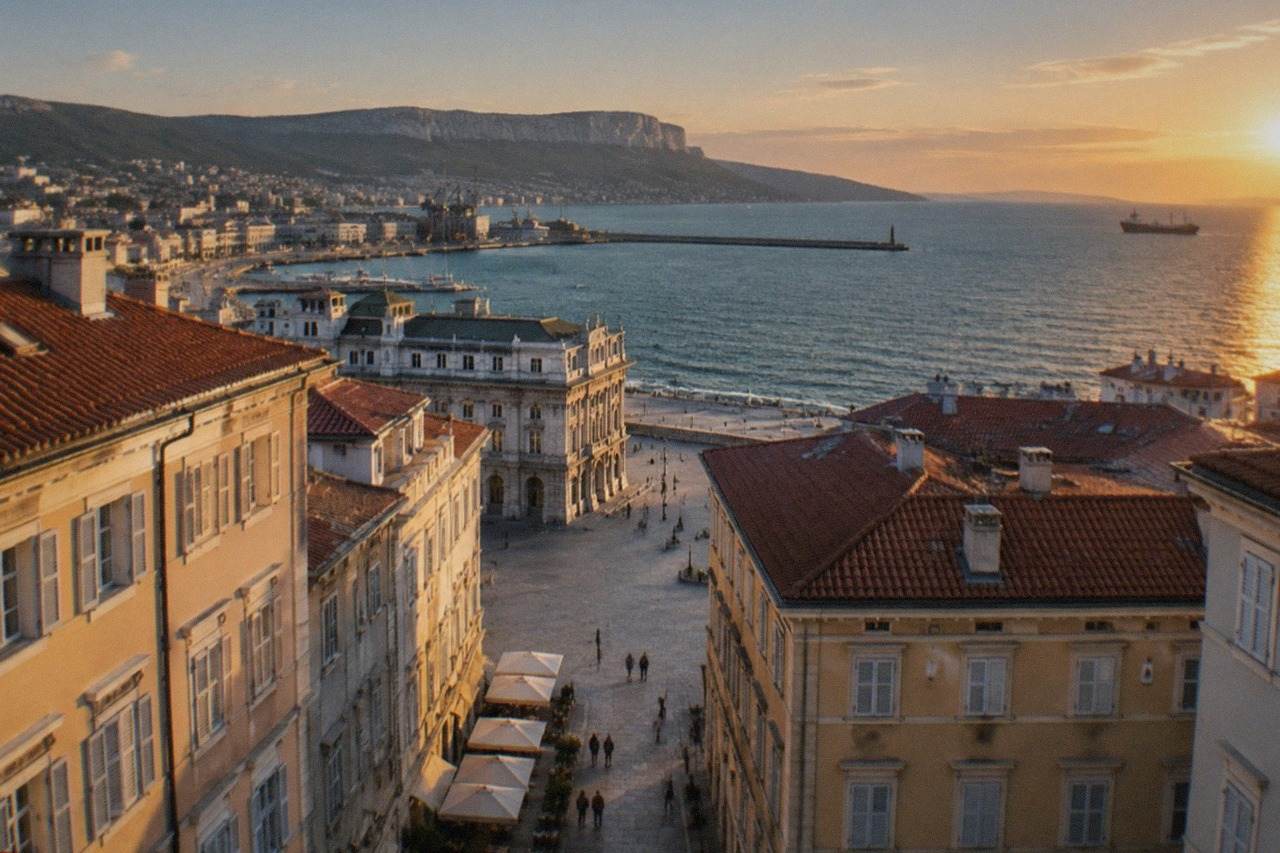
Trieste, the Adriatic port city in Friuli Venezia Giulia in north-east Italy, is compact enough that almost anywhere inside the built-up area puts you within reach of the sea, but the districts differ sharply in character, price and noise. The honest answer for most visitors is the old town, Città Vecchia, or the Habsburg-era grid of Borgo Teresiano immediately behind it: between them they hold Piazza Unità d'Italia, the Canal Grande, the main cafés and most of the sights a first-time visitor comes for. This page compares the realistic options district by district, with the city's own 2026 tourist tax rates so the cost side is not a guess.
Where Is the Best Place to Stay in Trieste?
The best place to stay in Trieste, Italy, for a first visit is Città Vecchia, the old town on and below San Giusto hill, or the streets of Borgo Teresiano immediately around Piazza Unità d'Italia and the Canal Grande. Both put the main squares, the historic cafés and the seafront within a short level walk of your door. Barcola, the seafront suburb along the Gulf, suits a second, longer or quieter stay, and Muggia and Opicina only make sense with a car or a specific reason to be there.
That ranking comes down to how Trieste is built. The city centre is genuinely small: the distance from the railway station to Piazza Unità d'Italia is a flat walk through the Borgo Teresiano grid, and the old town climbs from the water up to the Cathedral of San Giusto, whose entry is free and whose hours the parish publishes as weekdays 8:00-18:30 and Sundays 9:00-19:30. Staying outside that core means depending on buses, and Trieste's hills are not a joke: the Opicina tram exists precisely because the climb to the Karst plateau is steep.
The district choice also decides what your evenings look like. The area around Piazza della Borsa and the Canal Grande keeps the historic cafés and the aperitivo crowd; Città Vecchia is quieter at night but closer to the monuments; Barcola is where the city swims and strolls, with the shoreline promenade, but it is a residential strip, not a dining district. If you are still weighing how long to give the city at all, our piece on how many days in Trieste is enough is the companion question to this one.
Which Trieste District Suits Which Trip?
For a short city break, book Città Vecchia or the Borgo Teresiano grid; for a stay built around swimming and the seafront, book Barcola; for a cheap base with a car, look at the edge of the grid near the station; for a quiet retreat with a vehicle, the Karst villages above the city. Each district trades convenience against price and noise in a different way, and none of them is far from the water.
The comparison below is about character and fit, not invented distances, because the honest planning figure is "a short walk" inside the core and "a bus ride" outside it.
| District | Character | Best for | Watch out for |
|---|---|---|---|
| Città Vecchia | Old town lanes below San Giusto hill, monuments, quieter nights | First visits, sightseeing on foot | Some streets climb steeply |
| Borgo Teresiano | Habsburg grid, cafés, Canal Grande, station on its edge | Cafés, nightlife, arriving by train | Busier and more tourist-facing |
| The Rive seafront | Waterfront promenade from the centre to Barcola | Sea views, walking, a hotel with a view | Thin on hotels, mostly a passage |
| Barcola | Residential seafront strip with the swimming platforms | Longer stays, summer, families | Dining and sights are a bus ride back |
| Opicina / the Karso | Hill villages on the plateau above the city | A quiet base with a car, osmize touring | Steep, spread out, not walkable to the centre |
Two practical notes from the verified facts. First, the free-entry rhythm of the city centre is worth knowing before you pick a bed: Castello di San Giusto charges €7 full / €5 reduced and is free every first Sunday of the month, and Museo Revoltella (€8, closed Tuesdays) runs the same first-Sunday scheme, so a central base lets you use those days without transport. Second, if Miramare Castle is a priority, the castle is €17 for adults, every day 9:00-19:00 with last admission 18:30, while its park is free all year, and the castle sits up the coast at Grignano rather than in any district you would sleep in. The full area-by-area breakdown, including the smaller quarters, is in our guide to where to stay in Trieste.
If you want a second opinion framed the same way, the reader question what part of Trieste to stay in covers the same ground from the angle of a traveller who already has the ticket booked.
What Does Staying in Trieste Actually Cost?
Trieste's 2026 tourist tax runs from EUR 1.50 per person per night at campsites up to EUR 3.80 at five-star hotels, with four-star and self-catering case vacanza at EUR 3.30, three-star at EUR 3.00, two-star, affittacamere, B&B Superior, hostels and short-let properties at EUR 2.30, B&B Comfort at EUR 2.00 and one-star and B&B Standard at EUR 1.80.
It is charged for a maximum of five consecutive nights in the same property, and everyone under 18 is exempt.
That rate table is published by the Comune di Trieste for 2026, and it is the only accommodation cost figure on this page that can be stated with a source. Nightly room rates in Trieste are date-specific and behind booking-site walls, so this site does not quote them: check the live rate for your own dates. What the tax table does tell you, beyond the bill itself, is how the city classifies its accommodation, and the band a property sits in is a fair signal of what you are getting. The rest of the planning pages sit on Trieste Travel Guide.
| Property type (2026 tax band) | Tax per person per night |
|---|---|
| Five-star hotel | EUR 3.80 |
| Four-star hotel / self-catering case vacanza | EUR 3.30 |
| Three-star hotel | EUR 3.00 |
| Two-star, affittacamere, B&B Superior, hostels, agriturismi, short-let properties | EUR 2.30 |
| B&B Comfort | EUR 2.00 |
| One-star, B&B Standard | EUR 1.80 |
| Campsites and motorhome areas | EUR 1.50 |
The exemptions matter to more travellers than you might expect. Beyond everyone under 18, the city waives the tax for people with a certified disability of 80% or more, for one companion per hospital inpatient, for coach drivers and tour leaders accommodated free, and for one group leader per fifteen minors. If your stay qualifies, say so at check-in rather than paying the default.
The cost of the visit itself is easier to plan than the bed. The centre's headline sights are cheap or free: the cathedral is free, the Roman theatre is looked down on from the street at no charge, and Risiera di San Sabba, the national monument at the old rice mill, is free with daily hours of 9:00-19:00 from March to mid-October. Food is the other lever, and our guide to what to eat in Trieste covers the buffet culture that keeps a day's eating well below big-city prices.
Should You Stay in Trieste or Day-Trip from Venice?
Stay in Trieste if the city itself is the point: the cafés, the seafront, the Habsburg centre and the Karst above it all reward evenings and early mornings that a day trip cannot give you. Day-trip from Venice only if your accommodation is already fixed there and your time in the region is a single day, because the two cities are far enough apart that you lose most of a morning and evening to the transfer. Trieste hotel prices also sit below Venice's at every level.
The trade-off is really about pace. Trieste rewards the slow hours: a caffè at a historic bar, the walk along the Rive, the osmize up on the Karst when their frasche branches are hung out. A day-tripper gets the postcard and misses the rhythm. If you are genuinely torn, the head-to-head in is it better to stay in Venice or Trieste works through the whole comparison, and is Trieste in Italy worth visiting covers the case for going at all.
One planning fact that belongs to this decision: Trieste's calendar peaks in October, when the Barcolana regatta fills the gulf. The 2026 edition runs 2-11 October with the main race on Sunday 11 October, and the event record is 2,689 boats, set in 2018. Rooms in the central districts are at their scarcest that week, so book early or avoid it, but the atmosphere on the seafront is the city at its best.
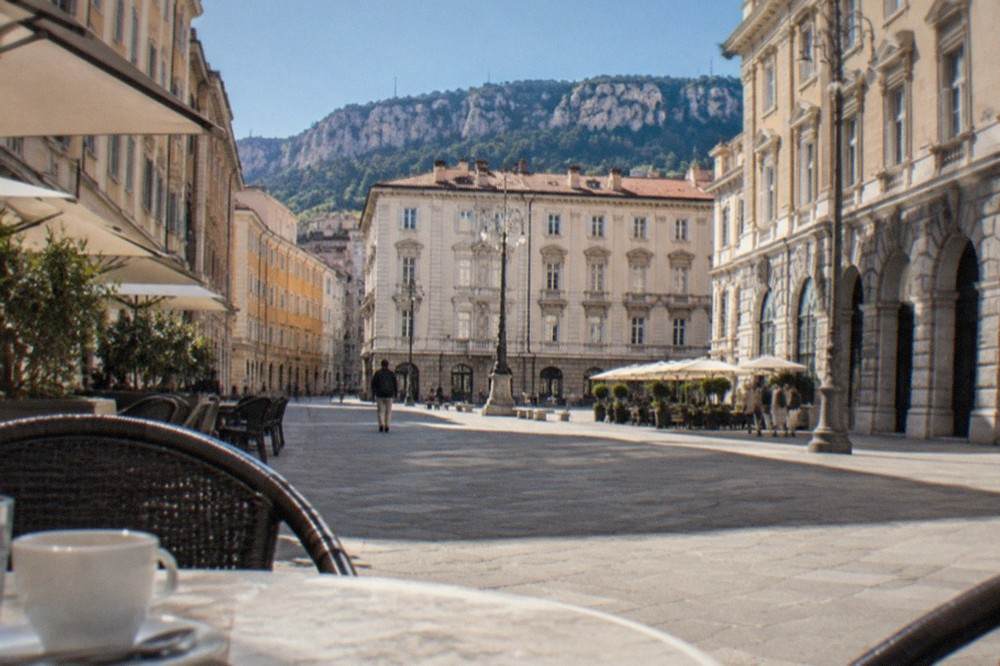
Once you are installed in the centre, the fastest way to learn the city's geography is to walk it with a guide. The Trieste guided tour in the heart of the city runs about two and a half hours among the elegant squares and sea views, from $50.44 per person, with the current rating on the operator's live listing: Check availability
Common Questions About Where to Stay in Trieste
Where is the best place to stay in Trieste?
Città Vecchia and the Borgo Teresiano grid around Piazza Unità d'Italia are the best base for a first visit, because the main squares, cafés and monuments sit within a short walk. Barcola suits a longer, quieter, summer-focused stay, and the Karst villages only work with a car.
What part of Trieste to stay in?
Stay in the part you will use in the evenings: the Borgo Teresiano for cafés and nightlife, Città Vecchia for monuments and quiet, Barcola for the seafront. The grid around the station is the practical budget corner of the centre.
Is Trieste a walkable city for visitors?
The centre is flat, compact and genuinely walkable, from the station through Piazza Unità d'Italia to the old town. The hills start immediately behind and above the city, which is why the Opicina tram and the buses exist.
How much is the tourist tax in Trieste?
For 2026 it runs from EUR 1.50 to EUR 3.80 per person per night depending on the property's category, charged for a maximum of five consecutive nights in the same property, and everyone under 18 is exempt.
Is it better to stay in Venice or Trieste?
Stay in Trieste if the city is your destination: it is cheaper at every level, far less crowded, and its centre rewards evenings. Keep Venice as the base only if your accommodation is already there and Trieste is a one-day add-on.
How many days in Trieste is enough?
Two days cover the centre, the seafront and Miramare comfortably; three let you add the Karst, an osmiza when open, or a cross-border day trip into Slovenia, for which you should carry ID because Italy is running temporary checks on that land border through 18 December 2026.
Whichever district you choose, the pattern holds across all of them: book inside or beside the Borgo Teresiano grid for a first stay, move up to Barcola or the Karst only when the sea or the silence is the reason you came, and check the live room rate for your own dates rather than any figure a guide might quote you, because in Trieste the only printed number you can rely on before arrival is the tourist tax band.