Why Does Italy Control Trieste?
Why the Adriatic port city of Trieste, Italy belongs to Italy and not to Slovenia or Croatia: the Habsburg port, the disputed border years and the Cold War division explained.
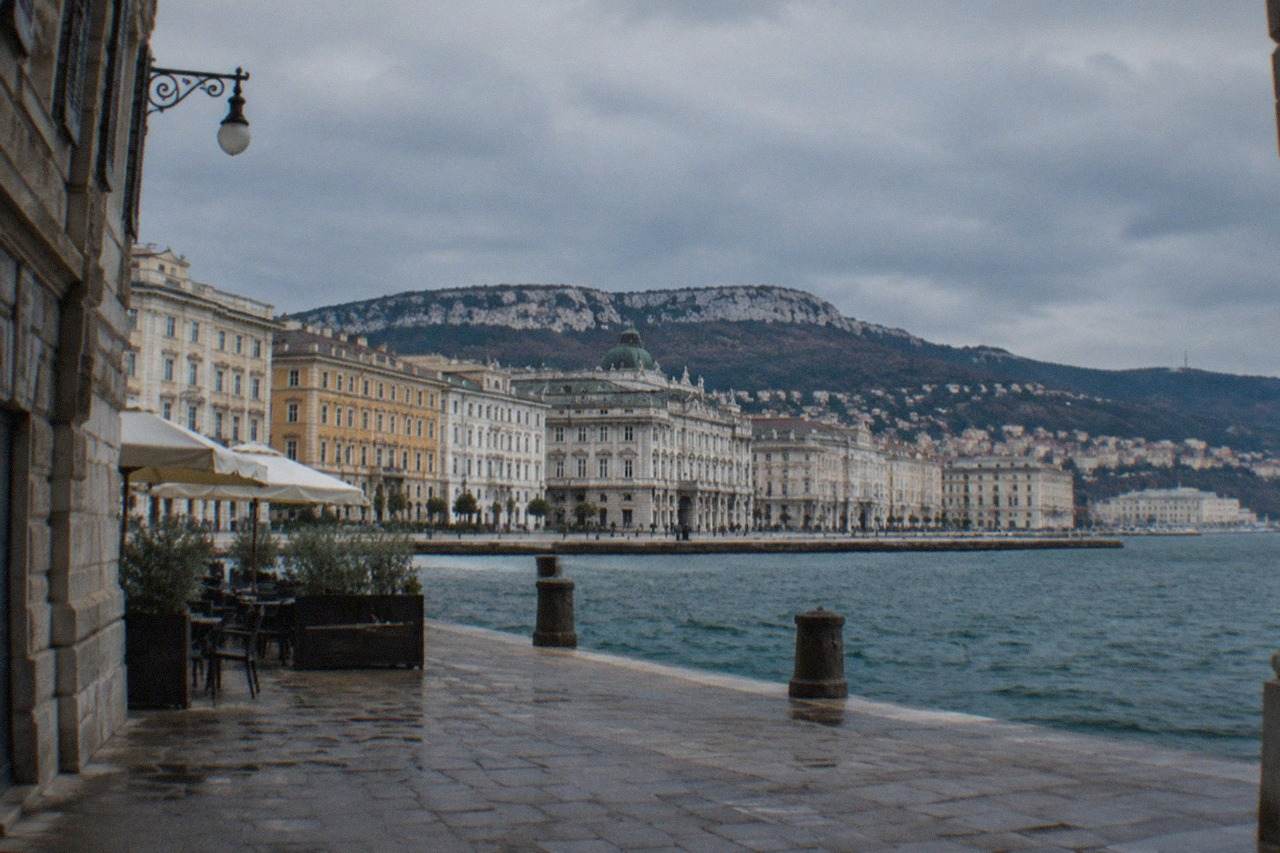
Trieste, the Adriatic port city in the Friuli Venezia Giulia region of northeast Italy, is Italian today for reasons that have very little to do with language, geography or ancient Rome, and everything to do with empires collapsing in the right order. The city was the Habsburg monarchy's outlet to the sea for centuries, a German-speaking administration ruling an Italian-speaking merchant class on the edge of a Slovene and Croat hinterland. When that empire fell apart, Trieste's fate became one of the most contested questions in Europe, argued over at peace conferences, fought over by partisans, and finally split down the middle by an Iron Curtain that ran a few kilometres from Piazza Unità d'Italia. The short version of the answer is below, and the longer version is the rest of this page.
Why Does Italy Control Trieste?
Italy controls Trieste because the city's Italian-speaking merchant and political class pushed for annexation when the Habsburg empire collapsed after the First World War, and the postwar peace settlement drew the new Italian border to include it. The Second World War then reopened the question, and for several years Trieste and its surroundings were governed as a separate territory under Allied administration before the city was returned to Italy and the wider region was assigned to Yugoslavia, a division confirmed by treaty during the Cold War.
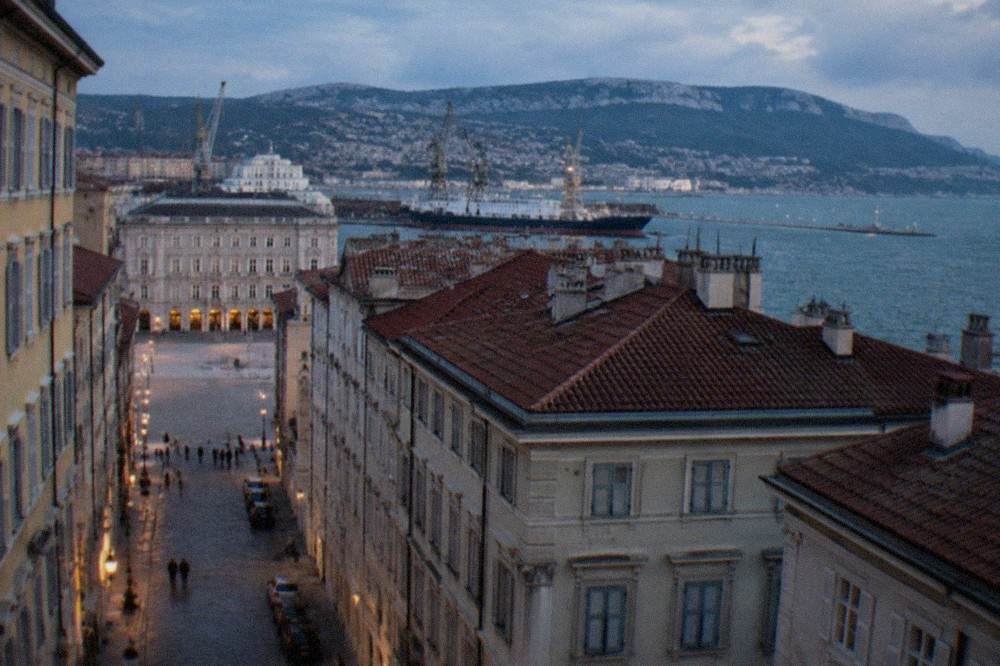
That is the skeleton. The muscle is in the details, because every one of those steps was contested, and the city's streetscapes still show the argument. Trieste's grand neoclassical core, the Borgo Teresiano, was built by the Habsburgs as a free port, and it looks like Vienna dropped on the Adriatic precisely because that is what it was. The Italian state that took the city over inherited an imperial capital, not an Italian provincial town, which is why the place still feels different from almost anywhere else in the country. If you want to see the layered result with someone who can point at each layer, what is special about Trieste, Italy covers the strange mix in more detail, and the tours below are a good way to walk it.
Whichever of those you pick, the guide matters more here than in most cities, because the story of Trieste is a story of borders and the buildings wear the evidence of every change of flag.
Who Ruled Trieste Before Italy?
Before Italy, Trieste was ruled by the Habsburg monarchy, which turned a modest medieval town into one of the busiest ports in the Mediterranean. The city kept its own municipal identity and a large Italian-speaking commercial class, but its government, its defenses and its enormous trade were imperial, and Slovene and Croat speakers filled the countryside and the growing industrial suburbs around the Italian centre.
The Habsburg decision that mattered most was making Trieste a free port, which flooded the city with merchants from across the Mediterranean and Central Europe. Greeks, Serbs, Jews, Armenians, Swiss and Germans all settled here, and the city's religious architecture still records it: the Serbian Orthodox church of Saint Spyridon, the synagogue that was one of the largest in Europe, and the Greek community's presence in the old town all date from this commercial boom. Coffee arrived as a trading commodity through this port, which is why Trieste, Italy became a roasting city and why its caffè culture is Central European in feel, an espresso standing at a marble counter under a Habsburg ceiling. The empire's presence is also why the countryside behind the city, the Carso plateau, is dotted with Slovene villages and why the wine tradition there is Slovene in its names and methods. A private guide can walk you through which square belonged to which community, and the related tour below is built exactly around that kind of storytelling.
How Did Trieste Become Italian?
Trieste became Italian when the Habsburg empire was dissolved at the end of the First World War and the victorious powers redrew the map of the northern Adriatic. Italy had entered the war on the Allied side with territorial promises that included the port, and although the city's own Italian majority made the annexation less violent than elsewhere, the new border still cut through Slovene and Croat communities that had looked to Trieste as their regional capital.
The peace settlement handed Italy not just Trieste but the whole Istrian peninsula and a long stretch of what is now Slovenian and Croatian coast, a region Italians knew as Venezia Giulia. Under Italian rule the Slavic-speaking population of the hinterland faced forced Italianisation, and the tensions of those decades are still part of local memory on both sides of the modern border. The Second World War then destroyed the arrangement entirely: German occupation, partisan war in the Carso, and finally the Yugoslav army reaching the outskirts of the city before the Allies arrived. That race for Trieste produced the Cold War's strangest little territory, and it is the direct reason the border sits where it does today. The New Zealand and other Allied units that took the western part of the city at the end of the war held it as an occupied zone, and for nearly a decade the question "whose city is this?" had no answer in law. More of these guides are collected on Trieste Travel Guide.
| Era | Who governed Trieste, Italy | What changed for the city |
|---|---|---|
| Habsburg centuries | The Habsburg monarchy, as a free port | Boom in trade, immigration and grand construction; Italian-speaking elite under imperial rule |
| After the First World War | The Kingdom of Italy | Annexation with the wider Venezia Giulia region; Italianisation pressure on Slovene and Croat communities |
| After the Second World War | Allied military administration, city and environs | Yugoslav forces held the surrounding area; the city itself stayed under Allied control |
| Free Territory period | A neutral administration under UN Security Council oversight | Trieste and its port were governed separately from both Italy and Yugoslavia while the powers argued |
| Cold War settlement | Italy for the city, Yugoslavia for the hinterland | The border was confirmed by treaty, splitting families and villages but ending the dispute |
The table above compresses decades into five lines, and the two lines at the bottom are the ones visitors most often get wrong. Trieste was not simply "given back" to Italy: for years after the war it was not legally part of any state, and the Yugoslav zone next door was a separate administration with its own currency rules and border posts. That limbo is why older residents of the city still describe a childhood of checkpoints a short tram ride from home. If you would rather have all of this explained standing in the square where it happened, the box below links to the operator's live listing.
Was Trieste Ever Going to Be Yugoslav?
Yes, seriously, and for several years the outcome hung in the balance. The Free Territory of Trieste was created by the peace treaty with Italy as an independent statelet under international supervision, with a governor to be appointed by the United Nations Security Council, and it was divided into two zones: the city under Anglo-American administration and the surrounding territory under Yugoslav military administration. The governor was never appointed, the statelet never functioned, and the two occupying powers eventually agreed to dissolve it.
The deal that ended the limbo gave the city and its immediate hinterland to Italy, and the rest of the zone to Yugoslavia, with the final confirmation coming in a bilateral treaty signed by Italy and Yugoslavia during the Cold War. Italy got the port, the historic centre and the Carso villages closest to the city; Yugoslavia got the coast to the south and the plateau's eastern side. Families who had farmed one side of a hill and sold wine in the other's market suddenly needed papers. That division held until Yugoslavia itself dissolved, and Slovenia's independence in the 1990s turned the Yugoslav border into a Slovenian one, which is the border you cross today if you take a day trip from Trieste to Piran or Ljubljana. The question of identity that the division left behind is not a museum piece, it is a live argument, and is Trieste more Italian or Slovenian takes it on directly.
Why Does the Border with Slovenia Matter So Much?
The border matters because it is the exact line where the Cold War settlement put Italy, and because it is now an external border of both the European Union and the euro area. Slovenia has been in the euro area since 1 January 2007 and in Schengen since December 2007, Croatia joined both the euro and Schengen on the same day, 1 January 2023, and Italy is running temporary internal checks on its land border with Slovenia from 19 June 2026 to 18 December 2026.
In plain terms: all three countries, Italy, Slovenia and Croatia, use the euro, so nobody needs to change money on a Trieste day trip, but the Schengen free-movement ideal is currently paused on the Italy-Slovenia land border, and the European Commission's own register of temporary controls is the document that says so. Carry a passport or national ID card if you are crossing, because the checks are real while they last, and treat them as dated and temporary rather than permanent. The border's history also explains its present shape: because the line was drawn to split a contested zone rather than to follow any natural feature, it runs improbably close to the city, and the tram to Opicina, reactivated on 1 February 2025 from its piazza Dalmazia terminus, climbs into villages where the border was once a daily obstacle.
| Border fact | Status | Source basis |
|---|---|---|
| Slovenia and the euro | In the euro area since 1 January 2007 | European Commission |
| Slovenia and Schengen | Full member since December 2007 | European Commission |
| Croatia, euro and Schengen | Joined both on the same day, 1 January 2023 | European Commission |
| Italy-Slovenia land border, 2026 | Temporary internal checks from 19 June 2026 to 18 December 2026 | European Commission's register of reintroduced controls |
| Currency needed for Trieste, Piran or Rovinj | The euro in all three | All three countries are euro members |
Is Trieste Securely Italian Today?
Yes, and the dispute is closed in law: the treaty settlement was confirmed again between Italy and Slovenia after Slovenian independence, and no state claims Trieste today. What remains contested is cultural rather than territorial, a question of memory, language and identity, with a bilingual Slovene-Italian reality written into street signs, schools and place names across the province rather than any live border claim.
That is why the honest answer to "why does Italy control Trieste?" ends not with a conquest but with a treaty and a long, slow normalisation. The city's Italian institutions, its universities, its coffee houses and its Habsburg palaces now sit inside a European border region where the frontier is a formality crossed by commuter buses and kayak tours along the coast. The economic story reversed too: the port that the Habsburgs built and Italy inherited spent decades as a Cold War dead end, with the border a few kilometres away, and only became a genuine cross-border hub again after Slovenia and Croatia joined the Union. Visitors feel this as openness, but residents feel it as the end of a long argument. For what that history left to actually see and taste, why is Trieste famous is the natural next page, and the walks below are the practical way to put the story under your feet.
A private walk, a panoramic castle tour or a food tour will each surface a different layer of the same border story, and all three can be booked through the operator's live listing with free cancellation.
Common Questions About Why Italy Controls Trieste
Why does Italy control Trieste?
Because the Italian-speaking city was annexed by Italy when the Habsburg empire fell after the First World War, survived a postwar period as an internationally governed free territory, and was formally assigned to Italy by the Cold War settlement while the surrounding hinterland went to Yugoslavia.
Was Trieste ever part of Yugoslavia?
The city itself, no. Yugoslav forces reached the outskirts at the end of the Second World War and administered the surrounding zone for years, but the historic centre stayed under Anglo-American administration and was returned to Italy. Villages just outside the city did end up on the Yugoslav side and are in Slovenia today.
Is Trieste Italian or Slovenian?
Trieste is Italian, in Italy, and has an Italian-speaking majority with a long Slovene minority presence and bilingual signage across the province. The city's culture is its own mix, Habsburg, Mediterranean and Mitteleuropean, which is why it does not feel like a typical Italian city.
Do you need a passport to visit Slovenia from Trieste?
Yes, carry one. Slovenia is in Schengen and the euro area, but Italy is running temporary internal border checks on the land border with Slovenia from 19 June 2026 to 18 December 2026, so controls can appear at the crossing even though no visa or currency change is involved.
Why is Trieste so different from the rest of Italy?
Because it spent centuries as the Habsburg empire's main port rather than as an Italian city, and its architecture, coffee houses, cuisine and mixed population were shaped by that imperial, Central European role. The what is Trieste famous for page unpacks the details.
Could Trieste have become an independent country?
For several years it legally was one on paper. The Free Territory of Trieste was created by the postwar peace treaty as a neutral statelet under United Nations oversight, but its governor was never appointed and it never functioned as a real state before being divided between Italy and Yugoslavia.
If the history has sold you on the city itself, how many days in Trieste is enough and is Trieste in Italy worth visiting are the practical follow-ups, and a private walking tour of the Habsburg squares with a local guide, bookable through the operator's live listing, is the fastest way to turn this border history into a route you can actually walk.