Trieste in Winter: What to Expect, Do and Pack in Trieste, Italy
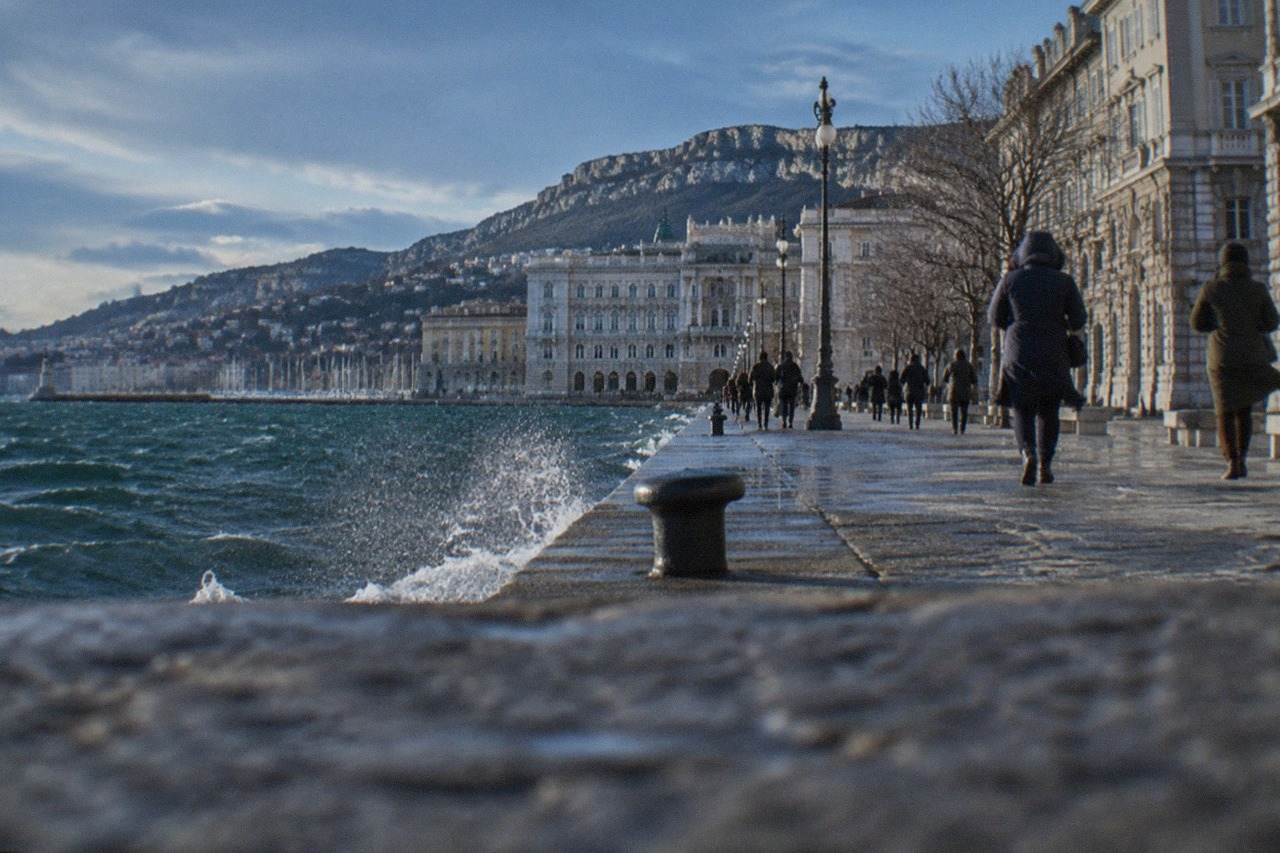
Winter in Trieste, Italy is a season of short days, sharp light and the bora wind, with most museums and both castles open on reduced cold-season hours and the seafront at its most dramatic.
Short answer
Winter in Trieste, Italy means mean temperatures of 8.5 C in December, 7.1 C in January and 7.4 C in February, rain on roughly 6.6 to 7.7 days a month, and the bora wind at its most frequent. Castles and museums stay open on reduced hours, the Opicina tram runs, and the city is at its quietest from January to early March.
Trieste, the Adriatic port city in Friuli Venezia Giulia in the far northeast of Italy, is a winter destination in a way most Italian seaside cities are not. The season here is not a shutdown: the castles keep their cold-season hours, the museums keep their doors open, the coffee houses exist precisely for cold afternoons, and the bora wind, the city's defining weather event, is at its most frequent between November and March. This itinerary, part of the wider coverage on Trieste Travel Guide, lays out what ARPA FVG's own station tables say a Trieste winter actually is, what stays open, how to get around on the urban network's 2026 fares, and how to spend three short days well.
What Is Winter Weather Actually Like in Trieste, Italy?
Winter in Trieste is mild on the thermometer and violent on the wind gauge: ARPA FVG's station tables for the molo Fratelli Bandiera give December a mean of 8.5 C, January 7.1 C and February 7.4 C, with mean highs near 10 C. Rain is moderate, 77.4 mm in December, 52.8 mm in January and 59.7 mm in February, on 6.6 to 7.7 wet days. The monthly record gust exceeds 110 km/h in every single month of the year.
Those figures come from the agency's own 1995-2024 series, not from a climate stereotype, and they overturn two common assumptions. The first is that an Adriatic city is rainy all winter: the wettest month in Trieste is actually November at 109.8 mm, and September is second at 102.3 mm, while the deep-winter months are drier than either. The second is that the bora is a summer squall: it is a cool-season wind, most frequent and persistent from November to March and peaking in February, which is also the month holding the all-time peak gust in the series, 168.1 km/h, recorded in February 2012.
Daylight is the real constraint. The station tables put December at 8.72 hours of daylight and January at 9.06, against 15.68 in June. Plan the outdoor sightseeing for the middle of the day and give the late afternoon to a caffè, a museum or a covered market, and the short days stop feeling like a loss.
| Month | Mean high C | Mean C | Mean low C | Rain mm | Wet days | Sea C | Days gust over 90 km/h | Daylight hours |
|---|---|---|---|---|---|---|---|---|
| December | 10.7 | 8.5 | 6.4 | 77.4 | 7.7 | 13.6 | 2.3 | 8.72 |
| January | 9.2 | 7.1 | 5.0 | 52.8 | 6.6 | 11.6 | 2.4 | 9.06 |
| February | 9.8 | 7.4 | 5.2 | 59.7 | 6.6 | 10.5 | 2.9 | 10.35 |
The sea column is worth reading twice. February's mean sea temperature of 10.5 C is the annual minimum, and the sea stays cold through spring, which is why the winter itinerary below keeps swimming off the plan entirely and points swimmers instead at the Barcola seafront pages for the warm months.
What Should You Actually Do in Trieste in Winter?
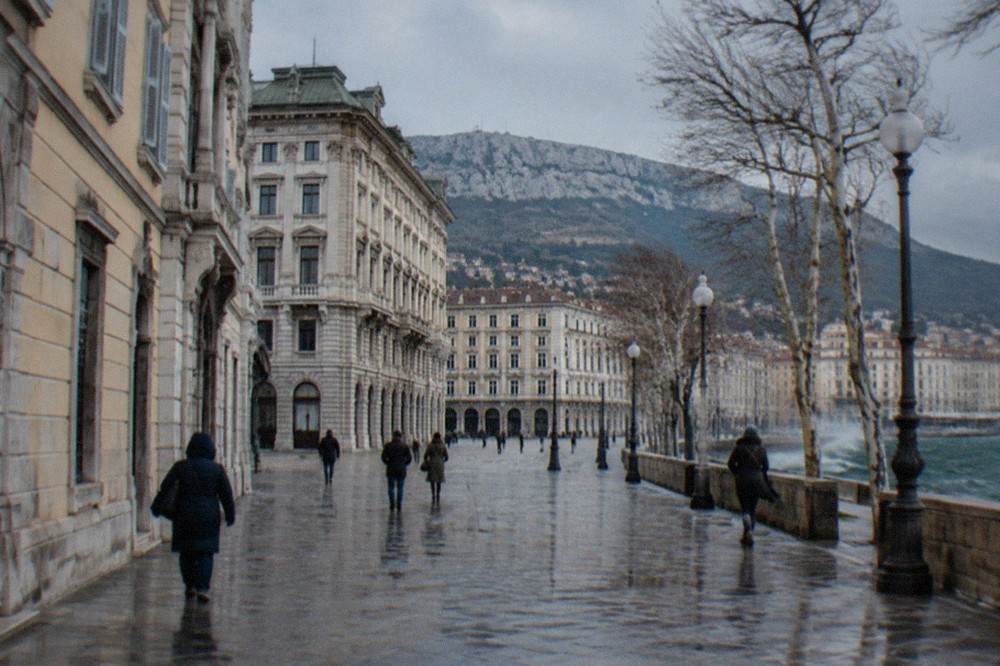
The winter answer is the indoor-and-elegant one: the historic cafés, the covered city museums, the Habsburg architecture that made Trieste the Austrian Littoral's capital, and the seafront for short, sharp walks between them. The Piazza Unità d'Italia and the Città Vecchia are at their emptiest in January and February, and the light off the gulf on a clear cold day is the reason photographers come in winter rather than July.
The city's core is compact enough that a cold-day plan works in blocks of one or two hours outdoors followed by an hour somewhere warm. Start on the Piazza Unità d'Italia, walk into the Città Vecchia below the hill, then climb to the castle hill while the light still holds. The self-guided walking tour route works in winter exactly as written, just front-loaded into the daylight hours.
The Habsburg layer is the one winter suits best, and a guide makes it legible. The private Habsburg history walking tour runs 2h 30m, is rated 4.86 from 21 reviews on the operator's live listing, and starts from $143.30 per person; it is the fastest way to understand why a Mediterranean port has Vienna's face. Check availability
If the bora is blowing, swap the long walk for something sheltered and guided. The "City that will definitely surprise you" walk runs 2h 30m through the city centre and ends with coffee in a historic bar, from $68.79 per person and rated 4.97 from 106 reviews, which makes it a reasonable bora-day substitute for an open-air route.
Which Castles and Museums Stay Open in Trieste in Winter?
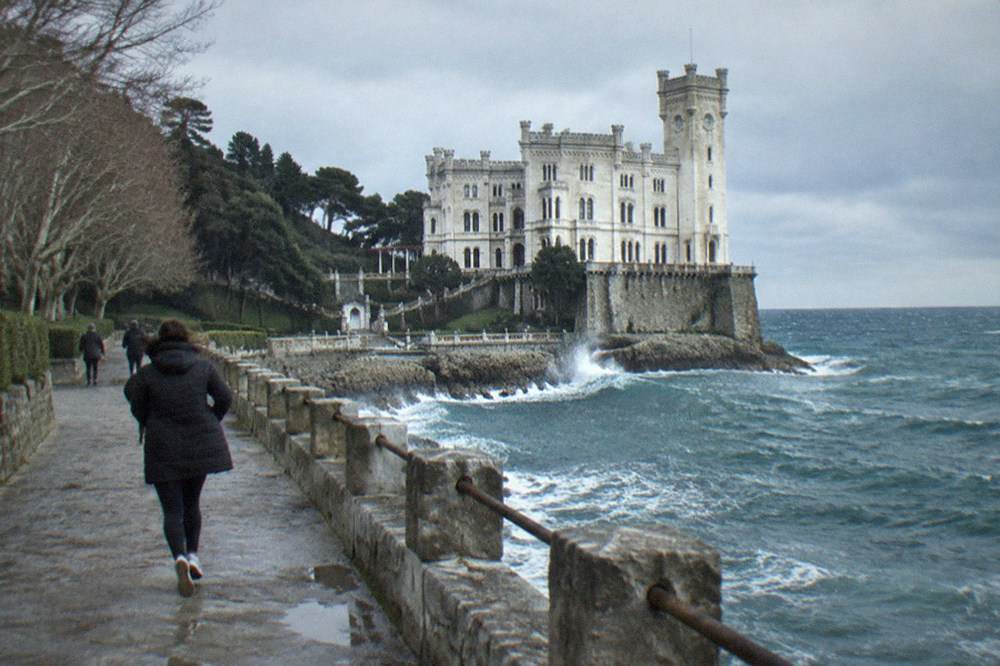
All the major ones stay open, on cold-season hours: Miramare Castle opens every day 9:00-19:00 at EUR 17.00 with its park free year-round, San Giusto Castle runs Tuesday to Sunday 10:00-17:00 from 12 October at EUR 7.00, Museo Revoltella opens daily 10:00-19:00 except Tuesdays at EUR 8.00, and the Risiera di San Sabba is free daily 9:00-17:00. Only the day-of-week closures catch visitors out: Monday for San Giusto, Tuesday for Revoltella.
The full price and hours picture, from each venue's own published pages:
| Venue | Winter admission | Winter hours | Closed |
|---|---|---|---|
| Castello di Miramare | EUR 17.00 adult, EUR 7.00 reduced EU 18-25 with exhibition, EUR 2.00 castle only | Daily 9:00-19:00, last admission 18:30 | No weekly closing day stated |
| Miramare Park | Free | November and December 8:00-16:00, January 8:00-16:00 | Open daily |
| Castello di San Giusto | EUR 7.00 adult, EUR 5.00 reduced, EUR 1.00 school and university groups | From 12 October: Tuesday-Sunday 10:00-17:00, last entry 16:30 | Mondays |
| Cattedrale di San Giusto | Free | Weekdays 8:00-18:30, Sundays and holidays 9:00-19:30 | Bell tower open by arrangement in winter |
| Museo Revoltella | EUR 8.00 adult, EUR 6.00 reduced | Daily 10:00-19:00, last entry 18:00 | Tuesdays |
| Risiera di San Sabba | Free | From 12 October: daily 9:00-17:00, last entry 16:30 | 25 December and 1 January |
| Grotta Gigante | EUR 15.00 adult, EUR 12.00 reduced, EUR 8.00 children 6-18 | September to February: Tuesday to Sunday, guided tours only | Mondays, 25 December, 1 January |
Three details in that table decide most winter itineraries. First, the free days: San Giusto Castle and Revoltella are free on the first Sunday of the month, and San Giusto is also free on 3 November, the patron saint's day. Second, the two San Giusto Castle and hill closures never coincide, so one of the hill's two headline sights is always open. Third, Grotta Gigante is guided-only with compulsory booking even in winter, and its family rate drops to EUR 6.00 per child for parties with two or more children aged 6-18.
Miramare deserves a half-day of any winter visit. The castle is up the coast at Grignano, and the Miramare Castle guide covers the apartments of Archduke Maximilian and Charlotte in detail. The combined entry-and-exhibition ticket, which includes the temporary exhibition, is priced in EUR at EUR 20.50 on the operator's live listing and rated 4.4 from 146 reviews.
That ticket is also the one to check against the ministry's first-Sunday scheme before you buy, since free castle days and paid exhibition tickets interact differently month to month. The venue's own event page is the place to confirm any specific date.
Is the Opicina Tram Running in Winter, and How Do You Get Around Trieste?
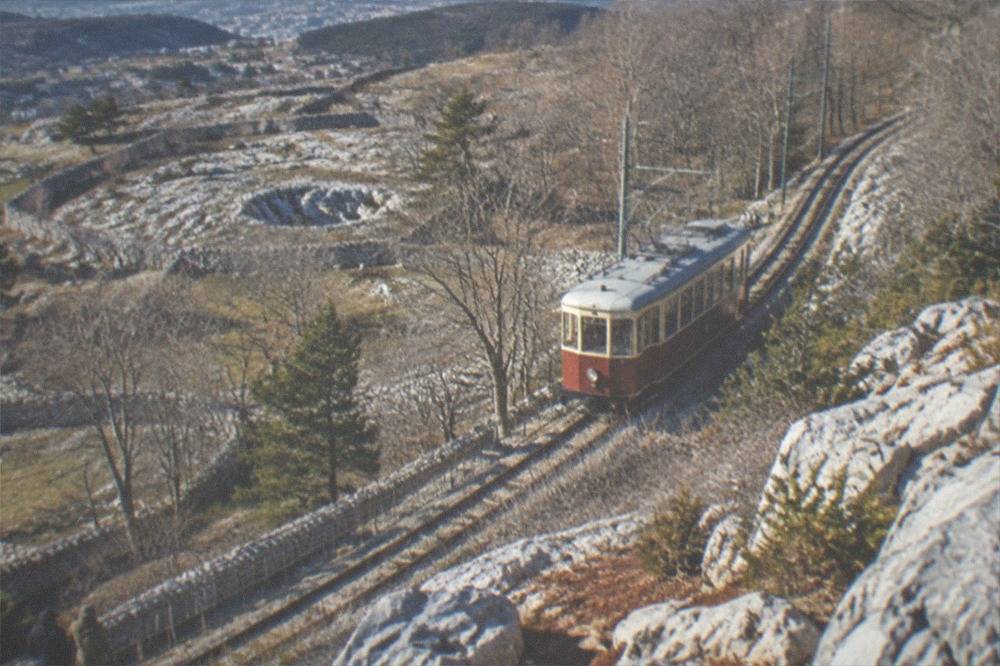
Yes: the Opicina tram, urban line 2, was reactivated on 1 February 2025 after its long stop, and Trieste Trasporti's line-2 page carries a current timetable dated 20 July 2026. It runs from piazza Dalmazia, not piazza Oberdan, over about 5.175 km to Opicina, and a standard urban ticket covers it. The 2026 urban fares are EUR 1.50 for a 60-minute single, EUR 3.35 for a day ticket and EUR 13.50 for ten rides.
The terminus detail matters because almost every older guide in print and online still sends readers to piazza Oberdan. The published route is piazza Dalmazia, then piazza Casali, Sant'Anastasio, via Romagna, Vetta Scorcola, Cologna, Conconello, Obelisco and Opicina. For the live status on any given winter day, check the operator's own site rather than a guide, including this one, because maintenance notices change week to week.
The full 2026 urban tariff sheet, dated 29 December 2025:
| Code | Ticket | Price | Validity |
|---|---|---|---|
| U01 | Urban single | EUR 1.50 | 60 minutes |
| U02 | Urban single | EUR 1.85 | 75 minutes |
| U24 | Day ticket | EUR 3.35 | Full day |
| U10 | 10 rides | EUR 13.50 | Carnet |
| U20 | 20 rides | EUR 16.65 | Carnet |
Two winter-specific notes from the same tariff sheet. Singles are extended to 240 minutes on Sundays and public holidays, which covers most of a slow sightseeing day on one ticket. And contactless bank cards, Mastercard, Visa and American Express, plus digital wallets, can be tapped on board the "Eva" readers, with the system applying the cheapest applicable fare, so there is no need to find a ticket machine in the cold.
The bus network covers everything the tram does not, and the one-day itinerary works as the compressed version of the three-day plan below.
Where Do You Eat and Drink in Trieste in Winter?
Winter is the season Trieste's café culture was built for: the historic coffee houses, the buffet counters serving jota and goulash, and the osmize of the Carso, farmhouse wine outlets that open in limited periods and hang a frasca, a leafy branch, at the turning when they are open. The guided foodie walking tour, 3 hours from $71.08 per person and rated 4.91 from 264 reviews, is the structured way in, and the Historic Cafés Experience, 3 hours from $74.52, is the coffee-specific one.
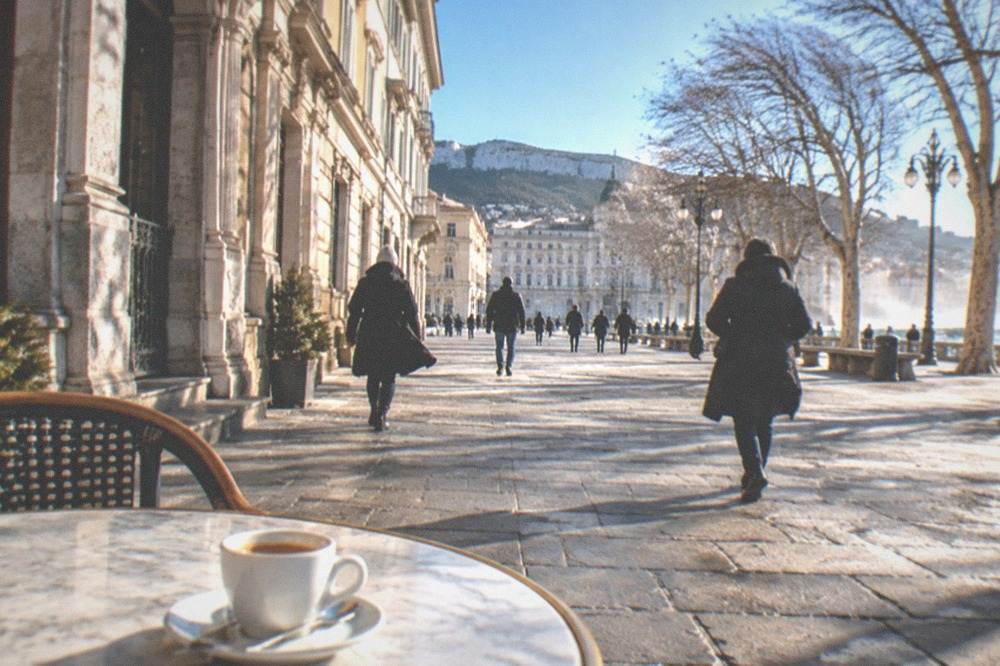
Trieste's coffee culture is real and deep, and this site deliberately does not attach a consumption figure to it, because no primary source for the widely repeated kilograms-per-head claim exists. What the pack does support is what you can verify on the ground: a historic roasting industry headquartered in the city, coffee houses that have served for generations, and a café scene built for long sittings. The Trieste coffee culture guide covers the institutions; the what to eat guide covers the food side, including the jota, the sauerkraut-and-bean soup that is exactly the right thing in a February wind.
The osmize are the winter wildcard. They are farms on the Carso plateau selling their own wine and home produce direct from the property for limited periods, signalled by the frasca, and the long-established calendar of which osmiza is open on which day lives at osmize.com. The custom is observable and real; the legal history behind it is not verified against a primary source, so check the calendar rather than any stated rule about how many days a year they may open.
What Should You Pack for the Trieste Bora?
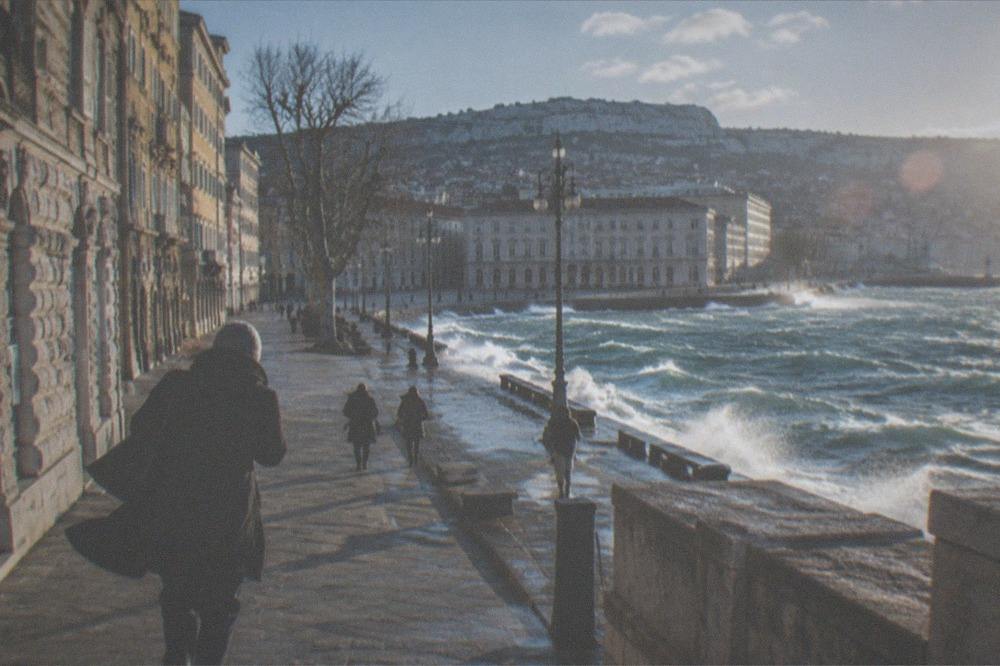
Pack for wind before you pack for cold: layers you can seal at the cuffs and collar, a genuinely windproof outer layer, and nothing with an umbrella in it, because the bora blows from the east-north-east and averages 17.6 days a year with a gust over 90 km/h, with February the windiest month at 2.9 such days. The air temperatures alone, means of 7.1 to 8.5 C across the deep-winter months, are mild; the wind chill is not.
No official wind threshold exists at which the Rive seafront is closed, ferries stop or events are cancelled, and this site will not invent one. What the station tables do give is the frequency structure: 49.0 days a year with a gust over 72 km/h, gusts over 90 km/h in every month, and a monthly record above 110 km/h in all twelve. Practically, that means a bora day is possible on any winter visit, and the plan should be flexible rather than fearful.
| Condition | What the tables show | What to do about it |
|---|---|---|
| Bora day, gusts over 90 km/h | 2.3-2.9 days per winter month on average | Swap seafront walks for museums, cafés and a guided indoor-centred tour |
| Rain | 52.8-77.4 mm per winter month, 6.6-7.7 wet days | A compact umbrella works in the city centre, less so on the open Rive |
| Short daylight | 8.72-10.35 hours in December-February | Front-load outdoor sights, keep late afternoon indoors |
| Cold sea | 10.5-13.6 C mean sea temperature | No swimming; the seafront walk is the point instead |
| Border trip to Slovenia | Temporary Italian checks through 18 December 2026 | Carry a passport or national ID card |
The bora also has an upside worth planning around: it scours the sky. The days after a strong bora are typically the clearest and sharpest of the Trieste winter, which is exactly when you want to be on the castle hill or at the Victory Lighthouse viewpoint rather than in a museum. Treat the wind forecast as your itinerary scheduler.
How Do You Spend Three Winter Days in Trieste?
A three-day winter plan runs one day for the Habsburg centre, one for the castle hill and the museums, and one for the Carso or Miramare, with every outdoor block placed between late morning and mid afternoon to catch the 8.72 to 10.35 hours of December-to-February daylight. The city centre is compact, the day ticket at EUR 3.35 covers the buses and the tram, and the two museum closing days, Monday at San Giusto and Tuesday at Revoltella, are the only real scheduling traps.
The day-by-day shape, with the verified winter hours built in:
| Day | Morning | Midday | Afternoon and evening |
|---|---|---|---|
| Day 1 | Piazza Unità d'Italia and the Grand Canal, daylight front-loaded | Città Vecchia lanes and lunch at a buffet counter | Habsburg walking tour or the seafront, then a historic caffè |
| Day 2 | San Giusto Castle from 10:00, avoiding Monday | Cathedral, free entry, and the hill views | Museo Revoltella until 18:00, avoiding Tuesday, or the Risiera di San Sabba |
| Day 3 | Opicina tram from piazza Dalmazia to the Obelisk and back | Miramare Castle, daily 9:00-19:00, park free until 16:00 | Carso osmiza if the calendar shows one open, or the rainy-day list if the bora arrives |
Day one is the walkable core. The two-day and three-day itinerary pages carry the full detail in season-neutral form; the winter adjustment is purely about the clock, starting outdoors by 10:00 and being somewhere warm by 16:00.
Day two is the hill. The Trieste Cathedral is free, its bell tower runs by arrangement in winter, and the castle ticket at EUR 7.00 covers the walls, the Civico Museo del Castello-Armeria, the Lapidario Tergestino and temporary exhibitions. The Roman theatre is on the way down, looked at from the street rather than entered.
Day three is the choice day. The tram up the karst, Miramare up the coast, or, if the border checks and the calendar both allow, a hop into Slovenia: the Ljubljana day trip page covers the cross-border logistics, including the ID requirement while Italy's temporary checks on the Slovenian land border run through 18 December 2026. The wider set of options is covered in the day trips overview.
Is Winter a Good Time to Visit Trieste, or Should You Wait?
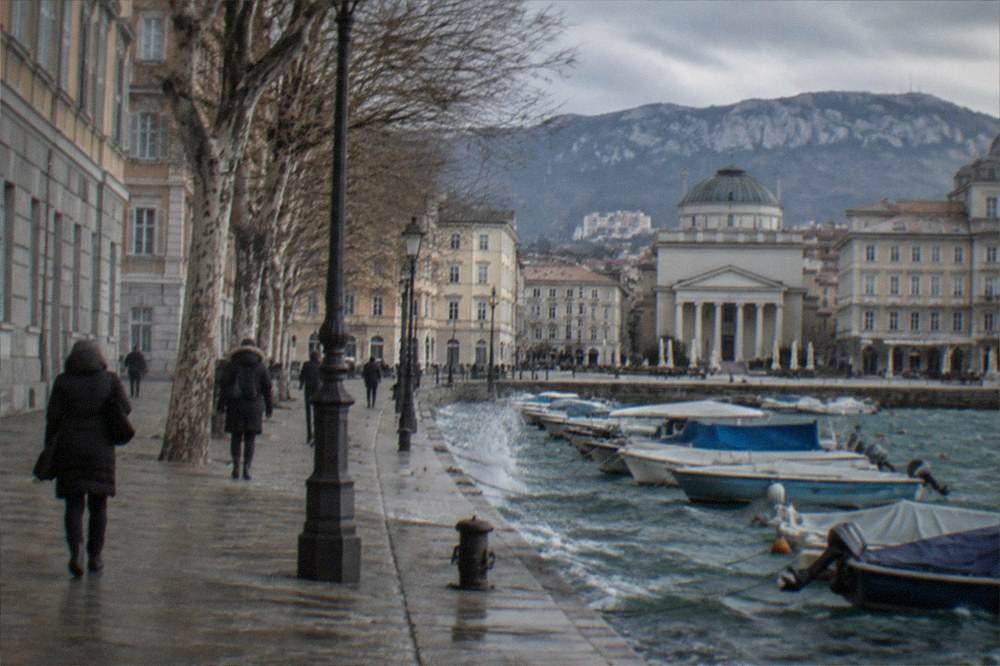
Winter is a good time to visit Trieste if you want the city rather than the beach: the sights are open, the crowds are at their annual minimum, the café culture is at its most purposeful, and the weather is mild by northern-European standards with a mean of 7.1 to 8.5 C. It is the wrong time if you want to swim, long evenings or a calm seafront, because the sea sits at 10.5 to 13.6 C and the bora is at its most frequent.
The honest trade-off is that. What you give up is the Barcola swimming season and the long dusk on the Rive; what you gain is a city that feels like itself, Habsburg, caffeinated, wind-scoured, rather than a resort. The best time to visit guide works through all twelve months if you have flexibility; the weather month-by-month guide carries the full station table behind the three-month extract above.
For a shorter trip, the weekend-in-Trieste plan compresses days one and two of the itinerary above, and the free-day plan does the same for a zero-spend visit, since the cathedral, the Risiera, the Miramare park and the first-Sunday museum entries are all free.
If a guided structure helps in the cold months, these are the three products this site rates for a winter visit:
Common Questions About Trieste in Winter
Is Trieste cold in winter?
By the ARPA station tables, no, not by northern standards: mean temperatures run 8.5 C in December, 7.1 C in January and 7.4 C in February, with mean highs near 10 C. The bora wind, not the temperature, is what makes it feel cold; on a still day a January afternoon in Trieste is milder than one in Milan.
Does it rain a lot in Trieste in winter?
Less than in autumn. November is the wettest month at 109.8 mm and September is second at 102.3 mm, while December carries 77.4 mm, January 52.8 mm and February 59.7 mm, on 6.6 to 7.7 wet days each. The rainy season in Trieste is an autumn phenomenon, not a winter one.
What is the bora wind in Trieste?
The bora is a dry, cold katabatic wind blowing from the east-north-east down off the Carso plateau, at its most frequent from November to March and peaking in February. ARPA's series shows gusts over 90 km/h on 17.6 days a year on average, with the all-time peak of 168.1 km/h recorded in February 2012. There is no official threshold at which the city closes anything; on a strong bora day you simply plan indoors.
Is Miramare Castle open in winter?
Yes, every day, 9:00-19:00 with last admission at 18:30, at EUR 17.00 for an adult including the temporary exhibition. The park is free all year and keeps shorter winter hours, 8:00-16:00 in November, December and January. Miramare also takes part in the ministry's first-Sunday free-entry scheme; confirm the specific date on the venue's own page.
Can you swim in Trieste in winter?
Not comfortably. The mean sea temperature is 13.6 C in December, 11.6 C in January and 10.5 C in February, the annual minimum, from ARPA's oceanographic series. The swimming season, covered in the beaches and swimming guides, is a June-to-September story.
Is the Opicina tram running in winter 2026?
Yes. The tram, urban line 2, was reactivated on 1 February 2025 and Trieste Trasporti's current timetable is dated 20 July 2026. It departs from piazza Dalmazia, not piazza Oberdan, and a standard urban ticket, EUR 1.50 for a single or EUR 3.35 for a day ticket, covers it. Check the operator's site for live status on the day.
Trieste in winter is a city that does not pause: the castles keep their cold-season hours, the cafés fill their intended role, the tram climbs the karst on an ordinary urban ticket, and the bora, when it arrives, is the most dramatic free show on the Adriatic. Pack for the wind, keep the outdoor hours in the middle of the day, and the cold season becomes the best time to see the city as the Habsburgs built it.