The Grand Canal and Sant'Antonio Taumaturgo in Trieste, Italy
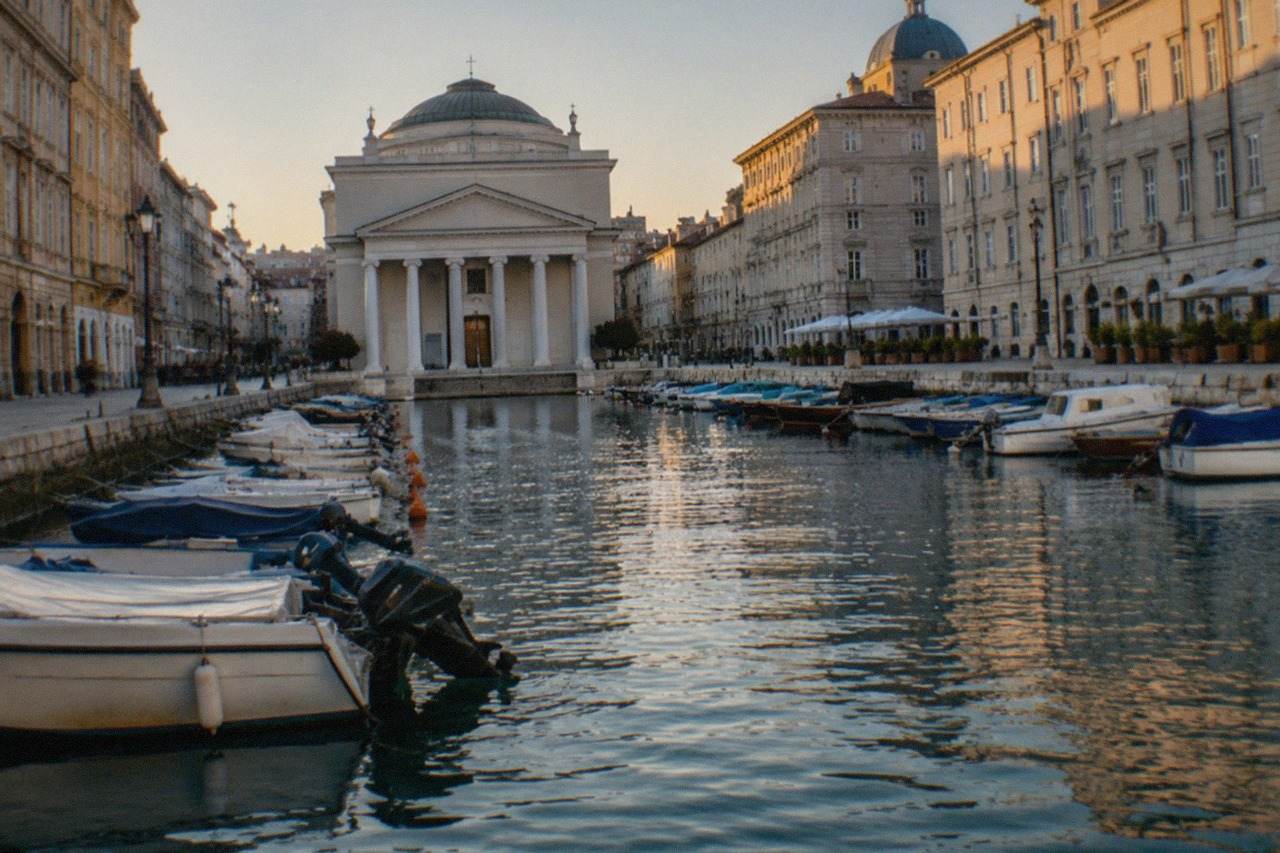
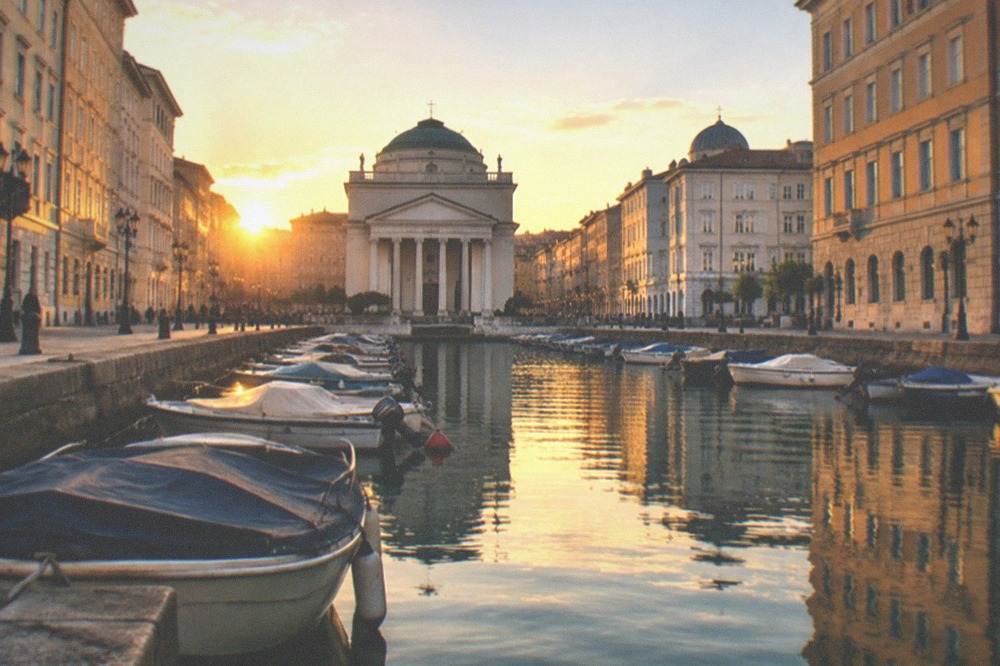
The Canal Grande is the open-air spine of Trieste's Borgo Teresiano in Italy, a short stretch of water lined with cafès and palaces, closed at its head by the Neoclassical facade of Sant'Antonio Taumaturgo.
Short answer
The Grand Canal (Canal Grande di Trieste) is a navigable canal dug through the eighteenth-century new town of Borgo Teresiano in Trieste, Italy, so ships could unload beside the merchants' houses. At its inland end stands the church of Sant'Antonio Taumaturgo, the largest Catholic church in the city. Both are free to see from the street, a short walk from Piazza Unità d'Italia, and best visited with the surrounding streets of the Borgo Teresiano.
The Grand Canal of Trieste, in the far north-east of Italy on the Adriatic, is the one piece of Venice that Trieste built for itself on purpose. Dug through the new town laid out under Empress Maria Theresa in the eighteenth century, the canal let sailing ships sail into the heart of the merchant quarter and unload directly in front of the warehouses and the palaces of the families who owned them. Today it is a short, straight stretch of water running from the seafront inland to the broad steps of the church of Sant'Antonio Taumaturgo, the largest Catholic church in the city, whose Neoclassical colonnade closes the view like a full stop.
This page is a complete, practical guide to both: what the canal is and why it exists, what the church of Sant'Antonio Taumaturgo is and how to visit it, what the buildings along the banks are, and how to fit the whole quarter into a walk. It is written for a first-time visitor standing at the Rive with half a day, and it links out to the deeper pages on this site for the rest of the city, from Piazza Unità d'Italia to the old town on San Giusto hill and Miramare Castle up the coast.
What Is the Grand Canal in Trieste, Italy?
The Grand Canal, or Canal Grande di Trieste, is a navigable canal dug through the Borgo Teresiano, the eighteenth-century expansion of Trieste, Italy, so that merchant ships could sail into the city and unload beside the palaces and warehouses of the trading families. It runs a short, straight stretch from the seafront, between the Ponte Rosso and Ponte Bianco bridges, inland to the church of Sant'Antonio Taumaturgo, which closes its head. It is one of the city's most recognisable views and it is free to see at any hour.
The canal belongs to a single moment in Trieste's history. When the Habsburg emperor Charles VI declared Trieste a free port in the early eighteenth century, the city grew so fast that its medieval core, wedged under San Giusto hill, could not hold it. The answer was a new town laid out on reclaimed salt-pan and marsh land north of the old centre, a grid of straight streets named in the Empress Maria Theresa's honour: the Borgo Teresiano. The canal was cut through the middle of it as the commercial artery, with the banks built up as private palaces whose owners could take delivery of goods at their own doors.
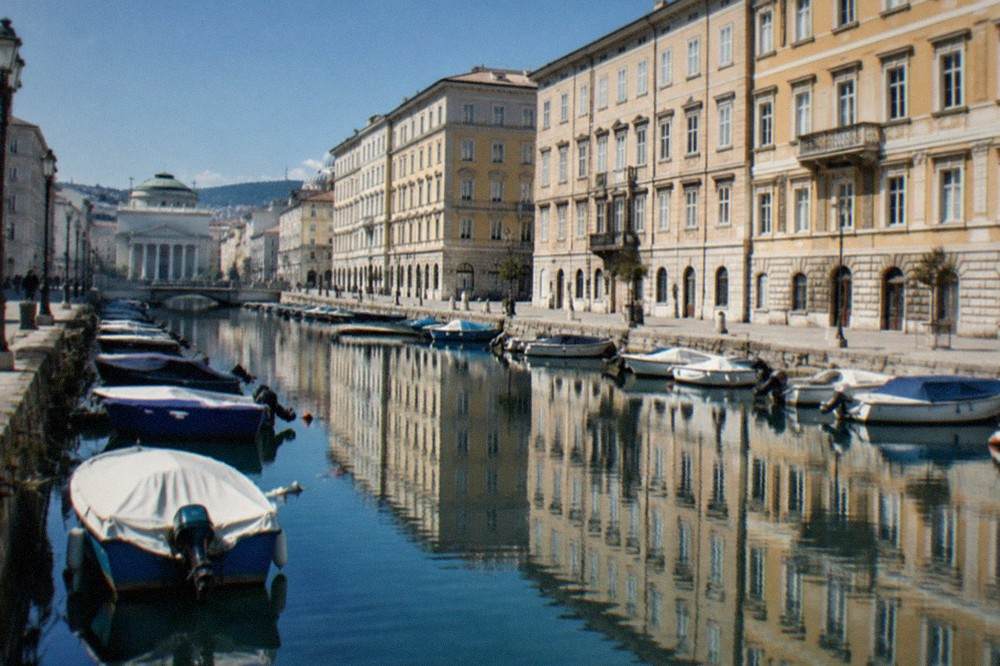
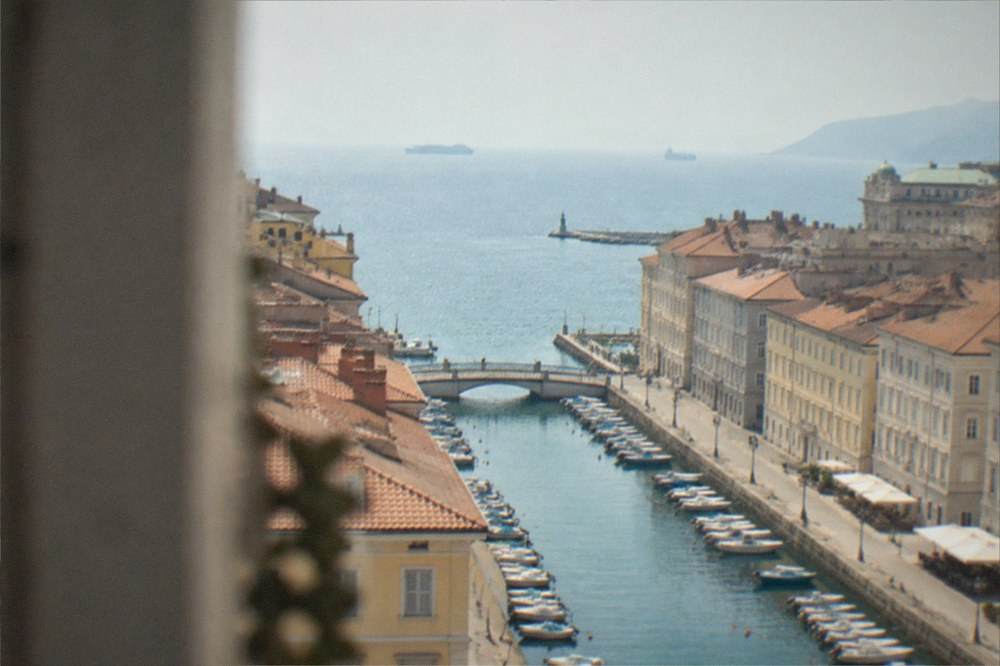
What you see now is the canal in its reduced, nineteenth-century form. It was originally longer and deeper, with more arms; the demands of road traffic and the railway steadily filled in the seaward sections, and today's water begins a short way inland of the Rive, at the point where the Darsena, the old dock basin, meets the modern seafront. Three bridges cross it in its surviving length. The Ponte Rosso, the red bridge, carries Via Cairoli over the middle of the canal and is the classic viewpoint. The Ponte Bianco crosses nearer the mouth. At the head of the water, the Ponte Curto or the steps in front of Sant'Antonio Taumaturgo frame the view back down towards the sea, which on a clear afternoon ends in a strip of silver between the roofs.
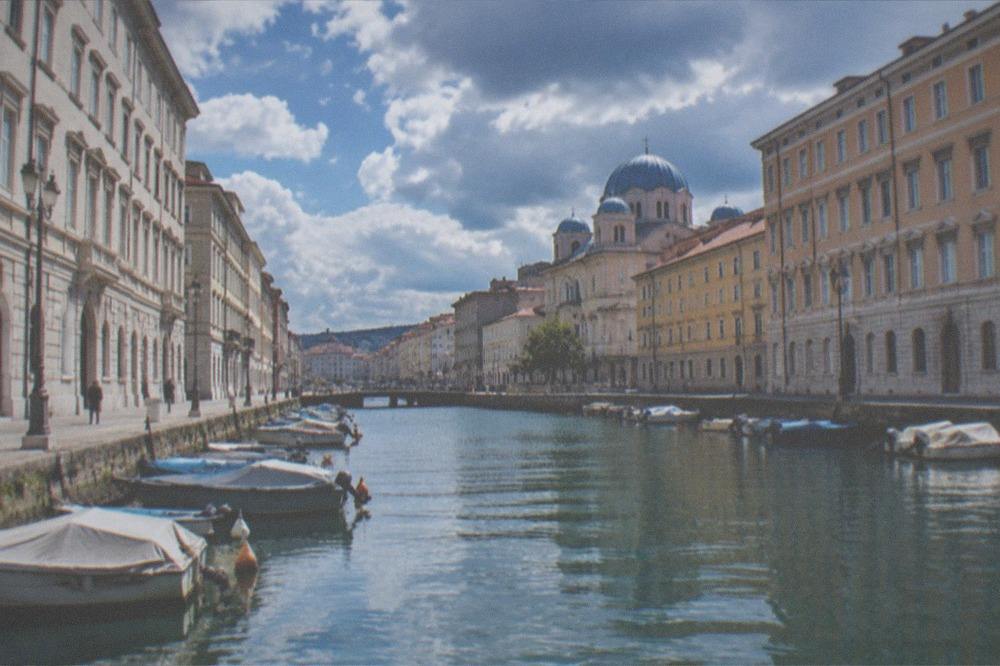
The canal's most photographed single feature sits on its north bank at the Ponte Rosso: a small statue of the Irish writer James Joyce, who lived in Trieste for over a decade and drank in the cafès of this quarter. A few steps away, at the head of the canal, the Serbian Orthodox church of San Spiridione raises its blue domes above the rooftops; our page on Saint Spyridon Serbian Orthodox Church covers it in detail. The canal, the church at its head, the Orthodox church beside it and the grid of the Borgo Teresiano around it are best understood as one planned ensemble, and that is how this guide treats them.
The table below puts the canal's key facts side by side for planning.
| Fact | Detail |
|---|---|
| Name | Canal Grande di Trieste (Grand Canal of Trieste) |
| Where | Borgo Teresiano district, central Trieste, Friuli Venezia Giulia, Italy |
| What it is | Navigable canal dug for merchant shipping through the eighteenth-century new town |
| Bridges | Ponte Rosso (Via Cairoli), Ponte Bianco, Ponte Curto near the church |
| Cost to visit | Free, open at all hours; it is a public waterway and street |
| Signature view | Sant'Antonio Taumaturgo framed at the inland head, seen from Ponte Rosso |
| Nearby landmark | James Joyce statue on the north bank at the Ponte Rosso |
Can You Walk Along the Grand Canal and What Do You See from Each End?
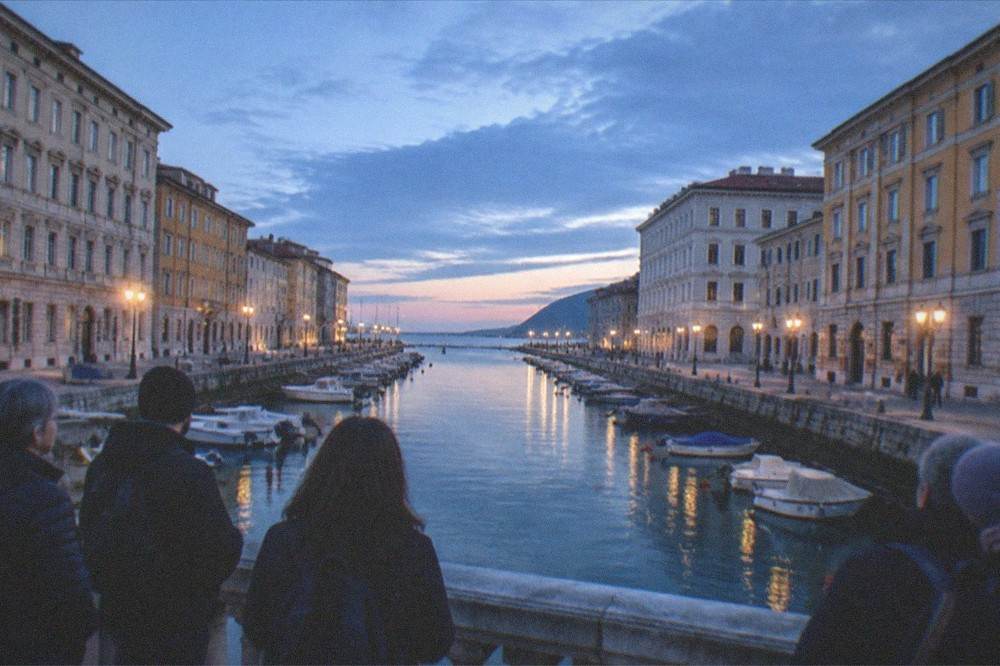
Yes, both banks of the Grand Canal in Trieste are public streets and you can walk their full length in a few minutes; from the Ponte Rosso in the middle you get the classic postcard view of the church of Sant'Antonio Taumaturgo closing the water, and from the steps at the church's end you look back down the canal to the sea and the hills of the Carso behind the rooftops. The walk is flat, free and works in any weather.
Start from the seafront. The Rive, Trieste's long waterfront promenade, runs the whole length of the city centre, and the canal's mouth sits directly opposite the Molo Audace, the stone pier that juts into the gulf. From there the canal leads you inland past moored small boats, past the café tables that spill onto the north bank in good weather, and up to the church. The distance is short; this is a compact city and the canal is a walk of minutes, not a boat trip through a lagoon, and there is no gondola service on it as there is in Venice.
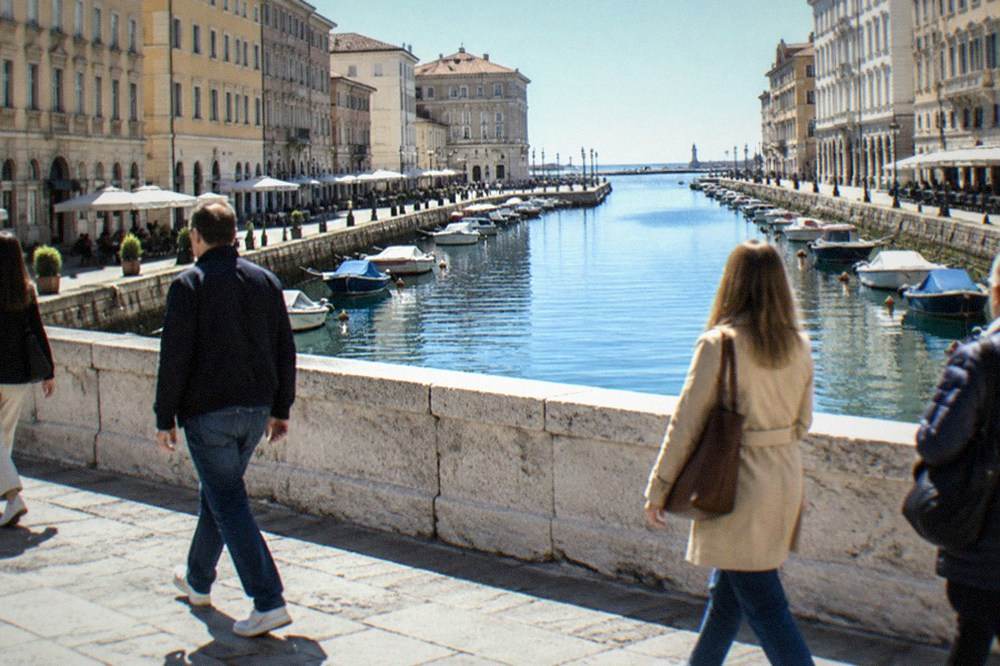
What makes the walk worth slowing down for is the architecture stacked along the banks. These are the palaces of the Borgo Teresiano's merchant families, and the group best known to locals sits near the Ponte Rosso: the so-called Case dei tre ocai, the houses of the three pheasants, whose bird reliefs decorate their facades. At the canal's north-east corner stands the palazzo of the Stratti family with its historic café on the corner, and on the far side of the church square, the Serbian Orthodox church of San Spiridione faces its Catholic neighbour across the grid. Every one of these buildings was raised by the port trade, and the quarter reads as an open-air museum of the city's single great era.
The streets either side of the canal reward a detour as much as the water itself. Via del Corso runs parallel a block north, the city's main shopping street; the Piazza della Borsa, the old stock-exchange square that once ranked as the second square of Habsburg Trieste, sits two streets south and has its own page in this guide; and the whole grid slopes gently east towards the hill of San Giusto, where the cathedral and the castle look down over the new town. For a fuller circuit, our self-guided Trieste walking tour stitches the canal into a route that takes in the old town as well.
A local guide can turn the same streets into a running story of emperors, shipping and coffee, and a private walk that starts from the canal side is one of the most booked introductions to the city on this site.
If you would rather go at your own pace, the table below breaks the canal walk into its four natural viewpoints and what each one gives you.
| Viewpoint | Where To Stand | What You See |
|---|---|---|
| The mouth | Where the canal meets the seafront by the Rive | Small boats, the open gulf, the seafront behind you |
| Ponte Bianco | The first bridge crossing the canal | The lower canal, café terraces on the north bank |
| Ponte Rosso | The red bridge carrying Via Cairoli | The classic framed view of Sant'Antonio Taumaturgo, the Joyce statue beside you |
| The church steps | In front of Sant'Antonio Taumaturgo | The whole canal running to the sea, domes of San Spiridione to your right |
What Is the Church of Sant'Antonio Taumaturgo in Trieste?
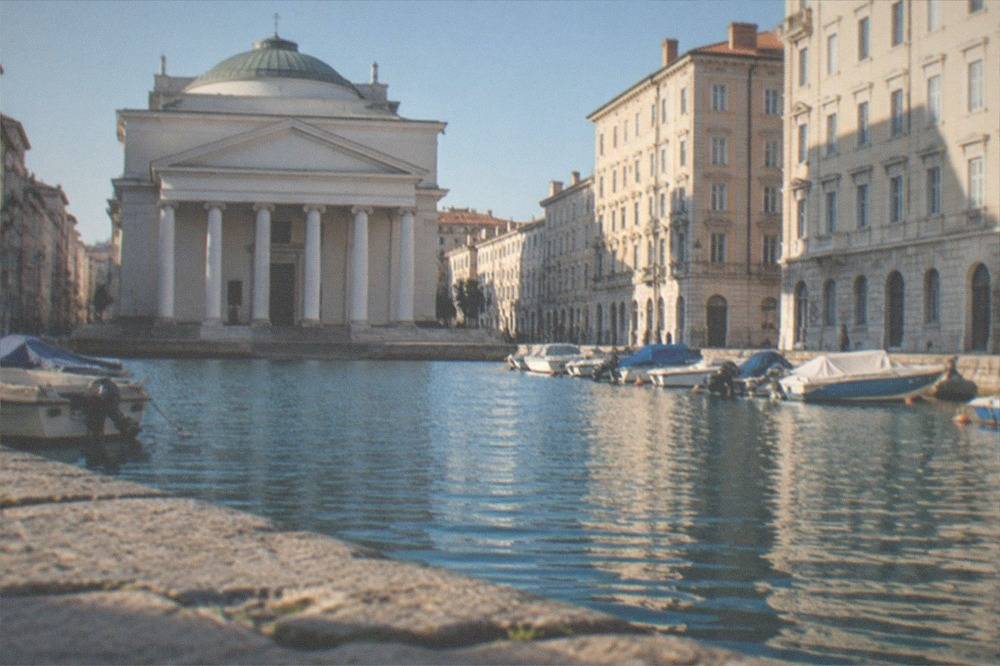
Sant'Antonio Taumaturgo, at the head of the Grand Canal in Trieste, Italy, is the largest Catholic church in the city, a Neoclassical building of the nineteenth-century port era, begun for the city's Greek community and later handed to the Catholic diocese. Its broad flight of steps, six-columned portico and pediment close the view down the canal and make it the quarter's most recognisable facade. It is an active parish church, so visiting is free but centres around a working place of worship.
The church has an unusual biography even by Trieste's standards. It was commissioned for the Greek community of the port, which had grown wealthy in the shipping boom; when the community's own fortunes changed, the building passed to the Catholic parish that serves the Borgo Teresiano. The dedication is to Saint Anthony the Wonderworker, Sant'Antonio Taumaturgo, the Paduan saint whose title survives in the church's full name. Its facade, a wide Ionic portico reached by a stepped platform, was designed to be seen from the water, and it still is: every visitor walking the canal ends at its base.
Inside, the church keeps a single tall nave with side chapels, and the interior is cooler and plainer than the baroque excess visitors may expect from Italy, which is itself a clue to the city: Trieste's churches mostly belong to the Neoclassical and nineteenth-century world of the Habsburg port, not to the Renaissance south. The other great churches of the city follow the same pattern, from the cathedral of San Giusto on its hill to the Serbian Orthodox church beside the canal.
Because it is a parish church rather than a ticketed monument, there is no entry fee and no published visiting tariff to quote; the practical rule is the one that applies to every working church in Italy, go outside Mass times, dress modestly and be quiet. The square in front, the Piazza Sant'Antonio Nuovo, doubles as the meeting point for much of the neighbourhood and as the stage for the Christmas market that fills the canal quarter each December.
The church's headline facts, for planning:
| Fact | Detail |
|---|---|
| Full name | Chiesa di Sant'Antonio Taumaturgo |
| Standing | The largest Catholic church in Trieste |
| Style | Neoclassical, nineteenth-century port era |
| Original community | Commissioned for the Greek community, later a Catholic parish church |
| Position | Head of the Grand Canal, Piazza Sant'Antonio Nuovo |
| Entry | Free, an active parish church; visit outside Mass times |
| Best view | From the Ponte Rosso, framed down the length of the canal |
A guided introduction to the city almost always begins in this quarter, and the private walking tour below pairs well with a morning at the canal before you head up the coast.
When Is the Best Time to Visit the Grand Canal in Trieste?
The best time to visit the Grand Canal in Trieste is late spring through early autumn, when the café terraces on the banks are open, the light runs down the water from the sea, and the bora wind is at its quietest; November is the wettest month at the city's own weather station and winter brings both more rain and more wind, so a summer or September morning gives you the calmest water and the clearest view of the church at the canal's head.
The climate record for Trieste, kept by the regional weather agency at the molo Fratelli Bandiera station on the waterfront, gives the visitor a clear picture. The city is not the rainy Mediterranean town of the guidebook cliché; its wettest month is November, at 109.8 mm of rain, with September second at 102.3 mm, and July is one of its driest months at 53.8 mm. Mean daily highs run from 9.2°C in January to 28.2°C in July, and the sea, measured separately, averages 25.9°C in both July and August, its warmest of the year. The wind matters more than the rain here: the same station records gusts over 90 km/h on 17.6 days a year on average, and the monthly record gust exceeds 110 km/h in every single month of the year, which is why the canal's boats and terraces live with the bora. Other pages covering the same trip are gathered on Trieste Travel Guide.
What that means in practice for the canal quarter: the water is at its calmest and the terraces at their fullest from May to September, and June is statistically the calmest month for wind in the station's tables. September brings the sea at its warmest of the shoulder season, 23.9°C on average, but it is also the city's second-wettest month, so it trades a few rainy days for thinner crowds. Winter is the season of the Christmas market, when the canal and the church square fill with stalls; it is atmospheric, and the season's cold is moderate, but the days are short and the light for photographs ends early.
The month-by-month picture, from the station's own normals:
| Month | Mean High | Rain mm | Sea °C | Notes For The Canal Walk |
|---|---|---|---|---|
| March | 13°C | 52.8 | 11.6 | Quieter streets, cool but workable |
| May | 21.7°C | 75 | 17.9 | Terraces reopening, good light |
| June | 25.8°C | 62.5 | 23.1 | Calmest wind month in the tables |
| July | 28.2°C | 53.8 | 25.9 | Driest-adjacent, warmest water |
| September | 23.9°C | 102.3 | 23.9 | Warm sea, but second-wettest month |
| November | 14.7°C | 109.8 | 16.8 | Wettest month; Christmas market arriving |
| December | 10.7°C | 77.4 | 13.6 | Market season around the canal and church |
Whenever you come, a guide who knows the quarter can build the canal walk into a fuller route through the city, and you can reserve your place now and pay nothing until the day.
What Else Is Around the Grand Canal in Trieste?
The Grand Canal sits in the Borgo Teresiano, the grid-planned new town of Trieste, Italy, and everything in the central city is within an easy flat walk of it: Piazza Unità d'Italia and the seafront at one end, the old town of Città Vecchia and the hill of San Giusto at the other, with the Serbian Orthodox church of San Spiridione immediately beside the canal's head and the shopping axis of Via del Corso running parallel a block north.
The Borgo Teresiano deserves its own sentence of explanation, and this site gives it a full page. It was built as a single planned district in the eighteenth century on reclaimed ground, and the canal was cut as its commercial spine; the grid around it was then filled with palaces, warehouses, theatres and cafès serving the port trade. That is why the quarter feels different from the twisting lanes under San Giusto: it is Enlightenment city planning, wide and rational, and the canal is its centrepiece. The Borgo Teresiano page on this site covers the district's streets and history in depth.
Head south from the canal and you are in the Borgo Teresiano's grander civic rooms. The Piazza della Borsa, the old exchange, marks the commercial heart of the old trading city; two blocks further, the Teatro Verdi, the city's opera house, faces a small square where a café table was famously reserved for the writer Italo Svevo. North and east, the grid climbs gently towards the hill, and the Roman Arco di Riccardo, one of the city's oldest standing monuments, sits at the top of the slope looking down over the new town it predates by well over a millennium.
Beyond the centre, the canal makes a natural first stop on a wider itinerary. The seafront walks west to the Molo Audace and the Piazza Unità d'Italia, Italy's largest seaside square, and continues along the Rive towards the Victory Lighthouse and the beaches of Barcola. Up the coast, Miramare Castle and its free-entry park stand at Grignano, and the karst plateau rises behind the city towards Grotta Gigante. The day-trip pages on this site cover the cross-border options too, from Piran to Ljubljana, remembering that all three countries, Italy, Slovenia and Croatia, use the euro, and that Italy is running temporary border checks on its land border with Slovenia through 18 December 2026, so carry ID.
Here is how the main sights around the canal group together for planning:
| Direction | Sight | This Site's Page |
|---|---|---|
| Seaward | Molo Audace stone pier and the open gulf | /attractions/molo-audace/ |
| Seaward | Piazza Unità d'Italia, Italy's largest seaside square | /attractions/piazza-unita-ditalia/ |
| Beside the canal | Serbian Orthodox church of San Spiridione | /attractions/saint-spyridon-serbian-orthodox-church/ |
| South of the canal | Piazza della Borsa, the old stock exchange | /attractions/piazza-della-borsa/ |
| South of the canal | Teatro Verdi, the opera house | /attractions/teatro-lirico-giuseppe-verdi/ |
| Uphill east | Arco di Riccardo, the Roman arch | /attractions/arco-di-riccardo/ |
| Uphill east | Cattedrale di San Giusto and Città Vecchia | /attractions/trieste-cathedral-san-giusto/ |
| Up the coast | Miramare Castle and its free park | /attractions/miramare-castle/ |
How Does the Grand Canal Fit Into a Day in Trieste?
The Grand Canal works best as the second stop of a morning in Trieste, Italy: start at Piazza Unità d'Italia on the seafront, walk the length of the canal to Sant'Antonio Taumaturgo and the Orthodox church, then climb towards San Giusto for the cathedral, the castle and the view over the whole grid you have just crossed. Half a day covers the canal quarter comfortably, and the church steps make a natural pause before the uphill section.
For a one-day visit, the sequence matters because the terrain does. The canal and the Borgo Teresiano are flat and quick; San Giusto hill is a real climb; and the old town between them is a warren that rewards wandering without a schedule. Doing the flat quarter first, while you still have legs and light, leaves the afternoon free for the hill and its views. Cruise passengers docked at the terminal get the same logic in miniature, since the walk from the port leads naturally along the Rive and into the canal mouth first; our page for ashore hours, Trieste from a cruise ship, builds that route in detail.
For visitors with two or three days, the canal quarter takes on a different role, as the base neighbourhood. Much of the city's accommodation sits in and around the Borgo Teresiano precisely because it is flat, central and well connected, and the canal is then not a sight you visit but the view you cross every morning on the way to coffee. Our pages on where to stay and on the two-day and three-day itineraries handle those decisions in full.
A rough way to slot the canal into your visit:
| Time You Have | Where The Canal Fits | Pair It With |
|---|---|---|
| A few hours ashore | First inland stop from the seafront | Piazza Unità d'Italia, Molo Audace |
| One full day | Morning, after the seafront squares | Città Vecchia, San Giusto hill in the afternoon |
| Two days | Morning of day one, home base thereafter | Old town day one, Miramare or a cave day two |
| Three or more days | Base quarter, revisited at your leisure | Day trips to Slovenia, the Carso and the coast |
Are There Guided Tours That Include the Grand Canal in Trieste?
Yes: every general walking tour of Trieste passes the Grand Canal and the church of Sant'Antonio Taumaturgo, and the best fit is a private city walk, which typically crosses the canal between the seafront and San Giusto hill; for a first visit, a guided walk plus a half-day up the coast to Miramare Castle or out to the karst caves covers the canal quarter and the two things most visitors most regret missing.
The choice among paid tours is wide, and the three below are the ones this site highlights for a visit anchored on the canal. The private best-of walk takes in the landmarks, the canal among them, with a local guide; the Miramare tour covers the castle whose archduke gave Trieste its other great canal-side era of building; and the Lipica and Škocjan day trip carries you across the border into the Karst landscape that rises directly behind the canal's rooftops.
There is also a free option worth naming honestly. GuruWalk runs a pay-what-you-want city walk of Trieste led by a local guru, tip based, which crosses the canal on its route; it costs nothing up front and you pay the guide what you think the walk was worth. It is a genuine way to see the quarter if the budget is tight, and it is listed with the other walking options on this site's page of free walking tours.
The paid options this site rates most, with their headline details:
| Tour | What It Is | Grouping |
|---|---|---|
| Best of Trieste private walking tour | Landmarks walk with a local guide, two hours, private group up to 10 | City, includes the canal quarter |
| Miramare Castle and the park | Private castle tour covering the archducal apartments, two hours, per group | Half day up the coast |
| Lipica stud farm and Škocjan Caves | Full day to the white horses and the UNESCO cave system, six hours | Karst day trip behind the city |
For the castle half day, the private tour below is the one this page recommends pairing with a morning at the canal.
Common Questions About the Grand Canal and Sant'Antonio Taumaturgo in Trieste
Is the Grand Canal in Trieste the same as the one in Venice?
No. Trieste's Canal Grande is a short eighteenth-century shipping canal cut through the planned Borgo Teresiano district so merchant ships could unload beside the palaces; it runs a few hundred metres from the seafront to the church of Sant'Antonio Taumaturgo. It is walkable end to end in minutes and there is no gondola or vaporetto service on it.
Can you take a boat ride on the Grand Canal in Trieste?
No regular boat service runs on the canal. The water is used by small moored craft, and the way to see it is on foot, from the banks and from the Ponte Rosso bridge, where the classic view of the church at the head of the water opens up.
What is the church at the end of the Grand Canal in Trieste?
It is the church of Sant'Antonio Taumaturgo, the largest Catholic church in Trieste, a Neoclassical building of the nineteenth-century port era. It was commissioned for the Greek community of the port and later became a Catholic parish church. Entry is free, and it is a working parish, so visit outside Mass times.
Is the Grand Canal in Trieste free to visit?
Yes. The canal is a public waterway with public streets on both banks, open at all hours and free, and the church of Sant'Antonio Taumaturgo at its head is also free to enter outside services.
How far is the Grand Canal from Piazza Unità d'Italia in Trieste?
The canal's mouth meets the seafront a short walk from Piazza Unità d'Italia, and the two are connected by the waterfront: cross the square towards the sea and the canal opening is directly opposite the Molo Audace pier. The whole canal quarter is flat and compact.
What is the best time of day to photograph the Grand Canal in Trieste?
The canal photographs best in the second half of the day, when the light runs down the water from the sea and lights the facade of Sant'Antonio Taumaturgo at its head; from the Ponte Rosso the church sits framed between the banks. Evening adds reflections in calm water, and the café terraces give the banks life after dark.
The Grand Canal and Sant'Antonio Taumaturgo together give you Trieste in a single view: a city planned by an empress for the trade of an empire, still mooring boats in the middle of its streets, with its grandest church standing where the ships used to end their run. Walk it slowly, look up at the palaces, and then let the grid carry you wherever the rest of the city takes you.