Piazza Della Borsa in Trieste, Italy: What to See in the City's Old Merchant Square
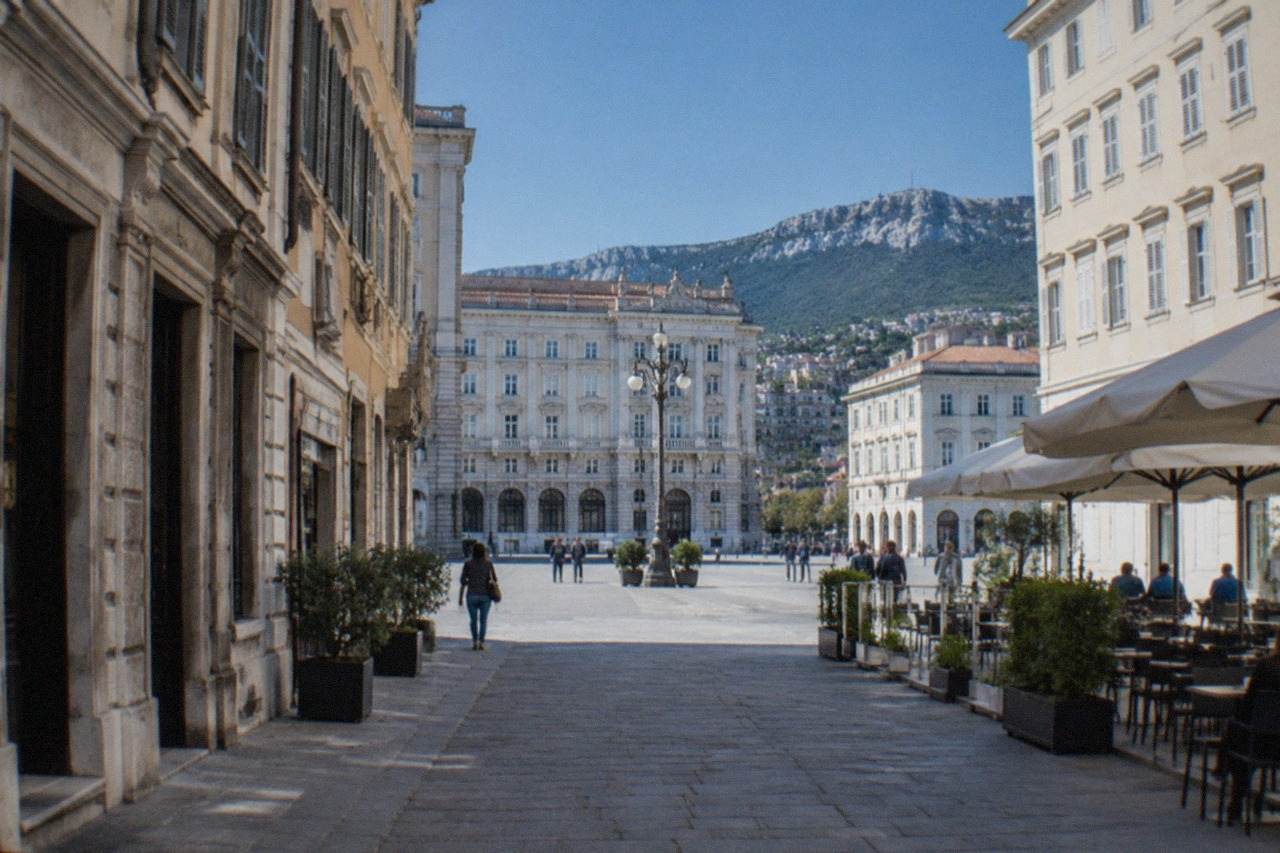
Piazza della Borsa in Trieste, Italy, sits one block back from the Grand Canal, a quieter working square framed by the buildings of the old insurance trade and steps from the water.
Short answer
Piazza della Borsa is the old commercial heart of Trieste, Italy, a small square behind the Grand Canal where the insurance companies and coffee merchants of the Habsburg port once traded. It is free to visit at any hour, sits a short walk from Piazza Unità d'Italia and the canal, and works best as a stop on a walking route through the Borgo Teresiano rather than a destination in itself.
Piazza della Borsa in Trieste, Italy, is the square where the port city did its business. While the grand ceremonial space of Piazza Unità d'Italia faced the sea and the empire, the Borsa square, one block inland behind the Grand Canal, was where merchants, insurers and brokers argued over coffee cargoes and shipping rates. Today it is a modest, traffic-calmed piazza ringed by imposing commercial architecture and café tables, and it sits at the natural midpoint of a walk through the Borgo Teresiano grid between the waterfront and the train station.
The square rewards a slow pass rather than a dedicated pilgrimage. You will cross it between the Canal Grande of Trieste and the café district, notice the architecture, maybe stop for a coffee, and move on. This guide covers what the square is, what surrounds it, which of the nearby ticketed sights are worth your time and money, and how the practical numbers of a Trieste visit (transport fares, the tourist tax, museum tickets) actually stack up. Everything below comes from verified official sources, and where a figure could not be verified it says so plainly. This page is part of Trieste Travel Guide, the site's full coverage of the city and its coast.
What Is Piazza Della Borsa in Trieste, Italy?
Piazza della Borsa is a small commercial square in central Trieste, Italy, in the Borgo Teresiano district immediately behind the Grand Canal. It grew up as the trading floor of the Habsburg-era port: the insurance companies, exchange and merchant houses that served Trieste's shipping trade clustered here, close to the warehouses and the quays. Entry is free, there are no hours and no tickets, and the square is best understood as the commercial counterweight to the ceremonial Piazza Unità d'Italia two blocks away.
The square's character comes from its buildings rather than from any single monument. The palaces around it were raised for the institutions of the port economy, and their scale tells you what kind of money moved through this city at its peak. The Pack has no verified founding dates or architect names for the individual palaces, and this guide will not invent any. What can be said with confidence is architectural: the square belongs to the same neoclassical grain as the rest of the Borgo Teresiano, the planned district laid out under the Habsburgs when Trieste was made the empire's outlet to the sea.
Walk the square and you notice how it differs from Piazza Unità d'Italia. The great waterfront piazza is open, theatrical, facing the Adriatic. Piazza della Borsa turns inward. It is built for transaction, not display: the proportions are tighter, the entrances face each other, the café tables occupy what were once the busiest commercial crossroads in the city. Coffee is still the theme, which is fitting for a port that remains a historic roasting centre. Trieste's coffee culture is real and deep, but no per-head consumption figure for the city has a verifiable primary source, so none is printed here.
For orientation purposes the square is a junction, not a terminus. It links the canal, the café district around the historic baroque of the old town's edge, and the Corso that runs toward the station. Almost every walking route through central Trieste crosses it, which is why the paid walking tours of the city, discussed below, all include it.
Where Is Piazza Della Borsa and How Do You Get There?
Piazza della Borsa sits in the Borgo Teresiano district of Trieste, Italy, one block inland from the Grand Canal and a very short walk from Piazza Unità d'Italia on the seafront. It is inside the flat grid between the waterfront and Trieste Centrale station, so it is reached on foot from almost anywhere in the centre. A Trieste urban single ticket costs EUR 1.50 for 60 minutes or EUR 1.85 for 75 minutes, per the operator's 2026 tariff sheet, and can be tapped contactless on board.
The square is a pedestrian-scale object in a compact city centre. The Borgo Teresiano grid that contains it is flat, regular and easy to navigate, laid out as a planned extension of the 18th-century port city. Coming from the cruise terminals or the station you simply walk into the grid; the Pack gives no verified minute-by-minute walking times and this guide will not invent them, but the district is compact enough that the square functions as a midpoint on almost any central route.
Public transport in Trieste is run by Trieste Trasporti, and the 2026 urban tariff sheet lists the fares that matter to a visitor. Singles run 60 or 75 minutes, with validity extended to 240 minutes on Sundays and public holidays, and the network accepts contactless bank cards on board through the "Eva" readers, applying the cheapest applicable fare. The historic tram to Opicina, urban line 2, is part of the same network: it was reactivated on 1 February 2025 after its long post-2016 stop and currently runs from piazza Dalmazia, not piazza Oberdan, on a timetable dated 20 July 2026. Its relevance here is simple: the square is a place you reach on foot in the centre, while the tram is the outing, up to the Karst edge at Opicina.
| Ticket | Validity | 2026 price |
|---|---|---|
| Urban single (U01) | 60 minutes | EUR 1.50 |
| Urban single (U02) | 75 minutes | EUR 1.85 |
| Day ticket (U24) | one day | EUR 3.35 |
| 10 rides (U10) | 10 journeys | EUR 13.50 |
| 20 rides (U20) | 20 journeys | EUR 16.65 |
The tariff sheet also lists season passes, but those prices did not extract unambiguously from the source, so none is quoted here. For a visitor spending a day or two around Piazza della Borsa and the centre, the day ticket at EUR 3.35 is the only fare decision that really matters, and many visitors will find they never need one, because the square, the canal, the waterfront and the old town form one continuous walkable zone.
The Tram de Opicina, for the record, is running: the operator's own line-2 page carries the current timetable from piazza Dalmazia to Opicina. The repeatedly published claim that it leaves from Piazza Oberdan is outdated; that terminus is pending redevelopment. Check the operator's homepage for live status on the day you go.
What to See Around Piazza Della Borsa on Foot?
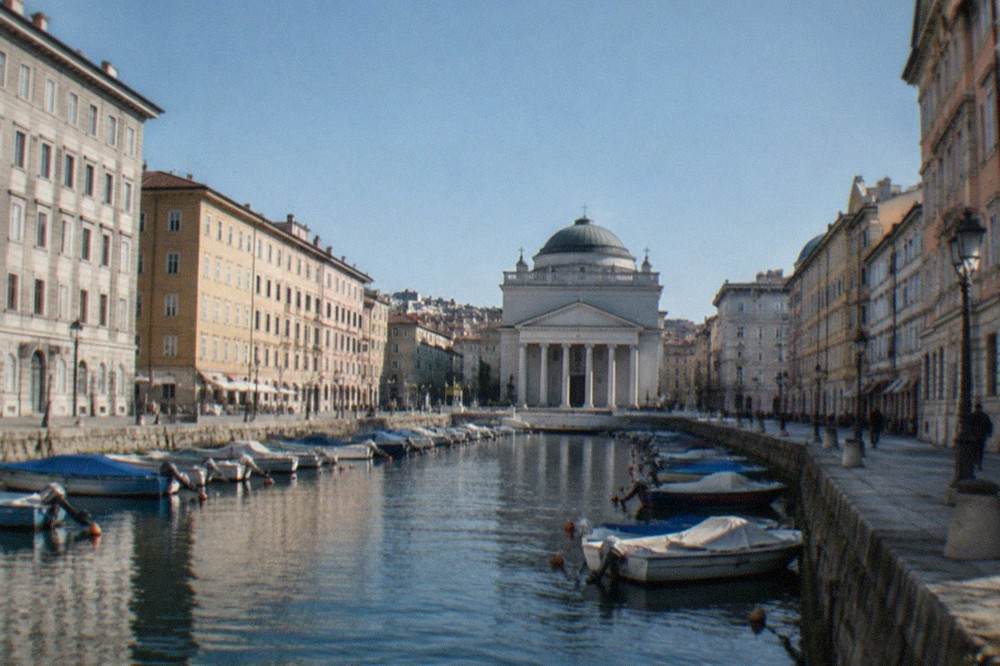
The area within a short walk of Piazza della Borsa includes the Grand Canal, the Sant'Antonio Taumaturgo church at its head, the Serbian Orthodox church of Saint Spyridon, the Arco di Riccardo, and the Roman theatre, which you view from the street above it. The nearest ticketed sights are Castello di San Giusto at EUR 7 and the Museo Revoltella at EUR 8, both beyond the old town ridge. The square, the canal and the churches cost nothing.
Working outward from the square: the Grand Canal is the nearest landmark, the narrow waterway cut into the Borgo Teresiano so sailing ships could unload directly into the warehouse district. The Sant'Antonio Taumaturgo church closes the view at its head, and the canal is the single most photographed slice of the district. James Joyce's Trieste is the literary thread through this same grid: the writer spent years in the city, and the sites associated with him cluster in and around the café district the square belongs to.
Cross into Città Vecchia, the old town on the hillside, and the density rises. The Serbian Orthodox church of Saint Spyridon is the most striking interior in that quarter. The Arco di Riccardo is an ancient Roman gate on the slope. The Roman theatre of Trieste stands at the foot of the hill, and here a correction to most guidebooks matters: it is not a site you enter. You look down into it from the street. The Ministry of Culture's page for the monument is the right reference, and individual access is not routinely offered; guided visits exist for groups and schools on request through the heritage authority.
| Sight near Piazza della Borsa | Entry | Notes |
|---|---|---|
| Grand Canal and Sant'Antonio church | Free | Public space; church open to visitors outside services |
| Saint Spyridon Serbian Orthodox church | Free | Città Vecchia, the old town |
| Roman theatre of Trieste | Free, viewed from the street | Not routinely enterable by individuals |
| Arco di Riccardo | Free | Ancient gateway in the old town |
| Molo Audace | Free | Waterfront pier, a flat walk from the square |
| Teatro Lirico Giuseppe Verdi | Varies by performance | Opera house, the city's main theatre |
The Molo Audace pier and the seafront Rive extend the walk out onto the water, and the Trieste Cathedral of San Giusto caps the hill above. Cathedral entry is free, and its weekday hours run 8:00-18:30, with Sundays and holidays 9:00-19:30, per the parish's own page. The bell tower keeps seasonal hours, April to September daily 9:00-17:30, but the parish prints no ticket price for the tower, so none appears here.
The two-hill itinerary that strings these together, the cathedral, the castle, the old town gates and back down to the square, is the standard first-day walk in Trieste, and it is exactly what a private guide is for.
The 2-hour private walking tour covers the central landmarks in one organized pass, priced from USD 206.36 per group of up to 10 and rated 4.9 from 98 reviews on the operator's live listing. For a group of four or more that is competitive with per-person tours and you set the pace. If you would rather walk alone, the self-guided Trieste walking tour guide covers the same ground at your own speed.
What Do the Nearby Ticketed Attractions Cost in 2026?
The 2026 ticket prices for the main sights within reach of Piazza della Borsa are: Castello di San Giusto EUR 7 full, EUR 5 reduced; Museo Revoltella EUR 8 full, EUR 6 reduced, closed Tuesdays; Castello di Miramare EUR 17 full including the temporary exhibition, with the park free all year; and Grotta Gigante EUR 15 full, guided tours only with compulsory booking. The Risiera di San Sabba national monument is free. First Sundays of the month are free at San Giusto and Revoltella.
These are official figures from the venues' own pages. Castello di San Giusto's EUR 7 ticket is good value because it covers a lot: the walls and bastions with their view over the city and gulf, the Civico Museo del Castello-Armeria, the Lapidario Tergestino and the temporary exhibitions at the Bastione Fiorito. From 12 October the castle drops to a Tuesday-Sunday schedule, closed Mondays, 10:00-17:00 with last entry at 16:30; before that, through 11 October, it runs daily 10:00-19:00.
The Museo Revoltella, the modern-art gallery on the waterfront side of the centre, is EUR 8, daily 10:00-19:00 with last entry at 18:00, closed Tuesdays. Miramare, up the coast at Grignano, is the big-ticket item at EUR 17, and the price includes the temporary exhibition, "Una Sfinge l'attrae". The castle opens every day 9:00-19:00 with last admission at 18:30, and the park is free all year, its hours shifting by month (April to September 8:00-19:00). Do not assume castle and park share a schedule: they do not.
| Attraction | 2026 ticket | Hours (current) | Closed |
|---|---|---|---|
| Castello di San Giusto | EUR 7 / EUR 5 reduced | 1 Apr-11 Oct: daily 10:00-19:00; from 12 Oct: Tue-Sun 10:00-17:00 | Mondays from 12 Oct |
| Museo Revoltella | EUR 8 / EUR 6 reduced | Daily 10:00-19:00, last entry 18:00 | Tuesdays |
| Castello di Miramare | EUR 17 incl. exhibition | Daily 9:00-19:00, last entry 18:30 | None listed |
| Miramare park | Free | Apr-Sep 8:00-19:00 (varies by month) | Never |
| Risiera di San Sabba | Free | 1 Mar-11 Oct: daily 9:00-19:00; from 12 Oct: daily 9:00-17:00 | 25 Dec, 1 Jan |
| Grotta Gigante | EUR 15 / EUR 12 reduced | Tours 9:00-16:00 hourly, booking compulsory | Sep-Feb: Mondays |
Two free-entry notes. The ministry's first-Sunday-of-the-month scheme runs through 2026 at participating state museums, and Miramare takes part: the castle is free those Sundays, the park is free always. The rule has changed more than once in recent years, so confirm the specific date on the venue's own page rather than trusting a calendar printed here. San Giusto and Revoltella are also free on 3 November, the patron saint's day, and Revoltella on first Sundays too.
The regional FVGcard pass reportedly covers Trieste sites including Grotta Gigante and Revoltella at 48-hour and one-week rates, but those figures could not be verified from the issuing body's own site, so they are not printed here. Check the regional tourism pass page directly before buying.
How Does Piazza Della Borsa Fit Into a One-Day Trieste Itinerary?
A sensible one-day Trieste route that includes Piazza della Borsa runs: Piazza Unità d'Italia and the Molo Audace pier first, then the Grand Canal and Piazza della Borsa with a coffee stop, then uphill through Città Vecchia past the Arco di Riccardo to the Cathedral and Castello di San Giusto, then down past the Roman theatre and back to the seafront. Paid sights on that route total roughly EUR 15-25 depending on what you enter, and the whole route is walkable.
The logic of the order is simple: the flat waterfront and the Borgo Teresiano first, while legs are fresh and the cafés are open, then the climb to San Giusto hill, then the descent through the old town. The square sits at the transition point, which is why it appears in almost every published itinerary. The one-day Trieste itinerary breaks this down stop by stop, and the Trieste itinerary planner adapts it to different trip lengths.
On time: the Pack does not give verified walking durations between these sights, and this guide does not invent them. What can be said is that Trieste's centre is genuinely compact, flat along the waterfront, and steep only on the San Giusto hillside, where the funicular-style staircases of the old town do the climbing for you if you pick your lane well.
Budget-wise, a day built around the square is cheap by Italian standards. The walk itself, the canal, the churches, the Roman theatre from the street, the Risiera di San Sabba if you extend out to it, and the Miramare park are all free. Add San Giusto at EUR 7 and a coffee or two, and a full sightseeing day costs less than a single ticket at many Italian flagship museums.
One cost every visitor does pay and rarely budgets for is the tourist tax. The Comune di Trieste's 2026 table, published under the regional municipal platform, sets the per-person, per-night rate by accommodation class and caps the charge at five consecutive nights in the same property. Under-18s are exempt.
| Accommodation type | Tourist tax per person, per night, 2026 |
|---|---|
| 5-star hotel | EUR 3.80 |
| 4-star hotel | EUR 3.30 |
| 3-star hotel | EUR 3.00 |
| 2-star hotel, affittacamere, B&B Superior | EUR 2.30 |
| Hostels, residences, short-let properties | EUR 2.30 |
| B&B Comfort | EUR 2.00 |
| 1-star hotel, B&B Standard | EUR 1.80 |
| Campsites and motorhome areas | EUR 1.50 |
The rates come from the October 2025 council resolution named in the official table's header. Publish the rates, not the politics around them.
When Is the Best Time to Visit the Squares of Trieste?
The best months to visit Trieste, Italy, for square-and-waterfront walking are April to June and September, when the ARPA station tables show mild air temperatures, sea temperatures from 14 C in April to 23.9 C in September, and June's low gust-day counts. July and August are the warmest at a 28 C mean high but hold the peak visitor season; November is the wettest month at 109.8 mm of rain, with 1.9 days of gusts over 90 km/h.
These figures come from ARPA FVG's OSMER station tables for the Trieste molo Fratelli Bandiera gauge, the 1995-2024 series, and they correct a persistent myth about this coast. Trieste is not a rainy-summer city. July is the second driest month of the year at 53.8 mm, and the wettest month is November at 109.8 mm, with September second at 102.3 mm. Autumn, not summer, is when the rain falls.
The bora, the cold north-easterly that defines this coast, is a winter-dominant phenomenon. The station tables show 17.6 days a year on average with a gust over 90 km/h and 49 days over 72 km/h, with the monthly record gust exceeding 110 km/h in every single month of the year, so a strong bora can arrive in any season. June is the calmest month. The all-time peak gust in the series is 168.1 km/h, February 2012, at the molo Fratelli Bandiera station. No official wind threshold exists at which the Rive close or ferries stop, so none is stated here.
| Month | Mean high C | Rain mm | Wet days | Sea C | Days gust over 90 km/h |
|---|---|---|---|---|---|
| March | 13 | 52.8 | 6.1 | 11.6 | 2.1 |
| April | 16.8 | 60.7 | 8 | 14 | 0.7 |
| May | 21.7 | 75 | 8.5 | 17.9 | 0.7 |
| June | 25.8 | 62.5 | 6.1 | 23.1 | 0.3 |
| July | 28.2 | 53.8 | 5.4 | 25.9 | 0.9 |
| September | 23.9 | 102.3 | 7.4 | 23.9 | 1.1 |
| October | 19.6 | 88.6 | 7.6 | 20.3 | 1.4 |
| November | 14.7 | 109.8 | 9.5 | 16.8 | 1.9 |
If your visit lands in October, you may overlap the Barcolana, the regatta that turns the gulf into the largest sailing race in the world. The 2026 edition, Barcolana 58, runs 2-11 October with the main race on Sunday 11 October, start scheduled 10:30, over a 13-nautical-mile course in the gulf finishing off Piazza Unità d'Italia. The record entry was 2,689 boats in 2018, a Guinness World Record; the 2025 edition drew 1,865, the highest since 2019. October averages 1.4 days a year with gusts over 90 km/h: the event sits deliberately inside the windy shoulder of the year.
Can You Take a Day Trip from Piazza Della Borsa's District?
Day trips reachable from Trieste by booked tour include Postojna Cave with Predjama Castle (from about USD 137.57, 6 hours), the Lipica stud farm with the Škocjan Caves (from about USD 129.93, 6 hours), Ljubljana and Lake Bled (from about USD 108.91, 9 hours), Piran on the Slovenian coast (from about USD 114.64, 6 hours), and Grotta Gigante in the Karst (from USD 17.2, 1 hour). Croatia, Slovenia and Italy all use the euro and all three are in Schengen.
The square's district is a natural base for these because the tours depart from the centre. The Karst caves are the nearest and most distinct: Grotta Gigante, in the Carso behind Sgonico, is a guided-only cave with compulsory booking, EUR 15 full price, tours at 9:00, 10:00, 11:00, 12:00, 14:00, 15:00 and 16:00, and it closes Mondays from September to February. The venue's own pages do not print a step count or a constant cave temperature, so this guide does not repeat those widely circulated figures.
Cross-border, the situation is cleaner than most guides make it. Croatia joined Schengen and adopted the euro on the same day, 1 January 2023. Slovenia has been in both for years. No money changing, no routine passport control on the Piran or Rovinj runs. One live exception: Italy is running temporary internal border checks on its land border with Slovenia from 19 June to 18 December 2026, per the European Commission's own register, so carry a passport or national ID card on any Slovenian or Croatian day trip by road.
| Day trip from Trieste | Type | From (USD) | Rating | Duration |
|---|---|---|---|---|
| Grotta Gigante guided tour, Sgonico | Karst cave | 17.2 | 4.78, 151 reviews | 1 hour |
| Postojna Cave and Predjama Castle | Karst cave | 137.57 | 4.76, 543 reviews | 6 hours |
| Lipica and Škocjan Caves | Karst cave | 129.93 | 4.86, 23 reviews | 6 hours |
| Piran and the Slovenian coast | Adriatic coast | 114.64 | 4.57, 136 reviews | 6 hours |
| Ljubljana and Lake Bled | Slovenia lakes | 108.91 | 4.69, 544 reviews | 9 hours |
Prices and ratings are as listed on the operators' live listings and can change. The day trips from Trieste guide compares all of these in depth, and the dedicated pages for Trieste to Piran and Trieste to Ljubljana cover the individual routes.
If you would rather turn the central walk itself into the activity, the self-guided scavenger hunt walks the square and the city's highlights with no guide and no schedule, from USD 4.67 per person, rated 4.6 from 28 reviews on the operator's listing.
Is Miramare Castle Worth Adding to a Piazza Della Borsa Visit?
Miramare Castle, up the coast at Grignano, is worth adding to any Trieste visit of two days or more. The 2026 castle ticket is EUR 17 including the temporary exhibition, open daily 9:00-19:00, and the park is free all year with hours that vary by month. A combined entry ticket and audio-app experience is listed from USD 20.64, rated 4.35 from 881 reviews.
The castle, the former residence of Archduke Maximilian and Charlotte, sits in a marine protected area on the Grignano coast, and the park alone justifies the trip for visitors who skip the interior. The 2026 exhibition at the castle, "Una Sfinge l'attrae", is included in the EUR 17 ticket. Reduced rates apply for EU citizens aged 18-25: EUR 7 with the exhibition, EUR 2 for the castle only. Booking online is optional and recommended through the venue's own channels.
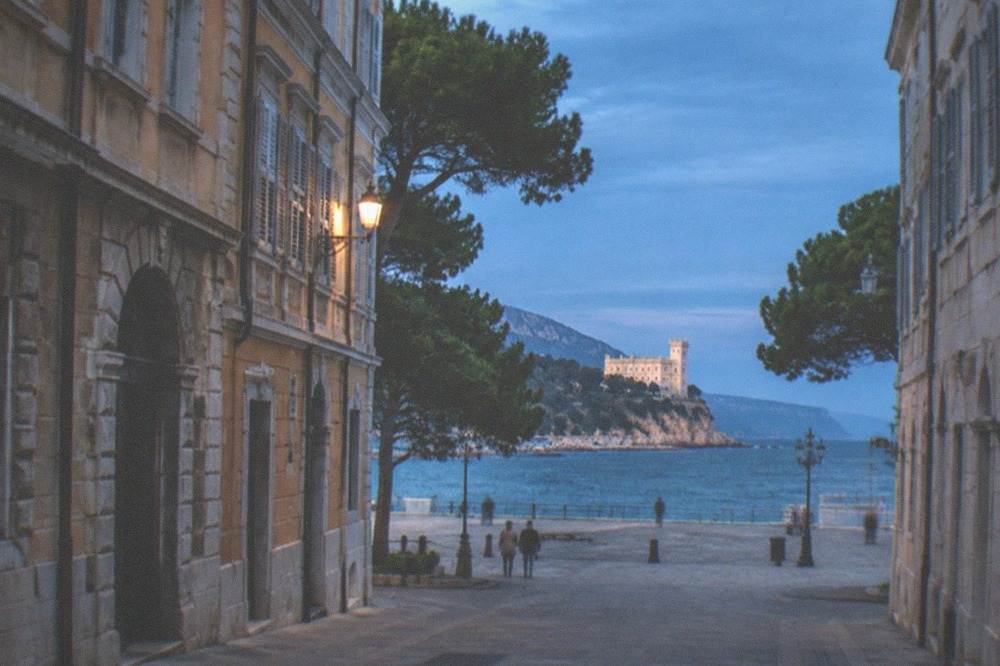
The combined castle-and-park ticket with the exhibition is also sold as a skip-the-line product at EUR 20.50, rated 4.4 from 146 reviews on its listing; that product is priced in euro, unlike most listings on this site, and the currency is given exactly as the operator prices it.
The trip up the coast combines naturally with the Barcola seafront and the walk to Grignano, or with a swim stop for anyone so inclined: ARPA's oceanographic bulletins show Gulf of Trieste sea temperatures peaking around 25.9 C in July and August, with swimmable conditions generally June into early October.
Where Should You Stay Near Piazza Della Borsa?
The best base for a first visit focused on Piazza della Borsa is the Borgo Teresiano, the flat grid district around the square and the Grand Canal, with Città Vecchia on the hill for atmosphere and the seafront around Piazza Unità d'Italia for views. The 2026 tourist tax ranges from EUR 1.50 to EUR 3.80 per person per night by accommodation class, capped at five consecutive nights, and everyone under 18 stays exempt.
The Borgo Teresiano is the practical choice: flat, central, walkable to the station, the seafront and the old town, and dense with the cafés and restaurants that make Trieste evenings pleasant. Città Vecchia trades convenience for character: steeper lanes, older buildings, the cathedral and castle above. The waterfront strip commands the best views. The where to stay in Trieste guide compares the districts in detail; no hotel rates are published here because none could be verified from official channels.
For food, the square's district sits at the centre of the buffet culture that defines eating out here: the jota soup, the goulash, the buffets serving cured pork and bread in the Central European manner. The what to eat in Trieste guide covers the food properly, and a guided foodie walking tour runs from the same district, from USD 71.08 per person, rated 4.91 from 264 reviews on the operator's listing.
What Do Visitors Get Wrong About Piazza Della Borsa?
The most common mistakes are treating the square as a major standalone sight, confusing it with Piazza Unità d'Italia, expecting it to have opening hours or tickets, and assuming Trieste's summer is too rainy or too windy to enjoy it. It is a free public square, one block behind the Grand Canal, best experienced as a stop on a walk, in a city whose driest and calmest month of the year, by the station tables, is June.
Visitors arriving from the cruise port or the station sometimes head straight for Piazza Unità d'Italia and never leave the waterfront, which means missing the canal district the Borsa square anchors entirely. The reverse mistake is expecting a UK-style "Bourse" building with a ticket desk and a tour: Trieste's trading square is a public piazza, free and always open, its interest spread across the facades and the café life rather than one interior.
The third error is believing the weather myths. Trieste's climate is not the rainy-city story some guides tell. The ARPA station tables show 867 mm of annual rain across 86.1 wet days, concentrated in autumn, with July the second driest month. The bora is real, 17.6 days a year with a gust over 90 km/h on average, but June is calm and summer episodes are rarer and weaker. Plan for the wind in the cool season, not the warm one.
| Month | Record gust km/h | Days gust over 72 km/h | Verdict for square walking |
|---|---|---|---|
| January | 148 | 5.5 | Cold, can be windy |
| April | 123 | 3.5 | Mild, low wind |
| June | 110 | 2.2 | Calmest month of the year |
| July | 125 | 3.3 | Warm, mostly still |
| September | 124 | 3.5 | Warm sea, moderate wind |
| November | 147 | 5.2 | Wettest month, windy |
Finally, the naming. Italian particles stay lowercase inside a proper noun: Piazza della Borsa, Piazza Unità d'Italia, Castello di San Giusto, del Carso. The accents are canonical: Unità, Città Vecchia, caffè. Getting the names right is a small thing, but on a border city where identity is the whole story, it is the visible part of taking the place seriously.
Common Questions About Piazza Della Borsa in Trieste
What is Piazza della Borsa in Trieste, Italy?
A small commercial square in the Borgo Teresiano district, one block inland from the Grand Canal. It was the trading and insurance hub of the Habsburg-era port, and today it is a free public piazza ringed by historic commercial buildings and cafés.
Is there an entry fee or opening hours for Piazza della Borsa?
No. It is a public square, open at all hours and free to enter. The ticketed sights nearby are Castello di San Giusto at EUR 7, Museo Revoltella at EUR 8, and further out, Miramare Castle at EUR 17 and Grotta Gigante at EUR 15.
How far is Piazza della Borsa from Piazza Unità d'Italia?
The two squares sit about two blocks apart in the flat central grid, with the Grand Canal between them. The walk between them is short and level, and the whole Borgo Teresiano district that contains both is pedestrian-scale.
What is near Piazza della Borsa?
The Grand Canal, the Sant'Antonio Taumaturgo church, the Serbian Orthodox church of Saint Spyridon, the Arco di Riccardo, the Roman theatre viewed from the street, the Molo Audace pier and the café district. The ticketed sights of San Giusto hill are a steep walk beyond the old town.
When is the best time to visit Trieste's squares?
April to June and September, when air temperatures are mild and gust days are at their lowest, with June the calmest month in the station tables. July and August are warmest; November is the wettest month at 109.8 mm of rain.
Can you take tours that include Piazza della Borsa?
Yes. Private walking tours of Trieste's centre include the square, from about USD 206.36 per group of up to 10, and a self-guided scavenger hunt covers it from USD 4.67 per person. A free, tip-based city walk also runs through the centre; check its listing for the current guru and schedule.
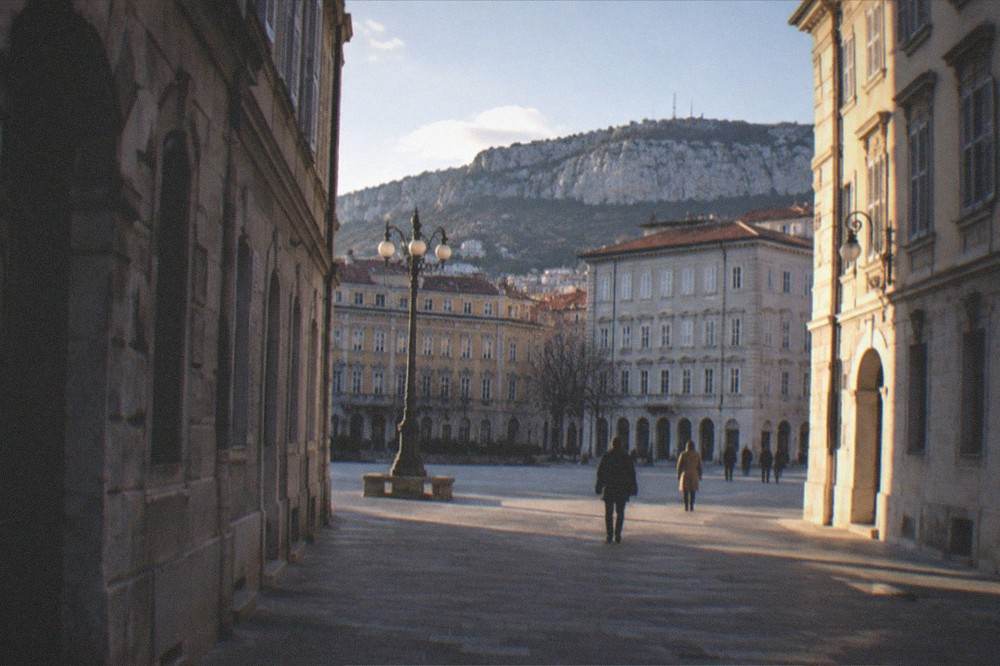
Piazza della Borsa is not the headline sight of Trieste, Italy, and that is precisely its use: it is the quiet commercial core that explains the grandeur two blocks away on the seafront. Walk it with a coffee, read the facades, and let it connect the canal, the cafés and the hill.