Trieste Photography Spots: Where to Point Your Camera in Trieste, Italy
Trieste, Italy, is a port city built for photographs: a Habsburg seafront, a Roman hill, a white castle on the water and a wind that sculpts the sky. Here is where to shoot, what it costs and when the light is right.
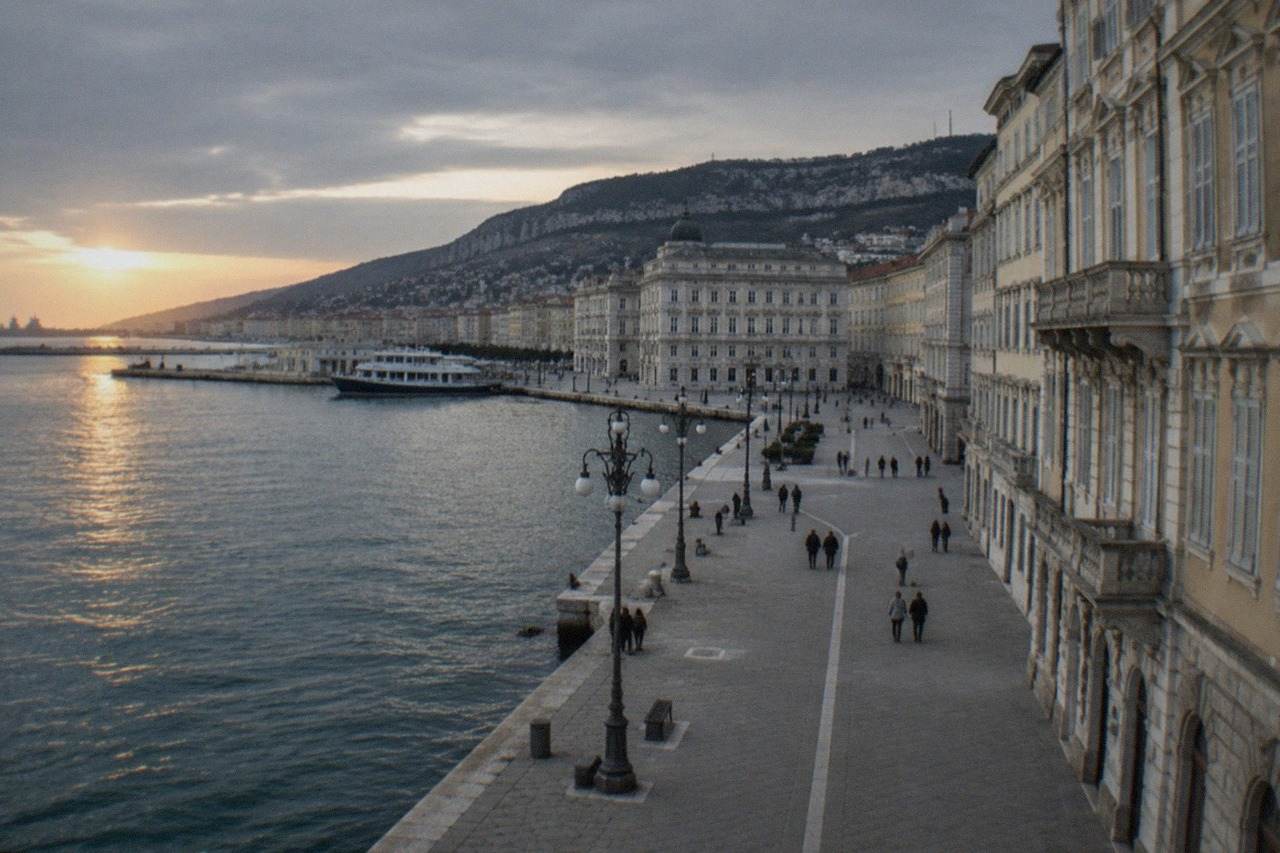
Short answer
The best Trieste photography spots are Piazza Unità d'Italia at dawn or dusk, Molo Audace for sea-level frames, San Giusto hill for the rooftops, the Victory Lighthouse for the gulf, Miramare Castle up the coast, and the Opicina tram for a moving subject unlike anywhere else in Italy.
Trieste, Italy, is one of the most photogenic small cities on the Adriatic, and almost nobody has photographed it. The seafront opens directly onto Piazza Unità d'Italia, a Habsburg square laid out against open water; a Roman theatre sits at the foot of a medieval castle hill; a white royal residence stares down the coast at Miramare; and a funicular tram, back in service since 1 February 2025, climbs a limestone escarpment that falls straight into the sea. The light is Central European, the architecture is imperial, and the wind, the famous bora, does things to the sky that a photographer cannot stage.
This guide walks through the frames worth travelling for, in the order you would shoot them across a day or two, with verified ticket prices, opening hours and climate data from the regional weather agency's own station tables. Practical planning around the city itself is covered in the one-day Trieste itinerary and the self-guided Trieste walking tour, and this page stays on the photography.
Where Are the Best Photography Spots in Trieste, Italy?
The strongest Trieste photography spots are Piazza Unità d'Italia and Molo Audace on the waterfront, San Giusto hill and the Victory Lighthouse above the city, the Canal Grande with the Serbian Orthodox church, Miramare Castle up the coast, and the Opicina tram on its cliff-side line. Each one gives a different Trieste: imperial, maritime, medieval, royal and working-class, all within a compact city that is easy to carry a camera around.
Start on the water. Trieste's centre faces the gulf head-on, with no beach, no promenade clutter and no land between your lens and the horizon, which is why the seafront frames work at almost any hour. The square itself, Piazza Unità d'Italia, is the single most photographed composition in the city and deserves its own section below.
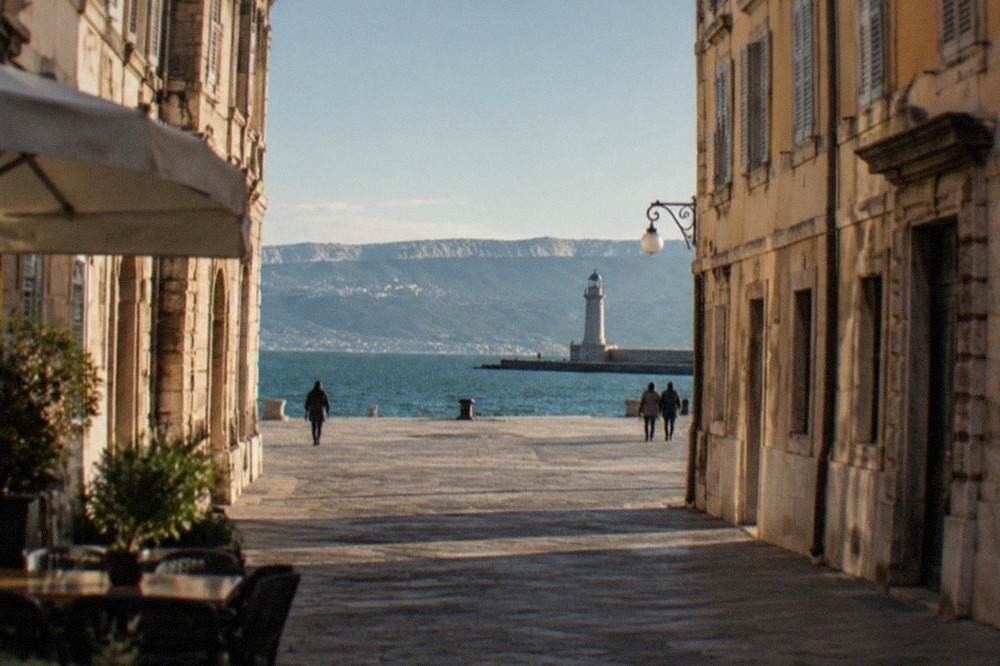
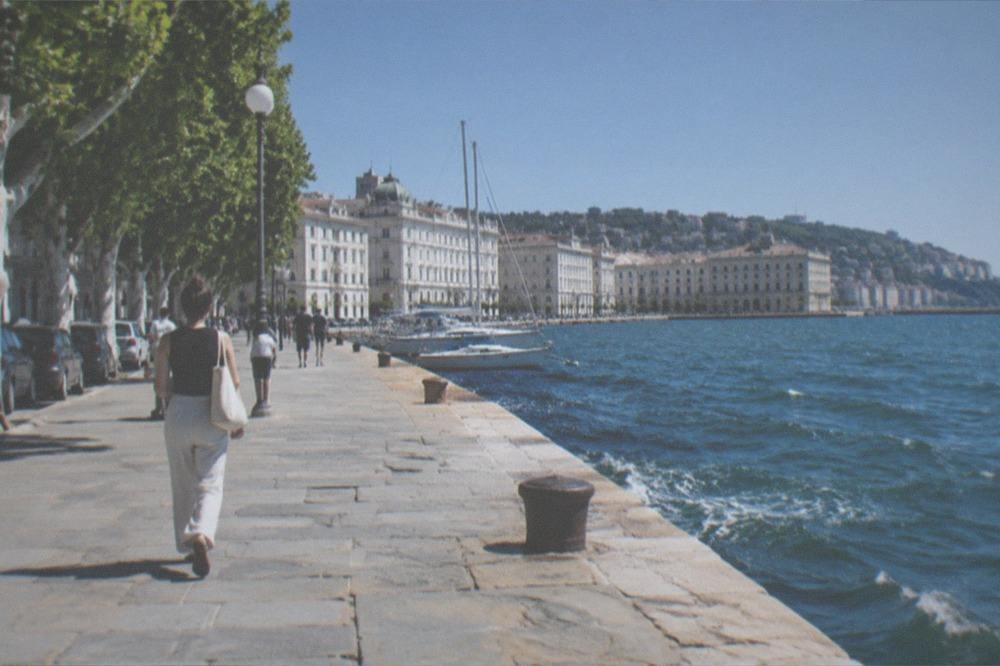
Molo Audace, the stone jetty that runs straight off the square into the gulf, is the sea-level counterpart: a flat walkway with water on both sides and the city's facade behind you. Shoot it long at dusk, when the paving stones reflect the sky. The Molo Audace guide covers the history; photographically, it is the one spot where the sea, not the architecture, is the subject.
The Canal Grande, a short waterway cut into the Borgo Teresiano grid, lines up the domed Serbian Orthodox church of Saint Spyridon at its head. It is the only place in the centre where you get water, bridges and a church spire in one frame, and the surrounding streets are the city's most consistent Habsburg-era backdrop. The Borgo Teresiano and Canal Grande pages map the district.
What Makes Piazza Unità d'Italia the Signature Trieste Photo?
Piazza Unità d'Italia is the signature Trieste photograph because it is one of the only great European squares that opens directly onto the sea, so a single frame holds ornate Habsburg facades, the town hall's central arch and the horizon of the Adriatic. The composition works from the water side looking inland, from the square looking out, and from the third floor of any café terrace.
The square's three monumental facades face the water, and the open side is the frame. Shoot from the Molo Audace end at first light, when the square is empty and the facades catch low sun; shoot from beneath the town hall arch at dusk, when the square's lamps come on and the gulf behind goes dark blue. The Piazza Unità d'Italia guide gives the building-by-building detail, including the Fountain of the Four Continents and the two bronze figures that locals treat as the square's personality.
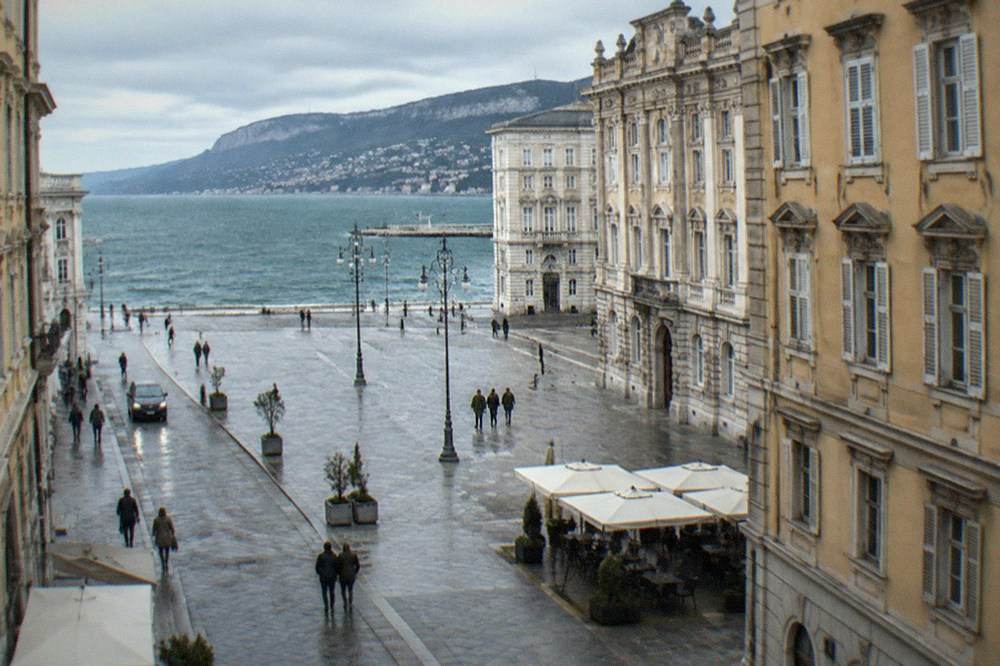
Two practical notes from the venue's own published hours. The square is public and free at all hours, which makes dawn the only reliable way to have it to yourself. And the historic caffè that line its flanks, covered in the Trieste coffee culture guide, are interiors worth photographing in their own right: mirrored, wood-panelled rooms from the era when this was the coffee port of an empire.
A guided walk is the efficient way to reach the square's best angles plus the lanes behind it. The "City that will definitely surprise you" walk pairs the centre's landmarks with a coffee in a historic bar, and its listing shows a 4.97 rating from 106 reviews at from $68.79 per person. The free walking tours in Trieste page covers the tip-based GuruWalk alternative for photographers travelling light on budget.
Which Trieste Viewpoints Give You the City from Above?
The real Trieste viewpoints are the walls and ramparts of Castello di San Giusto on the hill above the old town, the terrace of the Victory Lighthouse on the Chiadino side, the Obelisco stretch of the Opicina tram line where the city drops away beneath the tracks, and the park terraces at Miramare. Each looks at a different slice: rooftops, gulf, coastline and castle.
San Giusto hill packs three layers into one climb: the Roman theatre at its foot, which you photograph looking down from the street rather than entering, the Arco di Riccardo and the Cattedrale di San Giusto, and the castle on top. The San Giusto Castle and hill guide covers the route. The castle's published terms matter to a photographer: entry is €7 full, €5 reduced, and the ticket covers the walls and bastions, the castle museum and the Lapidario Tergestino. Hours are daily 10:00-19:00 with last entry 18:30 from 1 April to 11 October, then Tuesday to Sunday 10:00-17:00 from 12 October. The rampart walk is the viewpoint; the gulf and the red rooftops of Città Vecchia open below it.
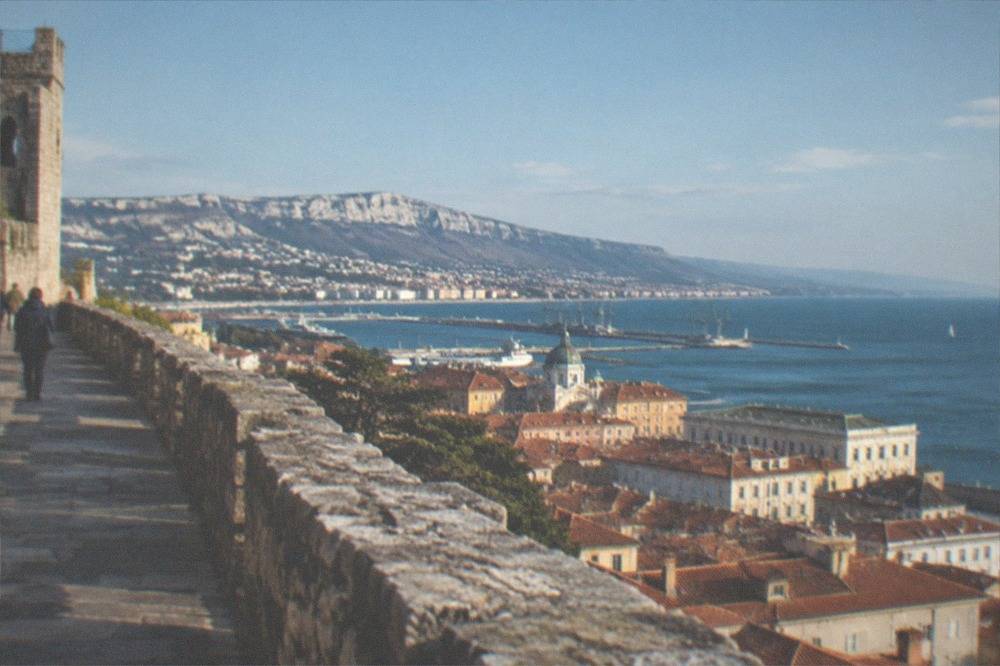
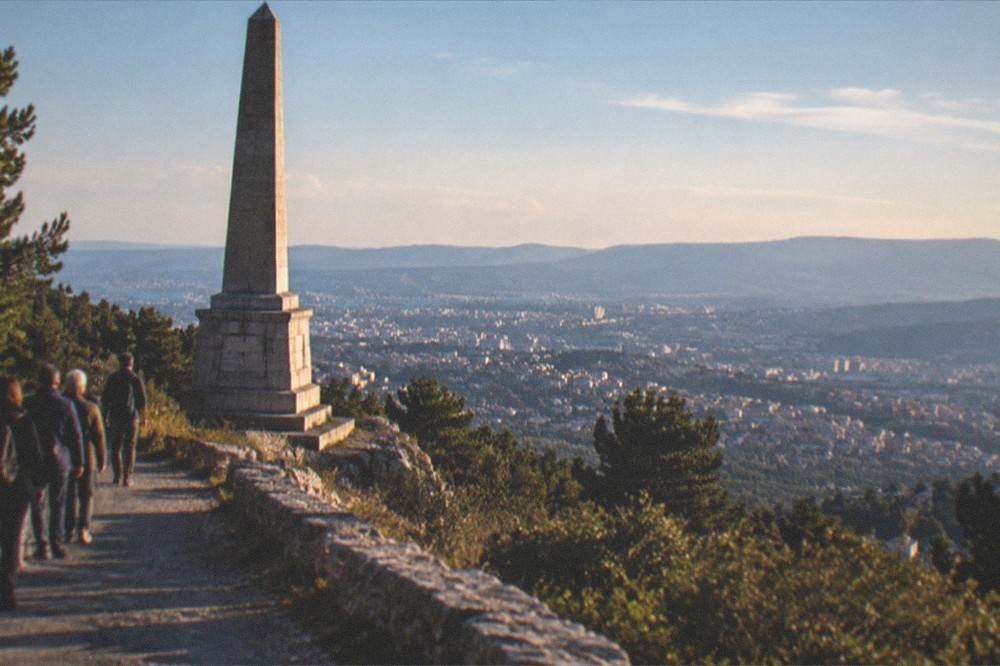
The Victory Lighthouse is the second: a monumental interwar lighthouse whose terrace frames the whole gulf front, the molo and the city in one sweep. The Opicina tram is the third and the most unusual, because the viewpoint moves. The tram, line 2 of the urban network, runs from piazza Dalmazia to Opicina village, and the stretch around the Obelisco is where the cliffs of the Carso fall away toward the sea. It was reactivated on 1 February 2025 after a long stop, it takes a standard urban ticket, and its live status is on the operator's homepage. A single fare is €1.50 for 60 minutes or €1.85 for 75 minutes per the 2026 urban tariff sheet.
| Viewpoint | What the frame holds | Entry cost | Best light |
|---|---|---|---|
| San Giusto castle ramparts | Rooftops of Città Vecchia, gulf, Molo Audace | €7 full, €5 reduced | Morning to late afternoon |
| Victory Lighthouse terrace | Full gulf front, molo, city skyline | Check the venue's page | Afternoon into sunset |
| Opicina tram at the Obelisco | Carso cliffs, coastline from above | €1.50 urban single | Morning, city side lit |
| Miramare park terraces | Castle, sea, Grignano coastline | Park free, castle €17 | Late afternoon from the west |
| Molo Audace | Sea horizon, square behind you | Free | Dawn and dusk |
Photographers who want the viewpoints and the stories in one pass should look at the guided options: the "City that will definitely surprise you" walk covers the centre with a historic-bar coffee stop, and the foodie walk reaches the market-and-lanes side of the city that most visitors never shoot. Check availability
When Is the Best Light for Photography in Trieste?
The best photography light in Trieste runs from April to September, when mean highs sit between 16.8 and 28.2 degrees Celsius, the sea reaches 25.9 degrees in July and August, and daylight stretches past 15 hours in June, but October is the month that combines long golden hours with the Barcolana regatta, and November is the one to avoid for light, since it is both the wettest month at 109.8 mm and the darkest at 9.54 hours of daylight.
These figures come from the regional weather agency's own station tables for the Trieste molo, series 1995-2024, and they are the data a photographer should actually plan against. The full breakdown is in the Trieste weather month-by-month guide and the best time to visit Trieste page; the photography-specific read is below.
| Month | Mean high C | Daylight hours | Rain mm | Sea C | Photographic read |
|---|---|---|---|---|---|
| March | 13.0 | 11.83 | 52.8 | 11.6 | Soft light, bare trees on the Carso |
| April | 16.8 | 13.48 | 60.7 | 14.0 | Long evenings, park in bloom |
| May | 21.7 | 14.88 | 75.0 | 17.9 | Peak walking-shooting weather |
| June | 25.8 | 15.68 | 62.5 | 23.1 | Longest days, calmest wind month |
| July | 28.2 | 15.38 | 53.8 | 25.9 | Second-driest month, warm sea |
| September | 23.9 | 12.62 | 102.3 | 23.9 | Storm skies over the gulf |
| October | 19.6 | 11.03 | 88.6 | 20.3 | Barcolana month, golden hours |
| November | 14.7 | 9.54 | 109.8 | 16.8 | Wettest and darkest month |
Two details in that table surprise people, and both matter to a photographer. July is the second-driest month of the year at 53.8 mm, not part of a rainy summer; the wettest month is November, followed by September. And June is the calmest month for wind, which makes it the month for long exposures and tripod work on the waterfront. The wider set of guides lives on Trieste Travel Guide.
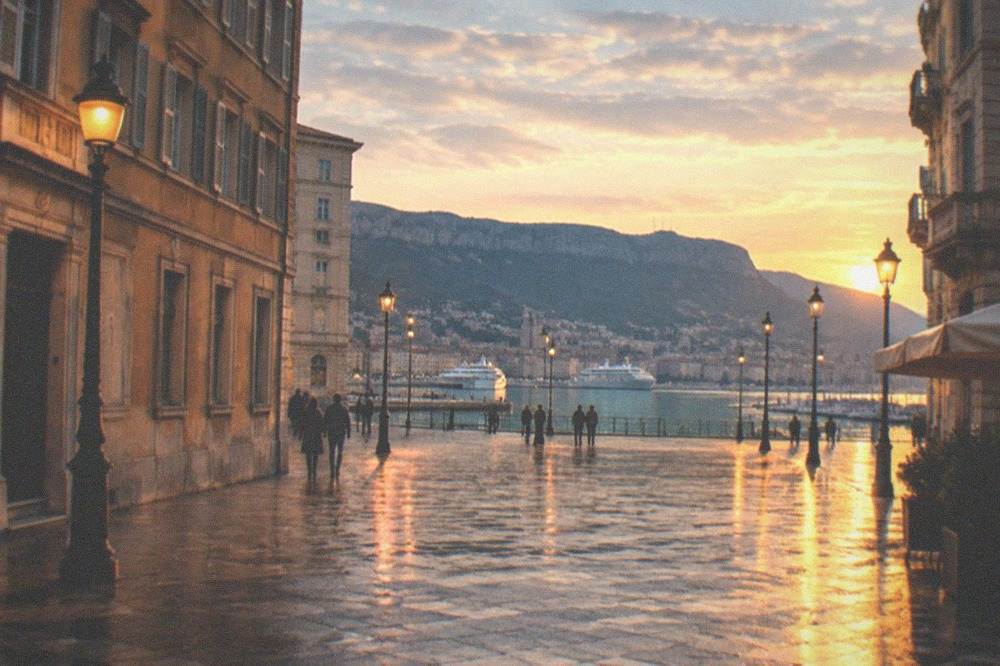
If your trip lands in the first half of October, the Barcolana regatta is the single biggest photographic event on the calendar. Barcolana 58 runs 2-11 October 2026, with the main race on Sunday 11 October from 10:30 over 13 nautical miles in the gulf. The record entry stands at 2,689 boats, set in 2018, which the organisers describe as a Guinness World Record for the largest sailing race in the world. Shooting two thousand sails off Piazza Unità d'Italia is a once-a-year frame.
How Does the Bora Wind Change Your Trieste Photos?
The bora changes Trieste photography more than any other single factor: this is a katabatic wind that gusts from the east-north-east, the waterfront station averages 17.6 days a year with a gust over 90 km/h and 49 days over 72 km/h, and its all-time peak in the station series is 168.1 km/h recorded in February 2012, so on a bora day the sea is white, the sky is scrubbed clean and handheld shots need fast shutter speeds.
The wind is the city's defining weather fact, and the bora wind guide covers the science and the culture. For a photographer the practical takeaways are simple. Bora days give you the clearest air of the year, because the wind strips the haze off the gulf and the Carso, so distant coastline shots that fail in summer humidity snap into focus. They also give you a sea state that makes the Molo Audace and the lighthouse frames dramatic rather than serene.
| Wind fact (station series 1995-2024) | Figure |
|---|---|
| All-time peak gust | 168.1 km/h, February 2012 |
| Average days per year with a gust over 90 km/h | 17.6 |
| Average days per year with a gust over 72 km/h | 49.0 |
| Calmest month | June |
| Windiest months for strong gusts | January and February |
| Monthly record gust, every month of the year | Above 110 km/h |
No official wind threshold exists at which the seafront closes or ferries stop, so do not plan around a number; check the operator's site on the day. What you can plan is the seasonal pattern: strong-gust days cluster in the cool season and peak in February, while June is the calmest month in the tables. If you want bora drama in your frames, come between November and March. If you want glassy water and long exposures, come in June.
What Should You Photograph at Miramare Castle and the Coast?
Miramare Castle is Trieste's most rewarding photography subject outside the centre: a white royal residence built on a headland over the gulf, with a free park of terraces and avenues around it, a castle ticket at €17 for adults including the current exhibition, and a marine protected area below it where the water is the colour photographers cross countries for. The castle is open every day 9:00-19:00 with last admission 18:30.
The castle's own visit page is the source for those hours and prices, and the split between park and castle matters: the park is free all year, with seasonal hours, while the castle interior is ticketed. The Miramare Castle guide covers the apartments of Maximilian and Charlotte and the park's layout. Photographically, the park terraces give you the castle-above-sea composition from several heights, and the shoreline below gives you the castle-from-the-water line.
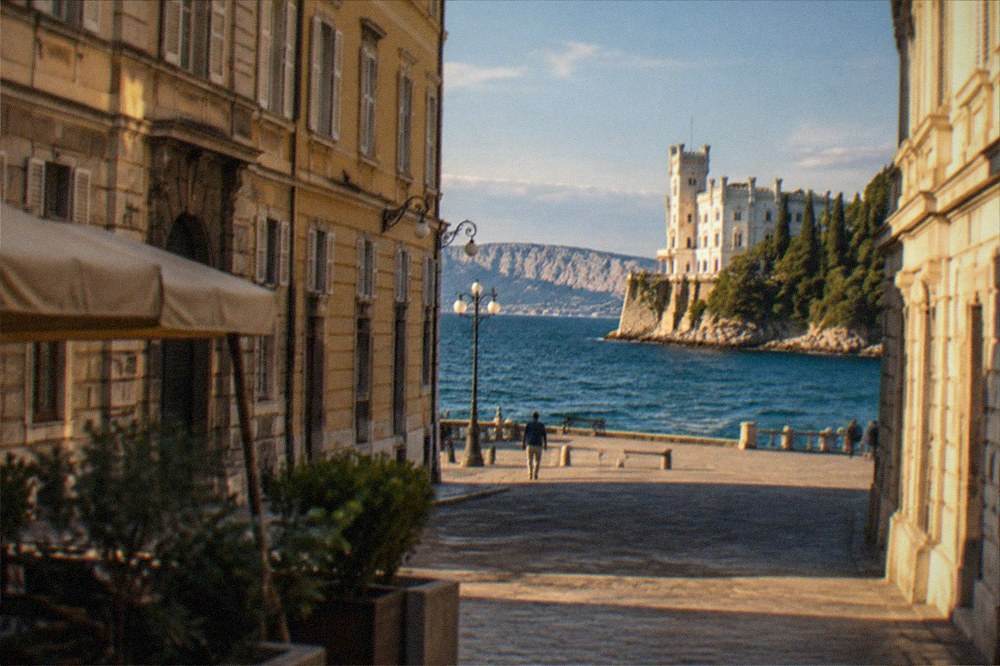
The castle also participates in the ministry's first-Sunday-of-the-month free-entry scheme, so confirm the date on the venue's own event page before you plan a free visit. For the coast beyond, the Barcola seafront and the Trieste beaches and swimming guide cover the water side, and the sea temperature tables show why late summer is the photographic sweet spot: the water averages 25.9 C in August and still 23.9 C in September, warmer than June at 23.1 C despite shorter days, because the sea holds its heat into autumn.
A ticket-only product is the lightest way in: the Miramare Castle entrance ticket product is listed from $29.19 per person with a 3.6 rating from 39 reviews on the operator's listing. The panoramic city and castle tour, a 4-hour guided product from $129.94 per person rated 4.97 from 21 reviews, bundles the castle with the city viewpoints.
| Coastal subject | Frame | Cost to shoot it |
|---|---|---|
| Miramare Castle from the park terraces | Castle above the gulf | Park free |
| Miramare Castle interiors | Royal apartments, sea-view rooms | €17 adult, €7 reduced EU 18-25 |
| Miramare marine protected area | Clear water, coastline | Check the protected-area page |
| Barcola seafront | Pines over water, sunbathing coast | Free |
| Duino castles and the Rilke trail | Cliff path, two castles | See the Rilke trail guide |
| Grotta Gigante | One of the world's largest show caves | €15 adult, guided tours only |
One inland addition for the cave-minded: Grotta Gigante, on the Carso above the city, is a guided-only visit with compulsory booking, €15 for adults, with departures at 9:00, 10:00, 11:00, 12:00, 14:00, 15:00 and 16:00. It runs Tuesday to Sunday from September to February and daily from March to August. Underground photography is its own discipline, but the single chamber is a frame unlike anything else in the region.
Which Trieste Tours and Walks Help Photographers Most?
The tours that help photographers most in Trieste are the guided walking tours that reach the centre's frames with a local who knows the light, the food walk for the market and lanes most visitors miss, and the Miramare products for the coastal frames; the flagship "City that will definitely surprise you" walk is rated 4.97 from 106 reviews, costs from $68.79 per person and includes coffee in a historic bar that is itself worth photographing.
The logic is simple: Trieste's best frames are within walking distance of each other, but the stories, the empty-square timing and the interior access are not. A two-and-a-half-hour guided walk covers the centre's compositions and puts you inside at least one historic caffè whose mirrored interior you would otherwise walk past. The listing for that walk shows from $68.79 per person, 2h 30m, rated 4.97 from 106 reviews.
The foodie walk is the second pick for a photographer, and not only for the eating: it is rated 4.91 from 264 reviews, from $71.08 per person for three hours, and it moves through the market-and-street-food side of the city, the Città Vecchia lanes and the buffet culture covered in the what to eat in Trieste guide. Street photography in Trieste lives in those lanes, and a local guide walks you through them at the hours when they are alive.
For the free option, the free walking tours in Trieste page lists the GuruWalk pay-what-you-want walks, including a centre walk rated 4.86 from 50 reviews and an Old Port industrial-archaeology walk, tip-based and run by a local guru, through a port district only opened to the public in recent years. The Old Port is the most underrated photographic subject in the city: monumental interwar port architecture on a scale the centre never shows you.
| Tour product | Kind | Duration | Listing price | Rating on the listing |
|---|---|---|---|---|
| City that will definitely surprise you | Guided walk with historic-bar coffee | 2h 30m | From $68.79 | 4.97 from 106 reviews |
| Guided Foodie Walking Tour | Food walk, Città Vecchia lanes | 3 hours | From $71.08 | 4.91 from 264 reviews |
| Miramare Castle Entrance Ticket | Ticket-only castle entry | 2-3 hours | From $29.19 | 3.6 from 39 reviews |
| Panoramic City and Miramare Castle Tour | Guided city plus castle, 4 hours | 4 hours | From $129.94 | 4.97 from 21 reviews |
| GuruWalk city walk | Free, tip-based | Variable | Free, tip based | 4.86 from 50 reviews |
| GuruWalk Old Port walk | Free, tip-based, port district | Variable | Free, tip based | 5 from 4 reviews |
Budget the trip around the Trieste on a budget and how much a trip to Trieste costs pages, and remember the tourist tax when you book accommodation: the Comune's 2026 table charges per person per night, from €1.50 at campsites to €3.80 at five-star hotels, for a maximum of five consecutive nights in the same property.
Common Questions About Photography in Trieste
Where are the best photography spots in Trieste, Italy?
Piazza Unità d'Italia and Molo Audace on the waterfront, San Giusto castle ramparts and the Victory Lighthouse above the city, the Canal Grande with Saint Spyridon's dome, Miramare Castle up the coast, and the Obelisco stretch of the Opicina tram line.
When is the best light for photography in Trieste?
April to September for long days and warm light, June for the calmest wind in the station tables, and the first half of October for the Barcolana regatta. November is both the wettest month at 109.8 mm and the darkest at 9.54 hours of daylight.
Does the bora wind ruin photography in Trieste?
The opposite. Bora days scrub the haze off the gulf and give the clearest air of the year; the waterfront station averages 17.6 days a year with a gust over 90 km/h. Bring fast shutter speeds and a windproof setup, and shoot the seafront when it is white.
Can you photograph inside Miramare Castle?
Yes, with a castle ticket: €17 for adults including the current exhibition, €7 reduced for EU citizens 18-25, open every day 9:00-19:00 with last admission 18:30. The park around it is free all year and gives the castle-above-sea frames from its terraces.
Is Piazza Unità d'Italia free to photograph?
Yes, the square is public at all hours, which makes dawn the only reliable time to have it empty. The historic caffè on its flanks are separate businesses with their own hours.
Which Trieste tours are best for photographers?
A guided centre walk such as the "City that will definitely surprise you" tour, rated 4.97 from 106 reviews, for the landmarks and a historic-bar interior; a food walk for the Città Vecchia lanes; and a Miramare ticket or guided castle tour for the coastal frames.
Trieste rewards the photographer who turns up early, checks the wind forecast and walks. The square at dawn, the ramparts in the afternoon, the jetty at dusk and the castle up the coast are all within a day of each other, and the light on the gulf does the rest.