Trieste vs Venice: Which Italian City Should You Visit?
Trieste and Venice sit on the same Adriatic shore, two hours apart by train, and they could not be more different cities. Here is how the two compare.
Short answer
Trieste, Italy is the cheaper, calmer and more surprising of the two: free seafront, Habsburg squares, €1.50 bus tickets and a coffee culture Venice cannot match. Venice has the canals, the crowds and the higher prices. Two or three days in each, with the train between them, is the best way to do both.
Trieste, the Adriatic port city in Friuli Venezia Giulia in Italy's northeast, gets compared to Venice more often than its residents would like. The two cities share a sea, a railway line and a Habsburg-tinged history of ports and empires, and they are close enough that travellers routinely bolt one onto the other. But they are opposites in almost everything a visitor actually feels: Venice is a museum city built on water and flooded with visitors, Trieste is a working city with a free seafront, a coffee obsession and barely a queue in sight. This guide compares the two honestly: prices, crowds, food, atmosphere, transport and how to combine them on one trip.
The short version: if you want spectacle and do not mind paying for it, Venice wins. If you want a city that feels lived in, where a coffee in a historic caffè costs less than a Venetian gondola ride tip and the biggest monument, the sea itself, is free, Trieste wins. Many people, quite sensibly, do both. The train connection between the two makes a split trip easy, and there is a full argument on whether Trieste is better than Venice elsewhere on this site if you want the short-form case.
Is Trieste or Venice Better for a First Visit?
For a first taste of Italy's northeast, Venice is the safer bet: it is a global icon and its core sights are unmissable. But for a first visit that rewards you rather than processes you, Trieste is the better city: it has the same Habsburg grandeur, a seafront that costs nothing, a coffee culture Venice cannot imitate, and crowds thin enough that you can walk into the main square, Piazza Unità d'Italia, and have it feel like yours.
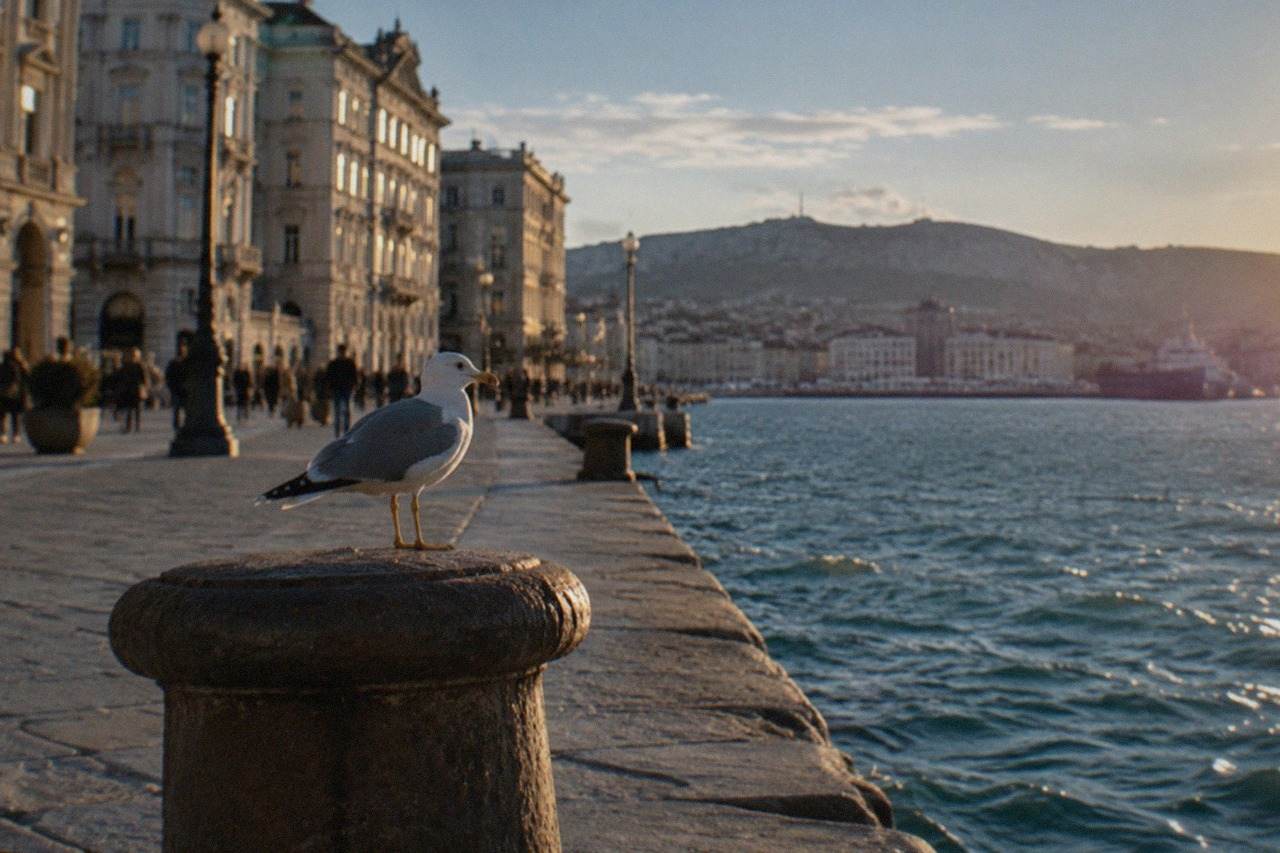
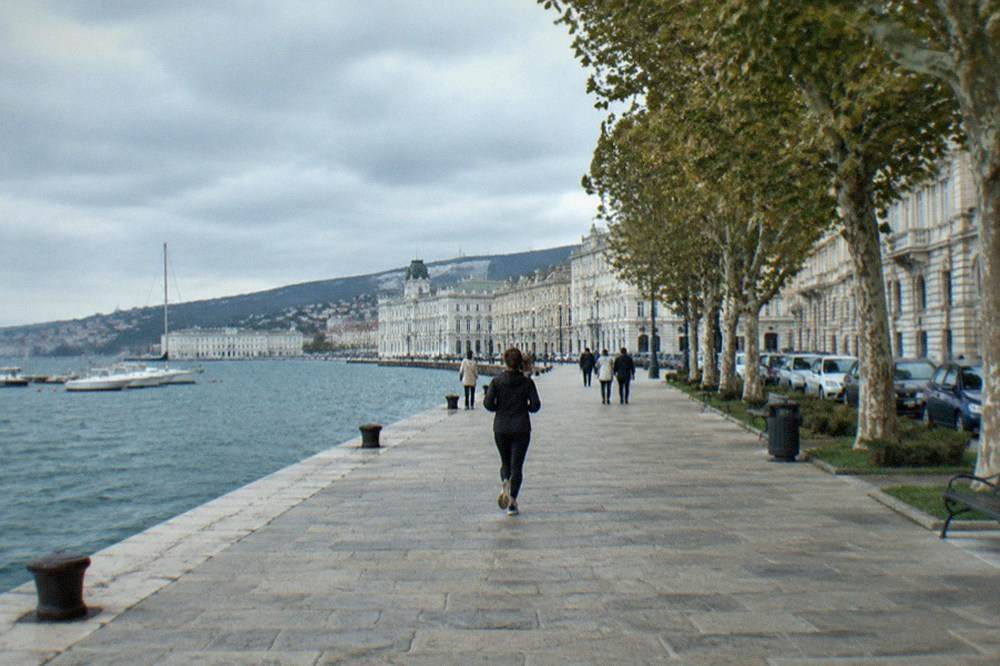
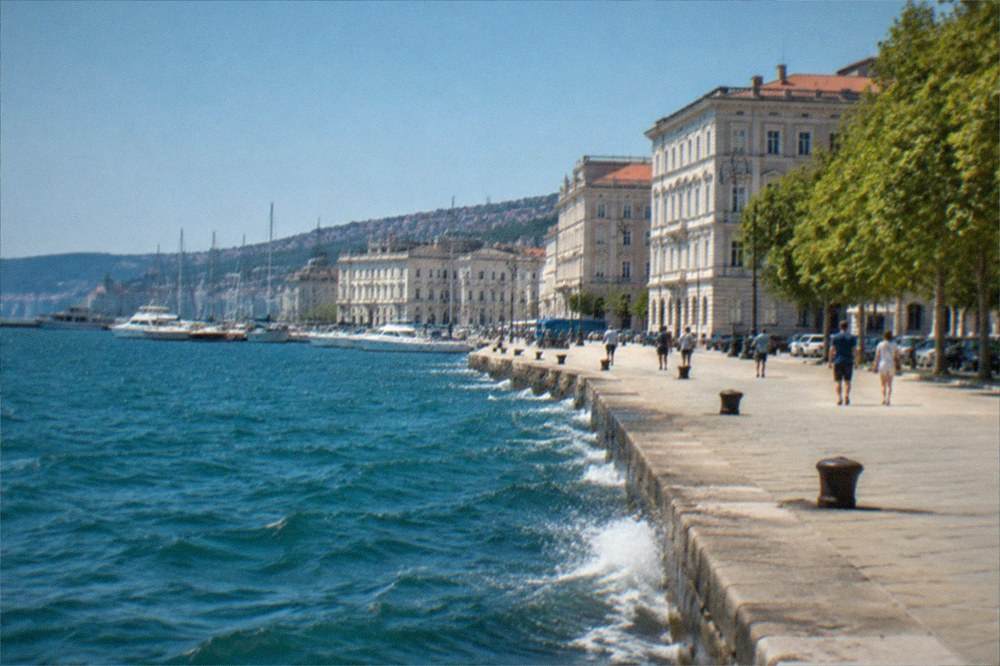
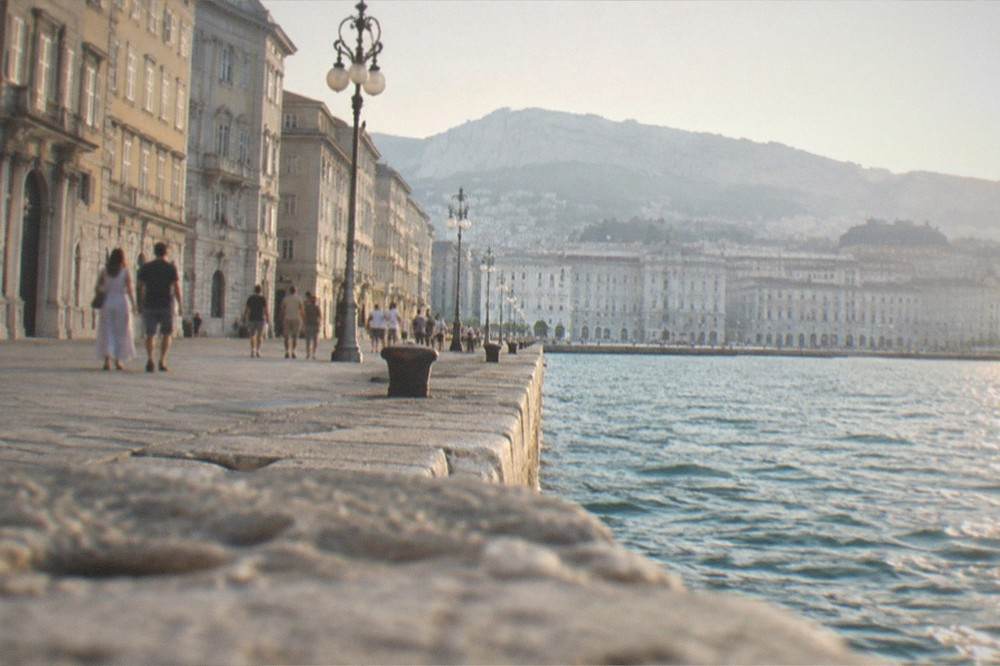
Venice delivers a concentrated hit of the extraordinary. Canals, palazzi, the Basilica di San Marco: none of it exists anywhere else. The cost of that uniqueness is density. Trieste's sights are spread across a compact centre that you never have to fight through. Piazza Unità d'Italia opens directly onto the sea, the largest seafront square in Italy, and the old town climbs away from it in a grid of lanes that stay quiet even in summer. The Molo Audace, the stone pier that reaches into the gulf, is free, always open and, on a bora-clear evening, one of the great public spaces in Europe.
If it is your only trip to this corner of Italy and you have three or four days, the honest answer is to see both. Venice for the spectacle, Trieste for the feeling that you discovered something. Our one day in Trieste itinerary shows how little time the city needs to work its spell, and the two-day version simply adds the Carso and a slow evening on the water.
Which City Is Cheaper: Trieste or Venice?
Trieste is the clearly cheaper city. Its urban bus single costs €1.50 for 60 minutes and a day ticket €3.35, its castle entry tops out at €17 for Miramare with the exhibition included, its cathedral is free, its seafront and main square cost nothing, and its tourist tax runs €1.50-3.80 per night for at most five nights. Venice's pricing pressure starts higher on every one of those lines, from transport to accommodation to a simple coffee standing at the bar.
The verified Trieste numbers make the case on their own. The 2026 urban tariff sheet from Trieste Trasporti lists a 60-minute single at €1.50, a 75-minute single at €1.85, a day ticket at €3.35 and a 10-ride carnet at €13.50. Contactless bank cards can be tapped on board and the system charges the cheapest applicable fare. The Comune's own 2026 tourist-tax table charges €3.80 per night in a five-star hotel, €3.30 in a four-star, €3.00 in a three-star, €2.30 in a two-star or B&B Superior, €2.00 for B&B Comfort, €1.80 for a one-star or B&B Standard and €1.50 at campsites, for a maximum of five consecutive nights, with everyone under 18 exempt.
| Trieste cost item | 2026 figure | Notes |
|---|---|---|
| Urban bus single, 60 min | €1.50 | Extended to 240 min on Sundays and holidays |
| Urban day ticket | €3.35 | Valid on the whole urban network, including the Opicina tram |
| Miramare Castle, adult | €17.00 | Includes the temporary exhibition |
| Castello di San Giusto, adult | €7.00 | Covers walls, museum and Lapidario Tergestino |
| Museo Revoltella, adult | €8.00 | Closed Tuesdays |
| Cattedrale di San Giusto | Free | Bell tower price not published by the parish |
| Tourist tax, 3-star hotel | €3.00 per night | Max 5 nights, under-18s exempt |
None of that means Trieste is free of tourist pricing. A coffee in one of the great historic caffè costs more than one at a neighbourhood bar, and the Miramare park's free entry does not extend to the castle. But the floor is lower everywhere, and the city's biggest experiences, the seafront, the old town, the swimming at Barcola, cost nothing at all. The question of whether Trieste is cheap or expensive has its own answer page, and the full cost breakdown lives in the trip-budget guide on this site.
How Do the Crowds Compare Between Trieste and Venice?
Trieste has visitors, Venice has visitor management. Trieste's busiest moments, a summer evening on the Rive or the Barcolana regatta weekend in October, would count as an ordinary Tuesday in Venice's core. In Trieste you can walk into Piazza Unità d'Italia, the Molo Audace and the old town on a weekend in July and still find space, while Venice's historic centre concentrates its annual arrivals into a few narrow calli.
The difference is structural, not seasonal. Venice is a small island city receiving a global pilgrimage; Trieste is a regional capital that tourists have only recently rediscovered. Trieste's own calendar has genuinely busy moments: the Barcolana regatta, whose record edition in 2018 put 2,689 boats on the start line, fills the seafront for the regatta weekend, which in 2026 runs 2-11 October with the main race on Sunday 11 October. But even that is a local festival that swells the city with Italians rather than a permanent state of saturation.
The practical payoff is that Trieste does not require the tactics Venice now demands: no pre-booked time slots for a stroll, no detour into quiet corners to escape the flow, no calculating an off-season window. The best time to visit Trieste matters for weather and events, not for crowd avoidance. If you want the spectacle of Venice without the crush, the standard advice on whether Venice or Trieste is better is blunt: base yourself in Trieste and day-trip into Venice early, then come home to a calm seafront.
What Does Trieste Have That Venice Does Not?
Trieste has a Habsburg seafront, a coffee culture with no Venetian equivalent, the bora wind, the Karst plateau with its osmize farm taverns and caves, and a borderland identity straddling Italy, Slovenia and Central Europe. Venice has canals and a merchant empire's art. Trieste has an imperial port's architecture, free sea swimming at Barcola, and a landscape that runs from the Adriatic into limestone karst within a few kilometres.
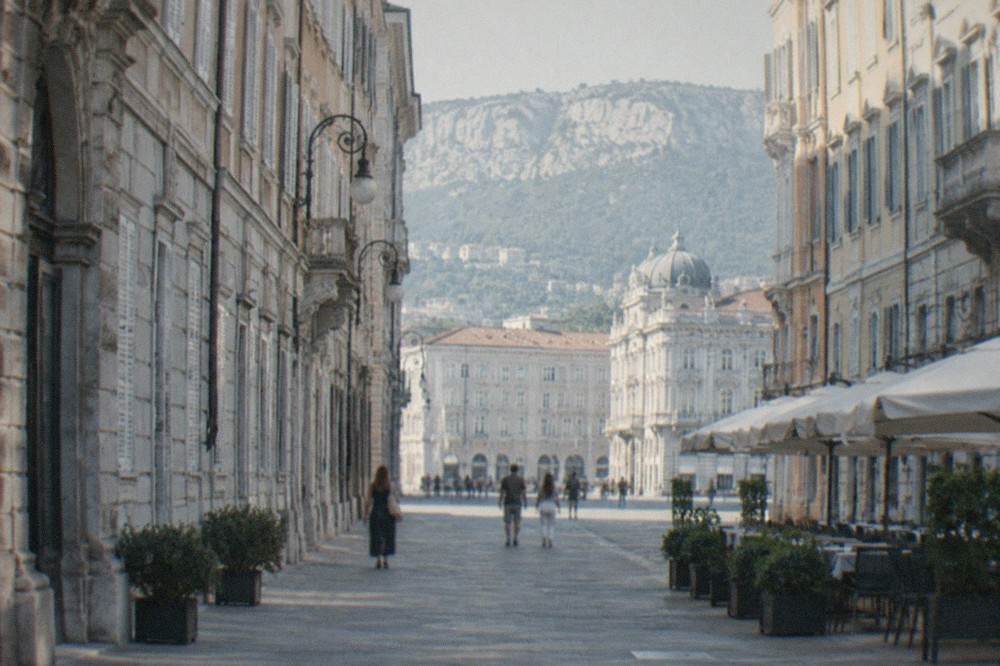
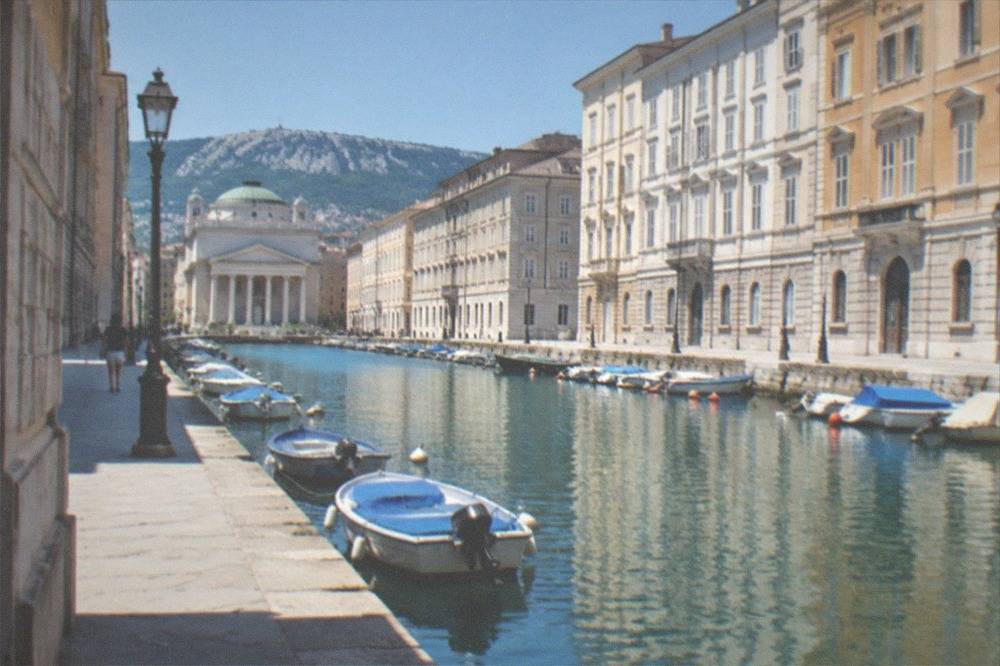
Start with the architecture. Trieste was the Habsburgs' great port, and it shows: Piazza Unità d'Italia, the canal district of the Borgo Teresiano, the opera house. This is Central Europe facing the sea, not the Byzantine-Venetian mash of the lagoon. The Habsburg history private walking tour exists precisely because the empire is the story here, and a private guide is the fastest way to read the facades. Check availability on the operator's live listing.
Then coffee. Trieste's coffee culture is the city's defining daily ritual, a port-town roasting tradition with its own vocabulary of orders and a set of historic caffè that double as salons. Venice has its historic caffè too, on San Marco's flank, but in Trieste the coffee house is the city's living room, not an attraction. The signature drinks, the ritual of the counter, the sheer density of historic rooms: it is the one category where Trieste is not merely cheaper than Venice but categorically different.
| Trieste only | What it is | Verified figure |
|---|---|---|
| Barcola seafront | Free swimming and pine-shaded promenade on the gulf | Free entry |
| Grotta Gigante | One of the world's largest show caves, guided only | Adult €15, booking compulsory |
| Osmize of the Carso | Seasonal farm taverns selling their own wine, signposted by a frasca branch | Calendar at osmize.com |
| The bora wind | A gust averaging 17.6 days a year over 90 km/h at the molo | Peak 168.1 km/h, February 2012 |
| Miramare Castle | Archduke Maximilian's white castle above the sea | €17, park free year-round |
| Opicina tram | A hybrid tram-funicular, reactivated 1 February 2025 | Urban ticket valid, €1.50 single |
The Karst is the trump card. Within the province, the landscape flips from sea to limestone: Grotta Gigante near Sgonico, the Škocjan Caves over the Slovenian line, and the osmize, farmhouse taverns where producers sell their own wine under a Habsburg-era custom, signposted by a leafy frasca branch at the roadside. Venice's hinterland is industrial plain; Trieste's is one of the most distinctive landscapes in Italy.
Trieste vs Venice: Which Is Better for Food and Coffee?
Trieste wins on food and it is not close. Its cuisine is a genuine borderland mix of Italian, Slovenian and Austro-Hungarian cooking, jota soup and goulash in the buffets, prosciutto and Adriatic fish, served at local prices, while its coffee culture is the deepest in Italy. Venice's food is good at the high end and punishing in the tourist core, and its coffee tradition, while real, is a museum piece beside Trieste's living one.
Trieste's food identity is what the city eats daily: jota, goulash and the buffet tradition, Austro-Hungarian bean-and-sauerkraut soups beside Adriatic sardines and the local Terran and Vitovska wines of the Carso. The guided foodie walking tour covers the street-food side in three hours, from $71.08 per person, rated 4.9 from 264 reviews on the operator's listing. It is the single best shortcut into the buffet culture that most visitors otherwise miss entirely.
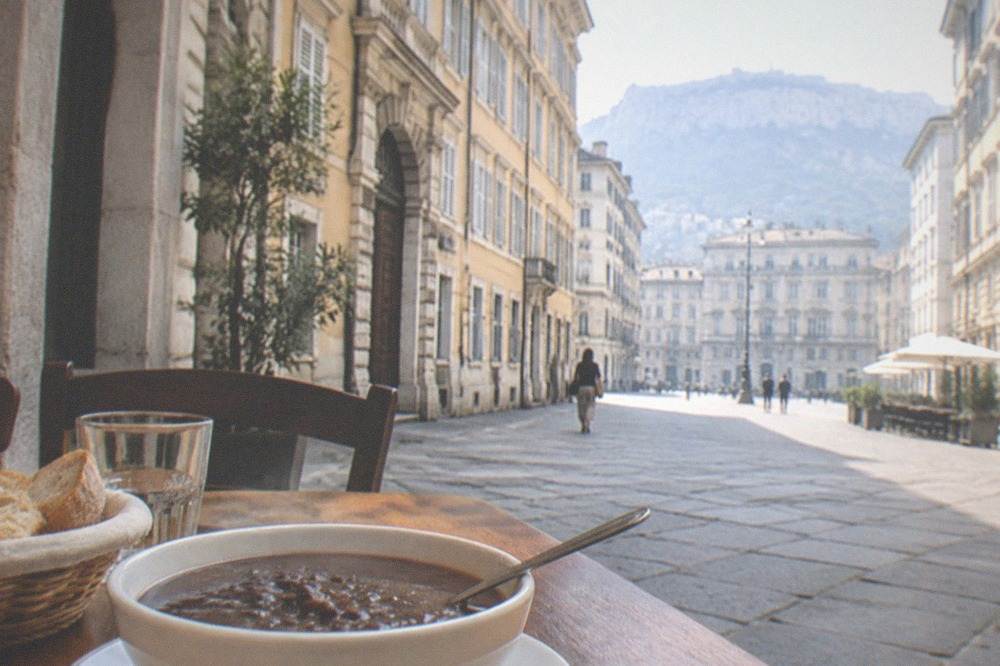
Coffee deserves its own paragraph because it is the one thing everyone asks about. Trieste is a historic coffee port and roasting centre, the home city of Illy, and the caffè is where the city's public life happens. The often-repeated claim that Triestini drink some multiple of the Italian average has no primary source behind it, so this guide will not print a number, but the observable fact stands: the historic caffè are full of residents, not tourists, at rates Venetian institutions abandoned long ago. Other pages covering the same trip are gathered on Trieste Travel Guide.
| Food and drink category | Trieste | Venice |
|---|---|---|
| Defining dishes | Jota, goulash, prosciutto, Adriatic fish, presnitz | Sarde in saor, risi e bisi, baccalà |
| Coffee culture | Living daily ritual, historic caffè full of locals | Historic caffè, largely tourist trade |
| Wine region | Carso: Vitovska, Malvasia, Terrano, nearby Prosecco hills | Veneto: Prosecco, Soave, Valpolicella |
| Budget eating | Buffets serving jota and goulash at local prices | Cheap eats thin in the tourist core |
| Food tours on this site | From $71.08 per person, 3 hours | Not covered by this site's roster |
How Do You Combine Trieste and Venice on One Trip?
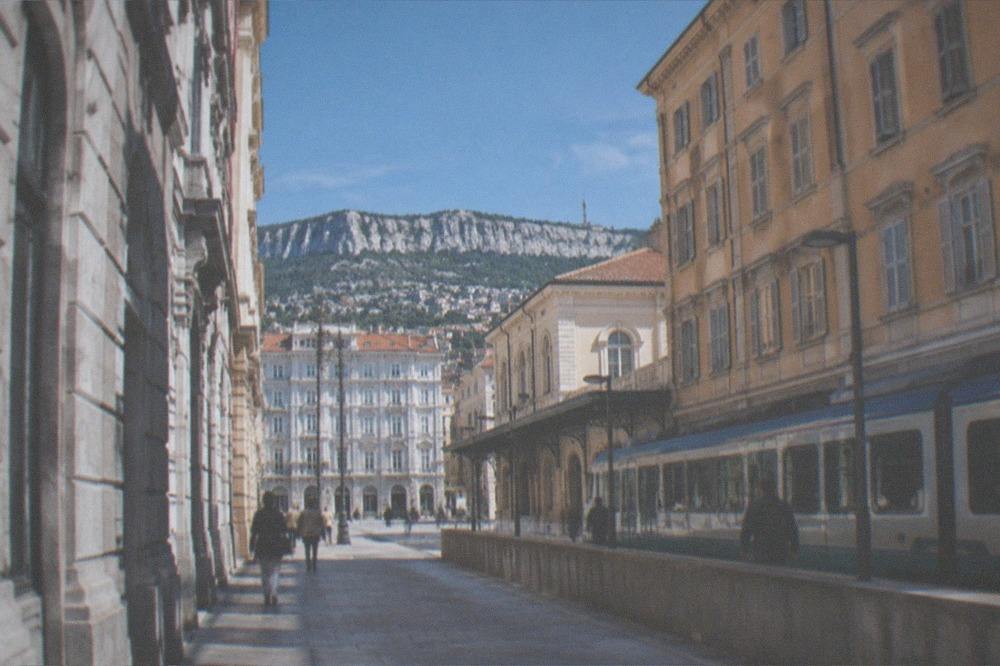
The two cities are connected by a direct rail line along the Adriatic coast, and the standard, best-value pattern is to base yourself in Trieste, which is cheaper and calmer, and day-trip into Venice for the spectacle. A Venice day trip from Trieste is a well-trodden route, and the reverse, Venice to Trieste as a day trip, works too if you are already committed to a Venetian stay. Allow two or three days in Trieste and one long day in Venice, or split a week between them.
The day trip from Trieste to Venice has a full planning page here, and the rail detail, frequencies and the scenic question, is covered in the train guide between the two cities. Cruise passengers have their own decision tree: whether a day trip from Trieste to Venice is realistic, and how a transfer from the cruise port works, are the two questions that matter, and both have answer pages on this site.
If you are flying in through Venice's airport rather than Trieste's own, the transfer logistics are covered in the Venice airport to Trieste guide on this site. The choice of base is really a question of temperament and budget, and the argument over which city to sleep in is made in detail in the stay-comparison answer page.
Which City Has the Better Weather and Sea?
Trieste has a windier, more dramatic climate and a swimmable free seafront; Venice has a hotter, more humid lagoon summer and a flooding season in late autumn. Trieste's bora wind averages 17.6 days a year with gusts over 90 km/h and its all-time measured peak is 168.1 km/h from February 2012, but its July and August mean highs sit at 28.2 and 28.1 C with sea temperatures at 25.9 C, and its wettest month is November, not summer.
ARPA FVG's own station tables for Trieste molo Fratelli Bandiera, the 1995-2024 series, give the city a precise profile most guides get wrong. July is the second-driest month of the year at 53.8 mm of rain, while November is the wettest at 109.8 mm and September second at 102.3 mm. The sea in the gulf reaches 25.9 C in July and August, which is why Barcola and the city's beaches fill up all summer.
| Month | Trieste mean high C | Rain mm | Sea C | Days gust over 90 km/h |
|---|---|---|---|---|
| March | 13.0 | 52.8 | 11.6 | 2.1 |
| June | 25.8 | 62.5 | 23.1 | 0.3 |
| July | 28.2 | 53.8 | 25.9 | 0.9 |
| August | 28.1 | 71.7 | 25.9 | 0.9 |
| September | 23.9 | 102.3 | 23.9 | 1.1 |
| October | 19.6 | 88.6 | 20.3 | 1.4 |
| November | 14.7 | 109.8 | 16.8 | 1.9 |
The bora is the climate feature Venice simply does not have. It blows from the east-north-east, and ARPA's tables show the monthly record gust exceeds 110 km/h in every single month of the year. There is no published official wind threshold at which the Rive close or ferries stop, so do not believe any number you read claiming one; check the live forecast instead. The full story is in the bora wind guide, with month-by-month detail in the weather guide on this site.
Where Should You Stay: Trieste or Venice?
Stay in Trieste if you want a cheaper base, a real city at night and easy day trips into Slovenia, Croatia and the Karst; stay in Venice if sleeping inside the spectacle matters more to you than space, price or quiet. Trieste's tourist tax tops out at €3.80 a night against Venice's higher accommodation costs, its evenings stay lived-in rather than emptied of residents, and its position on the border makes it the better launchpad for a second country.
The accommodation argument usually resolves itself on price and on what you want after dark. Venice empties of residents and fills with day-trippers; by late evening it belongs to hotel guests, which is either magical or eerie depending on your taste. Trieste keeps its evening population: the Rive fill with walkers, the caffè stay open, the buffet kitchens serve late. The where to stay in Trieste guide breaks the city into its real neighbourhoods, from the Borgo Teresiano's grid to the old town's lanes to Barcola's seafront.
| Base decision | Trieste | Venice |
|---|---|---|
| Tourist tax ceiling | €3.80 per night, 5-star | Higher across the board |
| Evenings | Resident city, caffè and Rive busy | Largely visitors after dark |
| Day trips available | Slovenia, Croatia, Carso caves, Miramare | Lagoon islands, mainland cities |
| Transport base | Direct trains to Venice, Ljubljana, Vienna routes | Rail via Mestre for most mainland trips |
| Space per euro | More of it | Considerably less |
The border position is Trieste's quiet advantage as a base. From Trieste you can reach Slovenia's coast, the Postojna and Škocjan caves and the Lipica stud farm on half-day and full-day trips, all covered in the day-trip guides on this site, and Croatia's Istrian coast beyond them. Venice's day-trip radius is the lagoon and the Veneto. Neither is wrong; they are simply different holidays.
Common Questions About Trieste vs Venice
Is Trieste better than Venice?
Neither is objectively better; they serve different trips. Venice is a spectacle city with global fame, dense crowds and higher costs. Trieste is a calmer, cheaper, more surprising city with a Habsburg seafront, free swimming and a deeper coffee culture. Most travellers who like one enjoy the other, and the train between them makes seeing both easy.
Is Trieste cheaper than Venice?
Yes, clearly. Trieste's 2026 urban bus single is €1.50, its day ticket €3.35, its most expensive castle entry €17 and its tourist tax runs €1.50-3.80 per night for a maximum of five nights. Venice's transport, accommodation and tourist-core prices all start higher.
Can you visit Venice from Trieste?
Yes. The two cities are linked by a direct rail line along the Adriatic coast, and a Venice day trip from Trieste is a well-trodden route with its own planning page on this site. Cruise passengers docking in Trieste also regularly transfer to Venice for the day.
How many days do you need in Trieste compared to Venice?
Trieste works in one or two days for the centre, with a third for the Karst or Miramare. Venice rewards two or three days for the core sights alone. A combined trip of five to seven days, split between the two, is the pattern most visitors end up choosing.
Does Trieste have beaches like Venice?
Trieste's swimming is better than most people expect. The sea reaches 25.9 C in July and August per ARPA's station tables, and the Barcola seafront and the city's free bathing establishments are where locals swim all summer. Venice's swimming is largely a lagoon-island affair.
Which city has better coffee, Trieste or Venice?
Trieste, and it is not a close contest. Trieste is a historic coffee port and roasting centre, the home city of Illy, with historic caffè that function as the city's living rooms. Venice's historic caffè are real but largely a tourist experience today.
The honest closing comparison is this: Venice is a city you see, Trieste is a city you join. One gives you pictures you already knew you wanted; the other gives you a seafront, a coffee ritual and a borderland you did not expect. Do both if the calendar allows, and let the train along the Adriatic settle the argument for you.